A bill to redesignate a Federal building in Albuquerque, New Mexico, as the "Raymond G. Murphy Department of Veterans Affairs Medical Center".
Legislative Activity
Stay on top of the latest movement without scrolling through every action
Became Public Law No: 110-45.
July 5, 2007
View full timeline
Introduced in Senate
January 9, 2007
Sponsor introductory remarks on measure. (CR S298-299)
January 9, 2007
Read twice and referred to the Committee on Veterans' Affairs. (text of measure as introduced: CR S299)
January 9, 2007
Senate Committee on Veterans' Affairs discharged by Unanimous Consent.(consideration: CR S4455)
April 12, 2007
Senate Committee on Veterans' Affairs discharged by Unanimous Consent. (consideration: CR S4455)
April 12, 2007
Passed Senate without amendment by Unanimous Consent. (text: CR S4455)
April 12, 2007
Message on Senate action sent to the House.
April 13, 2007
Received in the House.
April 16, 2007 • 2:06 PM
Referred to the House Committee on Veterans' Affairs.
April 16, 2007
Mr. Hare moved to suspend the rules and pass the bill.
June 25, 2007 • 4:48 PM
Considered under suspension of the rules. (consideration: CR H7041-7043)
June 25, 2007 • 4:49 PM
DEBATE - The House proceeded with forty minutes of debate on S. 229.
June 25, 2007 • 4:49 PM
Passed/agreed to in House: On motion to suspend the rules and pass the bill Agreed to by voice vote.(text: CR H7041)
June 25, 2007 • 5:08 PM
On motion to suspend the rules and pass the bill Agreed to by voice vote. (text: CR H7041)
June 25, 2007 • 5:08 PM
Motion to reconsider laid on the table Agreed to without objection.
June 25, 2007 • 5:08 PM
Cleared for White House.
June 25, 2007
Presented to President.
June 28, 2007
Signed by President.
July 5, 2007
Became Public Law No: 110-45.
July 5, 2007
Floor Debate
23 membersWhat members said about S. 229 on the floor
 DF
DF SB
SB SMC
SMC LEC
LEC CJD+18
Floor Debate
23 membersWhat members said about S. 229 on the floor
Mr. President, I rise today with my colleague, Senator Collins, to introduce legislation that protects the retirement benefits earned by public employees and eliminates barriers which discourage many…
Mr. President, I rise today with my colleague, Senator Collins, to introduce legislation that protects the retirement benefits earned by public employees and eliminates barriers which discourage many Americans from pursuing careers in public service. This bill will repeal two provisions of the Social Security Act--the Government Pension Offset and Windfall Elimination Provision--which unfairly reduce the retirement benefits earned by public employees such as teachers, police officers, and firefighters.
The Government Pension Offset reduces a public employee's Social Security spousal or survivor benefits by an amount equal to two-thirds of his or her public pension.
Take the case of a widowed, retired police officer who receives a public pension of $600 per month. His job in the local police department was not covered by Social Security, yet his wife's private- sector employment was. An amount equal to two-thirds of his public pension, or $400 each month, would be cut from his Social Security survivor benefits. If this individual is eligible for $500 in survivor benefits, the Government Pension Offset provision would reduce his monthly benefits to $100.
In most cases, the Government Pension Offset eliminates the spousal benefit for which an individual qualifies. In fact, 9 out of 10 public employees affected by the Government Pension Offset lose their entire spousal benefit, even though their spouse paid Social Security taxes for many years.
The Windfall Elimination Provision reduces Social Security benefits by up to 50 percent for retirees who have paid into Social Security and also receive a public pension, such as from a teacher retirement fund.
While the reforms that led to the creation of the Government Pension Offset and Windfall Elimination Provision were meant to prevent public employees from being unduly enriched, the
practical effect is that those providing critical public services are unjustly penalized.
According to the Congressional Budget Office, the Government Pension Offset provision alone reduces earned benefits for more than 300,000 Americans each year, by upwards of $3,600. In some cases, for those living on fixed incomes, this represents the difference between a comfortable retirement and poverty.
Nearly one million Federal, State, and municipal workers, as well as teachers and other school district employees, are unfairly held to a different standard when it comes to retirement benefits.
Private-sector retirees receive monthly Social Security checks equal to 90 percent of their first $656 in average monthly career earnings. However, under the Windfall Elimination Provision, retired public employees are only allowed to receive 40 percent of the first $656 in career monthly earnings, a penalty of over $300 per month.
This unfair reduction in retirement benefits is inequitable. The Social Security Fairness Act will allow government pensioners the chance to receive the same 90 percent of their benefits to which nongovernment pension recipients are entitled.
We must do more to encourage people to pursue careers in public service. Unfortunately, the Government Pension Offset and Windfall Elimination Provision make it more difficult to recruit teachers, police officers, and fire fighters; and, it does so at a time when we should be doing everything we can to recruit the best and brightest to these careers.
California's police force needs to add more than 10,000 new officers by 2014--a growth of nearly 15 percent--while hiring more than 15,000 additional officers to replace those who leave the force.
It is estimated that public schools will need to hire between 2.2 million and 2.7 million new teachers nationwide by 2009 because of record enrollments. The projected retirements of thousands of veteran teachers and critical efforts to reduce class sizes also necessitate hiring additional teachers.
California currently has more than 300,000 teachers but will need to double this number by 2010, to 600,000 teachers, in order to keep up with student enrollment levels.
Most importantly, the Government Pension Offset and Windfall Elimination Provision hinder efforts to recruit new math and science teachers from the private sector. As our world becomes increasingly interconnected, it is imperative that our school children receive the finest math and science education to ensure our Nation's future competitiveness in the global economy.
It is counterintuitive that on the one-hand, policymakers seek to encourage people to change careers and enter the teaching profession, while on the other hand, those wishing to do so are discouraged because they are clearly told that their Social Security retirement benefits will be significantly reduced.
Now that we are witnessing the practical effects of these 20 year old provisions, I hope that Congress will pass legislation to address the unfair reduction of benefits that essentially sends the message that if you do enter public service, your family will suffer and will be unable to receive the full retirement benefits to which they would otherwise be entitled.
I understand that we are facing deficits and repealing the Government Pension Offset and Windfall Elimination Provision will be costly.
I am open to considering all options that move us toward our goal of removing this inequity by allowing individuals to keep the Social Security benefits to which they are entitled while promoting public sector employment.
We should respect, not penalize, our public service employees. I hope that my colleagues will join me in sending this long overdue message to our Nation's public servants, that we value their contributions and support giving all Americans the retirement benefits they have earned and deserve.
I ask unanimous consent that the text of the bill be printed in the Record.
Mr. President, I am pleased to join Senator Chambliss and a number of other co-sponsors in introducing the Edward Byrne Memorial Justice Assistance Grant Reauthorization Act. This bill would take the $1,095,000,000 amount which Congress authorized for the Byrne/ JAG grant program in fiscal year 2006 in the Violence Against Women and DOJ Reauthorization Act of 2005 (Pub. L. 109-162), and reauthorize that same amount for the program in each year through fiscal year 2012.
The ``Byrne/JAG'' program resulted from the 2005 consolidation of the Edward Byrne Memorial State and Local Law Enforcement Assistance Program, and the Local Government Law Enforcement Block Grants.
Named after New York Police Officer Edward Byrne, who was killed in the line of duty in 1988, it provides critical support to State and local law enforcement officials.
Byrne/JAG is a law enforcement funding program run by the Department of Justice. For more than 20 years, grants from Byrne/JAG and its predecessor programs have funded state and local drug task forces, community crime prevention programs, substance abuse treatment programs, prosecution initiatives, and many other local crime control programs.
One of the most popular uses of Byrne/JAG funds is to support multi- jurisdictional task forces, which help fight drug and firearm traffickers, gangs, pharmaceutical diversion, and organized crime in America's communities.
Results from Byrne/JAG are real. According to data compiled by the National Criminal Justice Association from self-reported metrics submitted by State Administering Agencies for the 2004 grant year, task forces funded in part by Byrne/JAG grants were responsible for: 54,050 weapons seized; 5,646 methamphetamine labs seized; and $250,000,000 in cash and personal property seized, not including the value of narcotics seized. They were also responsible for removing massive quantities of controlled substances from America's streets, including: 2.7 million grams of amphetamine and methamphetamine; 1.8 million grams of powder cocaine; 278,200 grams of ``crack'' cocaine; 73,300 grams of heroin; 75 million cultivated and noncultivated marijuana plants, and 27 million kilograms of marijuana.
As Ron Brooks, President of the National Narcotics Officers' Associations' Coalition (NNOAC) testified last June, ``more than one- third of all meth lab seizures were conducted by Byrne-funded task forces.''
We get good returns on this investment. The National Sheriff's Association estimates that, with 2,794 personnel in multi- jurisdictional drug tasks forces, this equates to: 79 drug arrests per full-time employee (221,475 total); 6 kilograms of cocaine seized per FTE. (17,991 total); 2 kilograms of meth seized per FTE, 5,452 kilos total''; 400 grams of heroine seized per FTE, 1,177 kilos total, 306 lbs. of processed marijuana per FTE, 855,309 total; and 3 meth lab responses per FTE, 8,983 total.
And our rural communities are especially dependent on Byrne/JAG grants. Byrne/JAG grants to the States are allocated 60/40, so that 40 percent of the funds must be set aside for distribution to local governments. In short, this is one of the only sources of federal funds for sheriffs and police chiefs in many of our smaller towns and counties.
When Byrne/JAG and the Community Oriented Policing Services (COPS) program were well funded, state and local law enforcement officers produced real results. It is no coincidence that, during this period, we saw more than a decade of steady reductions in violent crime.
Unfortunately, Federal funding for these justice assistance programs has been dramatically slashed in recent years. As late as Fiscal Year 2003, the Byrne grant programs had been funded at a level of $900 million. In Fiscal Year 2004, however, it was reduced to $725 million. And in FY2005, Byrne/JAG was cut to $634 million.
That year in California, the Governor issued a notice to the law enforcement community, advising that this change would ``significantly reduce the amount of drug control and criminal justice funding in California''--by a whopping $14 million in one year, just for my State.
In Fiscal Year 2006, the program was cut even further, to only $416.5 million--amounting to a 54 percent cut from Fiscal Year 2003. In Fiscal Year 2006, and then again in Fiscal Year 2007, the President's budget proposed eliminating the Byrne program entirely.
In response, the Senate voted to restore Byrne funding in Fiscal Year 2006 to its Fiscal Year 2003 level of $900 million, but that increase was taken out of the final conference report.
For Fiscal Year 2007, the Senate again restored $900 million in a budget amendment, but no appropriations bill was passed.
What have we seen in the wake of these cuts to State and local law enforcement and the Byrne/JAG program?
After a decade of declines, FBI reports for 2005 showed a rise in violent crime in every region of our country--an overall increase of 2.5 percent, the largest reported increase in violent crime in the U.S. in 15 years.
For the first six months of 2006, the numbers for violent crime were even worse--up again in every region, and with a surge of nearly 3.7 percent. And the number of robberies--which many criminologists see as a leading indicator of future activity--was up by almost 10 percent. The reduction in Byrne/JAG and other similar funding is not the only reason for this increase. Experts also cite the spread of criminal street gangs like MS-13, for example, as a major factor in the jump in violent crime.
When we are faced with such challenges, however, the Byrne/JAG program has a clear role to play in addressing America's growing violent crime problem.
A national integrated threat demands a national integrated response, with State and local law enforcement leading the way, but with the Federal Government providing meaningful support. Byrne/JAG facilitates. that design, by allowing State and local leaders to leverage resources in key areas,
and facilitating collaboration among those in law enforcement, corrections, treatment, and prevention.
A review of programs around the country reveals that some Byrne/JAG- funded task forces receive between $30 and $40 from State or local sources for every Federal dollar they receive. Rather than supplanting other sources, Byrne/JAG often leverages Federal dollars, by providing the incentive needed for local agencies to cooperate, communicate, share information and build good cases.
Because State and local cops account for 97 percent of all drug arrests in America, further Byrne/JAG cuts will have a clear effect, as NNOAC President Ron Brooks testified: [T]ake away the Byrne-JAG drug task forces and I guarantee you will have fewer lab seizures . . . The meth supply will continue to grow, as will the toxic meth waste that is being dumped in many neighborhoods.
Unfortunately, some of this is already happening. After the recent cuts to Byrne/JAG, the governor of Texas eliminated funding for most drug task forces in his State, because he decided the limited funding available was needed instead for border enforcement. Narcotics officers throughout the United States also report a similar trend of eliminations and decreases of task forces.
Without multi-jurisdictional task forces, officers will revert to working within their own stovepipes, arresting mere targets of opportunity instead of focusing on organizational targets that have a disproportionate impact on the problem. Police officers will return to working within their own teams rather than cooperating and using shared intelligence to identify wider drug trafficking investigations.
Since 9/11, we have understandably placed greater emphasis on the terrorist threat from abroad, and protecting our borders. But to save the perimeter and lose the heartland to international drug cartels, American street gangs, local meth cookers and neighborhood drug traffickers would be a hollow victory indeed.
Last year, a group of 15 organizations--including NNOAC, the National Troopers Coalition, the International Association of Chiefs of Police, the Major City Chiefs' Association, the National Sheriffs Association, the National District Attorneys' Association, the National Alliance of Drug Enforcement Agencies, the National Association of Counties, the National Association of Drug Court Professionals--all came together to call for the Byrne/JAG program to be funded at the $1.1 billion level.
The 15 groups represented more than 456,000 law enforcement officers, drug court judges, treatment practitioners, and prosecutors from over 2,000 counties and more than 5,000 community prevention coalitions. And for the 110th Congress, funding Byrne/JAG at the $1.1 billion level remains a top law enforcement priority.
Passage of this bill will respond to such requests from law enforcement, and also send a clear message that any further efforts by this Administration to reduce or eliminate the Byrne/JAG program in the Fiscal Year 208 budget will be strongly resisted by this Congress.
I urge my colleagues to support this legislation.
Mr. Speaker, I yield myself such time as I may consume. Let me first take this opportunity to thank the chairman of the Subcommittee on Health, Mr. Michaud, as well as the subcommittee's ranking…
Mr. Speaker, I yield myself such time as I may consume.
Let me first take this opportunity to thank the chairman of the Subcommittee on Health, Mr. Michaud, as well as the subcommittee's ranking member, Mr. Miller, for their leadership in developing this legislation.
H.R. 2199, as amended, the Traumatic Brain Injury Health Enhancement and Long-Term Support Act of 2007, seeks to improve the treatment of veterans suffering with traumatic brain injuries, often referred to as TBI, and the care for veterans who live in rural communities.
However, I would comment that several of the provisions included in this legislation are similar to initiatives that already exist or are getting underway. For example, section 2 of the bill would require the VA to screen eligible veterans for symptoms of traumatic brain injury and create a TBI registry. These are also the recommendations of the President's task force on returning global war on terror heroes. In addition, in March 2007, Secretary Nicholson directed a number of changes to improve the way the VA provides care to our newest combat veterans.
These veterans initiatives include screening all OEF and OIF combat patients for TBI and for PTSD; providing each polytrauma patient with an advocate to assist them and their family; mandatory training for all VA health care personnel to recognize and care for patients with TBI; and establishing an outside panel of clinical experts to review the VA polytrauma system of care.
Additionally, the bill would provide five new centers for TBI research, education, and clinical activities. During the 108th Congress, we recognized the frequency and unique nature of the polytrauma/blast injuries resulting from the global war on terror. These injuries require an interdisciplinary program to handle the medical, psychological, rehabilitation, and prosthetic needs of the injured servicemember.
Public Law 108-422, the Veterans' Health Programs Improvement Act of 2004, directed VA to establish ``an appropriate number of centers for research, education, and clinical activities to improve and coordinate rehabilitative services for veterans suffering from complex multitrauma from combat injuries, and to coordinate these services with the Department of Defense.''
The centers required in Public Law 108-422 became the Polytrauma System of Care. There are four centers located in Richmond, VA; Tampa, FL; Minneapolis, MN; and Palo Alto, CA. The committee strongly recommends that the new TBI centers be colocated with the VA's polytrauma rehabilitation centers. In this way, we can capitalize on the experience and expertise available at the polytrauma centers and enhance the ability to understand and treat the entire spectrum of the TBI injury from mild to most severe.
I want to thank Mr. Michaud for recognizing that we can actually get some benefits by the colocation of these services where TBI is already located. Because we take and concentrate such expertise, the colocation can only have benefits. And the gentleman worked with me, and I think because TBI have a number of comorbidities such as PTSD, depression, anxiety disorders, and while these issues may appear with TBI, they may also exhibit themselves separately from TBI, and I think that is exactly what Mr. Michaud is trying to get to. So I want to thank the gentleman for his leadership and for bringing this bill to the committee, along with your staff, for their good work.
Mr. Speaker, I reserve the balance of my time.
Mr. Speaker, I would like to thank Mr. Michaud because he did his committee work. He did his committee work because we brought a bill to the floor. Yes, under suspension, Mr. Filner, but he did his committee work. He filed a report which allowed us to work with him. When you don't file a report, you deny the minority their opportunity to be heard.
So I want to thank Mr. Michaud for working with us and for his leadership.
Mr. Speaker, I yield such time as he may consume to the gentleman from Arkansas (Mr. Boozman).
Mr. Speaker, I would also like to express my support for a provision in the bill that would require the VA to establish a TBI transition office at each of the polytrauma network sites. Not only is this vital for the DOD and the VA to provide for a seamless transition from active duty to veteran status, but it is also important for VA to aid in the coordination of veteran care between VA and other health care providers for services that could possibly not be provided by the VA. These transition offices would help coordinate veterans care for services not offered by the VA, and have the authority to arrange care with public or private entities to establish long-term neurobehavioral rehabilitation and recovery programs.
The bill also includes two rural health initiative provisions, one of which would establish a pilot program for vet centers in rural areas. H.R. 2199, as amended, included an amendment
offered by Mr. Lamborn of Colorado, the ranking member of the Subcommittee on Disability Assistance and Memorial Affairs. This amendment will expand the role of the mobile vet center pilot program to include helping veterans in need of assistance in the filing of benefits claims.
Mr. Speaker, I yield such time as he may consume to the gentleman from Colorado (Mr. Lamborn).
Mr. Speaker, I reserve my time.
Mr. Speaker, I want to thank the gentleman who just spoke. As a retired sergeant major, we benefit by his expertise not only on the Veterans' Affairs Committee, but also in Congress. We have a lot of people here who have been enlisted, and we have had officers and generals and admirals, but when you get a sergeant major, they speak softly. And there's a reason the sergeant major speaks softly, because he doesn't have to speak loudly because they are so well respected. And so, Sergeant Major, your contributions to the committee are recognized and appreciated.
Mr. Speaker, I reserve my time.
Mr. Speaker, I appreciate the gentleman's comments that he just made. Before you take off, this issue, and I appreciate your interest in it because this is one of our great challenges. We've got the best helmet that we put on our soldiers and marines in the field and even some of the Air Force personnel, Navy personnel. And it protects them against ballistics, and it's the best in the world. But when it comes to blasts and crash, what it does to the brain, we're now on the forefront, and we are pushing the boundary of our knowledge.
And some of the world's experts now are not only at the polytrauma centers, but in particular, when these soldiers end up at Landstuhl, Germany, that's where they are. So they can immediately deal with these neurotraumas.
And when the gentleman said that there could possibly be thousands, what we do know is that at the polytrauma centers, those who are actually being treated for traumatic brain injury, there's less than 400 cases.
But the gentleman is right with regard to individuals who may have had a concussion. Yet, how severe is the concussion?
And if the science is unknown, and we're trying to understand that. That's the purpose of Mr. Michaud's bill. And I appreciate the gentleman's interest, would love to continue to work with you in your interest.
I'd bring to your attention the Veterans Health Administration Directive 2007-013 released April 13, 2007, establishes the VA policy and procedure for screening and evaluation of possible TBI in OEF and OIF veterans. This directive states, ``Not all patients who screen positive have TBI. It is possible to respond positively to all four sections due to the presence of other conditions such as PTSD, cervical cranial injury with headaches and inner ear injury, for example. Therefore, it's critical that patients not be labeled with a diagnosis of TBI on the basis of a positive screening test. Patients need to be referred for further evaluation.''
So we are in an area of science whereby the sand shifts directly under our feet, and I would look forward to working with the gentleman.
Mr. Speaker, I reserve my time.
Mr. Speaker, I yield myself such time as I may consume.
At the May 9, 2007, full committee hearing on the results of the President's Task Force on Returning Global War on Terror Heroes, in response to my questioning about the actual number of TBI cases treated in VA as inpatients, Secretary Nicholson responded that VA has treated 369 veterans in its polytrauma centers so far for TBI.
Secretary Nicholson also commented that the VA has the capacity in their polytrauma centers, and that many of the patients in the polytrauma centers are active duty military.
Mr. Speaker, I continue to reserve my time.
Mr. Speaker, I believe that it is conceivable that at some point one of these needed Traumatic Brain Injury Centers of Excellence could be located in the Department of Veterans Affairs Medical Center in Albuquerque, New Mexico, which could be named the Raymond G. ``Jerry'' Murphy Department of Veterans Affairs Medical Center, if Chairman Filner would clear either H.R. 474 or take up Senate bill 229 for consideration on the floor of which that Senate bill, Mr. Speaker, sits at your desk.
Mr. Speaker, I yield back the balance of my time.
Mr. President, I am pleased to join with my colleague from California, Senator Feinstein, in introducing the Social Security Fairness Act. This bill repeals two provisions of current law--the…
Mr. President, I am pleased to join with my colleague from California, Senator Feinstein, in introducing the Social Security Fairness Act. This bill repeals two provisions of current law--the windfall elimination provision (WEP) and the government pension offset (GPO) that unfairly reduce earned Social Security benefits for many public employees when they retire.
Individuals affected by both the GPO and the WEP are those who are eligible for Federal, State or local pensions from work that was not covered by Social Security, but who also qualify for Social Security benefits based on their own work in covered employment or that of their spouses. While the two provisions were intended to equalize Social Security's treatment of workers, we are concerned that they unfairly penalize individuals for holding jobs in public service when the time comes for them to retire.
These two provisions have enormous financial implications not just for Federal employees, but for our teachers, police officers, firefighters and other public employees as well. Given their important responsibilities, it is unfair to penalize them when it comes to their Social Security benefits. These public servants--or their spouses--have all paid taxes into the Social Security system. So have their employers. Yet, because of these two provisions, they are unable to collect all of the Social Security benefits to which they otherwis'e would be entitled.
While the GPO and WEP affect public employees and retirees in virtually every State, their impact is most acute in 15 States, including Maine. Nationwide, more than one-third of teachers and education employees, and more than one-fifth of other public employees, are affected by the GPO and/or the WEP.
Almost one million retired government workers across the country have already been adversely affected by these provisions. Many more stand to be affected by them in the future. Moreover, at a time when we should be doing all that we can to attract qualified people to public service, this reduction in Social Security benefits makes it even more difficult for our Federal, State and local governments to recruit and retain the teachers, police officers, firefighters and other public servants who are so critical to the safety and well-being of our families.
The Social Security windfall elimination provision reduces Social Security benefits for retirees who paid into Social Security and who receive a government pension from work not covered under Social Security, such as pensions from the Maine State Retirement Fund. While private sector retirees receive Social Security checks based on 90 percent of their first $656 average monthly career earnings, government pensioners checks are based on 40 percent--a harsh penalty of more than $300 per month.
The government pension offset reduces an individual's survivor benefit under Social Security by two-thirds of the amount of his or her public pension. It is estimated that 9 out of 10 public employees affected by the GPO lose their entire spousal benefit, even though their deceased spouses paid Social Security taxes for many years.
What is most troubling is that this offset is most harsh for those who can least afford the loss--lower-income women. In fact, of those affected by the GPO, 73 percent are women. According to the Congressional Budget Office, the GPO reduces benefits for more than 200,000 of these individuals by more than $3,600 a year--an amount that can make the difference between a comfortable retirement and poverty.
Our teachers and other public employees face difficult enough challenges in their day-to-day work. Individuals who have devoted their lives to public service should not have the added burden of worrying about their retirement. Many Maine teachers, in particular, have talked with me about this issue. They love their jobs and the children they teach, but they worry about the future and about their financial security in retirement.
I hear a lot about this issue in my constituent mail, as well. Patricia Dupont, for example, of Orland, ME, wrote that, because she taught for 15 years under Social Security in New Hampshire, she is living on a retirement income of less than $13,000 after 45 years in education. Since she also lost survivors' benefits from her husband's Social Security, she calculates that a repeal of the WEP and the GPO would double her current retirement income.
These provisions also penalize private sector employees who leave their jobs to become public school teachers. Ruth Wilson, a teacher from Otisfield, ME, wrote:
``I entered the teaching profession two years ago, partly
in response to the nationwide pleas for educators. As the
current pool of educators near retirement in the next few
years, our schools face a crisis. Low wages and long hard
hours are not great selling points to young students when
selecting a career.
I love teaching and only regretted my decision when I found
out about the penalties I will unfairly suffer. In my former
life as a well-paid systems manager at State Street Bank in
Boston, I contributed the maximum to Social Security each
year. When I decided to become an educator, I figured that
because of my many years of maximum Social Security
contributions, I would still have a livable retirement
`wage.' I was unaware that I would be penalized as an
educator in your State.''
In September of 2003, I chaired a Governmental Affairs Committee hearing to examine the effect that the GPO and the WEP have had on public employees and retirees. We heard compelling testimony from Julia Worcester of Columbia, ME--who was then 73. Mrs. Worcester told the Committee about her work in both Social Security-covered employment and as a Maine teacher, and about the effect that the GPO and WEP have had on her income in retirement. Mrs. Worcester worked for more than 20 years as a waitress and in factory jobs before deciding, at the age of 49, to go back to school to pursue her life-long dream of becoming a teacher. She began teaching at the age of 52 and taught full-time for 15 years before retiring at the age of 68. Since she was only in the Maine State Retirement System for 15 years, Mrs. Worcester does not receive a full State pension. Yet she is still subject to the full penalties under the GPO and WEP. As a consequence, she receives just $171 a month in Social Security benefits, even though she worked hard and paid into the Social Security system for more than 20 years. After paying for her health insurance, she receives less than $500 a month in total pension income.
After a lifetime of hard work, Mrs. Worcester, is still substitute teaching just to make ends meet. This simply is not fair. I am therefore pleased to join Senator Feinstein in introducing this legislation to repeal these two unfair provisions, and I urge my colleagues to join us as cosponsors.
Mr. President, I rise today to introduce the Southern Idaho Bureau of Reclamation Repayment Act of 2007. This Act authorizes prepayment by landowners of their allocated portion of the obligations to…
Mr. President, I rise today to introduce the Southern Idaho Bureau of Reclamation Repayment Act of 2007. This Act authorizes prepayment by landowners of their allocated portion of the obligations to the Bureau of Reclamation within A&B Irrigation District and will allow individual landowners to prepay their obligations if they so desire. Additionally, the Act will allow the landowners who
have prepaid to be exempt from the acreage limitation provisions set in the Reclamation Reform Act of 1982, thereby creating an appropriate market for the sale of those lands now owned by landowners who have either died or have retired.
I look forward to working with my colleagues to move this necessary bill through the legislative process quickly.
Mr. President, I have sought recognition to comment on legislation that I introduced last November along with the distinguished Senator from Hawaii, Senator Akaka, and that I am again introducing today. The bill would expand the number of eligible recipients of retroactive payments under the Traumatic Injury Protection under Servicemembers' Group Life Insurance, or ``TSGLI'', benefit. Most of my colleagues have perhaps heard the story of how this important benefit became law and what its intended purpose is, but I believe it is worth repeating.
In April of 2005 I was visited by three servicemembers who were seriously injured during Operation Iraqi Freedom (OIF). They were members of an organization called the Wounded Warrior Project, and they told me of their lengthy recovery times at Walter Reed Army Medical Center and the financial toll that that period of convalescence had on them and their families. They talked about wives, parents, and other relatives who had taken long absences from work, and some who had even quit their work, in order to spend time with those recovering at Walter Reed. And they told me that the Department of Veterans Affairs compensation system was no help because, by law, those benefits do not kick in until after separation from service.
Based on their experiences, these wounded warriors recommended that I pursue legislation to create a new insurance benefit for those with traumatic injuries such as theirs. The insurance would pay between $25,000 and $100,000 as soon as possible after an injury occurred, thereby bridging the gap in assistance needed during the time of a wounded servicemember's recovery and the time of his or her separation from service. They asked that I make the legislation prospective only, meaning that they, and hundreds of others, would go without any TSGLI payment. I honored that request and, together with Senator Akaka and other Members of the Committee on Veterans' Affairs, introduced an amendment to the 2005 Emergency Supplemental Appropriations bill then pending before the Senate.
A second degree amendment was later unanimously agreed to which authorized retroactive benefit payments to all of those injured in the Operation Iraqi Freedom and Operation Enduring Freedom (OEF) theaters of operation--providing for TSGLI payments to hundreds of servicemembers who had been seriously injured since the start of the wars in Afghanistan and Iraq. At the time, the retroactive TSGLI provision was consistent with other retroactive benefits approved within the Emergency Supplemental bill, such as $238,000 in combined Servicemembers' Group Life Insurance (SGLI) and death gratuity benefits that were provided retroactively to survivors of those killed in combat operations since the start of the War on Terror. Needless to say, the TSGLI amendments were approved by the Congress and enacted into law.
Fast forward to the present. TSGLI has been up and running since December 1, 2005, and provides financial assistance of $25,000 to $100,000 to traumatically injured servicemembers within, on average, 60 days of the date of the injury causing event. As of January 5, 2007, almost 2,233 wounded OIF/OEF servicemembers have benefited under the retroactive portion of the program. For those with injuries post December 1, 2005, it does not matter if an injury occurs as a result of combat operations or training exercises--payment under TSGLI is available in either situation; 626 wounded servicemembers have benefited under this aspect of the program.
The Senate Committee on Veterans' Affairs held a hearing on the TSGLI benefit in September 2006. The Committee received testimony from the Wounded Warrior Project, the organization largely responsible for TSGLI's conception. While very pleased with the program overall, a serious concern was raised regarding the equity of only extending retroactive TSGLI payments to those injured during Operations Iraqi and Enduring Freedom. Mr. Jeremy Chwat, testifying for the Wounded
Warrior Project that day, used the example of one servicemember as representative of others who are not now eligible for benefits:
Brave men and women like Seaman Robert Roeder who was
injured on January 29, 2005 when an arresting wire on the
aircraft carrier, the USS Kitty Hawk, severed his left leg
below the knee . . . Although the ship was on its way to the
Gulf and the training exercises being conducted were in
preparation for action in either Operation Enduring or Iraqi
Freedom, Robert's injury does not qualify for payment.
Furthermore, since enactment of the 2005 Emergency Supplemental, retroactive SGLI and death gratuity benefits combining $238,000 have been expanded to provide payments to survivors of all servicemembers who died on active duty, whether in combat or not. The reason behind the expansion of retroactive benefits was a recognition that military service is universal in character; that each military man or woman, no matter where they are serving, contributes in a unique way to make the United States Armed Forces second to none.
The legislation I am again introducing today, along with Senator Akaka, will make the TSGLI retroactive payment eligibility criteria consistent with the other benefit program retroactive payment criteria I just mentioned. Thus, if this legislation is enacted, all traumatically injured servicemembers who served between October 7, 2001, and December 1, 2005, will be eligible for TSGLI payments, irrespective of where their injuries occurred. Unofficial estimates from VA suggest that there may be over 215 active duty personnel who, like Seaman Roeder, sustained traumatic injuries during this time period while performing their military duties.
Both the Wounded Warrior Project and the National Military Families Association have expressed their support for this bill. And I now ask my colleagues for their support. This is the right thing to do for our military men and women.
I ask unanimous consent that the text of the bill text be printed in the Record.
Mr. President, on the 5th anniversary of No Child Left Behind (NCLB), I rise today to introduce The Standards to Provide Educational Achievement for Kids (SPEAK) Act, a bill designed to start the job…
Mr. President, on the 5th anniversary of No Child Left Behind (NCLB), I rise today to introduce The Standards to Provide Educational Achievement for Kids (SPEAK) Act, a bill designed to start the job of holding every child in America to the same high standards. At its core, SPEAK will create, adopt, and implement voluntary core American education content standards in math and science while incentivizing States to adopt them.
America's leadership, economic, and national security rest on our commitment to educate and prepare our youth to succeed in a global economy. The key to succeeding in this endeavor is to have high expectations for all American students as they progress through our Nation's schools.
Currently there are 50 different sets of academic standards, 50 State assessments, and 50 definitions of proficiency under the No Child Left Behind Act. As a result of varied standards, exams and proficiency levels, America's highly mobile student-aged population moves through the Nation's schools gaining widely varying levels of knowledge, skills and preparedness. And yet, in order for the United States to compete in a global economy, we must strengthen our educational expectations for all American children--we must compete as one Nation.
Recent international comparisons show that American students have significant shortcomings in math and science. Many lack the basic skills required for college or the workplace. This affects our economic and national security; it holds us back in the global marketplace and risks ceding our competitive edge. This is unacceptable.
America was founded on the notion of ensuring equity and opportunity for all. And yet, we risk both when we allow different students in different States to graduate from high school with very different educations. We live in a Nation with an unacceptably high high school dropout rate. We live in a Nation where 8th graders in some States score more than 30 points higher on tests of basic science knowledge than students in other States. I ask my colleagues today what equality of opportunity we have under such circumstances.
This is where American standards come in. Voluntary, core American standards in math and science are the first step in ensuring that all American students are given the same opportunity to learn to a high standard no matter where they reside. They will allow for meaningful comparisons of student academic achievement across States, help ensure that American students are academically qualified to enter college or training for the civilian or military workforce, and help ensure that students are better prepared to compete in the global marketplace. Uniform standards are a first step in maintaining America's competitive and national security edge.
While I realize there will be resistance to such efforts, education is after all a State endeavor; we cannot ignore that at the end of the day America competes as one country on the global marketplace. This does not mean that I am asking States to cede their authority in education. What the bill simply proposes is that we use the convening power of the Federal Government to develop standards and then provide States with incentives to adopt them.
At the end of the day, this is a voluntary measure. States will choose whether or not to participate. States that do participate, while required to adopt the American standards, will be given the flexibility to make them their own. They will have the option to add additional content requirements, they will have final say in how coursework is sequenced, and, ultimately, States and districts will still be the ones developing the curriculum, choosing the textbooks and administering the tests. The standards provided for under this legislation will simply serve as a common core.
The SPEAK Act will task the National Assessment Governing Board (NAGB) with creating rigorous and voluntary core American education content standards in math and science for grades K-12. It will require that the standards be anchored in the National Assessment of Educational Progress' (NAEP) math and science frameworks. It will ensure that such standards are internationally competitive and comparable to the best standards in the world. It will develop rigorous achievement levels. It will ensure that varying developmental levels of students are taken into account in the development of such standards. It will provide for periodic review and update of such standards. It will allow participating States the flexibility to add additional standards to the core. And, it establishes an American Standards Incentive Fund to incentivize States to adopt the standards. Among the benefits of participating is a significant infusion of funds for States to bolster their K-12 data systems.
What I propose today is a first step. A first step in regaining our competitive edge. A first step in ensuring that all American students have the opportunity to receive a first class, high-quality education. It is not a step that I am taking alone.
The SPEAK Act has garnered endorsements from businesses, math/science organizations, foundations, and the education community, including the National Education Association (NEA). Through the leadership of Congressman Vernon Ehlers in the House of Representatives it shares not only bicameral, but bipartisan support. Together we have all come together to affect meaningful change in our public schools.
We live in an economy where you can no longer lift, dig or assemble your way to success. Today, you've got to think your way to success so that when public education doesn't work, when we fail to compete as one nation, our entire country gets left behind. Low expectations translate to an America that is less competitive on the world stage. If that happens, we are going to wonder why we didn't do anything about it while we still had time.
Core American standards will set high goals for all students, allow for meaningful comparisons of achievement across States, and help ensure
that all of our students are qualified to enter college. At the end of the day, we all want what's best for our country and parents want what's best for their kids. With core standards, America will begin the work of regaining its competitive edge in the global economy. And in the life of every student, equality will be made a little more real with introduction of this bill, as the skills and knowledge we expect of them are no longer made contingent on where they reside.
I hope that my colleagues will join me in supporting the SPEAK Act. As we start holding our students to the same high standards, I expect that we will be amazed at the excellence that follows. I ask unanimous consent that the text of the bill be printed in the Record.
Show 8 more
Mr. President, the issue of Internet freedom, which is also known as net neutrality, is one that is very important to me. I have long fought in Congress against media concentration, to prevent the…
Mr. President, the issue of Internet freedom, which is also known as net neutrality, is one that is very important to me. I have long fought in Congress against media concentration, to prevent the consolidation of control over what Americans see, read and hear in the media. Americans have recognized how important this issue is and millions spoke out when the FCC sought to loosen the ownership rules to allow for more consolidation.
But now, Americans face an equally great threat to the democratic vehicle of the Internet. The Internet, which we have always taken for granted as an open and free engine for economic and creative growth, is now also at risk, and this must also become a front burner issue for consumers and businesses.
The Internet became a robust engine of economic development by enabling anyone with a good idea to connect to consumers and compete on a level playing field for consumers' business. The marketplace picked winners and losers, and not some central gatekeeper. Our economy, small businesses and consumers benefited tremendously from that dynamic marketplace.
But now we face a situation where the FCC has removed nondiscrimination rules that applied to Internet providers for years, and that enabled the Internet to flourish, and consumers and innovation to thrive.
The FCC removed these rules, and broadband operators soon thereafter announced their interest in acting in discriminatory ways, planning to create tiers on the Internet that could restrict content providers' access to the
Internet unless they pay extra for faster speeds or better service. Under their plan, the Internet would become a new world where those content providers who can afford to pay special fees would have better access to consumers.
On November 7, 2005 then-SBC, now AT&T, CEO Ed Whitacre was quoted in Business Week as saying: ``They don't have any fiber out there. They don't have any wires. They don't have anything . . . They use my lines for free--and that's bull. For a Google or a Yahoo! or a Vonage or anybody to expect to use these pipes for free is nuts!''
In another article a senior executive from Verizon was quoted as saying: ``(Google) is enjoying a free lunch that should, by any rational account, be the lunch of the facilities providers.''
Now perhaps if we had a competitive broadband market we would not need to be concerned about the discriminatory intentions of some providers. In a market with many competitors, there is a reasonable chance that market forces would discipline bad behavior.
But this is not the case today: FCC statistics on broadband show that the local cable and telephone companies have a 98 percent share of the national broadband residential access market.
For those that say, the market will take care of competition, and ensure that those that own the broadband networks won't discriminate, that cannot be so when at best consumers have a choice of two providers.
Furthermore, these broadband operators have their own content and services, video, VOIP, media content. They have an incentive to favor their own services and to act in an anti-competitive fashion. Last year Cablevision's Tom Rutledge talking about Vonage made the following statement: ``So, anyone who buys Vonage on our network using our data service doesn't really know what they are doing . . . Our service is better, its quality of service. We actually prioritize the bits so that the voice product is a better product.''
With these developments, consumers' ability to use content, services and applications could now be subject to decisions made by their broadband providers. The broadband operator will become a gatekeeper, capable of deciding who can get through to a consumer, who can get special deals, faster speeds, better access to the consumer.
This fundamentally changes the way the Internet has operated and threaten to derail the democratic nature of the Internet. American consumers and businesses will be worse off for it.
It is for this reason that Senator Snowe and I are reintroducing the Internet Freedom Preservation Act, with the support of Internet businesses large and small, consumer groups, labor and education groups, religious organizations, and many others.
Last year we faced an uphill battle: broadband providers were spending millions of dollars on print and television advertisements and efforts to convince lawmakers to let them act as gatekeepers on the Internet, removing the power from the consumers that drive Internet choice today.
We still face the vast resources of broadband operators that seek to authorize their ability to control content on the Internet. But more importantly on the side of our legislation we have the grass roots support for and the substantive merits of Internet freedom.
In addition, we have proof that it can be done- nondiscrimination rules and Internet freedom can co-exist with profitable business plans. Recently AT&T accepted as a condition of its merger with BellSouth a net neutrality provision written by the FCC. Wall Street immediately reported that it expected no impact on AT&T's bottom line by the acceptance of these conditions, and AT&T is forging ahead, while at the same time having committed to protecting Internet freedom.
It is clear that an open and neutral Internet can co-exist and thrive along with competitive and profitable business models.
But legislation is still critical. The merger conditions are an important step but are not enough. We must restore Internet freedom mandates to the entire broadband industry and make them permanent, ensuring that consumers can continue to receive the benefits of an open and vibrant Internet not only in the short term from AT&T, but from any broadband provider in the longer term.
Today we introduce the Internet Freedom Preservation Act to ensure that the Internet remains a platform that spawns innovation and economic development for generations to come. We look forward to working with our colleagues in Congress to enact these important measures into law.
I ask unanimous consent that the text of the bill be printed in the Record.
Mr. Speaker, I rise today to express my support for four bills that are before the House. H.R. 366, H.R. 2546, H.R. 2602, and S. 229 honor four Medal of Honor recipients who through their diligence…
Mr. Speaker, I rise today to express my support for four bills that are before the House. H.R. 366, H.R. 2546, H.R. 2602, and S. 229 honor four Medal of Honor recipients who through their diligence and self-sacrifice protected the freedoms we hold dear today. As we move toward the Fourth of July recess, it is fitting that we pay tribute to these four men, two of whom were Native Americans.
H.R. 366 would pay honor to Ernest Childers by naming the VA Outpatient Clinic in Tulsa, OK, the ``Ernest Childers Department of Veterans Affairs Outpatient Clinic.'' A Creek Indian from Oklahoma, Ernest Childers enlisted in the Oklahoma National Guard in 1937 to earn extra money while attending the Chilocco Indian School in north-central Oklahoma. He was deployed to Africa to fight in World War II, and retired from the Army in 1965 as a Lieutenant Colonel. During action in 1943 in Oliveto, Italy, Childers ordered covering fire and advanced up a hill, single-handedly killing two snipers, silencing two machine gun nests and capturing an enemy mortar observer. His courageous action helped American troops win the battle and save the lives of American soldiers. Ernest Childers was also awarded the Purple Heart and the Bronze Star for his actions.
H.R. 2546 would honor the sacrifice of a Cherokee Indian from North Carolina, Private First Class Charles George, who made the ultimate sacrifice while serving his country in Korea. This legislation would name the VA Medical Center in Asheville, NC, as the ``Charles George Department of Veterans Affairs Medical Center.'' Private First Class George displayed gallantry and outstanding courage above and beyond the call of duty in action against the enemy, when enemy forces launched a grenade into his company and after calling out a warning to his comrades, he pushed one soldier out of danger, and with full knowledge of the consequences, unhesitatingly threw himself upon the grenade, absorbing the full blast of the explosion. It is more than fitting that we name this VA facility in his honor.
H.R. 2602 would pay tribute to Oscar G. Johnson by naming the VA Medical Facility in Iron Mountain, MI, the ``Oscar G. Johnson Department of Veterans Affairs Medical Facility.'' Another of our World War II heroes, U.S. Army Sergeant Oscar Johnson led his company to protect the left flank of an offensive to break the German's Gothic Line. Under heavy fire, most of his company were either killed or wounded. Yet Sergeant Johnson held the line, and continued to single- handedly hold the line from September 16-18, 1944. On September 17, 1944, 25 German soldiers surrendered to him. He was sent two additional men to reinforce his position, but they were both injured and were removed to their rear. He remained on watch through the night, and when finally relieved of his post on September 18, 1944, 20 dead Germans were found in front of his position. By his heroic stand and utter disregard for personal safety, Sergeant Johnson was in a large measure responsible for defeating the enemy's attempts to turn the exposed left flank.
The final bill under consideration is S. 229, which would honor Raymond G. ``Jerry'' Murphy by naming the VA Medical Center in Albuquerque, NM, the ``Raymond G. Murphy Department of Veterans Affairs Medical Center.'' Serving in the U.S. Marine Corps Reserve in Korea, Second Lieutenant Murphy had positioned his unit above the Imjin River facing the Chinese Communist troops. On February 3, 1953, American forces attacked the Chinese Communists who were dug into high ground. As the battle went on, sensing the operation was not being executed as planned, Lieutenant Murphy led his reserve platoon up the hill to find all the officers and noncoms of the two assault platoons dead or wounded and confusion among the troops. In the midst of machine gunfire, he ordered his men to find their comrades and evacuate the area. Jerry Murphy made several trips in the midst of heavy gunfire to rescue casualties. At one point, Jerry Murphy was helping lift a stretcher when he was hit in the back by fragments of an enemy grenade. He refused medical attention and continued to lead his men to rescue their wounded comrades, holding off the Chinese Communist troops with an automatic rifle until all the Marines were safe. Wounded a second time, Second Lieutenant Murphy continued to refuse treatment and provided cover for his troops, until all Marines were safe and accounted for. The House companion bill for S. 229 is H.R. 474, introduced by Congresswoman Heather Wilson.
The four men we pay tribute today served their country with honor, valor, and courage. The three Medal of Honor recipients who survived to return to the United States continued to serve their country in the military and in public service. After his retirement from the military in 1965, Ernest Childers continued his public service as a leader among the Creek Nation, and spoke out against racism. Oscar Johnson continued to serve his country as the foreman of a National Guard vehicle maintenance shop in Lansing, MI, and served for 30 years with the National Guard. Raymond Murphy dedicated 20 years of his life helping veterans in New Mexico, serving as the Director of the Veterans Services Division of the Albuquerque, NM, VA Regional Office from 1974- 1997. After his retirement from the VA, he continued to volunteer at the VA hospital in Albuquerque. As a final tribute to the veterans he cared for, upon his death this past April, Raymond Murphy requested to be buried in his VA Volunteer smock.
It is right and fitting that we pay tribute to these Medal of Honor recipients, who through their service to a grateful Nation, continue to provide inspiration, pride and encouragement for generations to come.
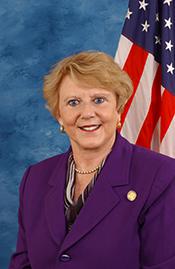
Mr. Speaker, I am pleased that we are considering S. 229 on the House floor today. This Senate bill would name the VA Medical Center in Albuquerque, New Mexico the Raymond G. ``Jerry'' Murphy…
Mr. Speaker, I am pleased that we are considering S. 229 on the House floor today. This Senate bill would name the VA Medical Center in Albuquerque, New Mexico the Raymond G. ``Jerry'' Murphy Department of Veterans Affairs Medical Center.
Jerry Murphy was awarded the Medal of Honor and the Silver Star for heroism during the Korean War. Its companion bill in the House, H.R. 474, introduced by Representative Wilson, has the support of the entire New Mexico delegation as well as Governor Richardson from that State.
During his service in the United States Marine Corps, Second Lieutenant Murphy was cited for his ``conspicuous gallantry at the risk of his life and above and beyond the call of duty as a platoon commander. He was twice wounded, but he repeatedly refused medical attention and continued to lead his men in an assault against a cleverly concealed and well-entrenched enemy force.
Mr. Speaker, at this time I would submit for the Record the text of Lieutenant Murphy's Medal of Honor citation.
Murphy, Raymond G.
Rank and organization: Second Lieutenant, U.S. Marine Corps
Reserve, Company A, 1st Battalion, 5th Marines, 1st Marine
Division (Rein.). Place and date: Korea, 3 February 1953.
Entered service at: Pueblo, Colo. Born: 14 January 1930,
Pueblo, Colo. Citation: For conspicuous gallantry and
intrepidity at the risk of his life above and beyond the call
of duty as a platoon commander of Company A, in action
against enemy aggressor forces. Although painfully wounded by
fragments from an enemy mortar shell while leading his
evacuation platoon in support of assault units attacking a
cleverly concealed and well-entrenched hostile force
occupying commanding ground, 2d Lt. Murphy steadfastly
refused medical aid and continued to lead his men up a hill
through a withering barrage of hostile mortar and small-arms
fire, skillfully maneuvering his force from one position to
the next and shouting words of encouragement. Undeterred by
the increasing intense enemy fire, he immediately located
casualties as they fell and made several trips up and down
the fire-swept hill to direct evacuation teams to the
wounded, personally carrying many of the stricken marines to
safety. When reinforcements were needed by the assaulting
elements, 2d Lt. Murphy employed part of his unit as support
and, during the ensuing battle, personally killed 2 of the
enemy with his pistol. With all the wounded evacuated and the
assaulting units beginning
to disengage, he remained behind with a carbine to cover the
movement of friendly forces off the hill and, though
suffering intense pain from his previous wounds, seized an
automatic rifle to provide more firepower when the enemy
reappeared in the trenches. After reaching the base of the
hill, he organized a search party and again ascended the
slope for a final check on missing marines, locating and
carrying the bodies of a machine gun crew back down the hill.
Wounded a second time while conducting the entire force to
the line of departure through a continuing barrage of enemy
small-arms, artillery, and mortar fire, he again refused
medical assistance until assured that every one of his men,
including all casualties, had preceded him to the main lines.
His resolute and inspiring leadership, exceptional fortitude,
and great personal valor reflect the highest, credit upon 2d
Lt. Murphy and enhance the finest traditions of the U.S.
Naval Service.
Mr. Speaker, after the Korean War, Jerry Murphy spent most of his adult life in service to New Mexico's veterans. He was Director of the Veterans Services Division of the Albuquerque, New Mexico, VA Regional Office from 1974 to 1997.
Jerry Murphy was a paragon of service because after his retirement he served as a volunteer at the VA Hospital, pushing veterans in their wheelchairs to their appointments. Many of those veterans did not know who was helping them, but that's the kind of man that Jerry was. This brave marine and true comrade left this Earth on April 6, 2007. Of course he was buried wearing his VA Hospital volunteer smock.
Mr. Speaker, no one could be more deserving of having a VA Hospital named after him than Jerry Murphy, who served his country with conspicuous gallantry and intrepidity well beyond the call of duty.
I urge my colleagues to support S. 229.
Mr. Speaker, I reserve the balance of my time.
Mr. Speaker, I yield to the gentlelady from New Mexico (Mrs. Wilson) as much time as she may consume.
Mr. Speaker, I yield such time as he may consume to the gentleman from New Mexico (Mr. Pearce).
Mr. Speaker, at each opportunity granted us to consider a bill honoring the service of a Medal of Honor recipient, I stand in awe of the dedication to country and comrades these people displayed through their lives, whether those lives extended beyond their act of bravery or were ended in that the act.
Of the four Medal of Honor recipients to whom we have paid tribute today, one made the ultimate sacrifice for his comrades and his Nation. Three survived the battle to return home where they continued to serve their Nation through service in the military and through service to the Federal Government. Many who lived and worked with them had no knowledge that these men had received America's highest award for valor in combat. Their lives of quiet humility only accentuated their moments of resounding achievement.
The great example of those lives and those moments will, with passage of these bills, Mr. Speaker, be enshrined in the namings that we are now considering.
We must remember that we are voting not simply to name four buildings; we are consecrating the gift of four lives lived well.
Mr. Speaker, I urge my colleagues to support S. 229.
Mr. Speaker, I yield back the balance of my time.

Mr. Speaker, I move to suspend the rules and pass the bill (H.R. 2199) to amend title 38, United States Code, to direct the Secretary of Veterans Affairs to provide certain improvements in the…
Mr. Speaker, I move to suspend the rules and pass the bill (H.R. 2199) to amend title 38, United States Code, to direct the Secretary of Veterans Affairs to provide certain improvements in the treatment of individuals with traumatic brain injuries, and for other purposes, as amended.
Mr. Speaker, I yield myself 3 minutes.
Mr. Speaker, I would point out this is one of the most important bills on the floor today or at any time. It's called the Traumatic Brain Injury Health Enhancement and Long-Term Support Act of 2007.
The wounded from wars in Afghanistan and Iraq are returning with multiple injuries due to the use of improvised explosive devices, or IEDs. This often results in servicemembers and veterans needing polytrauma care, and has caused an increase in veterans with brain injury, or TBI.
We are going to have tens of thousands of these young men and women with these injuries. Among veterans and servicemembers that return from OEF and OIF and treated at Walter Reed for injuries of any type, approximately 65 percent have TBI or a comorbid, as they call it, diagnosis. Survivors of TBI experience physical, cognitive, emotional and community integration issues. Because of their injury, their capacity and initiative to seek appropriate care on their own is diminished.
We are also faced with thousands of veterans returning from Iraq and Afghanistan with milder cases of brain injury. This milder case often is missed and goes untreated, and symptoms may often mirror that of PTSD. Indeed, according to the Defense and Veterans Brain Injury Center, in prior military conflicts, TBI was present in up to 14 to 20 percent of surviving casualties. The numbers for operations in OEF/OIF are predicted to go much, much higher.
We must ensure that the health care and services that meet the needs of returning servicemembers are available and accessible, while never forgetting the needs of veterans from previous conflicts. This bill provides for mandatory screening of veterans for traumatic brain injury. It requires the Secretary to establish a comprehensive program of long-term care, of postacute traumatic brain injury rehabilitation at four geographically disbursed polytrauma network sites. It provides for the establishment of TBI transition offices at each Department polytrauma network site to coordinate health care and services to veterans who suffer from moderate to severe traumatic brain injuries. It requires the Secretary to establish a registry of those who served in Iraq who exhibit symptoms associated with TBI.
This legislation establishes centers for TBI research, education and clinical activities, and requires the Secretary to establish a committee on the care of veterans with TBI. In addition to the provisions that address health care, research and treatment for veterans, this legislation also provides for veterans who reside in rural areas.
Mr. Speaker, it is a very important bill. We will hear soon from Mr. Michaud, the chairman of our Health Subcommittee, who was the primary author of this, who has been a leader to make sure that we serve the veterans who come back with these incredible injuries, that they receive the proper care that they need.
Mr. Speaker, I reserve the balance of my time.
Mr. Speaker, I recognize the chairman of our subcommittee who has taken such a great leadership role on these issues, the gentleman from Maine (Mr. Michaud) for 4 minutes.
Mr. Speaker, I yield 1\1/4\ minutes to the chairwoman of our Economic Opportunity Subcommittee, the gentlelady from South Dakota, Stephanie Herseth Sandlin.
Mr. Speaker, we have had many people contribute to this legislation, as Mr. Michaud said. I would like to recognize a great new Member from Indiana who has worked hard on this legislation, Mr. Donnelly, for 2 minutes.
Mr. Speaker, I would like to yield 2 minutes to another hard-working new member from our committee, the gentleman from California (Mr. McNerney).
Mr. Speaker, I would like to yield 2 minutes to another hard-working new member of our committee, the highest-enlisted man ever to be elected to Congress, Command Sergeant Major Tim Walz from Minnesota.
Mr. Speaker, how much time do we have left?
I would now recognize another great new Member from Pennsylvania (Mr. Altmire) for 2 minutes. He has taken the lead on dealing with traumatic brain injury.
Mr. Speaker, I'd like to yield 2 minutes to the fighting gentleman from New Jersey (Mr. Pascrell), who we like to call an honorary member of the Veterans' Committee since he fights so hard for veterans and is cochair of the Traumatic Brain Injury Caucus in the Congress.
Mr. Speaker, I'd like to yield 2 minutes to another great new Member fighting for veterans, Congressman Welch from Vermont.
Mr. Speaker, let me just conclude by saying like everything else about this war, the administration did not prepare either for the fighting, the aftermath, or the treatment of the
veterans coming back. We simply left thousands of our veterans without adequate resources to treat these brain injuries or PTSD or other issues that arise. No matter what denial that comes from the minority party, no matter what denial comes from the administration, we have not prepared for adequate treatment of these veterans. We are passing legislation today to do that, and we will not deny that there will be thousands and thousands of brain-injured veterans. We should bring them home now and we should treat them well when they get back.
Mr. Speaker, I yield back the balance of my time.
Mr. Speaker, on that I demand the yeas and nays.

Mr. Speaker, in January of this year, I introduced the companion to the Senate measure that we're considering today, and I wanted to thank both my colleagues from New Mexico, Mr. Pearce and Mr.…
Mr. Speaker, in January of this year, I introduced the companion to the Senate measure that we're considering today, and I wanted to thank both my colleagues from New Mexico, Mr. Pearce and Mr. Udall, for their support of that legislation.
I'm very happy today that the House is taking up the Senate version of this bill, which is supported both by Senator Bingaman and by Senator Domenici. I am also very pleased that the governor of New Mexico, Governor Richardson, and a wide variety of veterans' organizations in New Mexico, have supported this legislation.
Jerry Murphy passed away on April of this year, on Good Friday. He was a hero in Korea, as my colleagues have pointed out, but it's the way he chose to spend the rest of his life that makes him so special to New Mexico's veterans. He was a Second Lieutenant in the Marine Corps Reserves. He volunteered to go into the Marine Corps when it looked as though he was going to be drafted and sent to Korea in the Army and he thought the Marine Corps might suit him better. In 1952, he commanded an infantry platoon in the Fifth Marines in Seoul, Korea, and was a recipient of the Silver Star.
In February of 1953, he positioned his unit about the Imjin River facing the Chinese Communist troops. Their job was to continually push the Chinese lines to keep them from getting too dug in. He was commanding the reserve platoon, and as the battle went on and he sensed that the operation was not being executed as planned because there were no wounded coming back to the lines, he decided he had to go forward and find out what was going on. When he took his platoon forward, he found that all the officers and the noncommissioned officers of the two assault platoons were dead or wounded, and there was mass confusion among the troops.
He very quickly took command, and in the midst of machine gun fire, he ordered his men to find their comrades and evacuate the area. He made several trips in the midst of heavy gunfire to rescue casualties. At one point, he was helping to lift a stretcher and he was hit in the back by the fragments of an enemy grenade. He refused medical attention and continued to lead his men to rescue their wounded comrades.
As he continued to command his reserves, he came face to face with two Chinese soldiers, and he killed them both. The Chinese entered the trenches as the last American wounded troops were being evacuated. Jerry Murphy picked up an automatic rifle and held off the Chinese Communist forces until all of the marines were safe.
He then went and counted all his marines. He noticed he had a handful still missing, and he went back to the top of the hill with a search team. He located the bodies of a machine gun crew and took them down the hill.
At this point, he was wounded a second time. He again refused medical treatment until all his men had preceded him into the main line. He eventually received treatment and returned to America.
In October, 1953, when he was in graduate school, Jerry Murphy was awarded the Medal of Honor. It was presented to him by President Eisenhower on October 27, 1953.
For more than 20 years after Jerry Murphy left the service, he dedicated his life to serving New Mexico veterans. He served at the VA hospital as Director for Veterans Services. For 23 years, he provided lots of support to all kinds of veterans in New Mexico. The neat thing is that even after he retired from the VA, he continued to volunteer at the VA hospital.
One of the VA hospital employees once told me that Jerry Murphy was a volunteer; he had his turquoise smock on, and he would push veterans to and from their appointments at the VA hospital. The veterans had no idea who it was that was pushing them around in their wheelchairs. He was always a humble servant. That is the kind of man he was: A quiet, humble servant, soft-spoken, a modest man who was concerned with his fellow soldiers. His humility really never ended. You know, if you think about this guy, he was a Marine, a Medal of Honor winner, and he chose to be put to rest wearing his VA volunteer smock. He will be missed by his family and his wife, Mary Ann.
I want to commend Senators Domenici and Bingaman for sponsoring this legislation and ushering it through the
Senate; my colleagues, Mr. Pearce and Mr. Udall, for cosponsoring the House version of the bill; Secretary John Garcia of New Mexico for first suggesting to all of us that it might be appropriate to name the VA medical center after Jerry; the chairman and ranking member of the Veterans Affairs Committee, Mr. Buyer and Mr. Filner, for their leadership and willingness to bring this legislation forward.
Mr. Speaker, I urge passage of this bill.

Mr. President, today I will once again introduce with the, Senator from Mississippi, Mr. Cochran, and the Senator from Arizona, Mr. McCain, a bill to bring Senate campaigns into the 21st century by…
Mr. President, today I will once again introduce with the, Senator from Mississippi, Mr. Cochran, and the Senator from Arizona, Mr. McCain, a bill to bring Senate campaigns into the 21st century by requiring that Senate candidates file their campaign finance disclosure reports electronically and that those reports be promptly made available to the public. This step is long overdue, and I hope that the fact that we now have two dozen or so bipartisan cosponsors indicates that the Senate will act quickly on this legislation.
A series of reports by the Campaign Finance Institute has highlighted the anomaly in the election laws that makes it nearly impossible for the public to get access to Senate campaign finance reports while most other reports are available on the Internet within 24 hours of their filing with the Federal Election Commission (FEC). The Campaign Finance Institute asks a rhetorical question: ``What makes the Senate so special that it exempts itself from a key requirement of campaign finance disclosure that applies to everyone else, including candidates for the House of Representatives and Political Action Committees?''
The answer, of course, is nothing. The United States Senate is special in many ways. I am proud to serve here. But there is no excuse for keeping our campaign finance information inaccessible to the public when the information filed by House candidates or others is readily available. A recent Washington Post editorial called this delay ``completely unjustified.'' I couldn't agree more, especially now, when the Senate is debating ethics reforms designed to increase transparency and accountability to the public. I ask unanimous consent that the text of this editorial be printed in the Record following the text of the bill.
My bill amends the section of the election laws dealing with electronic filing to require reports filed with the Secretary of the Senate to be filed electronically and forwarded to the FEC within 24 hours. The FEC is required to make available on the Internet within 24 hours any filing it receives electronically. So if this bill is enacted, electronic versions of Senate reports should be available to the public within 48 hours of their filing. That will be a vast improvement over the current situation, which, according to the Campaign Finance Institute, requires journalists and interested members of the public to review computer images of paper-filed copies of reports, and involves a completely wasteful expenditure of hundreds of thousands of dollars to re-enter information into databases that almost every campaign has available in electronic format.
The current filing system also means that the detailed coding that the FEC does, which allows for more sophisticated searches and analysis, is completed over a week later for Senate reports than for House reports. This means that the final disclosure reports covering the first two weeks of October are often not susceptible to detailed scrutiny before the election. According to the Campaign Finance Institute, in the 2006 election, ``[v]oters in six of the hottest Senate races were out of luck the week before the November 7 election if they did Web searches for information on general election contributions since June 30. In all ten of the most closely followed Senate races voters were unable to search through any candidate reports for information on `pre-general election (October 1-18)' donations.'' And a September 18, 2006, column by Jeffery H. Birnbaum in the Washington Post noted that ``When the polls opened in November 2004, voters were in the dark about $53 million in individual Senate contributions of $200 or more dating all the way back to July . . .''
It is time for the Senate to at long last relinquish its backward attitude toward campaign finance disclosure. I am encouraged by the supportive statements from a number of my colleagues on both sides of the aisle, including the new Minority Leader and Minority Whip, and the new Chair of the Rules Committee. I urge the enactment of this simple bill that will make our reports subject to the same prompt, public scrutiny as those filed by PACs, House and Presidential candidates, and even 527 organizations. I close with another question from the Campaign Finance Institute: ``Isn't it time that the Senate join the 21st century and allow itself to vote on a simple legislative fix that could significantly improve our democracy?'' This Congress, let us answer that question in the affirmative.
I ask unanimous consent that the text of the bill be printed in the Record.
Mr. President, I rise today to introduce the Calling for 2-1-1 Act. I'm thrilled to be a part of the new Democratic Congress as we move to pass the kind of bipartisan legislation I'm talking about…
Mr. President, I rise today to introduce the Calling for 2-1-1 Act. I'm thrilled to be a part of the new Democratic Congress as we move to pass the kind of bipartisan legislation I'm talking about today--a bill that could make an invaluable difference in the lives of citizens in New York and the country.
I'd first like to thank my colleague Senator Dole for joining me in this effort. Because of her long history with the Red Cross, the Senator understands the importance of 2-1-1, and I am so pleased to be working with her again in this new Congress to champion this important cause.
Every hour of every day, someone in the United States needs essential services--from finding an after-school program to securing adequate care for an aging parent. Faced with a dramatic increase in the number of agencies and help-lines, people often don't know where to turn. In many cases, people end up going without necessary services because they do not know where to start. The 2-1-1 system is a user-friendly social- services network, providing an easy-to-remember and universally available phone number that links individuals and families in need to the appropriate nonprofit and government agencies. 2-1-1 helps people find and give help by providing information on job training, schools, volunteer opportunities, elder care housing, and countless other community needs.
However, the importance of this system extends far beyond the day to day needs of our citizens. The need for effective communication was made crystal clear in the immediate aftermath of the devastation of September 11, when most people did not know where to turn for information about their loved ones. Fortunately for those who knew about it, 2-1-1 was already operating in Connecticut, and it was critical in helping identify the whereabouts of victims, connecting frightened children with their parents, providing information on terrorist suspects, and linking ready volunteers with coordinated efforts and victims with necessary mental and physical health services. 2-1-1 provided locations of vigils and support groups, and information on bioterrorism for those concerned about future attacks.
As time went by, many people needed help getting back on their feet. More than 100,000 people lost their jobs. Close to 2,000 families applied for housing assistance because they couldn't pay their rent or mortgage. 90,000 people developed symptoms of post-traumatic stress disorder or clinical depression within eight weeks of the attacks. Another 34,000 people met the criteria for both diagnoses. And 2-1-1 was there to help.
The needs were great and the people of America rose to the challenge. But our infrastructure struggled to keep up with this outpouring of support. In fact, a Brookings Institution and Urban Institute study of the aftermath of September 11 found that many dislocated workers struggled to obtain available assistance. The devastation of natural disasters Hurricanes Katrina and Rita further demonstrated the need to connect people to services quickly in a time of crisis. That's what 2- 1-1 is all about: providing a single, efficient, coordinated way for people who need help to connect with those who can provide it.
There is broad, bi-partisan support for this legislation--because the need for it has been proven. Unfortunately, in many States, limited resources have slowed the process of connecting communities with this vital service. Without adequate Federal support, 2-1-1 will not reach a nationwide population for decades. The University of Texas developed a national cost-benefit analysis that found there would be a savings to society of nearly $1.1 billion over ten years if 2-1-1 were operational nationwide. The Federal Government, States, counties, businesses and citizens all stand to benefit from a nationwide 2-1-1 service.
As this new Congress moves in a positive direction for America, we must enact legislation that best protects and prepares ourselves for the future. All fifty States deserve to be equipped with the proper communication to respond effectively in an emergency situation.
Every single American should have a number they can call to cut through the chaos of an emergency. That number is 2-1-1. It's time to make our citizens and our country safer by making this resource available nationwide.
Mr. Speaker, I move to suspend the rules and pass the Senate bill (S. 229) to redesignate a Federal building in Albuquerque, New Mexico, as the ``Raymond G. Murphy Department of Veterans Affairs…
Mr. Speaker, I move to suspend the rules and pass the Senate bill (S. 229) to redesignate a Federal building in Albuquerque, New Mexico, as the ``Raymond G. Murphy Department of Veterans Affairs Medical Center''.
Mr. Speaker, I yield myself such time as I may consume.
Mr. Speaker, on December 9, 1861, Iowa Senator James W. Grimes introduced S. 82 in the United States Senate, a bill designed to ``promote the efficiency of the Navy'' by authorizing the production and distribution of ``medals of honor''. On December 21 the bill was passed, authorizing 200 such medals be produced ``which shall be bestowed upon such petty officers, seamen, landsmen and Marines as shall distinguish themselves by their gallantly in action and other seamanlike qualities during the present war.'' President Lincoln signed the bill, and the Medal of Honor was born.
The first Medal of Honor was the Navy Medal of Honor. Raymond Murphy was a Second Lieutenant in the United States Marine Corps when he risked his life and went above and beyond the call of duty as a platoon commander in action against the enemy.
Although painfully wounded by fragments from an enemy mortar shell while leading his evacuation platoon, Second Lieutenant Murphy refused medical aid and continued to lead his men up a hill through hostile mortar and small-arms fire, while shouting words of encouragement to his men.
Under the increasing intense enemy fire, he immediately located casualties as they fell and made several trips up and down the fire- swept hill to direct evacuation teams to the wounded, personally carrying many of the stricken Marines to safety. When reinforcements were needed by the assaulting elements, Second Lieutenant Murphy employed part of his unit as support and, during the ensuing battle, personally killed two of the enemy with his pistol.
With all the wounded evacuated and the assaulting units beginning to disengage, he remained behind with a carbine to cover the movement of friendly forces off the hill, and although suffering intense pain from a previous wound, seized an automatic rifle to provide more firepower when the enemy reappeared in the trenches.
After reaching the base of the hill, he organized a search party and again ascended the slope for a final check on missing Marines, locating and carrying the bodies of a machine gun crew back down the hill.
Wounded a second time while conducting the entire force to the line of departure through a continuing barrage of enemy small-arms, artillery and mortar fire, he once again refused medical attention until assured that every one of his men, including all the casualites, had preceded him to the main lines.
Second Lieutenant Murphy's actions epitomize the Marine Corps motto, Semper Fidelis, ``always faithful,'' and demonstrate his loyalty and commitment to marine comrades-in-arms.
After the war, Mr. Murphy continued his service to his veteran comrades in New Mexico, serving as Director of Veteran Services at the VA center in Albuquerque, New Mexico.
Renaming the VA Medical Center in Albuquerque, New Mexico is a fitting tribute to a tireless advocate of veterans.
Mr. Speaker, I reserve the balance of my time.
Mr. Speaker, I yield as much time as he may consume to the gentleman from New Mexico (Mr. Udall).
Mr. Chairman, I reserve the balance of my time.
Mr. Speaker, I continue to reserve the balance of my time.
Mr. Speaker, in closing, I have had the opportunity I think twice now to be able to manage bills on the floor of the House. I want to say that today is a very proud day for me. These are four great, great men; heroes they are, one and all. I am honored, and I thank the committee for allowing me the opportunity to do this.
As my colleague said, this isn't just naming buildings after somebody. This is really a lasting memory of people who have given everything they have ever had. Everything we are as a Nation we owe to these four great people.
I urge my colleagues to unanimously support Senate bill 229.
Mr. Speaker, I have no further requests for time, and I yield back the balance of my time.
Show 11 more
Mr. President, I rise to speak about the Child Tax Credit and to support S. 218, a bill I've worked on with Senators Snowe and Lincoln. Working families should get the tax relief they deserve, and I…
Mr. President, I rise to speak about the Child Tax Credit and to support S. 218, a bill I've worked on with Senators Snowe and Lincoln. Working families should get the tax relief they deserve, and I am proud to cosponsor this bill to help realize this aspiration. The Child Credit is an important component of our Federal tax code, and S. 218 is an important step in making the credit more valuable and more fair for those who need it most.
Raising children is expensive and has become even more so in recent years. The Child Tax Credit allows middle class families to claim a credit of $1,000 per child against their Federal income tax. That's a big help in covering these rising costs.
Importantly, the Child Credit also recognizes the particular vulnerability low-income families with children. Since the credit is refundable to the extent of 15 percent of a taxpayer's earned income in excess of $11,300, families earning more than that threshold level of income get at least a partial benefit even if they have no Federal income tax liability. The benefit may be small for families with low incomes, but every penny helps defray the rising costs of being a working parent in America today.
Unfortunately, as currently structured, the Child Credit leaves more and more families out of the benefit each year. That's because the income threshold for eligibility rises annually at the rate of inflation even though family incomes may not rise as fast. That means that if you earn the minimum wage, or if your wage is low and you didn't get a raise, or if you worked fewer hours than the year before, then your tax refund probably shrunk. It may even have disappeared. Given that an estimated four and a half million households with children experienced this decline last year alone, we must reverse this unintended--and unfair--effect.
In many cases, indexing the parameters of the tax system for inflation makes sense because it neutralizes the effects of inflation on the tax system. In this case, however, indexing the threshold results in an unfair tax increase for low-income, working families whose incomes are not keeping up with rising costs. Recent data indicates that the typical low-income household actually saw its earnings decline during the first few years ofthis decade. At the same time, the costs of housing, childcare, and driving to work have increased sharply.
This bill returns the threshold to its original level of $10,000 and freezes it, thereby expanding the benefit to include more kids and protecting those families from unfair tax increases due to inflation. This is an important step in improving the fairness of our tax code and providing necessary support to working families.
In time, I hope we will do more. It is unfair that more than eight million children in families with incomes too low to qualify for even a partial credit get no benefit at all. These are families whose incomes are far below the Federal poverty level and whose children ironically have the greatest needs--even as their parents pay an enormous share of their incomes in taxes and basic services, such as food, housing, and clothing.
America can do better. In the new Congress, I hope we will tackle the broader challenge of ensuring that their parents have jobs that pay living wages, a home they can afford, a school district that enables a life of opportunity, a community that cares for its children, and the faith that hard work and personal commitment payoff. America can do this.
I urge my colleagues to join me in supporting this important bill as a first step in addressing the broader goal of equal opportunity for all Americans.
Mr. President, today Congress is confronted with how to best provide tax relief to American families earning slightly more than the minimum wage. We can do that by expanding the availability of the…
Mr. President, today Congress is confronted with how to best provide tax relief to American families earning slightly more than the minimum wage. We can do that by expanding the availability of the child tax credit to more working families.
In 2001, I pushed to make the child tax credit refundable for workers making around the minimum wage. As enacted in 2001, a portion of a taxpayer's child tax credit would be refundable--up to 10 percent of earnings above $10,000.
In 2004, Congress passed the Working Families Tax Relief of 2004, which increased from 10 percent to 15 percent the portion of the child tax credit that is refundable. Although the legislation increased the amount of the refundable child credit, it failed to increase the number of families eligible for the benefit. The consequences are serious for low-income Americans living paycheck-to-paycheck. It means that tens of thousands of low-income families will be completely ineligible for a credit they should receive.
This year, because the income threshold is indexed, only taxpayers earning over $11,750 are eligible to receive the refundable portion of the child tax credit. Low-income families earning less than $11,750 are shut out of the child tax credit completely.
For example, a single mother who earns the current minimum wage and works a 40 hour week, for all 52 weeks of the year, fails to qualify for the refundable portion of the child tax credit. Since the mother earns $10,700, she is a mere $300 away from qualifying for the credit. Worse, if the single mother does not receive a raise the following year, it will be even tougher to qualify because the $11,750 she originally needed to earn is adjusted for inflation and will increase.
Today, I am introducing legislation, the Working Family Child Assistance Act, with Senators Lincoln, Obama, and Rockefeller that will enable more hard-working, low-income families to receive the refundable child credit this year. My legislation returns the amount of income a family must earn to qualify for the child tax credit to $10,000. Moreover, my bill would ``de-index'' the $10,000 threshold for inflation, so families failing to get a raise each year would not lose benefits.
Most notably, my bill is identical to the refundable child credit proposal the Senate passed in May 2001 as part of its version of that year's tax bill. Although I was able to ensure that a refundable child credit would be part of the final bill sent to President Bush, conferees did index the $10,000 threshold to inflation despite my best efforts.
The staff of the Joint Committee on Taxation has estimated that this legislation will allow an additional 600,000 families to benefit from the refundable child tax credit. The Maine Department of Revenue estimates that 16,700 families in Maine alone would benefit from our proposal. Two thousand of these Maine families would otherwise be completely locked out of the refundable child tax credit under current law.
For example, my legislation provides a $113 child credit to a mom who earns $10,750 per year. That's money she could use to buy groceries, school books, other family necessities, and even pay rent.
Our families and our country are better off when government lets people keep more of what they earn. Parents deserve their per-child tax credit, and my bill rewards families for work.
I am committed to this issue and have called on President Bush to work with Congress so we can help an additional one million children, whose parents and guardians struggle every day to take care of them.

Mr. President, I rise to re-introduce the Fair Contracts for Growers Act of 2007. This bill would simply instill fairness into contractual dealings between farmers and processors. It ensures that…
Mr. President, I rise to re-introduce the Fair Contracts for Growers Act of 2007. This bill would simply instill fairness into contractual dealings between farmers and processors. It ensures that parties to a dispute related to agricultural contracts have a true choice of venues.
I introduce this legislation because I believe that anti-competitive activity has become a grave threat to the family farmer. During the last Farm Bill debate, I brought this same bill forward, along with several others. Despite this policy passing the Senate, remarkably the final Farm Bill included no provisions to address concentration.
So, earlier this year, I announced that I will be putting forward a package of bills that will focus on anti-competitive activity in the agriculture industry. This bill is the first step of my agriculture concentration agenda.
Today's legislation is one piece of the puzzle to help stop the unfair impact that vertical integration is having on the family farmer. In the last several years we've seen a tremendous shift in agriculture toward contract production. Under many of these contract arrangements, large, vertically integrated agribusiness firms have the power to dictate the terms of ``take-it-or-leave-it'' production contracts to farmers.
Then, when there is a dispute between the packer and the family farmer, and the contract between the two includes an arbitration clause, the family farmer has no alternative but to accept arbitration to resolve the dispute. These clauses limit farmers' abilities to pursue remedies in court, even when violations of Federal or State law are at issue. This mandatory arbitration process puts the farmer at a see disadvantage. Even in a situation where discrimination or fraud is suspected, a farmer's only recourse under such a contract is to submit to arbitration. The farmer cannot seek redress in court, even if the result is bankruptcy or financial ruin.
Make no mistake, arbitration is very useful in certain situations. It reduces the load on our courts, and can save parties the expense of drawn-out litigation. This bill would not rule out arbitration-just forced arbitration.
The Fair Contracts for Growers Act would amend the Packers and Stockyards Act to require that any contract arbitration be voluntarily agreed upon by both parties to settle disputes at the time a dispute arises, not when the contract is signed. This would allow farmers the opportunity to choose the best form of dispute resolution and not have to submit to the packers. It ensures that a farmer, most often the ``little guy'' in these dealings, is able to maintain his constitutional right to a jury trial. It also gives him a chance to compel disclosure of relevant information, held by the company, which is necessary for a fair decision.
During consideration of the Farm Bill, the Senate passed, by a vote of 64-31, the Feingold-Grassley amendment to give farmers a choice of venues to resolve disputes associated with agricultural contracts. I urge my colleagues to join with Senator Feingold and me, along with our other cosponsors, in supporting this important legislation.
I ask unanimous consent that the text of the bill and letters of support be printed in the Record.
Mr. President, I ask unanimous consent that the text of this bill be printed in the Record.
Mr. Speaker, I thank the chairman for yielding. H.R. 2199 is a bipartisan effort to address the challenges presented by traumatic brain injury and to improve the quality of care for our rural…
Mr. Speaker, I thank the chairman for yielding.
H.R. 2199 is a bipartisan effort to address the challenges presented by traumatic brain injury and to improve the quality of care for our rural veterans.
TBI is considered to be the signature wound of this war. TBI is complex and frequently overlooked or misdiagnosed.
We also have very little understanding of the long-term consequences of TBI. We must make sure that the VA is doing all they can to provide for these wounded soldiers. This is only the beginning, we still have more work to do, but this is a good first step.
H.R. 2199 also includes two provisions to improve the quality of care provided
to our rural veterans. With so many veterans from Iraq and Afghanistan living in rural areas, and an already existing population of older veterans in these areas, we need to explore innovative ways to improve VA accessibility and quality of care, especially on mental health issues. You heard both from the chairman and ranking member as far as what this legislation does.
I would like to recognize the hard work of a group of Members on both sides of the aisle who helped craft this legislation. This truly is bipartisan legislation. I do want to start with my good friend, Mr. Miller of Florida, who is the ranking member of the Health Care Subcommittee, who has been extremely helpful in getting this legislation introduced and moved through the full committee; also, Mr. Altmire of Pennsylvania, who has taken a real leadership role in traumatic brain injury, and for his focus on TBI with his legislation, H.R. 1944, which is included in H.R. 2199; Mr. Walz of Minnesota, for his legislation to establish centers for TBI research, education, and clinical activities, which are now also included in H.R. 2199, who also served on the Veterans' Affairs Committee; and Mr. McNerney of California, his legislation was included in H.R. 2199 to create the Committee on Care for Veterans with TBI; Mr. Donnelly, who sits on the Veterans' Affairs Committee, of Indiana, for his bill which was included in section 4 of H.R. 2199, to create an advisory committee on rural veterans; Mr. Welch of Vermont, for his bill and efforts to establish a pilot program for mobile vet centers, which are extremely important for rural areas; Mr. Lamborn of Colorado, for his amendment to include providing benefits outreach and assistance with claims for benefits as part of the mission of mobile vet centers. He also sits on the committee and was very helpful in making this bill a better bill.
So this truly has been a real bipartisan piece of legislation that took a lot of components of other bills that were through, that were introduced and we had hearings on, to be part of this bill.
I also would like to thank Ranking Member Buyer for his focus on this issue, and for his understanding of the importance of long-term research and the pursuit of the best practices for TBI care. He definitely has been very helpful with this legislation.
And, finally, I would like to thank and congratulate Chairman Filner for his strong bipartisan leadership on this bill and other veterans bills on the floor as well, and look forward to tackling other veterans issues as we move forward in the 110th Congress.
I urge my colleagues to support H.R. 2199.
Mr. President, I rise today to introduce legislation to assist the families of our reservists and National Guard members. With our reservists and National Guard members bravely answering our…
Mr. President, I rise today to introduce legislation to assist the families of our reservists and National Guard members. With our reservists and National Guard members bravely answering our country's call to service, we must do all we can to meet the calls of help from those families left behind who are struggling financially as a result of their loved ones' wartime service.
All too often, the families of reservists and National Guard members must contend not only with the physical absence of a loved one but also with the loss of income that makes paying house, car, medical and other bills too great of a burden to bear without help. According to the latest available statistics, some 55 percent of married Guard members and reservists have experienced a loss in income, with nearly 50 percent experiencing a loss of $1,000 in pay per month and 15 percent experiencing a loss of $30,000 or more in pay a year. With our Guard and reservists putting their lives on the line, they should not also have to put their families' financial lives on the line due to their service.
In an effort to provide relief to these families, I am introducing today the Voluntary Support for Reservists and National Guard Members Act that would bolster the financial assistance available to these families. More specifically, the Voluntary Support for Reservists and National Guard Members Act would provide taxpayers the option of contributing part of their tax refund to the Reserve Income Replacement Program which provides financial assistance to those families who have experienced an income loss due to a call-up to active duty. In 2005, the IRS issued 106 million refunds that totaled $227 billion with the average refund coming in at $2,141.36. Even a small percentage of this amount could make a significant difference in the lives of these reservist and National Guard families.
While we can do little to ease the emotional burden experienced by families regarding the service of their loved ones, we can at least try to give them some peace of mind when it comes to their day-to-day finances. These families already have made a great sacrifice to the nation, and they should not also have to sacrifice their financial well-being due to their loved ones' service. Beyond our gratitude, care packages and gifts, we can thank our troops for their service by helping to meet the everyday needs of their families who are facing financial hardships. My bill would provide Americans a convenient way to thank our troops by contributing a portion of their tax refunds to give much-needed help to the loved ones of our reservists and National Guard members .
I ask unanimous consent that my legislation, the Voluntary Support for Reservists and National Guard Members Act, and the accompanying remarks be printed in the Record.
Mr. President, I ask unanimous consent that the text of the bill be printed in the Record.
Mr. President, I come before the Senate to once again raise an issue that is near and dear to my heart--an issue that is of great importance to working families across this country. In 2001 and again…
Mr. President, I come before the Senate to once again raise an issue that is near and dear to my heart--an issue that is of great importance to working families across this country. In 2001 and again in 2003, Senator Snowe and I worked together to ensure that low- income working families with children receive the benefit of the Child Tax Credit. I come here today to again ask my colleagues to help me ensure that low-income families aren't forgotten as we discuss tax relief in the 110th Congress.
Unfortunately, although we have made great strides in ensuring that the credit is a useful tool for our working families, in its current form it isn't working for everyone. We can and should take an important additional step to improve it.
As some of my colleagues may be aware, to be eligible for the refundable child tax credit, working families must meet an income threshold. If they don't earn enough, then they don't qualify for the credit. The problem is that some of our working parents are working full-time, every week of the year and yet they still don't earn enough to meet the income threshold to qualify for the credit, much less to receive a meaningful refund.
In 2006, the New York Times highlighted a report which shows that almost one-third of our children live in families that do not qualify for the child tax credit because family earnings are too low. When you break the findings down by race, it's even more disheartening--about half of all African American children and half of all Latino children are left out of the full child tax credit because their family's earnings are just too low to qualify.
It is wrong to provide this credit to some hardworking Americans, while leaving others behind. The single, working parent that is stocking shelves at your local grocery store is every bit as deserving as the teacher, accountant or insurance salesman that qualifies for the credit in its current form. We must address this inequity and we must ensure that our tax code works for all Americans, especially those working parents forced to get by on the minimum wage.
In response, Senator Snowe and I have proposed a solution that will build on our previous efforts to make this credit work for those that need it the most. Today, we are reintroducing the Working Child Family Assistance Act, legislation which de-indexes the income threshold and sets it at a reasonable level so that all working parents, including those making the minimum wage, qualify for the credit. This is a simple, easy solution to a serious problem.
I look forward to working with my colleagues and the Administration to correct this inequity and to ensure that those low-income, hard- working families that need this credit the most do receive its benefits.
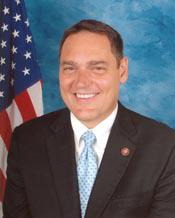
Mr. Speaker, I rise again today in support of H.R. 2199, the Traumatic Brain Injury Health Enhancement and Long-Term Support Act. This bill offers a comprehensive legislative solution to confronting…
Mr. Speaker, I rise again today in support of H.R. 2199, the Traumatic Brain Injury Health Enhancement and Long-Term Support Act. This bill offers a comprehensive legislative solution to confronting our servicemembers' increasing suffering from Traumatic Brain Injury.
Our brave men and women who serve in Operation Iraqi Freedom and Operation Enduring Freedom are faced with daunting physical and mental challenges every day as they carry out their duties. Troops deployed in Iraq, specifically, encounter the widespread use of IEDs, which can cause Traumatic Brain Injury. Extended deployments put our troops at risk for longer periods of time.
H.R. 2199 brings together solutions to begin addressing the needs of our wounded warriors who have been diagnosed with TBI. The bill requires the VA to establish five centers for TBI research, education, and clinical activities. It also instructs the VA to establish a TBI screening program that would provide critical information to Congress regarding the number of veterans screened, the prevalence of TBI symptoms, and recommendations for improving care. H.R. 2199 dictates that the VA should create a comprehensive program for the long-term care and rehabilitation for veterans who suffer from TBI. The bill also requires the VA to create a Traumatic Brain Injury Veterans Health Registry to generate a list of those who served in Iraq and/or Afghanistan, who have symptoms of TBI, and who apply for VA medical care or file a disability claim. The VA can then notify those on the registry of significant developments in research on health consequences of serving in Iraq and/or Afghanistan.
Additionally, this bill authorizes funding for a pilot program of mobile VA centers for rural areas. These mobile VA centers would improve access to readjustment benefits as well as mental health services. The mobile centers would also assist veterans in making disability claims.
I represent a rural district comprised of small towns and villages. I know that my rural veterans' constituency desperately needs better access to VA services and care, and these mobile VA centers could be part of the solution.
I strongly urge my colleagues to support this bill because it makes great strides in providing comprehensive care for our Nation's wounded warriors suffering from Traumatic Brain Injury.
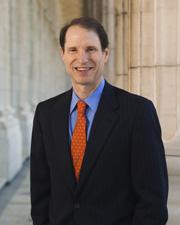
Mr. President, the legislation I introduce today reauthorizes a very successful cooperative watershed restoration program that I originally sponsored, and that was originally enacted for the Forest…
Mr. President, the legislation I introduce today reauthorizes a very successful cooperative watershed restoration program that I originally sponsored, and that was originally enacted for the Forest Service, in the Fiscal Year 1999 Interior Appropriations bill. The original legislation lasted through Fiscal Year 2001 after which it was reauthorized by the Appropriations Committees, at my request, through Fiscal Year 2005 and then again through Fiscal Year 2011. My bill passed the Senate in the 109th Congress, but unfortunately did not pass in the House before the end of the Congress. Today, I reintroduce the bill hoping that it can speedily pass both chambers.
The bill making what is commonly referred to as the Wyden amendment permanent authorizes the Secretary of Agriculture to use appropriated Forest Service funds for watershed restoration and enhancement agreements that benefit the ecological health of National Forest System lands and watersheds. The Wyden amendment does not require additional funding, but allows the Forest Service to leverage scarce restoration dollars thereby allowing the federal dollars to stretch farther. During the eight years the program has existed, the Forest Service has leveraged three dollars for every Forest Service dollar spent on these agreements.
The Wyden amendment has resulted in countless Forest Service cooperative agreements with neighboring state and local land owners to accomplish high priority restoration, protection and enhancement work on public and private watersheds. The projects authorized by these agreements have improved watershed health and fish habitat through the control of invasive species, culvert replacement, and other riparian zone improvement projects. In addition to ecological restoration, use of the Wyden amendment has improved cooperative relationships between the Forest Service, private land owners, state agencies and other federal agencies.
I am hopeful that my colleagues on the Energy and Natural Resources Committee will again pass this bill out of the Committee and that thereafter this legislation can again pass the Senate expeditiously. I ask unanimous consent that the text of the bill be printed in the Record.
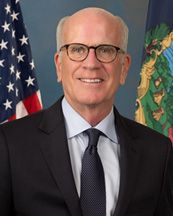
Mr. Speaker, I want to thank the Veterans' Affairs Committee, the openness of that committee, to let anyone with a good idea to help veterans to come in and have an opportunity to do that. Mr.…
Mr. Speaker, I want to thank the Veterans' Affairs Committee, the openness of that committee, to let anyone with a good idea to help veterans to come in and have an opportunity to do that. Mr. Filner, Mr. Michaud, and, of course, Mr. Buyer and Mr. Miller, thank you.
Rural Americans have always served the Nation's armed services, National Guard and Reserves in very great numbers. In fact, though only 19 percent of the Nation lives in rural America, 44 percent of the current U.S. military recruits come from rural areas, and nearly one- third of those who died in Iraq are from small towns and communities across the Nation, Vermont very much among them.
And unfortunately, access to health care for many of our veterans in rural areas is limited by mileage, distance and just the difficulty of transportation. Especially true, the provision of mental health care in rural settings has historically been a challenge for all health care systems and providers, including the VA. And therefore, what we recognize in this legislation is that we need to help the VA develop innovative solutions to address the need for mental health services in remote areas, TBI being the big injury that's been discussed by my colleagues.
This legislation takes a significant step towards improving the mental health services available to geographically isolated veterans. It creates a pilot program where at least two mobile vet centers will provide readjustment counseling and mental health services to veterans in at least five Veterans Integrated Service Networks that have the highest concentration of rural veterans.
One of these covers New England and my home State of Vermont. These mobile vet centers will also provide information and outreach concerning veterans benefits and, when practicable, assistance with claims for benefits.
Rural individuals and their families have strong bonds and ties to their communities. These mobile vet centers will allow veterans to stay in their communities and prevent endless hours of car rides for the care they receive.
I urge support and passage of this legislation and thank the committee for its indulgence.
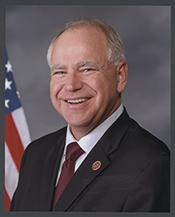
Mr. Speaker, I rise today in support of H.R. 2199. I want to thank my colleague from Maine for sponsoring this piece of legislation; also thank my colleague from Maine (Mr. Michaud), who's been a…
Mr. Speaker, I rise today in support of H.R. 2199. I want to thank my colleague from Maine for sponsoring this piece of legislation; also thank my colleague from Maine (Mr. Michaud), who's been a leader on this issue and veterans issues in general; grateful that he introduced this piece of legislation, and grateful that he allowed a piece of legislation that I had introduced establishing the five TBI centers around the country.
I'd also like to thank the ranking member, the gentleman from Indiana, for his thoughtful guidance on the colocation of those facilities. I think it's absolutely the right thing to do. I think it concentrates our resources and our expertise. So I thank him for that addition to it.
The colocation at the polytrauma centers is the right thing to do. The research that's being done there is world class. And I think an example of how we can enhance that comes from, and you just heard one of my colleagues speaking about this injury.
I visit the VA centers every Veterans Day for the last quite some time. And several years ago there was a young man from Michigan there, and he had suffered a traumatic brain injury. He had survived a shrapnel wound, but his brain had literally been turned inside of his head. And because of the great care he was receiving there, he was stabilized, and he was starting to rehabilitate. This bill will allow us to enhance his recovery, starting to reintegrate him back to the life that he knows and that he should be able to live.
On this floor we're going to continue to debate the wars. We're going to continue to see the debates divide us on the war in Iraq. This Congress, and I thank the ranking member, and the chairman for allowing the care of our veterans to bring us back together. Regardless of how we feel on this war, this Congress and this committee is proving that the 110th Congress can and will advance crucial legislation like H.R. 2199. So I thank you both. I thank my colleagues.
Mr. Speaker, I rise in favor of H.R. 2199, the Traumatic Brain Injury Health Enhancement and Long-Term Support Act. As cochair of the 8-year-old Congressional Brain Injury Task Force of over 110…
Mr. Speaker, I rise in favor of H.R. 2199, the Traumatic Brain Injury Health Enhancement and Long-Term Support Act.
As cochair of the 8-year-old Congressional Brain Injury Task Force of over 110 members, I commend the committee under Chairman Filner's leadership. You've never, ever acted, through the Speaker, to do favors for veterans. You've always handled it in terms of your own responsibility. I salute you for that.
For his ongoing endeavors to explore and thoughtfully legislate for the benefit of our Nation's many veterans suffering from TBI, I want to thank Jack Murtha, Congressman Murtha, for all his work over the last 5 years on this issue when it wasn't popular to talk about.
The Veterans Administration has shown tremendous effort in addressing the needs of our returning vets, our returning troops on its own; however, I believe the large volume of returning TBI victims, the need for timely treatment and the immediate need for rehab, expertise and capacity require additional resources. Flexibility for the VA to form partnerships to ensure top-notch care for our service personnel is essential. 2199 is an excellent first step to ensuring our Nation's veterans the care they need and deserve.
The bill establishes five new Veterans Administration research centers for TBI, which, without a doubt, produce new and exciting prevention and treatment techniques. A comprehensive TBI treatment program within the VA is long overdue.
I want to commend the TBI screening program for veterans. We recommended it. Football teams throughout the United States screen students before they put on football equipment. I think that's important that we do that with our vets. I worked to establish it in the civilian realm. We should have it in the military.
On behalf of the task force, I look forward to working with the Veterans Committee on this and other TBI issues in the future.
I urge my colleagues to vote in favor of H.R. 2199.
Bill Text
5 versions available
        [Congressional Bills 110th Congress]
[From the U.S. Government Publishing Office]
[S. 229 Enrolled Bill (ENR)]

S.229

One Hundred Tenth Congress

of the

United States of America

AT THE FIRST SESSION

Begun and held at the City of Washington on Thursday,
the fourth day of January, two thousand and seven

An Act

To redesignate a Federal building in Albuquerque, New Mexico, as the
``Raymond G. Murphy Department of Veterans Affairs Medical Center''.

Be it enacted by the Senate and House of Representatives of the
United States of America in Congress assembled,
SECTION 1. REDESIGNATION.
The Federal building known and designated as the ``Department of
Veterans Affairs Medical Center'' located at 1501 San Pedro Drive, SE,
in Albuquerque, New Mexico, shall be known and redesignated as the
``Raymond G. Murphy Department of Veterans Affairs Medical Center''.
SEC. 2. REFERENCES.
Any reference in a law, map, regulation, document, paper, or other
record of the United States to the Federal building referred to in
section 1 shall be deemed to be a reference to the ``Raymond G. Murphy
Department of Veterans Affairs Medical Center''.

Speaker of the House of Representatives.

Vice President of the United States and
President of the Senate.