Federal Trade Commission Reauthorization Act of 2008
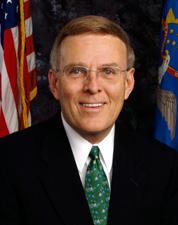 Sen. Byron L. Dorgan (D-ND)
Legislative Activity
Stay on top of the latest movement without scrolling through every action
Read twice and referred to the Committee on Commerce, Science, and Transportation. (text of measure as introduced: CR S2754-2756)
April 8, 2008
View full timeline
Introduced in Senate
April 8, 2008
Sponsor introductory remarks on measure. (CR S2754)
April 8, 2008
Read twice and referred to the Committee on Commerce, Science, and Transportation. (text of measure as introduced: CR S2754-2756)
April 8, 2008
Floor Debate
2 membersWhat members said about S. 2831 on the floor

Floor Debate
2 membersWhat members said about S. 2831 on the floor
Mr. President, today I am introducing the Federal Trade Commission Reauthorization Act of 2008. I am joined by Senator Inouye. We seek with this reauthorization to give the Federal Trade Commission,…
Mr. President, today I am introducing the Federal Trade Commission Reauthorization Act of 2008. I am joined by Senator Inouye. We seek with this reauthorization to give the Federal Trade Commission,…
Mr. President, I ask unanimous consent that the text of the bill be printed in the Record.
Bill Text
Latest available legislative text
        [Congressional Bills 110th Congress]
[From the U.S. Government Printing Office]
[S. 2831 Introduced in Senate (IS)]

2d Session
S. 2831

To reauthorize the Federal Trade Commission, and for other purposes.

_______________________________________________________________________

IN THE SENATE OF THE UNITED STATES

April 8, 2008

Mr. Dorgan (for himself and Mr. Inouye) introduced the following bill;
which was read twice and referred to the Committee on Commerce,
Science, and Transportation

_______________________________________________________________________

A BILL

To reauthorize the Federal Trade Commission, and for other purposes.

Be it enacted by the Senate and House of Representatives of the
United States of America in Congress assembled,

SECTION 1. SHORT TITLE; TABLE OF CONTENTS.

(a) Short Title.--This Act may be cited as the ``Federal Trade
Commission Reauthorization Act of 2008''.
(b) Table of Contents.--The table of contents for this Act is as
follows:

Sec. 1. Short title; table of contents.
Sec. 2. Authorization of appropriations.
Sec. 3. Independent litigation authority.
Sec. 4. Specialized administrative law judges.
Sec. 5. Civil penalties for violations of the Federal Trade Commission
Act.
Sec. 6. Application of Federal Trade Commission Act to tax-exempt
organizations.
Sec. 7. Aiding and abetting a violation.
Sec. 8. Permissive administrative procedure for consumer protection
rules.
Sec. 9. Rulemaking procedure for subprime lending mortgages and
nontraditional mortgage loans.
Sec. 10. Harmonizing FTC rules with banking agency rulemaking.
Sec. 11. Enforcement by State attorneys general.
Sec. 12. Harmonization of national do-not-call registry and effect on
State laws.
Sec. 13. FTC study of alcoholic beverage marketing practices.
Sec. 14. Common carrier exception.

SEC. 2. AUTHORIZATION OF APPROPRIATIONS.

The text of section 25 of the Federal Trade Commission Act (15
U.S.C. 57c) is amended to read as follows:
``(a) In General.--There are authorized to be appropriated to carry
out the functions, powers, and duties of the Commission--
``(1) $264,000,000 for fiscal year 2009;
``(2) $290,400,000 for fiscal year 2010;
``(3) $319,400,000 for fiscal year 2011;
``(4) $351,400,000 for fiscal year 2012;
``(5) $386,500,000 for fiscal year 2013;
``(6) $425,200,000 for fiscal year 2014; and
``(7) $467,700,000 for fiscal year 2015.
``(b) Litigation and Internet Commerce Technology.--There are
authorized to be appropriated to the Commission $20,000,000 for each of
fiscal years 2009 through 2015 to be used by the Commission to improve
technology in support of the Commission's competition and consumer
protection missions.
``(c) International Technical Assistance.--From amounts
appropriated pursuant to subsection (a), the Commission may spend up to
$10,000,000 for each of fiscal years 2009 through 2015 to continue and
enhance its provision of international technical assistance with
respect to foreign consumer protection and competition regimes.''.

SEC. 3. INDEPENDENT LITIGATION AUTHORITY.

Section 16(a) of the Federal Trade Commission Act (15 U.S.C. 56(a))
is amended--
(1) by striking paragraph (1) and inserting ``(1) The
Commission may commence, defend, or intervene in, and supervise
the litigation of any civil action involving this Act
(including an action to collect a civil penalty) and any appeal
of such action in its own name by any of its attorneys
designated by it for such purpose. The Commission shall notify
the Attorney General of any such action and may consult with
the Attorney General with respect to any such action or request
the Attorney General on behalf of the Commission to commence,
defend, or intervene in any such action.'';
(2) by striking subparagraph (A) of paragraph (3) and
inserting ``(A) The Commission may represent itself through any
of its attorneys designated by it for such purpose before the
Supreme Court in any civil action in which the Commission
represented itself pursuant to paragraph (1) or (2) or may
request the Attorney General to represent the Commission before
the Supreme Court in any such action.''; and
(3) by striking paragraph (4) and redesignating paragraph
(5) as paragraph (4).

SEC. 4. SPECIALIZED ADMINISTRATIVE LAW JUDGES.

(a) In General.--In appointing administrative law judges under
section 3105 of title 5, United States Code, to conduct hearings and
render initial decisions in formal adjudicative matters before it, the
Federal Trade Commission may give preference to administrative law
judges who have experience with antitrust or trade regulation
litigation and who are familiar with the kinds of economic analysis
associated with such litigation.
(b) Details.--If the Commission asks the Office of Personnel
Management to assign an administrative law judge under section 3344 of
title 5, United States Code, to conduct a hearing or render an initial
decision in a formal adjudicative matter before it, the Commission may
request the assignment of an administrative law judge who has
experience with antitrust or trade regulation litigation and is
familiar with the kinds of economic analysis associated with such
litigation and the Office of Personnel Management shall comply with the
request to the maximum extent feasible.

SEC. 5. CIVIL PENALTIES FOR VIOLATIONS OF THE FEDERAL TRADE COMMISSION
ACT.

Section 5(m)(1)(A) of the Federal Trade Commission Act (15 U.S.C.
45(m)(1)(A)) is amended--
(1) by inserting ``this Act, or'' after ``violates'' the
first place it appears; and
(2) by inserting ``a violation of this Act or such act is''
after ``such act is''.

SEC. 6. APPLICATION OF FEDERAL TRADE COMMISSION ACT TO TAX-EXEMPT
ORGANIZATIONS.

Section 4 of the Federal Trade Commission Act (15 U.S.C. 44) is
amended by striking ``members.'' in the second full paragraph and
inserting ``members, and includes an organization described in section
501(c)(3) of the Internal Revenue Code of 1986 that is exempt from
taxation under section 501(a) of such Code.''.

SEC. 7. AIDING AND ABETTING A VIOLATION.

Section 10 of the Federal Trade Commission Act (15 U.S.C. 50) is
amended by adding at the end thereof the following:
``It is unlawful for any person to aid or abet another in violating
any provision of this Act or any other Act enforceable by the
Commission.''.

SEC. 8. PERMISSIVE ADMINISTRATIVE PROCEDURE FOR CONSUMER PROTECTION
RULES.

(a) In General.--Section 18 of the Federal Trade Commission Act (15
U.S.C. 57a) is amended by adding at the end thereof the following:
``(k) Alternative Rulemaking Procedure.--The Commission may, by
majority vote of the full Commission, dispense with the requirements of
other provisions of this section and of section 22 of this Act with
respect to rulemaking involving a consumer protection matter (as
determined by the Commission). If the Commission dispenses with such
requirements with respect to such a rulemaking, it shall conduct such
rulemaking in accordance with section 553 of title 5, United States
Code, and in such case the provisions for judicial review of rules
promulgated under section 553 of title 5 shall apply.''.

SEC. 9. RULEMAKING PROCEDURE FOR SUBPRIME LENDING MORTGAGES AND
NONTRADITIONAL MORTGAGE LOANS.

Section 18 of the Federal Trade Commission Act (15 U.S.C. 57a), as
amended by section 8, is further amended by adding at the end thereof
the following:
``(l) Special Rule for Certain Mortgage-Related Rulemakings.--
Notwithstanding any other provision of this section, section 22 of this
Act, or any other provision of law, the Commission shall conduct
rulemaking proceedings with respect to subprime mortgage lending and
nontraditional mortgage loans in accordance with section 553 of title
5, United States Code, and the provisions for judicial review of rules
promulgated under section 553 of title 5 shall apply.''.

SEC. 10. HARMONIZING FTC RULES WITH BANKING AGENCY RULEMAKING.

(a) In General.--The second sentence of section 18(f)(1) of the
Federal Trade Commission Act (15 U.S.C. 57a(f)(1)) is amended--
(1) by striking ``The Board of Governors of the Federal
Reserve System (with respect to banks) and the Federal Home
Loan Bank Board (with respect to savings and loan institutions
described in paragraph (3))'' and inserting ``Each Federal
banking agency (with respect to the depository institutions
each such agency supervises)''; and
(2) by inserting ``in consultation with the Commission''
after ``shall prescribe regulations''.
(b) FTC Concurrent Rulemaking.--Section 18(f)(1) of such Act is
further amended by inserting after the second sentence the following:
``Such regulations shall be prescribed jointly by such agencies to the
extent practicable. Notwithstanding any other provision of this
section, whenever such agencies commence such a rulemaking proceeding,
the Commission, with respect to the entities within its jurisdiction
under this Act, may commence a rulemaking proceeding and prescribe
regulations in accordance with section 553 of title 5, United States
Code. If the Commission commences such a rulemaking proceeding, the
Commission, the Federal banking agencies, and the National Credit Union
Administration Board shall consult and coordinate with each other so
that the regulations prescribed by each such agency are consistent with
and comparable to the regulations prescribed by each other such agency
to the extent practicable.''.
(c) GAO Study and Report.--Not later than 18 months after the date
of enactment of this Act, the Comptroller General shall transmit to
Congress a report on the status of regulations of the Federal banking
agencies and the National Credit Union Administration regarding unfair
and deceptive acts or practices by the depository institutions.
(d) Technical and Conforming Amendments.--Section 18(f) of the
Federal Trade Commission Act (15 U.S.C. 57a(f)) is amended--
(1) in the first sentence of paragraph (1)--
(A) by striking ``banks or savings and loan
institutions described in paragraph (3), each agency
specified in paragraph (2) or (3) of this subsection
shall establish'' and inserting ``depository
institutions and Federal credit unions, the Federal
banking agencies and the National Credit Union
Administration Board shall each establish''; and
(B) by striking ``banks or savings and loan
institutions described in paragraph (3), subject to its
jurisdiction'' before the period and inserting
``depository institutions or Federal credit unions
subject to the jurisdiction of such agency or Board'';
(2) in the sixth sentence of paragraph (1) (as amended by
subsection (b))--
(A) by striking ``each such Board'' and inserting
``each such banking agency and the National Credit
Union Administration Board'';
(B) by striking ``banks or savings and loan
institutions described in paragraph (3)'' each place
such term appears and inserting ``depository
institutions subject to the jurisdiction of such
agency'';
(C) by striking ``(A) any such Board'' and
inserting ``(A) any such Federal banking agency or the
National Credit Union Administration Board''; and
(D) by striking ``with respect to banks, savings
and loan institutions'' and inserting ``with respect to
depository institutions'';
(3) by adding at the end of paragraph (1) the following new
sentence: ``For purposes of this subsection, the terms `Federal
banking agency' and `depository institution' have the same
meaning as in section 3 of the Federal Deposit Insurance
Act.'';
(4) in paragraph (2)(C), by inserting ``than'' after
``(other'';
(5) in paragraph (3), by inserting ``by the Director of the
Office of Thrift Supervision'' before the period at the end;
(6) in paragraph (4), by inserting ``by the National Credit
Union Administration'' before the period at the end; and
(7) in paragraph (6), by striking ``the Board of Governors
of the Federal Reserve System'' and inserting ``any Federal
banking agency or the National Credit Union Administration
Board''.

SEC. 11. ENFORCEMENT BY STATE ATTORNEYS GENERAL

(a) In General.--Except as provided in subsection (f), a State, as
parens patriae, may bring a civil action on behalf of its residents in
an appropriate State or district court of the United States to enforce
the provisions of the Federal Trade Commission Act or any other Act
enforced by the Federal Trade Commission to obtain penalties and relief
provided under such Acts whenever the attorney general of the State has
reason to believe that the interests of the residents of the State have
been or are being threatened or adversely affected by a violation of a
subprime mortgage lending rule or a nontraditional mortgage loan rule
promulgated by the Federal Trade Commission.
(b) Notice.--The State shall serve written notice to the Commission
of any civil action under subsection (a) at least 60 days prior to
initiating such civil action. The notice shall include a copy of the
complaint to be filed to initiate such civil action, except that if it
is not feasible for the State to provide such prior notice, the State
shall provide notice immediately upon instituting such civil action.
(c) Intervention by FTC.--Upon receiving the notice required by
subsection (b), the Commission may intervene in such civil action and
upon intervening--
(1) be heard on all matters arising in such civil action;
(2) remove the action to the appropriate United States
district court; and
(3) file petitions for appeal of a decision in such civil
action.
(d) Savings Clause.--Nothing in this section shall prevent the
attorney general of a State from exercising the powers conferred on the
attorney general by the laws of such State to conduct investigations or
to administer oaths or affirmations or to compel the attendance of
witnesses or the production of documentary and other evidence. Nothing
in this section shall prohibit the attorney general of a State, or
other authorized State officer, from proceeding in State or Federal
court on the basis of an alleged violation of any civil or criminal
statute of that State.
(e) Venue; Service of Process; Joinder.--In a civil action brought
under subsection (a)--
(1) the venue shall be a judicial district in which the
lender or a related party operates or is authorized to do
business;
(2) process may be served without regard to the territorial
limits of the district or of the State in which the civil
action is instituted; and
(3) a person who participated with a lender or related
party to an alleged violation that is being litigated in the
civil action may be joined in the civil action without regard
to the residence of the person.
(f) Preemptive Action by FTC.--Whenever a civil action or an
administrative action has been instituted by or on behalf of the
Commission for violation of any rule described under (a), no State may,
during the pendency of such action instituted by or on behalf of the
Commission, institute a civil action under subsection (a) against any
defendant named in the complaint in such action for violation of any
rule as alleged in such complaint.
(g) Award of Costs and Fees.--If the attorney general of a State
prevails in any civil action under subsection (a), the State can
recover reasonable costs and attorney fees from the lender or related
party.

SEC. 12. HARMONIZATION OF NATIONAL DO-NOT-CALL REGISTRY AND EFFECT ON
STATE LAWS.

(a) Amendment of the Telemarketing and Consumer Fraud and Abuse
Prevention Act.--Section 5 of the Telemarketing and Consumer Fraud and
Abuse Prevention Act (15 U.S.C. 6105) is amended by adding at the end
thereof the following:
``(d) State Laws Not Preempted.--Nothing in this Act or the Do-Not-
Call Implementation Act (15 U.S.C. 6101 note) preempts any State law
that imposes more restrictive requirements on intrastate or interstate
telemarketing to telephone numbers on a do-not-call registry maintained
by that State.''.
(b) Conforming Amendment.--Section 227(e)(1) of the Communications
Act of 1934 (47 U.S.C. 227(e)(1)) is amended by inserting ``interstate
or'' after ``restrictive''.

SEC. 13. FTC STUDY OF ALCOHOLIC BEVERAGE MARKETING PRACTICES.

Within 2 years after the Federal Trade Commission completes its
study entitled Self-Regulation in the Alcohol Industry and every 2
years thereafter, the Commission shall transmit a report to the
Congress on advertising and marketing practices for alcoholic
beverages, together with such recommendations, including legislative
recommendations, as the Commission deems appropriate. In preparing the
report, the Commission shall consider information contained in reports
by the Secretary of Health and Human services under section 519B of the
Public Health Service Act (42 U.S.C. 290bb-25b), and shall include, to
the extent feasible, data on measured and unmeasured media by brand and
type of beverage, and data on expenditures for slotting and
discounting.

SEC. 14. COMMON CARRIER EXCEPTION.

Section 4 of the Federal Trade Commission Act (15 U.S.C. 44) is
amended by striking the paragraph containing the definition of the term
``Acts to regulate commerce'' and inserting the following:
```Acts to regulate commerce' means subtitle IV of title 49, United
States Code, and all Acts amendatory thereof and supplementary
thereto.''.
<all>