American Falls Reservoir District Number 2 Conveyance Act
Legislative Activity
Stay on top of the latest movement without scrolling through every action
Read twice and referred to the Committee on Energy and Natural Resources. (text of measure as introduced: CR S1528-1529)
February 1, 2007
View full timeline
Introduced in Senate
February 1, 2007
Sponsor introductory remarks on measure. (CR S1528)
February 1, 2007
Read twice and referred to the Committee on Energy and Natural Resources. (text of measure as introduced: CR S1528-1529)
February 1, 2007
Floor Debate
14 membersWhat members said about S. 477 on the floor
 EMK
EMK CG
CG RJD
RJD MBE
MBE OJS+9
OJS+9
Floor Debate
14 membersWhat members said about S. 477 on the floor
Mr. President, it is a privilege to join Senator Enzi in introducing the Enhancing Drug Safety and Innovation Act of 2007. The goals of the legislation are to strengthen the Food and Drug…
Mr. President, it is a privilege to join Senator Enzi in introducing the Enhancing Drug Safety and Innovation Act of 2007. The goals of the legislation are to strengthen the Food and Drug Administration's authority over the safety of prescription drugs after they are approved; to encourage innovation in medical products; to increase access to clinical trials for patients and ensure that doctors and patients are aware of the results of clinical trials involving the drugs they prescribe and use; and to improve the screening of members of FDA's scientific advisory committees to avoid conflicts of interest.
The withdrawal of the drug Vioxx from the market 2 years ago demonstrated again that all prescription drugs have risks, many of which are unknown when a drug is approved, or even for years after approval. We need a more effective system to identify and assess the serious risks of drugs, inform health care providers and patients about such risks, and manage and mitigate these risks as soon as they are detected.
Our bill will require drugs to have a risk evaluation and mitigation strategy when it is approved. For many drugs, the strategy will include only the drug labeling, reports of adverse events, a justification for why only such reporting is needed, and a timetable for assessing how the REMS is working.
The FDA will be able to include additional requirements for drugs that pose serious risks, such as by requiring that the drug be dispensed with labels that patients can understand, that the drug company have a plan to inform health care providers about how to use the drug safely, and that a drug should not be advertised directly to consumers for up to 2 years after approval. If a serious safety concern needs to be understood, FDA can require further studies
or even clinical trials after the drug is approved. Enhanced data collection and data mining techniques will help identify risk signals earlier and more thoroughly.
For drugs with the most serious side effects, FDA will be able to require that its risk evaluation and mitigation strategy include the restrictions on distribution or use needed to assure its safe use.
The FDA will be able to impose any of these requirements at the time a drug is approved. The agency can also modify the labeling or otherwise alter a drug's availability after the approval. The drug's manufacturer will propose the overall strategy, or modifications to it, and the FDA and the company will try to work out an adequate compromise. If the agency and the company cannot agree, the agency's Drug Safety Oversight Board can review the dispute and recommend a resolution to senior FDA officials, who will make the final decision.
Civil monetary penalties are added to FDA's traditional enforcement authority to ensure compliance. Drug user fees will also be used to review and implement the program.
The bill formalizes and makes mandatory what is now only informal and voluntary. Our intent is not to change the standards for approving drugs, but to see that the FDA has the ability to identify, assess, and manage risks as they become known. Better risk management will mean that drugs with special benefits for some patients will remain available, despite serious risks for other patients, because FDA can better identify the risks and manage them.
The bill helps to improve drug safety in other ways as well. The Reagan-Udall Institute for Applied Biomedical Research will be a new public-private partnership at the FDA to advance the agency's critical path initiative. The initiative is intended to improve the science of developing, manufacturing, and evaluating the safety and effectiveness of drugs, biologics, medical devices, and diagnostics.
The Institute will be supported by Federal funds and by contributions from the pharmaceutical and device industries. Philanthropic organizations will be able to supplement Federal support. The institute will have a board of directors and an executive director, and will report to Congress annually on its operations.
The bill will also expand the public database at NIH to encourage more patients to enroll in clinical trials of drugs. The database will build on the current systems and would include late phase II, phase III, and all phase IV clinical trials for all drugs.
A second, publicly available database would include the results of phase III and phase IV clinical trials of drugs, with the possibility that late phase II trials would be added later. Posting of results could be delayed for up to 2 years, pending the approval of the drug or the publication of trial results in a peer- reviewed journal.
The public needs to know about the results of clinical trials on drugs. Tragically, such information was not adequately available for the clinical studies of antidepressants in children.
Posting information in the clinical trials registry and the clinical trials results database will be requirements for federal research funding and for drug review and approval by the FDA. Both the FDA and other appropriate offices in the Department of Health and Human Services will review the content of submissions to the results database to ensure they are truthful and nonpromotional. These Federal requirements will preempt State requirements for clinical trial databases.
Finally, the bill will improve FDA's process for screening advisory committee members for financial conflicts of interest. The agency relies on advisory committees to provide independent, expert, nonbinding recommendations on significant issues. Ideally, committee members should be free of any financial ties to the companies affected by an issue before a committee. But at times, there may be no individual without financial ties to such companies--for example, when the issue involves a rare disease or a cutting edge medical technology. In these cases, the FDA must be able to grant a waiver to allow an individual with essential expertise to serve on the committee. The bill will require the agency to seek qualified experts with minimal conflicts, clarify how it makes waiver decisions, and disclose those decisions at least 15 days before a committee meeting.
Our bill is a comprehensive response to drug safety and other important issues involving prescription drugs and other medical technologies. I commend Chairman Enzi and his dedicated staff-- especially Amy Muhlberg--for working closely with us on this proposal, and I urge our colleagues to support it.
Mr. President, it's a privilege to join my colleague, Senator Durbin, in introducing the Student Loan Sunshine Act, to provide greater support for students and families across America who are struggling with great difficulty to pay for college.
Over the past 20 years, the cost of attending college has doubled. Today, the average cost of attendance at a 4-year public college is almost $13,000. As a result, students and families are going deeper and deeper into debt to finance the cost of higher education. In 1993, fewer than a third of students at four-year colleges graduated with debt to pay on their student loans. Today that number has doubled. Two- thirds of students now graduate with student loan debt.
The average debt load has soared as well. In the past decade, it has increased by 57 percent at public colleges and 38 percent at private colleges. Today, the typical graduate leaves college saddled with $17,000 in student loans.
Nowhere has this growth been more pronounced than in private student loans. Until recently, most students who borrowed for college took out loans under the Direct Loan program and the Federal Family Education Loan program--the two main student loan programs subsidized by the Federal Government.
With the cost of college rising rapidly and grant aid stagnating, however, more and more students are turning to the private loan sector and are taking out so-called ``alternative loans''--private loans that lenders offer through colleges and universities. Students are also borrowing increasingly from direct-to-consumer education lenders, which include giant lenders such as Sallie Mae that also participate in the FFEL program, as well as other companies that just offer private-market loans, such as Loan to Learn.
A decade ago, private loans accounted for only 3 percent of all funds used to finance students' post-secondary education. Since then, the volume of private loans has grown by an astronomical 1200 percent. Today, private loans now total $17 billion, and represent 20 percent of all borrowing for higher education.
Many lenders making these private loans claim they're providing an important service. They say that at a time when college prices are rising rapidly, they provide needed funds to help students pay for college.
What they won't tell you is the exorbitant cost that countless students are paying for these loans. Unlike loans offered through the federal programs, private loans frequently carry much higher interest rates, especially for students without credit histories and families without strong credit ratings. In some cases, the interest rates on private loans may be as high as 19 percent a year, compared to 6.8 percent for loans offered through the FFEL and Direct Loan programs.
The lenders also don't tell you about the aggressive tactics they use to persuade colleges to offer private loans to their students--and to persuade students to borrow directly as well.
The private company Student Loan Xpress has offered 100 percent loan approval at colleges if the college agrees to ``brand'' the private loan with the college's name and emblem--making the loan appear to be offered by the college, not the private lender.
Other private loan companies encourage borrowers not to fill out the Free Application for Federal Student Aid, which allows borrowers to obtain loans at lower interest rates. They don't prominently disclose the fact that their interest rates are typically much higher.
Some lenders make gifts to college and university employees. Loan to Learn invited college officials and their spouses to an all-expenses paid ``education conference'' in the West Indies. Many lenders who participate in the FFEL program offer similar ``educational conferences'' at fancy hotels, and offer free entertainment and tickets to sporting events to college officials. The Attorney General in New York State has opened an investigation into such practices and is looking into the practices of six lenders, including Sallie Mae, Nelnet, and Educap, the corporate name of Loan to Learn.
We need to take immediate steps to stop actions that prevent students from obtaining the best loan agreement possible. That is what the Student Loan Sunshine Act does.
First and foremost, it is a consumer protection measure. It will protect student and parent borrowers by ending the inappropriate lender practices I've just mentioned.
It prohibits lenders from offering to a college employee any gift worth more than $10, including free or discounted trips, meals, invitations to entertainment events or other form of hospitality.
It prohibits lenders from offering services to financial aid offices that create a conflict of interest, such as lending staff during peak loan processing times. It also prohibits lenders from ``branding'' their loans with a college name, emblem, or logo.
The Sunshine Act also arms students and parents with the information they need to make wise decisions when they borrow funds for higher education.
The Act requires lenders to report any special arrangements they have with colleges to make such loans, and it ensures that this information is conveyed to borrowers.
It requires the Secretary of Education, together with members of the higher education community and students, to develop a clear, easy-to- use model format for reporting the terms and conditions of student loans, similar to the APR disclosure required for other types of loans.
If a college creates a ``preferred lender'' list, the Act requires the college to disclose clearly and fully why it has identified a lender as a preferred lender. Schools must also include at least three nonaffiliated lenders on the list, so that students have a real choice. Finally, the Sunshine Act also addresses the fast-growing direct-to- consumer educational loan market. It offers new protections for students who take out direct-to-consumer loans, so they don't borrow more than is necessary to pay for their college education.
The Act requires all lenders of direct-to-consumer private educational loans to state clearly and prominently that borrowers may qualify for low-interest loans through the Federal Government's loan programs. It also requires lenders to clearly disclose the terms and conditions of the loans they're offering, including any hidden fees, as well as any complaints against the lender that have been filed by consumer agencies such as the Better Business Bureau or the state attorney general's office.
Before a direct-to-consumer lender can offer an education loan of more than $1000, the Act requires the lender to notify the borrower's college of the amount of the proposed loan, so that the school can advise the borrower whether the loan exceeds what's necessary to cover the student's cost of attendance after other aid sources are factored in.
Students deserve the best loan advice possible from financial aid officers and the best deal from lenders. They have the right to exhaust their federal loan eligibility before turning to more expensive private lenders for aid.
Going to college is a lifetime investment, but paying for college is a heavy burden for too many families. As the private student loan market continues to grow, it's our responsibility to protect students from exploitation in that market.
I thank the bill's cosponsors, and I urge my colleagues to support this bill as well. It's time we put students first, and the Student Loan Sunshine Act takes important steps to do just that.
I ask unanimous consent that the text of this bill be printed in the Record.
Mr. President, I rise to speak in support of a bill that I am introducing today, the Combating Money Laundering and Terrorist Financing Act of 2007. The life-blood of any criminal organization or…
Mr. President, I rise to speak in support of a bill that I am introducing today, the Combating Money Laundering and Terrorist Financing Act of 2007.
The life-blood of any criminal organization or enterprise is money. Whether engaged in drug dealing or terrorism, criminals cannot operate without money. The targeting of efforts by criminals to hide illegitimate funds in legitimate financial institutions has long been a focus of law enforcement.
Yet like all other aspects of criminal activity, money laundering continues to evolve into newer and more complex forms. This is particularly true in the funding of terrorist organizations and operations. Therefore, money laundering remains not only a criminal racket but also poses a grave threat to our national security.
Tracking how terrorists obtain, store, and move illicit funds is among the most critical aspects of stopping their efforts. Among its recommendations, the 9/11 Commission report stated that, ``Vigorous efforts to track terrorist financing must remain front and center in the U.S. counterterrorism efforts.'' We have made some significant strides in identifying how terrorists accumulate and move money, but more remains to be done. Terrorists and criminal networks continually evolve new ways of using legitimate means to launder illegally obtained funds. We must not underestimate the intelligence or resolve of these groups. Many have already utilized loopholes in current law to hide funds or circumvent required reporting to U.S. Customs officials.
Work must continue so that terrorists and other criminals are left without the ability to hide illegally obtained funds inside or in concert with legitimate means. We should commit to increasing pressure on these organizations to make money laundering as difficult and unprofitable as possible. And ultimately, we must give law enforcement and prosecutors the ability to effectively deal with criminals' ever- changing tactics.
The legislation that I am introducing today will strengthen our current money laundering statutes by streamlining those laws, closing those loopholes in the laws exploited by criminal organizations, and creating more efficient means for dealing with violators of money laundering laws. My bill goes about doing this in several ways.
First, my bill deals with the problem of ``specified unlawful activities'' or ``SUAs.'' SUAs are predicate offenses required for current money laundering statutes to apply, and there are currently over 200 of them. As criminals continue to change methods of laundering money, the list of SUAs will continue to grow. This legislation will prevent criminals from turning to other means not designated as an SUA, and will consolidate the ever growing list of SUAs by including all federal and state offenses punishable by imprisonment for more than one year. Also, criminals will no longer be able to hide behind borders, as this legislation would subject violations in foreign countries that have an effect on the U.S. to the same penalties as if they had occurred in the United States.
Currently, most circuit courts must charge each violation of money laundering statutes separately. My bill will allow, at the election of the government, prosecutors to charge multiple acts under one count in an indictment. This will significantly reduce the time and expense incurred by the courts in these cases, versus the current method of charging each and every violation separately.
Criminals have realized that the movement of large sums of money through traditional financial institutions will result in increased scrutiny and investigation. Therefore, many have turned to smuggling large quantities of money via a courier or bulk cash smuggling. They have developed techniques to avoid having to declare property with a value greater than $10,000 and to protect those couriers who are caught. My legislation will remove the criminal's ability to get around current laws, and remove protections for the smuggler.
For example, current law requires that couriers know specifics about the illegal activities that produced the monies they carry before they may be prosecuted under money laundering statutes. As a result, many claim ignorance about the illegal origins of the money and are released. With my bill, couriers will now be held responsible for their actions, even if they try to claim ignorance. Therefore, law enforcement can get both the courier and the money off the street. This bill also would stiffen the penalty for bulk cash smuggling to 10 years.
Another tactic now being used by criminals is to have couriers carry blank checks in bearer form. The couriers argue that the check has no amount, so it is not subject to declaration. Once the courier arrives at his destination, he merely has to fill in the amount, whatever it may be. My legislation would remove this loophole by setting the value of any blank check in bearer form equal to the highest amount in that account during the time period it was being transported, or when it is cashed.
My bill also seeks to mitigate the tactics of ``commingling funds'' and ``structured transactions.'' The ``commingling funds'' tactic involves depositing illegal money in an account with legitimate funds. Under current law, criminals can argue that money withdrawn from the account was from the legitimate sources. The language in this bill would clarify that transactions on accounts containing more than $10,000 in illegally obtained funds will be considered a transaction involving more than $10,000 in criminally derived property, regardless of how the other money in the account was obtained. Nor will criminals be allowed to avoid the law by structuring smaller transactions below the $10,000 reporting requirement. Under my bill, individual but related transactions will be considered at their aggregate value.
Finally, this bill will provide the United States Secret Service with the legislative and financial resources it needs to combat counterfeiters and other criminals seeking to harm our financial systems. The U.S. Federal Reserve Note is the most identifiable currency in the world and the backbone of many other nations' economies. To help ensure continued stability of the Greenback worldwide, my bill will make illegal the possession of any materials used to make counterfeit currency. This is necessary because technology has evolved far beyond the old days of printing plates, stones, and digital images. Like the evolving tactics used by those in money laundering operations, the counterfeiter constantly changes his tactics and technologies. Furthermore, the crime of counterfeiting is becoming more and more international in scope every day. The Secret Service has identified counterfeiting operations in Colombia, Nigeria, Italy, Iraq, and North Korea. This is apparent in the use of bleached notes. Bleached notes are simply bills with low denominations being bleached with chemicals. This produces a blank canvas of genuine currency paper for counterfeiters to work with, to which they can add higher denominations. My bill will make it illegal to possess these bleached or otherwise altered notes, and give the Secret Service the authorization it needs to pursue these criminals outside the United States.
Additionally, this bill gives the Secret Service the authorization to use funds seized from criminals to pay for ongoing undercover investigations. This seems like common sense, and indeed, every other federal investigative agency has this authority. Tasked with protecting our financial systems, the Secret Service should be provided with all the resources necessary to fund its undercover operations. This makes even more sense, considering it's the criminals themselves who would be paying those bills. My bill provides that authority to the Secret Service and will allow them to continue the important work of protecting our financial infrastructure.
As I said, money is essential for the operation of any criminal or terrorist organization. The ability to get, move, and hide these funds is critical to the operations of both. We have had some success in thwarting this ability, as is evident by the constantly changing techniques for laundering money. We must continue to apply pressure on these groups, and do everything we can to identify and stop their financing operations. This bill is designed to do just that, and put these organizations out of business for good. I urge my colleagues to join me and my cosponsors, Senators Kyl, Cornyn, and Graham, in supporting this legislation to combat the financing of criminal and terrorist activities.
Mr. President, I ask unanimous consent that the text of this bill be printed in the Record.
Mr. President, I rise today to urge my colleagues to support the Kennedy-Durbin ``Student Loan Sunshine Act.'' There is no question that having a college education is essential in today's job market.…
Mr. President, I rise today to urge my colleagues to support the Kennedy-Durbin ``Student Loan Sunshine Act.''
There is no question that having a college education is essential in today's job market. Over the course of a lifetime, a college graduate will earn over $1 million more than those with only a high school diploma.
In addition to the individual benefits of a college education, investing in and producing more college-educated Americans is vital to our nation's growth. Economists estimate that the increase in the education level of the United States labor force between 1915 and 1999 directly resulted in at least 23 percent of the overall growth in U.S. productivity.
However, paying for college is becoming increasingly difficult for students and their families. Tuition at four-year public institutions rose by 42 percent in the last five years, and more and more students are leaving college saddled with ever increasing debt burdens. According to the U.S. Department of Education, the average student debt has increased by more than 50 percent over the last decade. In 2004, college students graduated with an average of $17,400 in federal student loan debt, almost 45 percent more than students who graduated in 1993. When private loans are factored in, the average debt increases to more than $19,000.
As students and their families struggle to find ways to pay for higher education, more and more are forced to turn to private student loans in order to close the gap. Because these loans are not guaranteed or subsidized by the government, they often carry much higher interest rates.
According to The College Board, private student loans are now a $17.3 billion industry. Between the 2000-2001 and 2005-2006 school years, private student loans grew at an average annual rate of 27 percent, after adjusting for inflation.
As more students begin to rely on private student loans to help pay for college, some lenders and colleges are engaging in practices that do not appear to be in the best interests of the students. An article published in The New York Times revealed examples of incentives offered to colleges by student loan companies in order to be placed on a college's ``preferred lender'' list.
An example cited in the article included an all-expense paid trip to the Caribbean for university officials and their spouses to attend an education ``summit'' held at a luxury five-star beachfront resort. Between symposiums, forums and roundtable discussions on the importance of addressing the cost of higher education, guests could enjoy complimentary water and beach sports such as snorkeling, sailing, kayaking, sailboarding and volleyball as well as access to an 18-hole championship golf course, a 10-court tennis complex, two beachfront pools and a luxury spa. News of the trip garnered such a negative response from the public that the sponsor of the trip, Loan to Learn, ultimately cancelled the trip. Aside from all-expense paid trips, other examples of incentives include iPods that were given away at a financial aid administrators meeting and bonuses that are based on how much students borrow.
Colleges and universities should not be enticed to select ``preferred lenders'' or take other actions related to the student loan program on the basis of factors that are irrelevant, or at best ancillary, to the primary interests of the students.
The Student Loan Sunshine Act protects students and parents from potential exploitation by private student loan lenders and lenders that offer gifts to schools as a way to acquire the school's loan business. It ensures that students and their families have all the facts and can feel confident that they're receiving the best deal on their college loan.
First, this bill puts a stop to inappropriate lender practices. Lenders are
prohibited from offering any gift over $10 to employees of a university, including free trips, meals, and tickets to entertainment events. Lenders are no longer allowed to offer services to a financial aid office that create a conflict of interest such as lending staff during peak loan processing times, printing literature for the financial aid office and e-mailing students on behalf of the financial aid office.
Second, the Act provides students and their families access to information about preferred lender lists, special arrangements between lenders and colleges and terms and conditions of loans. A school's preferred lender list must include at least three lenders that are independent from each other, clearly disclose why a lender was identified as a preferred lender, and clearly state that students and parents may take out a student loan with a lender that is not on their school's preferred lender list. This requirement is needed because in some instances, a school's preferred lender list may include what appear to be five different lenders; however, four of the five lenders may turn out to be subsidiaries of a single company. Lenders are required to report to the Secretary of Education any special arrangement they have with colleges to make loans to the students at a school including the terms of the arrangement and any benefit provided to the school in connection with the loan arrangement. In addition, the Act requires the Secretary of Education, along with the higher education community and students, to develop an easy-to-understand form for reporting the terms and conditions of student loans--similar to an APR disclosure.
Finally, the Act encourages students to maximize their borrowing options through the government's loan programs before obtaining private loans with higher interest rates and discourages over-borrowing through direct-to-consumer education loans. Some companies fail to clearly disclose that their private educational loans typically carry a higher interest rate and even encourage students not to complete the Free Application for Federal Student Aid form, which allows students to borrow low-interest educational loans. The Act requires all direct-to- consumer lenders to clearly disclose to students certain information such as: the fact that the student may be eligible for low-interest student loans through the federal government, how the interest rate is determined, any and all fees, and whether any complaints have been filed against the lender. Additionally, the Act puts in place provisions that will ensure that before a student obtains an educational loan through a direct-to-consumer lender, the student is informed of their loan options through the federal government and whether the loan will cause the student to exceed what is necessary to cover the student's cost of attendance.
These requirements are simply meant to ensure that as students are about to sign on the dotted line and accept what will likely be one of the largest debts they will incur in their lives, they have the information they need to make an informed decision and some assurance that their school has only their best interests in mind--not visions of the Caribbean or the latest iPod. We must not look away and allow them to be taken advantage of at one of the most critical points in their lives. I urge my colleagues to support this important legislation.
Mr. President, I rise today to introduce a very important bill, one that my colleague Senator Kennedy and I have been working on for some time. For decades, the United States has been the standard…
Mr. President, I rise today to introduce a very important bill, one that my colleague Senator Kennedy and I have been working on for some time.
For decades, the United States has been the standard bearer in bringing new drugs and medications to the world market. Like it or not, the FDA
has a very important role in all of our daily lives. The FDA is involved in ensuring the safety of the meals we are eating today, the pills we are taking, and even the cell phones in our pockets and briefcases. The FDA's role in our health and in our economy is broad.
Nearly half of all Americans take a prescription drug daily. Anyone who prescribes, provides or takes a prescription drug could benefit from enhanced safety and risk communication about these life-saving products. Over the last few years, a spate of safety issues, such as the withdrawal of the arthritis drug Vioxx and the labeling of antidepressants for suicidality in adolescents, has caused a crisis of public confidence in the FDA. I believe the American people are losing confidence in the FDA and its ability to evaluate and weigh the benefits and risks of prescription drugs. In addition, staff at the agency feel like they are under heavy fire, with little or no protection from the prevailing political winds, due to the lack of a confirmed Commissioner of Food and Drugs for most of the last six years. I believe that only Congress can restore the public's confidence in FDA and morale at the agency.
In 2005, the HELP Committee held two hearings on the issue of drug safety. We received over 50 recommendations from witnesses at those hearings. At that time, Senator Kennedy and I pledged to develop a comprehensive response to the drug safety issues raised. Last August, we introduced the Enhancing Drug Safety and Innovation Act. That bill, S. 3807, was the product of working across party lines, and created a structured framework for resolving safety concerns. Careful and comprehensive pre-approval planning of how drugmakers and FDA will identify, assess and manage serious risks post-approval is a better way to obtain safety information without compromising patient access.
In September 2006, the Institute of Medicine released its report titled ``The Future of Drug Safety: Promoting and Protecting the Health of the Public.'' The recommendations in this report had much in common with S. 3807. The Senate HELP Committee held a hearing in November 2006 at which representatives of the IOM, a physician and drug safety expert, patient groups, a consumer group, and a pharmaceutical company testified about the IOM report, the bill, and the relationship between them. In addition, other stakeholder groups made additional comments on the bill. Yesterday, FDA released their response to the IOM report. Newly confirmed Commissioner Dr. Andrew von Eschenbach has put forward a number of promising ideas to improve the internal processes and culture at FDA. His leadership is outstanding and his ideas are helpful, but internal change is not enough to alter public perception. FDA needs new drug safety authorities, and this bill provides those authorities.
While the bill we are introducing today reflects numerous refinements to clarify ambiguities or to address issues that S. 3807 had not addressed, we realize that there are thoughtful differences of opinion and ideas on how best to move forward with drug safety. I welcome any and all suggestions on improving this bill, and I look forward to working with my colleagues and other stakeholders to understand those concerns more fully and incorporate any necessary changes in the bill which will be considered in front of the HELP Committee in the next few weeks. I hope that all of my colleagues will take another look at this legislation and its goals and work with me to change the status quo. Everyone agrees: We must do more for drug safety.
Under the Enhancing Drug Safety and Innovation Act, FDA would begin to approve drugs and biologics, and new indications for these products, with risk evaluation and mitigation strategies (REMS). The REMS is designed to be an integrated, flexible mechanism to acquire and adapt to new safety information about a drug. The sponsor and FDA will assess and review an approved REMS at least annually for the first three years, as well as in applications for a new indication, when the sponsor suggests changes, or when FDA requests a review based on new safety information.
The development of tools to evaluate medical products has not kept pace with discoveries in basic science. New tools are needed to better predict safety and efficacy, which in turn would increase the speed and efficiency of applied biomedical research. The Enhancing Drug Safety and Innovation Act would spur innovation by establishing a new public- private partnership between the FDA, industry and academia to advance the Critical Path Initiative and improve the sciences of developing, manufacturing, and evaluating the safety and effectiveness of drugs, devices, biologics and diagnostics.
The Enhancing Drug Safety and Innovation Act also establishes a central clearinghouse for information about clinical trials and their results to help patients, providers and researchers learn new information and make more informed health care decisions.
Finally, the Enhancing Drug Safety and Innovation Act would make improvements to FDA's process for screening advisory committee members for financial conflicts of interest. FDA relies on its 30 advisory committees to provide independent expert advice, lend credibility to the product review process, and inform consumers of trends in product development. The bill would clarify and streamline FDA's processes for evaluating candidates for service on an advisory committee, and address the key challenge of identifying a sufficient number of people with the necessary expertise and the fewest potential conflicts of interest to serve on advisory committees.
I want to thank the dozens of stakeholders, including the Food and Drug Administration, patient and consumer groups, industry associations, individual companies, and scientific experts who have taken the time and effort to give us their comments and input on the bill. Their assistance has been invaluable, and I look forward to continuing to work with them as we go through this legislative process.
Senator Kennedy and I believe that this bipartisan effort will bring more consistency, transparency, and accountability to the process of assuring a drug's safety after it is approved. The 110th Congress will hold an exceptionally full agenda with respect to the FDA. In addition to updating the FDA's authorities as we are proposing today, Congress must renew the drug and device user fee programs, as well as the Best Pharmaceuticals for Children and Pediatric Research Equity Acts. The introduction of this bill today is the beginning, not the end, of the process, and I look forward to working with my colleagues to advance these important pieces of legislation.
Mr. President, I rise today to support the Global Warming Reduction Act of 2007. Senator Kerry and I are here today offering this legislation because the issue of global warming is no longer…
Mr. President, I rise today to support the Global Warming Reduction Act of 2007. Senator Kerry and I are here today offering this legislation because the issue of global warming is no longer seriously open to skepticism. The preponderance of peer-reviewed scientific evidence is irrefutable and the cost of inaction incalculable. It is no longer a question of science--it is now a question of political will.
I believe our bill offers a means by which anyone who is honestly committed to addressing global warming can vote to improve our environmental future while preserving our economy. We call for 65 percent reductions of greenhouse gas emissions by 2050 for all major sectors of our society, and starting in 2010, we put these called-for emissions reductions on a downward glide path to make the reductions realistic yet aggressive. It takes a forward-looking, comprehensive, science-based approach to tackling this issue without putting a stranglehold on our economy. This is the right course at the right cost.
While Congress fiddles, alpine glaciers and polar ice caps millions of years old are melting. Sea levels are rising globally. Manmade carbon dioxide levels and the average global temperature have increased at unprecedented levels over the past century--and are projected to increase up to 8.1 degrees Fahrenheit in the next 100 years. Meanwhile, the CO2 we continue to release today while we await meaningful action will remain in the atmosphere for at least a century--with concentrations rising in the coming decades. Just think-- CO2 emissions from Henry Ford's very first car are still in the atmosphere. Clearly, we can't afford to wait any longer.
And it's not as though we aren't literally catapulting toward a consensus on at least the existence of the problem. We have a Federal agency, NOAA, reporting that 2006 was the warmest year since regular temperature records began in 1895 and the past nine years have been among the 25 warmest years on record for the contiguous U.S. Even though the President announced no new direct climate policy changes, he did state in his most recent State of the Union Address that we must confront the serious challenge of global climate change.
Just last week, a coalition of ten major U.S. companies came together to form the U.S. Climate Action Partnership--Alcoa, BP America, Caterpillar, Duke Energy, DuPont, General Electric, FPL Group, Lehman Brothers, PG&E, and PNM Resources all have advocated for a mandatory carbon cap-and-trade system--as our bill provides. Even ExxonMobil, long skeptical on anthropogenic global warming, recently saw its CEO state that ``the risk [of climate change] is so great that it justifies taking action.''
Two years ago, I became co-chair of the International Climate Change Taskforce, comprised of respected scientists, business leaders, and elected officials from eight industrialized and developing nations. The first and significant recommendation we published was to prevent global temperatures from rising above 3.6 degrees Fahrenheit in the next century--because science suggests that beyond this temperature increase there is a tipping point--a possible abrupt climate change that would have a catastrophic
effect on our ecosystems and our society.
This bill would prevent us from reaching that tipping point with a required 65 percent reduction in CO2 emissions by 2050--a figure that is both rigorous and realistic. And it does so by both instituting the successful California emissions standards that have already been embraced by other States--including seven northeastern States like my home State of Maine--and that provide industry with predictability and uniformity . . . and also putting in place a flexible but mandatory carbon ``cap and trade'' system that uses the power of the ``invisible hand'' to reduce emissions more cost- effectively for businesses.
And to encourage greater investment in renewable energy, we also call for 20 percent of America's electricity to come from renewable sources by 2020. But at the same time we provide incentives for advanced technologies so that existing industries can actually make investments into cleaner infrastructure.
Moreover, with the U.S. comprising only four percent of the world's population yet emitting 20 percent of the world's carbon dioxide, we think it's time our response to this crisis become proportional to our nation's contribution to the problem. And that's why our bill also urges the U.S. to return to the international negotiating table.
Global warming is a comprehensive problem that demands the kind of comprehensive approach our bill provides--with measures to minimize the effects on our communities and our ecosystems that other bills acknowledge are inevitable but do not address. Ours is the only climate bill to be introduced that calls for research to assess the vulnerability of coral reefs to increased CO2 deposits, and of marine organisms throughout the marine food web. Our bill also calls for the creation of a ``vulnerability scorecard'' to provide communities with a yardstick for them to measure the potential impact of climate change and make informed decisions to minimize the impact.
In the end, government leaders should make no mistake--the public understands the severity of the risk of inaction on this crucial issue, with half of voters reporting in a recent Zogby poll that concerns about global warming made a difference in who they voted for and 58 percent said that combating global warming should be a high priority. So the truth is that elected officials ignore the public's concerns with global warming at their own peril--just as we ignore the danger to the detriment of our children and future generations.
The opportunity to stop, and ultimately reverse, global climate change is not open-ended. The clock is ticking . . . and the cost of inaction continues to escalate. We recognize the major cause of global warming and we understand what a solution requires. Now we are compelled to muster the political will to make it happen--and the Kerry-Snowe bill provides a reasonable yet vigorous path to follow. Thank you.
Show 8 more
Mr. President, I am honored to join with the distinguished senior Senator from my State, Senator Grassley, to introduce the Joshua Omvig Veterans Suicide Prevention Act. During my years in the Navy,…
Mr. President, I am honored to join with the distinguished senior Senator from my State, Senator Grassley, to introduce the Joshua Omvig Veterans Suicide Prevention Act.
During my years in the Navy, I learned one of the most important lessons of my entire life: Never leave a buddy behind. That's true on the battlefield--and it's also true after our servicemembers return home. Taking care of our veterans is a continuing cost of national defense, and we need to make sure we don't abandon them once they return home.
Our service men and women endure tremendous stress during combat. Almost all of our soldiers reported being under fire while serving in Iraq and knowing someone seriously injured or killed. Returning home and rejoining their families and friends can be a time of hope and joy, but it can also be a time of enormous stress. In particular, the traumas and memories of combat service can cause profound problems. Army studies show that around 25 percent of soldiers who have served in Iraq display symptoms of serious mental-health problems, including depression, substance abuse and post-traumatic stress disorder (PTSD).
Tragically, suicide disproportionately affects veterans. In 2004, veterans accounted for more than 20 percent of deaths by suicide, yet they make up only 10 percent of the general population. We should be addressing this shocking rate of suicide among our veterans. But the Department of Veterans Affairs (VA) currently does not have appropriate suicide prevention, early detection, and treatment programs available to meet the needs of our veterans. This is unacceptable! The aim of our bill is to improve early detection and intervention; provide access to services for veterans in crisis; and, thereby, prevent the unnecessary deaths of the men and women who have put their lives on the line to defend our nation.
Joshua Omvig was one such veteran. Josh was a member of the United States Army Reserve 339th MP Company, based in Davenport, IA. Before leaving for Iraq, he was a member of the Grundy Center Volunteer Fire Department and the Grundy Center Police Reserves. He felt honored to serve his country in the Reserves and hoped to return to serve his community as a police officer. Unfortunately, when he returned from his 11-month deployment in Iraq, he brought the traumas of war with him. He committed suicide a few days before Christmas in 2005. He was just 22 years old.
This was a preventable death. If Josh and his family had had better access to mental health services; if they had been trained to recognize the symptoms of PTSD; and if they had known where to turn for help; then the tragedy of his death might well have been avoided.
In his honor, Senator Grassley and I offer this legislation to improve the services offered by the VA, and to bring down the appalling rate of suicide among veterans.
First, this bill focuses on reducing the stigma associated with seeking treatment for mental health problems. Almost 80 percent of soldiers serving in Iraq and Afghanistan who exhibited signs of mental health problems were not referred for mental health services. More than two-thirds of the servicemembers who screened positive for a mental health problem reported that they were concerned about the stigma associated with seeking treatment.
Given these statistics, our bill calls for the creation of a mental health campaign to increase awareness of mental illness and the risk factors for suicide. Veterans need to hear from members of the chain of command, leadership within the VA, and from their peers that seeking mental health services is important for their health, their families, and no different than seeking treatment for a physical health issue, such as chronic pain or a broken leg.
Second, this bill ensures that VA staff and medical personnel will receive suicide prevention and education training so that they can recognize when and where to refer veterans for assistance. Additionally, the legislation ensures 24-hour access to mental health care for those who are at risk for suicide, including those in rural or remote areas. Veterans who do not have easy access to VA hospitals and veterans centers must be assured of access to services during periods of crisis.
Finally, this bill recognizes the importance of family and peer support. It trains peer counselors to understand the risk factors for suicide, provide support during readjustment, and to assist veterans in seeking help. This bill also engages family members by helping them to understand the readjustment process; to recognize the signs and symptoms of mental illness; and let them know where to turn for assistance. By enlisting the aid and support of family members and peers, we will reduce the likelihood that our veterans suffer in isolation.
The stresses that our service men and women endure in combat are strong and can trigger severe mental
health issues. Although our men and women may come home safely, the war isn't over for them. Often, the physical wounds of combat are repaired, but the mental damage--the psychological scars of combat--can haunt a person for a lifetime. The Federal Government has a moral contract with those who have fought for our country and sacrificed so much. Together, we can work to make good on that contract. Our service men and women deserve to know that we will not forget about their service--and we will not leave them behind.
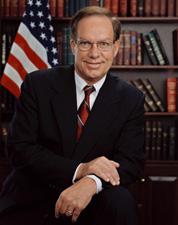
Mr. President, today I am introducing a bill to fully authorize the necessary funds needed to complete the construction of a new VA medical facility near Denver, CO. I am joined by my colleague…
Mr. President, today I am introducing a bill to fully authorize the necessary funds needed to complete the construction of a new VA medical facility near Denver, CO. I am joined by my colleague Senator Salazar on this important legislation. Thankfully, Congress authorized approximately 16 percent of the needed funds for this project last year in order to finalize planning and site acquisition. That is a promising start that enables the project planners to begin the serious business of building this hospital. Although this was a tremendous step forward, there is still a great deal more that needs to be accomplished in order for this hospital to become a reality.
The current Denver VA hospital was built ``more than 50 years ago and as we are all well aware, medical technology has far surpassed what the builders of the Denver VA originally envisioned. This facility, which hosted the first liver transplant in 1963, has provided tremendous care over the years, but simply does not have the infrastructure to continue to provide our veterans the care they need in the 21st century. While I cannot say enough about the care and service our veterans receive at the current facility, many changes and improvements can and should be made, and a new facility is the only way to accomplish these goals.
This new VA hospital to be located at Fitzsimons campus and the former home of the Fitzsimons Army Medical Center will carry on a strong tradition of providing exceptional medical care for our Nation's best and bravest citizens. The current Fitzsimons campus first began treating wounded veterans in 1918, specializing in assisting those who had been victims of chemical weapons in world War I. The facility continued to grow through the 20th century and became one of the premiere Veterans hospitals through World War II. Fitzsimons was even unofficially deemed the ``White House of the West'' when President Eisenhower spent 7 weeks in the facility while recovering from a heart condition in 1955. Fitzsimons Hospital was even the birthplace of my colleague, Senator Kerry.
The new facility will provide an example of successful collaboration between numerous parties and will be the culmination of years of hard work. The Denver VA, the University of Colorado Health Sciences Center and the University of Colorado Hospital already have a complex and rewarding partnership in meeting veterans' healthcare needs in the region, and all are partnered together on this unique project. The University of Colorado, who currently owns the land for the new hospital, strongly supports the move of the existing Denver VA medical facility to the Fitzsimons Campus in Aurora, CO, and looks forward to strengthening their partnership with the Veterans Administration, allowing each entity to focus on its strengths.
Of course, the biggest endorsement of this new facility comes ultimately from the end-users: our veterans. The United Veterans Committee of Colorado, a coalition of 45 federally chartered veterans' service organizations, strongly supports the relocation of the Denver VA medical center to the Fitzsimons campus and has worked closely with my office and the Colorado congressional delegation over the years to ensure its success.
Of course, not too long ago it looked like this project was in peril. Thankfully, in 2005 Secretary Nicholson brought a much-needed, fresh perspective to this project. He made it a priority and made it clear to the entire Colorado delegation that he would pursue every opportunity to make the project a reality. I commend his efforts and thank him for his support. It is also important to mention the hard work and diligence of those in Colorado who have also worked to ensure the success of this new hospital. Without the extraordinary efforts put forth by the Fitzsimons Redevelopment Authority and its chairman, city of Aurora Mayor Ed Tauer, an agreement would not have been reached on the ultimate location of the Hospital.
I strongly support authorization of this hospital and look forward to seeing the completion of the new VA medical facility which undoubtedly will serve as a regional beacon for modern veteran medical care science not only for veterans in Colorado but throughout the entire Rocky Mountain region as well.
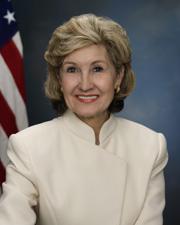
Mr. President, I rise today to acknowledge the lifetime achievements of my dear friend Dr. Michael Ellis DeBakey, a public servant and world-renowned cardiologist, by re-introducing legislation to…
Mr. President, I rise today to acknowledge the lifetime achievements of my dear friend Dr. Michael Ellis DeBakey, a public servant and world-renowned cardiologist, by re-introducing legislation to award him the Congressional Gold Medal.
Throughout his life, Dr. DeBakey has made numerous advances in the field of
medicine. When he was only 23 years of age and still attending medical school, Dr. DeBakey developed a roller pump for blood transfusions--the precursor and major component of the heart-lung machine used in the first open-heart operation. This device later led to national recognition for his expertise in vascular disease. His service to our country did not stop there.
Dr. DeBakey put his practice on hold and volunteered for military service during World War II with the Surgeon General's staff. During this time, he received the rank of Colonel and Chief of Surgical Consultants Division.
As a result of his military and medical experience, Dr. DeBakey made numerous recommendations to improve the military's medical procedures. His efforts led to the development of mobile army surgical hospitals, better known as MASH units, which earned him the Legion of Merit in 1945.
After WWII, Dr. DeBakey continued his hard work by proposing national and specialized medical centers for those soldiers who were wounded or needed follow-up treatment. This recommendation evolved into the Veterans Affairs Medical Center System and the establishment of the commission on Veterans Medical Problems of the National Research Council.
In 1948, Dr. DeBakey joined the Baylor University College of Medicine, where he started its first surgical residency program and was later elected the first President of Baylor College of Medicine.
Adding to his list of accomplishments, Dr. DeBakey performed the first successful procedure to treat patients with aneurysms. In 1964, Dr. DeBakey performed the first successful coronary bypass surgery, opening the doors for surgeons to perform preventative procedures to save the lives of many people with heart disease. He was also the first to successfully use a partial artificial heart. Later that same year, President Lyndon B. Johnson appointed Dr. DeBakey as Chairman of the President's Commission on Heart Disease, Cancer and Stroke, which led to the creation of Regional Medical Programs. These programs coordinate medical schools, research institutions and hospitals to enhance research and training.
Dr. DeBakey continued to amaze the medical world when he pioneered the field of telemedicine by performing the first open-heart surgery transmitted over satellite and then supervised the first successful multi-organ transplant, where a heart, both kidneys and a lung were transplanted from a single donor into four separate recipients.
These accomplishments have led to national recognition. Dr. DeBakey has received both the Presidential Medal of Freedom with Distinction from President Johnson and the National Medal of Science from President Ronald Reagan.
Recently, Dr. DeBakey worked with NASA engineers to develop the DeBakey Ventricular Assist Device, which may eliminate the need for some patients to receive heart transplants.
I stand here today to acknowledge Dr. DeBakey's invaluable work and significant contribution to medicine by offering a bill to award him the Congressional Gold Medal. His efforts and innovative surgical techniques have since saved the lives of thousands, if not millions, of people. I ask my Senate colleagues to join me in recognizing the profound impact this man has had on medical advances, the delivery of medicine and how we care for our Veterans. Although, Dr. DeBakey is not a native of Texas, he has made Texas proud. He has guided the Baylor College of Medicine and the city of Houston into becoming a world leader in medical advancement. On behalf of all Texans, I thank Dr. DeBakey for his lifetime of commitment and service, not only to the medical community, but to the world.
I ask unanimous consent that the text of the bill be printed in the Record.
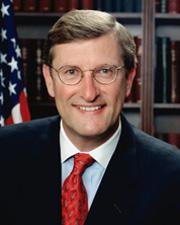
Mr. President, 5 years ago, I formed the bipartisan Task Force on Tribal Colleges and Universities to raise awareness of the important role that the tribal colleges and universities play in their…
Mr. President, 5 years ago, I formed the bipartisan Task Force on Tribal Colleges and Universities to raise awareness of the important role that the tribal colleges and universities play in their respective communities as educational, economic, and cultural centers. The Task Force seeks to advance initiatives that help improve the quality education the colleges provide.
For more than 3 decades, tribal colleges have been providing a quality education to help Native Americans of all ages reach their fullest potential. More than 30,000 students from 250 tribes nationwide attend tribal colleges. Tribal colleges serve young people preparing to enter the job market, dislocated workers learning new skills, and people seeking to move off welfare. I am a strong supporter of our Nation's tribal colleges because, more than any other factor, they are bringing hope and opportunity to America's Indian communities.
Over the years, I have met with many tribal college students, and I am always impressed by their commitment to their education, their families and their communities. Tribal colleges and universities have been highly successful in helping Native Americans obtain a higher education. Congress has recognized the importance of these institutions and the significant gains they have achieved in helping more individuals obtain their education. While Congress has steadily increased its financial support of these institutions, many challenges still remain.
One of the challenges that the tribal college presidents have expressed to me is the frustration and difficulty they have in attracting qualified individuals to teach at the colleges. Recruitment and retention are difficult for many of the colleges because of their geographic isolation and low faculty salaries.
To help tackle the challenges of recruiting and retaining qualified faculty, I am introducing the Tribal Colleges and Universities Faculty Loan Forgiveness Act. This legislation will provide student loan forgiveness to individuals who commit to teach for up to five years in one of the tribal colleges nationwide. Individuals who have Perkins, Direct, or Guaranteed loans may qualify to receive up to $15,000 in loan forgiveness. This will provide these institutions with extra help in attracting qualified faculty, and thus help ensure that deserving students receive a quality education. Finally, the bill also includes loan forgiveness for nursing instructors at the few tribal colleges with accredited nursing programs. Nursing instructors currently receive loans through the Department of Health and Human Services for their training. As a result, without the added provision in this bill, they would not qualify for assistance.
I would be remiss if I did not recognize that former Senator Daschle was responsible for spearheading this initiative for a number of years. The tribal colleges lost a true champion, but I am pleased to carry forward his vision and support for the colleges.
I am pleased that Senators Domenici, Dorgan, McCain, Bingaman, Kohl and Thune are original cosponsors of this bill, and I look forward to working with my colleagues to pass this important legislation.
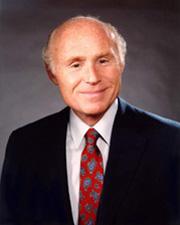
Mr. President, I rise today to introduce the Antitrust Modernization Commission Extension Act of 2007. This legislation will ensure that the Commission is able to finalize its report examining the…
Mr. President, I rise today to introduce the Antitrust Modernization Commission Extension Act of 2007. This legislation will ensure that the Commission is able to finalize its report examining the state of the Nation's antitrust laws in a timely manner by granting it a brief 30 day extension to close out its operations. I thank my co- sponsors Senators Hatch and Specter for joining me in introducing this measure.
Congress established the Antitrust Modernization Commission through the passage of the Antitrust Modernization Act of 2002. The Commission's purpose was to ``examine whether the need exists to modernize the antitrust laws'' of our Nation. In fulfillment of this purpose the Commission is now finalizing a comprehensive report due to both Congress and the President by April 2, 2007. Currently, the Commission expects the report to be submitted in a timely manner. The Commission is concerned, however, with the sufficiency of the statutorily required 30 day deadline to dismantle itself following the submission of the report.
In order to comply with the current statutory framework and shut down operations within 30 days of the report's submission date, the Commission will need to begin archiving its records prior to its completion of the report. This large administrative undertaking will interfere with the Commission's final efforts on the report given the Commission's very limited staff resources. In view of the importance of the report, it is imperative that no aspect of this report be jeopardized by administrative deadlines. To alleviate this burden on the closing operations of the Commission, I am introducing this legislation to extend the Commission's administrative shutdown period from 30 days to 60 days.
Granting an additional 30 days to the Commission will provide it with time to archive Commission records and work product, while allowing it to perform other necessary close-out tasks, including the transfer of its acquired property to other government agencies, without interfering with the completion of its report. Furthermore, the time extension requested does not contemplate the appropriation of any additional funding to the Commission. In fact, the Commission expects that it will likely return at least $500,000 to the Treasury of the $4 million allocated to it upon fulfillment of its purpose. This 30 day extension is merely directed at the administrative process of wrapping up operations.
I urge my colleagues to support this legislation that will effectively and efficiently allow the Antitrust Modernization Commission to complete its designated tasks.
I ask unanimous consent that the text of the bill be printed in the Record.
Mr. President, today Senator Allard and I are introducing a bill that will authorize full funding for a state-of-the- art veterans' hospital at the Fitzsimons campus in Aurora, CO. This crown jewel…
Mr. President, today Senator Allard and I are introducing a bill that will authorize full funding for a state-of-the- art veterans' hospital at the Fitzsimons campus in Aurora, CO.
This crown jewel of our veterans' health system will serve more than 424,000 veterans who live in Colorado, and many more who live in nearby States, with the best available health care. Our veterans deserve the best, and Fitzsimons will be the best.
Since the VA identified the Fitzsimons VA Hospital as one of its top medical construction projects in 2004, I have fought to move this project forward, although we've encountered some hurdles along the way.
But we are making progress. I helped bring all the stakeholders together in 2005 so that supporters of the project, and advocates for veterans' health care, could speak with one voice on Fitzsimons. Thanks in part to this dialogue, in February of 2006 the VA finally reached agreement with the Fitzsimons Authority on the purchase price of 24 acres at the site.
And just 2 months ago, in December, I was pleased that the omnibus veterans' bill we passed, S. 3421, included a $98 million authorization for Fitzsimons that was so desperately needed to keep the project on track. Senator Allard and I fought hard for that authorization because it allowed the VA to use unspent project funds from previous years, and to begin spending more on the critical initial phases of the project.
Today, Senator Allard and I are introducing a bill that will complete the authorization for Fitzsimons VA Hospital. Our bill authorizes the remaining $523 million necessary to complete the project. It is a straightforward bill that we should pass as soon as possible to ensure we don't run into any costly construction delays down the road.
I spoke with Secretary Nicholson about this project just last week, and he reiterated his commitment to getting this project done as soon as possible. Just as the VA must keep Fitzsimons at the top of its priority list, so too should Congress do its part by completing the authorization for the project.
I look forward to the day when our veterans can enjoy the benefits of a new state-of-the-art facility at Fitzsimons. They have more than earned the high quality care they will receive there, and I urge this body to keep the project on track by passing this bill as soon as possible.
Mr. President, I am pleased to reintroduce a bill today with my colleague, Senator Craig to formally convey title a portion of the American Falls Reservoir District from the Bureau of Reclamation to…
Mr. President, I am pleased to reintroduce a bill today with my colleague, Senator Craig to formally convey title a portion of the American Falls Reservoir District from the Bureau of Reclamation to the National Park Service in our home State of Idaho.
The Minidoka Internment National Monument Draft General Management Plan and Environment Impact Statement proposes, the transfer of these two publicly owned parcels of land, which are both within and adjacent to the existing 73-acre NPS boundary, and have been identified as important for inclusion as part of the Monument. The sites were both within the original 33,000-acre Minidoka Relocation Center that was operated by the War Relocation Authority, where approximately 13,500 Japanese and Japanese Americans were held from 1942 through 1945.
The smaller 2.31-acre parcel is located in the center of the monument in the old warehouse area and includes three historical buildings and other important cultural features. The Draft General Management Plan proposes to use this site for visitor services, including a Visitor Contact Station within an original warehouse to greet visitors and provide orientation for the monument. The other, a 7.87-acre parcel, is on the east end of the monument and was undeveloped during WWII. The NPS proposes to use this area for special events and to provide a site for the development of a memorial for the Issei, first-generation Japanese immigrants. These two publicly-owned properties are critical for long-term development, visitor services, and protection and preservation of historical structures and features at Minidoka Internment National Monument.
I would like to add that this legislation was developed with and is strongly supported by both the agencies involved and the local communities. I ask my colleagues to join me in enacting this small land transfer that we might move a step closer toward properly memorializing an important, but often forgotten, chapter of our Nation's history.
I ask unanimous consent that the text of the bill be printed in the Record.
Mr. President, I am pleased to reintroduce a bill today with my colleague, Senator Craig to formally convey title a portion of the American Falls Reservoir District from the Bureau of Reclamation to…
Mr. President, I am pleased to reintroduce a bill today with my colleague, Senator Craig to formally convey title a portion of the American Falls Reservoir District from the Bureau of Reclamation to the National Park Service in our home State of Idaho.
The Minidoka Internment National Monument Draft General Management Plan and Environment Impact Statement proposes, the transfer of these two publicly owned parcels of land, which are both within and adjacent to the existing 73-acre NPS boundary, and have been identified as important for inclusion as part of the Monument. The sites were both within the original 33,000-acre Minidoka Relocation Center that was operated by the War Relocation Authority, where approximately 13,500 Japanese and Japanese Americans were held from 1942 through 1945.
The smaller 2.31-acre parcel is located in the center of the monument in the old warehouse area and includes three historical buildings and other important cultural features. The Draft General Management Plan proposes to use this site for visitor services, including a Visitor Contact Station within an original warehouse to greet visitors and provide orientation for the monument. The other, a 7.87-acre parcel, is on the east end of the monument and was undeveloped during WWII. The NPS proposes to use this area for special events and to provide a site for the development of a memorial for the Issei, first-generation Japanese immigrants. These two publicly-owned properties are critical for long-term development, visitor services, and protection and preservation of historical structures and features at Minidoka Internment National Monument.
I would like to add that this legislation was developed with and is strongly supported by both the agencies involved and the local communities. I ask my colleagues to join me in enacting this small land transfer that we might move a step closer toward properly memorializing an important, but often forgotten, chapter of our Nation's history.
I ask unanimous consent that the text of the bill be printed in the Record.
Show 2 more

Mr. President, I am pleased to be joined by my good friend and colleague from Wisconsin, Senator Feingold in once again introducing legislation to replace the Federal Election Commission (FEC) with…
Mr. President, I am pleased to be joined by my good friend and colleague from Wisconsin, Senator Feingold in once again introducing legislation to replace the Federal Election Commission (FEC) with the Federal Election Administration (FEA). The FEA would serve as an independent body to enforce Federal campaign laws-- something the FEC has been unable, and often unwilling, to do.
This legislation would terminate the FEC and establish a new regulatory entity. Using a new organizational structure and administrative law judges, we hope to avoid the routine partisan deadlocks that are now so prevalent at the FEC.
This bill would authorize the new FEA to impose civil penalties, issue cease and desist orders, report apparent criminal violations to the appropriate law enforcement authorities, and conduct audits and field examinations of campaign committees. Finally, this bill would direct the Comptroller General to examine and report to Congress on the enforcement of the criminal provisions of the Federal campaign finance laws.
I urge my colleagues to support this common sense reform proposal.
Mr. President, I rise today to with Senator Bingaman to introduce legislation that provides resources that the U.S. Marshals Service desperately needs for their role in improving the security of our…
Mr. President, I rise today to with Senator Bingaman to introduce legislation that provides resources that the U.S. Marshals Service desperately needs for their role in improving the security of our borders and enforcing our immigration laws.
Our U.S. Marshals are involved in several aspects of immigration matters, including helping to transport criminal immigrants and guarding them in federal courthouses. As we improve border security and interior enforcement, our Marshals need increased staff to handle the increased caseload that will be associated with those improvements.
Therefore, my legislation calls for hiring 50 new deputies each year for five years. Increasing the number of Deputy U.S. Marshals by 250 new law enforcers will make a great impact on this service that is stretched thin in their role relating to border security and immigration enforcement. Without such legislation, we will only be adding to the workload of our already thinly-stretched Marshals Service.
I ask unanimous consent that the text of the bill be printed in the Record.
Bill Text
Latest available legislative text
        [Congressional Bills 110th Congress]
[From the U.S. Government Publishing Office]
[S. 477 Introduced in Senate (IS)]

<DOC>

110th CONGRESS
1st Session
S. 477

To authorize the Secretary of the Interior to convey certain land and
improvements of the Gooding Division of the Minidoka Project, Idaho.

_______________________________________________________________________

IN THE SENATE OF THE UNITED STATES

February 1, 2007

Mr. Crapo (for himself and Mr. Craig) introduced the following bill;
which was read twice and referred to the Committee on Energy and
Natural Resources

_______________________________________________________________________

A BILL

To authorize the Secretary of the Interior to convey certain land and
improvements of the Gooding Division of the Minidoka Project, Idaho.

Be it enacted by the Senate and House of Representatives of the
United States of America in Congress assembled,

SECTION 1. SHORT TITLE.

This Act may be cited as the ``American Falls Reservoir District
Number 2 Conveyance Act''.

SEC. 2. DEFINITIONS.

In this Act:
(1) Agreement.--The term ``Agreement'' means Agreement No.
5-07-10-L1688 between the United States and the District,
entitled ``Agreement Between the United States and the American
Falls Reservoir District No. 2 to Transfer Title to the
Federally Owned Milner-Gooding Canal and Certain Property
Rights, Title and Interest to the American Falls Reservoir
District No. 2''.
(2) District.--The term ``District'' means the American
Falls Reservoir District No. 2, located in Jerome, Lincoln, and
Gooding Counties, Idaho.
(3) Secretary.--The term ``Secretary'' means the Secretary
of the Interior.

SEC. 3. AUTHORITY TO CONVEY TITLE.

(a) In General.--In accordance with all applicable law and the
terms and conditions set forth in the Agreement, the Secretary may
convey--
(1) to the District all right, title, and interest in and
to the land and improvements described in Appendix A of the
Agreement, subject to valid existing rights;
(2) to the city of Gooding, located in Gooding County,
Idaho, all right, title, and interest in and to the 5.0 acres
of land and improvements described in Appendix D of the
Agreement; and
(3) to the Idaho Department of Fish and Game all right,
title, and interest in and to the 39.72 acres of land and
improvements described in Appendix D of the Agreement.
(b) Compliance With Agreement.--All parties to the conveyance under
subsection (a) shall comply with the terms and conditions of the
Agreement, to the extent consistent with this Act.

SEC. 4. TRANSFER.

As soon as practicable after the date of enactment of this Act, the
Secretary shall direct the Director of the National Park Service to
include in and manage as a part of the Minidoka Internment National
Monument the 10.18 acres of land and improvements described in Appendix
D of the Agreement.

SEC. 5. COMPLIANCE WITH OTHER LAWS.

(a) In General.--On conveyance of the land and improvements under
section 3(a)(1), the District shall comply with all applicable Federal,
State, and local laws (including regulations) in the operation of each
facility transferred.
(b) Applicable Authority.--Nothing in this Act modifies or
otherwise affects the applicability of Federal reclamation law (the Act
of June 17, 1902 (32 Stat. 388, chapter 1093), and Acts supplemental to
and amendatory of that Act (43 U.S.C. 371 et seq.)) to project water
provided to the District.

SEC. 6. REVOCATION OF WITHDRAWALS.

(a) In General.--The portions of the Secretarial Orders dated March
18, 1908, October 7, 1908, September 29, 1919, October 22, 1925, March
29, 1927, July 23, 1927, and May 7, 1963, withdrawing the approximately
6,900 acres described in Appendix E of the Agreement for the purpose of
the Gooding Division of the Minidoka Project, are revoked.
(b) Management of Withdrawn Land.--The Secretary, acting through
the Director of the Bureau of Land Management, shall manage the
withdrawn land described in subsection (a) subject to valid existing
rights.

SEC. 7. LIABILITY.

(a) In General.--Subject to subsection (b), upon completion of a
conveyance under section 3, the United States shall not be liable for
damages of any kind for any injury arising out of an act, omission, or
occurrence relating to the land (including any improvements to the
land) conveyed under the conveyance.
(b) Exception.--Subsection (a) shall not apply to liability for
damages resulting from an injury caused by any act of negligence
committed by the United States (or by any officer, employee, or agent
of the United States) before the date of completion of the conveyance.
(c) Federal Tort Claims Act.--Nothing in this section increases the
liability of the United States beyond that provided in chapter 171 of
title 28, United States Code.

SEC. 8. FUTURE BENEFITS.

(a) Responsibility of the District.--After completion of the
conveyance of land and improvements to the District under section
3(a)(1), and consistent with the Agreement, the District shall assume
responsibility for all duties and costs associated with the operation,
replacement, maintenance, enhancement, and betterment of the
transferred land (including any improvements to the land).
(b) Eligibility for Federal Funding.--
(1) In general.--Except as provided in paragraph (2), the
District shall not be eligible to receive Federal funding to
assist in any activity described in subsection (a) relating to
land and improvements transferred under section 3(a)(1).
(2) Exception.--Paragraph (1) shall not apply to any
funding that would be available to a similarly situated
nonreclamation district, as determined by the Secretary.

SEC. 9. NATIONAL ENVIRONMENTAL POLICY ACT.

Before completing any conveyance under this Act, the Secretary
shall complete all actions required under--
(1) the National Environmental Policy Act of 1969 (42
U.S.C. 4321 et seq.);
(2) the Endangered Species Act of 1973 (16 U.S.C. 1531 et
seq.);
(3) the National Historic Preservation Act (16 U.S.C. 470
et seq.); and
(4) all other applicable laws (including regulations).

SEC. 10. PAYMENT.

(a) Fair Market Value Requirement.--As a condition of the
conveyance under section 3(a)(1), the District shall pay the fair
market value for the withdrawn lands to be acquired by them, in
accordance with the terms of the Agreement.
(b) Grant for Building Replacement.--As soon as practicable after
the date of enactment of this Act, and in full satisfaction of the
Federal obligation to the District for the replacement of the structure
in existence on that date of enactment that is to be transferred to the
National Park Service for inclusion in the Minidoka Internment National
Monument, the Secretary, acting through the Commission of Reclamation,
shall provide to the District a grant in the amount of $52,996, in
accordance with the terms of the Agreement.
<all>