Madam President, this bipartisan legislation makes technical changes to legislation I previously introduced, S. 487, along with Senators Bond, Dorgan, Graham, Durbin, Mikulski, Pryor, Cardin,…
Madam President, this bipartisan legislation makes technical changes to legislation I previously introduced, S. 487, along with Senators Bond, Dorgan, Graham, Durbin, Mikulski, Pryor, Cardin, Isakson, Coleman, Brown, and Chambliss and which passed the Senate on July 9, 2007. Companion legislation, H.R. 710, was introduced in the House by Representatives Charles Norwood and Jay Inslee,
where the bill was renamed in honor of Representative Norwood, a longtime advocate of organ donation, following his passing on February 13, 2007. This legislation, which applied only to kidneys when first introduced, was subsequently broadened in a Senate substitute amendment I offered and the Senate adopted unanimously on July 9, 2007. The legislation was broadened to include paired donation of other organs as the field of transplantation advances, and in order that those advances not be hindered.
Today, the House has returned the bill passed by the Senate on July 9, 2007, with several technical changes and we are all pleased that with its adoption today and fast-track to the President for his signature, the saving of thousands of lives is on the horizon.
Our legislation will save lives by increasing the number of kidneys and other organs available for transplantation through the process called paired organ donation. It addresses this relatively new procedure, which is supported by numerous medical organizations, including the United Network for Organ Sharing, UNOS, the American Society of Transplant Surgeons, the National Kidney Foundation, the Association of Organ Procurement Organizations, and the American Society of Pediatric Nephrology, as well as many other organ donation and transplant organizations. Paired organ donation, which did not exist when the National Organ Transplant Act, NOTA, was enacted more than two decades ago, will make it possible for thousands of people who wish to donate a kidney or other organ to a spouse, family member or friend, but find that they are medically incompatible, to still become living kidney donors.
In the process of organ paired donation, a donor who is willing to give an organ to a family member or a friend, but is biologically incompatible, donates to another patient, who also has an incompatible donor. By cross-matching two or more incompatible living donor recipient pairs, more patients can receive organs and more donors can give an organ. Paired organ donation results in donor-recipient matching, that would not otherwise occur.
This legislation is necessary because the National Organ Transplant Act, NOTA, which contains a prohibition intended by Congress to preclude purchasing organs, is unintentionally impeding the facilitation of matching incompatible pairs, as just described. Our legislation would simply add paired donation to the list of other living-related donation exemptions that Congress originally placed in NOTA. It removes an unintended impediment to paired donations by clarifying ambiguous language in section 301 of the National Organ Transplant Act, NOTA. That section has been interpreted by a number of transplant centers to prohibit such donations. In section 301 of NOTA, Congress prohibited the buying and selling of organs. Subsection (a), titled ``Prohibition of organ purchases,'' says, ``It shall be unlawful for any person to knowingly acquire, receive, or otherwise transfer any human organ for valuable consideration . . .'' This legislation does not remove or alter any current provision of NOTA, but simply adds a line to section 301 which states that paired kidney donations do not violate it.
Congress surely never intended that the living donation arrangements that permit paired donation be impeded by NOTA. Our bill simply makes that clear. Some transplant professionals involved in these and other innovative living kidney donation arrangements have proceeded in the reasonable belief that these arrangements do not violate section of 301 of NOTA, but they contend that they are doing so under a cloud.
No Federal dollars are needed to implement this change. And, for each patient who receives a kidney, Medicare will save roughly $220,000 in the end-stage-renal disease program because of the significantly lower cost of transplantation compared to dialysis cost. It is essential that we make the intent of Congress explicit so that transplant centers which have hesitated to implement incompatible living kidney donation programs can feel free to do so.
Currently, over 97,000 people are waiting for an organ, including 72,000 who are waiting for a kidney transplant, over 2,600 of whom are in the State of Michigan, as they endure countless hours attached to a life-sustaining dialysis machine hoping that a organ donor will become available before they die. Because of the shortage of available organs, approximately 3,800 people die every year while on the waiting list for a kidney transplant. For them, time is of the essence.
Last but certainly not least, the great success we have achieved here today would not have been possible without the support of my good friend and colleague in the House, Representative John Dingell chair of the House Energy and Commerce Committee and my distinguished and caring colleague in the Senate, Senator Ted Kennedy, chair of the Committee on Health, Education, Labor, and Pensions. In addition, there are those who energetically led the effort in educating Congress on the need for paired donation and they have long been a progressive force in organ donation and transplantation. I thank Dr. Robert M. Merion, professor of surgery at the University of Michigan Transplant Center and secretary of the American Society of Transplant Surgeons, ASTS, as well as Dr. Goran B. Klintmalm from Baylor University Medical Center and president of the ASTS, for their tireless advocacy for this lifesaving legislation. I would also like to thank Dr. Jeff Crippin, director of liver transplants at Washington University in St. Louis, MO, and president of the American Society of Transplantation, AST; Dr. David Briscoe, director of transplant research at Children's Hospital in Boston, Harvard University; Dr. David Cohen, director of kidney transplant, Columbia University; and Bill Lawrence of United Network of Organ Donor Sharing for his steadfast leadership in the cause of organ donor awareness and organ transplantation.
Senate passage and enactment of this legislation is a fitting tribute that honors the memory of six members of the University of Michigan Transplant Team, who died in a tragic plane crash while on an emergency mission to deliver life-saving organs to the University of Michigan Hospital to save the lives of transplant patients.
I would like to share with my colleagues the sentiments expressed by Mary Sue Coleman, President of the University of Michigan, upon learning of the tragic loss of the six members of the University of Michigan Transplant Team. Her remarks, given on June 5, 2007, are as follows:
Our hearts are broken by the devastating and irreplaceable
loss of six members of the Survival Flight transplant team.
Every day, the doctors, nurses and flight personnel of
Survival Flight do heroic work in saving the lives of others,
and that is how we will remember those who perished in
Monday's tragedy--as selfless heroes.
There is no greater act than that of saving a life, and
through our grief, we take comfort in knowing these six men
died in the service of a fellow human being.
Please hold in your hearts David Ashburn, M.D., a fellow
(physician-in-training) in cardiothoracic surgery; Richard
Chenault II, a transplant donation specialist with the U-M
Transplant Program; Dennis Hoyes, a Marlin air pilot; Rick
Lapensee, a transplant donation specialist with the U-M
Transplant Program; Bill Serra, a Marlin air pilot; and
Martinus (Martin) Spoor, M.D., a cardiac surgeon who had been
on the U-M faculty since 2003.
Our thoughts and prayers are with their families, friends
and colleagues.
Finally, I would also like to share an excerpt from a letter I received from Dr. Robert Merion regarding his cherished colleagues and friends who were members of the University of Michigan Transplant Team, as follows:
All of my colleagues who perished in that horrible crash
were committed to organ donation. In fact, the U.S.
Department of Health and Human Services awarded one of them,
Richard Chenault II, its Medal of Honor in 2006 for his
successful efforts to increase organ donation at the
University of Michigan. All six of these fine men would have
been extraordinarily proud to know that their names were
being invoked to stimulate final passage of a bill that will
provide the gift of life to so many others.
I commend the Senate on the passage of this much-needed legislation and look forward to the President signing it in the days ahead.
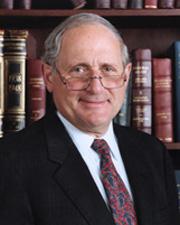 Sen. Carl Levin (D-MI)