Stem Cell Research Enhancement Act of 2007

Legislative Activity
Stay on top of the latest movement without scrolling through every action
Veto message received in Senate. Ordered held at the desk.
June 20, 2007
View full timeline
Introduced in Senate
January 4, 2007
Sponsor introductory remarks on measure. (CR S9-11)
January 4, 2007
Introduced in the Senate. Read the first time. Placed on Senate Legislative Calendar under Read the First Time.
January 4, 2007
Read the second time. Placed on Senate Legislative Calendar under General Orders. Calendar No. 3.
January 8, 2007
Star Print ordered on on the bill.
March 29, 2007
Measure laid before Senate by unanimous consent. (consideration: CR S4237-4294)
April 10, 2007
Considered by Senate. (consideration: CR S4319-4371, S4386-4391)
April 11, 2007
Passed Senate, having acquired the 60 votes required under unanimous consent, without amendment by Yea-Nay Vote. 63 - 34. Record Vote Number: 127. (text as passed Senate: CR S4389-4390)
April 11, 2007
Message on Senate action sent to the House.
April 12, 2007
Received in the House.
April 16, 2007 • 2:05 PM
Held at the desk.
April 16, 2007 • 4:58 PM
Rules Committee Resolution H. Res. 464 Reported to House. Rule provides for consideration of S. 5 with 1 hour of general debate. Previous question shall be considered as ordered without intervening motions. Measure will be considered read. Bill is closed to amendments. All points of order against the bill and against its consideration are waived except those arising under clause 10 of rule XXI. A motion to commit is in order.
June 6, 2007 • 6:46 PM
Rule H. Res. 464 passed House.
June 7, 2007 • 11:53 AM
Considered under the provisions of rule H. Res. 464. (consideration: CR H6125-6143)
June 7, 2007 • 11:54 AM
Rule provides for consideration of S. 5 with 1 hour of general debate. Previous question shall be considered as ordered without intervening motions. Measure will be considered read. Bill is closed to amendments. All points of order against the bill and against its consideration are waived except those arising under clause 10 of rule XXI. A motion to commit is in order.
June 7, 2007 • 11:54 AM
DEBATE - The House proceeded with one hour of debate on S. 5.
June 7, 2007 • 11:57 AM
The previous question was ordered pursuant to the rule. (consideration: CR H6141)
June 7, 2007 • 1:20 PM
Mr. Gingrey moved to commit with instructions to Energy and Commerce. (consideration: CR H6141-6142)
June 7, 2007 • 1:21 PM
DEBATE - The House proceeded with 10 minutes of debate on the Gingrey motion to commit with instructions. The instructions contained in the motion seek to require the bill to be reported back to the House with an amendment in the nature of a substitute inserting a complete new text entitled "Alternative Pluripotent Stem Cell Therapies Enhancement Act of 2007."
June 7, 2007 • 1:22 PM
The previous question on the motion to commit with instructions was ordered without objection. (consideration: CR H6142-6143; text: H6141)
June 7, 2007 • 1:33 PM
On motion to commit with instructions Failed by the Yeas and Nays: 180 - 242 (Roll no. 442).
June 7, 2007 • 1:57 PM
Passed/agreed to in House: On passage Passed by the Yeas and Nays: 247 - 176 (Roll no. 443).(text: CR H6125)
June 7, 2007 • 2:04 PM
On passage Passed by the Yeas and Nays: 247 - 176 (Roll no. 443). (text: CR H6125)
June 7, 2007 • 2:04 PM
Motion to reconsider laid on the table Agreed to without objection.
June 7, 2007 • 2:04 PM
Cleared for White House.
June 7, 2007
Presented to President.
June 12, 2007
Vetoed by President.(text of veto message: CR S8060-8061)
June 20, 2007
Vetoed by President. (text of veto message: CR S8060-8061)
June 20, 2007
Veto message received in Senate. Ordered held at the desk.
June 20, 2007
Voting History
3 votes recorded • Roll call available
HOUSE
Roll Call AvailableJune 7, 2007 at 2:04 PM
On Passage
Majority required: 1/2 (50%)
247 - 176
HOUSE
Roll Call AvailableJune 7, 2007 at 1:57 PM
On Motion to Commit with Instructions
Majority required: 1/2 (50%)
180 - 242
SENATE
Roll Call AvailableApril 11, 2007 at 5:53 PM
On Passage of the Bill S. 5
Majority required: 3/5 (60%)
63 - 34
Floor Debate
21 membersWhat members said about S. 5 on the floor
 DKI
DKI SB
SB JFK
JFK JM
JM TH+16
TH+16
Floor Debate
21 membersWhat members said about S. 5 on the floor
Mr. President, I rise today to introduce the Rural Preventive Health Care Training Act, a bill that responds to the dire need of our rural communities for quality health care and disease prevention…
Mr. President, I rise today to introduce the Rural Preventive Health Care Training Act, a bill that responds to the dire need of our rural communities for quality health care and disease prevention programs. Almost one fourth of Americans live in rural areas and frequently lack access to adequate physical and mental health care. As many as 21 million of the 34 million people living in underserved rural areas are without access to a primary care provider. Even in areas where providers do exist, there are numerous limits to access, such as geography, distance, lack of transportation, and lack of knowledge about available resources. Due to the diversity of rural populations, language and cultural obstacles are often a factor in the access to medical care.
Compound these problems with limited financial resources, and the result is that many Americans living in rural communities go without vital health care, especially preventive care. Children fail to receive immunizations and routine checkups. Preventable illnesses and injuries occur needlessly, and lead to expensive hospitalizations. Early symptoms of emotional problems and substance abuse go undetected, and often develop into full-blown disorders.
An Institute of Medicine (IOM) report entitled, ``Reducing Risks for Mental Disorders: Frontiers for Preventive Intervention Research,'' highlights the benefits of preventive care for all health problems. The training of health care providers in prevention is crucial in order to meet the demand for care in underserved areas. Currently, rural
health care providers lack preventive care training opportunities.
Interdisciplinary preventive training of rural health care providers must be encouraged. Through such training, rural health care providers can build a strong educational foundation from the behavioral, biological, and psychological sciences. Interdisciplinary team prevention training will also facilitate operations at sites with both health and mental health clinics by facilitating routine consultation between groups. Emphasizing the mental health disciplines and their services as part of the health care team will contribute to the overall health of rural communities.
The Rural Preventive Health Care Training Act would implement the risk-reduction model described in the IOM study. This model is based on the identification of risk factors and targets specific interventions for those risk factors. The human suffering caused by poor health is immeasurable, and places a huge financial burden on communities, families, and individuals. By implementing preventive measures to reduce this suffering, the potential psychological and financial savings are enormous.
I ask unanimous consent that the text of this bill be printed in the Record.
Mr. President, today I introduce the Nursing School Clinics Act. This measure builds on our concerted efforts to provide access to quality health care for all Americans by offering grants and incentives for nursing schools to establish primary care clinics in underserved areas where additional medical services are most needed. In addition, this measure provides the opportunity for nursing schools to enhance the scope of student training and education by providing firsthand clinical experience in primary care facilities.
Primary care clinics administered by nursing schools are university or nonprofit primary care centers developed mainly in collaboration with university schools of nursing and the communities they serve. These centers are staffed by faculty and staff who are nurse practitioners and public health nurses. Students supplement patient care while receiving preceptorships provided by college of nursing faculty and primary care physicians, often associated with academic institutions, who serve as collaborators with nurse practitioners. To date, the comprehensive models of care provided by nursing clinics have yielded excellent results, including significantly fewer emergency room visits, fewer hospital inpatient days, and less use of specialists, as compared to conventional primary health care.
This bill reinforces the principle of combining health care delivery in underserved areas with the education of advanced practice nurses. To accomplish these objectives, Title XIX of the Social Security Act would be amended to designate that the services provided in these nursing school clinics are reimbursable under Medicaid. The combination of grants and the provision of Medicaid reimbursement furnishes the financial incentives for clinic operators to establish the clinics.
In order to meet the increasing challenges of bringing cost-effective and quality health care to all Americans, we must consider a wide range of proposals, both large and small. Most importantly, we must approach the issue of health care with creativity and determination, ensuring that all reasonable avenues are pursued. Nurses have always been an integral part of health care delivery. The Nursing School Clinics Act recognizes the central role nurses can perform as care givers to the medically underserved.
I ask unanimous consent that the text of this bill be printed in the Record.
Mr. President, almost twelve years ago, I stood before you to introduce a bill ``to provide an opportunity for the Pottawatomi Nation in Canada to have the merits of their claims against the United States determined by the United States Court of Federal Claims.''
That bill was introduced as Senate Resolution 223, which referred the Pottawatomi's claim to the Chief Judge of the U.S. Court of Federal Claims and required the Chief Judge to report back to the Senate and provide sufficient findings of fact and conclusions of law to enable the Congress to determine whether the claim of the Pottawatomi Nation in Canada is legal or equitable in nature, and the amount of damages, if any, which may be legally or equitably due from the United States.
Seven years ago, the Chief Judge of the Court of Federal Claims reported back that the Pottawatomi Nation in Canada has a legitimate and credible legal claim. Thereafter, by settlement stipulation, the United States has taken the position that it would be ``fair, just and equitable'' to settle the claims of the Pottawatomi Nation in Canada for the sum of $1,830,000. This settlement amount was reached by the parties after seven years of extensive, fact-intensive litigation. Independently, the court concluded that the settlement amount is ``not a gratuity'' and that the ``settlement was predicated on a credible legal claim.'' Pottawatomi Nation in Canada, et al. v. United States, Cong. Ref. 94-1037X at 28 (Ct. Fed. Cl., September 15, 2000) (Report of Hearing Officer).
The bill I introduce today is to authorize the appropriation of those funds that the United States has concluded would be ``fair, just and equitable'' to satisfy this legal claim. If enacted, this bill will finally achieve a measure of justice for a tribal nation that has for far too long been denied.
For the information of our colleagues, this is the historical background that informs the underlying legal claim of the Canadian Pottawatomi.
The members of the Pottawatomi Nation in Canada are one of the descendant groups--successors-in-interest--of the historical Pottawatomi Nation and their claim originates in the latter part of the 18th century. The historical Pottawatomi Nation was aboriginal to the United States. They occupied and possessed a vast expanse in what is now the States of Ohio, Michigan, Indiana, llinois, and Wisconsin. From 1795 to 1833, the United States annexed most of the traditional land of the Pottawatomi Nation through a series of treaties of cession--many of these cessions were made under extreme duress and the threat of military action. In exchange, the Pottawatomis were repeatedly made promises that the remainder of their lands would be secure and, in addition, that the United States would pay certain annuities to the Pottawatomi.
In 1829, the United States formally adopted a Federal the policy of removal--an effort to remove all Indian tribes from their traditional lands east of the Mississippi River to the west. As part of that effort, the government increasingly pressured the Pottawatomis to cede the remainder of their traditional lands--some five million acres in and around the city of Chicago and remove themselves west. For years, the Pottawatomis steadfastly refused to cede the remainder of their tribal territory. Then in 1833, the United States, pressed by settlers seeking more land, sent a Treaty Commission to the Pottawatomi with orders to extract a cession of the remaining lands. The Treaty Commissioners spent 2 weeks using extraordinarily coercive tactics-- including threats of war--in an attempt to get the Pottawatomis to agree to cede their territory. Finally, those Pottawatomis who were present relented and on September 26, 1933, they ceded their remaining tribal estate through what would be known as the Treaty of Chicago. Seventy-seven members of the Pottawatomi Nation signed the Treaty of Chicago. Members of the ``Wisconsin Band'' were not present and did not assent to the cession.
In exchange for their land, the Treaty of Chicago provided that the United States would give to the Pottawatomis 5 million acres of comparable land in what is now Missouri. The Pottawatomi were familiar with the Missouri land, aware that it was similar to their homeland. But the Senate refused to ratify that negotiated agreement and unilaterally switched the land to five million acres in Iowa. The Treaty Commissioners were sent back to acquire Pottawatomi assent to the Iowa land. All but seven of the original 77 signatories refused to accept the change even with promises that if they were dissatisfied ``justice would be done.''
Treaty of Chicago, as amended, Article 4. Nevertheless, the Treaty of Chicago was ratified as amended by the Senate in 1834. Subsequently, the Pottawatomis sent a delegation to evaluate the land in Iowa. The delegation reported back that the land was ``not fit for snakes to live on.''
While some Pottawatomis removed westward, many of the Pottawatomis-- particularly the Wisconsin Band, whose leaders never agreed to the Treaty--refused to do so. By 1836, the United States began to forcefully remove Pottawatomis who remained in the east--with devastating consequences. As is true with many other American Indian tribes, the forced removal westward came at great human cost. Many of the Pottawatomi were forcefully removed by mercenaries who were paid on a per capita basis government contract. Over one-half of the Indians removed by these means died en route. Those who reached Iowa were almost immediately removed further to inhospitable parts of Kansas against their will and without their consent.
Knowing of these conditions, many of the Pottawatomis including most of those in the Wisconsin Band vigorously resisted forced removal. To avoid Federal troops and mercenaries, much of the Wisconsin Band ultimately found it necessary to flee to Canada. They were often pursued to the border by government troops, government-paid mercenaries or both. Official files of the Canadian and United States governments disclose that many Pottawatomis were forced to leave their homes without their horses or any of their possessions other than the clothes on their backs.
By the late 1830s, the government refused payment of annuities to any Pottawatomi groups that had not removed west. In the 1860s, members of the Wisconsin Band--those still in their traditional territory and those forced to flee to Canada--petitioned Congress for the payment of their treaty annuities promised under the Treaty of Chicago and all other cession treaties. By the Act of June 25, 1864 (13 Stat. 172) the Congress declared that the Wisconsin Band did not forfeit their annuities by not removing and directed that the share of the Pottawatomi Indians who had refused to relocate to the west should be retained for their use in the United States Treasury. (H.R. Rep. No. 470, 64th Cong., p. 5, as quoted on page 3 of memo dated October 7, 1949.) Nevertheless, much of the money was never paid to the Wisconsin Band.
In 1903, the Wisconsin Band--most of whom now resided in three areas, the States of Michigan and Wisconsin and the Province of Ontario-- petitioned the Senate once again to pay them their fair portion of annuities as required by the law and treaties. (Sen. Doc. No. 185, 57th Cong., 2d Sess.) By the Act of June 21, 1906 (34 Stat. 380), the Congress directed the Secretary of the Interior to investigate claims made by the Wisconsin Band and establish a roll of the Wisconsin Band Pottawatomis that still remained in the East. In addition, the Congress ordered the Secretary to determine ``the[] [Wisconsin Bands] proportionate shares of the annuities, trust funds, and other moneys paid to or expended for the tribe to which they belong in which the claimant Indians have not shared, [and] the amount of such monies retained in the Treasury of the United States to the credit of the clamant Indians as directed the provision of the Act of June 25, 1864.''
In order to carry out the 1906 Act, the Secretary of Interior directed Dr. W.M. Wooster to conduct an enumeration of Wisconsin Band Pottawatomi in both the United States and Canada. Dr. Wooster documented 2007 Wisconsin Pottawatomis: 457 in Wisconsin and Michigan and 1550 in Canada. He also concluded that the proportionate share of annuities for the Pottawatomis in Wisconsin and Michigan was $477,339 and that the proportionate share of annuities due the Pottawatomi Nation in Canada was $1,517,226. The Congress thereafter enacted a series of appropriation Acts from June 30, 1913 to May 29, 1928 to satisfy most of money owed to those Wisconsin Band Pottawatomis residing in the United States. However, the Wisconsin Band Pottawatomis who resided in Canada were never paid their share of the tribal funds.
Since that time, the Pottawatomi Nation in Canada has diligently and continuously sought to enforce their treaty rights, although until this congressional reference, they had never been provided their day in court. In 1910, the United States and Great Britain entered into an agreement for the purpose of dealing with claims between both countries, including claims of Indian tribes within their respective jurisdictions, by creating the Pecuniary Claims Tribunal. From 1910 to 1938, the Pottawatomi Nation in Canada diligently sought to have their claim heard in this international forum. Overlooked for more pressing international matters of the period, including the intervention of World War I, the Pottawatomis then came to the U.S. Congress for redress of their claim.
In 1946, the Congress waived its sovereign immunity and established the Indian Claims Commission for the purpose of granting tribes their long-delayed day in court. The Indian Claims Commission Act (ICCA) granted the Commission jurisdiction over claims such as the type involved here. In 1948, the Wisconsin Band Pottawatomis from both sides of the border--brought suit together in the Indian Claims Commission for recovery of damages. Hannahville Indian Community v. U.S., No. 28 (Ind. Cl. Comm. Filed May 4, 1948). Unfortunately, the Indian Claims Commission dismissed Pottawatomi Nation in Canada's part of the claim ruling that the Commission had no jurisdiction to consider claims of Indians living outside territorial limits of the United States. Hannahville Indian Community v. U.S., 115 Ct. Cl. 823 (1950). The claim of the Wisconsin Band residing in the United States that was filed in the Indian Claims Commission was finally decided in favor of the Wisconsin Band by the U.S. Claims Court in 1983. Hannahville Indian Community v. United States, 4 Ct. Cl. 445 (1983). The Court of Claims concluded that the Wisconsin Band was owed a member's proportionate share of unpaid annuities from 1838 through 1907 due under various treaties, including the Treaty of Chicago and entered judgment for the American Wisconsin Band Pottawatomis for any monies not paid. Still the Pottawatomi Nation in Canada was excluded because of the jurisdictional limits of the ICCA.
Undaunted, the Pottawatomi Nation in Canada came to the Senate and after careful consideration, we finally gave them their long-awaited day in court through the congressional reference process. The court has now reported back to us that their claim is meritorious and that the payment that this bill would make constitutes a ``fair, just and equitable'' resolution to this claim.
The Pottawatomi Nation in Canada has sought justice for over 150 years. They have done all that we asked in order to establish their claim. Now it is time for us to finally live up to the promise our government made so many years ago. It will not correct all the wrongs of the past, but it is a demonstration that this government is willing to admit when it has left unfulfilled an obligation and that the United States is willing to do what we can to see that justice--so long delayed is not now denied.
Finally, I would just note that the claim of the Pottawatomi Nation in Canada is supported through specific resolutions by the National Congress of American Indians, the oldest, largest and most- representative tribal organization here in the United States, the Assembly of First Nations (which includes all recognized tribal entities in Canada), and each and every of the Pottawatomi tribal groups that remain in the United States today.
I ask unanimous consent that the text of this bill be printed in the Record.
Mr. President, many of you know of my continued support and advocacy on the importance of addressing the plight of Filipino World War II veterans. As an American, I believe the treatment of Filipino World War II veterans is bleak and shameful. The Philippines became a United States possession in 1898, when it was ceded by Spain, following the Spanish-American War. In 1934, the Congress enacted the Philippine Independence Act, Public Law 73-127, which provided a 10- year
time frame for the independence of the Philippines. Between 1934 and final independence in 1946, the United States retained certain powers over the Philippines including the right to call military forces organized by the newly-formed Commonwealth government into the service of the United States Armed Forces.
The Commonwealth Army of the Philippines was called to serve with the United States Armed Forces in the Far East during World War II under President Roosevelt's July 26, 1941 military order. The Filipinos who served were entitled to full veterans' benefits by reason of their active service with our armed forces. Hundreds were wounded in battle and many hundreds more died in battle. Shortly after Japan's surrender, the Congress enacted the Armed Forces Voluntary Recruitment Act of 1945 for the purpose of sending Filipino troops to occupy enemy lands, and to oversee military installations at various overseas locations. These troops were authorized to receive pay and allowances for services performed throughout the Western Pacific. Although hostilities had ceased, wartime service of these troops continued as a matter of law until the end of 1946.
Despite all of their sacrifices, on February 18, 1946, the Congress passed the Rescission Act of 1946, now codified as Section 107 of Title 38 of the United States Code. The 1946 Act deemed that the service performed by these Filipino veterans would not be recognized as ``active service'' for the purpose of any U.S. law conferring ``rights, privileges, or benefits.'' Accordingly, Section 107 denied Filipino veterans access to health care, particularly for non-service-connected disabilities, and pension benefits. Section 107 also limited service- connected disability and death compensation for Filipino veterans to 50 percent of what their American counterparts receive.
On May 27, 1946, the Congress enacted the Second Supplemental Surplus Appropriations Rescission Act, which duplicated the language that had eliminated Filipino veterans' benefits under the First Rescission Act. Thus, Filipino veterans who fought in the service of the United States during World War II have been precluded from receiving most of the veterans' benefits that had been available to them before 1946, and that are available to all other veterans of our armed forces regardless of race, national origin, or citizenship status.
The Filipino Veterans Equity Act, which I introduce today, would restore the benefits due to these veterans by granting full recognition of service for the sacrifices they made during World War II. These benefits include veterans health care, service-connected disability compensation, non-service connected disability compensation, dependent indemnity compensation, death pension, and full burial benefits.
Throughout the years, I have sponsored several measures to rectify the lack of appreciation America has shown to these gallant men and women who stood in harm's way with our American soldiers and fought the common enemy during World War II. It is time that we as a Nation recognize our long-standing history and friendship with the Philippines. Of the 120,000 that served in the Commonwealth Army during World War II, there are approximately 60,000 Filipino veterans currently residing in the United States and the Philippines. According to the Department of Veterans Affairs, the Filipino veteran population is expected to decrease to approximately 20,000 or roughly one-third of the current population by 2010.
Heroes should never be forgotten or ignored; let us not turn our backs on those who sacrificed so much. Let us instead work to replay all of these brave men for their sacrifices by providing them the veterans, benefits they deserve.
Mr. President, I ask unanimous consent that the text of my bill be printed in the Record.
Mr. President, I rise to introduce legislation to repeal the current 50 percent tax deduction for business meals and entertainment expenses, and to restore the tax deduction to 80 percent gradually over a five-year period. Restoration of this deduction is essential to the livelihood of small and independent businesses as well as food service, travel, tourism, and entertainment industries throughout the United States. These industries are being economically harmed as a result of the 50 percent tax deduction.
Small businesses rely heavily on the business meal to conduct business, even more so than larger corporations. In releasing its study in May 2004, entitled he Impact of Tax Expenditure Policies on Incorporated Small Business, the Small Business Administration, SBA, Office of Advocacy, found that small incorporated businesses benefit more than their larger counterparts from the meal and entertainment tax deduction. According to the study, small firms that take advantage of the business-meal deduction reduce their effective tax rate by 0.75 percent on average, while larger firms only receive a 0.11 percent reduction in the effective tax rate. More importantly, the study strongly suggests that full reinstatement of the business meal and entertainment deduction should be a major policy priority for small businesses.
Small companies often use restaurants as onference space to conduct meetings or close deals. Meals are their best and sometimes only marketing tool. Certainly, an increase in the meal and entertainment deduction would have a significant impact on a small business bottom line. In addition, the effects on the overall economy would be significant.
Accompanying my statement is the National Restaurant Association (NRA), State-by-State chart reflecting the estimated economic impact of increasing the business meal deductibility from 50 to 80 percent. The NRA estimates that an increase to 80 percent would increase business meal sales by $8 billion and create a $26 billion increase to the overall economy.
I urge my colleagues to join me in cosponsoring this important legislation. I ask unanimous consent that the NRA State by State chart and the text of my bill be printed in the Record.
Mr. President, today I introduce the ``Medicaid Advanced Practice Nurse and Physician Assistants Access Act of 2007.'' This legislation would change Federal law to expand fee-for-service Medicaid to include direct payment for services provided by all nurse practitioners, clinical nurse specialists, and physician assistants. It would ensure all nurse practitioners, certified nurse midwives, and physician assistants are recognized as primary care case managers, and require Medicaid panels to include advanced practice nurses on their managed care panels.
Advanced practice nurses are registered nurses who have attained additional expertise in the clinical management of health conditions. Typically, an advanced practice nurse holds a master's degree with didactic and clinical preparation beyond that of the registered nurse. They are employed in clinics, hospitals, and private practices. While there are many titles given to these advanced practice nurses, such as pediatric nurse practitioners, family nurse practitioners, certified nurse midwives, certified registered nurse anesthetists, and clinical nurse specialists, our current Medicaid law has not kept up with the multiple specialties and titles of these advanced practitioners, nor has it recognized the critical role physician assistants play in the delivery of primary care.
I have been a long-time advocate of advanced practice nurses and their ability to extend health care services to our most rural and underserved communities. They have improved access to health care in Hawaii and throughout the United States by their willingness to practice in what some providers might see as undesirable locations--the extremely rural, frontier, or urban areas. This legislation ensures they are recognized and reimbursed for providing the necessary health care services patients need, and it gives those patients the choice of selecting advanced practice nurses and physician assistants as their primary care providers.
I ask unanimous consent that the text of this bill be printed in the Record.
Mr. President, today, along with my colleagues; Senators Akaka, Kennedy, Conrad and Dorgan, I introduce ``The Wakefield Act,'' also known as the ``Emergency Medical Services for Children Act of 2007.'' Since Senator Hatch and I worked toward authorization of EMSC in 1984, this program has become the impetus for improving children's emergency services Nationwide. From specialized training for emergency care providers to ensuring ambulances and emergency departments have state-of-the-art pediatric sized equipment, EMSC has served as the vehicle for improving survival of our smallest and most vulnerable citizens when accidents or medical emergencies threatened their lives.
It remains no secret that children present unique anatomic, physiologic, emotional and developmental challenges to our primarily adult-oriented emergency medical system. As has been said many times before, children are not little adults. Evaluation and treatment must take into account their special needs, or we risk letting them fall through the gap between adult and pediatric care. The EMSC has bridged that gap while fostering collaborative relationships among emergency medical technicians, paramedics, nurses, emergency physicians, surgeons, and pediatricians.
The Institute of Medicine's recently released study on Emergency Care for
Children, indicated that our Nation is not as well prepared as once we thought. Only 6 percent of all emergency departments have the essential pediatric supplies and equipment necessary to manage pediatric emergencies. Many of the providers of emergency care have received fragmented and little training in the skills necessary to resuscitate this specialized population. Even our disaster preparedness plans have not fully addressed the unique needs posed by children injured in such events.
EMSC remains the only federal program dedicated to examining the best ways to deliver various forms of care to children in emergency settings. Re-authorization of EMSC will ensure that children's needs will be given the due attention they deserve and that coordination and expansion of services for victims of life-threatening illnesses and injuries will be available throughout the United States.
I look forward to re-authorization of this important legislation and the continued advances in our emergency healthcare delivery system.
I ask unanimous consent that the text of this bill be printed in the Record.
Mr. President, today I introduce the Clinical Social Workers' Recognition Act to correct a continuing problem in the Federal Employees Compensation Act. This bill will also provide clinical social workers the recognition they deserve as independent providers of quality mental health care services.
Clinical social workers are authorized to independently diagnose and treat mental illnesses through public and private health insurance plans across the Nation. However, Title V of the United States Code, does not permit the use of mental health evaluations conducted by clinical social workers for use as evidence in determining workers' compensation claims brought by federal employees. The bill I am introducing corrects this problem.
It is a sad irony that federal employees may select a clinical social worker through their health plans to provide mental health services, but may not go to this same professional for workers' compensation evaluations. The failure to recognize the validity of evaluations provided by clinical social workers unnecessarily limits federal employees' selection of a provider to conduct the workers' compensation mental health evaluations. Lack of this recognition may well impose an undue burden on Federal employees where clinical social workers are the only available providers of mental health care.
I ask unanimous consent that the text of this bill be printed in the Record.
Mr. President, the legislation I have introduced will extend to qualified teaching hospital support organizations the existing debt-financed safe harbor rule. Congress enacted that rule to support the public service activities of tax-exempt schools, universities, pension funds, and consortia of such institutions. Our teaching hospitals require similar support.
A New York Times article on June 21, 2002, described the financial problems which nonprofit hospitals are facing to modernize their facilities and meet the growing demand for charitable medical care. The problems have grown more urgent since that article appeared.
On November 22, 2006, the Wall Street Journal noted the rising numbers of uninsured patients who fill hospital emergency rooms without paying their bills. In 2005, 46.6 million Americans had no health insurance. Compounding the growing demand for charitable care, new safety and infection-prevention standards require hospitals to undertake massive improvements.
As a result, the article stated, for-profit hospitals are moving from older areas to affluent locations where residents can afford to pay for treatment. These private hospitals, the reporter pointed out, typically have no mandate for community service. In contrast, nonprofit hospitals must fulfill a community service requirement. They must stretch their resources to provide increased charitable care, update their facilities, and maintain skilled staffing. Both the Wall Street Journal and the New York Times noted the resulting closures of nonprofit hospitals due to this financial strain.
The problem is particularly severe for teaching hospitals. As the Times article said, nonprofit hospitals provide nearly all the postgraduate medical education in the United States. Post-graduate medical instruction is by nature not profitable. Instruction in the treatment of mental disorders and trauma is especially costly.
Despite their financial problem the nation's nonprofit hospitals strive to deliver a very high level of service. A study in the December 2006 issue of Archives of Internal Medicine had surveyed hospitals' qualify of care in four areas of treatment. It found that nonprofit hospitals consistently outperformed for-profit hospitals. It also found that teaching hospitals had a higher level of performance in treatment and diagnosis. It said that investment in technology and staffing leads to better care. And it recommended that alternative payments and sources of payments be considered to finance these improvements.
The success and financial constraints of nonprofit teaching hospitals is evident in the work of the Queen's Health Systems in my State. This 146-year-old organization maintains the largest, private, nonprofit hospital in Hawaii. It serves as the primary clinical teaching facility for the University of Hawaii's medical residency programs in medicine, general surgery, orthopedic surgery, obstetrics-gynecology, pathology, and psychiatry. It conducts educational and training programs for nurses and allied health personnel. It operates the only trauma unit as well as the chief behavioral health program in the State. It maintains clinics throughout Hawaii, health programs for Native Hawaiians, and a small hospital on a rural, economically depressed island. Its medical reference library is the largest in the State. Not the least, it annually provides millions of dollars in uncompensated health services. To help pay for these community benefits, the Queen's Health Systems, as other nonprofit teaching hospitals, relies significantly on income from its endowment.
In the past, the Congress has allowed tax-exempt schools, colleges, universities, and pension funds to invest their endowment in real estate so as to better meet their financial needs. Under the tax code these organizations can incur debt for real estate investments without triggering the tax on unrelated business activities.
If the Queen's Health Systems were part of a university, it could borrow without incurring an unrelated business income tax. Not being part of a university, however, a teaching hospital and its support organization run into the tax code's debt financing prohibition. Nonprofit teaching hospitals have the same if not more pressing needs as universities, school, and pension trusts. The same safe harbor rule should be extended to teaching hospitals.
My bill would allow the support organizations for qualified teaching hospitals to engage in limited borrowing to enhance their endowment income. The proposal for teaching hospitals is actually more restricted than current law for schools, universities, and pension trusts. Under safeguards developed by the Joint Committee on Taxation staff, a support organization for a teaching hospital can not buy and develop land on a commercial basis. The proposal is tied directly to the organization endowment. The staff's revenue estimate show that the provision with its general application will help a number a teaching hospitals.
The U.S. Senate several times has acted favorably on this proposal. The Senate adopted a similar provision in H.R. 1836 the Economic Growth and Tax Relief Act of 2001. The House conferees on that bill, however, objected that the provision was unrelated to the bill's focus on individual tax relief and the conference deleted the provision from the final legislation. Subsequently, the Finance Committee included the provision in H.R. 7 the CARE Act of 2002 and in S. 476 the CARE Act of 2003 which the Senate passed. In the last Congress S. 6 the Marriage, Opportunity, Relief, and Empowerment Act of 2005, which the Senate leadership introduced, also included the proposal.
As the Senate Finance Committee's recent hearings show, substantial health needs would go unmet if not for our charitable hospitals. It is time for the Congress to assist the nation's teaching hospitals in their charitable, educational service.
I ask unanimous consent that the text of my bill be printed in the Record.
Mr. President, today I introduce legislation to authorize the autonomous functioning of clinical psychologists and clinical social workers within the Medicare comprehensive outpatient rehabilitation facility program.
In my judgment, it is unfortunate that Medicare requires clinical supervision of the services provided by certain health professionals and does not allow them to function to the full extent of their state practice licenses. Those who need the services of outpatient rehabilitation facilities should have access to a wide range of social and behavioral science expertise. Clinical psychologists and clinical social workers are recognized as independent providers of mental health care services under the Federal Employee Health Benefits Program, the TRICARE Military Health Program of the Uniformed Services, the Medicare (Part B) Program, and numerous private insurance plans. This legislation will ensure that these qualified professionals achieve the same recognition under the Medicare comprehensive outpatient rehabilitation facility program.
I ask unanimous consent that the text of this bill be printed in the Record.
Mr. President, on behalf of our Nation's clinical social workers, I am introducing legislation to amend the Public Health Service Act. This legislation would: 1. establish a new social work training program, 2. ensure that social work students are eligible for support under the Health Careers Opportunity Program, 3. provide social work schools with eligibility for support under the Minority Centers of Excellence programs, 4. permit schools offering degrees in social work to obtain grants for training projects in geriatrics, and 5. ensure that social work is recognized as a profession under the Public Health Maintenance Organization Act.
Despite the impressive range of services social workers provide to people of this nation, few federal programs exist to provide opportunities for social work training in health and mental health care.
Social workers have long provided quality mental health services to our citizens and continue to be at the forefront of establishing innovative programs to serve our disadvantaged populations. I believe it is important to ensure that the special expertise social workers possess continues to be available to the citizens of this nation. This bill, by providing financial assistance to schools of social work and social work students, acknowledges the long history and critical importance of the services provided by social work professionals. I believe it is time to provide them with the recognition they deserve.
I ask unanimous consent that the text of this bill be printed in the Record.
Mr. President, I am reintroducing legislation today that would direct the Secretary of the Army to determine whether certain nationals of the Philippine Islands performed military service on behalf of the United States during World War II.
Our Filipino veterans fought side by side with Americans and sacrificed their lives on behalf of the United States. This legislation would confirm the validity of their claims and further allow qualified individuals the opportunity to apply for military and veterans benefits that, I believe, they are entitled to. As this population becomes older, it is important for our Nation to extend its firm commitment to the Filipino veterans and their families who participated in making us the great Nation that we are today.
I ask unanimous consent that the text of my bill be printed in the Record.
Mr. President, today I am reintroducing a bill which is of great importance to a group of patriotic Americans. This legislation is designed to extend space-available travel privileges on military aircraft to those who have been totally disabled in the service of our country.
Currently, retired members of the Armed Services are permitted to travel on a space-available basis on non-scheduled military flights within the continental United States, and on scheduled overseas flights operated by the Military Airlift Command. My bill would provide the same benefits for veterans with 100 percent service-connected disabilities.
We owe these heroic men and women who have given so much to our country a debt of gratitude. Of course, we can never repay them for the sacrifices they have made on behalf of our Nation, but we can surely try to make their lives more pleasant and fulfilling. One way in which we can help is to extend military travel privileges to these distinguished American veterans. I have received numerous letters from all over the country attesting to the importance attached to this issue by veterans. Therefore, I ask that my colleagues show their concern and join me in saying ``thank you'' by supporting this legislation.
I ask unanimous consent that the text of my bill be printed in the Record.
Mr. President, in our effort to accommodate many Americans by making Memorial Day the last Monday in May, we have lost sight of the significance of this day to our Nation. My bill would restore Memorial Day to May 30 and authorize our flag to fly at half mast on that day. In addition, this legislation would authorize the President to issue a proclamation designating Memorial Day and Veterans Day as days for prayer and ceremonies. This legislation would help restore the recognition our veterans deserve for the sacrifices they have made on behalf of our nation.
I ask unanimous consent that the text of my bill be printed in the Record.
Mr. President, today I am reintroducing legislation to enable those former prisoners of war who have been separated honorably from their respective services and who have been rated as having a 30 percent service-connected disability to have the use of both the military commissary and post exchange privileges. While I realize it is impossible to adequately compensate one who has endured long periods of incarceration at the hands of our Nation's enemies, I do feel this gesture is both meaningful and important to those concerned because it serves as a reminder that our Nation has not forgotten their sacrifices.
I ask unanimous consent that the text of my bill be printed in the Record.
Mr. President, today I am introducing legislation to amend Title XVIII of the Social Security Act to correct discrepancies in the reimbursement of clinical social workers covered through Medicare, Part B. The three proposed changes contained in this legislation clarify the current payment process for clinical social workers and establish a reimbursement methodology for the profession that is similar to other health care professionals reimbursed through the Medicare program.
First, this legislation sets payment for clinical social worker services according to a fee schedule established by the Secretary. Second, it explicitly states that services and supplies furnished by a clinical social worker are a covered Medicare expense, just as these services are covered for other mental health professionals in Medicare. Third, the bill allows clinical social workers to be reimbursed for services provided to a client who is hospitalized.
Clinical social workers are valued members of our health care provider network. They are legally regulated in every State of the Nation and are recognized as independent providers of mental health care throughout the health care system. It is time to correct the disparate reimbursement treatment of this profession under Medicare.
I ask unanimous consent that the text of this bill be printed in the Record.
Mr. President, today I introduce the Registered Nurse Safe Staffing Act. For over four decades I have been a committed supporter of nurses and the delivery of safe patient care. While enforceable regulations will help to ensure patient safety, the complexity and variability of today's hospitals require that staffing patterns
be determined at the hospital and unit level, with the professional input of registered nurses. More than a decade of research demonstrates that nurse staff levels and the skill mix of nursing staff directly affect the clinical outcomes of hospitalized patients. Studies show that when there are more registered nurses, there are lower mortality rates, shorter lengths of stay, reduced costs, and fewer complications.
A study published in the Journal of The American Medical Association found that the risks of patient mortality rose by 7 percent for every additional patient added to the average nurse's workload. In the midst of a nursing shortage and increasing financial pressures, hospitals often find it difficult to maintain adequate staffing. While nursing research indicates that adequate registered nurse staffing is vital to the health and safety of patients, there is no standardized public reporting mechanism, nor enforcement of adequate staffing plans. The only regulations addressing nursing staff exists vaguely in Medicare Conditions of Participation which states: ``The nursing service must have an adequate number of licensed registered nurses, licensed practice (vocational) nurse, and other personnel to provide nursing care to all patients as needed''.
This bill will require Medicare Participating Hospitals to develop and maintain reliable and valid systems to determine sufficient registered nurse staffing. Given the demands that the healthcare industry faces today, it is our responsibility to ensure that patients have access to adequate nursing care. However, we must ensure that the decisions by which care is provided are made by the clinical experts, the registered nurses caring for these patients. Support of this bill supports our nation's nurses during a critical shortage, but more importantly, works to ensure the safety of their patients.
I ask unanimous consent that the text of this bill be printed in the Record.
Mr. President, I rise today to introduce legislation to amend the Public Health Service Act for the establishment of a National Center for Social Work Research. Social workers provide a multitude of health care delivery services throughout America to our children, families, the elderly, and persons suffering from various forms of abuse and neglect. The purpose of this center is to support and disseminate information about basic and clinical social work research, and training, with emphasis on service to underserved and rural populations.
While the Federal Government provides funding for various social work research activities through the National Institutes of Health and other Federal agencies, there presently is no coordination or direction of these critical activities and no overall assessment of needs and opportunities for empirical knowledge development. The establishment of a Center for Social Work Research would result in improved behavioral and mental health care outcomes for our nation's children, families, the elderly, and others.
In order to meet the increasing challenges of bringing cost- effective, research-based, quality health care to all Americans, we must recognize the important contributions of social work researchers to health care delivery and the central role that the Center for Social Work can provide in facilitating their work.
I ask unanimous consent that the text of this bill be printed in the Record.
Mr. President, I rise to introduce legislation today to modify Title VII of the U.S. Public Health Service Act in order to provide students enrolled in graduate psychology programs with the opportunity to participate in various health professions loan programs.
Providing students enrolled in graduate psychology programs with eligibility for financial assistance in the form of loans, loan guarantees, and scholarships will facilitate a much-needed infusion of behavioral science expertise into our community of public health providers. There is a growing recognition of the valuable contribution being made by psychologists toward solving some of our Nation's most distressing problems.
The participation of students from all backgrounds and clinical disciplines is vital to the success of health care training. The Title VII programs play a significant role in providing financial support for the recruitment of minorities, women, and individuals from economically disadvantaged backgrounds. Minority therapists have an advantage in the provision of critical services to minority populations because often they can communicate with clients in their own language and cultural framework. Minority therapists are more likely to work in community settings where ethnic minority and economically disadvantaged individuals are most likely to seek care. It is critical that continued support be provided for the training of individuals who provide health care services to underserved communities.
I ask unanimous consent that the text of this bill be printed in the Record.
Mr. President, I am introducing legislation today to amend Title VII of the Public Health Service Act to establish a psychology post-doctoral program. Psychologists have made a unique contribution in reaching out to the Nation's medically underserved populations. Expertise in behavioral science is useful in addressing grave concerns such as violence, addiction, mental illness, adolescent and child behavioral disorders, and family disruption. Establishment of a psychology post-doctoral program could be an effective way to find solutions to these issues.
Similar programs supporting additional, specialized training in traditionally underserved settings have been successful in retaining participants to serve the same populations. For example, mental health professionals who have participated in these specialized federally funded programs have tended not only to meet their repayment obligations, but have continued to work in the public sector or with the underserved.
While a doctorate in psychology provides broad-based knowledge and mastery in a wide variety of clinical skills, specialized post-doctoral fellowship programs help to develop particular diagnostic and treatment skills required to respond effectively to underserved populations. For example, what appears to be poor academic motivation in a child recently relocated from Southeast Asia might actually reflect a cultural value of reserve rather than a disinterest in academic learning. Specialized assessment skills enable the clinician to initiate effective treatment.
Domestic violence poses a significant public health problem and is not just a problem for the criminal justice system. Violence against women results in thousands of hospitalizations a year. Rates of child and spouse abuse in rural areas are particularly high, as are the rates of alcohol abuse and depression in adolescents. A post-doctoral fellowship program in the psychology of the rural populations could be of special benefit in addressing these problems.
Given the demonstrated success and effectiveness of specialized training programs, it is incumbent upon us to encourage participation in post-doctoral fellowships that respond to the needs of the nation's underserved.
I ask unanimous consent that the text of this bill be printed in the Record.
Mr. President, today I am introducing legislation that would provide a Federal charter for the National Academies of Practice. This organization represents outstanding health care professionals who have made significant contributions to the practice of applied psychology, medicine, dentistry, nursing, optometry, osteopathic medicine, pharmacy, podiatry, social work, and veterinary medicine. When fully established, each of the ten academies will possess 150 distinguished practitioners selected by their peers. This umbrella organization will be able to provide the Congress of the United States and the executive branch with considerable health policy expertise, especially from the perspective of those individuals who are in the forefront of actually providing health care.
As we continue to grapple with the many complex issues surrounding the delivery of health care services, it is clearly in our best interest to ensure that the Congress has direct and immediate access to the recommendations of an interdisciplinary body of health care practitioners.
I ask unanimous consent that the text of this bill be printed in the Record.
Mr. President, today I introduce legislation to amend Title 18 of the United States Code to allow our Nation's clinical social workers to use their mental health expertise on behalf of the Federal judiciary by conducting psychological and psychiatric exams.
I feel that the time has come to allow our Nation's judicial system to have access to a wide range of behavioral science and mental health expertise. I am confident that the enactment of this legislation would be very much in our Nation's best interest.
I ask unanimous consent that the text of this bill be printed in the Record.
Mr. President, Today I introduce the United States Military Cancer Institute Research Collaborative Act. This legislation, twice passed by the Senate yet unsuccessful in the House, would formally establish the United States Military Cancer Institute, USMCI, and support the collaborative augmentation of research efforts in cancer epidemiology, prevention and control. Although the USMCI already exists as an informal collaborative effort, this bill will formally establish the institution with a mission of providing for the maintenance of health in the military by enhancing cancer research and treatment, and studying the epidemiological causes of cancer among various ethnic groups. By formally establishing the USMCI, it will be in a better position to unite military research efforts with other cancer research centers.
Cancer prevention, early detection, and treatment are significant issues for the military population, thus the USMCI was organized to coordinate the existing military cancer assets. The USMCI has a comprehensive database of its beneficiary population of 9 million people. The military's nationwide tumor registry, the Automated Central Tumor Registry, has acquired more than 180,000 cases in the last 14 years, and a serum repository of 30 million specimens from military personnel collected sequentially since 1987. This population is predominantly Caucasian, African-American, and Hispanic.
The USMCI currently resides in the Washington, D.C., area, and its components are located at the National Naval Medical Center, the Malcolm Grow Medical Center, the Armed Forces Institute of Pathology, and the Armed Forces Radiobiology Research Institute. There are more than 70 research workers, both active duty and Department of Defense civilian scientists, working in the USMCI.
The Director of the USMCI, Dr. John Potter, intends to expand research activities to military medical centers across the nation. Special emphasis will be placed on the study of genetic and environmental factors in carcinogenesis among the entire population, including Asian, Caucasian, African-American and Hispanic subpopulations.
I ask unanimous consent that the text of this bill be printed in the Record.
Mr. President, today I introduce the Native Hawaiian Medicaid Coverage Act of 2004. This legislation would authorize a Federal Medicaid Assistance Percent, FMAP, of 100 percent for the payment of health care costs of Native Hawaiians who receive health care from Federally Qualified Health Centers or the Native Hawaiian Health Care System.
This bill was originally a provision within the Medicare Prescription Drug Bill, which the Senate passed by an overwhelming majority of 76 to 21, but was dropped from the final Medicare Prescription Drug Conference Report.
This bill is modeled on the Native Alaskan Health Care Act, which provides for a Federal Medicaid Assistance Percent, FMAP, of 100 percent for payment of health care costs for Native Alaskans by the Indian Health Service, an Indian tribe, or a tribal organization.
Community health centers serve as the ``safety net'' for uninsured and medically underserved Native Hawaiians and other United States citizens, providing comprehensive primary and preventive health services to the entire community. Outpatient services offered to the entire family include comprehensive primary care, preventive health maintenance, and education outreach in the local community. Community health centers, with their multi-disciplinary approach, offer cost effective integration of health promotion and wellness with chronic disease management and primary care focused on serving vulnerable populations.
I ask unanimous consent that the text of this bill be printed in the Record.
Mr. President, last year we made significant improvements to the Nation's transportation security system by enacting the SAFE Port Act, which strengthened the security of our Nation's ports and maritime vessels. Yet, during the conference on this important bill, the Congress failed to seize the opportunity to enact comprehensive transportation security legislation that would have provided real homeland security for our entire transportation system. The Senate- passed version of the SAFE Port Act contained essential provisions that would have strengthened security in all of the surface modes of transportation, including passenger and freight rail, public transit, trucking, intercity bus and pipelines. But jurisdictional infighting and a lack of political will kept the leadership of the House of Representatives from agreeing to, or even attempting to consider, these provisions in conference.
Given the urgent need for surface transportation security improvements, Cochairman Stevens and I are introducing the Surface Transportation and Rail Security Act of 2007, or STARS Act, to once again offer the Congress an opportunity to enact a comprehensive transportation security bill. We have all seen the possible consequences of an attack on critical surface transportation systems in Madrid and London. We have all heard about possible threats and foiled plots aimed at our rail tunnels and stations here at home. The time has come for us to address these vulnerabilities and risks in a comprehensive and coordinated way that ensures that in the rush to protect one mode of transportation we don't shift vulnerability towards other, less secure, transportation modes.
The STARS Act combines the rail, truck, bus, pipeline and hazardous materials security provisions that were included in the Senate-passed SAFE Port Act into a stand-alone bill, which the Commerce Committee will soon consider. These provisions were endorsed unanimously by the Senate during consideration of the SAFE Port Act, and the House of Representatives overwhelmingly voted to instruct its conferees to include these provisions in the Conference Report--advice the House leadership declined to accept. Additionally, the rail security portion of this package has already passed the Senate twice in prior Congresses and has been endorsed by railroads and rail labor alike. This kind of support demonstrates both the necessity of these improvements and the distinct possibility that we can finally enact these provisions into law this Congress.
The legislation that we introduce today reflects the Commerce Committee's substantial expertise over the issues of transportation security. The time has come to advance these improvements, and protect the vital surface transportation assets that grant us the quality of life and economic health that we all cherish. Our legislation presents an opportunity to make immediate progress on transportation security, and it is my sincere hope that my colleagues will join me in supporting consideration and passage of this measure as soon as possible.
I ask unanimous consent that the bill be printed in the Record.
Mr. President, I ask unanimous consent that the order for the quorum call be rescinded. Mr. President, I rise to start the discussion on this side regarding stem cells, regarding the major hope and…
Mr. President, I ask unanimous consent that the order for the quorum call be rescinded.
Mr. President, I rise to start the discussion on this side regarding stem cells, regarding the major hope and promise of stem cells, stem cell research and adult stem cells, cord blood, amniotic fluid.
I wish to start off with a story of a patient, David Foege. I have a picture of him here. David Foege lives in Florida and has suffered from end-stage heart disease. He experienced shortness of breath, tiredness, and an inability to concentrate and function in a normal fashion. Over 2 years ago, his cardiologist indicated that he should go to hospice, saying he had no other options. ``I would be provided plenty of morphine to ease my way into a `transitional state,' '' was the statement of his treating physician. Hospice does provide great service, but David learned about adult stem cell treatments through a company called TheraVitae.
When I saw David last year, he had just returned from his first stem cell treatment. He has just returned from his second one a matter of weeks ago--just this week, as a matter of fact. We have a progress report from him about this amazing work which has taken place, this therapy which has occurred with adult stem cells. Listen to David's letter. It is really impressive and very interesting.
I am one of 7 people in the world who have experienced 2
stem cell therapies!
Susan and I have just returned from Bangkok, Thailand,
after 45 days of adult stem cell cardiac treatment and
rehabilitation. [One has to wonder why he is in Thailand for
that.] The absolute cutting edge of technology, the
utilization of my own stem cells reinjected into my heart,
allowed the reshaping and a re-functioning of my heart from a
life-threatening situation to a nearly normal heart function
today.
Following my stem cell [treatment] last year I went from a
life expectancy of one day to 90 days to at least one year.
The second stem cell treatment has jumpstarted me into the
range of normal function. I reasonably can expect a normal
life expectancy, which is approximately 10 to 15 more years.
I can't `` tell you how great it is to the back in the
greatest country in the world, the United States of America.
The weather is fabulous here in Florida, and it is wonderful
to sleep on my own soft bed.
I am in awe of the Creator, who amazingly engineered us to
have our own warranty in our body's toolbox with us at all
times . . . our own stem cells! It does not check our
politics, race, religion, or sex.
Some of the diseases in addition to heart diseases which
can be treated in 2008-2009 are the following [projected into
the future]:
Blindness macular degeneration, diabetes, stroke and
Parkinson's disease, paralysis of any part of the body
including back and/or legs, renal failure.
Being one of the world's longest living renal transplant
recipients of 23 years, I can't tell you how thrilled I am
for others that they may not have to endure the hellish
torture of a renal failure. This reasonable treatment is in
the immediate future.
It is an absolutely wonderful time to be alive. The only
letters, or designation, I would like to have behind my name
is David Foege, Alive!
TheraVitae has the technology to soup-up our cells and
differentiate them for maximum effectiveness. I would support
embryonic cells, but they have a 100% certain side effect of
growing cancer tumors. Our own adult stem cells do not.
Best wishes and great health be with you.
This opens a revolutionary door of opportunity to improve
the quality of life like it has for me and cut the spiraling
cost of health care in the USA.
On my way to Costco without cane or wheel chair for 30
minute shopping walk, I remain
Sincerely yours,
David Foege, Ph.D. And alive
That is a good way to start this discussion of these miraculous stem cells. They are beautiful, and they are working in at least 72 different human maladies. David Foege had treatments using two. The problem is, he has had to go to Bangkok, Thailand, for both of them instead of the United States.
Adult stem cell therapy has no ethical problems, no ethical questions. They are his own stem cells. Yet he has had to travel to Bangkok because we don't seem to have enough research funding to be able to support this sort of research into areas that are giving cures--treatments, I want to say, emphasize treatments, not cures--to people to give them an enthusiastic life, to give them a chance to live and to sign off ``David Foege, Ph.D., and alive.''
We have now found these amazing stem cells in many places, not only in cord blood. Thanks to my colleague from Iowa, who worked with me and many others, we established a cord blood bank, and we are now--I just checked these numbers before we came over here--at the end of 2006, there have been 10,000 cord blood transplants to unrelated donors. I got those from the New York Blood Center, which was responsible for 2,500 of these units. That is 10,000 people probably alive who wouldn't be--maybe some would, in other ways or shapes. But still it is taking place.
We now need to bank amniotic fluid. We just found in recent research--I want to show this chart as well. Some of my colleagues may have missed this. This came out in JAMA, February 28, 2007: ``Stem cells obtained from amniotic fluid.'' This is the fluid, of course, surrounding the child in the womb.
Amniotic fluid-derived stem cells--AFS cells--can be coaxed
to become muscle, bone, fat, blood, vessel, nerve and live
cells.
AFS, stem cells, might be capable of repairing damaged
tissues resulting from conditions such as spinal cord
injuries, diabetes, Alzheimer's disease and stroke.
I hope one of the efforts we can take on banking, that I could possibly do with my colleague from Iowa and many others, is banking amniotic fluid. This has been traditionally thrown away. It may hold the promise of incredible cures. It is a great source of stem cells. They are very malleable, the pluripotent stem cells that are taking place that are in this as well. That may be another one on which we can join together. There is much news to celebrate on the stem cell front, this being one.
In the placenta, I believe, they are finding a rich source of these pluripotent malleable stem cells as well--here another throwaway, if you will. That is an area we are going to be able to find and probably use more and more into the future for these very malleable, pluripotent stem cells from which we can create--not create but use for additional amazing cures.
I want to recognize the work of my colleagues who are on the other side of this debate, Senator Specter from Pennsylvania, Senator Harkin from Iowa--many others who have pushed for a long time in these areas, and much good has happened. In the cord blood banking, that has gone very well. In the adult stem cell research, that work has gone fabulously, as I just read in this opening story of a gentleman just back from Bangkok--although he wished his treatments were taking place in the United States rather than in Thailand. Much good has happened.
We have two major barriers. The first one I believe to be an insurmountable barrier, that first one being, What is the human embryo? If it is a person, as we have discussed many times, then it is entitled to human dignity and should be treated in a dignified fashion and not researched or taxpayer dollars used to research and destroy it. If it is property, it can be done with as its master chooses.
We have discussed and debated this many times. Obviously, here the effort would be to treat the youngest of human beings as property to be researched on, to be destroyed with the use of Federal taxpayer dollars. Yet, if you follow that debate on forward, at what point in time does a human embryo become a person? We know that if you allow it to grow, at some point in time, under everybody's definition, it becomes a person entitled to protection and human dignity. Yet we are saying here: No, at the earliest phases, we are going to treat it as property, and with Federal taxpayer dollars we are going to pay to destroy it and to research on it.
That is the obstacle which cannot be overcome because we believe in human dignity. We believe as a society in human dignity. So our debate, which we have had multiple sets of times, sets of different debates on this here, continues today.
The central question will be, Will we sanction the destruction of nascent human life with Federal taxpayer dollars? That is the central issue. Will we divert taxpayer dollars from adult stem cell research, which is working? See the case of Dr. David Foege--and send these dollars to fund speculative research that likely will never produce any patient treatments? That is the second question with it.
I mentioned the first to be an insurmountable one. I think the second is one of wisdom: Should we be funding something that is working or should we be speculating on something that is not and is producing, indeed, tumors? I will back that up with a number of research papers.
These are the two central questions. These are the two questions we will be debating throughout this period of time.
I doubt there is much surprise left on the vote, on how the votes will take place. It is an important debate. It does frame much of what we move forward with in this country and in places around the world. But these are the two central questions: Will we sanction the destruction of nascent human life with Federal taxpayer dollars? Will we divert taxpayer dollars from adult stem cell research which is working and send these dollars to fund speculative research that likely will never produce any patient treatments?
Central to this debate is the issue of how we treat our fellow man. We would all agree, I hope, that individuals should be treated with respect. We would agree that we should avoid prejudices. We would agree that each individual has an inalienable right to life--my colleagues, my colleague from Iowa, myself, the Presiding Officer, those around, those watching would all agree that we each have an inalienable right to life--to live. We would all hold this for the newborn through the eldest members of our society. But when does that life begin? The question that has vexed this body for some period of
time. Does it begin at birth? Does it begin before birth? When? Biology tells us that life begins much earlier than birth. Here I want to read from the ``Human Embryology'' textbook. It says this:
Although life is a continuous process, fertilization is a
critical landmark because under ordinary circumstances, a new
genetically distinct human organism is thereby formed.
Such definitions are helpful in clarifying that human life does begin at the embryonic phase. Indeed, myself, my colleague from Iowa, the Presiding Officer all began at that embryonic phase, whether the embryo comes the old-fashioned way, via IVF or a product of various scientific methods such as SCNT human cloning.
With the scientific fact in hand, we evaluate the facts in light of our ethical framework. For instance, we know that the human embryo is a human life. Then the question is, How should we treat it? Human life has immeasurable value, from the youngest to the oldest. Human beings are ends in themselves. It is wrong to use any human as a means to an end. Any time throughout human history when we have done otherwise we have regretted it.
Our value as people is intrinsic. I would say here, I am pro-life, whole life. I believe that all life is sacred, it is beautiful, it is unique, it is the child of a loving God, from beginning to end, it is true here, it is true in the womb, it is true of a child in Darfur, it is true of a lady in poverty, it simply is true.
Yes, we want to treat people and help people who have medical conditions. But we must not trample upon any human to achieve such an end. This is because human beings are distinct and unique amongst all creation. I would note that Ronald Reagan had, I thought, a very folksy way of defining whether this was human life and whether it should be protected. In his 1983 essay on ``Abortion and the Conscience of a Nation,'' he put this in a very commonsense way.
Anyone who doesn't feel sure whether we are talking about a
second human life, should clearly give life the benefit of
the doubt. If you don't know whether a body is alive or dead,
you would never bury it.
I think this consideration itself should be enough for all of us to insist on protecting the unborn. Very commonsense, folksy way, but he does hit the point. Will we do what is ethical with respect to our fellow man? This is one of the central questions of this debate.
Now during this debate some will argue that we should proceed with ethical embryonic stem cell research. Here I would distinguish between embryonic and some of the unquestionably ethical alternatives which we can talk about. With respect to embryonic stem cell research, though, as embodied in the guidelines of the Stem Cell Research Enhancement Act, S. 5, how is it possible to ethically do something that is completely unethical--destroy another human life, innocent human life-- for research purposes?
Arguments that the bill provides ethical guidelines, though well intended, I believed are misplaced. The ethics of S. 5 have nothing to do with protecting innocent life from destruction. They will fund, with taxpayer dollars, the destruction of innocent human life.
The ethics of S. 5 have to do with the process of how you donate young human embryos for destruction. Mr. President, we have had this debate before. We have had it on the floor on this issue, and we have had it before regarding other issues. We had it with the fetal tissue research from abortions.
I wish to take the body back to 1991, the Coalition for Research Freedom, in a letter signed by many prominent patient advocacy groups who are advocating embryonic stem cell research today, were advocating fetal tissue research in 1991. They wrote this: Fetal tissue transplantation research is widely recognized as one of the most promising research avenues for such disease and disabilities as Parkinson's, Alzheimer's, diabetes, Huntington's, leukemia, epilepsy, spinal cord injuries, and many other chronic health conditions.
Doesn't that sound familiar, Congress responding to the emotional outcry with legislation to provide for funding for unethical research, research that can only take place with the trampling of the rights of a fellow human.
That was 1991. Those were the promises. That was the move forward by this body. That is what was pushed on forward. We know what happened. It was on the front page of the New York Times in 2001. The news story began like this:
A carefully controlled study that tried to treat
Parkinson's disease by implanting cells from aborted fetuses
into patient's brains not only failed to show an overall
benefit but also revealed a disastrous side effect,
scientists report.
In about 15 percent of patients, the cells apparently grew
too well, churning out so much of a chemical that controls
movement that the patients writhed and jerked uncontrollably.
The story continues:
``They chew constantly, their fingers go up and down, their
wrists flex and distend,'' Dr. Greene said. And the patients
writhe and twist, jerk their heads, fling their arms about.
``It was tragic, catastrophic,'' he said. ``It's a real
nightmare. And we cannot selectively turn it off.''
One man was so badly affected that--
We will see what happens. Hopefully, the sound will come back in a little while.
One man was so badly affected that he could no longer eat
and had to use a feeding tube, Dr. Greene said. In another,
the condition came and went unpredictably throughout the day,
and when it occurred, the man's speech was unintelligible.
For now, Dr. Greene said, his position is clear: ``No more
fetal transplants. We are absolutely and adamantly convinced
that this should be considered for research only.'' The
pattern repeats itself. It is a double tragedy. First, the
young human life is destroyed. Second, it is patients who
will likely be harmed. There are no embryonic human
treatments or applications, despite 25 years of embryonic
work in animal models and a decade of work with human
embryonic stem cells.
I repeat that. Twenty-five years of embryonic work in animal models, there are no human treatments, and a decade of work with human embryonic stem cells, no treatments.
But what we have learned about embryonic stem cells is that these cells are very good at forming tumors, in particular. The literature abounds with such stories. One example is in an area published last year in Stem Cells. You read the article and find: The expression of the insulin gene could be demonstrated only when the cell is differentiated in vivo into teratomas, those are tumors.
This is one example and there are many others. I wish to point this out because this was the same result we saw taking place with fetal tissue research, was that tumors were formed. That is what took place.
I wish to go to several of the articles now that are published articles on the formation of tumors by embryonic stem cells. Note this one on the insulin gene, this was in the publication Stem Cells, published August 2 of 2006--have another one published April 6, 2006.
They noted there as well the potential for teratoma development in embryonic stem cell lines, even after prolonged differentiation. I have a series of articles. Here is one in Neurochem, 2006, June. They were noting there frequent tumor-related deaths in transplanted animals taking place in that one.
Here is one in Stem Cells in June of 2006. There they note that rats grafted with human embryonic stem cells predifferentiated in vitro for 16 days developed severe teratomas--again, tumors.
The literature is full of that work. These are developing tumors. We note in Stem Cells publication, June of 2006, more than 70 percent of mice that received embryonic stem cells neural precursor cells developed teratomas, developed tumors.
I have a series of those publications, all noting the stem cell therapy in animals produced tumors. Strange. That is what we found took place in fetal tissue research when we were dealing with an older set of cells that had been developed, and now when we back it up to a younger set of stem cells or cells we are using, we are seeing this same feature, forming teratomas or tumors throughout each of the research animals and in some cases in almost every circumstance.
That is what we found then, and we are finding the same thing now, consistent on the research. I have, for those who are interested, if any of the offices are interested, 17 different examples of the formation of teratomas
by embryonic stem cell work in lab animals.
Let's not go down this road of unethical, speculative research. I am sure the research is interesting to some. But the Government needs to pursue what is best for Americans suffering from diseases and injuries. That is what our standard should be in this.
We have an enormous ethical hurdle of killing young human life for this research purpose, and we have an area that needs more funding in the adult stem cell, cord blood, amniotic fluid, and that money is being diverted to other places.
Now let us move from that ethical to the practical question: Should we put millions or billions of dollars into interesting, speculative research on tumor-forming embryonic stem cells or should we put our money where we are already getting strong results with adult stem cell work, cord blood, amniotic fluid, other areas where there is no ethical problem?
Adult stem cells have no ethical strings attached. You can get them from an adult patient without causing the patient harm, you can harvest them from the rich cord blood, and as noted in the Journal of the American Medical Association on March 7 of this year, they can be obtained from amniotic fluid, which I previously cited, without causing harm to the unborn child.
Defying the naysayers, who said this could not work or would not work, there are so many confirmed adult pluripotent stem cells, pluripotent cells, that means they can form a number of different types of cell types, previously thought to only exist in the embryos, can turn into virtually any cell in the body.
And here I want to show--first, let us go to the chart of the areas that were having treatments taking place by adult stem cell therapy. I wish to hold this up. I do not think this is a complete set of areas but 72 current human--this is in humans--clinical applications using adult stem cells: blood conditions, autoimmune, bladder disease, cancer, cardiovascular, liver disease, ocular, wounds and injuries, metabolic disorders.
You can see the list of 72 different areas that are being treated with adult stem cells in humans, in human trials. I wish to hold up to my colleagues--I will be happy to provide this to any offices that would like it--it is about an inch-thick binder of ``New Reasons for Hope.'' These are recent developments published since Congress's stem cell debate and vote of 2006 and the adult stem cell research and other alternative to embryonic stem cell work and research.
This is from June 2006 to March of 2007. Here are the number of additional areas that we have gotten successful work taking place in each of those. I wish to show this as a folder--I have shown it before to my colleagues--if anybody would like to see this. These are the recent advances in adult stem cell research and other alternatives. This is a binder about 4 inches thick, full of the front pages, just the first pages of the research in these fields of what is taking place. There needs to be more taking place in this field to get more of the treatments for more people like David Foege.
If people want to go to the Web site of ClinicalTrials.gov and pull up the latest number of trials and studies of places that are recruiting patients or are filled and no longer recruiting, it pulls up 1,422 studies currently ongoing. This is the first of 50 pages from ClinicalTrials.gov of the various areas and uses of adult stem cells that are going on right now.
Let's look at the money chart. Presently, there is no prohibition against anybody developing new embryonic stem cell lines legally. If a private group or a state wants to develop a new embryonic stem cell line, they can. The limitation is on the use of Federal taxpayer dollars in research areas on newly established embryonic stem cell lines. But if a private group wants to develop an embryonic stem cell line or a State, they can do that now.
Let's look at the funding that has gone into embryonic stem cell research, both human and nonhuman. In fiscal year 2006, the last year that we have full data for, human embryonic stem cell research, $37.8 million, nonhuman embryonic stem cell research, $110.4 million; for 2002 to 2006, human embryonic stem cell research, $132.1 million, nonhuman embryonic stem cell research, $481.7 million; for a total of $613.9 million in embryonic stem cell research. We are putting a lot of money into embryonic stem cell research. Still the scoreboard of where we are getting humans treated after $613.9 million, stem cell research human applications, adult, we have two treatment areas with binders full of information, with 1,422 study trials. We have zero on the embryonic, after 25 years of knowing about this, 10 years of knowing about it in humans, and after $613 million in funding.
After some period of time, should we not think, wouldn't it be better if Dr. David Foege were being treated in the United States instead of Thailand and we had more of that work that is getting him treated taking place here rather than in other places around the world? Wouldn't it be better to take the $613 million that could yield more treatments, if that is what we are after, wouldn't it be better to take that $613 million and say: Let's put more in adult stem cell research where it is yielding results? Doesn't that make sense? Isn't that the right thing to do?
Where we have all of this that is producing results, after 25 years we don't have anything here. That is not fair to say. I am sure we have interesting research information that has come up through that research of that $613 million. I am sure there has been useful research, but it involves the destruction of young human life.
Before people who are watching this think: You have a cure for me in the adult stem cell area, I want to make sure to put forward that many of these are in clinical trials today. Not all of these are widely available yet. However, there has been success in all of these areas using adult stem cells. For some of these treatments adult stem cells were the main component. In others adult stem cells were the part that helped the main component to work. All of these are real and legitimate.
On the eve of last summer's biological debate, some scientists took it upon themselves to criticize this list by publishing a letter in the Journal of Science. In January this year, Science published a response to this initial letter. It is important that we put forward here the context of the adult stem cell treatment that has yielded so many human treatments to date. I want to put this in context.
In their letter ``Adult Stem Cell Treatments for
Diseases?'' S. Smith et al. claim that we misrepresent a list
of adult stem cell treatments benefiting patients.
But it is the Letter's authors who misrepresent our
statements and the published literature, dismissing as
irrelevant the many scientists and patients who have shown
the benefits of adult stem cells.
We have stated that adult stem cell applications have
``helped,'' ``benefited,'' and ``improved'' patient
conditions. Smith et al.'s Supporting Online Material
repeatedly notes patient improvement from these cells. We
have never stated that these treatments are ``generally
available,'' ``cures,'' or ``fully tested in all required
phases of clinical trials and approved by the U.S. Food and
Drug Administration (FDA).'' Some studies do not require
prior FDA approval, and even the nine supposedly ``fully
approved'' treatments acknowledged by Smith et al. would not
be considered ``cures'' or ``generally available'' to the
public at this stage of research.
The insistence that no benefit is real until after FDA
approval is misplaced. Such approval is not a medical
standard to evaluate patient benefit, but an agency
determination that benefits outweigh risks in a broad class
of patients.
Physicians and patients use an evidentiary standard. Our
list of 72 applications, [is] compiled from peer-reviewed
articles, documents observable and measurable benefit to
patients, a necessary step toward formal FDA approval and
what is expected of new, cutting-edge medical applications.
As this debate moves forward, I look forward to sharing the stories of some of the real patients who have benefited from ethical adult stem cell research. We need more patients treated. We have more patients who need treatment. We have an area of high-yield Federal dollar investment where it should go, and we don't have the ethical barriers. We should be putting that money there; 72 to 0, that is the score. There are at least 72 human treatments and applications using adult stem cells. There are no human treatments with embryonic stem cells. With the rate of tumor formation which I previously noted, none seemed to be on the horizon soon.
This is acknowledged by some scientists. Notably, Science carried a piece in 2005 in which the authors note:
. . . the clinical benefits of the research are years or
maybe decades away. This is a message that desperate families
and patients will not want to hear.
Yet we do have a message that desperate families and patients do want to hear; that is that we have treatments on the horizon, and we do in the adult and cord blood and amniotic fluid. We need the research money.
Harvard stem cell researcher David Shaywitz wrote in a 2005 Washington Post op-ed:
While stem cell advocates have helped voters connect
embryonic stem cell research with compelling images of
patients who might one day benefit from treatment, such
therapies are unlikely to emerge soon enough to benefit most
current proponents. . . .
. . . scientists must do a better job of articulating the
limitations of our existing acknowledge, taking care to
emphasize not only the ultimate therapeutic potential of
these cells, but also how far we are from achieving such
therapies.
Which road will we choose? Will we choose the ethical adult stem cell road that holds great promise and is currently producing treatments, or will we choose the unethical embryonic stem cell road that tramples on human dignity and has produced tumors to date? That is the point of the discussion.
This is not just an academic discussion, nor is it just a policy discussion. It involves real people. I showed you one person who was a real person. I started off with talking about David Foege who is excited about being alive. Let me show you Jacki Rabon, a paraplegic. I met Jacki last year. She has continued to improve. I want to share her story with you.
She lives in central Illinois. She had come to DC last year with her mother and sister because she wanted to tout her successful adult stem cell treatment. The courage of Jacki and many others like her is truly amazing. Years earlier, as an active 16-year-old, she was paralyzed in an automobile accident. As the car was flipping multiple times, Jacki was thrown from the vehicle and landed on her back on a country road. Her dreams of earning a volleyball scholarship for college were shattered.
In a letter sent to me last year, Jacki wrote this:
That day changed my outlook, my future aspirations and my
complete life. Before the accident I was a very active 16-
year-old. I played volleyball in school and was very good. I
had hopes of going to college on a volleyball scholarship. I
truly was living a nightmare after this tragedy. I really
thought my life was over. I couldn't imagine not playing
volleyball anymore, jumping on my trampoline with my young
nephew, chasing after my niece or just taking a walk around
my small community. Not only does something like this change
the victim but it also disrupts and seriously affects your
family.
I spent a little over a month in the hospital. I had back
surgery to stabilize my back. I had a fracture at the T12
area, which made me a paraplegic. I had no feeling below the
belly button. I had to learn to become independent again. I
had to learn to dress, bathe, transfer from place to place,
and take care of my personal hygiene and toiletry issues. It
was so difficult and I struggled with these once simple
tasks. After I accomplished these I was released and allowed
to come home. I was simply told, ``You'll never walk again.''
That was my prognosis!
I got back to school a few months later and that was
another adjustment. Everything looks and works differently
when you are sitting in a wheelchair. I had to deal with a
lot of depression and sadness. But I tried to continue with
my life the best way that I could. I truly believe that my
faith got me through. If it wasn't for this amazing love of
God and my strong will and determination I don't know if I
could have proceeded with what my life had become. But I have
great determination along with the comforting faith and I
didn't intend on giving up that easily. I wanted to give life
another opportunity with my new ``lifestyle.''
Can you imagine the anguish of being a 16-year-old, your whole life in front of you, and then being confronted with this sort of tragedy?
Jacki was very fortunate, however, to have so many people who were looking out for her. Her pastor saw a PBS show called ``The Miracle Cell,'' about a procedure called olfactory mucosa transplantation being done in Portugal by Dr. Carlos Lima. The work involved transplanting adult stem cells from spinal cord patients' own sinus area into their spinal cord at the initial injury site.
This gave Jacki real hope. Continuing her letter, she wrote:
I listened to amazing recovery of returned sensation and
even the ability to walk again with continued rehab from
others after having this surgery. I remember thinking,
``There's my chance!'' I knew I wanted to pursue this
possibility for me.
My mom and I started researching this procedure on the
Internet and collected as much information that we could. We
discovered a Spinal Cord Injury Institute getting ready to
open in Detroit, Michigan, that summer. This institute was
closely associated with Dr. Lima. We called to see if we
could get an appointment to go and meet Dr. Steve Hinderer
and asked about the procedure in depth and inquire about my
chances of getting it done.
I did go to Detroit and was told that I could well be a
good candidate. I was given the guidelines and criteria for
having this done. After many months of additional testing, x-
rays, etc., I was accepted.
This was very exhilarating for me. I had read about the
success stories of the individuals that have gone before me.
Their various success stories gave me so much hope!
I had so much support from my family, friends, church,
community and surrounding areas to raise the $50.000.000
needed to have this surgery. Without this overwhelming
support I could not have gone forward with this incredible
opportunity.
I went to Portugal in October 2005. I had the procedure
done on October 29th. My experience in Portugal was not all
pleasant. My mom and I had to deal with the language barrier
and the unfamiliar culture. I returned to the states on
November 5th. I rested at home for a few weeks then went to
Detroit to the Institute for aggressive rehab. Rehab was very
tiring and indeed very aggressive. It was an exhausting
experience but a very rewarding one. It was there that I
took my first steps on the parallel bars. I was up!
My progress since undergoing this surgery has been amazing!
I have a lot of hip movement, some tingling and heaviness in
my legs. I have continued with my rehab regimen at home. I
have leg braces that were fitted to me. I can walk on
parallel bars and have begun walking with a walker. I am up
on my feet again! That's the most satisfying feeling. Unless
you have been confined in a wheelchair for an extended amount
of time you can't really know how rewarding it is to be
standing again.
This brings me to the ongoing debate over adult stem cell
research. I did not think a lot about this issue before the
accident but now it has sparked a great interest within me.
First, I am very much against embryonic stem cell research
and advancement. I do not support this aspect at all. The
killing of human life is appalling to me. But with adult stem
cell and non-embryonic stem cell research I have become an
advocate. My personal experience with adult stem cell
transplantation should awaken the United States to the
unlimited possibilities. This technique is simply, ``your
body healing itself.'' Medical research in the United States
has always been respected and admired for the advances toward
cure for cancer, arthritis treatments and medication, heart
disease and other well-known diseases and ailments. But when
it comes to spinal cord injuries the U.S. is very much in the
negative category. We as taxpayers pay more money in the
daily care of a spinal cord injury victim than we do on a
cure. Now why is that? The medical society treats the injury
at the onset then teaches the individual to live in a
wheelchair and function accordingly. Then they are sent home
and told, ``You will never walk again.'' I experienced that
first hand.
But I am walking again. I have goals of walking by the end
of the year with my braces and crutches. This was made
possible by the procedure in Portugal--Portugal, not the
United States--and aggressive rehab. But I had to leave the
comfort of my home and country and travel to a foreign area
to get this done. Now that is sad, isn't it?
This tragedy that happened to me can happen to anyone. It
could be your wife, husband, son, daughter or friend. What
would you want for them? Simply a statement, ``You'll never
walk again'' or ``Never give up hope there is a better option
for you.''
Jacki Rabon writes:
Wake up United States! We are missing out. Let's look at
the issue in a more personal level--I can walk again.
Sincerely,
Jacki Rabon,
Waverly, IL.
These are the moving words this courageous young lady wrote last summer.
Jacki's progress does continue. We received an e-mail from Jacki's mom, Becki, in the last few weeks. Becki Rabon writes:
Jacki is doing wonderfully. She did have a slight hip
problem a few weeks ago. She was experiencing a lot of pain.
We had x-rays, Ultrasounds and lab work done.
Thank God, it was only tightness in her hip muscles. The
pain of course was not good . . . but it was in a way that is
good since Jacki is getting more feeling in her hips.
Otherwise, she is still walking with her braces and a
walker at our church. She walks independently now. All I do
is help her with getting the braces on and stabilizing the
walker while she stands up. Then she can walk by herself. The
distance has increased considerably. The next step for her is
to start walking outside and at home. She needs to be on more
normal terrain.
This is an amazing story, and the science that has gone into Jacki's
treatment is truly revolutionary, miraculous. Adult stem cell therapy-- what could it do with another $600 million? How far along could we be?
A June 2006 study in the Journal of Spinal Cord Medicine reported on Dr. Lima having transplanted nasal stem cells into seven patients with spinal cord injury. The patients regained some motor function and sensation, and two patients showed bladder control improvement.
Most of the adult stem cell work in this area is still being done in lab animals, but it is already starting to have human applications. You have to ask yourself, why would we want to go down the unethical embryonic stem cell road when the doors are already being opened by adult stem cells and you already have these types of human stories taking place? Why, when we have something that is working?
Shown in this picture is Jacki Rabon.
I am going to tell an amazing story about Dr. Dennis Turner. He came in to testify in the Senate Commerce Committee Subcommittee on Science and Technology. He testified in 2004. He suffered from Parkinson's disease. I want to read portions of his testimony. I show you a picture of Dr. Dennis Turner. He stated:
For 14 years I've had Parkinson's Disease. This
irreversible disease involves the slow destruction of
specialized cells in the brain, called Dopamine Neurons. By
early 1991 I suffered extreme shaking of the right side of my
body, stiffness in my gait and movements. After some years of
medication, I developed fluctuation and poor response to
Sinemet. This made daily activities needing the coordinated
use of both hands hard or impossible, such as putting in
contact lenses. My disability prevented me from using my
right arm.
Other than my Parkinson's symptoms I was physically very
active and fit. Because of this Dr. Levesque felt that I'd be
a good candidate for an experimental treatment. He explained
that he would take a very small tissue sample from my brain,
removing its adult neural stem cells. He would then multiply
and mature these cells into Dopamine Neurons, then inject
these cells back into the left side of my brain. He proposed
treating only the left side because it controls the right
side of the body, the side with the most severe Parkinson's
symptoms.
Dr. Levesque did not tell me that this treatment would
permanently cure my condition. Science has yet to learn what
causes Parkinson's Disease, much less how to remove it.
However, since this cell-replacement approach had never been
tried in a human patient we hoped for the best. And since my
only other realistic alternative was to continue growing
worse until I eventually died, I decided to have the surgical
procedures in 1999, one to remove the tissue and another to
inject the cells. I was awake for both procedures, under
local anesthesia.
Soon after having the cells injected my Parkinson's
symptoms began to improve. My trembling grew less and less,
until to all appearances it was gone, only slightly
reappearing if I became upset. Dr. Levesque had me tested by
a Neurologist, who said he wouldn't have known I had
Parkinson's if he had met me on the street. I was once again
able to use my right hand and arm normally, enjoying
activities that I had given up hope of ever doing.
Since being diagnosed with Parkinson's Disease my condition
had slowly, but continuously worsened. I can't say with
certainty what my condition would have become if Dr. Levesque
had not used my own adult stem cells to treat me. But I have
no doubt that because of this treatment I've enjoyed five
years of quality life that I feared had passed me by.
Last year, after 4 years of being virtually symptom free,
my Parkinson's symptoms began reappearing in my body's left
side. Today I have various degrees of trembling in both
hands, although I feel that the left is slightly worse.
Nevertheless, I wouldn't hesitate for a second to have Dr.
Levesque use my adult stem cells to treat me a second time,
since in my case they were safe, effective, and involved no
risk of rejection.
Because of my improvements through Dr. Levesque's treatment
I've been able to indulge in my passion for big game
photography these past 5 years.
This man suffering severe Parkinson's for 5 years being able to indulge in his passion for big game photography.
While on safari in 2001 I scrambled up a tree to avoid
being run over by a Rhino. I swam in the South Atlantic with
Great White Sharks. Two weeks ago I returned from Africa
after photographing Cheetahs and Leopards in the wild.
This is a man with severe Parkinson's.
Here are a few examples of the pictures I took. They
represent memories and experiences I feel I have Dr. Levesque
to thank for. I came here to offer him my sincere gratitude,
and to offer others with Parkinson's a concrete reason for
hope.
This summarizes my history with Parkinson's and the
positive effects I experienced through a treatment that used
my own adult stem cells. I'm very happy with its results and
would dearly love to have a second treatment.
Mr. President, I cite this example because here is a route forward for us. We want to treat people with Parkinson's. Here is a route forward that has been shown in a human clinical trial setting, with positive results for a period of time. Why would we want to waste that? Why wouldn't we want to fund that and to use it aggressively?
Thank you very much, Mr. President. I yield the floor and will continue to use more of my time later.
Mr. President, today the first bill I am introducing in the 110th Congress is the Kids Come First Act, legislation that would ensure every child in America has health care coverage. The Kids Come…
Mr. President, today the first bill I am introducing in the 110th Congress is the Kids Come First Act, legislation that would ensure every child in America has health care coverage. The Kids Come First Act was also the first bill I introduced in the 109th Congress and I feel just as strongly today as I did at the beginning of the last Congress that insuring all children must be a top agenda item. In the two years since I last introduced this bill, the problem of uninsured children in this nation has actually worsened.
The 110th Congress faces many challenges, from the war in Iraq to lobbying reform. But perhaps no issue bears more directly on the lives of more Americans than health care reform. Today 47 million Americans are uninsured, including 11 million under age 21. Health care has become a slow-motion Katrina that is ruining lives and bankrupting families all over the country. We cannot stand by as the ranks of the uninsured rise and American families find themselves in peril.
A recent Census Bureau report revealed that for the first time in almost a decade the number of uninsured children increased. In 2005 there were 361,000 children under the age of 18 added to the uninsured rolls. And the number of Americans without health care continues to rise.
The Kids Come First Act calls for a Federal-State partnership to mandate health coverage to every child in America. The proposal makes the states an offer they can't refuse. The federal government will pay for the most expensive part: enrolling all low-income children in Medicaid, automatically. The states will pay to expand coverage to higher income children. In the end, states across the country will save more than $6 billion a year, and every child will have health care.
It is totally unacceptable that, in the greatest country in the world, millions of children are not getting the health care they need. The Kids Come First Act expands coverage for children up to age of 21. Through expanding the programs that work, such as Medicaid and SCHIP, we can cover all eleven million children uninsured children.
Insuring children improves their health and helps families cover the spiraling costs of insuring them. Covering all kids will reduce avoidable hospitalizations by 22 percent and replace expensive critical care with inexpensive preventative care. Also, when children get the medical attention they need, they pay much better attention in the classroom and studies show their performance improves.
To pay for the expansion of health insurance for children, the Kids Come First Act includes a provision that provides the Secretary of Treasury with the authority to raise the highest income tax rate of 35 percent to a rate not higher than 39.6 percent in order to offset the costs. Prior to the enactment of the Economic Growth and Tax Relief Act Reconciliation Act of 2001, the top marginal rate was 39.6 percent. Less than one percent of taxpayers pay the top rate and for 2007, this rate only affects individual with income above $349,700.
The health care of our children is a priority that we must address and it can be done in a fiscally responsible manner. I will continue to work to find ways to offset the cost of my proposal. The wealthiest of all Americans do not need a tax cut when 11 million children do not even have health insurance. President Bush has called for this rate cut to be made permanent, but I believe it would be a better use of our resources to invest in our future by improving health care for children.
Since I first introduced the Kids Come First Act in the 109th Congress, more than 500,000 people have shown their support for the bill by becoming Citizen Cosponsors and another 20,000 Americans called into our ``Give Voices to Our Values'' hotline to share their personal stories. In addition, a coalition of 24 non-profit organizations representing 20 million people from across the country have endorsed Kids Come First, including the National Association of Children's Hospitals, the American Academy of Pediatrics, the American Academy of Family Physicians, March of Dimes, the Small Business Service Bureau, AFL-CIO, SEIU, and AFSCME.
It is clear that providing health care coverage for our uninsured children is a priority for our nation's workers, businesses, and health care community. They know, as I do, that further delay only results in graver health problems for America's children. Their future, and ours, depends on us doing better. I urge my colleagues to support and help enacting the Kids Come First Act of 2007 during this Congress.
I ask unanimous consent that the text of the Kids Come First Act of 2007 be printed in the Record.
Mr. President, today I am introducing the ``Export Products Not Jobs Act.'' Our tax code is extremely complicated. In 1994, the IRS estimated that a family that itemized their deductions and had some interest and capital gains would spend 11\1/2\ hours preparing their Federal income tax return. A decade later in 2004, this estimate increased to 19 hours and 45 minutes. It is time for Congress to pass bipartisan tax legislation in the style of the Tax Reform Act of 1986, which greatly simplified the tax code. And our tax reform should be based upon the following three principles: fairness, simplicity, and opportunity for economic growth.
Citizens and businesses struggle to comply with rules governing taxation of business income, capital gains, income phase-outs, extenders, the myriad savings vehicles, recordkeeping for itemized deductions, the alternative minimum tax (AMT), the earned income tax credit (EITC), and taxation of foreign business income. I believe that our international tax system needs to be simplified and reformed to encourage businesses to remain in the United States. And today, I am introducing legislation that I hope will be fully considered as we continue our discussions on tax reform.
Presently, the complexities of our international tax system actually encourage U.S. corporations to invest overseas. Current tax laws allow companies to defer paying U.S. taxes on income earned by their foreign subsidiaries, which provides a substantial tax break for companies that move investment and jobs overseas. Today, under U.S. tax law, a company that is trying to decide where to locate production or services--either in the United States or in a foreign low-tax haven--is actually given a substantial tax incentive not only to move jobs overseas, but to reinvest profits permanently, as opposed to bringing the profits back to re-invest in the United States.
Recent press articles have revealed examples of companies taking advantage of this perverse incentive in our tax code. For instance, some companies have taken advantage of this initiative by opening subsidiaries to serve markets throughout Europe. Much of the profit earned by these subsidiaries will stay in the European countries and the companies therefore avoid paying U.S. taxes. Other companies have announced the expansion of jobs in India. This reflects a continued pattern among some U.S. multinational companies of shifting software development and call centers to India, and this trend is starting to expand include the shifting critical functions like design and research and development to India as well. Some companies are even outsourcing the preparation of U.S. tax returns.
The Export Products Not Jobs Act would put an to end to these practices by eliminating tax breaks that encourage companies to move jobs overseas and by using the savings to create jobs in the United States by repealing the top corporate rate. This legislation ends tax breaks that encourage companies to move jobs by: 1. eliminating the ability of companies to defer, paying U.S. taxes on foreign income; 2. closing abusive corporate tax loopholes; and 3. repealing the top corporate rate. It removes the incentive to shift jobs overseas by eliminating deferral so that companies pay taxes on their international income as they earn it, rather than being allowed to defer taxes.
Last Congress, the Ways and Means Subcommittee on Revenue held a hearing on international tax laws. Stephen Shay, a former Reagan Treasury official, testified that our tax rules ``provide incentives to locate business activity outside the United States.'' Furthermore, he suggested that taxation of U.S. shareholders under an expansion of Subpart F would be a ``substantial improvement'' over our current system. The Export Products Not Jobs Act does just that.
Our current tax system punishes U.S. companies that choose to create and maintain jobs in the United States. These companies pay higher taxes and suffer a competitive disadvantage with a company that chooses to move jobs to a foreign tax haven. There is no reason why our tax code should provide an incentive that encourages investment and job creation overseas. Under my legislation, companies would be taxed the same whether they invest abroad or at home; they will be taxed on their foreign subsidiary profits just like they are taxed on their domestic profits.
This legislation reflects the most sweeping simplification of international taxes in over 40 years. Our economy has changed in the last 40 years and our tax laws need to be updated to keep pace. Our current global economy was not even envisioned when existing law was written.
My Export Products Not Jobs Act will in no way hinder our global competitiveness. Companies will be able to continue to defer income they earn when they locate production in a foreign country that serves that foreign country's markets. For example, if a U.S. company wants to open a hotel in Bermuda or a car factory in India to sell cars, foreign income can still be deferred. But if a company wants to open a call center in India to answer calls from outside India or relocate abroad to sell cars back to the United States or Canada, the company must pay taxes just like call centers and auto manufacturers located in the United States.
Currently, American companies allocate their revenue not in search of the highest return, but in search of lower taxes. Eliminating deferral will improve the efficiency of the economy by making taxes neutral so that they do not encourage companies to overinvest abroad solely for tax reasons.
The Congressional Research Service stated in a 2003 report that, ``[a]ccording to traditional economic theory, deferral thus reduces economic welfare by encouraging firms to undertake overseas investments that are less productive--before taxes are considered--than alternative investments in the United States.'' Additionally, a 2000 Department of Treasury study on deferral stated, ``[a]mong all of the options considered, ending deferral would also be likely to have the most positive long-term effect on economic efficiency and welfare because it would do the most to eliminate tax considerations from decisions regarding the location of investment.''
The ``Export Products Not Jobs Act'' would modify the rules for determining residency for publicly-traded companies by basing a corporation's residence on the location of its primary place of management and control. This will prevent companies from locating in tax havens, but basically maintaining their operations in the United States. This provision should not hinder foreign investment in the United States. Existing companies that are incorporated in foreign countries with a comprehensive tax treaty with the United States will not be affected by this provision.
Massachusetts is an example of a state that benefits from foreign investment. Two foreign companies have recently expanded investment in Massachusetts. Our tax system should not discourage foreign investment, but it should not encourage companies to locate in tax havens.
The revenue raised from the repeal of deferral and closing corporate loopholes would be used to repeal the top corporate tax rate of 35 percent. The tax differential between U.S. corporate rates and foreign corporate rates has grown over the last two decades and the repeal of the top corporate rate is a start in narrowing this gap.
The Export Products Not Jobs Act would promote equity among U.S. taxpayers by ensuring that corporations could not eliminate or substantially reduce taxation of foreign income by separately incorporating their foreign operations. This legislation will eliminate the tax incentives to encourage U.S. companies to invest abroad and reward those companies that have chosen to invest in the United States. I urge my colleagues to join me in this effort, and I ask unanimous consent that summary of the Export Products Not Jobs Act, as well as the text of the legislation, be printed in the Record.
Mr. President, today I am introducing the College Opportunity Tax Credit Act of 2007. This legislation creates a new tax credit that will put the cost of higher education in reach for American families.
An October 2006 College Board report found that this year tuition and other costs at public and private universities rose faster than inflation. And, according to the report, tuition and fees at public universities rose more in the past five years than at any other time in the past 30 years, increasing by 35 percent to $5,836 this academic year. Over the same time period, tuition and fees at private universities increased 22 percent to $22,218.
Unfortunately, neither student aid funds nor family incomes are keeping pace with increasing tuition and fees. In my travels around the country, I frequently hear from parents concerned they will not be able to pay for their children's college. These parents know that earning a college education will result in greater earnings for their children and they desperately want to ensure their kids have the greatest opportunities possible.
In 1997, we implemented two new tax credits to make college affordable--the HOPE Credit and the Lifetime Learning Credit. These tax credits were important and have put college in reach for families, but I believe we can do more. In December, the Senate Finance Committee held a hearing on tax incentives for higher education in which we learned that the existing tax credits are not reaching enough students, particularly lower-income students who are most severely impacted by rising tuitions.
The HOPE and Lifetime Learning credits are not refundable, and therefore a family of four must have an income over $30,000 in order to receive the maximum credit. Almost half of families with college students fail to receive the full credit because their income is too low. In order to receive the full benefit of the Lifetime Learning credit, a student has to spend $10,000 a year on tuition and fees. This is nearly double the average annual public four-year college tuition and four times the average annual tuition of a community college. Over 80 percent of college students attend schools with tuition and fees under $10,000.
In 2004, I proposed a refundable tax credit to help pay for the cost of four years of college. Currently the HOPE Credit applies only to the first two years of college. The College Opportunity Tax Credit Act of 2007 (COTC) helps students and parents afford all four years of college. It also builds on the proposal I made in 2004 by incorporating some of the suggestions made by experts, including those at this
week's Finance Committee hearing. My legislation creates a new credit that replaces the existing HOPE credit and Lifetime Learning credit and ultimately makes these benefits more generous.
The COTC has two components. The first provides a refundable tax credit for a student enrolled in a degree program at least on a half- time basis. It would provide a 100 percent tax credit for the first $1,000 of eligible expenses and a 50 percent tax credit to the next $3,000 of expenses. The maximum credit would be $2,500 each year per student. The second provides a nonrefundable tax credit for part-time students, graduate students, and other students that do not qualify for the refundable tax credit. It provides a 40 percent credit for the first $1,000 of eligible expenses and a 20 percent credit for the next $3,000 of expenses.
Both of these credits can be used for expenses associated with tuition and fees. The same income limits that apply to the HOPE credit and the Lifetime Learning credit apply to the COTC; the COTC will be phased out ratably for taxpayers with income between $45,000 and $55,000 ($90,000 and $110,000 for married taxpayers). These amounts are indexed for inflation, as are the eligible amounts of expenses.
The College Opportunity Tax Credit Act of 2007 simplifies the existing credits that make higher education more affordable and will enable more students to be eligible for tax relief. I understand that many of my colleagues are interested in making college more affordable. I look forward to working with my colleagues to make a refundable tax credit for college education a reality this Congress. I ask unanimous consent that the text of the bill be printed in the Record.
Mr. President, I ask unanimous consent that this statement be printed in the record. Mr. President, I rise today to introduce the Minority
Entrepreneurship Development Act of 2007. At the beginning of a new Congress it is important to set priorities for the nation because every new Congress brings with it the hope for a brighter future. One of the ways that this new Senate will lead is by creating opportunities for more Americans to pursue the American dream. As incoming Chair of the Small Business and Entrepreneurship Committee, I hope to help in that effort by fostering the development of entrepreneurship in minority communities. It's vital that current and future entrepreneurs from minority communities are given the opportunity to build their own piece of the American dream. I believe that this legislation the Minority Entrepreneurship Development Act of 2007 will help in that effort.
I want to take a moment and tell you why it's so important to expand the numbers of entrepreneurs in the minority community. As a member of the Senate Committee on Small Business and Entrepreneurship, I have received firsthand testimony and countless reports documenting the positive economic impact that occurs when we foster entrepreneurship in under-served communities. There are signs of significant economic returns when minority businesses are created and are able to grow in size and capacity. Between 1987 and 1997, revenue from minority owned firms rose by 22.5 percent, an increase equivalent to an annual growth rate of 10 percent. Employment opportunities within minority owned firms increased by 23 percent during that same period. There is a clear correlation between the growth of minority owned firms and the economic viability of the minority community.
Although these economic numbers tell a significant part of the story they don't tell the whole story of what these firms mean to the minority communities they serve and represent. Many of these business leaders are first generation immigrants; many are first generation business owners and many represent, for those in their communities, what hard work, determination and patience can do.
We must encourage those kinds of values in our minority communities and, quite frankly, in our nation as a whole. For generations, millions have come to our shores in search of a better life. Millions of others were brought here by force and for years were not given a voice in how their lives would turn out. But, how ever we got here, we all have become branches of this great tree we call America. This tree is still nourished by roots planted by our forefathers more than 200 years ago. Those men and women planted the roots of hard work, innovation, faith and risk taking.
When you think about it, those words are the perfect description of an entrepreneur. It is the spirit of entrepreneurship that has made our nation great. And that is why it is absolutely imperative that we continue to support and develop that spirit in our minority communities. To that end, this legislation provides several tools to help minority entrepreneurs as they develop and grow their businesses.
First, this legislation will create an Office of Minority Small Business Development at the Small Business Administration. One of its primary functions will be to increase the number of small business loans that minority businesses receive. Latinos, African-Americans, Asian-Americans and women have been receiving far fewer small business loans than they reasonably should.
To ensure that this trend is reversed and minorities begin to get a greater share of loan dollars, venture capital investments, counseling, and contracting opportunities, this bill will give the new office the authority to monitor the outcomes for SBA's Capital Access, Entrepreneurial Development, and Government Contracting programs. It also requires the head of the Office to work with SBA's partners, trade associations and business groups to identify more effective ways to market to minority business owners, and to work with the head of SBA's Field Operations to ensure that district offices have staff and resources to market to minorities.
Second, this legislation will create the Minority Entrepreneurship and Innovation Pilot Program. This program will offer a competitive grant to Historically Black Colleges and Universities, Tribal Colleges, and Hispanic-Serving Institutions to create an entrepreneurship curriculum at these institutions and to open Small Business Development Centers on those campus' to serve local businesses.
The goal of this program is to target students in highly skilled fields such as engineering, manufacturing, science and technology, and guide them towards entrepreneurship as a career option. Traditionally, minority-owned businesses are disproportionately represented in the service sectors. Promoting entrepreneurial education to undergraduate students will help expand business ownership beyond the service sectors to higher yielding technical and financial sectors.
Third, this legislation will create the Minority Access to Information Distance Learning Pilot Program. This program will offer competitive grants to well established national minority non-profit and business organizations to create distance learning programs for small business owners who are interested in doing business with the federal government.
The goal of this program is to provide low cost training to the many small business owners who cannot afford to pay a consultant thousands of dollars for advice or training on how to prepare themselves to contract with the Federal Government. There are thousands of small businesses in this country that are excellent and efficient. They are primed to provide the goods and services that this nation needs to stay competitive. This program will help prepare them to do just that.
Finally, this legislation will extend the Socially and Economically Disadvantaged Business Program which expired in 2003. This program provides a price evaluation adjustment for socially and economically disadvantaged businesses as a way of increasing their competitiveness when bidding against larger firms. This is one more tool to increase opportunities for our minority small business owners.
I have outlined several ways that we can create a more positive environment for our minority small business community. These are reasonable steps that we ought to take without delay. Moreover, these are important steps that will help bolster a movement that is already underway. According to U.S. Census data, Hispanics are opening businesses 3 times faster than the national average. Also, business development and entrepreneurship have played a significant role in the expansion of the black middle class in this country for over a century. These business owners are embodying the entrepreneurial spirit that our forefathers carried with them as they established this nation.
With this legislation and in my role as incoming Chair of the Committee on Small Business and Entrepreneurship, I hope to play a part in helping to extend that spirit to the next generation of entrepreneurs. Not only is this vital for our minority communities, but it is vital for America. I urge my colleagues to join with me in support of the Minority Entrepreneurship Development Act of 2007.
I ask unanimous consent that the text of the legislation be printed in the Record.
Mr. President, today I am introducing the Small Business Health Care Tax Credit Act which would provide small businesses with a refundable tax credit to help with the cost of providing employees with health insurance. Recent studies show that certain groups of individuals are less likely to have employer-provided health insurance. The 2006 Kaiser Family Foundation Employer Health Benefits Survey shows that since 2000 the number of firms offering health benefits has declined from 69 percent to 61 percent in 2006. This decline in coverage is more prevalent in small businesses. Only 48 percent of the firms with less than 10 employees offer health insurance whereas, 90 percent of the firms with 50 or more employees offer health benefits. Approximately 32 million Americans work for firms with fewer than 50 employees.
The April 2006 Commonwealth Fund Biennial Health Insurance Survey concluded that 41 percent of working-age Americans with incomes between $20,000 and $40,000 were uninsured for at least part of the past year. This reflects a dramatic increase in this income range, up from 28 percent in 2001. The survey found that of the 48 million American adults who were uninsured in the past year, 67 percent were in families where at least one person worked full time.
My legislation provides a refundable tax credit to small businesses designed to help provide coverage to those who are currently uninsured. Small businesses with less than 50 employees would be eligible to receive a tax credit to help with the cost of health care premiums for employees making more than $5,000 and less than $50,000 a year. To be eligible for the credit, the employer has to pay at least 50 percent of the health care insurance premium. The credit for businesses with fewer than 10 employees will be capped at 50 percent of the cost of the premium, and the credit amount decreases for larger businesses.
Last year, Leonard Burman, Codirector of the Tax Policy Center, testified before the Senate Finance Committee and suggested a refundable tax credit as an incremental option to help defray higher administrative costs faced by small employers in purchasing health care. This credit will help small businesses afford health care premiums. It is a refundable credit, so that it will help new businesses that do not yet have taxable income be able to offer health care and provide struggling businesses with assistance so that they can offer health care.
This tax credit will cut the cost of health insurance by up to 50 percent for small business owners. It will enable small businesses to provide health insurance for their low- and moderate-income employees. Until we can agree on a comprehensive proposal that will help reduce the cost of health care premiums for small businesses, this legislation provides an appropriate option for increasing health insurance coverage for small businesses and their employees.
I ask for unanimous consent that the text of the legislation be printed in the Record.
Mr. President, today I am introducing legislation which addresses the individual alternative minimum tax (AMT) for 2007. Last Congress, a choice was made to extend lower capital gains and dividends rates that do not expire until the end of 2008 rather than address the AMT for 2007. My preference was to address the AMT for 2007 and I believe we still must take action to prevent taxpayers never intended to pay the AMT from being penalized this year.
I opposed the Tax Increase Prevention and Reconciliation Act of 2005 because it contained the wrong priorities for America leaving behind working families and substantially adding to the deficit. This law extended the lower rates on capital gains and dividends for 2009 and 2010, but only addressed the individual AMT for 2006.
According to the Joint Committee on Taxation, those earning $200,000 or more will receive 84 percent of the benefit of the capital gains tax cut and 63 percent of the benefit of the dividends tax cuts. According to the Congressional Budget Office, 42.8 percent of taxpayers with income between $50,000 and $100,000 will be impacted by the AMT if the AMT is not fixed for 2007 a number that increases to 66 percent by 2010. The Tax Increase Prevention and Reconciliation of Act of 2005 extends a tax cut that does not expire to the end of 2008 with a price tag of $50 billion, but fails to protect the hard working families that will be impacted by the AMT. These families were never intended to be impacted by the AMT, a tax originally designed to prevent a small number of high-income taxpayers from avoiding taxation.
Today, I am introducing legislation that will address the AMT for 2007 and repeal the lower tax rates on capital dividends for 2009 and 2010. To calculate the AMT, individuals add back certain ``preference items'' to their regular tax liability. These include personal exemptions, the standard deduction, and the itemized deduction for state and local taxes. From this amount, taxpayers subtract the AMT exemption amount, commonly referred to as the ``patch'' which reverted to lower levels at the end of 2005. The Tax Increase Prevention and Reconciliation Act of 2005 increased and extended the patch for 2006. The patch was increased in order to hold the same number of taxpayers harmless from the AMT in 2006 as in 2005.
The problem with the AMT is that while the regular tax system is indexed for inflation, the AMT exemption amounts and tax brackets remain constant. This has the perverse consequence of punishing taxpayers for the mere fact their incomes rose due to inflation.
In 2001 Congress opted to provide more tax cuts to those with incomes of over $1 million rather than fix a looming tax problem for the middle class. The Economic Growth and Tax Relief Reconciliation Act of 2001 did include a small adjustment to the AMT, but it was not enough. And we knew then that the number of taxpayers subject to the AMT would continue to rise steadily because the combination of tax cuts and a minor adjustment to the AMT would cause the AMT to explode. We are rapidly approaching this explosion and without immediate action America's middle class will be harmed.
My legislation extends and expands the AMT exemption amount for 2007 to prevent additional taxpayers from being impacted by the AMT. Without increasing and extending the AMT exemption for 2007, an additional 19.5 million taxpayers will be impacted by the AMT in 2007. Large families, with incomes as low as $49,438, will be hurt by the AMT. My legislation will allow nonrefundable personal credits such as the higher education tax credits and the dependent care credit against the AMT for 2007. This legislation is offset by repealing the lower rates on capital gains and dividends.
My colleagues on the other side of the aisle have argued that the extension of the capital gains and dividends benefits is necessary to provide investor certainty. But I believe that the certainty of working families worried about paying the AMT should come first.
About a third of long-term capital gains are reported by taxpayers who are impacted by the AMT and due to the interaction of the AMT, they do not fully benefit from the lower rates. Simply put, taxpayers forced to carry the AMT burden will not benefit from the lower capital gains and dividends rate.
The AMT is a looming problem that is impacting hard-working families and for each year that we fail to address the AMT, it gets worse and more expensive. At a minimum we must address the AMT for 2007. My legislation is not a long-term cure to the AMT crisis, but it will provide certainty for 2007 to hard working families who will be impacted by the AMT just because of where they live and the number of children they have, and it will addresses the AMT in a revenue neutral manner for 2007 as well.
We all agree that the AMT should not be impacting families with incomes below $100,000. My bill fixes the AMT for 2007 in a timely and fiscally responsible manner and gives Congress time to work in a bipartisan manner to find a fiscally responsible permanent solution to the AMT.
I ask unanimous consent that the text of this bill be printed in the Record.
Mr. President, today, I am introducing the Restore a Rational Tax Rate on Petroleum Act of 2007. This legislation repeals the manufacturing deduction for big oil and gas companies that was enacted by Congress in 2004. I introduced this legislation in the 109th Congress and Congressman McDermott introduced companion legislation in the House.
The domestic manufacturing deduction was designed to replace export- related tax benefits that were successfully challenged by the European Union. Producers of oil and gas did not benefit from this tax break. Initial legislation proposed to address the repeal of the export- related tax benefits and to replace them with a new domestic manufacturing deduction. That legislation only provided the deduction to industries that benefited from the export-related tax benefits. However, the final product extended the deduction to include the oil and gas industry as well.
My bill repeals the manufacturing deduction for oil and gas companies because these industries suffered no detriment from the repeal of export-related tax benefits. At a time when oil companies are reporting mind-boggling record profits, there is no reason to reward them with a tax deduction.
Like me, many Members of Congress support a windfall profits tax on big oil and gas companies. Providing this deduction to oil and gas companies actually functions as a reverse windfall profits tax. This deduction lowers the tax rates on the windfall profits that they are currently enjoying. And without Congressional action this benefit will increase: upon enactment, the domestic manufacturing deduction was three percent, but it increased to six percent in 2007 and it is scheduled to increase to nine percent in 2010.
I urge my colleagues to support this legislation. We owe it to the American people to eliminate tax benefits to the oil industry at a time of record profits, record gas prices, and record deficits.
I ask unanimous consent that the text of this bill be printed in the Record.
Mr. President, 16 months after Hurricane Katrina struck the Gulf Coast, small business owners in New Orleans and across Louisiana are still struggling to keep their doors open and their employees working. In those 16 months, I have worked with Senators Snowe, Landrieu, and Vitter to produce a comprehensive package to reform the SBA's Disaster Assistance program. The SBA's failed response in a time of unmatched need demonstrated to everyone that this program is broken and needs fixing.
Immediately after Hurricane Katrina hit, I introduced an amendment with Senator Landrieu to the fiscal year 2006 Commerce, Justice and Science appropriations bill to address the needs of Gulf Region small business and homeowners. The amendment was adapted with input from Chair Snowe, and a subsequent bipartisan amendment passed the Senate with a vote of 96-0. Although the entire Senate supported the amendment, it was stripped out of the bill in conference.
On September 30, 2005, I again worked with Chair Snowe and Senators Landrieu and Vitter to introduce a bipartisan proposal, the Small Business Hurricane Relief and Reconstruction Act of 2006 S. 1807. This proposal was opposed by the administration. In June, I introduced the Small Business Disaster Loan Reauthorization and Improvements Act of 2006, S. 3487 which once again attempted to comprehensively address the shortcomings of the SBA's Disaster Assistance program. Again, the administration opposed this effort. In August, the Small Business Committee unanimously reported S. 3778, the Small Business Reauthorization and Improvements Act of 2006, which again put forward a bipartisan, comprehensive fix for this program. Finally, in December, just prior to the adjournment of the 109th Congress, yet another attempt was made at reaching a bipartisan consensus with the introduction of S. 4097, the Small Business Disaster Response and Loan Improvements Act of 2006. The administration maintained its opposition to the fixes proposed in this bill.
Now, on the first day of this new Congress, I am introducing the Small Business Disaster Response and Loan Improvements Act of 2007. Once again, this bill enjoys bipartisan support by the chair and the ranking minority member of the Small Business Committee, as well as by the Democratic and Republican Senators of Louisiana, whose constituents continue to wait for their Government to respond appropriately. I am introducing this bill on the first day of the 110th Congress because as the incoming chair of the Small Business Committee, improving the Disaster Assistance program at the SBA is among my top priorities.
This bill includes directives for the SBA to create a private disaster loan program, to allow for lenders to issue disaster loans. To ensure that these loans are borrower-friendly, we provide authorization for appropriations so that the agency can subsidize the interest rates. In addition, the administrator is authorized to enter into agreements with private contractors in order to expedite loan application processing for direct disaster loans.
The bill also includes language directing SBA to create an expedited disaster assistance loan program to provide businesses with short-term loans so that they may keep their doors open until they receive alternative forms of assistance. The days immediately following a disaster are crucial for business owners--statistics show that once they close their doors, they likely will not open them again. These short-term loans should help prevent those doors from closing.
A presidential declaration of Catastrophic National Disaster will allow the administrator to offer economic injury disaster loans to adversely affected business owners beyond the geographic reach of the disaster area. In the event of a large-scale disaster, businesses located far from the physical reach of the disaster can be affected by the magnitude of a localized destruction. We saw this when the terrorist attacks of September 11, 2001 affected businesses from coast to coast, and we saw it again with the 2005 Gulf Coast hurricanes. Should another catastrophic disaster strike, the President should have the authority to provide businesses across the country with access to the same low-interest economic injury loans available to businesses within the declared disaster area.
Non-profit entities working to provide services to victims should be rewarded and given access to the capital they require to continue their services. To this end, the administrator is authorized to make disaster loans to non-profit entities, including religious organizations.
Construction and rebuilding contracts being awarded are likely to be larger than the current $2 million threshold currently applied to the SBA Surety Bond Program, which helps small construction firms gain access to contracts. This bill increases the guarantee against loss for small business contracts up to $5 million and allows the administrator to increase that level to $10 million, if deemed necessary.
The bill also provides for Small Business Development Centers to offer business counseling in disaster areas, and to travel beyond traditional geographic boundaries to provide services during declared disasters. To encourage Small Business Development Centers located in disaster areas to keep their doors open, the maximum grant amount of $100,000 is waived.
So that Congress may remain better aware of the status of the administration's disaster loan program, this bill directs the administration to report to the Committee on Small Business and Entrepreneurship of the Senate and to the Committee on Small Business of the House of Representatives regularly on the fiscal status of the disaster loan program as well as the need for supplemental funding. The adiministration is also directed to report on the number of Federal contracts awarded to small businesses, minority-owned small businesses, women-owned businesses, and local businesses during a disaster declaration.
Finally, gas prices continue to fluctuate, and fuel-dependent small businesses are struggling with the cost of energy. This bill provides relief to small business owners during times of above average energy price increases, authorizing energy disaster loans through the Small Business Administration and the United States Department of Agriculture to companies that are dependent on fuel.
In the 16 months since Katrina struck, I have visited New Orleans three times. I have met with the lifeblood of that city--its small business owners--the shopowners on Bourbon Street and on Magazine Street who make that city unique. The people of New Orleans are resilient, and they remain hopeful; they are keeping their
businesses open despite tourism that has been slow to return and despite a government response that was painfully slow to arrive. Sixteen months is too long a time to wait to reform and improve a program that could have breathed relief into this city's economy during a time of desperation. As this new Congress begins, I call on my colleagues to support this legislation, a bipartisan labor of more than a year's worth of negotiations. The tools offered within this bill will go a long way toward heading off another Katrina-like response to any future catastrophic disaster.
Mr. President, I ask unanimous consent that the text of the bill be printed in the Record.
Mr. President, I am pleased to be joined today by Senators Snowe, Biden, and Lieberman in introducing the Rail Security Act of 2007. This legislation is nearly identical to the rail security measures…
Mr. President, I am pleased to be joined today by Senators Snowe, Biden, and Lieberman in introducing the Rail Security Act of 2007. This legislation is nearly identical to the rail security measures approved by the Senate during both the 108th and 109th Congresses. Unfortunately, the House of Representatives has yet to act
on rail security legislation. I remain hopeful that rail security will be made a top priority for the 110th Congress.
We have taken important steps and expended considerable resources to secure the homeland since 9/11. I think all would agree that air travel is safer than it was five years ago. And, we have worked to address port security in a comprehensive manner. However, we need to do more to better secure other transportation modes, a fact well documented by the 9/11 Commission. Unfortunately, only relatively modest resources have been dedicated to rail security in recent years. As a result, our Nation's transit system, Amtrak, and the freight railroads remain vulnerable to terrorist attacks.
The Rail Security Act would authorize a total of almost $1.2 billion dollars for rail security. More than half of this funding would be authorized to complete tunnel safety and security improvements at New York's Penn Station, which is used by over 500,000 transit, commuter, and intercity passengers each workday. The legislation would also establish a grant program to encourage security enhancements by the freight railroads, Amtrak, shippers of hazardous materials, and local governments with responsibility for passenger stations. It would help to address identified security weaknesses in a manner that also seeks to protect the taxpayers' interests.
As we continue fight the War on Terror, we need to do all we can to address our vulnerabilities. We have witnessed the tragic attacks on rail systems in other countries, including the cities of London, Mumbai and Madrid, and the devastating consequences of those attacks. It is essential that we move expeditiously to protect all the modes of transportation from potential attack, and this legislation will help to do just that.
As I mentioned earlier, the Senate has consistently supported legislation to promote rail security. Most recently, rail security provisions were adopted last Fall as part of the port security legislation. But again, the House failed to allow these important security provisions to move ahead, and the provisions were stripped from the conference agreement. As a result, our rail network continues to remain vulnerable to terrorist attack. That is unacceptable in my judgement.
I urge the Senate to move quickly to again pass this important legislation.
Mr. President, today I am pleased to be joined by Senators Stevens and Dorgan in introducing the Professional Boxing Amendments Act of 2007. This legislation is virtually identical to a measure approved unanimously by the Senate in 2005. I remain committed to moving the Professional Boxing Amendments Act through the Senate and I trust that my colleagues will once again vote favorably on this important legislation. Simply put, this legislation would better protect professional boxing from the fraud, corruption, and ineffective regulation that have plagued the sport for far too many years, and that have devastated physically and financially many of our Nation's professional boxers.
For almost a decade, Congress has made efforts to improve the sport of professional boxing and for very good reason. With rare exception, professional boxers come from the lowest rung on our economic ladder. Often they are the least educated and most exploited athletes in our nation. The Professional Boxing Safety Act of 1996 and the Muhammad Ali Boxing Reform Act of 2000 established uniform health and safety standards for professional boxers, as well as basic protections for boxers against the sometimes coercive, exploitative, and unethical business practices of promoters, managers, and sanctioning organizations. But further action is needed.
The Professional Boxing Amendments Act would strengthen existing Federal boxing law by improving the basic health and safety standards for professional boxers, establishing a centralized medical registry to be used by local commissions to protect boxers, reducing the arbitrary practices of sanctioning organizations, and enhancing the uniformity and basic standards for professional boxing contracts. Most importantly, this legislation would establish a Federal regulatory entity to oversee professional boxing and set basic uniform standards for certain aspects of the sport.
Current law has improved to some extent the state of professional boxing. However, I remain concerned, as do many others, that the sport remains at risk. In 2003, the Government Accountability Office (GAO) spent more than six months studying ten of the country's busiest State and tribal boxing commissions. Government auditors found that many State and tribal boxing commissions still do not comply with Federal boxing law, and that there is a troubling lack of enforcement by both Federal and State officials.
Ineffective and inconsistent oversight of professional boxing has contributed to the continuing scandals, controversies, unethical practices, and unnecessary deaths in the sport. These problems have led many in professional boxing to conclude that the only solution is an effective and accountable Federal boxing commission. The Professional Boxing Amendments Act would create such an entity.
Professional boxing remains the only major sport in the United States that does not have a strong, centralized association, league, or other regulatory body to establish and enforce uniform rules and practices. Because a powerful few benefit greatly from the current system of patchwork compliance and enforcement of Federal boxing law, a national self-regulating organization though preferable to Federal government oversight is not a realistic option.
This bill would establish the United States Boxing Commission, USBC or Commission. The Commission would be responsible for protecting the health, safety, and general interests of professional boxers. The USBC would also be responsible for ensuring uniformity, fairness, and integrity in professional boxing. More specifically, the Commission would administer Federal boxing law and coordinate with other Federal regulatory agencies to ensure that this law is enforced; oversee all professional boxing matches in the United States; and work with the boxing industry and local commissions to improve the safety, integrity, and professionalism of professional boxing in the United States.
The USBC would also license boxers, promoters, managers, and sanctioning organizations. The Commission would have the authority to revoke such a license for violations of Federal boxing law, to stop unethical or illegal conduct, to protect the health and safety of a boxer, or if the revocation is otherwise in the public interest.
Mr. President, it is important to state clearly and plainly for the record that the purpose of the USBC is not to interfere with the daily operations of State and tribal boxing commissions. Instead, the Commission would work in consultation with local commissions, and it would only exercise its authority when reasonable grounds exist for such intervention. In point of fact, the Professional Boxing Amendments Act states explicitly that it would not prohibit any boxing commission from exercising any of its powers, duties, or functions with respect to the regulation or supervision of professional boxing to the extent not inconsistent with the provisions of Federal boxing law.
Let there be no doubt, however, of the very basic and pressing need in professional boxing for a Federal boxing commission. The establishment of the USBC would address that need. The problems that plague the sport of professional boxing undermine the credibility of the sport in the eyes of the public and--more importantly--compromise the safety of boxers. The Professional Boxing Amendments Act provides an effective approach to curbing these problems. I urge my colleagues to support this legislation.
Mr. President, today I am introducing the Indian Tribes Methamphetamine Reduction Grants Act of 2007. This bill is identical to S. 4113, a bipartisan measure that was passed by unanimous consent in the Senate on December 8, 2006, the last day of the 109th Congress. The legislation would allow Indian tribes to be eligible for funding through the Department of Justice to eradicate the scourge of methamphetamine use, sale and manufacture in Native American communities. I am pleased to be joined by Senators Dorgan, Baucus, Grassley, Reid, Feinstein, and Feingold in introducing this important legislation.
The impacts of methamphetamine use on communities across the Nation are well known and cannot be overstated. Methamphetamine is the leading drug-related law enforcement problem in the country. Unfortunately, the meth crisis is affecting Indian Country most severely. Very serious concerns have been raised by the U.S. Department of Justice, States, and other non-tribal law enforcement agencies over the rapidly growing levels of methamphetamine production and trafficking on reservations with large geographic areas or tribes adjacent to the U.S.-Mexico border. But because of the sovereign status of the tribes, criminals are generally not subject to state jurisdiction in many cases. As a result, local law enforcement often has no jurisdiction in Indian country, and tribal law enforcement agencies bear the brunt of most law enforcement functions.
The problem of meth in Indian country, which the National Congress of American Indians identified last year as its top priority, is ubiquitous, and has strained already overburdened law enforcement, health, social welfare, housing, and child protective and placement services on Indian reservations. Last year a former tribal judge on the Wind River Reservation in Wyoming pled guilty to conspiracy to distribute methamphetamine and other drugs. The day before, the Navajo Nation police arrested an 81 year old grandmother, her daughter, and her granddaughter, for selling meth. One tribe in Arizona had over 60 babies born with meth in their systems. In 2005, the National Indian Housing Council expanded its training for dealing with meth in tribal housing: the average cost of decontaminating a single residence that has been used a meth lab is $10,000.
During the 109th Congress, as the Chairman of the Senate Indian Affairs Committee, I held hearings on this serious matter. Committee witnesses testified that the methamphetamine epidemic in Indian country has contributed to a rise in child abuse and neglect cases, among other social ills, and some tribes reported dramatic increases in suicide rates among young people linked to methamphetamine use. Following our hearings, I was pleased to work with Senators Dorgan, Sessions, Bingaman and others in improving upon our legislation to assist Indian Country in fighting this terrible drug crisis.
To avoid any potential misinterpretation of the intent of this legislation, this bill includes language developed and agreed to during the last Congress that is designed to clarify the intent of the bill. This clarifying language, provided in section 2(a)(4) of the bill, is intended to make it clear that by authorizing the Department of Justice's Bureau of Justice Assistance to award grant funds to a state, territory or Indian tribe to ``investigate, arrest and prosecute individuals'' involved in illegal methamphetamine activities, the legislation does not somehow authorize a grantee state, territory or Indian tribe to pursue law enforcement activities that it otherwise has no jurisdiction to pursue. And similarly, this provision also clarifies that an award or denial of a grant by the Bureau of Justice Assistance does not somehow allow a state, territory or Indian tribe to pursue law enforcement activities that it otherwise lacks jurisdiction to pursue. For example, a law enforcement agency in one state, territory or Indian reservation is not somehow enabled by this section, or by an award made pursuant to this section, to prosecute a methamphetamine crime arising in some other jurisdiction unless that agency already has such jurisdiction.
The legislation further clarifies that authority under the bill to award grants would have no effect beyond simply authorizing, awarding or denying a grant of funds to a state, territory or Indian tribe. So, for example, if a state, territory or Indian tribe is awarded or denied a grant of funds under this section, that award or denial has no relevance to or effect on the eligibility of the state, territory or Indian tribe to participate in any other program or activity unrelated to the award or denial of grants as permitted under this legislation. The award or denial of a grant under this subsection, in other words, is relevant only to the award or denial of the grant under this subsection, and nothing else.
The measure I am introducing today takes but a small step on the long journey toward our fight against methamphetamine. I encourage my colleagues to support it.
Mr. President, I am please to be joined by my colleague, Senator Kyl, in reintroducing a bill to designate Fossil Creek as a Wild and Scenic River. A companion measure is being introduced today by Congressman Renzi and other members of the Arizona congressional delegation.
Fossil Creek is a thing of beauty. With its picturesque scenery, lush riparian ecosystem, unique geological features, and deep iridescent blue pools and waterfalls, this tributary to the Wild and Scenic Verde River and Lower Colorado River Watershed stretches 14 miles through east central Arizona. It is home to a wide variety of wildlife, some of which are threatened or endangered species. Over 100 bird species inhabit the Fossil Creek area and use it to migrate between the range lowlands and the Mogollon-Colorado Plateau highlands. Fossil Creek also supports a variety of aquatic species and is one of the few perennial streams in Arizona with multiple native fish.
Fossil Creek was named in the 1800's when early explorers described the fossil-like appearance of creek-side rocks and vegetation coated with calcium carbonate deposits from the creek's water. In the early 1900's, pioneers recognized the potential for hydroelectric power generation in the creek's constant and abundant spring fed base-flow. They claimed the channel's water rights and built a dam system and generating facilities known as the Childs-Irving hydro-project. Over time, the project was acquired by Arizona Public Service (APS), one of the state's largest eclectic utility providers serving more than a million Arizonans. Because Childs-Irving produced less then half of 1 percent of the total power generated by APS, the decision was made ultimately to decommission the aging dam and restore Fossil Creek to its pre-settlement conditions.
APS has partnered with various environmental groups, federal land managers, and state, tribal and local governments to safely remove the Childs-Irving power generating facilities and restore the riparian ecosystem. In 2005, APS removed the dam system and returned full flows to Fossil Creek. Researchers predict Fossil Creek will soon become a fully regenerated Southwest native fishery providing a most-valuable opportunity to reintroduce at least six Threatened and Endangered native fish species as well as rebuild the native populations presently living in the creek.
There is a growing need to provide additional protection and adequate staffing and management at Fossil Creek. Recreational visitation to the riverbed is expected to increase dramatically, and by the Forest Service's own admission, they aren't able to manage current levels of visitation or the pressures of increased use. While responsible recreation and other activities at Fossil Creek are to be encouraged, we must also ensure the long-term success of the ongoing restoration efforts. Designation under the Wild and Scenic Rivers Act would help to ensure the appropriate level of protection and resources are devoted to Fossil Creek. Already, Fossil Creek has been found
eligible for Wild and Scenic designation by the Forest Service and the proposal has widespread support from surrounding communities. All of the lands potentially affected by a designation are owned and managed by the Forest Service and will not affect private property owners.
Fossil Creek is a unique Arizona treasure, and would benefit greatly from the protection and recognition offered through Wild and Scenic designation. I urge my colleagues to support this bill.
Mr. President, I am pleased to join with Senators Wyden and Sununu in introducing the Permanent Internet Tax Freedom Act of 2007. This bill would ensure that consumers never have to pay a toll when they access the Information Highway. Whether consumers log onto the Internet using cable modem, DSL, dial-up or wireless services, under this bill, they will not be taxed by any State or local governments for their Internet usage.
Keeping Internet access affordable to all Americans is a worthy policy goal. The Internet has become a fixture and core component of modem American life that has created and continues to generate social and economic opportunities throughout the United States.
In 1998, Congress put in place a temporary ban on any State or local taxes on Internet access. Additionally, Congress placed a moratorium on multiple or discriminatory State and local taxes on e-commerce transactions to ensure the growth of online commerce. This moratorium was extended in 2004, but is set to expire November 1, 2007. Our legislation, the Permanent Internet Tax Freedom Act of 2007, would make the moratorium permanent.
Today, the U.S. ranks 12th in the world in per capita Internet access, lagging behind competitors South Korea, the United Kingdom and Canada. This is absolutely unacceptable for a country that leads the world in technical innovation, economic development, and international competitiveness. We certainly cannot afford to make Internet access more difficult to obtain if we want to become more internationally competitive.
There is little doubt that the development and growth of the Internet was aided by the tax moratorium. In 1998, the year the moratorium was first enacted, 36 percent of U.S. adults reported using the Internet. In 2006, that number grew to 73 percent, an all time high according to an April 2006 Pew Internet & American Life Project Report. However, the report also found that Americans in the lowest income households are considerably less likely to be online. Just 55 percent of adults living in households with less than $30,000 annual income go online, versus 73 percent of those whose income is between $30,000-$50,000. This ``digital divide'' needs to be closed immediately. Continuing Congress's policy of reducing the cost of Internet access, by preventing the service from being taxed, is one step we can take now to close the ``digital divide.''
As use of the Internet has grown, so has e-commerce. According to the most recent comScore Networks report, Americans spent over $100 billion on Internet purchases during 2006, a major milestone for retailers and the World Wide Web. This legislation would ensure that online transactions are not taxed by cities or States at a rate higher than other sales transactions. Again, the goal of this legislation is to make the Internet affordable to all
Americans and foster the growth of the Internet.
With respect to the question of whether it is wise to make Internet access tax free, Congress has a long history of giving tax incentives to commercial activities that we believe help our society. The Internet is a technology that is a source of and vehicle for significant economic benefits. The proponents of this legislation strongly believe the Internet clearly merits the tax incentives provided by this bill.
I recognize that there are some who wish to continue to make the Internet tax moratorium temporary. Their premise is that the Internet will continue to evolve and thus Internet access may develop into a service the States and localities would wish to tax. I believe that this moratorium should be permanent to continue encouraging those very Internet-related innovations. By making the moratorium permanent, businesses that invest in and provide Internet access will be able to operate in a predictable tax environment. This will result in continued investment in this very important social, political and economic medium.
Congress now has the opportunity to extend permanently the Internet tax moratorium and assure consumers that taxes will not inhibit the offering of affordable Internet access. By supporting this legislation, we can continue to promote Internet usage by Americans as well as encourage innovation relating to this technology. For these reasons, I ask my colleagues to support this pro-consumer, pro-innovation, and pro-technology bill.
Mr. President, I am pleased to be joined by Senator DeMint
in introducing the Cell Phone Tax Moratorium Act of 2007. This bill would put a stop to new discriminatory taxes on cell phone services for a period of 3 years.
The average general sales tax in the U.S. today is around six percent, but the average State and local taxes and fees on cell phone service comes in at about 17 percent. Consumers are left paying a hefty portion of their monthly cell phone bill to the Government for what many believe is their most important communications device.
The National Conference of State Legislatures and the National Governors' Association have issued policy positions calling for states to eliminate excessive and discriminatory taxes on communications services. State and local governments have been working with the telecommunications industry to find a solution to these excessive taxes, but no agreement has been reached. During the three year moratorium, it is my hope that State and local governments--in cooperation with industry--will work to eliminate discriminatory taxes and fees on wireless services.
Excessive taxes dampen innovation, and are regressive, hitting the most vulnerable customers the hardest. Although more then 72 percent of all Americans own a cell phone, 26 percent said they could not live without it because it is their only communications source, according to a recent Pew Internet and Life Project report. Cell phone only owners are often those who find it difficult to afford a wired and a wireless phone. Additionally, according to the same report, 74 percent of the Americans say they have used their cell phone in an emergency and gained valuable assistance.
Some State and local governments cannot move beyond the idea that wireless services are some kind of luxury item that can be taxed at a higher rate. These services may have been a luxury item many years ago, but due to deregulation wireless services are more affordable than ever and even necessary for personal or business reasons. This is why it is perplexing that some states burden cell phone subscribers with taxes and fees that can be as high as 24 percent of a consumer's total bill.
Tax rates as high as this are generally associated with cigarettes and alcohol and known as ``sin taxes'' designed to reduce consumption. I cannot imagine it is the intention of states and localities to reduce consumption of wireless services.
Mindful of the revenue requirements of States and localities, this bill does not eliminate existing discriminatory taxes. Nor does the bill prohibit states and localities from imposing new taxes on wireless services that are not discriminatory. The bill simply puts a stop to the creation of new discriminatory taxes on cell phone services.
Last year I introduced similar legislative language during a mark-up in the Senate Commerce Committee. The amendment passed with a vote 21- 1. I am hopeful that this bill will once again be supported by the Commerce Committee and that it will be approved by the full Senate. I ask my colleagues to join me in ending the discriminatory sales taxes on this very popular communications service.
Mr. President, today I am pleased to be joined by Senators Feingold, Collins, and Lieberman in introducing a bill to provide greater transparency into the process of influencing our Government, and to ensure greater accountability among public officials.
The legislation proposes a number of important and necessary reforms. It would provide for faster reporting and greater public access to reports filed by lobbyists and their employers under current law. It would require greater disclosure of lobbyists' contributions and payments to lawmakers and entities associated with them, as well as fundraising and other events they host. the bill also would require greater disclosure from both lobbyists, and Members and employees of Congress, of travel that is arranged or financed by a lobbyist or his client.
To address the problem of the revolving door between Government and the private sector, the bill would strengthen the lobbying restrictions on former senior members of the Executive Branch, former Members of Congress, and former senior congressional staff. It would require that Members publicly disclose negotiations they are having with prospective private employers to ensure there is no conflict of interests. The bill also would modify the provision in current law that exempts former Federal employees who go to work for Indian tribes as outside lobbyists and agents from the revolving door laws.
The bill would prohibit all gifts from lobbyists to lawmakers and their staff. To ensure that such a ban is not circumvented, the bill also would require Members of Congress and their staff to pay the fair market value for travel on private planes and the fair market value of sports and entertainment tickets. Members and staff would also have to post the details of their privately-sponsored work trips on-line for public inspection.
The bill would establish an independent, non-partisan Office of Public Integrity. Armed with a number of investigative tools, the Office of Public Integrity would investigate alleged misconduct by Members and their staff and make appropriate recommendations to the Senate Ethics Committee for final disposition.
Finally, the bill would help us combat wasteful, porkbarrel spending. It would amend Congressional rules to allow lawmakers to challenge unauthorized appropriations, earmarks, and policy riders in appropriations bills.
Mr. President, when I introduced similar legislation over a year ago, I regretted that such reform was even necessary. And, I voted against the bill that was ultimately passed in the Senate because it lacked a number of elements essential to true reform.
Unfortunately, the need for such reform has only become more acute. The American people's faith and confidence in this venerable institution has steadily eroded. The day after the mid-term elections, CNN reported that, according to national exit polls, voters were concerned about corruption and ethics in Government more than any other issue. I can tell you the polls, if not spot on, are not far off.
During my travels around the country last year, it quickly became clear that there is a deep perception that we legislators do not act on the priorities of the American people, that special interests, and not the people's interests, guide our legislative hand. This loss in confidence is not limited to a single party or ideology; rather, it cuts across the spectrum. It is a perception bred by recent Congressional failures and scandals, which I need not chronicle here.
We can begin to restore faith in this institution by divesting ourselves of some of the perks and privileges that have somehow crept into public service. Take, for example, free meals and sports and entertainment tickets. The American people have rightfully come to see the abuse of such perks as a corrupting influence. In a string of guilty pleas last year, several lobbyists, former congressional aides, and a congressman admitted that such gifts were used as bribes. Quite frankly, there is no good reason why Members of Congress and their staff cannot forgo such gifts from lobbyists. No one would seriously contend that they are necessary for us to conduct the people's business. A total gift ban would go a long way towards restoring the public's confidence in us.
Another critical aspect requiring reform is the ability of a Member to travel on a corporate jet and only pay the rate of a first class plane ticket. This bill requires Senators and their employees who use corporate or charter aircraft to pay the fair market value for that travel. While I appreciate that such a change is not popular with some of my colleagues, the time has come to fundamentally change the way we do things in this town. Much of the public views our ability to travel on corporate jets, often accompanied by lobbyists, while only reimbursing the first-class rate, as a huge loophole in the current gift rules. And they are right--it is. I have no doubt that the average American would love to fly around the country on very comfortable corporate-owned aircraft and only be charged the cost of a first-class ticket. It is a pretty good deal we have got going here. We need to face the fact that the time has come to end this Congressional perk.
At a time when the public is questioning our integrity, the Senate needs to more aggressively enforce its own rules. We can do this not just by making more public the work that the Senate Ethics Committee currently undertakes, but by addressing the conflict that is inherent in any body that regulates itself. That is why I am again proposing the creation of a new Office of Public Integrity with the capacity to initiate and conduct investigations, uncolored by partisan concerns and unconstrained by collegial relationships.
Finally, Mr. President, if we are truly serious about reform, we need to address what some have coined the currency of corruption--earmarks. In 1994, there were 4,126 earmarks. In 2005, there were 15,877--an increase of nearly 400 percent! But there was a little good news for 2006 solely due to the good sense that occurred unexpectedly when the Labor HHS appropriations bill was approved with almost no earmarks, an amazing feat given that there were over 3,000 earmarks the prior year for just that bill. Yet despite this first reduction in 12 years, it does not change the fact that the largest number of earmarks have still occurred in the last three years--2004, 2005, and 2006.
Now, let us consider the level of funding associated with those earmarks. The amount of earmarked funding increased from $23.2 billion in 1994 to $64 billion in FY 2006. Remarkably, it rose by 34 percent from 2005 to 2006, even though the number of earmarks decreased! Earmarked dollars have doubled just since 2000, and more than tripled in the last 10 years. This explosion in earmarks led one lobbyist to deride the appropriations committees as favor factories. The time for us to fix this broken process is long overdue.
Mr. President, this past election, the American people sent a clear message: clean up the way business is done in our capitol. As faithful public servants, we are obligated to respond. Let us respond meaningfully, to assure the American people that we are here promoting the interests of main street over that of K Street, and that we are more interested in public service than the perks and privileges offered us. Let us also remind ourselves that we came here in the sincere belief that public service is a noble calling, a reward unto itself.
I therefore urge my colleagues in joining me on this bill. I think our Nation and this venerable institution will be all the better for it.
Mr. President, I noted as the clerk reported the bill, S. 5, she reported it as an amendment to the Public Health Service Act, and that is what this debate is all about and that is what this vote is…
Mr. President, I noted as the clerk reported the bill, S. 5, she reported it as an amendment to the Public Health Service Act, and that is what this debate is all about and that is what this vote is going to be about. It is going to be about public health of people in this country and around the world and whether they are going to have hope that they will see a future in which modern medical science can actually overcome and cure things such as Parkinson's disease, Alzheimer's, heart disease, spinal cord injuries, and a host of other illnesses. That is what this debate is about. It is about hope. It is about health. So today begins 20 hours of Senate debate on a bill to lift the administration's restrictions on stem cell research and bring hope to millions of people in this country who are suffering from illnesses such as ALS, juvenile diabetes, Parkinson's, spinal cord injuries, and so many other devastating diseases and conditions.
Most Americans probably find it hard to believe we are still arguing about this issue. They want more stem cell research. They have listened to the scientists. They have watched the House and Senate vote overwhelmingly during the last Congress to expand the administration's policy. Then they went to the polls in November and more often than not elected candidates who support stem cell research. So why are we still debating this? The answer, unfortunately, is simple: President Bush used his first--and so far only--veto of his administration to reject last year's stem cell bill and dash the hopes of millions of Americans. So we are back once again.
I thank my colleagues in the Senate who have worked together on this issue, starting, of course, with my colleague Senator Arlen Specter of Pennsylvania. He chaired the very first hearing in Congress on embryonic stem cells in December of 1998. In all, our Labor, Health, and Human Services and Education Appropriations Subcommittee has held 20 hearings on this research since then under the chairmanship of Senator Specter. I also thank the other Senate leaders on stem cell research, including Senator Hatch, Senator Kennedy, Senator Smith, and Senator Feinstein. So counting Senator Specter and me, there are three Republicans and three Democrats on that list, and this has truly been a bipartisan effort all the way. I thank our majority leader Senator Reid for scheduling this debate and making sure it is one of the first issues we vote on in the 110th Congress. I also thank our Republican leader Senator McConnell for working with us to schedule this debate and this vote tomorrow.
Most of all, I thank the hundreds of thousands of families and patients who never gave up, who kept up the pressure to bring this bill to the floor and who were so eager to see S. 5 sent to the President's desk. They have kept the faith and now it is our job to see that they are not disappointed.
There is probably one other entity I should thank and that is the House of Representatives, under the able leadership of Speaker Pelosi, which passed this bill earlier this year and sent it over to the Senate. I will talk a little bit later about how our bill differs from theirs, but nonetheless, the bill they passed is a bill that mirrors the same thing we are doing here, and that is to lift the restrictions on embryonic stem cell research.
Under this unanimous consent agreement we have, for information, we will debate and vote on two bills. Make no mistake, however: The only one that matters is S. 5, the Stem Cell Research Enhancement Act. The other bill is S. 30. This is the one bill that at long last will unleash some of the most exciting and promising research of modern times. Think of it this way: S. 5, the bill we will be debating and voting on, will take the handcuffs off of our scientists. It will take the handcuffs off so they can now begin to do the research that will lead to miraculous cures and interventions.
It is a good time to step back and ask: Why is there so much support for S. 5? Well, I have a letter signed by 525 groups endorsing this bill, including patient advocacy groups, health organizations, research universities, scientific societies, religious groups. There are 525 groups in all. They all agree Congress should pass S. 5. Why is that? Because it offers hope. I have a series of charts here which I will point to. S. 5 offers hope. I think this chart illustrates many--not all but many--of the ailments which scientists tell us embryonic stem cells could lead to interventions and cures for, including Lou Gehrig's disease, Alzheimer's, Parkinson's disease, muscular dystrophy, anemias, severe burns, leukemia, lymphoma, bone marrow disorders, diabetes, immune deficiencies, heart disease, and spinal cord injuries. That is just to name a few. There are many more, but my colleagues get the idea of how all encompassing the approach would be if we were to get into embryonic stem cell research. It is not just focused on one thing; it is broader than that. It encompasses so many illnesses and afflictions. All told, more than 100 million Americans have diseases that one day could be treated or cured with embryonic stem cell research.
But it is not just Members of Congress saying that. No one should take our word alone. Three weeks ago Dr. Elias Zerhouni, who is the Director of the National Institutes of Health, appeared before our Appropriations subcommittee. I asked him whether scientists would have a better chance of finding new cures and treatments if the administration's current restrictions on embryonic stem cell research were lifted. Dr. Zerhouni said unequivocally: Yes. Now, Dr. Zerhouni is the Federal Government's top scientist in the area of medical research. President Bush appointed him to be the Director of the National Institutes of Health. So it took great courage on his part to say in public we need to change direction on stem cell research, but he did so because it is the truth.
This is his quote. This is what the Director of the National Institutes of Health said before the subcommittee:
It is clear today that American science would be better
served and the Nation would be better served if we let our
scientists have access to more cell lines.
It is not only NIH scientists who believe this way. Dr. J. Michael Bishop, who won the Nobel Prize in medicine, wrote recently:
The vast majority of the biomedical research community
believes that human embryonic stem cells are likely to be the
source of key discoveries related to many debilitating
diseases.
Dr. Harold Varmus, the former Director of the National Institutes of Health, who just preceded Dr. Zerhouni and who himself is a Nobel Prize winner, wrote in a letter dated yesterday:
S. 5 represents an important step forward for human
embryonic stem cell research, a new field that offers great
promise for the replacement of damaged cells, the
understanding of the mechanics of disease, and the
development and testing of new drugs. Unfortunately, current
Federal policy has not kept pace with the speed of scientific
discovery and is today of limited value to the scientific
community.
I could go on and on. We have a lot of scientists all over this country and the world who agree we should be pursuing embryonic stem cell research because it offers enormous hope for easing
human suffering. Some may ask: I thought the Federal Government already supports embryonic stem cell research. Well, here we have an interesting situation in terms of Federal funding for embryonic stem cell research.
I have to take my colleagues back in time to August 9 of 2001. In an evening address starting at 9 p.m. on August 9 of 2001, the President, in an address to the Nation, said we were going to permit Federal funding for embryonic stem cells only if they were derived prior to 9 p.m. on August 9 of 2001. Any that were derived after that we could not fund research on. Well, at this time it was said there were 78 lines, 78 stem cell lines we could use. We know that is less than 21 now and many of these are in bad shape, and every single one of them contaminated on mouse feeder cells, which I will talk about in a moment. I always thought it was kind of interesting and very curious that we had this hypocrisy--I call it stem cell hypocrisy--that before 9 p.m. on August 9 of 2001, it is morally acceptable to use taxpayers' dollars to fund embryonic stem cell research. So if the stem cells were derived before 9 p.m., it is morally acceptable, but if they were derived after 9 p.m. on August 9, it is morally unacceptable. Well, I ask, what is so significant about 9 p.m. on August 9? Why couldn't it have been 8:30 p.m., 9:15 p.m., midnight, or 10 p.m? Well, I think my colleagues get the point. It is totally arbitrary--totally arbitrary. We have to ask ourselves: Why is it that Federal tax dollars can be used on embryonic stem cells derived before 9 p.m.--that is OK--but after 9 p.m., it is not OK? Please, someone tell me why 9 p.m., August 9 is the moral dividing line. It is totally arbitrary.
Even with that, we had hoped the President's policy would work, but it hasn't. Here is why. As I said earlier, on that date, the President said there were 78 stem cell lines available. We now know only 21 are eligible. It is not nearly enough to reflect the genetic diversity scientists need to develop treatments for everyone in the country. What is more, every single one--every single one of these approved lines--is contaminated by mouse feeder cells. What that means is when you take the stem cells and you propagate them, you get them to grow, you do them in a medium. You grow them in a medium. They were grown on mouse cells, mouse feeder cells, so they are all contaminated. Ask yourself: Would you want to take the possibility that somehow mouse cells are getting into your body because of stem cells? No. Many of the 21 lines are too unhealthy. They have degenerated. They are unhealthy. As a matter of fact, I have been told we are down to about right now only four.
Dr. Elizabeth Nabel, the Director of the NIH Heart, Lung and Blood Institute, said only 4 of the 21 federally approved lines are in common use by NIH-funded scientists. Only four. Dr. Jeremy Berg, another NIH Director, was a little more generous. He said there are six lines in common use. Well, four or six, you get the picture. It is not 78, it is only 4 or 6. Again, they are contaminated with mouse feeder cells. So some stem cell research is taking place, but our top scientists are working with one arm tied behind their backs because of these restrictions. It is having a chilling impact on the scientists who are thinking about entering the field.
According to Dr. Nora Volkow, Director of the NIH Drug Abuse Institute, the administration's policy is discouraging scientists from applying for NIH funding to conduct stem cell research. In a letter to me last year, she wrote:
Despite general interest and enthusiasm in the scientific
community for embryonic stem cell research, the limited
number of available lines has translated into a general lack
of research proposals.
So the President's policy, which we have had in effect since August 9, 2001, is not a way forward; it is an absolute dead end for research. It only offers false hope to the millions of people across America and the world who are suffering from diseases that could be cured or treated through embryonic stem cell research. Meanwhile, hundreds of new stem cell lines have been derived since the President's arbitrary time of August 9, 2001. The NIH estimates there are about 400 different stem cell lines worldwide. Many of those lines are uncontaminated and healthy, but they are totally off limits to federally funded scientists.
Scientists in many other countries around the world don't face these kinds of arbitrary restrictions. We have talked to researchers in England, for example. Our policy makes no sense to them. They cannot understand why stem cell lines derived on one date are fine to use, but if they are derived on another date, they are off limits. I don't understand that, either. I have wrestled with that since August 9, 2001.
If you are going to take the position that this is totally morally unacceptable and there should be no Federal funding, then we should have no Federal funding, and there are four or five lines that are now being examined and studied that should not be allowed, either. But I have not seen any amendment from anyone here that would even overturn that policy. It is a shame that we don't open these stem cell lines. Think about it this way. We don't require astronomers to explore the skies with 19th century telescopes. We don't tell our geologists to study the earth with tape measures. If we are serious about realizing the promise of stem cell research, our scientists need access to the best stem cell lines available.
Again, don't take my word for it. Dr. Story Landis runs the Stem Cell Task Force at NIH. In January, she appeared before a joint hearing of the HELP Committee, chaired by Senator Kennedy, and my subcommittee. Senator Kennedy asked her whether scientists are missing out on possible breakthroughs under the administration's current policy, and this was her answer:
Yes, we are missing out on possible breakthroughs. From a
purely scientific perspective, Federal funding of additional
cell lines is necessary to advance the field.
This is Dr. Landis, head of the Stem Cell Task Force at NIH.
So we need a stem cell policy in this country that offers true, meaningful hope to patients and their loved ones. That is what this bill, S. 5, would do. Under our bill, federally funded researchers could study any stem cell line, regardless of the date a stem cell is derived, as long as strict ethical guidelines are met.
I believe it is important to emphasize this: We have very strict ethical guidelines. First, stem cells must come from embryos that would otherwise be discarded. There are more than 400,000 embryos right now in the United States left over from fertility treatments that are currently sitting frozen in liquid nitrogen. If the contributors of those embryos--the parents, the moms and dads--have had all the children they want and they no longer need the embryos, what happens to them? Under the policy we have now, there are only two things: You can keep them frozen for the next 10,000 or 20,000 or 50,000 years, or however long, or you can discard them. That is what is happening every day at in vitro fertilization clinics across the country. Embryos are being discarded as hospital waste.
Now, you might be a couple who says: We have had all our children, and we don't want any more. We don't want to keep paying forever and ever to have the embryos frozen. We would like to donate them to stem cell research to maybe help a young person with juvenile diabetes or someone with a spinal cord injury. We would like to contribute those embryos for that research. They cannot do it. It seems to me that at least we ought to be able to allow the couples to donate them if they wish. So the real question is, Do we throw them away or use them to ease suffering? Do we throw them away or allow them to be used with these strict ethical guidelines? I think it is the second choice that is truly moral and respectful of human life.
You might even think about it this way. Embryos will be destroyed, people say. The embryo itself--about which, by the way, I will point out there is a lot of misconception. I didn't listen to it, but I read the debate in the House last year. One of the speakers--I think the former minority leader, Mr. Delay, talked about fetuses and about the protection of fetuses. A lot of people think we are talking about fetuses. We are not. We are talking about embryos. I often put a dot on a piece of paper and I say: Can anybody see what I put there? That is just how big an embryo is, which is a few dozen cells.
Well, you have to get over this idea that somehow it is a fully formed fetus
existing in a womb. That is not it at all. You might say it is alive, it has life--yes, it does--and you should not destroy that life. Well, you might destroy the embryo itself, but in taking the stem cells from it--the cells in the embryo give the embryo life. If you take the cells out and you propagate them and examine them and then maybe use those lines for curing diseases in the future, it seems to me that you are really propagating life, saving lives, and enhancing life by doing that. That is why giving people the choice of voluntarily contributing the cells is truly moral and respectful of human life.
The second ethical requirement is that couples must provide written, informed consent. Now, I might point out that some of the 21 federally approved lines that are now in existence--especially the ones from other countries--don't meet that requirement. So we need to pass S. 5 to tighten the ethical guidelines of stem cell research, so there is no question that the embryos were donated properly. Think of it this way. We have Federal money right now that could be going--and probably is-- for research on some stem cells that were provided without written informed consent. So we need to tighten down on that. S. 5 does that.
I read the debates of last year on the floor of the Senate and in the House. There was a lot of talk about setting up ``embryo farms,'' that there is going to be embryo farming so that women will take their eggs, or create embryos, and there will be embryo farms. I heard that a number of times. Well, S. 5 prohibits women from being paid to donate their embryos. There is no chance under this bill that women could be exploited to go through the donation process against their will. Under our bill, couples cannot receive money or other inducements to donate embryos. Under the present guidelines that now exist from the White House, it just says you cannot receive money. Well, there might be other inducements that may be provided to you to get you to donate. We want to cut that off and say it has to be purely voluntary. So you cannot receive money or any other inducements; you must have written, informed consent; it can only come from embryos that would otherwise be discarded; and there are very strict ethical guidelines.
So, again, this year's bill, S. 5, has one significant change from last year's bill that we passed. We passed that overwhelmingly, with 63 votes. But this bill has one difference. It includes the text of last year's Specter-Santorum bill, which passed the Senate unanimously but got tied up in the House and died at the end of the 109th Congress. That bill, which President Bush strongly endorsed, encouraged NIH to pursue alternative ways of deriving stem cells, in addition to our current method.
As I have made clear, going back to December of 1998, I support any ethical means to improve the lives of human beings who are suffering. I believe we should open every door we can in the pursuit of cures. So what we have done in the new version of S. 5 is combine the two bills the Senate passed overwhelmingly last year but did not become law. That was H.R. 810 and the Specter-Santorum bill. By voting for S. 5, the bill before us now, Senators can show they support all forms of stem cell research. Again, the Specter-Santorum bill says open it up and find out all other forms of stem cell research. That was amniotic, placental stem cells, adult stem cells, whatever. I have no problem with that. I think we ought to pursue all of them. But that is the key difference between S. 5 and S. 30--that is the other bill we will vote on tomorrow night, S. 30. That bill puts all its hopes in theories, alternative ways of deriving stem cells that might or might not work. At this point, nobody knows. We do know how to derive embryonic stem cells and how to propagate them. Some research in other countries and private research has already led to stem cells developing into nerve cells and things like that.
We don't know about what S. 30 does. S. 30 says to scientists--that is the other bill before us--don't use any of the 400 existing stem cell lines already derived. Instead, put all of your effort into figuring out some new way of deriving stem cells that might take 10 or more years to pan out, or maybe not at all. For example, the proponents of S. 30 will talk a lot over today and tomorrow about stem cells that could allegedly be derived from ``dead embryos''--embryos that are not healthy and have stopped growing. I have to tell you, the idea that we can cure juvenile diabetes, ALS, and Parkinson's with something called ``dead embryos'' doesn't exactly inspire me with a lot of confidence. Think about it. If you were treating somebody with embryonic stem cells, would you rather use stem cells that came from an embryo that is healthy, vibrant, and growing or would you rather have them coming from a dead embryo? Ask yourself that simple question. The dead embryo died for a reason: there was something wrong with it. Chances are that the stem cells which come from that embryo are not so great, either. So why does anyone think a dead embryo holds the secret to curing ALS or juvenile diabetes? S. 5, our bill, by contrast, would immediately make those hundreds of new lines eligible for Federal research, again, as long as they were derived under the strict ethical guidelines we have in our bill. So S. 30, the other bill, might not do any harm, but I don't think it does any good, either. Again, that is why we ought to keep our focus on S. 5.
If this year's debate goes like last year's, then we will expect opponents of S. 5 to make a lot of unfounded claims about adult stem cells. I will listen closely and try to correct those mistakes people might make. There is a lot of stuff out there. Our committee looked at this, and we have had a lot of testimony from scientists at NIH. So there will be a lot of unfounded claims about adult stem cells.
As I have said for the last several years, I am all for adult stem cell research and use. Adult stem cells are already being used successfully in treating several blood-related diseases, and that is great. I am all for it. Let's continue this area of research. But as we now know, and as scientists tell us, adult stem cells have limits. They can't do everything that embryonic stem cells can do. Again, don't take my word for it. Listen to what Dr. Zerhouni, the Nation's highest ranking medical researcher, has to say about adult stem cells. This is what he said before our committee:
The presentations about adult stem cells having as much or
more potential than embryonic stem cells, in my view, do not
hold scientific water. . . . I think they are overstated. . .
. My point of view is that all angles in stem cell research
should be pursued.
That is what S. 5 will allow us to do. Most people could care less what cells are used to develop a cure. They just want a cure. So I say let's examine them all.
By the way, S. 30, the other bill we will be debating that focuses on deriving stem cells from naturally dead embryos, can be done under S. 5 also or under the Specter-Santorum bill. There are no restrictions on that issue. It is just that S. 30 says that is all we will do. S. 5, our bill, says we will open the 400 lines as long as they meet the ethical guidelines we have established. We will open those 400 lines to federally funded research and everything else, too. They can look at stem cells from naturally dead embryos. They can look at them from adult stem cells, placental, amniotic fluid, umbilical cord--whatever. They can look at them all as long as they meet ethical guidelines.
Lastly, we talk all about research, about science, about stem cells, using all the quotes from scientists and others. What it is really about is giving hope to people. It is about helping people who have devastating--devastating--illnesses.
This is a picture of Karli Borcherding of Ankeny, IA. Karli is one of the millions of Americans whose hopes depend on stem cell research. I met Karli for the first time last fall with her mother and her sisters. She just celebrated her 12th birthday. She has type 1 diabetes, also called juvenile diabetes. When people have this disease, their body stops making insulin, so they have to inject it either through needles or a pump.
Here is a picture of Karli Borcherding, age 12, from Ankeny, IA, with 1 month's worth of needles. Look at that picture. There are 120 needles, 1 month. Ask yourself: How would you like to give yourself four shots a day at age 12? Imagine that, four times a day. As Karli says, she never gets a vacation from juvenile diabetes. It is with her wherever she goes--at school, at
home, on field trips, on holidays. She told me:
My dream is that one day we will find a cure for juvenile
diabetes, and I can just go back to being just a normal kid.
If adult stem cells could bring Karli a cure, she would gladly take it. But scientists have known about adult stem cells for 40 years, and they still haven't provided the answer for juvenile diabetes. We can't keep telling people such as Karli that embryonic stem cells might bring them a cure but, sorry, the Federal Government is not interested. Our premier institution of NIH can't be involved.
We can't keep telling the millions of Americans who have Parkinson's, ALS, cancer, or spinal cord injuries: Sorry, we know that embryonic stem cell research might ease your suffering, but we would rather do nothing about it.
Now is our chance to change that situation. I urge Senators to think about Karli Borcherding and all the people in their lives who could benefit from stem cell research and vote yes emphatically on S. 5 tomorrow.
Mr. President, I yield the floor to my good friend, and I say again, the person who started all of our hearings on this issue in December of 1998. Under the chairmanship of Senator Specter, our subcommittee had the first hearing on stem cell research 1 month after they were derived. Under his chairmanship, we have had 20 hearings. I mentioned that earlier. There hasn't been a more stalwart, informed person in either body, or on the Hill, about embryonic stem cell research than Senator Specter.
Mr. President, how much time do we have remaining on our side?
Mr. President, we started a little late, so I will yield back the remainder of my time on this segment.
Iowa.
Mr. President, I thank the Senator from California for the eloquent statement and for her many years of working on this issue and for her support on so many issues dealing with the health of the American people. I thank Senator Feinstein for being a stalwart in trying to break down the barriers we have to embryonic stem cell research.
I now yield 10 minutes to the Senator from Delaware, Mr. Carper.
Mr. President, I thank my good friend, the Senator from Delaware, for his very eloquent and personal statement. That is what this is all about, helping people who are suffering bad problems and need help with their health care.
I yield to a leader on all our health care issues for so many years, and I think he is recognized as such by the entire country. He is a great leader in all health care issues, especially on this issue of stem cell research. I yield to the Senator from Massachusetts, Mr. Kennedy.
How much time remains, Mr. President?
I suggest the absence of a quorum.
Mr. President, I ask unanimous consent that the order for the quorum call be rescinded.
Mr. President, how much time is remaining on our side in this round?
Mr. President, I yield 10 minutes to the distinguished Senator from Rhode Island.
Mr. President, I am glad to yield 10 minutes to the distinguished Senator from Maine.
Mr. President, I thank the Senator from Maine for her very eloquent statement regarding this bill. The Senator is right on the mark in talking about the ethical--if I can get her attention for a second--part of this issue.
As the Senator knows, in S. 5, we have very strict ethical guidelines. One, the only embryos that can be used are those slated to be discarded anyway from our IVF clinics. Secondly, there has to be written informed consent by the donors. And, third, there cannot be any monetary or other kinds of inducements at all to the donors of these embryos. Those guidelines are actually stricter than what is in law right now. As the Senator knows, we have these strict guidelines.
The other point the Senator brought up, if she has a minute for me to explore this point with her a bit, is that we have in vitro fertilization clinics. My information is that last year about 50,000 babies were born by IVF. I have friends of mine who had children thanks to IVF; otherwise, they would never have had children. Obviously, there are some embryos left over. They would like to be able to donate those for embryonic stem cell research because they are not going to have any more children.
So it seems to me the ethics question is, are we just going to discard them as hospital waste, which is done every day, or would it be more ethical to say let's use those with the strict guidelines we have to save lives, to make life better, to ease suffering and pain?
The Senator from Maine put her finger on it. That, to me, is the ethical way, I would think. What our bill is trying to do is to let those donors of those embryos say, yes, do this. You can do that, and use that for research. I thank the Senator from Maine for her contribution.
Mr. President, I thank the Senator from Maine. How much time does our side have remaining?
Mr. President, I will take a couple more minutes to expand on this point.
I mentioned this morning, if you are faced with a situation where embryos are going to be discarded and destroyed totally or these embryos could be donated for embryonic stem cell research and propagated and given life and then proceed to give life to others, is that not the better ethical choice? In other words, what I am saying is, when you discard an embryo from an IVF clinic now as hospital waste, that is destroyed. But if you take an embryo and take out of the embryo the 100 or 200 cells in it, extract them, the embryo itself is not an embryo any longer, but the cells are still alive. They are still alive. They propagate, they grow, they become stem cells that we already know--we have already done that--develop into nerve cells, bone cells, heart muscle tissue, motor neurons. They already know that.
On the one hand, you are really destroying the embryos, and on the other hand, you are taking the embryos, you are changing them into something else that propagates life and that actually could be--we don't know, as the Senator said, we don't know the end result but could actually enhance and make life better for many people. It seems to me this is the more ethical way to go.
Mr. President, I yield the remainder of the time to the Senator from Maryland.
Show 8 more

Mr. President, back in 1962, Marshall McLuhan wrote, ``The new electronic interdependence recreates the world in the image of a global village.'' Certainly, 40 years later, that concept is truer than…
Mr. President, back in 1962, Marshall McLuhan wrote, ``The new electronic interdependence recreates the world in the image of a global village.'' Certainly, 40 years later, that concept is truer than ever. As we prepare for the future in this global village, we need to affirm America's leadership role in the world.
The United States accounts for one-third of the world's spending on scientific research and development, ranking first among all countries. While this is impressive, relative to GDP, though, the United States falls to sixth place. And the trends show that maintaining American leadership in the future depends on increased commitment to research and science.
Asia has recognized this. Asia is plowing more funding into science and education. China, in particular, understands that technological advancement means security, independence, and economic growth. Spending on research and development has increased by 140 percent in China, Korea and Taiwan. In America, it has increased by only 34 percent.
Asia's commitment is already paying off. More than a hundred Fortune 500 companies have opened research centers in India and China. I have visited some of them. I was impressed with the level of skill of the workers I met there.
China's commitment to research, at $60 billion in expenditures, is dramatic by any measure. Over the last few years, China has doubled the share of its economy that it invests in research. China intends to double the amount
committed to basic research in the next decade. Currently, only America beats out China in numbers of researchers in the workforce.
Today, I am pleased to introduce the Research Competitiveness Act of 2007. This bill would improve our research competitiveness in four major areas. All four address incentives in our tax code. Government also supports research through federal spending. But I am not addressing those areas today.
First, my bill improves and simplifies the credit for applied research in section 41 of the tax code. This credit has grown to be overly complex, both for taxpayers and the IRS. Beginning in 2008, my bill would create a simpler 20 percent credit for qualifying research expenses that exceed 50 percent of the average expenses for the prior 3 years.
And just as important: The bill makes the credit permanent. Because the credit has been temporary, it has simply not been as effective as it could be. Since its creation in 1981, it has been extended 11 times. Congress even allowed it to lapse during one period.
The credit last expired in December of 2005. After much consternation and delay, Congress passed a two-year extension just last month, extending the credit for 2006 and 2007. These temporary extensions have taken their toll on taxpayers. In 2005, the experts at the Joint Committee on Taxation wrote: ``Perhaps the greatest criticism of the R&E credit among taxpayers regards its temporary nature.'' Joint Tax went on to say, ``A credit of longer duration may more successfully induce additional research than would a temporary credit, even if the temporary credit is periodically renewed.''
Currently, there are three different ways to claim a tax credit for qualifying research expenses. First, the ``traditional'' credit relies on incremental increases in expenses compared to a mid-1980s base period. Second, the ``alternative incremental'' credit measures the increase in research over the average of the prior 4 years.
Both of these credits have base periods involving gross receipts. Under the new tax bill enacted last month, a third formula was created, which does not rely on gross receipts and is available only for 2007. My bill simplifies these credits by using this new credit only, known as the ``Alternative Simplified Credit,'' based on research spending without reference to gross receipts. The current formulas hurt companies that have fluctuating sales. And it hurts companies that take on a new line of business not dependent on research.
This new, simpler formula in my bill would not start until 2008. That start date would give companies plenty of time to adjust their accounting.
The main complaint about the existing credits is that they are very complex, particularly the reference to the 20-year-old base period. This base period creates problems for the taxpayer in trying to calculate the credit. And it creates problems for the IRS in trying to administer and audit those claims.
The new credit focuses only on expenses, not gross receipts. And it is still an incremental credit, so that companies must continue to increase research spending over time. Further, this bill adds a mandate for a Treasury study to look at substantiation issues and ensure that current recordkeeping requirements assist the IRS without unduly burdening the taxpayer.
A tax credit is a cost-effective way to promote R&E. A report by the Congressional Research Service finds that without government support, investment in R&E would fall short of the socially optimal amount. Thus CRS endorses Government policies to boost private sector R&E.
Also, American workers who are engaged in R&E activities benefit from some of the most intellectually stimulating, high-paying, high-skilled jobs in the economy.
My own State of Montana has excellent examples of this economic activity. During the 1990s, about 400 establishments in Montana provided high-technology services, at an average wage of about $35,000 per year. These jobs paid nearly 80 percent more than the average private sector wage, which was less than $20,000 a year during the same period. Many of these jobs would never have been created without the assistance of the R&E credit.
My research bill would also establish a uniform reimbursement rate for all contract and consortia R&E. It would provide that 80 percent of expenses for research performed for the taxpayer by other parties count as qualifying research expenses under the regular credit.
Currently, when a taxpayer pays someone else to perform research for the taxpayer, the taxpayer can claim one of three rates in order to determine how much the taxpayer can include for the research credit. The lower amount is meant to assure overhead expenses that normally do not qualify for the R&E credit are not counted. Different rates, however, create unnecessary complexity. Therefore, my bill creates a uniform rate of 80 percent.
The second major research area that this bill addresses is the need to enhance and simplify the credit for basic research. This credit benefits universities and other entities committed to basic research. And it benefits the companies or individuals who donate to them. My bill provides that payments under the university basic research credit would count as contractor expenses at the rate of 100 percent.
The current formula for calculating the university basic research credit--defined as research ``for the advancement of science with no specific commercial objective''--is even more complex than the regular traditional R&E credit. Because of this complexity, this credit costs less than one-half of 1 percent of the cost of the regular R&E credit. It is completely underutilized. It needs to be simplified to encourage businesses to give more for basic research.
American universities have been powerful engines of scientific discovery. To maintain our premier global position in basic research, America relies on sustained high levels of basic research funding and the ability to recruit the most talented students in the world. The gestation of scientific discovery is long. At least at first, we cannot know the commercial applications of a discovery. But America leads the world in biotechnology today because of support for basic research in chemistry and physics in the 1960s. Maintaining a commitment to scientific inquiry, therefore, must be part of our vision for sustained competitiveness.
Translating university discoveries into commercial products also takes innovation, capital, and risk. The Center for Strategic and International Studies asked what kind of government intervention can maintain technological leadership. One source of technological innovation that provides America with comparative advantage is the combination of university research programs, entrepreneurs, and risk capital from venture capitalists, corporations, or governments. Research clusters around Silicon Valley and North Carolina's Research Triangle exemplify this sort of combination.
The National Academies reached a similar conclusion in a 2002 review of the National Nanotechnology Initiatives. In a report, they wrote: ``To enhance the transition from basic to applied research, the committee recommends that industrial partnerships be stimulated and nurtured to help accelerate the commercialization of national nanotechnology developments.''
To further that goal, the third major area this bill addresses is fostering the creation of research parks. This part of the bill would benefit state and local governments and universities that want to create research centers for businesses incubating scientific discoveries with promise for commercial development.
Stanford created the nation's first high-tech research park in 1951, in response to the demand for industrial land near the university and an emerging electronics industry tied closely to the School of Engineering. The Stanford Research Park traces its origins to a business started with $538 in a Palo Alto garage by two men named Bill Hewlett and Dave Packard. The Park is now home to 140 companies in electronics, software, biotechnology, and other high tech fields.
Similarly, the North Carolina Research Triangle was founded in 1959 by university, government, and business leaders with money from private contributions. It now has 112 research and development organizations, 37,600 employees, and capital investment of more than $2.7 billion. More recently,
Virginia has fostered a research park now housing 53 private-sector companies, nonprofits, VCU research institutes, and state laboratories. The Virginia park employs more than 1,300 people.
The creation of these parks would seem to be an obvious choice. But it takes a significant commitment from a range of sources to bring them into being. To foster the creation and expansion of these successful parks, my bill will encourage their creation through the use of tax- exempt bond financing. Allowing tax-exempt bond authority would bring down the cost to establish such parks.
Foreign countries are emulating this successful formula. They are establishing high-tech clusters through government and university partnerships with private industry.
Back in 2000, a partnership was formed to foster TechRanch to assist Montana State University and other Montana-based research institutions in their efforts to commercialize research. But TechRanch is desperately in need of some new high-tech facilities. It could surely benefit from a provision such as this. I encourage my Colleagues to visit research parks in their states to see how my bill could be helpful in fostering more successful ventures.
A related item is a small fix to help universities that use tax- exempt bonds to build research facilities primarily for federal research in the basic or fundamental research area. Some of these facilities housing federal research--mostly NIH and NSF funded projects--are in danger of losing their tax-exempt bond status. Counsel have notified some state officials that they may be running afoul of a prohibition on ``private use'' in the tax code, because one private party has a superior claim to others in the use of inventions that result from research.
The complication comes from a 1980 law. In 1980, Congress enacted the Patent and Trademark Law Amendments Act, also known as the Bayh-Dole Act. The Bayh-Dole Act requires the Federal Government to retain a non- exclusive, royalty-free right on any discovery. In order to foster more basic research through Federal-state-university partnerships, we need to clarify that this provision of the Bayh-Dole act does not cause these bonds to lose their taxexempt status. And my bill directs the Treasury Department to do so. I understand that the Treasury Department is aware of this significant concern. Whether or not Congress enacts my legislation, I hope that the Treasury Department will clarify the situation soon.
The fourth major area that my bill addresses is innovation at the small business level. Last year, representatives of a number of small nanotechnology companies came to visit me. They told me that their greatest problem was surviving what they called the ``valley of death.'' That's what they called the first few years of business, when an entrepreneur has a promising technology but little money to test or develop it. Many businesses simply do not survive the ``valley of death.'' I believe that Congress should find a way to assist these businesses with promising technology.
Nanotechnology, for instance, shows much promise. According to a recent report, over the next decade, nanotechnology will affect most manufactured goods. As stated in Senate testimony by one National Science Foundation official last year, ``Nanotechnology is truly our next great frontier in science and engineering.'' It took me a while to understand just what nanotechnology is. But it is basically the control of things at very, very small dimensions. By understanding and controlling at that dimension, people can find new and unique applications. These applications range from common consumer products-- such as making our sunblocks better--to improving disease-fighting medicines--to designing more fuel-efficient cars.
So, to help these small businesses convert their promising science into successful businesses, my bill would establish tax credits for investments in qualifying small technology innovation companies. These struggling start-up ventures often cannot utilize existing incentives in the tax code--like the R&E tax credit--because they have no tax liability and may have little income for the first few years. They need access to cheap capital to get through those first few research- intensive years.
The credit in my bill would be similar to the existing and successful New Markets Tax Credit. The New Markets Credit has provided billions of dollars of investment to low-income communities across the country. In my bill, entities with some expertise and knowledge of research would receive an allocation from Treasury to analyze and select qualifying research investments. These investment entities would then target small business with promising technologies that focus the majority of their expenditures on activity qualifying as research expenses under the R&E credit.
In sum, my bill would boost both applied and basic research. It would boost research by businesses big and small. And it would foster research by for-profit and non-profits alike.
McLuhan's quote about the global village was taken by many at the time as a wake-up call to a changing world. Since then, many more leaders in this village have emerged. Let us work to see that the next big technological advance is discovered here in America. Only through continued commitment to research can We ensure that it is.
Mr. President, there is a monster in the tax code. Like Frankenstein, the Alternative Minimum Tax brings back to life higher taxes. Higher taxes that families had been told not to worry about are brought back because of the Alternative Minimum Tax, or AMT. It is a monster that really cannot be improved. It cannot be made to
work right. It is time to draw the curtain on this monster.
That is why I am pleased to join with my friend Chuck Grassley, and our fellow Committee colleagues, Senators Schumer, Kyl, and Crapo to introduce legislation today that will repeal the individual AMT. Our bill simply says that beginning January 1, 2007, individuals will owe zero dollars under the AMT. Further, our bill provides that individuals with AMT credits can continue to use those credits up to 90 percent of their regular tax liability.
If we don't act, in 2007, the family-unfriendly AMT will hit middle- income families earning $61,000 with three children. What was once meant to ensure that a handful of millionaires did not eliminate all taxes through excessive deductions is now meaning millions of working families, including thousands in my home State of Montana, are subject to a higher stealth tax. It is truly bizarre that we've designed a tax that deems more children ``excessive deductions'' and punishes duly paying your State taxes. Already, 5,000 Montana families pay a higher tax because of the AMT. But this number could multiply many times over if we don't act soon.
Not only is the AMT unfair and poorly targeted, it is an awful mess to figure out. The National Taxpayer Advocate has singled out this item as causing the most complexity for individual taxpayers.
Of course, repeal does not come without cost and that cost is significant even if we assume the 2001 and 2003 tax cuts aren't extended. We are committed to working together to identify reasonable offsets. Certainly, I don't think we want a tax system unfairly placing a higher tax burden on millions of middle-income families with children. But it doesn't serve those families either if our budget deficit is significantly worse.
Like Frankenstein's monster, the AMT brings a most unpleasant reaction from those whom it encounters. It is time we end this drama and repeal the AMT.
Mr. President, I am pleased today to introduce the Trade Adjustment Assistance Improvement Act of 2007 with my good friend and colleague, Senator Norm Coleman.
In 2006, the United States passed, signed or concluded no fewer than five new free trade agreements. This June, the President's authority to negotiate trade agreements will expire. Congress should extend the President's authority to negotiate these deals. But when we do, we must raise the bar higher than before. Each deal must surpass the last, in order to take advantage of and adjust to changes in the global marketplace that affect American businesses and workers.
Congress will consider these agreements on their merits. In most cases, these deals will mean more access for American producers and service providers. In some few cases, these agreements could mean more and fiercer competition for producers and providers here at home.
Competition is the engine that drives market economies like ours. It spawns innovation and creates new jobs. But just as jobs are created in new sectors of our economy, jobs are also lost in other sectors which experience sudden or unfair competition from abroad.
Whether and how effectively we help those firms and workers who feel the negative effects of our national trade policy will, in large part, determine whether and how effectively we can move a trade agenda forward this year.
During the last several Congresses, we have experienced unprecedented change in the global marketplace and in our labor market at home. I have worked to raise the bar on our efforts to help workers affected by these changes. Today, I propose again, more urgently than ever, that Congress and the administration work together to adapt our national worker adjustment strategies to the challenges of globalization. The Trade Adjustment Assistance Improvement Act is a first and necessary step in that direction.
The Trade Adjustment Assistance Improvement Act includes many proposals that Congress should consider before the program expires this September. The Act extends coverage to more of the workers who are affected by trade and globalization. And the Act will improve the overall efficiency and effectiveness of the program.
For more than a century, the manufacturing sector drove the American economy. So, when President Kennedy decided to open the American economy to more trade, he established the Trade Adjustment Assistance program to help workers in the manufacturing sector adjust to change.
Today, our economy depends upon service exports. More than 75 percent of the American labor force work in services. While many service sector jobs cannot be outsourced, technology change makes it possible to provide many services remotely, in such fields as accounting, healthcare, and computers and information technology. So when a large call center left Kalispell, Montana, three years ago for Canada, the Montana workers left behind did not have access to the same benefits that workers laid off from the Columbia Falls Aluminum manufacturing plant did. They should have.
Last year, the Department of Labor agreed, for the first time ever, that workers who produce software, an intangible product, should be eligible for Trade Adjustment Assistance. That was a step in the right direction. We should take the next step this year. We should finally extend coverage to American service workers. That is what my bill proposes.
Trade Adjustment Assistance certification takes place on a case-by- case, plant-by-plant basis. This means that while two factories producing the same products may both experience foreign competition that leads to layoffs, often only one of those factories' laid off workers gets certified as eligible for the program.
Consider the softwood lumber industry. At least 12 out of 35 Trade Adjustment Assistance petitions filed by workers in Montana's softwood lumber industry over the last 7 years were denied by the Department of Labor. Yet, all of these mills were similarly affected by the same market conditions--dumped and subsidized Canadian imports. The International Trade Commission found that Canadian imports injured or threatened to injury the softwood lumber industry on a national scale.
But the Department of Labor's certification process does not take into account the bigger--and often more meaningful--picture. It simply relies on data provided by individual companies that lay off the workers to make its case-by-case determination.
The legislation that I introduce today makes industry-wide certification automatic for workers anywhere in the United States if the President, the International Trade Commission, or another qualified Federal agency determines that imports are harming that industry. My bill also authorizes, but does not require, the Secretary of Labor to make industry-wide determinations if she receives three or more petitions in one industry within one 6-month period, or if the Senate Finance Committee and the House Ways and Means Committee pass a resolution requesting such an investigation.
We can anticipate and in some cases even prevent displacements by renewing and expanding our commitment to small and medium-sized American companies looking to recapture their competitive edge. One key, yet small program that can help prevent displacements and shifts in production to overseas is the TAA for Firms program in the Department of Commerce. The Firms program reaches out to companies that have experienced decreasing sales or production due to import competition and have laid off or expect to lay off workers.
This program is chronically under-funded, and it should also be available to service sector firms. This bill would authorize $50 million for this program to reach more small- and medium-sized businesses across the nation before they are forced to lay off their American workers and close their doors.
This bill also moves the Firms program from the Economic Development Administration at Commerce back into the International Trade Administration. That's where it was previously. And frankly that's where it ought to have remained. Despite the Firms program's proven track record, proposals related to the program under the Economic Development Administration have sought to either defund the program altogether, or to limit eligibility by increasing the profit-loss margin required for participation and arbitrary termination of firms after 2 years. The Firms program is a trade program and should be administered by an agency whose primary mission is to help American companies to adjust to and benefit from trade.
In 2002, with the passage of the Trade Adjustment Assistance Reform Act, I had great expectations for our first wage insurance demonstration project. In theory, wage insurance--or Alternative Trade Adjustment Assistance--encourages swift re-entry into the workforce by replacing a portion of a worker's lost wages when a worker accepts a lower paying job within 6 months of a layoff. Workers who choose wage insurance over traditional Trade Adjustment Assistance training and income assistance often have less access to good training or simply cannot afford to be out of work during their training. Wage insurance provides an incentive for employers to hire lower-skilled and older workers and train them on the job.
In practice, I have been disappointed with the Department of Labor's implementation of the wage insurance proposal that we crafted in 2002. In a 2004 review by the Government Accountability Office, the Department of Labor's implementation of the benefit came up far short of the mark. Last
year, the Government Accountability Office once again found that the Department needed to improve its implementation, focusing specifically on its outreach to and direction of state employment service offices.
I hope to work with the Department of Labor on strategies that will improve its outreach. Wage insurance can help put people back to work, and can even save money over traditional Trade Adjustment Assistance. But it cannot do either of those things if no one knows about the benefit.
This bill streamlines the process to qualify for wage insurance, and lowers the eligible age from 50 to 40. Wage replacement should be available to younger workers who would re-enter the workforce more quickly if they could afford the often steep wage cut.
Another key component of the Trade Adjustment Assistance Reform Act was the health care tax credit to help displaced workers and some retirees maintain access to health insurance coverage. As health costs grow, losing health insurance can be as financially devastating to workers as losing a job. While I still believe that the TAA health care tax credit holds promise, this is clearly an area where reforms are needed to help the credit achieve its purpose.
Today, the TAA health care tax credit helps only a fraction of the hundreds of thousands eligible for assistance. In its first 2 years, less than 6 percent of eligible workers and retirees enrolled. A GAO report released last year studying five major plant closings in 2003 and 2004 found that only 3 to 12 percent of eligible workers enrolled. More than half of the workers studied didn't sign up for the tax credit because the 65 percent subsidy was too low to make health coverage affordable.
The tax credit also suffers from complexity and administrative red tape. More than half of eligible workers in GAO's recent study didn't even know about the benefit. About a third of workers who knew about the benefit decided not to enroll because it was too confusing. Even those who understand it have to navigate complex rules and requirements to get the benefit.
We need to make this program simpler, more affordable, and more seamless so that more workers can take it up in the years ahead. We need to improve the information that workers and retirees get about the program and create systems to ensure that they get it. We need to cut down on the red tape. And we need to look at options to make this benefit more affordable so that we can truly reach the hundreds of thousands eligible for this benefit that Congress intended to help when we enacted these reforms 4 years ago. I plan to introduce a bill later in the year that will achieve these goals for reforming the health care tax credit and will look forward to working with Senator Coleman and other colleagues in this effort.
The forces of globalization, like trade and technology change, have created tremendous opportunities for American businesses and workers, from cutting the cost of living to increasing the margin of profit. Trade accounts for a quarter of our gross domestic product. The adjustments we have made to maximize trade's benefits save the average American household $9,000 annually.
But we must also make adjustments to respond to the challenges that come with globalization. American businesses in the 21st century face rapidly-changing consumer preferences and ever-swifter technological advances. Global competition is fierce. Innovation is the key to these companies' continued prosperity.
The same holds true for American workers. They know that they must adjust to changes in the labor market if they are to maintain their place in it. Workers must be prepared for one or more career shifts before retirement. They must acquire more skills, and refresh their skills more often.
We can help American companies adapt, and regain their competitive edge in the global marketplace. We can help more trade-displaced workers get back into the workforce. We should help these workers adapt not only to trade displacement, but to all the other aspects of globalization as well.
American workers and the companies that employ them must each continually adjust to a changing world marketplace. So too should our worker adjustment strategies.
Mr. President, I ask unanimous consent that the full text of the bill be printed in the Record.
Mr. President, I appreciate everyone's courtesy. This is the first experience of mine to go through these procedures. It wasn't as smooth as clockwork, but with staff help it was smooth enough. So I…
Mr. President, I appreciate everyone's courtesy. This is the first experience of mine to go through these procedures. It wasn't as smooth as clockwork, but with staff help it was smooth enough. So I very much appreciate everyone's cooperation as we look forward to this new Congress.
The future lies with those wise political leaders who
realize that the great public is interested more in
Government than in politics.
Franklin Roosevelt, 1940.
I have chosen this line to open this new session of the Senate because the wisdom it imparts is as relevant today as it was 67 years ago.
The future lies with those wise political leaders who
realize that the great public is interested more in
Government than in politics.
The American people are expecting positive results from this 110th Congress, not more partisan rancor. We stand today at the cusp of a new Congress, ready to write a new chapter in our country's great future. It is a time of hope and promise for our Nation. The elections are over, and the next Senate campaigns have yet to begin.
Today we are not candidates; we are U.S. Senators. We 100 are from different States, we 100 represent different people, we 100 represent different political parties, but we share the same mission: keeping our country safe and providing a Government that allows people to enjoy the fruits and prosperity and, of course, our economic freedom.
Last November, the voters sent us a message. They sent this message to Democrats and they sent this message to Republicans: The voters are upset with Congress and the partisan gridlock. The voters want a Government that focuses on their needs. The voters want change. Together, Democrats and Republicans must deliver that change.
No longer can we waste time here in the Capitol while families in America struggle to get ahead. No longer can we here in the Capitol afford to pass the problems of today to Congresses of tomorrow. Those problems, for example, are from keeping families safe to raising the minimum wage to instituting new ethical reforms. We can and we must get to work.
As the new Congress begins, the challenges facing America are complex. They range from a contracted war in Iraq to a health care crisis right here at home, from a middle class that is squeezed to an energy policy that is warming our globe, from a higher education system that has exploded in costs to jobs where benefits have all but disappeared. We Senators can make a difference in each of these areas if we remember we are here to fight for our country, not with each other.
The majority, my party, holds a very slim margin--51 to 49. Some may look at this as a composition for gridlock, a recipe for gridlock, but I see this as a unique opportunity. I guarantee everyone in this Chamber that the American people are hoping it is a unique opportunity--an opportunity for Democrats, an opportunity for Republicans--to debate our differences and seek common ground. We must turn the page on partisanship and usher in a new era of bipartisan progress. How can we achieve progress? By doing things differently than they have been done in recent years.
One, we must--I repeat again and again--work together.
Second, we are going to have to work here in Washington, in the Senate, longer hours. Factory workers, shopkeepers in America's malls, schoolteachers, police officers, miners, welders, and business men and women work at least 5 days a week. Shouldn't we here in Washington, where we do our business, in this laboratory we call the Senate, do the same?
Three, we will achieve progress by working on an agenda that reflects not the needs of Democrats, not the needs
of Republicans, but the needs of the people of this great country.
Today Democrats may be in charge of the Senate and the House of Representatives, but we in the Senate are committed to bipartisanship. We found that a one-party town simply doesn't work. We know from experience that majorities come and they go. Majorities are very fragile, and majorities must work with minorities to make that lasting change.
In this body, the U.S. Senate, nothing can be accomplished unless we reach across the aisle--not one way but both ways. It is because when our Founding Fathers created the Senate 219 years ago, they carved out a special place for the minority. See, the Framers of this Constitution knew that majorities can always take care of themselves. Majorities didn't need help as defined in the Constitution. But this Constitution takes care of minorities because they can't always take care of themselves. The Founding Fathers created an institution that protects this minority, and we will respect our Constitution and those protections.
I have talked with Senator Mitch McConnell, the senior Senator from the great State of Kentucky. He is the minority leader. He is my friend. In the months and years that go forward, we will become even closer because he has learned, and I have learned, through adversity we grow together. I am committed to working with him, and I know he is committed to working with me. We as Democrats are committed to working with Republicans and Republicans are committed to working with us.
Does this mean there are going to be no bumps in the road? Of course there will be bumps in the road. We are in the Senate. The Founding Fathers wanted bumps in the road.
This morning, at 9 o'clock in the Old Senate Chamber, we held a rare joint caucus. It was an opportunity for us to look across the rows at each other and understand that the Senate is a place where we have to work in a bipartisan fashion.
We in the majority, we Democrats, are committed to working with our President, President Bush. He has pledged to work with Democrats. He has pledged to me personally that he would work to make progress.
We are not going to talk about what went on for the past 6-plus years. What I have discussed with the President, as late as last night, is what we are going to do for the next 22 months together. There are 22 months left in this Presidential term. The President, I know, wants to accomplish things. I want to accomplish things. He has to work with us and we have to work with him or jointly we do nothing to help our country.
As I have said, we are going to work longer hours, we are going to work full weeks, we are going to have votes on Mondays and Fridays. None of us are happy because all but 10 Senators here participated in the last Congress, the so-called do-nothing Congress. We are not proud of that fact. We spent less time working than any Congress in modern history. Some days the sessions lasted a matter of minutes. In this Congress, legislative days will be real workdays.
The extra days will help our committees. The foundation of this institution, the Senate, is the committee system. It has worked from the beginning of our great Republic, but it hasn't worked so well lately. But it now is going to have an opportunity to work better. Our committees will have the time they need to put their expertise to use.
The best legislation with the broadest possible support always comes from our committees. In the Senate, we have chairmen and ranking members with years of experience: Ted Kennedy and Mike Enzi on the HELP Committee; Max Baucus and Chuck Grassley on the Finance Committee; Joe Biden and Dick Lugar on the Foreign Relations Committee; Carl Levin and John McCain on the Armed Services Committee; Patrick Leahy and Arlen Specter on the Judiciary Committee. And on and on. These names speak of their broad experience and their ability to get things done for our country, but it must come through the committee process.
As all my Democrats know, when I assumed the job as Democratic leader, I told every ranking member that those committees had to function and I was going to let them function, and I have done that for 2 years. Now there is going to be more time for them to produce legislation. They are no longer ranking members, they are Chairs, but they cannot succeed unless they work with their ranking members.
Our committees will have the time to do a number of tasks, but the one item they need to do is conduct strong oversight. This is not a negative term. Oversight is good. It is important to find out what Federal agencies are doing, to listen to what the people who work there have to say. Congressional oversight is a responsibility that has been abdicated in recent years. Oversight is important for our country, not so we can point fingers or cast blame, but answer difficult questions and find lasting solutions to the enormous challenges we have. Everyone focuses on Iraq--of course, that is a very difficult problem--but there are many other problems that face this great country. The war in Iraq will cast a long shadow over the Senate's work this year. No issue in our country is more important than finding an end to that war. We will be listening very closely to President Bush when he comes forward with his plan next week. The President's new plan must ensure that Iraq takes responsibility for its own future and remove our troops from this civil war. Completing the mission in Iraq is the President's job and we will do everything to assist the Commander in Chief to ensure his responsibilities.
Finally, the Senate will achieve progress for our Nation by ensuring the Senate calendar reflects America's needs. In the weeks ahead, I look forward to receiving input from the minority. This afternoon, as is the tradition in the Senate, I will present an overview of the Democrats' legislative agenda, bills S. 1 through S. 10. Following the tradition of the Senate, my friend, the distinguished minority leader, Senator McConnell, will offer bills S. 11 through S. 20 whenever he feels it appropriate.
In the first 10 bills we will introduce this afternoon, and in our ongoing oversight of the war in Iraq, we intend to address these priorities, basically three of them: one, providing real security; two, restoring transparency, accountability, and responsibility in the United States Government; and three, helping working Americans get ahead by boosting wages and cutting costs in health care, education, and energy.
We begin with S. 1, our plan to change the way Washington works. It was late 2005 when scandals involving lobbyists and lawmakers shocked the very core of this Nation. Despite the Senate's best attempts on a bipartisan basis, here we are 2 years later and still no reform of ethics, lobbying, and earmarks. The American people deserve better. That is why as our first order of business we will seek to give Americans the open and accountable government they deserve. We will start Monday with a bipartisan bill cosponsored by Reid and McConnell. I think that is a pretty good start. We will start with the ethics bill that passed the Senate last year. Now, had that bill passed, which it didn't, it would have been the most significant reform since Watergate in lobbying and ethics reform. It didn't pass. Some people minimized our starting point. I maximize our starting point. This bill included important provisions in many areas, but it was not allowed to proceed because of what took place on the other side of the Capitol. This year, we will improve that legislation and make additional reforms.
This legislation will include reforms to slow the revolving door between Government jobs and lucrative employment with special interests. It will eliminate gifts paid for by lobbyists and interests that hire lobbyists. It will limit privately funded travel such as that of the notorious golf junkets to Scotland. It will increase disclosure requirements so the public will be better informed about the activities of lobbyists. And it will increase penalties for those who seek to break the rules. I lay and spread across this Record how grateful I am that the distinguished minority leader has agreed to cosponsor this legislation. I think it sends the right message to America.
With these reforms, which I am confident will pass, we will help ensure America has a government that is good and honest as the people it serves.
Mr. President, I send S. 1 to the desk and ask for its appropriate referral.
The bill is at the desk. I am told that the bill is at the desk and we choose not to rule XIV it at this stage.
Mr. President, S. 2 is our plan to increase the wages of working families by raising the minimum wage to $7.25 an hour. It has been 10 years since the minimum wage was last increased. In that time, the cost of gas, to say the least, has increased. The cost of food has increased. The cost of health care has increased. Even the salaries of Members of Congress have increased. In fact, the salaries of Members of Congress in the last 10 years have increased 9 times, by more than $30,000. But through all of this, the minimum wage has stayed the same. It is long past time America's workers received a raise as well.
Today, a mother or father can work full time for the minimum wage but still live $5,000 below the poverty level. Adjusted for inflation, the minimum wage is at its lowest level since 1955. S. 2 will directly raise the pay of nearly 7 million Americans by more than $4,000 and by setting a new salary floor that will indirectly boost the wages of 8 million more workers. That increase is enough to provide nearly 2 years of childcare, full tuition for a community college degree, over a year's worth of heat and electricity or more than 9 months of rent.
During the minimum wage debate we will also likely consider giving small businesses some tax relief. In fact, as we speak, Senator McConnell's staff and my staff are working, along with Senator Enzi, Senator Grassley, Senator Kennedy, and Senator Baucus, to see if we can have a minimum wage bill that he and I will cosponsor and bring before the Senate. We are working on that.
S. 2 is at the desk, and it will be reported at the appropriate time.
S. 3 is our plan to reduce drug costs for seniors. The flaws in the Medicare drug program are well documented, but many can be traced back to one simple fact: The law as written puts drug companies ahead of America's aging. No matter whether we supported or opposed that law-- that is, the one that created Medicare drug benefits--we all want to improve the program for older Americans and people with disabilities. It is our obligation to do so. Now the Federal Government, with the millions of seniors it represents through Medicare, is unable to negotiate for lower drug prices. As a result, Medicare beneficiaries are hostages to insurance companies, drug companies, and managed care entities like HMOs. S. 3 is at the desk.
S. 4 is our plan to make America safer by fully implementing the recommendations of the 9/11 Commission. Following September 11, 2001, the country turned to a respected, bipartisan group--the 9/11 Commission--to review the lessons of that terrible day and to recommend better ways to fight the war on terror. Two American patriots chaired that independent bipartisan commission: Congressman Lee Hamilton of Indiana and former Governor Tom Kean of New Jersey. They did a remarkably good job in a period of 1 year. We realized we didn't need Democratic solutions or Republican solutions to keep people safe; we needed bipartisan American solutions to keep us safe. The Commission did a wonderful job and made a number of recommendations. Some were implemented, others weren't. I was the manager, along with my distinguished colleague, the minority leader, of the bill that was brought before the Senate.
One year ago, the Commission delivered a report card grading the Government's progress in implementing its solutions. Among the grades given by that commission were 12 Ds, 5 Fs, and two incompletes. I say, try taking those grades home to your parents. These grades made clear we still have not done enough to make America safe. We have work to do, and this legislation will step toward in fulfilling the recommendations of the 9/11 Commission. Specifically, it will reinvigorate the fight against Osama bin Laden, al-Qaida, and the ideologies of violent extremists. It will enhance the security of our transportation system and our ports. It will provide America's first responders with the technology they need to communicate with each other during a crisis, and it will make it a priority to secure loose nukes around the world.
Finishing the job of implementing 9/11 Commission recommendations will not by itself win the war on terror or guarantee 100-percent complete security for the people of our country, but we hope with our legislation to improve on the worst of those grades, those Ds and Fs and incompletes, so the American people can have every confidence that Congress and the White House are taking every step--every step possible--to keep America safe. S. 4 is at the desk.
S. 5 is the Stem Cell Research Enhancement Act of this year, 2007. It is legislation we seek to pass so that American scientists will find cures--allow them to find cures for dread diseases that affect millions of our fellow countrymen. Today, there are people all across America suffering from debilitating diseases that stem cell research would cure. For these Americans, stem cell research is an area of science that offers hope, if only we in Washington would allow this hope to flourish. Last year, Congress passed legislation promoting stem cell research, only to see it vetoed by our President. This year, we will consider the legislation again, and on behalf of millions of Americans looking for cures, looking for relief, we urge our President to reconsider his veto. S. 5 is at the desk.
S. 6 is our plan to promote energy independence so we can enhance America's security and begin to deal with the threat--the threat--of global warming. I, with five of my Senate colleagues, traveled last week to the poorest country in the Western Hemisphere, Bolivia. We were in Ecuador and Peru. They told us, the most diverse Nation in the world, the most ecologically diverse Nation in the world--Ecuador--that the glaciers are melting Ecuador, rapidly. For too long our country's energy policy has had only one concern: oil company profits--$34 billion for Exxon and the other companies, international cartels, not far behind. We have allowed Exxon's bottom line to take priority over families struggling at the gas pump and the harmful effects of global warming. So in an effort to begin to solve this energy crisis, our sixth bill takes an aggressive approach to reducing America's dependence on oil, especially foreign oil, and putting more advanced technologies in the hands of consumers. It will boost production of electricity from solar, geothermal, and other renewable resources that are abundant in States such as Nevada, and it will grow our Nation's renewable energy jobs and manufacturing base. Freeing ourselves from oil is a tremendous challenge, but it is one we cannot afford to ignore. Remember: Unstable regimes around the world use our petro dollars to pay for international terror, to fund it, and pursue their despotic goals. So energy independence is not only energy independence, it is security. S. 6 is at the desk.
S. 7 is the College Opportunity Act, our plan to make college more affordable for middle-class families. In America today, a college education is more important than ever. Unfortunately, it is also far more expensive than ever. Today, too many families are being squeezed trying to put their children through school. In the last 6 years, the cost of college has increased by 52 percent. Federal assistance has declined, especially in the form of Pell grants. Our legislation will reverse this trend by raising the maximum Pell grant award. It will also assist families by lowering interest rates for student loans and expanding tax breaks for college costs. S. 7 is at the desk.
S. 8 is Rebuilding America's Military Act. As we speak, there is not a single nondeployed Army unit that is battle ready. The wars in Afghanistan and in Iraq, the war on terror, have been terribly devastating to our military. These brave men and women have done the very best any fighting force could do. But because of Iraq and Afghanistan, the U.S. militarily is strained to levels not seen since Vietnam. While our troops remain the finest in the world, infrastructure is crumbling around them. Nearly all of our combat divisions have been deployed and two-thirds of our Army combat brigades are not ready for combat. GEN Peter Schoomaker, the Chief of Staff of the Army, testified last month, ``At this pace . . . we will break the active component'' of the U.S. Army.
We, also, have National Guard, Reserve and Active-Duty veterans coming back in droves to America without sufficient help for their health care and certainly not their education.
If we want real security, we must rebuild the U.S. military and ensure it remains the best fighting force in the world. S. 8 is at the desk.
S. 9 will secure America by undertaking comprehensive immigration reform. I had friends and colleagues, staff, ask: Why are you bringing up this controversial subject on the first day of Congress? It has to be brought up. Immigration is a problem that affects this Nation. Last year, we passed a solid immigration bill in the Senate. There are parts of that bill I didn't like, but we passed a bill. Unfortunately, it fell victim to politics, again in the other body. Immigration reform is too vital to our security and our economy to fall by the wayside, so we must deal with it again this year. Our immigration system is broken. Does anyone dispute this? Our borders remain unsecured. Does anyone dispute that? Our laws remain underenforced. Does anyone dispute that? Does anyone dispute the fact that we have 11 million people with bad papers who are here illegally? Does anyone dispute that? No. So our bill will take a comprehensive approach to repairing this broken system. With tough and smart reforms, it will secure our borders, crack down on enforcement, and lay down a path to earned legalization for undocumented immigrants already living here. There is no amnesty. If there were ever an example of the need for bipartisanship, it is on immigration because it is going to be hard, but it is something that we have to do. S. 9 is at the desk.
Finally, S. 10 will reinstate pay-as-you-go rules to the budget process. This does not sound very politically sexy, to talk about pay as you go. But as most know, the Senate used to operate under a rule called pay as you go. This simple proposition demanded that when we increased spending or cut taxes we had to pay for it. It is a commonsense principle families all across America practice when they balance their checkbooks. Pay-go was in place in the Senate in the 1990s, when our country experienced unprecedented levels of economic growth and vitality. Remember, it can be done. In the last years of the Clinton administration, we paid down the national debt by almost a half trillion dollars. Unfortunately, the rule disappeared in recent years and the results have been disastrous: $9 trillion in debt; the largest deficits, of course, in our history; foreign debt that has more than doubled, giving unprecedented control to countries such as Saudi Arabia and China. We are even borrowing money from Mexico. These countries should not have the unprecedented control of our economic destiny. We are facing a fiscal nightmare that will not go away this Congress, and it will handicap our ability in all we need to do in so many different areas. With pay-go in place, we will begin to set America on the right track.
I have been in Congress going on 25 years. In my 25 years, I witnessed many fine moments in our Senate's history. But I believe in my State, in the Senate, and in the House, the days following 9/11 are what America is all about. It was a national tragedy, but it brought out the best in us, the best in Members of Congress, the best in the American people. Democrats and Republicans from all over America put aside our differences and worked with the administration to protect our country. That day showed the Government working as the Founders intended. This year we must work on the same bipartisan basis, the same fashion.
It should not take a national tragedy for us to work together. We should be equally united by our ability to make a positive difference in the lives of the people who sent us here. Today is that beginning. This year let us work side by side and succeed together.
The future lies with those wise political leaders who
realize the great public is interested more in government
than politics.
--Franklin Delano Roosevelt, 1940.

Mr. President, I rise today to introduce legislation that will bring to a close 18 years of litigation between the Natural Resources Defense Council, the Friant Water Users Authority and the U.S.…
Mr. President, I rise today to introduce legislation that will bring to a close 18 years of litigation between the Natural Resources Defense Council, the Friant Water Users Authority and the U.S. Department of the Interior. It is identical to the bill that we introduced in the waning days of the 109th Congress.
This historic bill will enact a settlement that restores California's second longest river, the San Joaquin, while maintaining a stable water supply for the farmers who have made the Valley the richest agricultural area in the world.
Without this consensus resolution to a long-running western water battle the parties will continue the fight, resulting in a court imposed settlement. To my knowledge, every farmer and every environmentalist who has considered the possibility of continued litigation believes that an outcome imposed by a judge is likely to be worse for everyone on all counts: more costly, riskier for the farmers, and less beneficial for the environment.
The Settlement provides a framework that the affected interests can accept. As a result, this legislation has the strong support of the Bush Administration, the Schwarzenegger Administration, the environmental and fishing communities and numerous California farmers and water districts, including all 22 Friant water districts that have been part of the litigation.
In announcing the signing of this San Joaquin River settlement in September, the Assistant Secretary of the Interior praised it as a ``monumental agreement.'' And when the Federal Court then approved the Settlement in late October, Secretary of the Interior Dirk Kempthorne further praised Settlement for launching ``one of the largest environmental restoration projects in California's history.'' The Secretary further observed that, ``This Settlement closes a long chapter of conflict and uncertainty in California's San Joaquin Valley . . . and open[s] a new chapter of environmental restoration and water supply certainty for the farmers and their communities.''
I share the Secretary's strong support for this balanced and historic agreement, and it is my honor to join with Senator Boxer and a bipartisan group of California House Members in introducing legislation to approve and authorize this Settlement.
The legislation indicates how the settlement forged by the parties is going to be implemented. It involves the Departments of the Interior and Commerce, and essentially gives the Secretary of the Interior the additional authority to: take the actions to restore the San Joaquin River; reintroduce the California Central Valley Spring Run Chinook Salmon; minimize water supply impacts on Friant water districts; and avoid reductions in water supply for third-party water contractors.
One of the major benefits of this settlement is the restoration of a long-lost salmon fishery. The return of one of California's most important salmon runs will create significant benefits for local communities in the San Joaquin Valley, helping to restore a beleaguered fishing industry while improving recreation and quality of life.
The legislation provides for improvements to the San Joaquin river channel to allow salmon restoration to begin in 2014. Beginning in that year, the river would see an annual flow regime mandated by the Settlement, with pulses of additional water in the spring and greater flows available in wetter years. There is flexibility to add or subtract up to 10 percent from the annual flows, as the best science dictates.
A visitor to the revitalized river channel in a decade will find an entirely different place providing recreation for residents of small towns like Mendota, and a refuge for residents of larger cities like Fresno.
The legislation I am introducing today includes provisions to benefit the farmers of the San Joaquin Valley as well as the salmon. In wet years, Friant contractors can purchase surplus flows at $10 per acre- foot for use in dry years, far less than the approximately $35 per acre-foot that they would otherwise pay for this water.
The Secretary of the Interior is authorized to recirculate new restoration flows from the Delta via the California aqueduct and the Cross-Valley Canal to provide additional supply for Friant.
Today's legislation also includes substantial protections for other water districts in California who were not party to the original settlement negotiations. These other water contractors will be able to avoid all but the smallest water impacts as a result of the settlement, except on a voluntary basis.
In addition, the restoration of flows for over 150 miles below Friant Dam, and reconnecting the upper River to the critical San Joaquin- Sacramento Delta, will be a welcome change for the more than 22 million Californians who rely on that crucial source for their drinking water.
Finally, restoring the San Joaquin as a living salmon river may ultimately help struggling fishing communities on California's North Coast--and even into Southern Oregon. The restoration of the San Joaquin and the government's commitment to reintroduce and rebuild historic salmon populations provide a rare bright spot for these communities.
In addition to congratulating the parties for making a settlement that will enable the long-sought restoration of the San Joaquin River, I am mindful of and remain committed to progress in implementing and funding the December 19, 2000, Trinity River restoration record of decision and the Hoopa Valley Tribe's co-management of the decision's important goal of restoring the fishery resources that the United States holds in trust for the Tribe.
Support of this agreement is almost as far reaching as its benefits. This historic agreement would not have been possible without the participation of a remarkably broad group of agencies, stakeholders and legislators, reaching far beyond the settling parties. The Department of the Interior, the State of California, the Friant Water Users Authority, the Natural Resources Defense Council on behalf of 13 other environmental organizations and countless other stakeholders came together and spent countless hours with legislators in Washington to ensure that we found a solution that the large majority of those affected could support.
In November of last year, California voters showed their support by approving Propositions 84 and 1E that will help pay for the Settlement by committing at least $100 million and likely $200 million or more toward the restoration costs. Indeed, this Legislation includes a diverse mix of approximately $200 million in direct Water User payments, new State payments, $240 million in dedicated Friant Central Valley Project capital repayments, and future Federal appropriations limited to $250 million. This mix of funding sources is intended to ensure that the river restoration program will be sustainable over time and truly a joint effort of Federal, state and local agencies.
I would like to emphasize that the Federal funding in the bill is for implementation of both the Restoration Goal to reestablish a salmon fishery in the river, and the Water Management Goal to avoid or minimize water supply losses supplied by Friant Water Districts. It is critical to recognize that these efforts are of equal importance.
At the end of the day, I believe that this agreement is something that we can all feel very proud of, and I urge my colleagues in the Senate to move quickly to approve this legislation and provide the Administration the authorization it needs to fully carry out its
legal obligations and the extensive restoration opportunities under the settlement.
I ask unanimous consent that the text of the bill be printed in the Record.
Mr. President, today I am pleased to join Senator Sessions in re-introducing the ``Preserving Crime Victims' Restitution Act.'' The Act would clarify the rule of law and procedures that should be applied when a criminal defendant, such as former Enron CEO Kenneth Lay, dies after he has been duly convicted, but before his appeals are final.
This bill passed the Senate unanimously at the end of the 109th Congress, but unfortunately it was not taken up by the House. Except for minor, technical corrections, this new bill is the same as what the Senate passed in the last Congress, and I urge my colleagues to speedily pass this bill, as you did before, so that it can be enacted into law.
As I mentioned when I introduced this bill last fall, we have worked closely with the Department of Justice in crafting this legislation, and have used much of DOJ's suggested language. DOJ fully supports the principles contained in this bill, and has indicated that it supports fixing this problem now to ensure that, despite a defendant's death, hard-won convictions are preserved so that restitution remains available for the victims of crime.
This bill would establish that, if a defendant dies after being convicted of a federal offense, his conviction will not be vacated. Instead, the court will be directed to issue a statement that the defendant was convicted--either by a guilty plea or a verdict finding him guilty--but then died before his case or appeal was final.
It would codify the current rule that no further punishments can be imposed on a person who is convicted if they die before a sentence is imposed or they have an opportunity to appeal their conviction. It would clarify that, unlike punishment, other relief (such as restitution to the victims) that could have been sought against a convicted defendant can continue to be pursued and collected after the defendant's death. It would establish a process to ensure that after a person dies, a representative of his estate can challenge or appeal his conviction if they want, and can also secure a lawyer--either on their own or by having one appointed and, if the Government had filed a criminal forfeiture action--in which it had sought to reach the defendant's assets that were linked to his crimes--the Government would get an extra 2 years after the defendant's death to file a civil forfeiture lawsuit so that it could try to recover those same assets in a different, and traditionally-accepted manner.
The need for this legislation was vividly demonstrated on October 17, 2006, when U.S. District Judge Sim Lake, of the Southern District of Texas, wiped clean the criminal record of Enron founder Kenneth Lay, even after a jury and judge had unanimously found him guilty of 10 criminal charges, including securities fraud, wire fraud involving false and misleading statements, bank fraud and conspiracy.
The decision to dismiss Mr. Lay's conviction was not based on any error in the trial, suggestion of unfairness in the proceedings, or allegation of his innocence. Instead, it was simply based on the fact that Mr. Lay died before his conviction had been affirmed on appeal, under a common law rule known as ``abatement.''
In other words, the order essentially meant that Mr. Lay was ``convicted but not guilty''--``innocent by reason of his death.''
Judge Lake granted this dismissal even in the face of DOJ Enron Task Force filings, which noted how Mr. Lay's conviction ``provided the basis for the likely disgorgement of fraud proceeds totaling tens of millions of dollars.'' In other words, the dismissal meant that millions of dollars that the jury found was obtained by Mr. Lay illegally at the expense of former Enron employees and shareholders, would remain untouched in the Lay estate. These employees and shareholders will now find it much harder to lay claim to these ill- gotten gains held by Mr. Lay's estate, because they will be unable to point to his criminal conviction as proof of his wrongdoing.
I do not fault Judge Lake for issuing this order. He made it clear that he was simply following the binding precedent issued in 2004 by the full U.S. Court of Appeals for the 5th Circuit, in a case called United States v. Estate of Parsons.
But as I noted in a letter I wrote to Attorney General Gonzales on October 20, 2006, the Fifth Circuit's Parsons decision goes far beyond the traditional rule of law in this area. While the common-law doctrine of abatement has historically wiped out ``punishments'' following a criminal defendant's death, the Supreme Court has never held that it must also wipe out a victim's right to other forms of relief such as restitution, which simply compensate third parties who were injured by criminal misconduct.
As the six dissenters in Parsons noted, the majority's `` `finality rationale' is a completely novel judicial creation which has not been embraced or even suggested by . . . other courts.'' The Third and Fourth Circuits, for example, have expressly refused to take this position, and upheld a restitution order after a criminal defendant's death.
The Parsons decision was remarkable in several other respects, including the fact that (as the dissenters noted), its new rule of law was apparently inspired by a single law review article. That academic piece boldly claimed that a criminal defendant's right of appeal is ``evolving into a constitutional right,''
and suggested that a conviction untested by appellate review is unreliable and illegitimate. This notion runs contrary to the traditional rule applied in virtually every other context--where a jury's findings are typically respected under the law.
Of course a defendant is presumed innocent at the outset of his case. After a jury has deliberated and unanimously issued a formal finding of guilt, however, that presumption of innocence no longer stands.
The Parsons ``finality'' rationale even raises the possibility that a defendant who fully admitted his wrongdoing and pleaded guilty, but who then died while an appeal of his sentence was pending, could have his entire criminal conviction erased.
In fact, that has already occurred, in the 1994 case of United States v. Pogue, where the D.C. Circuit ordered the dismissal of a conviction of a defendant whose appeal was pending--even though the docketing statement had said that the defendant intended to challenge only his sentence, and not his underlying conviction.
Following Judge Lake's decision, I sent a letter to the Attorney General, asking him to appeal the order and continue the fight for Enron victims. Unfortunately, the Justice Department decided in November to withdraw its appeal, leaving it up to the victims themselves to pursue any further relief.
I am very disappointed in this decision. These victims have had their livelihoods and retirement stripped from them, and they deserved a Justice Department that was willing to fight vigorously to protect their interests.
Enron's collapse in 2001 wiped out thousands of jobs, more than $60 billion in market value, and more than $2 billion in pension plans. When America's seventh largest company crumbled into bankruptcy after its accounting tricks could no longer hide its billions in debt, countless former Enron employees and shareholders lost their entire life savings after investing in Enron's 401(k) plan.
Many of these Enron victims have been following closely the years of preparation by the Enron Task Force, and the four-month jury trial and separate one-week bench trial, hoping to finally recover some restitution in this criminal case. And despite Mr. Lay's vigorous efforts to avoid being held accountable for his actions, a conviction was finally secured.
Yet now these people have essentially been victimized again. They will be forced to start all over in their efforts to get back some portion of the pension funds on which they expected to subsist, and the other hard-earned assets that will remain beyond their reach, despite the unanimous, hard-fought verdicts finding Mr. Lay guilty of all ten counts with which he had been charged.
I believe in situations like this, leaving the victims without this recourse is an unacceptable outcome. That is why I am introducing this bill to prevent further injustices like this from ever happening again.
While I have no desire for our Government to punish a criminal defendant who dies, the calculation should be different when we are determining how to make up for harm suffered by other innocent victims.
This legislation offers a fair solution and orderly process in the event that a criminal defendant dies prior to his final appeal.
The time has come for Congress to end this injustice--hopefully, by acting quickly enough to assist these Enron victims, but in any event in a way that will solve the problems that the Lay dismissal so starkly illustrated.
I urge my colleagues in the Senate to quickly pass this bill, as you did in the 109th Congress, so that we can enact it into law in the 110th Congress.
I ask unanimous consent that the text of the bill be printed in the Record.
Mr. President, I am pleased to join Senators Hutchison, Feingold, Leahy, Snowe, Kennedy and Durbin in reintroducing the ``Family Abduction Prevention Act,'' a bill to help the thousands of children who are abducted by a family member each year.
We introduced this legislation last Congress, and it passed the Senate by unanimous consent, but unfortunately, the bill was never taken up by the House. This is important and needed legislation.
Family abductions are the most common form of abduction, yet they receive little attention, and law enforcement agencies too often don't treat them as the serious crimes that they are--too often dismissing the seriousness of these cases as family disputes.
The Family Abduction Prevention Act of 2007 would provide grants to States for the costs associated with family abduction prevention. Specifically, it would assist States with costs associated with the extradition of individuals suspected of committing the crime of family abduction, costs borne by State and local law enforcement agencies to investigate cases of missing children, training for local and State law enforcement agencies in responding to family abductions, outreach and media campaigns to educate parents on the dangers of family abductions, and assistance to public schools to help with costs associated with ``flagging'' school records.
Each year, over 200,000 children--78 percent of all abductions in the United States--are kidnapped by a family member, usually a non- custodial parent.
More than half of the abducting parents have a history of domestic violence, substance abuse, or a criminal record.
Unfortunately, many State and local law enforcement agencies frequently treat these abductions as personal, family disputes. Approximately 70 percent of law enforcement agencies lack written guidelines on responding to family abduction and many are not informed about the Federal laws available to help in the search and recovery of an abducted child.
Too often law enforcement assumes that a child is not in grave danger if the abductor is a family member. Unfortunately, this is not always true, and this assumption can endanger a child's life. Research has shown that the most common motive in family abduction cases is revenge against the other parent--not love for the child.
The effects of family abduction on children are often traumatic. Abducted children suffer from severe separation anxiety. To break emotional ties with the left-behind parent, some abductors will coach a child into falsely disclosing abuse by the other parent to perpetuate their control during or after the abduction. And in many cases, the child is told that the other parent is dead or did not really love them.
For example, on Takeroot.org, a website devoted to the victims of family abductions, a young lady named Kelly told the story of how her parents were going through a bitter divorce and custody battle when she was nine, and her brother was six. Her dad picked them up for a regular visit, but then just kept on driving.
Kelly says, ``If I close my eyes, I can still see my mother waving goodbye as we watched her from the rear window of our father's truck. . . . Little did we know that it would be close to a year before we would see her again.''
Days later, Kelly started asking her father why they were continuing to drive--and why they were sleeping in the truck. After a while, her father finally broke his silence and screamed at her that her mother had given him the children because she didn't love them and that they would just have to learn to deal with it.
For the next eleven months, they lived like fugitives on the run, often dirty and hungry, ``with very little money and even less love,'' according to Kelly. ``We left in the middle of the night, never saying goodbye to friends we may have made or people we met. I still see those people in my mind's eye. I miss them. . . . Mostly, I miss the child I was, the child I lost.''
The harm caused by these abductions cannot easily be put into words. In many family abduction cases, children are given new identities at an age when they are still developing a sense of who they are. In extreme cases, the child's gender is masked to further avoid detection.
Abducting parents also often deprive their children of education and much-needed medical attention to avoid the risk of being tracked via school or medical records.
As the child adapts to a fugitive's lifestyle, deception becomes an integral part of their life. The child is taught to fear those that one would normally trust, such as police, doctors, teachers and counselors. Even after recovery, the child often has a difficult time growing into adulthood.
In some cases, the abducting parent leaves the child with strangers, or locations where their health, safety, and other basic needs may be extremely compromised.
For example, in Lafayette, CA, two girls abducted by their mother ended up under the control of a convicted child molester. When Kelli Nunez absconded with her daughters, 6-year-old Anna and 4-year-old Emily, in violation of court custody orders, she drove her daughters cross-country, and then returned by plane to San Francisco, where she handed the children to someone holding a coded sign at the airport.
The person holding the sign belonged to a helpful-sounding organization called the California Family Law Center--but the organization was actually led by Florencio Maning, a convicted child molester. For six months, Maning orchestrated the concealment of the Nunez girls with help from other people.
Luckily, police were able to track down the girls, and they were successfully reunited with their father. That success may have been due to the fact that California has been the Nation's leader in fighting family abduction.
In my State, we have a system that places the responsibility for the investigation and resolution of family abduction cases with the County District Attorney's Office. Each California County District Attorney's Office has an investigative unit that is focused on family abduction cases. These investigators only handle family abduction cases and become experts in the process.
However, most States lack the training and resources to effectively recover children who are kidnapped by a family member. According to a study conducted by Plass, Finkelhor and Hotaling, 62 percent of parents surveyed said they were ``somewhat'' or ``very'' dissatisfied with police handling of their family abduction cases.
The ``Family Abduction Prevention Act of 2007'' would be an important first step in addressing this serious issue.
I urge my colleagues to pass this important legislation, just as you did in the 109th Congress.
Mr. President, another piece of legislation that I am introducing today addresses an issue important to citizens of southern Colorado. The problem is this: cable and satellite subscribers in two…
Mr. President, another piece of legislation that I am introducing today addresses an issue important to citizens of southern Colorado.
The problem is this: cable and satellite subscribers in two southern Colorado counties are forced by current law to receive New Mexico television stations. Lately, I hear almost every day from my constituents that they would prefer to receive Colorado television over New Mexico television.
The problem stems from the fact that these two Colorado counties are located in the Albuquerque designated market area, as determined by Nielsen Media Research. As a matter of fairness, citizens of Colorado should be eligible to receive Colorado TV. Consumers should choose which television stations they receive, especially since they are the ones paying for it.
The bill I am introducing does just that. It makes a commonsense change to the law that allows citizens of La Plata and Montezuma Counties to receive television stations from Denver, not Albuquerque.
I hope that my colleagues will join me in supporting this bill that is nearly identical to laws enacted in previous Congresses that addressed similar problems in other States.
Mr. President, I am introducing a bill dealing with the Granada Relocation Camp, also known as Camp Amache. It played an important, but sad, part in United States history. Camp Amache, one of 10 internment camps in the Nation, was established in August 1942 by the U.S. Government during World War II as a place to house the Japanese from the west coast and was closed on August 15, 1945. This is a significant part of American history and it should be preserved. My bill today will designate the Granada Relocation Camp as a national historic site in Colorado.
Mr. President, another piece of legislation I am introducing today will authorize the expansion of the boundary of Mesa Verde National Park. The boundary adjustment will allow for the incorporation of 324 acres of land owned by the Henneman family, which is being purchased by the Conservation Fund for conveyance to the park, as well as a 38-acre parcel that will be donated to the park by the Mesa Verde Foundation.
Mesa Verde National Park protects some of the best preserved and most notable archeological sites in the world. There are over 4,000 known archeological sites in the park, including 600 cliff dwellings. These sites were constructed by ancestral Puebloans, who occupied this area for over 700 years, from 600 A.D. to 1300 A.D.
Mr. President, the Baca National Wildlife Refuge Purpose bill will give the U.S. Fish and Wildlife Service management tools that will allow the agency to run the Baca National Wildlife Refuge in a way that achieves the most beneficial use of this wonderful natural resource. The Baca National Wildlife Refuge consists of 92,500 acres of wetlands, sage brush, and riparian lands adjacent to the Great Sand Dunes National Park in southern Colorado. I, along with my former colleague from Colorado's 3rd Congressional District, U.S. Representative Scott McInnis, sponsored the legislation that converted the Sand Dunes from a monument to a park. This legislation also authorized the Federal acquisition of the Baca Ranch lands and I remain actively interested in the area's management.
Mr. President, I am introducing legislation which will extend congressional authorization for the Cache la Poudre Heritage Area in northern Colorado and will give local citizens greater management authority over the area. Under the original legislation, authored by former Colorado. Senator Hank Brown, the Secretary of Interior was to appoint a commission to work with the National Park Service and manage the area, but because of a technicality, the Secretary was unable to appoint the commission. In response, local citizens stepped up and formed the Poudre Heritage Alliance to support the Heritage Area until an official commission could be named. This legislation would rectify this, and empower local residents to continue the work they have been doing on behalf of the heritage area.
Mr. President, I am introducing a bill that will authorize the EPA to conduct a study of the growth in energy consumption by computer data centers operated by the Federal Government and by private corporations. The study will also examine industry movement toward energy efficient microchips and computer servers, potential cost savings associated with the movement to more efficient machines and what, if any, impacts to performance come with increased efficiency. The results of the study will allow us to more fully understand the impact that the growing number of computers in use throughout the country has on energy consumption. This information will better position Congress to make recommendations to Federal agencies on their energy use and computer selection.
It will also provide private industry with information that will allow them to choose computer models that will decrease their energy consumption, making their companies more efficient and profitable.
Mr. President, currently American seniors enjoy Medicare health plans called cost contracts. Under legislation I am introducing today, seniors will be able to continue utilizing these valued health plans.
Medicare cost contract plans are vital to America. Cost contracts provide Medicare beneficiaries in many rural areas and small cities throughout our country with an affordable, high-quality option to the traditional Medicare fee-for-service plan. For many of these beneficiaries, Medicare Advantage plans do not provide access to physicians in the community.
Medicare cost contracts are managed care plans that are reimbursed on a cost basis for providing health services. Under current law, cost contracts are one option for Medicare beneficiaries. Cost contract premiums cover Medicare deductibles and additional benefits not covered by basic Medicare. Further, for the costs of a normal Medicare fee-for- service copayment, seniors with cost contracts can use any Medicare provider regardless of whether they participate in the health plans network. This is critical in rural areas where physicians are scarce.
Cost contracts are vital to seniors who have them. From New York to Oregon, and even to Hawaii, America's seniors are enrolled in cost contract plans. Cost contracts are especially important in rural Colorado. Of the Coloradans with cost contract plans, 89 percent live in rural Colorado, where few physicians will see patients under straight Medicare or Medicare Advantage.
Many beneficiaries who are enrolled in Medicare cost contract plans live on limited incomes. Under the traditional Medicare program, beneficiaries incur considerable out-of-pocket expenses. In addition, Medicare supplemental insurers frequently age-adjust premiums
and either refuse coverage or impose coverage restrictions for pre- existing conditions. Medicare cost contract plans provide an affordable alternative.
Unfortunately, under current law cost contracts soon will terminate.
I believe Congress should work to extend Medicare cost contracts further. My bill, the Medicare Cost Contract Extension and Refinement Act of 2007, would accomplish this by extending by five years the cost contract sunset date of December 31, 2007, to December 31, 2012.
Cost contracts have been a bipartisan issue, with bipartisan support in the past. Senator Wyden of Oregon worked to get an extension for cost contracts in the 109th Congress, and I look forward to working with him again during the 110th.
Mr. President, I turn now to the issue of housing. Congress created the Mark-to-Market Program in 1997 to reduce Section 8 costs while preserving the affordability and availability of low-income rental housing. The purpose of the program is to reduce the property rents to market level while simultaneously restructuring property debt to prevent FHA defaults.
Studies seem to show that the program has been an overwhelming success. Nearly 250,000 units of affordable housing have been preserved due to the Mark-to-Market Program. This is affordable housing that would have been permanently lost as affordable otherwise. According to HUD, the program has also saved taxpayers more than $2 billion.
The original legislation authorized the Mark-to-Market Program for 4 years, which was subsequently extended for 5 additional years. Therefore, the Mark-to-Market program authority was scheduled to expire on September 30, 2006. Fortunately, the program authority was temporarily extended under the continuing resolutions.
When the program was extended in 2001, it appeared that 5 additional years would be sufficient time for nearly all eligible properties to complete the Mark-to-Market process. However, more recent projections show that nearly 78,000 properties will face rent reductions over the next 5 years.
It is important to note that even though the program will expire, these Section 8 properties with above market rates will still be required to have their rents reduced to market levels. Without the proper tools to also restructure the debt, many owners will lack sufficient funds for property maintenance or mortgage payments. Because many Section 8 properties are also FHA insured, this will result in a significant number of claims against FHA, in addition to many tenant displacements.
Clearly, no one finds this a desirable scenario. Failure to extend the Mark-to-Market Program would be bad for tenants and bad for taxpayers. Thus, I am pleased to join with Senator Reed of Rhode Island in reintroducing the Mark-to-Market Extension Act of 2007. Our bill would extend the program for 5 additional years to allow the remaining properties to go through the Mark-to-Market process. Frankly, I can see no downside to extending the program; It maintains affordable housing for less money.
I am pleased to work with industry groups and with my colleagues to see that this very worthwhile program is extended for an additional 5 years.
Mr. President, the first bill I present today is to address one of the biggest current scourges of our citizens-- methamphetamine abuse.
Just this week, a report published by Colorado's Meth Task Force cited Denver as a major distribution center for meth in the U.S.
Our Nation has been hard hit by the illegal trafficking of meth across U.S. borders. This is a national issue that is growing at a rate that constantly presents a challenge to our talented law enforcement officials. Through our work on the Combat Meth Act, we have provided them with many tools to fight the domestic production of meth. We are now called upon to respond to the issue of foreign produced meth as it presents a growing threat to the U.S.
In just 10 years, meth has become America's worst drug problem--worse than marijuana, cocaine or heroin. My home state of Colorado, like the rest of the Nation, faces challenges associated with the growing epidemic. Although the number of meth labs in the state is on the decline, meth distribution remains rampant because of Denver's location at the intersection of two major interstate highways, both of which serve as pipelines for the distribution of meth after it enters our country.
This evidence is echoed by the many local drug task forces, law enforcement officials, and District Attorneys who are tasked with tackling meth within our communities and who I have worked with on this issue.
According to estimates from the DEA, an alarming 80 percent of the meth used in the United States comes from larger labs, increasingly abroad, while only 20 percent of the meth consumed in this country comes from small laboratories.
Therefore, I propose that we improve efforts to curb the flow of meth both within and across our borders. We must take steps to expand enforcement to reduce the amount of meth being trafficked into the United States by establishing stricter penalties for meth offenders, improving coordination with foreign law enforcement officials, and examining the serious meth problems faced by Indian reservations.
The Methamphetamine Trafficking Enforcement Act of 2007 that I am introducing today is a first step to fighting the trafficking of this drug. My bill addresses the distribution issue by dramatically lowering the quantity and dollar amount thresholds for federal criminal prosecution of leaders of methamphetamine distribution rings.
The trafficking of meth across our borders makes Federal action necessary, but this is not our war to fight alone. This bill also presses upon the United States Trade Representative, the Secretary of State, the Attorney General, and the Secretary of Homeland Security to include new ways to curb the illicit use and shipment of pseudoephedrine, ephedrine, and similar chemicals in multilateral and bilateral negotiations. Federal law enforcement officials will collaborate with their foreign counterparts to fight meth internationally. Working together, we can find a long term solution.
According to the U.S. Department of Justice, the use, production and distribution of meth on Indian lands has increased in the past decade. With limited numbers of tribal law enforcement officials, meth can easily flow into and be trafficked out of many Indian reservations. This bill urges the Attorney General to research and report to Congress the challenges faced by all Indian reservations and make recommendations to help them address meth trafficking and abuse.
We must recognize the immediacy of the issue of methamphetamine trafficking. It is important that we protect the U.S. and its borders to ensure national security and the safety of our communities. I look forward to working with my colleagues on this issue and invite them to cosponsor the Methamphetamine Trafficking Enforcement Act of 2007.
Mr. President, I am introducing the Arkansas Valley Conduit bill, which will ensure the construction of a pipeline that will provide the small, financially strapped towns and water agencies along the lower Arkansas River with safe, clean, affordable water. This project was originally authorized by Congress in 1962, over 40 years ago, as a part of the Fryingpan-Arkansas Project. Due to several long years of drought and increasing Federal water quality standards, current water delivery methods are not enough. By creating an 80- percent Federal, 20-percent local cost share formula to help offset the construction costs of the conduit, this legislation will protect the future of southeastern Colorado's drinking water supplies and prevent further economic hardship.
Mr. President, another bill dealing with the large military presence in Colorado relates to the expansion of the Army's Pinon Canyon Maneuver Site. Due to an emphasis on rapid mobility, modularity, and maneuverability in recent years, the Army's ability to project force across the battlefield has increased exponentially. As such, the Army transformation is also driving higher their requirement for training space.
With its close location to Fort Carson, Pinon Canyon was perfectly suited for the Army's training needs 20 years ago. However, with the arrival of 10,000 new soldiers to Fort Carson, the Army has determined that the size of the site needs to be increased in order to meet Fort Carson's new operational training requirements.
I have been told repeatedly by Army officials that the genesis of Fort Carson's expansion proposal occurred when several landowners approached Fort Carson and expressed their strong desire to sell. I also understand that sufficient numbers of willing sellers exist to support a significant expansion of the site. However, many in the community surrounding Pinon Canyon have major questions that need to be answered.
In order to get some of these major questions answered, a reporting requirement was placed in the 2006 Defense Authorization bill, approved by both the Senate and the House. However, the Department of Army is restricted on communicating about any specific land acquisition proposal until a waiver for that site has been granted by the Secretary of Defense, which has yet to be granted. Thus, the Army's hands were tied and they were unable to meet the full reporting requirements in the 2006 Defense authorization. I understand the difficult position the Army is on this issue, but I believe it is absolutely necessary that they provide the information to the community and to Congress prior to any acquisition of property.
The leadership at Fort Carson has done a great job of reaching out and providing what information it could to the local communities. However, the Pentagon has not been as forthcoming. I believe the Congress and, more importantly, the local communities in Southeastern Colorado need more information before we can decide whether this proposed expansion is necessary and appropriate.
With these objectives in mind, today I am introducing a bill that clearly defines the process under which the Army can expand the Pinon Canyon Maneuver Site. This legislation prohibits the use of eminent domain, requires the Army to pay fair market value. Most importantly, the bill does not allow the Army to proceed with land acquisition until it delivers the answers previously sought on the environmental and economic impacts of expansion and also must offer options for compensating the loss of property tax revenue.
It is vital that the Army take the time to answer these important questions to help alleviate the affected communities concerns. A number of counties and small towns in Southeastern Colorado could be adversely affected by this expansion, and this study will help us better understand the extent of these impacts and provide options for mitigating them.
Mr. President, in another area, the events of the past several years remind us of the vital role of first responders in responding to natural disasters and terrorists attacks. It is important that our first responders receive the training needed to make critical, life-saving decisions under emergency circumstances. I believe that an essential element of preparing our first responders is to provide them with hands-on experience in real-world training environments.
The importance of real world training was called to my attention by a visit to the Transportation Technology Training Center, TTC, in Pueblo, CO. There, I witnessed first hand the tools at our Nation's disposal to equip our first responders with the training they need, specifically in the context of rail and mass transit. But our national training consortium does not currently include a facility that is uniquely focused on emergency preparedness within the railroad and mass transit environment. The inclusion of TTC would fill a critical gap in its current training agenda.
TTC is a federally owned, 52-square-mile multimodal testing and training facility in Pueblo, CO, operated by the Association of American Railroads, AAR. Each year, an average of 1,700 first responders travel to Pueblo, CO, to participate in TTC's training program. The facility has trained more than 20,000 students in its 20- year history.
The ERTC is regarded as the ``graduate school'' of hazmat training because of its focus on hands on, true to life, training exercises on actual rail vehicles, including tank cars and passenger rail cars. The ERTC is uniquely positioned to teach emergency response for railway- related emergencies.
It is for these reasons that today I introduce a bill authorizing the National Domestic Preparedness Consortium, as expanded to include the Transportation Technology Center in Pueblo, CO, and providing for its coordination and use by the Department of Homeland Security in training the Nation's first responders.
Mr. President, I am reintroducing legislation to establish a National Veteran's Cemetery in the Pikes Peak Region of Colorado in order to meet the needs of veterans in southern Colorado. This legislation is similar to what I have introduced and supported in the past, and seeks to fill a void for many veterans and their families. Colorado's fifth Congressional District contains the third highest concentration of military retirees in the nation. Recent estimates show that there are as many as 175,000 veterans in the area, when including all of southern Colorado. This legislation will allow thousands of eligible southern Colorado military personnel, both active duty and retired as well as the many veterans living in the area, to have a chance to find their final resting place in the region so many of them have come to love and appreciate.
This legislation has been influenced by the growing military retiree and veterans populations in the Pikes Peak region as well as community leaders and local Veterans Service Organizations who have repeatedly brought this issue to my attention over the last several years. It is important to note the passion and perseverance of those that have supported a National Veterans Cemetery and have worked tirelessly on the issue. This legislation is truly citizen-generated and is a testament to the dedication of veterans in the community.
Mr. President, the National Trails System Willing Seller Act will pave the way for the completion of our Nation's most outstanding national trails. The legislation will amend the National Trails System Act of 1968 to make clear that the Federal Government may purchase land to complete several national trails from willing sellers. The legislation specifically names nine trails that are spread across the nation. The Continental Divide trail, stretching from Mexico through Colorado to the Canadian border, is among the trails that await completion.
I was successful in gaining Senate passage of this legislation in the 108th Congress and am hopeful that both the House and Senate will act on the bill this year.

Mr. President, I am pleased to join with Senator Pryor to introduce the ``Effective Corruption Prosecutions Act of 2007,'' a bill to strengthen the tools available to Federal prosecutors in combating…
Mr. President, I am pleased to join with Senator Pryor to introduce the ``Effective Corruption Prosecutions Act of 2007,'' a bill to strengthen the tools available to Federal prosecutors in combating public corruption. This bill gives investigators and prosecutors the statutory tools and the resources they need to ensure that serious and insidious public corruption is detected and punished.
In November, voters sent a strong message that they were tired of the culture of corruption. From war profiteers and corrupt officials in Iraq to convicted Administration officials to influence-peddling lobbyists and, regrettably, even Members of Congress, too many supposed public servants were serving their own interests, rather than the public interest. The American people staged an intervention and made it clear that they would not stand for it any longer. They expect the Congress to take action. We need to restore the people's trust by acting to clean up the people's government.
The Senate's new leadership is introducing important lobbying reform and ethics legislation. Similar legislation passed the Senate last year, but stalled in the House. This is a vital first step.
But the most serious corruption cannot be prevented only by changing our own rules. Bribery and extortion are committed by people bent on getting around the rules and banking that they won't get caught. These offenses are very difficult to detect and even harder to prove. Because they attack the core of our democracy, these offenses must
be found out and punished. Congress must send a signal that it will not tolerate this corruption by providing better tools for federal prosecutors to combat it. This bill will do exactly that.
First, the bill extends the statute of limitations for the most serious public corruption offenses. Specifically, it extends the statute of limitations from five years to eight years for bribery, deprivation of honest services, and extortion by a public official. This is an important step because public corruption cases are among the most difficult and time-consuming cases to investigate and prosecute. They often require use of informants and electronic monitoring, as well as review of extensive financial and electronic records, techniques which take time to develop and implement.
Bank fraud, arson, and passport fraud, among other offenses, all have 10-year statutes of limitations. Since public corruption offenses are so important to our democracy and these cases are so difficult to investigate and prove, a more modest extended statute of limitations for these offenses is a reasonable step to help our corruption investigators and prosecutors do their jobs. Corrupt officials should not be able to get away with their ill gotten gains just by waiting out the investigators.
This bill also facilitates the investigation and prosecution of an important offense known as Federal program bribery, Title 18, United States Code, section 666. Federal program bribery is the key Federal statute for prosecuting bribery involving state and local officials, as well as officials of the many organizations that receive substantial Federal money. This bill would allow agents and prosecutors investigating this important offense to request authority to conduct wiretaps and to use Federal program bribery as a basis for a racketeering charge.
Wiretaps, when appropriately requested and authorized, are an important method for agents and prosecutors to gain evidence of corrupt activities, which can otherwise be next to impossible to prove without an informant. The Racketeer Influenced and Corrupt Organizations (RICO) statute is also an important tool which helps prosecutors target organized crime and corruption.
Agents and prosecutors may currently request authority to conduct wiretaps to investigate many serious offenses, including bribery of federal officials and even sports bribery, and may predicate RICO charges on these offenses, as well. It is only reasonable that these important tools also be available for investigating the similar and equally important offense of federal program bribery.
Lastly, my bill authorizes $25 million in additional Federal funds over each of the next four years to give federal investigators and prosecutors needed resources to go after public corruption. Last month, FBI Director Mueller in written testimony to the Judiciary Committee called public corruption the FBI's top criminal investigative priority. However, a September 2005 Report by Department of Justice Inspector General Fine found that, from 2000 to 2004, there was an overall reduction in public corruption matters handled by the FBI. The report also found declines in resources dedicated to investigating public corruption, in corruption cases initiated, and in cases forwarded to US Attorney's Offices.
I am heartened by Director Mueller's assertion that there has recently been an increase in the number of agents investigating public corruption cases and the number of cases investigated, but I remain concerned by the Inspector General's findings. I am concerned because the FBI in recent years has diverted resources away from criminal law priorities, including corruption, into counterterrorism. The FBI may need to divert further resources to cover the growing costs of Sentinel, their data management system. The Department of Justice has similarly diverted resources, particularly from United States Attorney's Offices.
Additional funding is important to compensate for this diversion of resources and to ensure that corruption offenses are aggressively pursued. My bill will give the FBI, the United States Attorney's Offices, and the Public Integrity Section of the Department of Justice new resources to hire additional public corruption investigators and prosecutors. They can finally have the manpower they need to track down and make these difficult cases, and to root out the corruption.
If we are serious about addressing the egregious misconduct that we have recently witnessed, Congress must enact meaningful legislation to give investigators and prosecutors the resources they need to enforce our public corruption laws. I strongly urge Congress to do more to restore the public's trust in their government.
I ask unanimous consent that the text of the bill be printed in the Record.
Mr. President, today I am reintroducing a bill that creates criminal penalties for war profiteers and cheats who would exploit taxpayer-funded efforts in Iraq and elsewhere around the world. Last year, despite the mounting evidence of widespread contractor fraud and abuse in Iraq, the Republican-controlled Senate would not act on it. Instead, the Congress took a terrible misstep in seeking to end the work of the Special Inspector General for Iraq Reconstruction. I have been proposing versions of this bill
since 2003, when it did pass the Senate. Unfortunately, this crucial provision was stripped out of the final version of a bill by a Republican-controlled conference committee.
There is growing evidence of widespread contractor fraud in Iraq, yet prosecuting criminal cases against these war profiteers is difficult under current law. We must crack down on this rampant fraud and abuse that squanders American taxpayers' dollars and jeopardizes the safety of our troops abroad. That is why I renew my efforts for accountability and action with the introduction of the War Profiteering Prevention Act of 2007. I am pleased to join with Senators Bingaman, Kerry, Harkin, Rockefeller, Dorgan, Wyden, Schumer, Cantwell, Bill Nelson, Clinton, Lautenberg and Menendez to introduce this legislation.
Congress has sent billions upon billions of dollars to Iraq with too little accountability and too few financial controls. More than $50 billion of this money has gone to private contractors hired to guard bases, drive trucks, feed and shelter the troops and rebuild the country. This is more than the annual budget of the Department of Homeland Security.
Instead of results from these companies, we are seeing penalties levied for allegations of fraud and abuse. At least 10 companies with billions of dollars in U.S. contracts for Iraq reconstruction have paid more than $300 million in penalties since 2000, to resolve allegations of bid rigging, fraud, delivery of faulty military parts and environmental damage. Seven other companies with Iraq reconstruction contracts have agreed to pay financial penalties without admitting wrongdoing.
In 2005, Halliburton took in approximately $3.6 billion from contracts to serve U.S. troops and rebuild the oil industry in Iraq. Halliburton executives say that the company received about $1 billion a month for Iraq work in 2006. In addition, last month, we learned of new plans to spend hundreds of millions more to create jobs in Iraq.
Last year, the Special Inspector General for Iraq Reconstruction found that millions of U.S. taxpayer funds appropriated for Iraq reconstruction have been lost and diverted. Yet we continue to send more taxpayer funds to Iraq, without accountability.
Too much of this money is unaccounted for, and many of the facilities and services that these funds were supposed to pay for are still nonexistent. We in Congress must ask--where did all the money go? We need to press for more accountability over the use and abuse of billions of taxpayers' dollars sent as development aid to Iraq, not less.
A new law to combat war profiteering in Iraq and elsewhere is sorely needed and long overdue. Although there are anti-fraud laws to protect against the waste of U.S. tax dollars at home, no law expressly prohibits war profiteering or expressly confers jurisdiction on U.S. federal courts to hear fraud cases involving war profiteering committed overseas.
The bill I introduced today would criminalize ``war profiteering''-- overcharging taxpayers in order to defraud and to profit excessively from a war, military action, or reconstruction efforts. It would also prohibit any fraud against the United States involving a contract for the provision of goods or services in connection with a war, military action, or for relief or reconstruction activities. This new crime would be a felony, subject to criminal penalties of up to 20 years in prison and fines of up to $1 million, or twice the illegal gross profits of the crime.
The bill also prohibits false statements connected with the provision of goods or services in connection with a war or reconstruction effort. This crime would also be a felony, subject to criminal penalties of up to 10 years in prison and fines of up to $1 million, or twice the illegal gross profits of the crime.
The measure also addresses weakness in the existing laws used to combat war profiteering, by providing clear authority for the Government to seek criminal penalties and to recover excessive profits for war profiteering overseas. These are strong and focused sanctions that are narrowly tailored to punish and deter fraud or excessive profiteering in contracts, both at home and abroad.
The message sent by this bill is clear--any act to exploit the crisis situation in Iraq or elsewhere overseas for exorbitant gain is unacceptable, reprehensible, and criminal. Such deceit demeans and exploits the sacrifices that our military personnel are making in Iraq and Afghanistan, and around the world. This bill also builds on a strong legacy of historical efforts to stem war profiteering. Congress implemented excessive-profits taxes and contract renegotiation laws after both World Wars, and again after the Korean War. Advocating exactly such an approach, President Roosevelt once declared it our duty to ensure that ``a few do not gain from the sacrifices of the many.''
Our Government cannot in good faith ask its people to sacrifice for reconstruction efforts that allow some to profit unfairly. When U.S. taxpayers have been called upon to bear the burden of reconstruction contracts--where contracts are awarded in a system that offers little competition and even less accountability--concerns about wartime profiteering are a grave matter.
Combating war profiteering is not a Democratic issue, or a Republican issue. Rather, it is a cause that all Americans can support. When I first introduced this bill in 2003, it came to be cosponsored by 21 Senators. The Senate Appropriations Committee also unanimously accepted these provisions during a Senate Appropriations Committee markup of the $87 billion appropriations bill for Iraq and Afghanistan for Fiscal Year 2004, and this provision passed the Senate. Passing bipartisan war profiteering prevention legislation was the right thing to do then, and it is the right thing to do now.
I am hopeful that in a new year, and with a new Congress, we can make a fresh start and forge a bipartisan partnership on this important issue that will result in passage of this bill. I ask unanimous consent that a copy of the bill be printed in the Record.
Mr. President, on the first day of this new Congress, I join Senator Specter to reintroduce a bill to restore the Great Writ of habeas corpus, a cornerstone of American liberty since the founding of this Nation. The Habeas Corpus Restoration Act of 2007 bill continues our efforts to amend last year's Military Commissions Act, to right a wrong and to restore a basic protection to American law. This is an issue on which we continue to work together and urge Senators on both sides of the aisle to join with us.
As Justice Scalia wrote in the Hamdi case: ``The very core of liberty secured by our Anglo-Saxon system of separated powers has been freedom from indefinite imprisonment at the will of the Executive.'' The remedy that secures that most basic of freedoms is habeas corpus. It provides a check against arbitrary detentions and constitutional violations. It guarantees an opportunity to go to court, with the aid of a lawyer, to prove one's innocence. This fundamental protection was rolled back in an unprecedented and unnecessary way in the run up to last fall's election by passage of the Military Commissions Act.
The Military Commissions Act eliminated that right, permanently, for any non-citizen determined to be an enemy combatant, or even ``awaiting'' such a determination. That includes the approximately 12 million lawful permanent residents in the United States today, people who work and pay taxes in America and are lawful residents. This new law means that any of these people can be detained, forever, without any ability to challenge their detention Federal court--or anywhere else--simply on the Government's say-so that they are awaiting determination whether they are enemy combatants.
I deeply regret that Senator Specter and I were unsuccessful in our efforts to stop this injustice when the President and the Republican leadership insisted on rushing the Military Commissions Act through Congress in the weeks before the recent elections. We proposed an amendment that would have removed the habeas-stripping provision from the Military Commissions Act. We fell just three votes short in those political charged days. It is my hope that the new Senate and new Congress will reconsider this matter, restore this fundamental protection and revitalize our tradition of checks and balances.
Giving Government such raw, unfettered power as this law does should concern every American. Last fall I spelled out a nightmare scenario about a hard-working legal permanent resident who makes an innocent donation to, among other charities, a Muslim charity that the Government secretly suspects might be a source of funding for critics of the United States Government. I suggested that, on the basis of
this donation and perhaps a report of ``suspicious behavior'' from an overzealous neighbor, the permanent resident could be brought in for questioning, denied a lawyer, confined, and even tortured. Such a person would have no recourse in the courts for years, for decades, forever.
Many people viewed this kind of nightmare scenario as fanciful, just the rhetoric of a politician. It was not. It is all spelled out clearly in the language of the law that this body passed. In November, the scenario I spelled out was confirmed by the Department of Justice itself in a legal brief submitted in federal court in Virginia. The Justice Department, in a brief to dismiss a detainee's habeas case, said that the Military Commissions Act allows the Government to detain any non-citizen designated an enemy combatant without giving that person any ability to challenge his detention in court. This is true, the Justice Department said, even for someone arrested and imprisoned in the United States. The Washington Post wrote that the brief ``raises the possibility that any of the millions of immigrants living in the United States could be subject to indefinite detention if they are accused of ties to terrorist groups.''
In fact, the situation is even more stark than The Washington Post story suggested. The Justice Department's brief says that the Government can detain any non-citizen declared to be an enemy combatant. But the law this Congress passed says the Government need not even make that declaration: They can hold people indefinitely who are awaiting determination whether or not they are enemy combatants.
It gets worse. Republican leaders in the Senate followed the White House's lead and greatly expanded the definition of ``enemy combatants'' in the dark of night in the final days before the bill's passage, so that enemy combatants need not be soldiers on any battlefield. They can be people who donate small amounts of money, or people that any group of decision-makers selected by the President decides to call enemy combatants. The possibilities are chilling.
The Administration has made it clear that they intend to use every expansive definition and unchecked power given to them by the new law. November's Justice Department brief made clear that any of our legal immigrants could be held indefinitely without recourse in court. Earlier in November, the Justice Department went to court to say that detainees who had been held in secret CIA prisons could not even meet with lawyers because they might tell their lawyers about the cruel interrogation techniques used against them. In other words, if our Government tortures somebody, that person loses his right to a lawyer because he might tell the lawyer about having been tortured. A law professor was quoted as saying about the Government's position in that case: ``Kafka-esque doesn't do it justice. This is `Alice in Wonderland.' ''
We have eliminated basic legal and human rights for the 12 million lawful permanent residents who live and work among us, to say nothing of the millions of other legal immigrants and visitors who we welcome to our shores each year. We have removed a vital check that our legal system provides against the government arbitrarily detaining people for life without charge. We may well have also made many of our remaining limits against torture and cruel and inhuman treatment obsolete because they are unenforceable. We have removed the mechanism the Constitution provides to check government overreaching and lawlessness.
This is wrong. It is unconstitutional. It is un-American. It is designed to ensure that the Bush-Cheney Administration will never again be embarrassed by a United States Supreme Court decision reviewing its unlawful abuses of power. The conservative Supreme Court, with seven of its nine members appointed by Republican Presidents, has been the only check on this Administration's lawlessness. Certainly the last Congress did not do it. With passage of the Military Commissions Act, the Republican Congress completed the job of eviscerating its role as a check and balance on the Administration.
Some Senators uneasy about the Military Commissions Act's disastrous habeas provision took solace in the thought that it would be struck down by the courts. Instead, the first court to consider that provision, a federal court in the District of Columbia, upheld the provision. We should not outsource our moral, legal and constitutional responsibility to the courts. Congress must be accountable for its actions and we should act to right this wrong.
Abolishing habeas corpus for anyone who the Government thinks might have assisted enemies of the United States is unnecessary and morally wrong. It is a betrayal of the most basic values of freedom for which America stands. It makes a mockery of the administration's lofty rhetoric about exporting freedom across the globe.
We should take steps to ensure that our enemies can be brought to justice efficiently and quickly. I introduced a bill to do that back in 2002, as did Senator Specter, when we each proposed a set of laws to establish military commissions. The Bush-Cheney Administration rejected our efforts and designed a regime the United States Supreme Court determined to be unlawful. Establishing appropriate military commissions is not the question. We all agree to do that. What we need to revisit is the suspension of the writ of habeas corpus for millions of legal immigrants and others, denying their right to challenge indefinite detainment on the, government's say-so.
It is from strength that America should defend our values and our Constitution. It takes commitment to those values to demand accountability from the Government. In standing up for American values and security, I will keep working on this issue until we restore the checks and balances that are fundamental to preserving the liberties that define us as a nation. We can ensure our security without giving up our liberty.

Mr. President, I am introducing a bill that would require that tap water be tested for perchlorate, and would ensure the public's right to know about perchlorate in their drinking water. I am pleased…
Mr. President, I am introducing a bill that would require that tap water be tested for perchlorate, and would ensure the public's right to know about perchlorate in their drinking water. I am pleased that the senior Senator from California, Mrs. Feinstein, and the senior Senator from New Jersey, Mr. Lautenberg, have joined as original cosponsors of this measure.
This toxin is a clear and present danger to California's and much of America's health, and EPA needs to get moving and protect our drinking water now. But until a perchlorate tap water standard is set, something must be done.
Therefore, my perchlorate monitoring and right to know bill will require that: EPA first swiftly set a health advisory for perchlorate that protects pregnant women, infants and children; second, that EPA order monitoring of drinking water for perchlorate until an enforceable standard is set; and, third, that the public be told about perchlorate and its health effects, if it is detected in their drinking water supply.
Drinking water sources for more than 20 million Americans are contaminated with perchlorate. The Government Accountability Office (GAO) says that perchlorate contamination has been found in water and soil at almost 400 sites in the U.S., with levels ranging from 4 parts per billion to millions of parts per billion. Perchlorate has polluted 35 States and the District of Columbia, and is known to have contaminated 153 public water systems in 26 States.
As we know, perchlorate can harm human health, especially that of pregnant women and children. Therefore, all citizens whose tap water system contains perchlorate have a right to know about that contamination, and about its potential health consequences. Only if their water is tested, and only if all systems are obligated to disclose the contamination and its health effects, will we be assured that the public is given the information that they deserve to protect themselves and their families.
EPA's original 1999 rule for monitoring of tap water for unregulated contaminants ordered testing for perchlorate. Just last year, on August 22, 2005, EPA proposed to extend the requirement that perchlorate be monitored in drinking water. However, on December 20, 2006, the Administrator reversed himself and signed a final rule removing perchlorate from the list of contaminants for which monitoring is required under the Unregulated Contaminant Monitoring Regulation. I was shocked by this action.
As a result of this new rule, Americans will not be assured of up-to- date information on whether their tap water is contaminated with this toxin. Until EPA sets a tap water standard for perchlorate, at the very least we should know if it's in our drinking water.
My bill will ensure that EPA acts swiftly to require water systems to test for and to inform the public about this threat to our health and welfare. I look forward to working with my colleagues to pass this important legislation.
I ask unanimous consent that the text of my bill be printed in the Record.
Mr. President, today I rise to introduce the Healthy Students Act, a bill that addresses the rising epidemic of childhood obesity.
Over the past 30 years, obesity rates have doubled for teenagers and tripled for children ages 6 to 11. Today, more than 30 percent of children in America are overweight and more than 15 percent are obese. As a result, more children are suffering from traditionally adult diseases--including type 2 diabetes, hypertension and high cholesterol--and putting their health in great danger.
While the reasons for the growing number of obese children problems are complex, the underlying problem is simple. Children are becoming obese because they are eating too much unhealthy food and getting too little exercise.
Vending machines are in too many of our schools. Children today eat five times as much fast food as they did 30 years ago. And the number of students who eat green vegetables ``nearly every day or more'' has dropped to only 30 percent.
Children are getting too little exercise. Nearly 23 percent of children ages 9-13 do not engage in any free-time physical activity during the school day, and nearly 60 percent do not participate in any kind of organized sports or physical activity program outside of school.
Also, the lack of qualified health professionals (school nurses)-- compounded with the access to them--is taking an adverse toll on children's health in our public schools. With just one licensed nurse for every 1,155 students, too many children don't have access to a caring health care professional who can diagnose illness, administer medicine, handle emergencies, or treat injuries.
We should ensure that during the school day, children have access to better nutrition and health care, more physical activity, and the skills necessary for a lifetime of good health. And that's what the Healthy Students Act will do.
First, the bill creates a commission of children's health experts to review existing school nutrition guidelines and develop new, healthier standards that provide more fresh fruits and vegetables and eliminate food of minimal nutritional value.
Second, the bill creates a grant program for school nutrition pilot programs that promote alternative healthful food promotion in its curriculum and lunch program.
I have seen firsthand what can be accomplished with such innovative programs. For example in Berkeley, California, the ``Edible Schoolyard'' program is changing the way kids eat and learn about nutrition. Schools in the Edible Schoolyard program maintain an organic garden and integrate the garden into both the curriculum and
lunch program. This hands-on approach educates students on healthy eating--from planting, to harvesting, to their plates. By teaching kids about the connection between what they eat and where it comes from, we can help them develop good nutrition habits that will last a lifetime.
Third, the bill creates a ``Healthy Hour'' pilot program that provides funding for an additional hour to the school day either before, after or during school--set aside specifically for physical activity. As more and more schools have cut recess and physical education classes, the bill provides funding for programs that extend physical activity time and highlight the importance of exercise for children in schools across the country.
Fourth, to make sure that children have the equipment they need, the bill provides tax incentives to individuals and businesses to donate exercise and gymnasium equipment to schools and organizations serving students.
And fifth, to address the shortage of qualified health care professionals in schools, the bill creates a tuition loan forgiveness program for those who earn a degree in nursing and make a minimum 3- year commitment to work in a public elementary or secondary school. We are saying to prospective nurses: If you make an investment in helping kids, then we will make an investment in you.
Childhood obesity is a growing epidemic that we must address now. I urge my colleagues to support the Healthy Students Act to ensure that all children have the health they need to achieve their dreams.
Mr. President, last year many Americans paid over $3--and in some places in California, $4--for a gallon of gasoline.
At the same time, oil companies made record profits. Enough is enough!
We need to help the American public and reduce our dependence on oil. The Federal Government should be taking the lead on this issue. Sadly, it is not.
In 2005, the Federal Government purchased 64,000 passenger vehicles. According to the U.S. Department of Energy, the average fuel economy of the new vehicles purchased for the fleet in 2005 was an abysmal 21.4 miles per gallon.
Today, hybrid cars on the market can achieve over 50 miles per gallon and SUVs can obtain 36 miles per gallon. The Government's average of 21.4 miles to the gallon is too low.
Instead, our government needs to purchase fuel-efficient cars, SUVs, and light trucks. This can be done today. I drive a Toyota Prius that gets over 50 mpg. The Ford Escape SUV can get 36 mpg.
The Federal Government should be a leader in protecting our environment and national security.
That is why I am reintroducing the Government Fleet Fuel Economy Act. The bill requires the federal government to purchase vehicles that are fuel-efficient to the greatest extent possible.
Mr. President, today I am introducing legislation that would order EPA to promptly establish a health advisory and then a drinking water standard for perchlorate. I am pleased that the Senior Senator from California, Mrs. Feinstein, and the Senior Senator from New Jersey, Mr. Lautenberg, have joined as original cosponsors of this measure.
This legislation will require the U.S. Environmental Protection Agency (EPA) to establish a standard for perchlorate contamination in drinking water supplies by December 31, 2007. EPA still has not committed to establishing a tap water standard for this widespread contaminant, decades after learning that perchlorate is a problem in our drinking water.
Perchlorate is a clear and present danger to California's and much of America's health. We cannot wait any longer to address this threat. EPA needs to get moving and protect our drinking water now.
Drinking water sources for more than 20 million Americans are contaminated with perchlorate. Perchlorate is the main ingredient in rocket fuel, which accounts for 90 percent of its use. Perchlorate is also used for ammunition, fireworks, highway safety flares, air bags, and fertilizers. It dissolves readily in many liquids, including water, and moves easily and quickly through the ground.
Perchlorate was first discovered in drinking water in 1957, and at the latest in the mid-1980s, EPA was aware that perchlorate contaminates drinking water. Since 1997, when California developed a new, more sensitive testing method that can detect perchlorate down to 4 parts per billion, perchlorate has been found in soil, groundwater, and surface water throughout the U.S.
According to a May 2005 report from the Government Accountability Office, perchlorate contamination has been detected in water and soil at almost 400 sites in the U.S., with levels ranging from 4 parts per billion to millions of parts per billion.
GAO also said that limited EPA data show that perchlorate has polluted 35 States and the District of Columbia, and is known to have contaminated 153 public water systems in 26 States. Those data likely underestimate total exposure, as illustrated by the finding
of the California Department of Health Services that perchlorate contamination has affected at least 276 drinking water wells sources and 77 drinking water systems in California alone.
The Food and Drug Administration and other scientific researchers have detected perchlorate in the United States food supply, including in lettuce, milk, cucumbers, tomatoes, carrots, cantaloupe, wheat, and spinach, and in human breast milk.
Perchlorate can harm human health, especially in pregnant women and children, by interfering with thyroid gland, which is needed to produce important hormones that help control human health and development. The thyroid helps to ensure children's proper mental and physical development, in addition to helping to control metabolism. Thyroid problems in expectant mothers or infants can affect babies, and result in delayed development and decreased learning capability.
The largest and most comprehensive study to date on the effects of low levels of perchlorate exposure in women was recently published by researchers from the Centers for Disease Control and Prevention (CDC). CDC found that there were significant changes in thyroid hormones in women with low iodine levels who were exposed to perchlorate. The CDC researchers also found that even small increases in low-level perchlorate exposure may affect the thyroid's production of hormones in iodine deficient women. About 36 percent of women in the U.S. have iodine levels equal to or below those of the women in the study.
EPA has not established a health advisory or national primary drinking water regulation for perchlorate. Instead, the agency has established a ``Drinking Water Equivalent Level'' (DWEL) of 24.5 parts per billion for this toxin. The agency's DWEL does not take into consideration all routes of exposure to perchlorate, and has been criticized by experts for failing to sufficiently consider the body weight, unique exposure, and vulnerabilities of certain pregnant women and fetuses, infants, and children. It is based primarily upon a small human study by Greer et al., which tested a small number of adults. The DWEL also does not take into account the new much larger studies from CDC, and other data indicating potential effects at lower perchlorate levels than previously found.
Alarming levels of perchlorate have been discovered in Lake Mead and the Colorado River, the drinking water source for millions of Southern Californians. Communities in the Inland Empire, San Gabriel Valley, Santa Clara Valley, and the Sacramento area are also grappling with perchlorate contamination.
My bill will ensure that EPA acts swiftly to address this threat to our health and welfare. I look forward to working with my colleagues to pass this important piece of legislation.
I ask unanimous consent that the text of my bill be printed in the Record.
Mr. President, today I rise to reintroduce the Early Education Act. This bill will enable children across our nation to be prepared with the initial skills and abilities to successfully begin their education.
I strongly believe that there should be a national commitment to establish that all children have access to high quality prekindergarten programs. This bill is a step forward in making that possible.
Of the nearly 8 million and 3- and 4-year-olds that could be in early education, fewer than half are enrolled in an early education program. In my State of California alone, just 65 percent of 4-year-olds are in preschool.
The result is that too many children come to school ill-prepared to learn. They lack language and social skills. Almost all experts now agree that an early education experience is one of the most effective strategies for improving later school performance.
Researchers have discovered that children have a learning capacity that can and should be developed at a much earlier age than was previously thought. The National Research Council reported that prekindergarten educational opportunities are critical in developing early language and literacy skills and preventing reading difficulties in young children.
Furthermore, studies have shown that children who participate in prekindergarten programs are less likely to be held back a grade, show greater learning retention and initiative, have better social skills, are more enthusiastic about school, and are more likely to have good attendance records.
In fact, prekindergarten programs pay for themselves in long-term benefits. It is estimated that for every dollar invested in early education, about $7 are saved in later costs.
My bill, the Early Education Act, would create a program in at least 10 States to provide one year of prekindergarten early education in the public schools. There is a 50 percent matching requilement, and the $300 million authorized annually under this bill would be used by States to supplement--not supplant--other Federal, State or local funds. This bill would serve approximately 136,000 children.
Our children need a solid foundation that builds on current education system by providing them with early learning skills. I urge my colleagues to support this legislation.
Mr. President, I introduce the Healthy Firefighters Act, an important bill that would protect the firefighters who respond to emergencies. The bill is inspired by the brave firefighters from the San Jacinto Ranger District, who responded to the Esperanza Incident wildfire in southern California in October of 2006.
We rely on firefighters to protect us when disaster strikes, and they selflessly place themselves in danger to provide that protection. One danger they face in the course of performing their duties is exposure to toxins--including fine particulates, carbon monoxide, sulfur, formaldehyde, mercury, heavy metals, and benzene--that can have a significant negative effect on their health.
We owe it to this country's brave firefighters to minimize their sacrifice for our safety, to the greatest extent possible. My bill would require the U.S. Fire Administrator to contract with a medical research university to conduct long-term medical health monitoring of firefighters who responded to emergencies in any areas declared a disaster by the Federal Government, and provide healthcare for those firefighters who suffer health problems as a consequence of their work in those disaster areas. Pulmonary illness, neurological damage, and cardiovascular damage are examples of illnesses for which firefighters would be monitored and treated under this bill.
I urge my colleagues to consider and pass this bill to benefit firefighters, who are among this country's most heroic citizens.
Mr. President, I rise today to introduce the Cellulosic Ethanol Development and Implementation Act of 2007.
As a Nation, we should be striving for greater energy independence and for more environmentally friendly sources of fuel for our automobiles. Cellulosic ethanol is fuel ethanol made from glucose, a sugar derived from the cellolose in biomass. It is chemically identical to ethanol made from food crops like corn and sugar cane. Cellulosic ethanol is more difficult to make, because cellulose is a tough structural material that gives plants their strength.
However, making ethanol from cellulose lets us tap into a much larger source of sugars, and, therefore, potentially make much larger amounts of fuel ethanol, tens of billions of gallons or more. An additional benefit is that cellulosic ethanol made from biomass is likely to produce smaller amounts of greenhouse gases than corn ethanol, and far less greenhouse gases than gasoline it will replace. With continued technology improvements, it should be cheaper than gasoline. Because it is locally made, it reduces the need for oil imports.
An April 2005 study by the Department of Energy and Agriculture indicates that the country currently has a supply of biomass sufficient to displace 30 percent of the country's present petroleum use.
I am introducing this bill because I believe we should be doing more to harness our Nation's cellulosic ethanol potential. I have been a strong proponent of using alternative transportation fuels and efficiency measures to reduce oil dependence. Last Congress, we took a good first step in the development of cellulosic ethanol. The Energy Policy Act of 2005, known as EPAct 05, requires that at least one-third of the Nation's ethanol be produced from cellulose by 2013.
In addition, EPAct 05 also created a new ethanol section of the Clean Air Act (Section 212). In that section, one subsection, section 212(e), includes language I authored to establish a new cellulosic production conversion assistance grant program. That program, housed at the Department of Energy, provides financial assistance to encourage the building of new cellulosic facilities in the U.S. The program was authorized to receive $250 million in fiscal year 2006 and $400 million in fiscal year 2007.
Though Congress has taken the steps I've just described, I believe we can and should do more, and the bill I introduce today does just that.
It would add two new cellulosic ethanol programs to the Clean Air Act. The first is a new competitive grant program for cellulosic motor vehicle fuel research and demonstration projects. Funded at $1 billion over 6 years, universities, Federal and State research labs, private industry, nonprofit groups, or partnerships between any of these groups, would be able to compete for funds.
My bill would also create a new pilot program for the installation of ethanol fuel pumps at gas stations or any other needed infrastructure required to dispense ethanol fuel, such as a storage tank, for example. Funded at $1 billion over 6 years, the same entities that would participate in the research section of the bill would also be able to compete for funds under this program. Successful applicants would have to provide 20 percent of the grant in matching funds.
Finally, my bill also extends the authorization for the original cellulosic grant program that is currently authorized in EPAct 05. The authorization expires at the end of this year, and the bill I introduce today would extend it at $400 million per year thru 2010. This extension will ensure the program continues.
As Chair of the Environment and Public Works Committee, I believe that our Nation's energy policy must focus on conservation, improvements in energy efficiency, and the development of clean, renewable energy technology. I continue to support measures to accomplish these goals, including the promotion of cellulosic ethanol. I believe this bill is an important next step in achieving these objectives. I ask content that a copy of the bill be printed in the Record.

Mr. President, we are going to reverse the order for a second. Mr. President, I wish to commend the distinguished Senators from Iowa and Pennsylvania on their passion for stem cell research, which is…
Mr. President, we are going to reverse the order for a second.
Mr. President, I wish to commend the distinguished Senators from Iowa and Pennsylvania on their passion for stem cell research, which is shared by virtually all the people whom I know.
I also wish to ask unanimous consent that Senators Chambliss, Cornyn, and Burr be added as cosponsors of S. 30.
Mr. President, at the outset of my remarks I thank Tyler Thompson and Brittany Espy for the 2 years she devoted to this issue prior to Tyler taking over and Joan Kirchner and Chris Carr of my staff for their invaluable work and an intern and distinguished scholar from the University of Georgia named Nick Chammoun who introduced me to a man for whom I have the greatest admiration, Dr. Steven Stice, an eminent scholar and eminent stem cell researcher at the University of Georgia.
I have introduced, in concert with Senator Coleman, S. 30, which has been referred to by the Senator from Ohio as containing theories--and I know he is getting ready to leave, but I want him to hear one part before he leaves.
The Senator from Iowa, I sincerely apologize. His man just won the Masters in Augusta. I should remember that.
This bill is not about a theory when it comes to naturally dead embryos. Five of the existing 21 lines funded by NIH, grandfathered under the President's directive in August 2001, were derived, and are active today, from naturally dead embryos. So we are not talking about a theory, we are not talking about hope, and we are not talking about speculation. We are talking about a way to address the concern of the ethics of destruction of viable embryos with the promises and the hope of embryonic stem cell research.
Now, I was a real estate broker before I was elected to Congress, and since I have been in Congress, I have been anything but a scientist or anyone knowledgeable of medicine, but I care deeply and compassionately about those who suffer, and I share the concerns of not the question of ``when'' but
the question of ``if'' that was expressed by Senator Specter. So I began researching this entire issue to see if there wasn't a way, and that is when I stumbled onto the fact that there were already ways that embryonic stem cells were being derived without the destruction of viable embryos.
I went to the University of Georgia and I met Dr. Stice for the first time and he walked me through that process. For the edification of all those here, as well as those who are concerned about that issue, I wish to talk about it for a second because it is clear and it is precise and it threads the ethical needle and addresses the concern for the furtherance of scientific research.
In the process of in vitro fertilization, there are three principles, known as the Gardner principles, by which physicians and doctors grade embryonic byproducts of the fertilization to determine the embryos that are implantable, the embryos that are freezable, and the embryos that are clinically or naturally dead.
Level I embryos, after in vitro fertilization, are created within the first 3 days. They are viable embryos with a cluster of eight cells ready for implantation and can develop into a human being. After 4 additional days, additional embryos develop that contain the essential eight cells, and they are viable for freezing or for implantation. But after 7 days, the natural process of the cells dividing no longer takes place, and there are level III Gardner principle materials that are left that contain embryonic stem cells but cannot be implanted and cannot become a human being. Five of those lines were in existence in 2001 and were invested in by NIH and are active today.
So it is absolutely possible for further embryonic stem cell research to take place today without destroying a viable embryo and to have a plethora of available stem cells for researchers and for scientists. That, by the way, has been certified by any number of learned doctors and physicians and researchers and I wish to share some of those quotes at this time.
There was an article written, ``A Comparison of National Institute of Health-Approved Human Embryonic Stem Cell Lines,'' by Carol Ware, Angelique Nelson, and Anthony Blau. In that, they compared 15 of the 22 lines that at the time were active under the August 2001 Presidential executive directive, and I quote:
They compare stem cell markers, and growth characteristics
of and ease of genetic manipulation of all lines. Only 10 of
the lines were easily tested and our 3 lines again were one
of those 10 lines derived from naturally dead embryos. None
of the 10 lines were statistically different in any way when
7 different growth and characteristics experiments were
conducted. The take home message is that there is no
difference between our 3 lines, the 3 lines derived from
naturally dead embryos, and the other 7 lines which were
derived from donated embryos.
So there you have it clearly and precisely stated that we have active embryonic stem cell lines under research and funded by the NIH derived from a naturally dead embryo that did not involve the destruction of a viable embryo.
With the passage of S. 30, you immediately have the opportunity, and NIH is directed, to develop those guidelines for the furtherance of additional embryonic stem cell research on stem cells derived from those lines.
Now, there are a number of other distinguished and learned people who have written extensively about these lines and their viability, among them Sandii Brimble and Yongquan Luo. Mr. Luo is at the Laboratory of Neuroscience, National Institute of Aging, Department of Health and Human Services, in Baltimore, MD, who wrote:
Lines BG01, BG02, and BG03, which are the three lines NIH
currently is investing in that were derived from naturally
dead embryos, are therefore independent, undifferentiated,
and pluripotent lines that can be maintained without
accumulation of karyotypic abnormalities.
It took me a long time to practice saying those last two words, but I finally got through it. The point being that they are equally as viable as pluripotent and as rich for scientific research as those cells that would have been derived from a destroyed embryo.
In addition, I wish to quote from an article called Embryonic Death and the Creation of Human Embryonic Stem Cells, written by Dr. Donald W. Landry and Howard A. Zucker of Columbia University. I read as follows:
We propose herein a paradigm for research involving embryos
that protects human life, is consistent with Federal policy,
and yet advances the interests of biomedical science and
therapeutic innovation.
That is precisely quoting the definition of natural death for embryos as the threshold for which that should go forward.
In terms of making ``naturally dead'' a term that is understandable, this bill defines ``natural death'' in regard to embryos as the same acceptable way that death is defined in all 50 States of the United States of America. In my 30 years of public life, I have been through a number of ethical debates--the ``living will'' debates of the 1970s and the ``durable power of attorney,'' where we tried to legislate how you, Mr. President, or I could give an advanced directive of what a doctor could or could not do to me when I came to be in an incapacitated state, and we finally decided that an irreversible cessation of brain waves would be a clinical definition upon which that threshold can take place.
A ``naturally dead'' embryo is an embryo that, after the seventh day, has a cessation of the division of cells. It no longer can be implanted and become an embryo, but the cells that remain are viable, just as my heart, liver, kidneys, or lungs remain alive while I have an irreversible cessation of brain waves. It is that precedent which established all the organ transplants we do in America today--the gift of life that is given after the loss of life and the irreversible cessation of brain waves. This is, clinically, as Dr. Landry and Dr. Zucker have said, precisely the exact way to deal with the ethics and the morality of embryonic stem cell research because it is the same thing for that embryo that cannot become a human being to donate cells to become pluripotent embryonic stem cells as it is for a predirective to determine that organs can be transplanted from someone who has suffered an irreversible cessation of brain waves. It is scientific. It is ethical. And it is precise.
I submit the President of the United States has said he would-- actually did last year--veto a bill similar to the one introduced by Senator Harkin. The President said he will veto it again. Senator Specter, in his compassionate remarks and passionate remarks, acknowledged that the number of votes necessary to override a veto did not exist in the U.S. House of Representatives.
If, in fact, it is a matter of not if but when, with the adoption of S. 30, we can make the when now. We can see to it that the promise of embryonic stem cell research goes forward and the ethical lines that cause the dilemma that exists today in the United States of America are not crossed.
There is a human face on the desire to further that research. It is the face like that of a friend of mine, like former Senator Kip Klein, who suffers from Parkinson's and who has been an inspiration to me to find methods like this; and Cindy Donald, a beautiful lady who tragically was injured in an automobile accident and lost her ability to walk. There is hope and promise in centers such as the Shepherd Spinal Center in Atlanta which deals with those terrible injuries to the spinal cord. There is the hope to see to it that those who suffer from diabetes and juvenile diabetes can, in fact, find a cure that is possible and within our reach.
To that end, at the University of Georgia today, which I have already referred to a number of times, that research on embryonic stem cell research for the curing of diabetes is taking place. It is taking place in a laboratory and under the direction of eminent scholars, one of whom is Dr. Steven Stice, one of America's leading scholars today and one of the embryonic researchers who himself introduced to me this method, given his recognition of the ethical considerations and his desire and hope to bring promise and hope to the future of those who suffer.
I submit that the Coleman-Isakson bill, S. 30, is a road for us to walk proudly down, that enhances and advances, immediately, research into embryonic stem cell cures while at the same time respecting the ethical, scientific, and moral concerns that exist in the medical community today. It is not always possible in the body politic for solutions to be win-win, but I submit that S. 30, the Coleman-Isakson
bill, is a win-win. It is a win for hope, it is a win for research, and it is a win for promise.
I am pleased to yield to the distinguished Senator from Minnesota, Mr. Norm Coleman.
Mr. President, how much time remains?
Mr. President, I am going to yield to Senator Coleman. But, first, I ask unanimous consent that Senator McConnell be added as a cosponsor to S. 30.
Mr. President, I wish to associate myself with the remarks of many of the speeches that have been made this afternoon, particularly when Senator Collins of Maine a little while ago talked about whether we should decide--``we'' meaning Members of the Senate-- what the promise of embryonic stem cell research is. We can't. We are not scientists. Mr. Coburn certainly would qualify as a medical doctor, but there are no scientists here of the eminence of people doing this critical work.
Ms. Collins made a very good point, and the point I would like to reiterate from the presentation I made this morning is that there is nobody here arguing against furthering science and furthering embryonic stem cell research. The question is which route we take.
The proposal in S. 30, which Senator Coleman and myself have brought forward, is an affirmation of the need to expand embryonic stem cell research. It is an affirmation that there is a way to do it. In the course of the last couple of years, we have discovered a lot of new, interesting, and dynamic things, most important of which is that 5 of the 21 lines that exist right now, under the grandfather clause the President issued in August of 2001, are lines derived not from the destruction of a live embryo or an implantable embryo but from a naturally dead embryo.
Let me briefly but succinctly go back to that definition. It is very much the same as a clinically dead person with an irreversible cessation of brain waves but the rest of their body still lives on life support so that they are able to donate, through a medical power of attorney, their organs to be transplanted and which can then save a human life. It is the same medical principle, where with that determination of death, although there is still life in the body,
that individual is able, through their grant, to donate their organs in order to save another life.
This is the same principle in terms of naturally dead embryos. Embryos developed for in vitro fertilization, after 3 days, are implantable viable embryos. In 4 additional days, additional embryos are created with the cell mass necessary to become a viable fetus and ultimately a human being. But after the seventh day, which is called level III, or the Gardner III principle, the embryonic stem cell embryos are clinically dead, although cells within the embryo are alive. That is the same principle as an organ donation from an individual who suffers from an irreversible cessation of brain waves.
S. 30, which I stand on the floor today to promote and commend to the Members of the Senate, does exactly and precisely what most of the Members of this body want to do, and that is further the NIH investment in embryonic stem cell research. As I said this morning, three of those lines happen to exist in the State of Georgia. Three lines currently under the grandfather clause issued by the President's Executive order in August of 2001, three lines that currently are continuing to be funded by the National Institutes of Health, three lines that are contributing to the breakthrough or hopefully the steps of the breakthroughs, in terms of any number of cures, but in particular those of diabetes and those of spinal column injury.
By adopting S. 30, sending it to the House and the House adopting it, and the President having said he will sign it, then we know we can break through this logjam and we can create additional lines for embryonic stem cell research and exponentially bring forward the public information that is so necessary in the research and medical community. Because the critical benefit the National Institutes of Health investment makes is it makes the discoveries come into the public domain because the NIH is a public entity and it is the taxpayers' money.
So I would submit that S. 30 is the right way to enhance what most, if not all, here want to do and that is to enhance the cure of dread diseases, the breakthroughs necessary to solve any number of problems, and do so in a way that clearly respects the viability of an embryo by selecting those lines only from embryos that are clinically dead. You are then not destroying what could become a viable human being, but you are adding to and furthering embryonic stem cell research in the same way that 5 of the existing 21 lines currently being researched are being brought forward.
I wish to read one paragraph from Dr. Edward Ferdin, who wrote on the Landry and Zucker report on this very subject, and I quote:
Dr. Landry points out a similar standard is invoked at the
end of life--meaning this dead embryo standard--in the use of
neurological criteria for the determination of death. When
the integrative unit of the body ceases because of the loss
of brain wave, a patient is declared dead even though the
individual cells and tissues of the body may continue to
function for some period of time. In the absence of the
brain, there is no longer a person presently within the body.
The fact that individual cells, tissues, and organs in the
brain-dead body continue to live is what enables transplant
surgeons to save thousands of lives each year through organ
donation.
The same could be true if we were to make the same use of cells of deceased embryos in pursuit of the cures for degenerative diseases and further the advancement of embryonic stem cell research.
I see my colleague from Texas, Senator Cornyn, has come to the floor to speak, so I yield the floor.
Mr. President, I ask unanimous consent that a letter from the American Medical Association dated April 10, 2007, be printed in the Record.
I would like to address that for a second. This is a letter that does not endorse a particular bill, but it lays out the AMA's support for embryonic stem cell research. I want to make a couple of affirmations quickly, if I can.
It says:
In general, the AMA supports Federal funding of biomedical
research which promises significant scientific benefits. More
specifically we, support biomedical research on multipotent
stem cells, (including adult and cord blood stem cells);
encourage strong public support of federal funding for
research involving human pluripotent stem cells (embryonic);
and, encourage continued research into scientific issues
surrounding the use of umbilical cord blood-derived
hematopoietic stem cells for transplantation.
Further, AMA research policy supports certain ethical
considerations, including donor anonymity, non-coercion of
donors, absence of financial inducement and written informed
consent of the donor regarding the nature and the scope of
the research involved.
S. 30, the Coleman-Isakson bill, contains exactly each and every one of those items laid out by the American Medical Association.
I might further add, unlike any other legislation, it does not pick a favorite, but it encourages NIE to make investments in all research that has the most imminent promise in terms of benefiting the lives of individuals.
So you heard people talking about embryonic, you heard people talking about adult, you heard people talking about cord blood. The Coleman- Isakson bill recognizes the value of all and leaves to the scientists at NIH the prioritization of those investments but ensures those investments are made in the furtherance of the research, just exactly as indicated in the letter from the AMA.
I see my colleague from Minnesota, Mr. Coleman, is on the Senate floor.
I yield to Senator Coleman.
Mr. President, how much of our time remains?
Mr. President, I yield 10 minutes to the Senator from Georgia, Mr. Chambliss.
Mr. President, I yield 10 minutes to the Senator from Oklahoma.
Mr. President, it is my understanding I have 20 minutes. Is that correct? I see. I thank the Presiding Officer. Mr. President, I rise in support of the Stem Cell Research Enhancement Act of 2007 that…
Mr. President, it is my understanding I have 20 minutes. Is that correct?
I see. I thank the Presiding Officer.
Mr. President, I rise in support of the Stem Cell Research Enhancement Act of 2007 that is known as S. 5. It is really the only bill of the two that will allow scientists to fully pursue the promise of stem cell research.
I want to particularly thank Senators Harkin and Specter, Kennedy and Hatch, who have been in the leadership of this issue for the past several Congresses. I also want to point out, in the case of the distinguished Senator from Utah, he is very pro-life. I have listened to him over these many years. I have listened to the real wisdom he has espoused on this issue. I hope more people will pay attention to him because I think he is right with respect to this issue.
On August 9, 2001--that is 6 years ago--President Bush limited Federal research funding to 78 stem cell lines already in existence. Nearly 6 years have passed, and in that time two things have happened. First, most of these 78 stem cell lines are no longer available for scientific work. Many lines developed abnormalities and mutations as they aged. Only 21 lines are available today. These lines are all contaminated with mouse feeder cells and therefore are useless for research in humans. They do not have the diverse genetic makeup that is necessary to find cures that benefit all Americans, and researchers cannot use them to examine rare and deadly genetic diseases.
This was, in fact, the President's policy. It is now clearly established that policy does not work, that policy is moribund. Yet the President will not relent and Federal research on stem cells cannot go forward.
Secondly, public support for stem cell research--full-blown stem cell research--has grown. Sixty-one percent of Americans responding to a poll in January of this year support embryonic stem cell research. This is also a bipartisan issue. Fifty-four percent of Republicans in an ABC News poll also support embryonic stem cell research.
The majority of the American public support this bill. We know the current policy is handcuffing our scientists and is not allowing this research to move forward. So the solution is obvious. We should pass this bill.
I think the time has come for the President to come to this realization, and it is my hope he will see he has been mistaken.
The bill we are debating today offers a compromise. This bill will not destroy any embryo that would not otherwise be destroyed or discarded. It will allow promising research to move forward. It would end the impasse. It would take off the handcuffs.
President Bush had the opportunity to take a step forward 9 months ago when the House and Senate sent him the Castle-DeGette bill, on which this bill is based. He made it the first and, so far, only veto of his Presidency. My colleagues and I made a commitment that we would raise this issue again and again--as long as it takes. Today we are fulfilling that promise. We know this bill will one day become law--if not this year, then next year; if not next year, then the following year.
The majority of the American people, the majority of the scientific community, other nations, many of our States have embraced the promise of stem cell research. The President can stand in the way of such an overwhelming consensus for only so long.
With every passing week, the inevitability of this legislation grows clearer. Just since the President's veto, officials from his own administration have acknowledged the shortcomings of the current policy. More research has demonstrated the unique promise of pluripotent, multipurpose stem cells. States and private institutions are forging ahead without Federal support.
Finally, and importantly, more Americans are waiting for cures and treatments for catastrophic diseases. This is a very large lobby indeed.
So today we have another opportunity to move hope forward. The two bills before us today present a very stark choice. Only one bill, S. 5, the Stem Cell Research Enhancement Act, embraces all forms of stem cell research. This legislation provides a simple and straightforward way to provide American scientists and researchers with immediate access to the most promising stem cell lines.
It states that embryos to be discarded from in vitro fertilization clinics may be used in federally funded stem cell research, no matter when they were created.
While opponents have suggested this bill will lead us down a slippery slope, the parameters created by the bill are numerous and, in fact, strict. Let me give you some examples.
The embryos must be left over following fertility treatment. The people donating the embryos must provide written consent. The donors may not be compensated for their donation. Finally, it must be clear that the embryos would otherwise be discarded.
This legislation will not allow Federal funding to be used to destroy embryos. With restrictions in place, over 400,000 embryos could become available while ensuring that researchers meet the highest of ethical standards.
Let's be clear. We are talking about embryos that will be destroyed whether or not this bill becomes law. It is an indisputable fact, and everyone would agree these embryos have no future. When President Bush adopted his ill-fated policy in 2001, he allowed lines already in existence to be used for federally funded research because ``the life- or-death decision'' had already been made.
The same is true here. In terms of the basic ideology of the President's earlier policy, this bill is no different than the earlier policy because the life-or-death decision has already been made with respect to these particular embryos. These will never be implanted. They will never be adopted. They will never be used.
This bill has not been held up because it is flawed. There is nothing wrong with this bill. The bill has been held up because of ideology, not policy.
There is a clear scientific consensus on this issue. Embryonic stem cell research has been endorsed by 525 organizations and 80 Nobel prize laureates. These groups and these experts represent the entire panoply of American health care, the young and the old: the American Association of Retired Persons, which we know as AARP; the Society of Pediatric Research; the American Geriatrics Society. They represent a wide range of medical experts. The American Medical Association supports this bill. The American Academy of Nursing supports this bill.
They are from varying regions in the country: the University of California
system, the University of Kansas, the University of Arizona, the University of Chicago, and the Wisconsin Alumni Research Foundation.
They represent patients struggling with a wide variety of afflictions: the Christopher Reeve Foundation, the Lung Cancer Alliance, the Arthritis Association, the ALS Association, the Juvenile Diabetes Research Foundation.
They represent a variety of religious faiths, including the Episcopal Church and the National Council of Jewish Women.
These groups represent a variety of patients, medical disciplines, and religious faiths. They are from all over this country, and they all support expanding stem cell research. This consensus now even includes Bush administration officials. Last month, NIH Director Dr. Elias Zerhouni testified this:
From my standpoint as NIH director, it is in the best
interest of our scientists, our science, and our country that
we find ways and the Nation finds a way to go full-speed
across adult and embryonic stem cells equally.
That is a pretty unambiguous statement from the man who heads the Institutes of Health.
The Senate and the President should listen to the scientists who best understand this issue and give them access to the stem cell lines that successful research demands.
Jennifer McCormick of Stanford University's Center for Biomedical Ethics has said:
The United States is falling behind in the international
race to make fundamental discoveries in related fields.
It is time to address and reverse that sentiment.
In a letter to President Bush, Nobel laureates called the discoveries made thus far by stem cell researchers a significant milestone in medical research.
They go on to say that:
Federal support for the enormous creativity of the United
States biomedical community is essential to translate this
discovery into novel therapies for a range of serious and
currently intractable diseases.
They are not alone. Paul Berg of Stanford, George Daley of Harvard, and Laurence S.B. Goldstein of the University of California at San Diego recognize the promise and the need for embryonic stem cell research. These esteemed researchers have said:
We want to be very clear. The most successful demonstrated
method for creating the most versatile type of stem cells
capable of becoming many types of mature human cells is to
derive them from human embryos.
This is the science.
You can quote a scientist here or a scientist there who will differ with that, but the bulk of people in this field worldwide believe as this statement reflects.
As Lucian V. Del Priore of Columbia University said:
This is important and exciting work.
It is time we use the wisdom of these respected scientists and embrace the promise of biomedical research using embryonic stem cells.
Scientists have learned more about stem cells--how they work, how they may one day be used for cures--since we last considered this issue, I guess some 10 months ago. This past August, scientists from the University of Edinburgh used embryonic stem cells from an African clawed frog to identify a protein that is critical to the development of liver cells and insulin-producing beta cells. This could lead to a better understanding of diabetes and liver disease as well as new treatments.
Then during the next month or two, in October, scientists at Novocell, a San Diego biotech company, announced the development of a process to turn human embryonic stem cells into pancreatic cells that produce insulin. This could be another significant step toward using stem cells to treat diabetes.
In September last, researchers used human embryonic stem cells to slow vision loss in rats suffering from a genetic eye disease that is similar to macular degeneration in humans. Macular degeneration is the leading cause of blindness in people aged 55 and over in the world. It affects more than 15 million Americans. This research means stem cells could one day be used to restore vision in many of these patients. Just think of that: fifteen million people who are surely going to go blind, and that blindness might be stopped.
In March, a team at the Burnham Institute in La Jolla, CA used embryonic stem cells in mice to treat a rare degenerative disorder called Sandhoff's disease. This condition, which is similar to Tay- Sachs disease, destroys brain cells. The mice treated with stem cells enjoyed a 70-percent longer lifespan, and the onset of their symptoms was delayed. The stem cells migrated throughout the brains of the mice and they replaced damaged nerve cells. No one ever thought that could be done before. This suggests that embryonic stem cells may effectively treat this disease as well as other genetic neurological conditions, including Tay-Sachs.
So all of this work is just beginning. Scientists will now work to translate these promising advances into cures for humans, and such a feat will almost certainly require access to viable lines of human stem cells. Unless the President's policy is overturned, these lines will not be available, and without access to additional stem cell lines, the cures and treatments will never move from mice to humans.
Many States, frustrated with Federal gridlock and the loss of their best scientific minds, are moving forward. I am particularly proud of my State of California. In 2004, California voters, by a whopping margin, approved Proposition 71 and created the California Institute of Regenerative Medicine. That institute is spending $3 billion over 10 years supporting promising research conducted in California. This work will be done with careful ethical oversight. It also bans human reproductive cloning, something we can all agree is immoral and unethical. Over $158 million in research grants has now been approved, making California the largest source of funding for embryonic stem cell research in America.
Promising projects include creating liver cells for transplantation at the University of California at Davis, developing cellular models for Parkinson's disease and Lou Gehrig's disease, ALS, at the Salk Institute. This will give a better understanding of how these diseases work and yield possible treatments, as will work at Stanford to more effectively isolate heart and blood cells from embryonic stem cells. These are only some of the more than 100 labs in California now working.
One might say: All right, why not let the private sector and the State address this problem? Why do we need Federal research? I want to concentrate a few moments on that. The actions of California and the actions of other private and public institutions do not substitute for Federal funding and a standardized national policy. Much of this debate focuses on stem cell lines themselves, but scientists need much more to succeed. They need expensive equipment and lab space in which to work and collaborate, and there is the rub. For scientists working on embryonic stem cells, this means taking great care not to intermingle their work on approved stem cell lines with those that are not approved. If Federal funds, for example, built a lab or bought a freezer, a petri dish, or a test tube, these resources cannot be used on research involving lines not included in the President's policy. As I said, there are no lines left in the President's policy. Therefore, they can't be used. This has created a logistical nightmare.
The duplication and careful recordkeeping required is an enormous disadvantage faced by the U.S. stem cell scientists. Many have gone to extreme lengths to ensure they follow these regulations. The stakes are high: Any mistake could result in the loss of Federal grants for a researcher's lab.
Let me give a few examples. University of Minnesota researcher Meri Firpo buys one brand of pens for her lab that receives Government money and another brand of pens for use in her privately funded lab. This helps her ensure that a ballpoint pen purchased with Federal grant money is not used to record results in her lab that works with stem cell lines not covered by the President's policy.
UCLA is using a complex accounting system to allocate Federal and private dollars in careful proportion to the amount of time a researcher spends working on either approved or unapproved stem cell lines. A stem cell researcher, Jeanne Loring at the Burnham Institute in La Jolla, CA, designed labels for all her equipment: Stem cells in a green circle denote equipment that can be used with all
stem cell lines, while equipment bought with Federal funds is marked with a red circle with a slash through it.
At the University of California in San Francisco, biologist Susan Fisher worked for 2 years to cultivate stem cell lines in a privately funded makeshift lab. Unfortunately, the power--the electricity--in her lab failed. She couldn't move her lines into the industrial-strength freezers in the other lab because they were federally funded. The stem cell lines on which she had worked for 2 years melted and were gone. So 2 years of work was out the window because of this ridiculous situation.
Money that could otherwise be devoted to research is instead used to build labs and purchase duplicate equipment, and the cost is significant. Scientists at the Whitehead Institute for Biomedical Research in Cambridge, MA, didn't want to fall behind international stem cell leaders, so they established a second lab. They had to buy a $52,000 microscope, two incubators which cost $7,500, and a $6,500 centrifuge. They already owned this equipment. They had the equipment, but they couldn't use it because that equipment was published with Federal dollars. To me, this makes no sense. I don't think we can afford this kind of wasteful duplication with what are very precious research dollars. Our scientists should be focused on investigating disease, not worrying about who pays for their pens or their test tubes. So bottom line: We need a reasonable Federal policy that includes funding for viable stem cell lines.
I don't need to tell my colleagues about the famous faces and the average people who are behind this legislation. It is nearly 70 percent of the population. I don't have to tell my colleagues about Michael J. Fox, who showed the Nation the true face of Parkinson's disease. I don't have to tell my colleagues about First Lady Nancy Reagan, who has spoken out in support of this and other legislation, or Christopher Reeve, who lived his life refusing to accept that his spinal cord injury would never be healed, or Dana Reeve, who stood by her husband and then tragically lost her own battle with cancer. Just as important are the millions of Americans who may not have a famous face, but put everything they have in us in the hope that we will do the right thing. The right thing is pretty simple. It is to give them a chance to live-- to live.
That is what we are talking about. I don't think there is any other piece of legislation that more involves the right to life than this piece of legislation.
These are people who are going to die. They live with catastrophic, often terminal diseases; they suffer immeasurably. Suddenly, there might well one day be a cure, or their disease might be put in remission. The kind of research might be done that can mend a broken spinal cord. How can we not support this? How can we look at the facts? Life or death is not involved for the embryo that is used. That is exactly what this legislation is. These are embryos that have no chance at life. All we ask is that they be put to work to protect human life. It seems to me that is not too much.
I hope this bill not only will pass here by a substantial margin but that some way, somehow, the 67 votes we need in this body to overturn a Presidential veto will be present. I think the American people demand no less.
I yield the floor.
Show 11 more
Mr. President, I thank my colleagues for this bill. Senator Coleman and Senator Isakson have put a great deal of time into this bill, and I am pleased to work with them in bringing about this…
Mr. President, I thank my colleagues for this bill. Senator Coleman and Senator Isakson have put a great deal of time into this bill, and I am pleased to work with them in bringing about this formulation. If I am not already a cosponsor, I ask unanimous consent to be added as a cosponsor.
Unlike many in the Chamber, I am a scientist. I am a physician. I have delivered, at last count, somewhere over 4,000 babies. I understand embryology. I understand the science of molecular biology. This debate is going to come down to a couple of moral questions. There are really two moral questions that this country has to answer. I will talk about those, and then I will talk about a few other things that most people don't want to admit to or discuss, issues surrounding this topic.
The first moral issue is, do we have the capability to destroy life in the name of saving life? That is what we are talking about with embryonic stem cells. We selectively snuff out a life so that we can potentially have a treatment in the future. That is the first great moral question. I have seen the various early stages and then every other stage through pregnancy what that life potential is. It is not to be taken lightly, this step of ignoring life or neutralizing life under the proxy of saying we are going to benefit someone.
We have heard many people talk about the promise of embryonic stem cells. They do yield promise for us. However, it is a long way off. But we need to be careful with this step in the direction of destroying life in the name of saving life.
I thought Senator Isakson did a very good job of explaining embryos that no longer grow. They have quit dividing. They won't be frozen. They won't be implanted. They, in fact, will be discarded. But they still have tremendous value for us for research. As he noted, 5 of the 21 lines presently being researched, and 3 of the 10 lines that presently have no problems whatsoever came from dead embryos, embryos that still have live cells but won't divide again unless induced to do so, and then won't divide into an embryo.
This is a big question for us because how we answer this question today is going to say a lot about the decisions we make in the future. One of the things we are going to hear about is the tremendous amount of excess embryos around. Here is a RAND study report that disputes that. Here is a scientific research organization that looked at the availability of excess embryos and in fact says the claims are not supported by the facts.
I ask unanimous consent to print this in the Record.
The second question we have to ask ourselves is, if you are a mother of a juvenile diabetic, a 2- or 3-year-old, or you are the wife of a Parkinson's patient or the caregiver of somebody with a spinal cord injury, if we told you that in fact we can do everything to produce a cure, to give you the exact same opportunity for a cure without ever destroying the first embryo, which would your choice be? Would your choice be to destroy that embryo or to do it in a nondestructive way getting exactly the same results?
That is where the science is today. That is going to be disputed. But the false hopes that have been created that that is the only way that we can find these cures is nothing but hogwash, scientifically proven hogwash.
The fact is, we don't know what is going to come from embryonic stem cells. We know a lot that will come from other treatments. I just shared with Senator Coleman, we will have a treatment for juvenile diabetes within 5 years, but it won't come from stem cells. It is going to come from the tobacco plant. That is very new research. It has been repeated in mice. It is working. We will have that cure. That is going to get funded, and it will be produced long before anything else that comes to an actual cure.
By the way, autologous stem cells, cells taken from yourself, have already cured five juvenile diabetics by taking the cells from a tube inside the pancreas and growing those cells, regenerating beta cells, and reimplanting those into children who have juvenile diabetes, who are off insulin today. So there are lots of opportunities.
The second moral question that Americans need to ask themselves, as do Members of this body, is if we can do everything without destroying the first embryo, why do we want to destroy embryos? Because it is easy? Because it is convenient? Because we are locked in a mantra that says this is the only way. Think for a minute about what else is going on. We now produce almost every cell type that man has from germ cells, research done in this country, proven in Germany, in Japan, another source of stem cells. Didn't destroy the first embryo, but we have it. Altered nuclear transfer, assisted reprogramming, which you heard Senator Coleman talk about, has not been done in humans yet because it hasn't been funded. The fact is, it has been done in mice. You sit and think, what can happen.
When we heard that these were theories by the Senator from Iowa, going to the Moon was a theory, but we did it. The fact is, there are lots of other theories on how to treat disease out there that we are going to be accomplishing that aren't going to have anything to do with stem cells.
It is important that we don't take our eye off the ball. This is a very key moral question that has to be answered. It has to be answered by all the disease groups out there. If, in fact, we can supply the same product in the same timeline with the same results, why would we want to destroy an embryo? If we could do it in an ethically, morally correct way, why would we do it in an ethically less correct way?
Then there is the little problem that you never hear talked about with stem cells. The only way a stem cell therapy is ever going to work without antirejection drugs, the only way it is ever going to work is if you clone yourself. They don't want to talk about that right now. But for a treatment to happen that will keep you free from rejecting that stem cell, that treatment, that set of cells that is not purely yours will mean anybody who gets a treatment from an embryonically derived stem cell will be on antirejection drugs the rest of their life, which has multiple complications. The solution to that--they don't want to talk about it--is you have to clone yourself. So now we are into cloning ourselves and then destroying ourselves so we can have a treatment for ourselves? That is the dirty little secret that nobody with embryonic stem cells wants to talk about.
The interesting answer to that is altered nuclear transfer, oocyte- assisted reprogramming, which has none of those problems because you use one of your cells into an egg, reprogram it to produce pluripotent cells that never produce an embryo. Nobody wants to talk about the real scientific issue of the problems of a treatment for a disease that we have no treatments for yet, that is well down the road, and the big kicker that will come is, what if we get a treatment and then we try to give it and everybody is going to have to be on an antirejection drug. Everybody knows somebody who has had a transplant. Ask them how they like taking their drugs. They like taking them because they have a new liver or heart or kidney, but if they could not take those drugs and have it, they would much rather have that.
So we set up a false choice. The false choice is, embryonic stem cells or nothing. That is not a real choice for this country.
I believe America is a great land, made up of good people. If we answer this second moral question, if we can do this, and we can, through multiple ways, why would we destroy the first embryo? We do not have to destroy the first embryo.
I think we ought to be considering the moral questions, but also the facts that are going to come about as a result of this fascination and hope for a cure. I have had mothers of juvenile diabetics in my office. I have had family members of Alzheimer's patients. I have had a Parkinson's patient plead with me to do this. When I explain to them what is on the horizon, when I explain to them what the potentials are, all of a sudden this hope that has no substance to it yet whatsoever does not have near the meaning as all the other things that are going on that do have meaning.
So we need to refocus on the real search, the real potential that is in front of our country and answer this best, most important moral question: Do we steal life from the innocent to potentially give life to the maimed or the injured or diseased, or do we, in fact, do it in a way that never steals life and accomplishes the same goal?
That is the real question before the Senate. S. 30 does that. S. 5 does not. That is the division. One says: To heck with the ethics, to heck with the problems associated with it, to heck with the rejection, to heck with the antirejection drugs, to heck with the idea we cannot clone ourselves, we want to go this way only.
S. 30 allows all the options, all the accomplishments, all the potential without violating the first ethical clause. That is the question America needs to ask itself in this debate. We can give to all those who are desirous of all these needed benefits of cure and treatment, and we can do it in an ethically responsible manner that will send us down the right road for this country, not the wrong road.
With that, I yield the floor.
Mr. President, I have been listening to the debate on this bill from my office. I have written down some of the miraculous statements that have been made on the floor of the Senate, and I thought I would resubmit some of them with some constructive criticism.
Seventy-eight stem cell lines are no longer useful. That is not accurate. All stem cell lines are contaminated with mouse feeder cells. Not true, either. The policy does not work. Not true. Research on stem cells under the present cannot go forward. I would remind the body that stem cells, embryonic stem cells are being researched every day in this country with private money. This is about using Federal dollars to destroy embryos; it is not about blocking embryonic stem cell research.
The statement was made by the Senator from California that these are embryos that would already be destroyed. Now that is not accurate at all. Only S. 5 embraces all forms of stem cell research. S. 30 embraces every form of stem cell research, including embryonic stem cells, but it makes the correct distinction of taking a nonviable embryo that is still viable for embryonic stem cells but not viable to create a human and uses those instead of the true potential-for-life embryos. There would be no limitation on the numbers of these.
If we go to a fertility clinic today where embryos are created, what we see is a range of embryos in terms of their quality. Then they are graded. Some are implantable. Some are frozen. Some have quit dividing. Those that quit dividing but are not dead but don't have the potential are the ones S. 30 will allow to be used for embryonic stem cells. It bypasses the ethical dilemma we have and still gives us embryonic stem cell research.
It was just released by the Journal of the American Medical Association and was on CNN, 13 young people from the ages of 14 to 31, now living in Brazil, who had type 1 diabetes were treated with their own immune cells given back to them, and they now live without insulin. That was released today. It didn't have anything to do with an embryonic stem cell.
Someone during the debate said: We all know embryonic stem cells hold the most potential. I believe the Presiding Officer now in the chair said that. That is not true. They don't hold the most potential. They hold great research potential, but what we ought to be interested in is therapeutics. How do we treat diseases? How do we accomplish therapies to do the most good for the most people?
What we are going to find out is, there will be some potential from embryonic stem cells. But if I had a child with diabetes, I would want it fixed as soon as I could, not 10 or 15 years from now. The fact is, we have all these treatments that are coming about. I am convinced, as much as I am alive and standing here today, that within 10 years new onset type 1 diabetics will be cured within 2 months of the onset of their disease. That is going to happen. We are going to see that. We will see tremendous treatments for that, whether from germ cell lines, embryonic stem cell lines that are harvested correctly and ethically, and other treatments, including autologous or their own stem cells used to treat the body.
I introduced into the Record the RAND study on the available embryos. We had it quoted today, there are 400,000 of them out there. That is not true. It is more like 13,000 available. So when we have this exaggerated claim that 400,000 embryos are waiting to be destroyed for embryonic stem cell research, that is not true.
I am happy to yield.
That is correct.
There is no question it happens every day. One of the things we have seen in our State is, we sometimes overfertilize eggs and create too many. But when it comes down to the individual couple who says: We are going to try this implantation, we are going to save these, then if they have a child, they may want to have another child, so that many of these are saved in reserve for that family. To say there are 400,000 when, in fact, there are probably less than 13,000 that could be available, if you look at the other side of that, how many nongrowing, nonviable embryos are available today? Fifty to seventy to one hundred thousand of the stage 3 embryos that can be used for embryonic stem cell that doesn't violate the ethical dilemma we face today. So the reason I put the RAND study in there is so the Record will show the facts, not the desire of a Member of the Senate to overstate the case. The fact is, there are less than 13,000 available. The fact is, level 3 embryos, there are 100,000 available. Nobody talks about that. In fact, 3 of the 10 that are the best lines right now running came from exactly that source. So we know that is the potential.
Let me continue. We had the statement: Science without ethics is like a ship without a rudder. That is true. Therefore, when we start destroying life, where is our rudder? When we start marginalizing the weakest and the most vulnerable in our society to say we are going to do something good somewhere when, in fact, the science doesn't show that yet, where is our rudder? That is what S. 30 does. S. 30 gives an ethical option for every need we have in the scientific community to accomplish everything the scientific community wants to accomplish. There are no limitations in S. 30.
The Senator from Minnesota has made the point, President Bush is going to veto S. 5. He has already said he is going to veto it. So a year from now, where do we want to be in terms of stem cell research? Do we want to have more embryonic stem cell lines and do we want to have more embryonic stem cell lines the NIH can use money to research on? The answer is, yes, we do. There is one way to do that. That is S. 30. S. 30 allows that. I am convinced, as an obstetrician and as a scientist, that 10 years from now we won't use embryos whatsoever to produce stem cells. We will use embryonic stem cells to help us research genetics and drug treatments for difficult diseases that we already have, and we will use other methods to produce cell lines that will give us cures to disease.
I ask unanimous consent to print in the Record the recent announcement of the article in JAMA on CNN, ``Type 1 diabetics live without insulin in stem cell experiment.''
There are two ethical questions America has to answer. One is, is it OK to destroy life with the potential of helping cure maladies--we haven't seen it yet--with the potential, the hope to cure maladies? In the midst of that ethical question, is it OK to destroy that life when you could do the same thing without destroying life by using class 3 embryos? That is the first ethical dilemma. The second ethical dilemma we face as a nation and as citizens of this country and as Members of this body is, if in fact it is true there are other ways to get to the exact same goal of treatments--we all want to fulfill the hopes and the desires, whether they are paraplegics, quadriplegics, diabetics, Parkinson's or others, all these tremendous diseases that we know we are going to be able to eventually find a cure for--if we can do that without ever having to destroy the first embryo, wouldn't we all rather go that way? That is what S. 30 offers. S. 30 offers an opportunity to accomplish exactly the same thing without destroying the first life. How we answer that question is going to say a lot about our country.
My hope is a year from now we are standing on this floor and seeing all this promise come true, whether it be altered nuclear transfer, whether it be germ cell, which I happen to believe is going to be another great option in terms of multipotent and pluripotent stem cells, that we will see the fruits and the wisdom of the Senate that passes a bill, S. 30, which actually makes a difference. S. 5 isn't going to make any difference. It is going to get vetoed. It is not going to do anything to help us except create a political posture that the President has said he will not bow to. He is not going to sign it. He is going to veto it, and the House will not override it. So the question is, if you want to give hope, if you want to promote a potential for treatment and cures for all these strong and tough diseases families are facing and individual patients are facing, the way to do that is to make sure S. 30 becomes law. It will, in fact, be the thing that makes the difference. S. 5 won't. S. 5 is going to get vetoed, and we will be back here doing the same thing next year and the next year and the next year.
The point is, let's do what we can today, and S. 30 accomplishes that.
I thank the Senator and yield the floor.
A shade over 4,000.
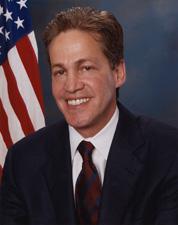
I thank my colleague from Georgia, who shares the passion of the Senator from Iowa, shares the passion of the Senator from Pennsylvania. We want to see scientific breakthroughs. We want to see cures…
I thank my colleague from Georgia, who shares the passion of the Senator from Iowa, shares the passion of the Senator from Pennsylvania. We want to see scientific breakthroughs. We want to see cures for those kids who suffer from juvenile diabetes and friends who have ALS. I have a brother-in-law who suffers from Parkinson's.
How do we get there? Senator Specter noted that, as he filled an hourglass and said: The clock is ticking--and it is. The question becomes how do we move forward, not just in the debate but action. I am a former mayor. If it snowed in St. Paul and the streets weren't plowed, I heard about it. That is what you do--take action.
If we look at the amount of research going on in stem cell research, human embryonic stem cell research--they are pluripotent. What we are talking about is an ability of stem cells to--they have apparently an incredible elastic ability to be perhaps transformed to a heart or a liver, an incredible capacity--in theory. But clearly, scientists, I think uniformly, believe there is great hope and great opportunity there.
The reality today is that there is a certain amount of Federal dollars. What we are talking about is Federal dollars. We are not talking about the sum of all research but simply, What does the Federal Government do? What do we do with taxpayer dollars? Where do we put them?
In terms of human embryonic, pluripotent, the President said--I think it was in 2001--he talked about a series of lines that would be available, just that. He was drawing the line there in terms of embryonic stem cells. Of those lines, originally there were 60 or 70, and there are now about 20 lines.
There is about $132 million being spent in Federal money in human embryonic stem cell research and over $1 billion in human nonembryonic cord blood stem cell, bone marrow, other kinds of research--all of which is promising. In some areas, there are actually therapies going on.
It is fascinating. Scientists are also very passionate. I am not a scientist, but I have been listening to them. There are those scientists who are advocates of embryonic stem cell, and they are passionate that this is the way. Clearly, in theory, in terms of pluripotency, embryonic stem cells have more pluripotency than adult stem cells, but the critics say you have the process of embryonic stem cells, that they have the rejection because when you have organ transplants, you put another genetic material into somebody, and there are problems of rejection. You have the problem of tumors growing from them. They say we have to support adult stem cell because that is where the work is being done, that is where the breakthroughs are happening. Of course, other scientists come back and say, rightfully so, that adult stem cells do not have the elasticity, the pluripotency of embryonic, and so that is not the way. The question is, Is there a third way? Is there a way to get past the culture wars, to get past the great divide we have?
There are many in this country who believe passionately that Federal dollars should not be used for research which involves the destruction of a human embryo, who believe very passionately about that. There are others who say the cause of science is so great, the size of this embryo is so small, the hope we have to offer is so great, we need to move forward. There is a divide.
The reality today is, with policy as it is, if the Harkin-Specter bill passes--which I presume it will, probably overwhelmingly it will pass--and a similar bill is passed in the House and ultimately we work out the language and the President then vetoes it and, as my colleague from Pennsylvania recognizes, there are not enough votes to override the veto, at the end of the day of January 1, 2008, there will still not be more than $132 million spent on human embryonic pluripotency research.
The question is, Is there another way? Senator Isakson has talked about another way. He talked about dead embryos. My colleague from Iowa dismissed it: Dead embryos, what does that mean?
My colleague explained it well, that embryonic stem cells produced by that method have the same pluripotency, the same capacity as other embryonic stem cells, but they do not cross the moral line.
Within S. 30, there is the point of doing other kinds of research that does not cross the moral line. One is called altered nuclear transfer. Later I will, perhaps, put up some charts to show how it works, but very simply, if you think about it, science 101, take an egg and sperm, they come together, create an embryo, become a person--one of the pages here or a Senator or mom and dad sitting somewhere. Then what we do with altered nuclear transfer--actually, by the way, if you relate it to cloning, it is not cloning, but if you think of the concept of cloning, you take an egg, put some genetic material from an adult in there, and it becomes a person. Practically, we had Dolly the sheep, so we know that works. Altered nuclear transfer basically says take that egg, take some genetic material, and before you put it in there, you program the egg so it doesn't create an embryo but creates a tissue mass which has the same pluripotency, the ability to do all the other things any other embryonic stem cell would do.
I have a series of letters from scientists who say this should work. I will quote:
Research results suggest that Altered Nuclear Transfer may
be able to produce human pluripotent stem cells--the
functional equivalent of embryonic stem cells--in a manner
that is simpler and more efficient than current methods.
That is by Hans Schoeler, chairman of the Department of Cell and Developmental Biology at the Max Planck Institute in Germany.
Recently, multiple labs in the United States and around the
world have published or reported experiments in which adult
cells were converted, not to embryos, but directly to
pluripotent ``embryonic-like'' cells. The resulting cells
were virtually indistinguishable from embryonic stem cells
derived from embryos. The techniques used have included
altered nuclear transfer, cell fusion and chemical
reprogramming. The results were obtained from the top
scientists in the field and published in the best journals.
That is by Markus Grompe, M.D., Oregon Stem Cell Center.
One last quote:
I think that current scientific evidence and reasonable
expectations make it likely that altering a donor nucleus to
preclude normal organization of any subsequent blastocyst is
technically feasible and consistent with the scientific and
medical goals of embryonic stem cell research.
That is by Lawrence S.B. Goldstein, Ph.D., Department of Cellular and Molecular Medicine at the University of California, San Diego.
Much of the work is from a doctor, Dr. William B. Hurlbut, over at Stanford, the Neuroscience Institute at Stanford. I worked with him. He has published a lot on this issue. I ask unanimous consent to have printed in the Record a presentation by Dr. Hurlbut entitled ``Stem Cells, Embryos and Ethics: Is There a Way Forward?''
Mr. President, I want to briefly touch on one other aspect of the bill we have not talked about. I do want to thank my colleague from Oklahoma for articulating what is the basic issue: if we can move science forward without crossing a moral line, if we can avoid the great division in America. Scientific research should be something that as a society we embrace. S. 30 gives us the opportunity to do that. I hope my colleagues from all perspectives on this issue decide they will support S. 30.
One other aspect of S. 30 that is important is there is a provision in the bill that calls for the Secretary of Health and Human Services to look into setting up a national amniotic and placental stem cell bank.
There are three banks of stem cells in this country. I believe Wisconsin has the 21 embryonic stem cell lines of the 78 the President originally authorized. In Minnesota, there is a cord blood cell bank, and there is a bone marrow bank.
What we hope to do, based on research that has recently come to
light--Wake Forest has done some of it--is have the use of amniotic and placental stem cells. These are stem cells, by the way, that can be grown in large quantities. They do not produce tumors, which occur in other types of stem cells. The Wake Forest scientists have noted the specialized cells generated from amniotic cells really, in effect, may have--again, this is all potential--but there is the potential to have the kind of elasticity and pluripotency we see in embryonic stem cells--high-flexibility growth potential in many ways resembling human embryonic stem cells.
The hope is to put together a tissue sampling of 100,000 tissues which would then give you the kind of ability to cut across a diversity we do not have today with the research that is going on.
Again, if S. 5 is passed, it will be vetoed, and the science will not be moved forward. But if S. 30 is passed, with the provisions that provide for stem cell research, that will provide for pluripotent research, that will provide for dead embryo research, which would give you, again, the same kind of stem cells you get from any other kind of embryonic stem cells--these are some of the new techniques out there.
In addition, S. 30 contains a provision for moving forward with a national amniotic and placental stem cell bank, which is another opportunity to move the research forward and to move from hope to reality, which is certainly the hope of the authors of this bill.
With that, I yield the floor.
Mr. President, we yield back the remainder of our time.
Mr. President, I thank my colleague from Georgia for his leadership and the opportunity to work together on something that I hope is a unifying force for this body. Let's agree where we can agree. I think that is what S. 30 offers.
I listened to the debate on S. 5. I see my colleague, the Senator from Iowa. I do not know if there is a greater champion in the Senate than the Senator from Iowa when it comes to supporting the rights of individuals with disabilities. I worked on disability discrimination when I graduated law school 30 years ago. One of my heroes in this regard has always been the Senator from Iowa.
Coauthor of S. 5 is my colleague from Utah, Senator Hatch. I don't know if there is a man of greater moral integrity in this body than Orrin Hatch. He is an extraordinary man. He and I have had long conversations about this bill. Good people disagree.
For some of us there is that moral line that says we cannot support Federal funding for the destruction of a human embryo. It is a line that a number of people cannot cross. So what happens is, if we have a concern of just having S. 5--and there is a battle that is being waged there. Again, it will pass. It will pass in this body and pass in the House. Then the reality is it will be vetoed. There will not be enough votes to override the veto. So in the end, those with good intentions who want to move science forward are not going to be able to do that.
This message to those who are suffering from ALS and suffering from juvenile diabetes--the research is not going to be moved forward at all.
A number of my colleagues have put forth S. 30 as an opportunity. Dr. Hurlbut said: We offer one small island of unity in a sea of controversy, a place we can come together and promote the opportunity and support pluripotent stem cell research, research that has the ability to provide the kind of flexible cell material that offers great hope. Again, hope; it offers great hope.
The good news is research is going forward in this area. This research offers an opportunity, not just in the area of stem cell research, but if you talk to some of the scientists, science itself is going to be opened, perhaps, to other advancements. We are going to learn more about stem cells just from doing this research.
I have a chart that lays out what ANT is. This is just one of the options under S. 30. S. 30 would provide Federal funding for research that does not involve the destruction of an embryo. Some of it is dead embryo research. This is ANT. Under the natural process you have a fertilized egg, the egg and sperm, the fertilized egg that becomes an embryo.
SCNT, as I understand it, is the way we got Dolly the sheep. We have a somatic cell from an adult. It was an animal--or it could be from a human. You put that cellular material, which has all the DNA, all that program in the enucleated egg, the egg gets fertilized, and you get an embryo.
What ANT does, and the type of research, among a number of options-- there are some thoughts you could reprogram these cells. You could do a range of things, but what you are doing is altering the cell nucleus. It is kind of a key in there, something that unlocks the cell. If you take it out--I think it is CDX2, but I am not a scientist. But what you essentially do if you take that out before you transfer into this enucleated egg, before you put this genetic material with all the DNA and everything in there, in the end what you are going to get is an inner cell mass with all the ability to produce the pluripotent cells that you would get, but there is no embryo, and it doesn't cross the moral line.
The opportunity for this Congress, in a bipartisan way, to support this kind of research is a positive thing.
I see my colleague from Missouri. I have some other comments, but I believe we have some time, and I will use that time later.
I want to reiterate that I hope my colleagues who support S. 5--we simply have disagreement over crossing that line--I hope they can come with us and support S. 30.
My concern is about the House. Last year this body passed a bill similar to S. 5. It also passed the Specter-Santorum bill, which provided, by the way, a number of alternative means of producing cells. Some of those, by the way, are included in S. 5. But, again, S. 5 will not become law.
If you want alternative ways to go forward, you have to support S. 30. The House killed the Specter-Santorum bill. Their approach was, they wanted to have 100 percent of nothing--no alternative ways if they didn't get exactly what they wanted in their bill that was similar to
Will the Senator from Oklahoma yield?
I believe the Senator from Oklahoma earlier introduced a RAND study that talked about the number of embryos. I believe there are nearly 400,000 that may be in IVF clinics. Apparently, only 2.8 percent have the potential to be discarded. Is that correct?
Is there a sense that the Senator from Oklahoma has in terms of decisions that parents and others are making about the kind of life potential of those 97 percent that are not being discarded, that are being frozen for future attempts at pregnancy?
I yield 2 additional minutes to the Senator from Oklahoma.
I thank the Senator from Oklahoma for both his passion and his expertise. I think he said this morning--how many babies has the Senator delivered?
This is one Senator who understands the value of life and has a hands-on approach.
It is interesting. President Clinton's bioethics commission concluded, if we have some other alternatives, why wouldn't we use them? They concluded the derivation of stem cells from embryos remaining following infertility treatments is justifiable only if no less morally problematic alternatives are available for advancing the research. I believe what is happening is the science is moving faster than the politics, that we have today the opportunity through a number of processes to move forward with pluripotent stem cell research in ways that are less morally problematic, that don't cross a line, that don't cross the line that says we should not have Federal funding for the destruction of a human embryo.
I know my colleagues and friends who support S. 5 quite often have talked about excess embryos that we have and that may not be used for any other purpose. I would ask them to ask these questions. I believe their intent is this narrow intent, but as you look at S. 5, the question raised is, is this the beginning of the production of embryos? If in fact this is the acceptable path to go, why wouldn't we produce embryos that would then get Federal funding to do the research? Is the use of these embryos only for the purpose of stem cell research? Where would we draw the line? Who draws that line? Why wouldn't we use this to study embryonic growth, cell patterns, a whole range of other things? Once we have crossed the line, where does it end? If it is difficult to coax embryonic stem cells into the desired kinds of differentiated type cell types, would we want to allow the embryos to develop longer so we could kind of coax them into later development so we can see that later stage embryos may be a better source of more advanced cells and tissues and organs? Even if we don't do that, if we move down this path, are there other nations or other countries that don't have the kind of moral concerns we have? Why would they not want to go that route?
We have already begun the process. What we offer in S. 30 is a possibility to bring this country together to provide
Federal funding for stem cell research that provides the hope of what pluripotent stem cells may be able to do. It sets up a tissue bank for amniotic and placental stem cells which offer great promise without the moral dilemma. At a time when clearly the Nation is divided, we offer a time to come together.
My concern is, last year we passed a bill in this Senate that provided for alternatives, Specter-Santorum. It was rejected in the House. I hope my colleagues don't take an all-or-nothing approach. I hope they don't look to get 100 percent of nothing--nothing meaning that S. 5 is going to be vetoed--and then stop us from at least moving forward with the opportunity to put Federal dollars in research and production doing stem cell research that doesn't cross a moral line.
I see my colleague from Oklahoma.
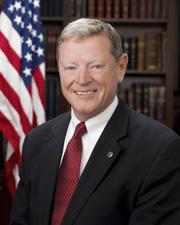
Mr. President, I rise today, as an experienced pilot over age 60, along with my colleagues, Senator Stevens, Senator Lieberman and Senator Feingold, to once again introduce a bill that will help end…
Mr. President, I rise today, as an experienced pilot over age 60, along with my colleagues, Senator Stevens, Senator Lieberman and Senator Feingold, to once again introduce a bill that will help end age discrimination among commercial airline pilots. Our bill will abolish the Federal Aviation Administration's (FAA) arcane Age 60 Rule a regulation that has unjustly forced the retirement of airline pilots the day they turn 60 for more than 45 years.
Our bipartisan bill called the ``Freedom to Fly Act'' would replace the dated FAA rule with a new international standard adopted this past November by the International Civil Aviation Organization (ICAO) which allows pilots to fly to 65 as long as the copilot is under 60.
Since the adoption of the ICAO standard in November of this year, foreign pilots have been flying and working in U.S. Airspace under this new standard up to 65 years of age a privilege the FAA has not been willing to grant to American pilots flying the same aircraft in the same airspace.
This bill may seem familiar; I have introduced similar legislation in the past two Congresses and I am dedicated to ensuring its passage this year. And it has never been more urgent.
We cannot continue to allow our FAA to force the retirement of America's most experienced commercial pilots at the ripe young age of 60 while they say to their counterparts flying for foreign flags ``Welcome to our airspace.''
Many of these great American pilots are veterans who have served our country and the flying public for decades. Many of them have suffered wage concessions and lost their pensions as the airline industry has faced hard times and bankruptcies. But these American pilots are not asking for a handout.
They are just saying to the FAA; ``Give me the same right you granted our foreign counterparts with the stroke of a pen this November. Let us continue to fly, continue to work, continue to contribute to the tax rolls for an additional 5 years.'' We join them and echo their sentiments to FAA Administrator Blakey. As far as we are concerned, that is the least we can do for America's pilots, who are considered the best and the safest pilots in the world.
Most nations have abolished mandatory age 60 retirement rules. Many countries, including Canada, Australia, and New Zealand have no upper age limit at all and consider an age-based retirement rule discriminatory. Sadly though, the United States was one of only four member countries of ICAO, along with Pakistan, Colombia, and France, to dissent to the ICAO decision to increase the retirement age to 65 last year.
The Age 60 Rule has no basis in science or safety and never has. The Aerospace Medical Association says that ``There is insufficient medical evidence to support restriction of pilot certification based upon age alone.'' Similarly, the American Association of Retired Persons, Equal Employment Opportunity Commission, the Seniors Coalition, and the National Institute of Aging of NIH all agree that the Age 60 Rule is simply age discrimination and should end. My colleagues and I agree.
When the rule was implemented in 1960 life expectancies were much lower at just over 69 and a half years. Today they are much higher at more than 77 years. The FAA's own data shows that pilots over age 60 are as safe as, and in some cases safer than, their younger counterparts. In the process of adopting the new international standard, ICAO studied more than 3,000 over-60 pilots from 64 nations, totaling at least 15,000 pilot-years of flying experience and found the risk of medical incapacitation ``a risk so low that it can be safely disregarded.''
Furthermore, a recent economic study shows that allowing pilots to fly to age 65 would save almost $1 billion per year in added Social Security, Medicare, and tax payments and delayed Pension Benefit Guarantee Corporation (PBGC) payments.
I am encouraged by the progress that has been made. In the 109th Congress, the Senate Commerce Committee reported the modified bill with the ICAO standard favorably and the Senate Transportation, Treasury, the Judiciary, Housing and Urban Development, and Related Agencies Appropriations Committee included a version of S. 65 in its bill. The FAA recently convened an Aviation Rulemaking Committee to study the issue of forced retirement. We have yet to see that report but it is our understanding the report was persuasive enough that the Administrator is considering a change in the rule now.
We are encouraged by that, but we also know that legislation will be needed to direct the FAA to pursue these changes in a timely manner and in a way that will protect companies and their unions from new lawsuits that might arise as a result of the changes. Our bill accomplishes that. Whether the FAA decides to change the rule on its own or not, Congress needs to do the right thing and pass S. 65 to fully ensure that our own American pilots have the same rights and privileges to work at least until age 65 that were accorded to foreign pilots over the age of 60 this fall.
I urge the rest of my colleagues to support the Freedom to Fly Act and help us keep America's most experienced pilots in the air.
Mr. President, I rise today along with my colleague, Tom Coburn, to proudly introduce legislation to designate the facility of the United States Postal Service located at 301 Commerce Street in Commerce, OK as the ``Mickey Mantle Post Office.''
Mickey Mantle emulates the Oklahoma spirit of hard work, charity, and sportsmanship. He is a shining example of how commitment and dedication can lead to great success. I seek to name the post office in Commerce, Oklahoma, in Mickey Mantle's honor. He is still known to Commerce by the nicknames ``Commerce Comet'' or ``Commerce Kid''.
At age 4, Mickey Mantle moved with his family to Commerce where he grew up, having been born in Spavinaw, OK. By his father who was an amateur player and fervent fan, Mickey Mantle was named in honor of Mickey Cochrane, the Hall of Fame catcher from the Detroit Tigers.
Signing with the New York Yankees in 1949, Mantle made his Major League Debut in 1951. He played his entire Major League career with the Yankees. He was a twenty-time All Star and named American League MVP three times. Mantle was a part of 12 pennant winners and 7 World Championship clubs. Some of Mantle's records still hold today. He holds the record for most World Series home runs 18, runs batted in 40, runs 42, walks 43, extra-base hits 26, and total bases 123.
Mantle announced his retirement on March 1, 1969. In actually retired on Mickey Mantle Day, June 8, 1969. In addition to the retirement of his uniform number 7, Mantle was given a plaque that would hang on the center field wall at Yankee Stadium, near the monuments to Babe Ruth, Lou Gehrig and Miller Huggins. In 1974, as soon as he was eligible, he was inducted into the Baseball Hall of Fame demonstrating his importance to baseball and community.
Sadly, Mickey Mantle's father died of cancer at the age of 39, just as his son was starting his career. Mantle said one of the great heartaches of his life was that he never told his father he loved him.
After a bout with liver cancer himself, Mickey Mantle was given a few precious extra weeks of life due to a liver transplant. The baseball great was overwhelmed by the selfless gift of a liver from a stranger; therefore, Mickey became determined to give something back at the end of his life. Thus, in 1995, the year he died, the Mickey Mantle Foundation was established to promote organ and tissue donation, and Mickey Mantle will be remembered for something more than his heroic baseball career.
I encourage my colleagues to join me in support of this legislation as we commemorate an outstanding athlete so that future generations will be as inspired by his example of sportsmanship and charity as we have been.
Mr. President, I introduce a bill to establish Medicare Health Savings Account, HSAs. This bill will make HSAs available under Medicare in lieu of Medicare Medical Savings Account, MSAs. I have long been dedicated to quality health care and believe that seniors should have the ability to make their own decisions regarding their health care, so they can receive the health care they need and deserve. As a senior myself, I appreciate how imperative it is that we seniors be provided with a wide array of choices.
My desire to see my fellow Oklahomans and all Americans receive the best possible health care is evidenced by my involvement in various health-related issues. I have always been a champion of rural health care providers. In 1997, I was one of the few Republicans to vote against the Balanced Budget Act because of its lack of support for rural hospitals. At that time, I made a commitment to not allow our rural hospitals to be closed and am pleased we finally addressed that important issue in the Medicare Modernization Act of 2003 by providing great benefits for rural health care providers as well as a voluntary prescription drug benefit to seniors. In 2003, I also co-sponsored the Health Care Access and Rural Equity Act, to protect and preserve access of Medicare beneficiaries to health care in rural regions.
In order to assist my State and other States suffering from large reduction in their Federal Medical Assistance Percentage, FMAP for Medicaid, I introduced a bill in the 109th Congress to apply a State's FMAP from fiscal year 2005 to fiscal years 2006 through 2014. The purpose of this legislation is to prevent drastic reductions in FMAP while revision of the formula itself is considered.
I am a strong advocate of medical liability reform and have consistently been an original cosponsor of the Medical Care Access Protection Act and the Healthy Mothers and Healthy Babies Access to Care Act. These bills protect patients' access to quality and affordable health care by reducing the effects of excessive liability costs. I am committed to this vital reform that would alleviate the burden placed on physicians and patients by excessive medical malpractice lawsuits.
I have also worked with officials from the Centers for Medicare and Medicaid Services, CMS to expand access to life-saving Implantable Cardiac Defibrillators and many other numerous regulations that would affect my rural State such as the 250 yard-rule for Critical Access Hospitals.
As a supporter of safety and medical research, I have co-sponsored legislation to increase the supply of pancreatic islet cells for research and a bill to take the abortion pill RU-486 off the market in the United States.
In response to the shortages of flu vaccines experienced in years past, I introduced the Flu Vaccine Incentive Act to help prevent any future shortages in flu vaccines in both the 108th and 109th Congresses. My bill removed suffocating price controls from government purchasing of the flu vaccine while encouraging more companies to enter the market. Also, my bill freed American companies to enter the flu vaccine industry by giving them an investment tax credit towards the construction of flu vaccine production facilities.
As a result of my sister's death from cancer and a treatment we learned about not accessible in the United States that might have saved her life, Senator Sam Brownback and I introduced the Access, Compassion, Care and Ethics for Seriously-ill Patients Act, ACCESS, in the 109th Congress. This bill offered a three-tiered approval system for treatments showing efficacy during clinical trials, for use by the seriously ill patient population. Seriously ill patients, who have exhausted all alternatives and are seeking new treatment options, would be offered access to these treatments with the consent of their physician. I was pleased to learn that the Food and Drug Administration has announced a proposal to offer expanded access to drugs to terminally ill patients.
My resolution to designate April 8, 2006, as ``National Cushing's Syndrome Awareness Day'' was passed by unanimous consent in the 109th Congress. The intent of this resolution is to raise awareness of Cushing's Syndrome, a debilitating disorder that affects an estimated 10 to 15 people per million. It is an endocrine or hormonal disorder caused by prolonged exposure of the body's tissue to high levels of the hormone cortisol.
It was brought to my attention thanks to a staffer with Celiac Disease and an Oklahoma Celiac Support Group that there is a great need to raise awareness of celiac disease; therefore, I worked to get my resolution passed by unanimous consent to designate September 13, 2006 as National Celiac Disease Awareness Day. Celiac disease is an autoimmune disorder and a malabsorption disease that affects an estimated 2.2 million Americans. Celiac disease is, essentially, intolerance to gluten, a protein found in wheat, rye, oats and barley, as well as some medicines and vitamins.
Additionally, I have consistently co-sponsored yearly resolutions designating a day in October as ``National Mammography Day'' and a week in August as ``National Health Center Week'' to raise awareness regarding both these issues and have supported passage and enactment of numerous health-care-related bills, such as the Rural Health Care Capital Access Act of 2006, which extends the exemption respecting required patient days for critical access hospitals under the federal hospital mortgage insurance program.
As the Federal Government invests in improving hospitals and healthcare initiatives, I have fought hard to ensure that Oklahoma gets its fair share. Specifically, over the past 3 years, I have helped to secure $5.2 million in funding for the Oklahoma Medical Research Foundation, the Oklahoma State Department of Health planning initiative for a rural telemedicine system, the INTEGRIS Healthcare System, the University of Oklahoma Health Sciences Center, the Oklahoma Center for the Advancement of Science and Technology, St. Anthony's Heart Hospital, the Hillcrest Healthcare System, and the Morton Health Center.
As a long supporter of HSAs, I believe all people should have access to them since they provide great flexibility in the health market and allow individuals to have control over their own health care. Medicare MSAs have existed since January 1, 1997, revised in December of 2003, but they have not worked. No insurer whatsoever has yet offered any Medicare MSA under the current law. To fix this problem, my legislation creates a new HSA program under Medicare that incorporates a high deductible health plan and an HSA account while dissolving the existing Medicare MSA.
In tandem with my efforts, the Centers for Medicare and Medicaid Service, CMS, are launching an HSA demonstration project that would test allowing health insurance companies to offer Medicare beneficiaries products similar to HSA. This activity points to the Administration's support of HSAs and desire to see all seniors receive the best possible coverage.
As the July 13, 2006 edition of The Hill, explains, ``no legislation is pending that would integrate HSAs into the Medicare program . . .'' Thus, my legislation is necessary because real Medicare HSA reform is needed in order for seniors to have true flexibility and freedom of choice in their health care.
Under my bill, beneficiaries who choose the HSA option will receive an annual amount that is equal to 95 percent of the annual Medicare Advantage, MA, capitation rate with respect to the individual's MA payment area. These funds provided through the Medicare HSA program can only be used by the beneficiary for the following purposes: as a contribution into an HSA or for payment of high deductible health plan premiums. However, the individual also has the opportunity to deposit personal funds in to the Medicare HSA.
My bill also guarantees that seniors be notified of the amount they will receive 90 days before receipt to ensure they have time to determine the best and most appropriate HSA to accommodate needs. The bill also allows the Secretary of Health and Human Services to deal with fraud appropriately and requires providers to accept payment by individuals enrolled in a Medicare HSA just as they would with an individual enrolled in traditional Medicare.
Please join me in supporting this important legislation to give our seniors more choices regarding their health care.
Mr. President, I introduce legislation requiring parental consent for intrusive physical exams administered under the Head Start program.
Young children attending Head Start programs should not be subjected to these intrusive physical exams without the prior knowledge or consent of their parents. While the Department of Health and Human Services has administered general exam guidelines to agencies, the U.S. Code is not clear about prohibiting them without parental consent. To clarify the Code, my bill will not allow any non-emergency intrusive exam by a Head Start agency without parental consent. This would not include exams such as hearing, vision or scoliosis screenings.
This issue was brought to my attention by some of my constituents from Tulsa, OK, who felt their rights were violated when their children were subjected to genital exams and blood tests without their consent. I am pleased to see that the Rutherford Institute has taken an interest in this crucial issue and are representing my constituents.
As a father and grandfather, I believe it is vital for parents to be informed about what is happening to their children in the classroom. I hope that my colleagues will join me in support of this important bill.
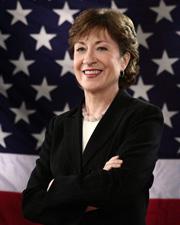
Mr. President, I rise today to join my colleagues in cosponsoring S. 1, a bill to provide greater transparency in the legislative process. The recent elections sent a clear message to Congress that…
Mr. President, I rise today to join my colleagues in cosponsoring S. 1, a bill to provide greater transparency in the legislative process.
The recent elections sent a clear message to Congress that the American people have lost confidence in their government. Without the support of the people, we cannot tackle the difficult issues that this Congress must face. This bill, then, is a critical part of restoring the people's trust by reforming ethics and lobbying rules.
It is important to remember that the conduct of most Members and their staffs is beyond reproach. Likewise, it is important to recognize that lobbying--whether done on behalf of the business community, an environmental organization, a children's advocacy group, or any other cause--can provide us with useful information and analysis that aids, but does not dictate, the decision-making process. Unfortunately, in the minds of many Americans, ``lobbying'' has come to be associated with expensive paid vacations masquerading as fact-finding trips, special access to Members and staff that an ordinary citizen could never hope to have, and undue influence that leads to decisions made in the best interest of the lobbyist and his or her client instead of the American people.
S. 1 which is nearly identical to a bill that was the product of bipartisan efforts by the Senate Committee on Homeland Security and Governmental Affairs and the Senate Committee on Rules and Administration and that was passed by this Senate just last year-- includes a number of important provisions that will help to restore the public image of the United States Congress.
S. 1 bans gifts from lobbyists. This is clear, brightline rule that diminishes the appearance of impropriety that gifts can create.
S. 1 requires greater disclosure of the sponsors of and the purposes for earmarks included in a bill so that the people can know where tax dollars are being spent and why.
S. 1 eliminates floor privileges for former Members who are seeking to lobby other members. They will enjoy no more access to Senators and Congressmen than any other citizen.
S. 1 will eliminate the practice of anonymous holds in the Senate so that we can bring debate into the open and not simply kill a bill with a secret hold.
S. 1 will require enhanced disclosure of the activities of groups lobbying Congress so that the public can easily find out which interests are trying to influence the decisions we make.
S. 1 will slow the revolving door between the Hill and the private sector by limiting the ability of departing Members and staff to lobby their former colleagues.
While I am pleased to be a cosponsor of this bill, I also believe strongly that it would be improved by the addition of an independent Office of Public Integrity within the Legislative Branch. This Office would be able to conduct nonpartisan investigations of possible ethics violations. These investigations would help to promote public confidence in the enforcement of any laws that we pass to enhance congressional ethics. During debate on this bill last year, an amendment that Senator Lieberman, Senator McCain, and I offered to create this Office was defeated. However, I hope my colleagues have taken the lessons of the recent elections to heart and that the idea of an Office of Public Integrity will be approved this year. To that end, I am also cosponsoring Senator McCain's lobbying reform package, which he has introduced today and which contains a number of the provisions of S. 1 as well as creating an independent Office of Public Integrity.
I once again commend my colleagues on recognizing the importance of this issue by making it our first priority in the 110th Congress. I urge the Senate to work quickly to get this legislation finished so that we can move on from the task of governing ourselves and get down to the business of governing our Nation.
Mr. President, I am pleased to join with my colleague from Louisiana, Senator Landrieu, in introducing the Access to Affordable Health Care Act, a comprehensive plan that builds on the strengths of our current public programs and private health care system to make affordable health care available to millions more Americans.
One of my priorities in the Senate has been to expand access to affordable health care. There are still far too many Americans without health insurance or with woefully inadequate coverage. As many as 46 million Americans are uninsured, and millions more are underinsured.
Maine is in the midst of a growing health insurance crisis, with insurance premiums rising at alarming rates. Whether I am talking to a self-employed fisherman, a displaced worker, the owner of a struggling small business, or the human resource manager of a large company, the soaring costs of health insurance is a common concern.
These cost increases have been particularly burdensome for small businesses, the backbone of the Maine economy. Maine small business owners want to provide coverage for their employees, but they are caught in a cost squeeze. They know that if they pass on premium increases to their employees, more of them will decline coverage. Yet these small businesses simply cannot afford to absorb double-digit increases in their health insurance premiums year after year.
The problem of rising costs is even more acute for individuals and families who must purchase health insurance on their own. Monthly health insurance premiums in Maine often exceed a family's mortgage payment. Clearly, we must do more to make health insurance more available and affordable.
The Access to Affordable Health Care Act, which we are introducing today, is a seven-point plan that combines a variety of public and private approaches. The legislation's seven goals are: one, to expand access to affordable health care for small businesses; two, to make health insurance more affordable for individuals and families purchasing coverage on their own; three, to strengthen the health care safety net for those without coverage; four, to expand access to care in rural and underserved areas; five, to increase access to affordable long-term care; six to promote healthier lifestyles; and seven, to provide more equitable Medicare payments to Maine providers to reduce the Medicare shortfall, which has forced hospitals, physicians and other providers to shift costs onto other payers in the form of higher charges, which in turn drives up health care premiums.
Let me discuss each of these seven points in greater detail.
First, our legislation will help small employers cope with rising health care costs.
Since most Americans get their health insurance through the workplace, it is a common assumption that people without health insurance are unemployed. The fact is, however, that as many as 83 percent of Americans who do not have health insurance are in a family with a worker.
Uninsured working Americans are most often employees of small businesses. In fact, some 63 per cent of uninsured workers are employed by small firms. Smaller firms generally face higher costs for health insurance than larger firms, which makes them less likely to offer coverage. The Access to Affordable Health Care Act will help these employers cope with rising costs by creating new tax credits for small businesses to make health insurance more affordable. It will encourage those small businesses that do not offer health insurance to do so and will help employers that do offer insurance to continue coverage for their employees even in the face of rising costs.
Our legislation will also provide grants to provide start-up funding to States to help businesses to form group purchasing cooperatives. These cooperatives will enable small businesses to band together to purchase health insurance jointly. This will help to reduce their costs and improve the quality of their employee's health care.
The legislation would also authorize a Small Business Administration grant program for States, local governments and non-profit organizations to provide information about the benefits of health insurance to small employers, including tax benefits, increased productivity of employees, and decreased turnover. These grants would also be used to make employers aware of their current incentives under State and Federal laws. While costs are clearly a problem, many small employers are simply not aware of laws that have already been enacted by both States and the Federal government to make health insurance more affordable. For example, in one survey, 57 percent of small employers did not know that they could deduct 100 percent of their health insurance premiums as a business expense.
The legislation would also create a new program to encourage innovation by awarding demonstration grants in up to 10 States conducting innovative coverage expansions, such as alternative group purchasing or pooling arrangements, individual or small group market reforms, or subsidies to employers or individuals purchasing coverage. The States have long been laboratories for reform, and they should be encouraged in the development of innovative programs that can serve as models for the Nation.
The Access to Affordable Health Care Act will also expand access to affordable health care for individuals and families. One of the first bills that I sponsored when I came to the Senate was legislation to establish the State Child Health Insurance Program, which provides insurance for the children of low-income parents who cannot afford health insurance, yet make too much money to qualify for Medicaid. Since 1997, this program, which is known as SCHIP, has contributed to a one-third decline in the uninsured rate of low-income children. Today, over six million children--including approximately 14,500 in Maine-- receive health care coverage through this remarkably effective health care program.
First, our legislation will shore up the looming shortfalls in SCHIP funding that 17 states--including Maine--will face in Fiscal Year 2007 to ensure that children currently enrolled in the program do not lose their coverage. Just prior to adjournment in December, the Congress approved legislation to partially address these shortfalls. That legislation, however, provides only about one-fifth of the funds needed. Our legislation will close that gap.
Our legislation also builds on the success of the SCHIP program and gives States a number of new tools to increase participation. The bill authorizes new grants for States and non-
profit organizations to conduct innovative outreach and enrollment efforts to ensure that all eligible children are covered. States would also have the option of covering the parents of the children who are enrolled in programs like MaineCare. States could also use funds provided through this program to help eligible working families pay their share of an employer-based health insurance plan. In short, the legislation will help ensure that the entire family receives the health care they need.
And finally, to help make health coverage more affordable for low and middle-income individuals and families who do not have employer- provided coverage and who are not eligible for the expanded programs, our legislation would provide an advanceable, refundable tax credit of up to $1,000 for individuals earning up to $30,000 and up to $3,000 for families earning up to $60,000. This could provide coverage for up to six million Americans who would otherwise be uninsured for one or more months, and will help many more working lower-income families who currently purchase private health insurance with little or no government help.
To strengthen our nation's health care safety net, the Access to Affordable Health Care Act calls for a doubling of funding over five years for the Consolidated Health Centers program, which includes community, migrant, public housing and homeless health centers.
These centers, which operate in underserved urban and rural communities, provide critical primary care services to millions of Americans, regardless of their ability to pay. About 20 percent of the patients treated in Maine's community health centers have no insurance coverage and many more have inadequate coverage, so these centers are a critical part of our nation's health care safety net.
The problem of access to affordable health care services is not limited to the uninsured, but is also shared by many Americans living in rural and underserved areas where there is a shortage of health care providers. The Access to Affordable Health Care Act therefore calls for increased funding for the National Health Service Corps, which supports doctors, dentists, and other clinicians who serve in rural and inner city areas.
The legislation will also give the program greater flexibility by allowing National Health Service Corps participants to fulfill their commitment on a part-time basis. Current law requires all National Health Service Corps participants to serve full-time. Many rural communities, however, simply do not have enough volume to support a full-time health care practitioner. Moreover, some sites may not need a particular type of provider on a full-time basis. Our bill therefore gives the program additional flexibility to meet community needs.
As the Senate co-chair of the bipartisan Congressional Task Force on Alzheimer's Disease, I am particularly sensitive to the long-term care needs of patients with chronic diseases like Alzheimer's and their families.
Long-term care is the major catastrophic health care expense faced by older Americans today, and these costs will only increase with the aging of the baby boomers. Most Americans mistakenly believe that Medicare or their private health insurance policies will cover the costs of long-term care should they develop a chronic illness or cognitive impairment like Alzheimer's Disease. Unfortunately, far too many do not discover that they do not have coverage until they are confronted with the difficult decision of placing a much-loved parent or spouse in long-term care and facing the shocking realization that they will have to cover the costs themselves.
The Access to Affordable Health Care Act will provide a tax credit for long-term care expenses of up to $3,000 to provide some help to those families struggling to provide long-term care to a loved one. It will also encourage more Americans to plan for their future long-term care needs by providing a tax deduction to help them purchase long-term care insurance.
Health insurance alone is not going to ensure good health. As noted author and physician Dr. Michael Crichton has observed, ``the future of medicine lies not in treating illness, but preventing it.'' Many of our most serious health problems are directly related to unhealthy behaviors--smoking, lack of regular exercise, and poor diet. These three major risk factors alone have made Maine the state with the fourth highest death rate due to four largely preventable diseases: cardiovascular disease, cancer, chronic lung disease and diabetes. These four chronic diseases are responsible for 70 percent of the health care problems in Maine.
Our bill therefore contains a number of provisions designed to promote healthy lifestyles. An ever-expanding body of evidence shows that investments in health promotion and prevention offer returns not only in reduced health care bills, but in longer life and increased productivity. The legislation will provide grants to States to assist small businesses wishing to establish ``worksite wellness'' programs for their employees. It would also authorize a grant program to support new and existing ``community partnerships,'' such as the Healthy Community Coalition in Maine's Franklin County, to promote healthy lifestyles among hospitals, employers, schools and community organizations. And, it would provide funds for States to establish or expand comprehensive school health education, including, for example, physical education programs that promote lifelong physical activity, healthy food service selections, and programs that promote a healthy and safe school environment.
And finally, the Access to Affordable Health Care Act would promote greater equity in Medicare payments and help to ensure that the Medicare system rewards rather than punishes states like Maine that deliver high-quality, cost-effective Medicare services to our elderly and disabled citizens.
The Medicare Modernization Act of 2003 and subsequent legislation did take some significant steps toward promoting greater fairness by increasing Medicare payments to rural hospitals and by modifying geographic adjustment factors that discriminated against physicians and other providers in rural areas. The legislation we are introducing today will build on those improvements by establishing State pilot programs that reward providers of high- quality, cost-efficient Medicare services.
The Access to Affordable Health Care Act outlines a blueprint for reform based on principles upon which I believe a bipartisan majority in Congress could agree. The plan takes significant strides toward the goal of universal health care coverage by bringing millions more Americans into the insurance system and by strengthening the health care safety net.
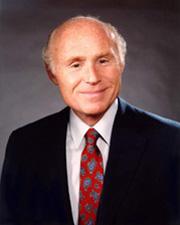
Mr. President, I rise today on the first day of this new Congress to introduce the Citizen Petition Fairness and Accuracy Act of 2007. This legislation will help speed the introduction of cost-saving…
Mr. President, I rise today on the first day of this new Congress to introduce the Citizen Petition Fairness and Accuracy Act of 2007. This legislation will help speed the introduction of cost-saving generic drugs by preventing abuses of the Food and Drug Administration citizen petition process.
Consumers continue to suffer all across our country from the high-- and ever rising--cost of prescription drugs. A recent independent study found that prescription drug spending has more than quadrupled since 1990, and now accounts for 11 percent of all health care spending. At the same time, the pharmaceutical industry is one of the most profitable industries in the world, returning more than 15 percent on their investments.
One key method to bring prescription drug prices down is to promote the introduction of generic alternatives to expensive brand name drugs. Consumers realize substantial savings once generic drugs enter the market. Generic drugs cost on average 63 percent less than their brand- name equivalents. One study estimates that every 1 percent increase in the use of generic drugs could save $4 billion in health care costs.
This is why I have been so active in pursuing legislation designed to combat practices which impede the introduction of generic drugs. The legislation I introduce today, which I first introduced last year with Senator Leahy in last Congress, targets one particularly pernicious practice by brand name drug companies to impede or block the marketing of generic drugs--abuse of the FDA citizen petition process.
FDA rules permit any person to file a so-called ``citizen petition'' to raise concerns about the safety or efficacy of a generic drug that a manufacturer is seeking FDA approval to bring to market. While this citizen petition process was put in place for a laudable purpose, unfortunately in recent years it has been abused by frivolous petitions submitted by brand name drug manufacturers (or individuals acting at their behest) whose only purpose is to delay the introduction of generic competition. The FDA has a policy of not
granting any new generic manufacturer's drug application until after it has considered and evaluated any citizen petitions regarding that drug. The process of resolving a citizen petition (even if ultimately found to be groundless) can delay the approval by months or years. Indeed, brand name drug manufacturers often wait to file citizen petitions until just before the FDA is about to grant the application to market the new generic drug solely for the purpose of delaying the introduction of the generic competitor for the maximum amount of time possible. This gaming of the system should not be tolerated.
In recent years, FDA officials have expressed serious concerns about the abuse of the citizen petition process. In 2005, FDA Chief Counsel Sheldon Bradshaw noted that ``[t]he citizen petition process is in some cases being abused. Sometimes, stakeholders try to use this mechanism to unnecessarily delay approval of a competitor's products.'' He added that he found it ``particularly troublesome'' that he had ``seen several examples of citizen petitions that appear designed not to raise timely concerns with respect to the legality or scientific soundness of approving a drug application, but rather to delay approval by compelling the agency to take the time to consider the arguments raised in the petition, regardless of their merits, and regardless of whether the petitioner could have made those very arguments months and months before.''
And a simple look at the statistics gives credence to these concerns. Of the 21 citizen petitions for which the FDA has reached a decision since 2003, 20--or 95 percent of them--have been found to be without merit. Of these, ten were identified as ``eleventh hour petitions'', defined as those filed less than 6 months prior to the estimated entry date of the generic drug. None of these ten ``eleventh hour petitions'' were found to have merit, but each caused unnecessary delays in the marketing of the generic drug by months or over a year, causing consumers to spend millions and millions of dollars for their prescription drugs than they would have spent without these abusive filings.
Despite the expense these frivolous citizen petitions cause consumers and the FDA, under current law the government has absolutely no ability to sanction or penalize those who abuse the citizen petition process, or who file citizen petitions simply to keep competition off the market. Our legislation will correct this obvious shortcoming and give the Department of Health and Human Services--the FDA's parent agency the power to sanction those who abuse the process.
Our bill will, for the first time, require all those who file citizen petitions to affirm certain basic facts about the truthfulness and good faith of the petition, similar to what is required of every litigant who makes a filing in court. The party filing the citizen petition will be required to affirm that the petition is well grounded in fact and warranted by law; is not submitted for an improper purpose, such as to harass or cause unnecessary delay in approval of competing drugs; and does not contain any materially false, misleading or fraudulent statement. The Secretary of the Department of Health and Human Services is empowered to investigate a citizen petition to determine if it has violated any of these principles, was submitted for an improper purpose, or contained false or misleading statements. Further, the Secretary is authorized to penalize anyone found to have submitted an abusive citizen petition. Possible sanctions include a fine up to one million dollars, a suspension or permanent revocation of the right of the violator to file future citizens' petition, and a dismissal of the petition at issue. HHS is also authorized to refer the matter to the Federal Trade Commission so that the FTC can undertake its own investigation as to the competitive consequences of the frivolous petition and take any action it finds appropriate. Finally, the bill directs the HHS that all citizen petitions be adjudicated within six months of filing, which will put an end to excessive delays in bringing needed generic drugs to market because of the filings of these petitions.
While our bill will not have any effect on any person filing a truly meritorious citizen petition, this legislation will serve as a strong deterrent to attempts by brand name drug manufacturers or any other party that seeks to abuse the citizen petition process to thwart competition. It will thereby remove one significant obstacle exploiting by brand name drug companies to prevent or delay the introduction of generic drugs. I urge my colleagues to support this legislation.
I ask unanimous consent that the text of the bill be printed in the Record.
Mr. President, I rise today to introduce the Generics First Act. This legislation requires the use of available generic drugs under the Medicare Part D prescription drug program, unless the brand name drug is determined to be medically necessary by a physician.
Everywhere I go in Wisconsin, I see how prescription drug costs are a drain on seniors, families, and businesses that are struggling to pay their health care bills. They want help now and we can respond by expanding access to generic drugs. Generics, which on average cost 63 percent less than their brand-name counterparts, are a big part of the solution to health care costs that are spiraling out of control.
The private and public sectors, as well as individuals, are seeking relief from high drug costs, and Senate Special Committee on Aging has heard some remarkable success stories from some who have turned to generic drugs. Last year, General Motors testified that, in 2005, they spent $1.9 billion dollars on prescription drugs, 40 percent of their total health care spending. Their program to use generics first, when a generic drug is available, saves GM nearly $400 million a year.
Last year, millions of seniors exceeded the initial $2,250 Medicare drug benefit and fell into the ``donut hole,'' where they had to pay the full price of their drugs. Using less expensive, but equally effective, generic drugs will keep seniors out of the ``donut hole'' longer and help them survive the gap in coverage.
Generic drugs approved by the FDA must meet the same rigorous standards for safety and effectiveness as brand-name drugs. In addition to being safe and effective, the generic must have the same active ingredient or ingredients, be the same strength, and have the same labeling for the approved uses as the brand drug. Generics perform the same as their respective brand name product.
Modeled after similar provisions in many state-administered Medicaid programs, this measure would reduce the high costs of the new prescription drug program and keep seniors from reaching the current gap in coverage or ``donut hole'' by guiding beneficiaries toward cost- saving generic drug alternatives.
We know generic drugs have the potential to save seniors thousands of dollars, and curb health spending for the Federal Government, employers, and families. And every year, more blockbuster drugs are coming off patent, setting up the potential for billions of dollars in savings. This legislation is one piece of a larger agenda I'm pushing to remove the obstacles that prevent generics from getting to market, and making sure that every senior, every family, every business, and every government program knows the value of generics and uses them to bring costs down. I urge my colleagues to support this legislation.
I ask unanimous consent that the text of the bill be printed in the Record.
Mr. President, I rise in support of the Kohl-Snowe legislation which would fund the Manufacturing Extension Partnership, MEP, for fiscal year 2008-fiscal year 2012. I am a long-time supporter of the MEP program and believe manufacturing is crucial to the U.S. economy. American manufacturers are a cornerstone of the American economy and embody the best in American values. A healthy manufacturing sector is key to better jobs, rising productivity and higher standards of living in the United States. Every individual and industry depends on manufactured goods. In addition, innovations and productivity gains in the manufacturing sector provide benefits far beyond the products themselves.
Small- and medium-sized manufacturers face unprecedented challenges in today's global economy which threaten the existence of manufacturing jobs in the United States. If it isn't China pirating our technologies and promising a low-wage workforce, it is soaring heath care and energy costs that cut into profits. Manufacturers today are seeking ways to level the playing field so they can compete globally.
One way to level the playing field--and increase the competitiveness of manufacturers--is through the MEP program. MEP streamlines operations, integrates new technologies, shortens production times and lowers costs, leading to improved efficiency by offering resources to manufacturers, including organized workshops and consulting projects. In Wisconsin, three of our largest corporations--John Deere, Harley- Davidson, and Oshkosh Truck--are working with Wisconsin MEP centers to develop domestic supply chains. I am proud to say that these companies found it more profitable to work with small- and medium-sized Wisconsin firms than to look overseas for cheap labor.
You would be hard pressed to find another program that has produced the results that MEP has. In Wisconsin alone in fiscal year 2006, WMEP reported 2,696 new or retained workers, sales of $163 million, cost savings of $33 million, and plant and equipment investments of $37 million.
Manufacturing is an integral part of a web of inter-industry relationships that create a stronger economy. Manufacturing sells goods to other sectors in the economy and, in turn, buys products and services from them. Manufacturing spurs demand for everything from raw materials to intermediate components to software to financial, legal, health, accounting, transportation, and other services in the course of doing business.
The future of manufacturing in the United States will be largely determined by how well small- and medium-sized companies cope with the changes in today's global economy. To be successful, businesses need state-of-the-art technologies to craft products more efficiently, a skilled workforce to meet the demands of modern manufacturers and a commitment from the government to provide the resources to allow companies to remain competitive.
At a time when economic recovery and global competitiveness are national priorities, I believe MEP continues to be a wise investment.

Mr. President, I thank my friends, Senators Harkin and Specter, for the extraordinary leadership they have provided on the extraordinary leadership they have provided on this issue, which is so…
Mr. President, I thank my friends, Senators Harkin and Specter, for the extraordinary leadership they have provided on the extraordinary leadership they have provided on this issue, which is so important to families in our country. We deal with a lot of issues around this body. But this particular legislation probably offers more hope to more people than perhaps anything else we will do here in the Senate this year.
When we think of all of the various kinds of illnesses and diseases and accidents that have affected so many families here in the Senate-- and, most importantly, the American families--we know we have the best in terms of treatment for these illnesses and sicknesses in the United States for those who are able to receive it. Still, all of these illnesses and sicknesses have defied the ablest and most gifted minds until very recently, and that is with the discovery that started about 10 years ago with the opportunity for using stem cells, which can play a very indispensable role in providing a cure for these individuals.
That is what this is basically all about--an extraordinary opportunity that is out there, and whether we in the United States are going to permit the great institution--the greatest institution for research--the National Institutes of Health to be able to unleash the vastness of the creativity, brilliance, and ability of those researchers and scientists to try to unlock the cures for so many of these diseases, and do it in a way that is ethically sound, and for so many of the reasons that have been spelled out.
This is an enormously timely bill. I thank Senator Harkin for his persistence and for ensuring we were going to be able to have this on the floor of the Senate in a timely way. I thank Senator Reid for scheduling this. I thank the broad bipartisan coalition that has come together on our side and on the other side of the aisle which has given strong support for this legislation.
It is pretty popular at this time in Washington to talk about the differences that exist in our Nation's Capital. There are some very important ones. We have come together, Republicans and Democrats, House and Senate--those who have over a long period of time advocated the pro-life position and those who have felt there should be an ability for individuals to make judgments about their own future--in support of this legislation. So this is a very special time, and this vote we are going to have tomorrow is enormously important.
Again, I thank my colleagues and friends for bringing us to the point where we are today. Nearly a decade ago, American scientists made the revolutionary discovery that tiny cells, called stem cells, held the extraordinary potential to offer new hope and new help in the fight against diabetes and Parkinson's disease, spinal injury, and many other illnesses.
Six years ago, many of us in the Senate joined millions of patients and their families in calling on President Bush to support this lifesaving research. Sadly, he rejected those calls and instead imposed severe restrictions on the search for the cures.
Since those severe limitations were imposed, we have struggled to free American scientists from these unwarranted restrictions. Last year, we scored a great victory when the House and Senate, with broad bipartisan majorities, voted to end those restrictions. But those efforts came to naught with a veto, and we are back at the battle again.
I share that view of my colleagues and friends in saying if we are not successful--although we are hopeful we will be--we are going to continue this battle day in and day out until we are successful.
Today we renew our hope that the President will start anew and consider the merits of this new legislation instead of automatically picking up the veto pen. When Congress passed the bipartisan stem cell bill last year, we voted for hope, for progress, and for life. But President Bush chose to dash those hopes by vetoing the legislation.
Now we are taking up the cause once again. Our legislation again brings together conservatives and progressives, Members of Congress on both sides of the debate over a woman's right to choose. Representatives from big cities, small towns, rural communities--we all agree stem cell research must go forward.
This legislation before us is only six pages long. It is a short, simple bill with enormous goals and vast potential. It overturns the unrealistic and unreasonable restrictions on the embryonic stem cell research imposed by the President's Executive order 5 years ago. His unilateral action bypassed Congress and froze progress in its tracks by barring the NIH from funding research using any stem cells derived after August 9, 2001, an arbitrary date chosen solely to coincide with the President's speech.
Many of us warned at that time that this policy would delay the search for new cures and put needless barriers in the way of medical progress. At a HELP Committee hearing days after the Executive order was issued, many of us raised concerns about the new policy and urged the President to reconsider.
Our concerns were dismissed by the administration, but time has shown that each of the drawbacks we feared then has become a real barrier to progress today.
At the time of the Executive order, the administration claimed that over 60 independent stem lines would be available to NIH researchers. We found, as our friend from California, Senator Feinstein, and Senator Harkin pointed out earlier, that 21 of those stem lines
are available to NIH researchers and all those were obtained using out- of-date methods and outmoded techniques.
We listened carefully to the words of Dr. Landis, who is chair of the NIH stem cell task force, in testimony before the Senate in January of this year.
``We are missing out on possible breakthroughs.''
``Federally funded research has monitoring oversight and transparency that privately funded research will not necessarily have.''
``The cell lines that are eligible for the NIH funding now have been shown to have genetic instabilities,'' effectively pointing out the missed opportunities that are in place now because of the restrictions put on by the administration and that even the research that is being done in the private sector, as limited as it is, is lacking in the kind of monitoring and oversight and, in many instances, the enormously important ethical considerations that have been included in this legislation.
It has been mentioned earlier in this discussion but needs to be mentioned again, the excellent statement by the Director of the National Institutes of Health before the Senate on March 19, where he points out:
To sideline the NIH in such an issue of importance, in my
view, is shortsighted. I think it wouldn't serve the Nation
well in the long run. We need to find a way to move forward.
These are two of the most distinguished researchers, scientists. Dr. Zerhouni has had a brilliant record at the NIH. Dr. Landis has had a brilliant record. Anyone who has the opportunity to listen to them respond to questions can't help but leave that meeting recognizing and supporting their position.
Those are the issues. That is what this legislation is about. Our legislation makes the basic change needed to reverse our current policy. As has been pointed out, science without ethics is akin to a ship without a rudder. For that reason, the legislation establishes essential ethical safeguards for stem cell research--enormously important--and has been reviewed earlier during this debate.
Our legislation authorizes new initiatives for obtaining the stem cells from sources other than embryos. We strongly support ongoing research for alternatives to embryonic stem cell research, but it is fundamentally wrong to shut down the promise of new cures while that search is underway.
In the end, this debate is not about abstract principles or complex aspects of science but the people who look with hope to stem cell research to help them with the challenges they face.
It is important to SGT Jason Wittling. Let me read about SGT Jason Wittling. He was injured in Kabala, Iraq. He is in the U.S. Marine Corps:
I was in Charlie Company, 1st Combat Engineering Battalion,
1st Marine Division. I spent 10 years, 1 month, 28 days in
the Marine Corps, but who's counting. On May 9, 2003, on the
outskirts of Kabala, Iraq, my squad was disposing of Iraqi
ordinances.
The fuse went off prematurely, and as a result of the accident, his vehicle overturned on him.
I had burst fractures of my C6 vertebrae in my neck, broke
my right wrist, and a number of other injuries. He is in a
wheelchair now, a brave and courageous marine.
Sergeant Wittling now looks to stem cell research for new hope for his injuries. He has had multiple surgeries.
Here is LCpl James Crosby of Winthrop, MA. He enlisted in the Marine Corps at age 17. He is married to Angela. He was living in California before his service and injury. On March 18, James was wounded by enemy fire while riding in the back of a U.S. military vehicle in Iraq. A rocket was fired and killed the driver and injured two marines, including James. Shrapnel pierced James's side and penetrated his intestine and spine. James was immediately flown to a hospital in Kuwait. He had his first operation there and was stabilized. He was finally flown to a U.S. military hospital in Germany.
In Germany, James underwent several surgeries to remove shrapnel and repair wounds. James's wife Angela was flown to Germany to be with him. He is now in a wheelchair. He has had multiple additional operations. He has lost 50 pounds, requires a colostomy bag at all times. He has undergone 14 surgeries. He remains paralyzed from the waste down.
He is now in a wheelchair and has high hopes that stem cell research can be of help, permitting him to recover from his wounds.
There are countless others who have similar injuries and recognize the importance of this research.
I am going to conclude with a letter I received from 15-year-old Lauren Stanford, who is from Plymouth, MA, who has juvenile diabetes. In her letter, she wrote of her hope of what stem cell research means to her and her family. She wrote me again this year. While she is still full of hope, you can also hear her frustration. These are her words:
I'm now wearing what is called a continuous glucose
monitoring system. It has a wire probe that I insert under my
skin every few days on my own. When I first held the wire
probe to my thigh, I was scared to death. The needle was
huge, and I was going to be plunging it into my body. Would
it hurt? What if it didn't work? Was it worth the risk? After
about 20 minutes of sweating and shaking, I stopped
chickening out and found the guts to do it. And then, as soon
as I did it, I knew almost immediately it was the right thing
to do. It went in fine. It didn't hurt that much. And it is
helping me.
Those were her words. She goes on to write to each of us about our decisions on how to vote on this legislation. Here is what she writes:
Some of you might be scared to vote yes. You know it's the
right thing to do; after all, if embryos are being discarded,
how can it not be right to use them to help people like me?
Your hand is lingering over the yes lever, just like mine
was over the insertion device. You can see it might do some
good . . . but you're afraid. Someone might get mad. It might
hurt a little. But follow my lead. Be brave.
Do something that might hurt a little or scare you for a
second, but after will make so many things so much better.
Vote yes to allow scientists to do this valuable research to
free kids like me from horrible diseases. Vote yes and take
another step along with me to finding cures.
No one ever said doing the right thing, the brave thing,
and the thing to make the world better would be easy. I've
learned that the hard way. Vote yes. Free me from the
machines that keep me alive. Clear away my future of kidney
damage, blindness and fear of a shortened life.
Those are Lauren Stanford's words, and they compel us to act. Tomorrow we can cast a vote of conscience and courage. By approving the Stem Cell Research Enhancement Act, we call upon the President of the United States to think anew and decide not to veto hope.
Mr. President, I yield back the remainder of my time.
Mr. President, I rise today to introduce legislation that is significant both in the problems it seeks to address and the man it seeks to honor. Since the day he arrived in Congress more than two…
Mr. President, I rise today to introduce legislation that is significant both in the problems it seeks to address and the man it seeks to honor.
Since the day he arrived in Congress more than two decades ago, Lane Evans was a tireless advocate for the men and women with whom he served. When Vietnam vets started falling ill from Agent Orange, he led the effort to get them compensation. Lane was one of the first in Congress to speak out about the health problems facing Persian Gulf War veterans. He worked to help veterans suffering from Post-Traumatic Stress Disorder, and he also helped make sure thousands of homeless veterans in our country have a place to sleep. Lane Evans fought these battles for more than 20 years, and even in the face of his own debilitating disease, he kept fighting. Today, veterans across America have Lane Evans to thank for reminding this country of its duty to take care of those who have risked their lives to defend ours.
I am very proud today to introduce the Lane Evans Veterans Healthcare and Benefits Improvement Act of 2007. This bill honors a legislator who left behind an enduring legacy of service to our veterans. The legislation also is an important step towards caring for our men and women who are currently fighting for us.
I am being joined today by Senator Olympia Snowe, the lead cosponsor of this bill. Senator Snowe has long been an advocate for veterans in her state, and I have been honored to work with her in the past on veterans issues. We have fought to reduce the backlog of disability claims at the Veterans Benefits Administration and to improve the military's ability to identify and treat Traumatic Brain Injury. Our introduction of the Lane Evans Bill is a continuation of these efforts.
Today, more than 1.5 million American troops have been deployed overseas as part of the Global War on Terror. These brave men and women who protected us are beginning to return home. Six hundred thousand people who served in Iraq and Afghanistan are now veterans, and more than 185,000 have already received treatment at the VA. That number is increasing every day. Many of these fighting men and women are coming home with major injuries. As a country, we are only beginning to understand the true costs of the Global War on Terror.
The Government Accountability Office reported that VA has faced $3 billion in budget shortfalls since 2005 because it underestimated the costs of caring for Iraq and Afghanistan veterans. The VA wasn't getting the information it needed from the Pentagon and was relying on outdated data and incorrect forecasting models. We cannot let these kind of bureaucratic blunders get in the way of the care and support we owe our servicemembers.
To avoid these costly shortfalls in the future, we have to do a better job keeping track of veterans. That's why the first thing the Lane Evans Act does is to establish a system to track Global War on Terror veterans. The VA established a similar data system following the Persian Gulf War. That effort has been invaluable in budget planning as well as in monitoring emerging health trends and diseases linked to the Gulf War. The Gulf War Veterans Information System also has been important to medical research and improved care for veterans. The sooner we begin keeping accurate track of our fighting men and women in Iraq, Afghanistan and beyond, the better and more efficiently we will be able to care for them.
The Lane Evans Act also tackles Post-Traumatic Stress Disorder. Mental health patients account for about one-third of the new veterans seeking care at the VA. The VA's National Center for PTSD reports that ``the wars in Afghanistan and Iraq are the most sustained combat operations since the Vietnam War, and initial signs imply that these ongoing wars are likely to produce a new generation of veterans with chronic mental health problems.''
This bill addresses PTSD in two ways. First, it extends the window during which new veterans can automatically get care for mental health from two years to five years. Right now, any servicemember discharged from the military has up to two years to walk into a VA facility and get care, no questions asked. After that, vets have to prove that they are disabled because of a service-connected injury, or they have to prove their income is below threshold levels. Unfortunately, it can take years for symptoms of PTSD to manifest. The time it takes to prove service-connection for mental health illness is valuable time lost during which veterans are not receiving critically needed treatment. The Lane Evans Act allows veterans to walk into a VA facility any time five years after discharge and get assessed for mental health care. This both extends the window and shortens the wait for vets to get care.
Second, the legislation makes face-to-face physical and mental health screening mandatory 30 to 90 days after a soldier is deployed in a war zone. This will ensure that our fighting force is ready for battle, and that we can identify and treat those at risk for PTSD. By making the exams mandatory, we can help eliminate the stigma associated with mental health screening and treatment.
Another problem veterans face is that the VA and DoD do not effectively share medical and military records. Older veterans often have to wait years for their benefits as the Department of Defense recovers aging and lost paper records. Under the Lane Evans Act, the Department of Defense would provide each separating service member at the time of discharge with a secure full electronic copy of all military and medical records to help them apply for healthcare and benefits. DoD possesses the technology to do this now. The information could be useful to VA to quickly and accurately document receipt of vaccinations or deployment to a war zone. The electronic data will also be helpful in future generations when family members of veterans seek information about military service, awards, and wartime deployment that go well beyond the existing single-sheet DD-214 discharge certificate, which is all veterans currently receive.
Finally, the legislation improves the transition assistance that National Guardsmen and military reservists receive when they return from deployment. A 2005 GAO report found that because demobilization for guardsmen and reservists is accelerated, reserve units get abbreviated and perfunctory transition assistance including limited employment training. VA should provide equal briefings and transition services for all service members regarding VA healthcare, disability compensation, and other benefits, regardless of their duty status.
Lane Evans dedicated his life to serving this country and serving veterans. The legislation Senator Snowe and I are introducing today, honors both the man and his mission, and will continue his legacy to the next generation of American veterans.
Mr. President, in 2005, Congress enacted the Renewable Fuels Standard, RFS, as part of the Energy Policy Act. The RFS is a commitment by the United States government that, henceforth, ethanol must comprise a substantial part of the national vehicle fuel supply, with a goal of 7.5 billion gallons of ethanol in our gasoline by 2012.
Ethanol production has responded vigorously to this national policy. In fact, in only two years, ethanol production has boomed to where it now far exceeds the RFS target for this year. It is
widely anticipated that ethanol production will surpass the target for the year 2012 by the end of this year, five years early.
Clearly, it is time to increase the RFS targets. I am pleased to be an original cosponsor of the bill introduced today by my colleagues, Senator Harkin and Senator Lugar, that will increase those targets to 30 billion gallons by the year 2020 and 60 billion gallons by the year 2030. I hope my colleagues will support the provisions of that bill.
But for an expanded RFS to be successful, we must lay further groundwork. We cannot meet the targets and deadlines of an expanded RFS without a robust package of policies that set the stage for the next decade.
So far, we've met our biofuels goals by producing ethanol made from sugars that come from corn. This approach, by itself, has been profoundly successful in many rural communities but will eventually reach its maximum capacity. While that day is still several years away, we must begin preparations now. We must build upon our current path. We must continue our pursuit in cracking the code for corn cellulosics. We must pour the foundation for the next generation of biofuels made from the broadest range of agriculture feedstocks. Our vocabulary must expand to cellulosics and biobut- anols, manure and miscanthus.
The American Fuels Act, which I introduce today, breathes life into an expanded RFS. The American Fuels Act is the heart, the centerpiece, the key to ensuring that an expanded RFS is successful. That's why I am pleased to be joined today by my esteemed colleagues, Senator Lugar and Senator Harkin, in the introduction of this bill.
The premise of the American Fuels Act is to create a ``Biofuels Triangle'' that focuses on (1). production, (2). distribution, and (3) consumption.
To expand production, we create an ``Alternative Diesel Standard'' for diesels that complements the RFS for gasoline. The Alternative Diesel Standard requires 2 billion gallons of alternative diesels into the 40 billion gallon domestic diesel supply by the year 2016, encouraging greater use of biofuel feedstocks like vegetable oils, animal fats, coal-to-liquids, manure, and municipal waste. We call for the establishment of a cellulosic biomass fuels credit of an additional 76.5 cents per gallon so that first-generation cellulosic plants can be built to meet the 250 million gallon production goals by 2012.
To expand distribution, the American Fuels Act provides a tax credit for ethanol producers to invest in on-site blending equipment, bypassing oil refineries so that E-85 can be transported directly to the pump at your local gas station. Our bill also provides freedom for fuel franchisers by making it illegal for oil companies to stop their branded franchises from selling biofuels should these local businessmen wish to respond to their customer's request for biofuels. This bill also gives franchisers the power to sue oil companies for imposing any restrictions.
And to expand consumption, the American Fuels Act encourages the manufacture of more vehicles that can function on higher ethanol blends like E-85 so that more passenger cars to be flexible fuel vehicles. We provide a $100 tax credit to automakers for each ethanol-capable vehicle produced beyond the CAFE credit or any other government requirement. We require that 100 percent of the Federal fleet must be ethanol-capable or hybrids in the next 7 years. And we require that any public transit agency that uses Federal dollars to upgrade bus fleets must purchase an alternative fuel bus, or pledge to use alternative fuels in those buses.
To oversee these efforts, we create a Director of Energy Security in the Office of the President to ensure that our massive investment in domestically produced fuels get the national security leadership and coordination it requires.
Our dependence on oil is hurting our economy and jeopardizing our national security by keeping us tied to the world's most dangerous and unstable regimes. It's the fossil fuels we insist on burning-- particularly oil--that are the single greatest cause of climate change and the damaging weather patterns that have been its result. Never has the failure to take on a single challenge so detrimentally affected nearly every aspect of our well-being as Nation. And never have the possible solutions had the potential to do so much good for so many generations to come.
That's why I urge my colleagues to join us in cosponsoring the American Fuels Act. I ask for their support, and for the swift enactment of this bill. I ask unanimous consent that the text of the American Fuels Act be printed in the Record.

Mr. President, I wish to explain to my colleagues why I will vote against S. 5 in its present form, and I believe it will probably be in its present form as we vote on it. We in Congress are…
Mr. President, I wish to explain to my colleagues why I will vote against S. 5 in its present form, and I believe it will probably be in its present form as we vote on it.
We in Congress are petitioned every day by individuals, by families, by companies, by interest groups, and other entities that have a stake in what the Federal Government does. We were elected to this great body to represent people back home, and to provide reasonable solutions to everyday problems that we confront here in the Congress.
I meet people in Iowa every week who seek cures for different diseases and different disorders. They seek results, and we fight to provide them results so that life is better, life expectancy is longer. Americans want Congress to fund medical research, and we do it in a big way. That is why we provided nearly $30 billion annually for the National Institutes of Health, which is the leading organization on health-related research.
We all know and love someone who has suffered from a devastating disease or disorder. My wife is a breast cancer survivor; my brother died of a stroke; my sister died of an aortic aneurysm. I have friends with diabetes, Parkinson's, and Lou Gehrig's disease. I have known many who have lost a battle to cancer, and others who face a long struggle with Alzheimer's disease.
I want cures as well as everybody else wanting cures. I want to believe that the pain and suffering will end as much as anyone wants it to end. But I cannot in good conscience support a bill that forces American taxpayers to fund research that requires the destruction of innocent human life. This is a slippery slope.
I wish to address six key points that have been put forward by Robert George and by Thomas Berg. They were made in an op-ed piece from the Wall Street Journal on March 13, this year.
These authors state that responsible and productive debate is often lost amidst confusion and misperceptions surrounding the issue of embryonic stem cell research. Both sides of this debate have reasonable arguments. But these authors, including this Senator, believe embryonic-destructive research cannot be morally justified.
First, Professor George and Reverend Berg rightly point out there is not a ban on human embryonic stem cell research in the United States. Yet I believe people in this body leave that impression. More importantly, it has left
the impression--whether from Members of Congress or other people in our society--there is a Federal ban on human embryonic stem cell research. They leave out the fact we are already doing some through the Federal Government. They leave out the fact that the private sector and State governments are doing a lot of embryonic stem cell research as well. So there is embryonic stem cell research going on. The issue is whether the Federal taxpayers ought to be paying for something that would destroy life at the beginning.
What people have forgotten in this debate, then, is George W. Bush was, in fact, the first President to provide Federal dollars for embryonic stem cell research. Throughout the Clinton administration, not one penny of taxpayer dollars was allowed for this sort of research. So there is no Federal ban. In fact, companies and researchers can and are doing it now. There is no legal barrier to prohibit the private financing of it. In fact, we will continue to fund the lines President Bush authorized in 2001. Since the President announced his decision in August 2001, the Federal Government has provided almost $130 million for embryonic stem cell research. Eighty- five percent of the embryonic stem cell research studies in the world use these lines that President Bush's decision in August 2001 allowed.
Because of this funding and the investment in the National Institutes of Health, America, our country, remains one of the global leaders in medical research. Why then do some generate the false impression that the Federal Government is not involved in stem cell research?
Well, that brings me to the second point. The authors say we are a long way away from seeing the therapies the other side promises. Embryonic stem cell research may not be the magic potion many make it out to be. Even the most ardent pro-embryonic stem cell research experts have stated its benefits are years, if not generations, away. George and Berg quote a prominent British expert who is not entirely convinced that embryonic stem cells will, in his life and possibly anyone's lifetime, be holding quite the promise that some desperately hope they will.
One expert from the University of Wisconsin fears a backlash because the cures the public expects could be decades away. I know many of my colleagues and many of my constituents believe embryonic stem cell research holds potential. They believe the hope and the promise of this research will save their lives and the lives of their loved ones. But I cannot support the expanded use of taxpayer dollars to invest in something that is generations away--even if possible--when proven therapies through adult stem cell research, with no moral strings being attached, no lives being taken, are right in front of us.
Third, the authors explain that a human embryo is deserving of at least some degree of special moral status. Most people would agree the embryo being destroyed has the potential to be developed into human life. It is a fact. Therefore, it is only right that a heightened degree of sensitivity and consideration be paid to this life at this stage of development, the embryo.
This bill then plays with human life. The other side's promise of cures disregards the fact that this bill will allow researchers to kill embryos, and pay for that killing, with American taxpayer dollars.
The bill before us says we should fund research using embryos that were on the brink of being thrown away anyway. Thrown away? What about the many children who have been adopted through this process? They were not thrown away or they obviously would not have been here to be adopted.
What about making sure that couples are not exploited and forced to create extra embryos so that industry can make a profit? Think how China makes a profit from harvesting organs from prisoners that they execute, or who knows how they die? Tourist medicine is what it is called. Do we want that sort of ethic in our research? I do not think so.
What about ensuring those so-called leftover embryos are not being created through cloning? How do we ensure human cloning is not made more attractive, and that researchers are limited to how they create and destroy life? Where do we draw the line?
Point number four: There are noncontroversial methods that are worth exploring if you want to do something for curing maladies with stem cells. Other noncontroversial methods of cutting-edge research, those which do not destroy human embryos, offer near equal promise for future medical benefit. Those methods are treating people this very day. Stem cells derived from bone marrow, umbilical cord blood, amniotic fluid, have opened the doors to many therapies. Adult stem cells have already proven effective in treating over 70 diseases and disorders, not something anybody interested in embryonic stem cells can point to. This alternative research has proven effective. We are investing taxpayers' money in research that people are reaping benefits in today.
Last year, I talked about an acquaintance of mine by the name of David Foege whom I happen to know from the years when he was a page in the Iowa Legislature in the 1960s. He grew up in Iowa and now resides in Florida. Four years ago, David Foege was told that he had little chance of survival. His heart was losing all function, and there was little that doctors could do. David turned to stem cell therapy. He found doctors in Bangkok who would harvest his own stem cells and inject them back into his own heart. This year, 25 million of his own stem cells were taken from his blood and injected into his heart. He went from a life-threatening situation to a nearly normal heart function. He went from a life expectancy of 90 days to 10 or 15 more years. He is fighting that death warrant that he received years ago. David Foege is evidence that adult stem cells work, that the investment we have made in adult stem cells is paying off, and it is evidence that we ought to put our money where product is received as opposed to the quandary of when will we get therapies or when will we get maladies fixed by the research in adult stem cells.
I wish I could list the advances with embryonic stem cell research, but I cannot. There aren't any. There are no treatments for human patients derived from embryonic stem cells. So there is no evidence on which to argue that this research should be expanded with public resources; in other words, tax dollars being used. We in Congress have to realize that there is a difference between hope and hype.
The fifth point these authors make, moral concerns are not exclusively religious in nature. Everybody thinks that anyone who is fighting this research is some religious fanatic.
Nobody says it better than Charles Krauthammer, a highly regarded columnist and former member of the President's Council on Bioethics. Mr. Krauthammer doesn't believe that life begins at conception, as many who have a feeling about embryonic stem cells and the destruction of life at that stage. But Mr. Krauthammer says that ``many secularly''--I emphasize secularly; I didn't say religious--``inclined people have great trepidation about the inherent dangers of wanton and unrestricted manipulation''--to the point of dismemberment--``of human embryos.'' Mr. Krauthammer says that we don't need religion to simply ``have a healthy respect for the human capacity for doing evil in the pursuit of doing good.''
Mr. Krauthammer knows firsthand what it is like to live with a debilitating disease. He suffers from spinal cord injury. He spends every day of his life in a wheelchair. Even he knows that it is cruel to play on the hearts of those who suffer by saying that a cure is within reach. He said:
There's nothing less compassionate than to construct a
political constituency of sufferers by falsely and cruelly
intimating that their disease is on the very cusp of cure if
only the President would stop playing politics with the
issue.
We aren't playing politics. Reasonable people can disagree on the moral or fiscal consequences of this bill without being labeled religiously minded obstructionists.
The sixth and final point that Berg and George make is that medical advancements are not the only interest of stem cell researchers. Because the benefit of embryonic stem cell research is only speculative and many years from producing results, most scientists have acknowledged that the primary interest of this type of research is to enhance the basic knowledge of early
human development. S. 5 does not ban human cloning, and it doesn't help draw the line on what researchers should or should not do with so- called leftover embryos. This puts us on a very slippery slope. I urge my colleagues to think long and hard about this issue before casting their vote.
S. 5 disregards respect for human life at the expense of prolonging the pain of those who seek a cure. We in Congress and across the country need to think rationally and to make tough choices. The right choice is to invest in what works. I have spent a great deal of time explaining that I thought that was adult stem cell research. I urge my colleagues to join in defeating S. 5 and supporting the proven and noncontroversial field of adult stem cell research.
I thank the Chair.
Madam President, throughout the world, Easter has been celebrated. This was done on Sunday. On that joyous day, Pope Benedict spoke of the human condition with a very heavy heart, and I quote: How…
Madam President, throughout the world, Easter has been celebrated. This was done on Sunday. On that joyous day, Pope Benedict spoke of the human condition with a very heavy heart, and I quote:
How many wounds--how much suffering there is in the world.
Nothing positive comes from Iraq, torn apart by continual
slaughter as the civilian population flees.
As we open the third work period this year, Pope Benedict's words weigh on my mind. I hope we will honor them as we continue to work in a bipartisan manner to address that suffering by moving America in a new direction at home and abroad.
That was the promise we made to the American people when the 110th Congress opened 3 months ago; not a promise made only by Democrats but by Democrats and Republicans. Although we have only completed the first two work periods of the session, we have made considerable progress.
When we began in January, we knew all our goals depended on changing the way Washington works. So our first order of business was passing the toughest lobbying ethics reform legislation in our Nation's history. We were guided through that by the chairman of our Rules Committee, Senator Feinstein.
Next, with the skill of Senators Kennedy and Baucus, we voted to give working Americans a much deserved and long overdue raise by finally increasing the minimum wage.
After the minimum wage, we addressed the fiscal mess left by the last Congress and passed a continuing resolution on a bipartisan basis, then enacted tough spending limits and limited earmarks for this fiscal year.
We then set our sights on keeping our country safe by finally passing the recommendations set forth by the 9/11 Commission, recommendations that came many years ago. This legislation was led by Senator Lieberman, as he skillfully led us on this long overdue legislation.
Next, we passed, under the guidance of our brilliant chairman, Kent Conrad, a balanced budget that put American families first by cutting taxes for working people, increasing investment for education, veterans, health care, and implementing the same pay-as-you-go rules that every American family must follow.
While addressing these crucial priorities here at home--ethics reform, minimum wage, homeland security, a return to fiscal responsibility, and a balanced budget for working families--we have also continued to seek a new direction for the war in Iraq at every opportunity, as the American people called for us to do last November. That is why we passed--with Senator Byrd and Senator Murray--last week an emergency supplemental appropriations bill that fully funded our troops while also setting forth a new course in Iraq.
The President has put our troops in the middle of a civil war. That was never supposed to be their mission. Every day the price we pay grows worse--soon to be 3,300 American lives lost, tens of thousands more wounded, and according to the Massachusetts Institute of Technology, 600,000 Iraqis have been killed. Our American Treasury has been depleted by about a $\1/2\ trillion because of this war. Yet there is still no end in sight for our troops or our taxpayers.
Let me be clear. Democrats are committed to giving our troops the funds they need. The supplemental appropriations bill that we are trying to send to President Bush will provide every dollar the commander has requested and it will go further by providing funding to address the unconscionable conditions at Walter Reed and the other military health care facilities the President's budget left out.
Democrats are united in our commitment to fully funding our troops on the ground in Iraq and here at home, but we are also committed to providing our troops a strategy for success in Iraq, which President Bush has failed to do from the very start of this war more than 4 years ago.
Virtually all experts, military and civilian, agree the war cannot be won militarily. Success can only come when all the political leaders in Iraq reach a settlement. Even General Petraeus, who is our commander on the ground there, said that only 20 percent of the war can be won militarily. It can only be won politically, diplomatically, and economically. Eighty percent of the war must be conducted through economics, through politics, and through diplomacy.
Pope Benedict, the spiritual leader of more than a billion people, said on Easter Sunday, and again I quote:
Nothing positive comes from Iraq, torn apart by continual
slaughter as the civilian population flees.
That is why we are telling the President he needs to make good on his promise to get the Iraqi people to meet the benchmarks they set for themselves but have never followed through on. After 4 years, it is long past time for Iraq to take responsibility for its own failures and its own future.
American troops are putting their lives at risk every single day, but Iraqi leaders are not willing to take the political risk of governing their own country. That must change. That is what Congress is demanding, that is what the American people, by a large majority, demand. The President should be leading us in that direction, not threatening to veto funding for our troops unless we rubberstamp his flawed plan.
Over the next 2 weeks, the President has an opportunity to work with Congress to let his views be heard on how to improve this bill. Speaker Pelosi and I invited him last month to sit down and work with us to develop a strategy together. We remain ready to do that. But this will require a commitment by the President to move beyond the political theater and take a seat at the table of negotiation, of compromise, of direction change.
Recall the Pope's Easter message: ``Nothing positive comes from Iraq.''
While we continue to press the President and his supporters in Congress to chart a new course in Iraq, we will move to the next set of issues crucial to the American people: expanding Federal funding for stem cell research, lowering Medicare prescription drug costs, delivering a new national energy
policy, and implementing tough, fair immigration reform.
This week, we will focus the Senate's attention on S. 5, the Stem Cell Research Enhancement Act. We will be led by Senators Harkin, Kennedy, and Feinstein. Democrats and Republicans joined together last year to pass legislation that would have made stem cell lines more available to scientists, while at the same time strictly regulating how they could be used. This legislation gives hope to millions of Americans.
The actions of the Senate and House gave hope to as many as 100 million Americans and tens of thousands of Nevadans who suffer from cancer, diabetes, Alzheimer's, Parkinson's, spinal cord injuries, heart disease, and Lou Gehrig's disease. Sadly, President Bush vetoed that bipartisan bill, and as a result we must take on this urgent cause again. This week, we will debate the Stem Cell Research Enhance Act and will fight to see that it becomes law.
Following debate on the stem cell bill, we will turn our attention to reducing drug costs for senior citizens. The flaws in the Medicare drug program are well documented, but many of them can be traced back to one simple fact: The current law puts drug companies and insurance companies ahead of seniors. Regardless of whether we supported or opposed the law that created the Medicare drug benefit, all of us want to make the program work better for seniors and people with disabilities, and right now they are paying too much because the Federal Government is unable to negotiate lower priced drugs. S. 3, the Medicare Prescription Drug Price Negotiation Act of 1967, will fix that injustice by making it easier for the most vulnerable in our society to afford the medicine they need.
We are being told by the minority that they are not going to allow a provision to be changed in the law which says Medicare can negotiate for lower price drugs. Why? I guess they and the President believe that HMOs and insurance companies and all these managed care entities deserve to have an advantage over Medicare. It is unfair. Medicare should be able to negotiate for lower prices and, in effect, compete with these money-hungry HMOs and insurance companies.
Next, we will move to energy legislation that will improve our national security and protect our environment. For the past several weeks, gas prices have risen dramatically. Last week, they rose 11 cents--in 1 week. The average price I heard in this morning's news is about $2.90 a gallon. In places in California, it is approaching $4 a gallon for gasoline. One reason for this spike is the fear premium caused partially by the administration's inept foreign policy. Another reason is the empty words and unfunded promises of the administration's shortsighted energy policy. President Bush's budget choices have robbed the Treasury of the funds we need to invest in a better, more sustainable energy policy, and his friends in the oil and energy industry have failed to fill the void by investing in alternatives to oil.
I am hopeful in the coming weeks the Senate will consider legislation that will put us on the right track toward increased production and use of renewable fuels, renewable electricity, and energy-efficient products, buildings, and vehicles. This will improve our energy security and reduce the risk of global warming.
After energy policy, we will focus on the challenge of comprehensive immigration reform. We all agree America's immigration system is broken; our borders remain unsecured. Our laws remain underenforced. Eleven or twelve million undocumented immigrants continue to live in the shadows. Last year, the Senate passed bipartisan immigration reform that would have fixed our broken borders. Unfortunately, the legislation fell victim to partisan politics in the House and to inaction by the President, so we must readdress the issue--again. We will start with a bill that takes a tough and smart approach to fixing the borders, cracking down on enforcement, and laying out a path to earned legal status for undocumented immigrants already here and contributing to our society.
In January, we promised the American people a new era of open, honest Government. We promised a new direction that will put families and working people, college students and senior citizens first. We also promised a new course in Iraq that honors the service of our men and women in uniform. Heaven knows we have tried, but the President is charging forward with the same mindless strategy in Iraq that the Pope calls a continual slaughter. Defined in the dictionary, slaughter is to kill in a bloody and violent manner and in large numbers. This slaughter must end. For the sake of humanity and our country, it should be no more.
In these first few months, we have made progress. As we begin our third work period, there is much left to be done, but I am confident that with a continued commitment to bipartisanship, we will rise to the challenges ahead and answer the call for renewal of the American dream.
It would be wrong for me not to end by saying we have had the cooperation, most of the time, from the minority. It has been most helpful. We could not have passed these bills without the help of the Republicans. I have a warm, cordial relationship with my counterpart, Senator McConnell. He is easy to work with. We have had some procedural bumps in the road, but we have worked through those, and as a result of this we have been able to accomplish some good things for our country.
I apologize to my colleagues for taking the time I did, but I ask that there will be a full hour for morning business--is that true?
I thank the Chair.
Mr. President, at the end of the 109th Congress, I learned that the Internal Revenue Service had a tax surprise for citizens in my state of Louisiana and in Mississippi who are trying to rebuild…
Mr. President, at the end of the 109th Congress, I learned that the Internal Revenue Service had a tax surprise for citizens in my state of Louisiana and in Mississippi who are trying to rebuild after Katrina. This tax surprise will set back our recovery and discourage our citizens from coming home.
Let me explain to my colleagues what I am talking about. Both Louisiana and Mississippi have established programs to help families rebuild their homes and their lives after Katrina and Rita. Congress appropriated the money for these initiatives--more than $10 billion in all, and we are very grateful for the assistance. The Louisiana program is called the ``Road Home'' and it is administered by the Louisiana Recovery Authority (LRA). The program is now starting to get going. Homeowners are eligible to receive grants from the Road Home of up to $150,000 to help them rebuild or repair their homes. Rental properties are also eligible. Grants can also be used to buy out homes. The Louisianians who were displaced by the storms want to go home and the Road Home program will get them there.
But the IRS has dug a big pothole in the middle of the Road Home by making some of these payments taxable. The way this tax surprise works is by requiring that any hurricane victim who claimed a casualty loss deduction for damage to their home on their tax return for 2005 will have to reduce that loss by the amount of any payment from the LRA. So if they had their taxes reduced in one year and received a Road Home grant the next year, they have to essentially eliminate any benefit of the earlier casualty loss deduction. Their taxes will go up.
Now I realize that under normal circumstances, when a person's home burns down, the roof caves in, or they are a victim of theft, they can take a casualty loss deduction, provided it meets certain requirements. The loss must exceed ten percent of the taxpayer's adjusted gross income, with a per loss floor of $100. In some circumstances, taxpayers are permitted to include a current-year casualty loss on an amended prior year return.
Immediately after Katrina, we enacted the Katrina Emergency Tax Relief Act (KETRA) that suspended the ten percent floor for casualty losses incurred in the Hurricane Katrina disaster area, including those claimed on amended returns. The purpose of the change in KETRA was simple: we wanted to put money in the hands of Katrina victims as quickly as possible. We essentially encouraged taxpayers to take this casualty loss, even by amending a past return. The IRS would then provide them with a refund.
This was a very helpful proposal in the days immediately following Katrina, Mr. President. Hurricane victims needed that money. If you had lost your home, that money could help you pay for a place to live. Many hurricane victims lost their jobs and needed this money to see them through until they started working again. They used the money to begin the rebuilding of their lives.
Congress encouraged people to take the new deduction by changing the law. Now the IRS wants to take it back.
I fully understand the policy behind what the IRS is doing. Casualty loss deductions are normally reduced by the amount of any insurance or other recovery they make on the loss. In fact, at the time the taxpayer makes the deduction he or she is supposed to reduce the amount of the loss by any insurance recovery they reasonably expect to receive. If you receive a larger payment than you expected at a future time, you must claim it on your income tax return when you receive it.
The problem is that this policy will encourage people to leave Louisiana. If you took the casualty loss on your return, and you receive a $150,000 Road Home payment to rebuild your house, you will have a tax consequence. But if you took the casualty loss and sold your house to the LRA for the $150,000 payment, it is treated like a home sale and there is no tax. This policy creates a disincentive to recovery. The Road Home will become the Road Out.
Congress has done a tremendous job passing legislation to encourage investment and the rebuilding of the Gulf Coast. At the end of the last session we passed a tax extenders bill that contained a two-year extension of the bonus depreciation for investment in the most seriously damaged areas in the GO Zone. That investment is supposed to attract businesses and people to Louisiana and the Gulf. The IRS's actions will only keep people away. We should not put road blocks in the way of the Road Home.
Today, I am introducing legislation to eliminate this road block to our recovery and to clarify that Road Home payments are not to be taxed. The hurricanes in 2005 were remarkable events causing unprecedented damage. As Congress has done in the past, we must continue to respond in unprecedented and innovative ways. I encourage my colleagues to support this bill.
Mr. President, Hurricanes Katrina and Rita revealed the Gulf Coast's vulnerability to storms and flooding. With the help of generous Americans, the people of the gulf coast have been working hard over the last year and a half to rebuild their economy, their communities, and their lives.
Since these devastating storms struck in 2005, Congress directed the U.S. Army Corps of Engineers to better protect America's gulf coast. Yet Congress's failure to pass a Water Resources Development Act WRDA, has delayed much of the needed protection. Of all of the many worthy projects throughout the Nation awaiting WRDA passage, there is one hurricane protection project that stands out and cries for immediate congressional authorization with or without a WRDA bill. Accordingly, I am introducing legislation to singularly authorize this long overdue project known as ``Morganza to the Gulf of Mexico Hurricane Protection.''
This project includes a series of levees, locks and other systems through Terrebonne and Lafourche Parishes in Louisiana. When complete, the Morganza to the Gulf project will protect about 120,000 people and 1,700 square miles of land against storm surges such as those caused by Hurricanes Katrina and Rita.
The Morganza to the Gulf project is distinguishable from all other projects awaiting WRDA passage because it was originally authorized in the last enacted WRDA bill in 2000, with the requirement that the Army Corps of Engineers deliver a favorable feasibility report by December 31 of that year. The Corps eventually submitted its report more than a year late, causing the authorization to expire despite the Corps' favorable recommendation.
Though repeated attempts have been made, Congress has been unable to deliver a new WRDA bill since 2000. As a result, vital hurricane protection for a portion of southeast Louisiana that the Corps recommends after years of environmental and economic analysis is awaiting congressional action, and an area of America's gulf coast remains needlessly vulnerable. Notably, every failed WRDA bill that the Senate, the House, and its committees have separately passed since 2000 has authorized the Morganza to the Gulf Hurricane Protection project. Simply stated, there is no other item in WRDA that has been kicked down the road as many times as this.
This bill that I introduce today fully authorizes the Morganza to the Gulf project in accordance with the plans and subject to the conditions of the Corps' report.
I urge my colleagues to support this legislation and ask unanimous consent that a copy of my statement and the bill appear in the Record.
Mr. President, I am pleased to join with my colleague from Main, Senator Collins, in introducing the Access to Affordable Health Care Act. The latest available Census figures show that 46.6 million people in our country--including almost 19 percent of the people in my home State of Louisiana--are without health insurance.
This statistic has been referred to so often in the media and in this body that it is almost possible to hear it without realizing the full impact of such uncertainty on one's day-to-day life. 46.6 million people without health insurance means 36.3 million families struggling with the knowledge that they may be just one hospitalization away from bankruptcy. It means 8.3 million children who may not be able to access the care they need to prevent increasingly common and often debilitating chronic illnesses such as diabetes and asthma, adversely affecting them for the rest of their lives. It means 27.3 million Americans with jobs, who work everyday knowing that they still may not be able to provide for their families in their time of need.
Across the country, small business owners and families are struggling with the high cost of health care. This is particularly true in Louisiana and across the gulf coast, where recovery from the 2005 hurricanes has already placed heavy burdens on thousands of families trying to rebuild and businesses working to reopen. Since 2000, the number of employees nationwide receiving health insurance through their employers has actually decreased, reversing the progress we saw in the 1990s. Small businesses create two out of every three new jobs in America and account for nearly half of America's overall employment. Yet only 26 percent of businesses with fewer than 50 employees can offer health insurance
to their employees. The Access to Affordable Health Care Act gives the small businesses that are the backbone of this country the opportunity to help make their employees' lives just a little easier.
This legislation further provides for the expansion of the enormously successful SCHIP program, allowing States to cover increased numbers of pregnant women and poor, working adults. It allows for more community health centers and encourages health care providers to practice in the increasingly underserved rural areas of all States. It gives businesses the tools to not only insure their employees against illness but to encourage wellness, decreasing health care costs for everybody. It allows our government to reward States that find ways to improve health outcomes among Medicare patients, actively supporting the types of cost-efficient successes that improve the quality of life.
A country identified by its ingenuity and creativity has a moral responsibility to do more than we have to provide its citizens with the ability to keep their families safe and healthy. These comprehensive, real steps forward will open new doors of opportunity and access to affordable health care for millions of American families and business owners, and I am proud to have partnered with Senator Collins in this important pursuit. I encourage my colleagues to consider this legislation and to help provide our all our constituents with the peace of mind.
Mr. President, first, let me thank the Senator from Iowa for yielding time to me. As a longtime supporter of stem cell research, I am pleased the Senate is once again taking up the Stem Cell Research…
Mr. President, first, let me thank the Senator from Iowa for yielding time to me.
As a longtime supporter of stem cell research, I am pleased the Senate is once again taking up the Stem Cell Research Enhancement Act. I am very proud to be a cosponsor of this bipartisan bill. It will expand the number of stem cell lines that are eligible for federally funded research, enabling scientists to take full advantage of the scientific and medical opportunities provided by stem cells. At the same time, the bill establishes clear standards to ensure this research is conducted ethically.
The promise of embryonic stem cell lines lies in their potential to develop into virtually any cell, tissue, or organ in the body. As a consequence, this research holds tremendous potential to treat, and perhaps even cure, a vast array of diseases and conditions. Researchers could, for example, potentially generate insulin-producing islet cells for patients with juvenile diabetes; neurons to treat Parkinson's disease, ALS, and Alzheimer's, as well as bone marrow cells to treat cancer. It is estimated that more than 100 million Americans are afflicted by diseases or disabilities that have the potential to be treated through this promising research.
I have heard some of our colleagues today, in arguing against this bill, say that the promise won't be fulfilled, that it is overblown, and that it is raising false hopes. We cannot say for certain what avenue of scientific research is necessarily going to produce the results all of us hope for, but surely it makes no sense to cut off a promising source of research that could benefit from Federal funds. I, for one, am very optimistic about the potential. There are no guarantees. There are no guarantees with any scientific research, but certainly the promise is there. It would be foolhardy for us to continue to restrict this research, to place artificial barriers in the way of research that offers such hope and such promise to so many American families.
In August of 2001, President Bush announced that Federal funds could, for the first time, be used to support research on embryonic stem cells. But that research, under the President's Executive order, was limited to existing stem cell lines that were created prior to 9 p.m. on that day.
In the 5\1/2\ years since the President made that announcement, this stem cell policy has fallen far short of its original goals. While the Human Embryonic Stem Cell Registry at the NIH lists 78 stem cell lines, at best, no more than 22 lines will ever be available for research under the current policy. Moreover, as Dr. John Gearhart of Johns Hopkins University told the Special Committee on Aging last year, existing lines are ``contaminated with animal cells, lack genetic diversity, are not disease-specific, and are not adequate for researchers to apply to a wide variety of diseases.'' Limiting researchers to these lines, therefore, places huge and unnecessary roadblocks in the way of possible treatments and cures for a wide range of devastating diseases.
We have learned a lot about stem cells since 2001. For example, scientists have now created methods for growing stem cell lines that are free of animal cells, thus greatly improving their potential for treating and curing disease. They have also created disease-specific stem cell lines. Under the current Federal policy, however, these new and improved stem cell lines are not available to federally funded researchers in the United States. It is time for us to update our stem cell policy to reflect what we have learned so that we can accelerate this important research.
The legislation before us lifts the current restriction so that stem cell lines are eligible for federally funded research, regardless of the date on which they are created. Federal funding, however, would continue to be restricted to stem cells derived from embryos originally created for fertility treatments that are in excess of the clinical need and that otherwise would be discarded. That is the issue before us. Are we going to use these stem cells--these cell clusters which otherwise would be thrown away--for what could be lifesaving and life- enhancing research? That is the issue.
The legislation has other important safeguards that require informed consent of the donors, and it prohibits any financial inducement to donate. Finally, the bill calls upon the NIH to develop strict guidelines to ensure that researchers adhere to clear ethical and moral standards.
As the founder and the cochair of the Senate Diabetes Caucus, I am particularly excited about the promise stem cell research holds for an ultimate cure for diabetes. Early research has shown that stem cells have the potential to develop into insulin-producing cells to replace those which have been destroyed in individuals suffering from type 1 diabetes.
During the last Congress, I chaired a hearing in conjunction with the Juvenile Diabetes Research Foundation Children's Congress to examine the devastating impact juvenile diabetes has had on too many American children and their families. We heard heartbreaking testimony from children who traveled here to tell us what it is like to live with juvenile diabetes, just how serious it is, and how important it is that we fund the research necessary to find a cure.
One of those was a constituent of mine from Falmouth, ME, Steffi Rothweiler. She told the committee that she could not remember having a normal life without diabetes. She described her parents, who have given up a full night's sleep and their weekends, on guard every hour of every day to make sure Steffi's diabetes is controlled as tightly as possible so that she can stay as healthy as possible. Steffi asks that we do all we can to find a cure for diabetes as quickly as possible. We simply cannot ignore the potential embryonic stem cell research holds for children like Steffi.
I am sensitive to the ethical concerns raised by opponents of this research. But I wish to emphasize once again that the cell clusters which will be used for this research would otherwise be discarded. In my view, the ethical choice is to use them for research that may benefit millions of Americans rather than just discard them as medical waste.
Moreover, what is often ignored in this debate is that embryonic stem cell research is now occurring in the private sector and in other countries outside the purview of the NIH. Therefore,
if we could extend these ethical guidelines that routinely accompany federally funded research, all of us should be for that as a goal.
I wish to quote testimony from Dr. Allen Spiegel, who was, at the time, Director of the National Institute of Diabetes and Digestive and Kidney Diseases. He made that very point at our 2005 hearing on juvenile diabetes. He testified that, while NIH routinely worked very closely with the private sector, in the area of stem cell research, ``there is a wall.'' By expanding our current stem cell policy, we can tear down that wall, allowing for more research but ensuring that it is conducted with clear ethical standards.
Now, the other argument we always hear is that we don't need to have this kind of stem cell research because adult stem cells derived from tissue, such as bone marrow, are a sufficient replacement for embryonic stem cells in forwarding this important research.
The fact is, both are promising. But, again, as Dr. Spiegel testified at the hearing that I chaired with regard to diabetes research:
We need to do embryonic stem cell first because it can give
us a better understanding of what causes type 1 diabetes . .
. because it will actually inform our ability to work with
adult stem cells . . . and finally, because, and one cannot
guarantee or promise this, the embryonic stem cells
themselves, if successfully turned into insulin-secreting
beta cells, could be the source of cell therapy.
That is the testimony from the experts.
It would be tragic not to take advantage of this opportunity to accelerate research that can potentially help millions of people suffering from devastating illnesses. I urge our colleagues to join in voting for this important legislation.
Again, I thank the chairman for yielding me time. This is legislation that truly can make a difference to the lives and well-being of so many American families.
Thank you, Mr. President.
Mr. President, if the Senator will yield for just a moment so I can respond to the excellent points that he made, first, I commend Senator Harkin, Senator Specter, and others who have worked on this bill for including those clear safeguards. This isn't a case where anyone is going to be selling the left over, unused embryos from in vitro fertilization. In fact, the bill appropriately prohibits any financial inducement, any sort of money changing hands. So that is an important safeguard.
But the Senator put his finger on what I think is the primary ethical choice. The left over cell clusters are going to be discarded. They are going to be discarded. They are discarded every day, every month, every year as medical waste. How much more enhancing it would be to use them for research that could save lives, that could prolong lives, that could improve the quality of life for someone suffering from juvenile diabetes or Parkinson's or Alzheimer's or other devastating diseases.
I believe this bill is a very ethical bill that will help move us forward in the search for better treatments, for better diagnoses, and someday a cure. I cannot believe that we would cut off such promising research when we know it can be done in an ethical way.
I applaud the Senator for his leadership in this area. I hope we will proceed to a very strong bipartisan vote in support of legislation that means so much to the American family.
We do a lot of debate on this Senate floor, but it is rare that we have a debate on an issue that touches so many Americans personally. All of us have family members who have suffered from these devastating diseases, and this offers--does not promise--but offers the potential for research that could really make a difference.
I thank the Senator. I am very happy to join him in this effort.
Bill Text
3 versions available
        [Congressional Bills 110th Congress]
[From the U.S. Government Publishing Office]
[S. 5 Enrolled Bill (ENR)]

S.5

One Hundred Tenth Congress

of the

United States of America

AT THE FIRST SESSION

Begun and held at the City of Washington on Thursday,
the fourth day of January, two thousand and seven

An Act

To amend the Public Health Service Act to provide for human embryonic
stem cell research.

Be it enacted by the Senate and House of Representatives of the
United States of America in Congress assembled,

SECTION 1. SHORT TITLE.

This Act may be cited as the ``Stem Cell Research Enhancement Act
of 2007''.

SEC. 2. HUMAN EMBRYONIC STEM CELL RESEARCH.

Part H of title IV of the Public Health Service Act (42 U.S.C. 289
et seq.) is amended by inserting after section 498C the following:

``SEC. 498D. HUMAN EMBRYONIC STEM CELL RESEARCH.

``(a) In General.--Notwithstanding any other provision of law
(including any regulation or guidance), the Secretary shall conduct and
support research that utilizes human embryonic stem cells in accordance
with this section (regardless of the date on which the stem cells were
derived from a human embryo).
``(b) Ethical Requirements.--Human embryonic stem cells shall be
eligible for use in any research conducted or supported by the
Secretary if the cells meet each of the following:
``(1) The stem cells were derived from human embryos that have
been donated from in vitro fertilization clinics, were created for
the purposes of fertility treatment, and were in excess of the
clinical need of the individuals seeking such treatment.
``(2) Prior to the consideration of embryo donation and through
consultation with the individuals seeking fertility treatment, it
was determined that the embryos would never be implanted in a woman
and would otherwise be discarded.
``(3) The individuals seeking fertility treatment donated the
embryos with written informed consent and without receiving any
financial or other inducements to make the donation.
``(c) Guidelines.--Not later than 60 days after the date of the
enactment of this section, the Secretary, in consultation with the
Director of NIH, shall issue final guidelines to carry out this
section.
``(d) Reporting Requirements.--The Secretary shall annually prepare
and submit to the appropriate committees of the Congress a report
describing the activities carried out under this section during the
preceding fiscal year, and including a description of whether and to
what extent research under subsection (a) has been conducted in
accordance with this section.''.

SEC. 3. ALTERNATIVE HUMAN PLURIPOTENT STEM CELL RESEARCH.

Part H of title IV of the Public Health Service Act (42 U.S.C. 284
et seq.), as amended by section 2, is further amended by inserting
after section 498D the following:

``SEC. 498E. ALTERNATIVE HUMAN PLURIPOTENT STEM CELL RESEARCH.

``(a) In General.--In accordance with section 492, the Secretary
shall conduct and support basic and applied research to develop
techniques for the isolation, derivation, production, or testing of
stem cells that, like embryonic stem cells, are capable of producing
all or almost all of the cell types of the developing body and may
result in improved understanding of or treatments for diseases and
other adverse health conditions, but are not derived from a human
embryo.
``(b) Guidelines.--Not later than 90 days after the date of the
enactment of this section, the Secretary, after consultation with the
Director, shall issue final guidelines to implement subsection (a),
that--
``(1) provide guidance concerning the next steps required for
additional research, which shall include a determination of the
extent to which specific techniques may require additional basic or
animal research to ensure that any research involving human cells
using these techniques would clearly be consistent with the
standards established under this section;
``(2) prioritize research with the greatest potential for near-
term clinical benefit; and
``(3) consistent with subsection (a), take into account
techniques outlined by the President's Council on Bioethics and any
other appropriate techniques and research.
``(c) Reporting Requirements.--Not later than January 1 of each
year, the Secretary shall prepare and submit to the appropriate
committees of the Congress a report describing the activities carried
out under this section during the fiscal year, including a description
of the research conducted under this section.
``(d) Rule of Construction.--Nothing in this section shall be
construed to affect any policy, guideline, or regulation regarding
embryonic stem cell research, human cloning by somatic cell nuclear
transfer, or any other research not specifically authorized by this
section.
``(e) Definition.--
``(1) In general.--In this section, the term `human embryo'
shall have the meaning given such term in the applicable
appropriations Act.
``(2) Applicable act.--For purposes of paragraph (1), the term
`applicable appropriations Act' means, with respect to the fiscal
year in which research is to be conducted or supported under this
section, the Act making appropriations for the Department of Health
and Human Services for such fiscal year, except that if the Act for
such fiscal year does not contain the term referred to in paragraph
(1), the Act for the previous fiscal year shall be deemed to be the
applicable appropriations Act.
``(f) Authorization of Appropriations.--There is authorized to be
appropriated such sums as may be necessary for each of fiscal years
2008 through 2010, to carry out this section.''.

Speaker of the House of Representatives.

Vice President of the United States and
President of the Senate.