Clean Railroads Act of 2007

Legislative Activity
Stay on top of the latest movement without scrolling through every action
Read twice and referred to the Committee on Commerce, Science, and Transportation. (text of measure as introduced: CR S2371-2372)
February 28, 2007
View full timeline
Introduced in Senate
February 28, 2007
Sponsor introductory remarks on measure. (CR S2371)
February 28, 2007
Read twice and referred to the Committee on Commerce, Science, and Transportation. (text of measure as introduced: CR S2371-2372)
February 28, 2007
Floor Debate
15 membersWhat members said about S. 719 on the floor
 HK
HK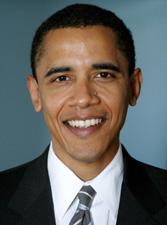 BO
BO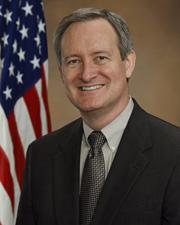 MC
MC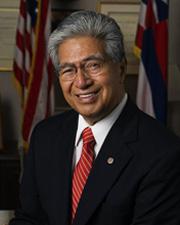 DKA
DKA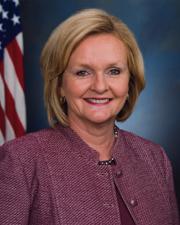 CM+10
CM+10
Floor Debate
15 membersWhat members said about S. 719 on the floor
Mr. President, I rise today, with Senator Kennedy and Senator Durbin, to introduce the State Court Interpreter Grant Program Act of 2007. This legislation would create a modest grant program to…
Mr. President, I rise today, with Senator Kennedy and Senator Durbin, to introduce the State Court Interpreter Grant Program Act of 2007. This legislation would create a modest grant program to provide much needed financial assistance to States for developing and implementing effective State court interpreter programs, helping to ensure fair trials for individuals with limited English proficiency.
States are already legally required, under Title VI of the Civil Rights Act of 1964, to take reasonable steps to provide meaningful access to court proceedings for individuals with limited English proficiency. Unfortunately, however, court interpreting services vary greatly by State. Some States have highly developed programs. Others are trying to get programs up and running, but lack adequate funds. Still others have no certification program at all. It is critical that we protect the
constitutional right to a fair trial by adequately funding State court interpreter programs.
Our States are finding themselves in an impossible position. Qualified interpreters are in short supply because it is difficult to find individuals who are both bilingual and well-versed in legal terminology. The skills required of a court interpreter differ significantly from those required of other interpreters or translators. Legal English is a highly particularized area of the language, and requires special training. Although anyone with fluency in a foreign language could attempt to translate a court proceeding, the best interpreters are those that have been tested and certified as official court interpreters.
Making the problem worse, States continue to fall further behind as the number of Americans with limited English proficiency--and therefore the demand for court interpreter services--continues to grow. According to the most recent Census data, 19 percent of the population over age five speaks a language other than English at home. In 2000, the number of people in this country who spoke English less than ``very well'' was more than 21 million, approaching twice what the number was ten years earlier. Illinois had more than 1 million. Texas had nearly 2.7 million. California had more than 6.2 million.
The shortage of qualified interpreters has become a national problem, and it has serious consequences. In Pennsylvania, a committee established by the Supreme Court called the State's interpreter program ``backward,'' and said that the lack of qualified interpreters ``undermines the ability of the . . . court system to determine facts accurately and to dispense justice fairly.'' When interpreters are unqualified, or untrained, mistakes are made. The result is that the fundamental right to due process is too often lost in translation, and because the lawyers and judges are not interpreters, these mistakes often go unnoticed.
Some of the stories associated with this problem are simply unbelievable. In Pennsylvania, for instance, a husband accused of abusing his wife was asked to translate as his wife testified in court. In recent testimony before the Judiciary Committee, Justice Kennedy described a particularly alarming situation where bilingual jurors can understand what the witness is saying and then interrupt the proceeding when an interpreter has not accurately represented the witness's testimony. Justice Kennedy agrees that the lack of qualified court interpreters poses a significant threat to our judicial system and emphasized the importance of addressing the issue.
This legislation does just that by authorizing $15 million per year, over five years, for a State Court Interpreter Grant Program. Those States that apply would be eligible for a $100,000 base grant allotment. In addition, $5 million would be set aside for states that demonstrate extraordinary need. The remainder of the money would be distributed on a formula basis, determined by the percentage of persons in that State over the age of five who speak a language other than English at home.
Some will undoubtedly question whether this modest amount can make a difference. It can, and my home State of Wisconsin is a perfect example of that. When Wisconsin's program got off the ground in 2004, using State money and a $250,000 Federal grant, certified interpreters were scarce. Now, just two years later, it has 43 certified interpreters. Most of those are Spanish, where the greatest need exists. However, the State also has interpreters certified in sign language and Russian. The list of provisional interpreters-- those who have received training and passed written tests--is much longer and includes individuals trained in Arabic, Hmong, Korean, and other languages. All of this progress in only two years, and with only $250,000 of federal assistance.
This legislation has the strong support of state court administrators and state supreme court justices around the country.
Our States are facing this difficult challenge, and Federal law requires them to meet it. Despite their noble efforts, many of them have been unable to keep up with the demand. It is time we lend them a helping hand. This is an access issue, and no one should be denied justice or access to our courts merely because of a language barrier, so I strongly urge my colleagues to support this critical legislation.
I ask unanimous consent that the text of the legislation be printed in the Record.
Mr. President, I rise today with Senator Kennedy to introduce the Family Reunification Act, a measure designed to remedy a regrettable injustice in our immigration laws. A minor oversight in the law has led to an unfortunate, and likely unintended, consequence. Parents of U.S. citizens are currently able to enter the country as legal permanent residents, but our laws do not permit their minor children to join them. Simply put, the Family Reunification Act will close this loophole by including the minor siblings of U.S. citizens in the legal definition of ``immediate relative.'' This legislation will ensure that our immigration laws can better accomplish one of the most important policy goals behind them--the goal of strengthening the family unit.
Congress took an important first step in promoting family reunification when it enacted the Immigration and Nationality Act. By qualifying as ``immediate relatives,'' this law currently offers parents, spouses and children of U.S. citizens the ability to obtain an immigrant visas to enter the country.
We can all agree that this is good immigration policy. Unfortunately, an oversight in this law has undermined the effectiveness of the important principle of family reunification. Each year, a number of families--in Wisconsin and across the country--are finding that they cannot take advantage of this family reunification provision.
Today, U.S. citizens often petition for their parents to be admitted to the United States as ``immediate relatives.'' As I have said, that is clearly allowed under current law. It is not always quite that simple, though. In a small number of cases, a problem arises when these U.S. citizens have minor siblings. Since they do not qualify as an ``immediate relative,'' the minor siblings are denied admission. So, a young man or woman can bring his parents into the country, but not his or her five year old brother or sister. Because the parents are unable to leave a young child behind, the child is not the only family member who does not come to the United States. The parents--forced to choose between their children--are effectively prevented from coming to this country as well. The result, then, is that we are unnecessarily keeping families apart by excluding minor siblings from the definition of immediate relative.
For example, one family in my home State of Wisconsin is truly a textbook example of what is wrong with this law. Effiong and Ekom Okon, both U.S. citizens by birth, requested that their parents, who were living in Nigeria, be admitted to as ``immediate relatives.'' The law clearly allows for this. Their father, Leo, had already joined them in Wisconsin, and their mother, Grace, was in possession of a visa, ready to join the rest of her family. However, Grace was unable to join her husband and sons in the United States because their six-year-old daughter, Daramfon, did not qualify as an ``immediate relative.'' Because it would be unthinkable for her to abandon her small child, Grace was forced to stay behind in Nigeria, separated from the rest of her family. That is not what this law was intended to accomplish.
It is difficult to determine the full extent of this problem. Because minor siblings do not qualify for visas, the Department of Homeland Security (DHS) does not keep track of how many families have been adversely affected. What we do know, however, is that the cases in my home State are not unique. Though the number is admittedly not large, DHS has notified us that they run into this problem regularly, with the number reaching into the hundreds each year. So, this change will not lead to an influx of many immigrants, but it will reunite a number of families who have unnecessarily been kept apart.
If only one family suffers because of this loophole, I would suggest that changes should be made. The fact that there have been numerous cases, probably in the hundreds, demands that we address this issue now.
Many parts of our immigration laws are outdated and in need of repair. The definition of ``immediate relative'' is no different. Congress's intent when it granted ``immediate relatives'' the right to obtain immigrant visas was to promote family reunification, but the unfortunate oversight which Senator Kennedy and I have highlighted has interfered with many families' opportunity to do just that. The legislation introduced today would expand the definition of ``immediate relative'' to include the minor siblings of U.S. citizens. By doing so, we can truly provide our fellow citizens with the ability to reunite with their family members. This is a simple and modest solution to an unfortunate problem that too many families have already had to face. I urge my colleagues to support this important legislation.
I ask unanimous consent that the text of the legislation be printed in the Record.
Mr. President, I rise today to speak about the ``Dignity for Wounded Warriors Act,'' which I am proud to introduce with Senator McCaskill. Last week, the Nation learned of the serious problems at…
Mr. President, I rise today to speak about the ``Dignity for Wounded Warriors Act,'' which I am proud to introduce with Senator McCaskill.
Last week, the Nation learned of the serious problems at Walter Reed Army Medical Center including decaying, cockroach-infested facilities and an overwhelmed patient-care bureaucracy. As described in a series of articles in the Washington Post by Dana Priest and Anne Hull, wounded soldiers are returning home from the battle in Iraq only to face a new battle to get the care and benefits they have earned.
These stories should not have come as a complete surprise to those who have followed the issue closely. We have long known that troops returning from battle face numerous bureaucratic hurdles when they get home. That's why I introduced legislation last year to smooth the transition from active duty to civilian life. The Lane Evans Bill expands and improves electronic medical records, face-to-face physical exams, better tracking of veterans, and other approaches to make life easier for returning veterans.
However, the stories out of Walter Reed last week did shock my conscience because, like many Senators, I have made the half-hour trek from the Capitol to visit Walter Reed. And I saw what the Army wanted the world to see: a shining world-class facility where the wounded can heal with state-of-the-art care. I never saw mold growing on the walls, or broken elevators, or the lack of adequate support for soldiers and their families. Walter Reed was supposed to be the flagship of military health care. Instead it has become an emblem of much that is wrong with the system, and a harbinger of more severe problems that may be hiding at other military hospitals and facilities that are not in the spotlight.
The problems at Walter Reed stem from complex causes, the most important of which is that the military and VA have not yet prepared for the growing flood of casualties from the Iraq war. Our injured troops did not hesitate to fight for us on the battlefield--we shouldn't make them fight again at home in order to receive the care they deserve. That is why Senator McCaskill and I are introducing the bipartisan Dignity for Wounded Warriors Act today. The bill will fix the problems at Walter Reed and improve care at our military hospitals and facilities.
Our bill would fix deplorable conditions at outpatient residence facilities by setting high standards and increasing accountability. Under this bipartisan measure, the standards will be clear. First, recovering soldiers' rooms will be as good or better as the best standard rooms for active-duty troops. Second, our injured heroes will not have to wait more than two weeks for maintenance problems to be repaired. Third, we will have zero tolerance for pest infestations. And finally, emergency medical personnel and crisis counselors will be available to recovering troops 24 hours a day.
The bill also tackles accountability problems. In the days following the Post stories, the Army vice chief of staff, and the Assistant Secretary of Defense for Health Affairs both said they were surprised by conditions at Walter Reed and directed blame on lower-ranking officers and noncommissioned officers. I also read in the Army Times that soldiers at Walter Reed have been warned not to talk to the media. Under our bill, we won't have to rely on the media to inform the Congress and the American people of the conditions at military hospitals. It requires that the Inspector General inspect facilities twice a year and report conditions to high-level officials and the public. Under our bill, military leaders will no longer be able to use the excuse that they didn't know conditions on the ground.
When injured servicemembers return home, they along with their family members face a mountain of paperwork and bureaucracy. From the moment a doctor determines a soldier may be unable to return to duty, it takes an average of 209 days for the military to figure out what to do with the soldier. The system is broken, and soldiers and their families are the ones who pay the price. Our bill addresses this problem by bringing the far flung parts of the military's Physical Disability Evaluation System (PDES) under one roof in each branch of the military. It also puts much of the system online so that caseworkers and servicemembers can manage their documents electronically. Today, students can apply to go to law school or business school online, without ever having to touch a piece of paper. Navigating the Pentagon bureaucracy should be that easy.
Our bill also calls for injury-specific procedures so that the most severely injured servicemembers can skip unnecessary steps. There's no reason why a soldier with a gunshot injury to the spine should face the same procedural hurdles in order to prove his injury was service- related as a soldier with less severe injuries. At the same time, nothing in our bill will prevent those servicemembers who wish to stay in the military from appealing decisions. Our bill also helps soldiers and their families navigate the PDES system with new hotlines, manuals, and an ombudsman to help answer questions.
Another problem at Walter Reed is casework. The caseworkers are doing amazing work helping soldiers schedule medical appointments, prepare paperwork, and obtain their everyday needs. However, the caseworkers are overwhelmed. Some have to care for 50 or more recovering soldiers at a time, more than double the ideal ratio. The Dignity for Wounded Warriors Act fixes this problem by forcing the Pentagon to work with each military hospital to set the ideal ratio of caseworkers to patients based on the particular needs of that facility. In the interim, our bill requires a temporary ratio of 1 caseworker for every 20 recovering servicemembers. This will push the Pentagon to begin hiring and training caseworkers right away.
This legislation also provides important new support for family members who often have to endure economic and emotional hardship to accompany their loved one through the recovery process and the currently flawed PDES process. It clarifies that non-medical attendees and family members on invitational orders may receive medical care and mental health counseling while caring for injured loved ones at military facilities. It extends employment and job placement training services to family members. And most important, this bipartisan legislation provides federal protections against a family member on invitational orders being fired. I think we can all agree that a mother should never have to choose between caring for a wounded son or daughter and keeping her job.
Secretary Gates promised a thorough investigation by outside experts and accountability for those responsible. Our bill builds on that model by establishing an Oversight Board of outside experts to review the Pentagon's progress in implementing this bill. The Board would be appointed by Congress and the executive branch and be made up of veterans, wounded soldiers, family members and experts on military medicine. The Oversight Board will be an important check to make sure the Defense Department is following through to care for recovering troops.
We cannot move fast enough to make sure our wounded troops are getting the care they need. No cost is too great. We must pass the Dignity for Wounded Warriors Act quickly and follow up with the adequate resources to ensure the men and women recovering at military hospitals across the world get the best care we can offer.
Mr. President, I rise today with my colleagues, 16 bipartisan cosponsors, to introduce the S. 700. Approximately 1 year ago, Senator Lincoln and I introduced the Collaboration for the Recovery of the…
Mr. President, I rise today with my colleagues, 16 bipartisan
cosponsors, to introduce the S. 700. Approximately 1 year ago, Senator Lincoln and I introduced the Collaboration for the Recovery of the Endangered Species Act, or CRESA, an earlier bill to amend the Endangered Species Act or ESA. S. 700 is an updated version of the Endangered Species Recovery Act or ESRA, which we introduced on December 6, 2006. Like ESRA, S. 700 does not amend the current ESA, but builds on ideas set forth in the original CRESA. It creates policies that finance the recovery of endangered species by private landowners. S. 700 makes it simpler for landowners to get involved in conservation and reduces the conflict that often emanates from the ESA. It will be an important codification of much-needed incentives to help recover endangered species. And, since the introduction of CRESA 1 year ago, I'm proud to count over 100 different species and landowner organizations and advocates that have partnered with us in support of this important tax legislation.
Over 80 percent of endangered species live on private property. Under the current law, however, there are too few incentives and too many obstacles for private landowners to participate in conservation agreements to help recover species. S. 700, like the voluntary farm bill conservation programs that inspired its creation, will make it more attractive for private landowners to contribute to the recovery of species under the ESA.
This bill resulted from effective and inclusive collaboration among key stakeholders most affected by the implementation of the ESA. Landowner interests include farmers, ranchers, and those from the natural resource-using communities. For example, some current supporters of S. 700 who contributed invaluable advice are the American Farm Bureau and the Society of American Foresters. This could not rightly be called a collaborative project without the vital and necessary input received from the Defenders of Wildlife, Environmental Defense and the National Wildlife Federation--key environmental groups that made significant contributions. They understand that landowner must be treated as allies to ensure success in the long-run for the conservation of habitat and species. Finally, while the genesis of this bill has many roots, a passionate catalyst was James Cummins of Mississippi Fish and Wildlife Foundation, whose great concern for the outdoors provided inspiration to move these ideas forward.
These experts worked together to craft S. 700, which provides new tax incentives for private landowners who voluntarily contribute to the recovery of endangered species. The tax credits will reimburse landowners for property rights affected by agreements that include conservation easements and costs incurred by species management plans.
For landowners who limit their property rights through conservation easements, there will be 100 percent compensation of all costs. That percentage declines to 75 percent for 30-year easements and 50 percent for cost-share agreements.
It is worth noting that this is the same formula that works successfully for farm bill programs such as the Wetlands Reserve Program. Private property owners are appropriately rewarded for crucial ecological services that they provide on their property. The public benefits from these services, which ensure biodiversity. While the primary returns from this investment are protection and recovery of endangered species, the public will also undoubtedly gain additional benefits such as aesthetically pleasing open space, a reduction in the number of invasive species and enhanced water quality.
The legislation provides a list of options that give landowners a choice--a crucial element for the success of this proposal. For some landowners, a conservation easement will be the most attractive option. Easements are flexible tools that can be tailored to each landowner and species' interests. An easement restricts certain activities, but it still works well with traditional rural activities such as ranching and farming. For agreements without easements, there is flexibility to do what is necessary for the concerned species without the need to sacrifice property rights into perpetuity.
The tax credits provide essential funding that is necessary to respect private property rights. Wildlife should be an asset rather than a liability, which is how it has sometimes been viewed under the ESA. With wildlife becoming valuable to a landowner, those who may have been reluctant to participate in recovery efforts in the past will be more likely to contribute with these new incentives. When people want to take part in the process and do not fear it, the likelihood of conflict and litigation is reduced. For years, this type of conflict has proven costly not only financially to individuals and the government, but also in terms of relationships between people who share the land and natural resources. With a new trust and new model for finding conservation solutions, we can improve and expand our conservation work.
Provisions have been made to accommodate landowners whose taxes may be less than the tax credit provides. Partnerships in the agreements will allow any party to an agreement to receive a credit as long as they pay or incur costs as a result of the agreement. This language will allow creative collaboration among governments, landowners, taxpayers and environmentalists, further increasing the number of people involved in finding new solutions for conservation.
Furthermore, this bill also expands tax deductions for any landowner who takes part in the recovery plans approved under the ESA, and allows landowners to exclude from taxable income certain Federal payments under conservation cost-share programs. This will allow both individuals and businesses to deduct the cost of recovery work without bureaucratic obstacles.
This bill not only sets forth the financing for private landowners, but it also makes it easier to implement the agreements. Landowners will receive technical assistance to implement the agreements. Also, to remove some legal disincentives to recover species, liability protection may be provided to protect the landowners from penalties under the ESA. This removes the fear of trying to help endangered species. Currently, more species usually just means more liability for a landowner.
As a result of these incentives, I expect to see a phenomenal increase in the number of success stories. These stories will sound familiar to those creative collaborators working on the ground now where we have learned that the types of tools provided in this bill can work if offered consistently.
The Endangered Species Recovery Act is very exciting to those of us who value protecting our natural resources. It provides collaborative, creative ways to balance conservation with economic uses of our natural resources. It also preserves rural ways of life. I look forward to working with my colleagues in the Senate and House to move ahead with this legislation which will provide a new model for conservation to do better work. I look forward to working with my colleagues in the Senate and House to move ahead with this legislation.
I am deeply grateful to my colleagues from Arkansas, Iowa and Montana for their essential expertise and support to create S. 700. I ask unanimous consent that the text of the bill be printed in the Record.
Mr. President, I rise today to introduce the Pet Protection Act of 2007. In 1966, Congress passed the Animal Welfare Act to prevent the abuse and mistreatment of animals and to provide assurance that…
Mr. President, I rise today to introduce the Pet Protection Act of 2007. In 1966, Congress passed the Animal Welfare Act to prevent the abuse and mistreatment of animals and to provide assurance that family pets would not be sold for laboratory experiments. Although the Animal Welfare Act provides a solid foundation to stop the mistreatment of animals, more needs to be done to protect pets and pet owners from the actions of Class B animal dealers, also known as ``random source'' dealers.
Across the Nation, random source animal dealers acquire tens of thousands of dogs and cats, many of them family pets, through deceit and fraud. Some of their tactics include tricking animals owners into giving away their dogs and cats by posing as someone interested in pet adoption and the outright theft of family pets left unattended. The treatment of the animals captured and sold by random source dealers is often shocking and cruel. Hundreds of animals are kept in squalid conditions with just enough food and water to keep them alive until sold.
This bill does not address the larger issue of whether animals should or should not be used in research facilities. Medical research is one of our primary weapons in the discovery of new drugs and surgical techniques that help develop cures for life-threatening diseases and animal research has been, and continues to be, a fundamental part of scientific advances. Instead, this legislation targets the unethical practice of selling stolen pets and stray animals to research facilities. While I do not believe that research laboratories intentionally seek out fraudulently obtained animals, it does happen. And it does need to be stopped.
My bill will strengthen the Animal Welfare Act by prohibiting the use of random source animal dealers as suppliers of dogs and cats to research laboratories by making funds unavailable to research facilities that purchase animals from a dealer that holds a Class B license under the Animal Welfare Act. In doing so, it also simultaneously encourages the use of legitimate sources such as USDA- licensed Class A dealers. I urge my colleagues to join me in my efforts to curb the abusive practices of random source dealers by supporting this bill.
Mr. President, I rise today with my colleagues from New Hampshire, Vermont, and Montana, Senators Sununu, Leahy and Tester, to reintroduce legislation to address problems with the REAL ID Act of 2005.
Last year, Senator Sununu and I introduced S. 4117, the Identity Security Enhancement Act, which would repeal the REAL ID Act and reinstitute the shared rulemaking process and more reasonable guidelines established in the Intelligence Reform and Terrorism Prevention Act of 2004. We joined together to convey our concerns with REAL ID to the Department of Homeland Security (DHS) and to urge the Department to ensure that the forthcoming regulations implementing REAL ID addressed our concerns. Now, on the eve of DHS releasing the proposed REAL ID regulations, we once again introduce our legislation as a placeholder as Congress and the American people review how DHS proposes to implement this costly and controversial law.
I plan to hold a hearing on the REAL ID regulations in the Oversight of Government Management Subcommittee shortly, and I will develop comprehensive legislation to address any privacy and civil liberties issues arising under the Act and any unrealistic burdens placed on the states.
From the time the REAL ID Act became law nearly two years ago, hundreds of organizations--ranging from the National Governor's Association (NGA) to the American Civil Liberties Union (ACLU)--have voice their strong opposition to REAL ID. None of these groups were heard by Congress before the bill was passed in May 2005 as there were no hearings to understand the repercussions of such sweeping legislation.
Rather, the REAL ID Act was attached to the Emergency Supplemental Appropriations Act for Defense, the Global War on Terror, and Tsunami Relief Act (P.L. 109-13) in Conference. It was wrong to include the legislation that has such a massive impact on State and local governments without their input. Not having a full debate on the measure to determine its impact has led an increasing number of State legislatures to introduce and pass legislation to condemn REAL ID and, in some cases, prohibit the state from spending money to implement the Act.
My two primary concerns with REAL ID are that the law places an unrealistic and unfunded burden on state governments and erodes Americans' civil liberties and privacy rights.
There is nothing realistic about REAL ID. The extremely costly and complex set of electronic systems that will be required to connect the thousands of local Departments of Motor Vehicles (DMVs) to one another and to a host of Federal agencies as required under REAL ID may not be practical. This would cost $1.42 billion according to a September 2006 report issued by the NGA, the National Conference of State Legislatures (NCSL), and the American Association of Motor Vehicle Administrators (AAMVA). In addition, the costs to re-issue every current driver's license under the new screening process is estimated to cost approximately $8 billion over five years. Combined with the other requirements imposed on states by REAL ID, such as new design requirements for the ID cards and on-site security, REAL ID will cost over $11 billion. Congress has appropriated only $40 million for REAL ID implementation, which leaves a hefty price tag for the states, especially for legislation that was passed with no review.
In addition to the unrealistic burden REAL ID places on states, REAL ID is a serious threat to our privacy rights and civil liberties.
As I said last year, the REAL ID Act will require every driver's licensing agency to collect and store substantial numbers of records containing licensees' most sensitive personally identifiable information, including one's social security number, proof of residence, and biometric identifiers such as a digital photograph and signature. If the state databases are compromised, they will provide one-stop access to virtually all information necessary to commit identity theft.
Moreover, the sharing of the aggregated personally identifiable information of licensees between and amongst various government agencies and employees at the federal, state, and local level, as contemplated by the REAL ID Act, potentially allows millions of individuals access to that information without protections or safeguards.
Despite these obvious threats to Americans' privacy, the REAL ID Act fails to mandate privacy protections for individuals' information nor does it provide states with the means to implement data security and anti-hacking protections that will be required to safeguard the new databases mandated by the Act.
REAL ID exacerbates the threat of identity theft which threatens our security by giving us a false sense of security.
Unfunded mandates and the lack of privacy and security requirements are real problems that deserve real consideration and real solutions. Congress
has a responsibility to ensure that driver's licenses and ID cards issued in the United States are secure--both from would-be terrorists and identity thieves--affordable, and practical.
I ask unanimous consent that the text of the bill be printed in the Record.
Mr. President, it is my honor to join my distinguished colleague from Illinois, Senator Obama, today in introducing the Dignity for Wounded Warriors Act, a bill that serves to better the experience…
Mr. President, it is my honor to join my distinguished colleague from Illinois, Senator Obama, today in introducing the Dignity for Wounded Warriors Act, a bill that serves to better the experience so many recovering military servicemembers and their families have in dealing with the military healthcare system and its bureaucracy.
It is not often that you read something in the paper that makes you sick, but this is precisely the feeling I had just over a week ago as I read a Washington Post article that spoke of awful living conditions and an interminable bureaucracy being experienced by our war wounded who are receiving outpatient care at Walter Reed Army Medical Center.
I will not stand aside as those who have fought for our country come home to fight new battles against a crippling bureaucracy just to get the compensation they have more than earned. They shouldn't have to live in substandard conditions while they are recovering from their injuries.
Our legislation directly tackles these problems. The principle is simple: our wounded and recovering servicemembers must receive the best treatment. They can't live in substandard housing as they recover. And they must have a user-friendly system to help them apply for the appropriate disability and benefits compensation. It's the least we can do for all they have done for us.
For example, each military department has a standard for their dormitories and barracks. I know that not every dormitory or barracks meets the highest standard that the service sets, but that each service is steadily working to reach this standard across their facilities. It is my belief, and this bill serves to establish, that the lowest standard acceptable for a returning wounded servicemember should be the highest existing standard in each military service. Facing the daunting challenge of recovering from war wounds--both psychological and physical--our returning servicemembers should not be living among vermin and mold. They should not be placed in temporary, cramped, makeshift, ancient or transient quarters. We're not demanding the Taj Mahal. We are demanding decent living conditions to help these injured men and women.
Further, when problems exist in the living quarters of our recovering servicemembers, they should be identified and repaired quickly. This bill establishes strict measures to facilitate reporting of unsatisfactory living conditions and to mandate timely repair. It also establishes measures to ensure that independent parties are inspecting living quarters in order to prevent any syndrome whereby those closely engaged in dealing with these facilities are overly focused on completing the mission with what they have as opposed to what they should have.
I was also appalled to learn of the extensive, confusing bureaucracy that greeted our recovering servicemembers in the outpatient care process. With numerous commands, organizations, advocates, doctors, commanders and any number of others involved in the process, recovering servicemembers found themselves navigating a complicated process and often without a map. They also have to fill out numerous forms, request records, check off bureaucratic blocks, get the right language in their doctor's evaluations, document their illnesses, capture the symptoms they are experiencing and more. It is safe to say that the process poses a daunting challenge to even a fully healthy individual--but imagine the challenge for someone far from home and facing the realities of the wounds of war.
Complicating the challenges, those tasked to provide these servicemembers and their families with assistance have been faced with large caseloads and insufficient resources. This legislation requires responsible caseloads for military leaders and caseworkers--and it requires that those providing this assistance not just have
a caseload that guarantees a recovering servicemember the attention they need and deserve, but that these caseworkers are well trained.
I also learned that those who come to military treatment facilities like Walter Reed to help their loved ones often face uphill battles. I am proud that this legislation reaches out to protect those loved ones who risk their livelihood to care for our recovering servicemembers by providing them medical care as well as protections to secure the jobs they leave behind.
Today, I visited Walter Reed, talked with our recovering servicemembers, toured the facilities and discussed these issues with Walter Reed's leaders. I can confidently say that those treating our servicemembers are with me--they want the very best for our recovering servicemembers and for their families. I know that the quality of care being provided at Walter Reed and at many other military hospitals is exceptional and I applaud the caregivers.
But I also know that we have all failed to provide the best service and support to many during the outpatient care process. Their living quarters were not the best. The Physical Disability Evaluation System they experience is too bureaucratic. It is time to deliver the best. This legislation seeks to provide it.
This is fair legislation. It balances requiring immediate changes with letting the Department of Defense study what is necessary and to subsequently implement incremental change. It empowers our physicians by not requiring random timelines for medical processing or medical care, but it requires that care and processing happen with manageable, understandable and streamlined procedures that equally empowers the servicemember. And this bill requires that trained, professional and caring providers be available to recovering servicemembers and their families in sufficient numbers and in the appropriate places throughout the care process.
In closing, I want to thank Senator Obama for his efforts in teaming with me to produce this important legislation. But mostly I want to thank all those serving our nation in uniform today. Their sense of duty is remarkable. Their sacrifice is great. Their heroism unmatched. They have given their best to our country and our country is committed to giving them the best in return.
Show 8 more

Mr. President, American consumers and public safety officials increasingly find themselves confronted by scams in the digital age. The latest scam is known as caller I.D. ``spoofing.'' Today, I am…
Mr. President, American consumers and public safety officials increasingly find themselves confronted by scams in the digital age. The latest scam is known as caller I.D. ``spoofing.'' Today, I am introducing a bipartisan bill with Senator Snowe--The Truth in Caller I.D. Act of 2007--to put an end to fraudulent caller I.D. spoofing.
It seems like every week we hear of new threats to our privacy and new ways to use telecommunications networks to endanger consumers' financial security and physical safety. For several years now, I have been fighting back against these threats, pushing legislation to combat frauds such as identity theft, the unauthorized sale of consumer telephone records and spyware. It's now time to put an end to the practice of caller I.D. spoofing.
What is caller I.D. spoofing? It's a technique that allows a telephone caller to alter the phone number that appears on the recipient's caller I.D. system. In other words, spoofing allows
someone to hide behind a misleading telephone number to try to scam consumers or trick law enforcement officers.
Let me give you a few shocking examples of how caller I.D. spoofing has been exploited during the past two years:
In one very dangerous hoax, a sharp-shooting SWAT team was forced to shut down a neighborhood in New Brunswick, NJ, after receiving what they believed was a legitimate distress call. But what really happened was a caller used spoofing to trick law enforcement into thinking that the emergency call was coming from a certain apartment in that neighborhood. It was all a cruel trick perpetrated with a deceptive telephone number.
In another example, identity thieves bought a number of stolen credit card numbers. They then called Western Union, set up caller I.D. information to make it look like the call originated from the credit card holder's phone line, and used the credit card numbers to order cash transfers, which the thieves then picked up.
In other instances, callers have used spoofing to pose as government officials. In recent months, there have been numerous instances of fraudsters using caller I.D. fraud to pose as court officers calling to say that a person has missed jury duty. The caller then says that a warrant will be issued for their arrest, unless a fine is paid during the call. The victim is then induced to provide credit card or bank information over the phone to pay the ``fine.''
Furthermore, while these examples are serious enough, think about what would happen if a stalker used caller I.D. spoofing to trick his victim into answering the telephone, giving out personal information, or telling the person on the other end of the line about their current whereabouts. The results could be tragic.
According to experts, there are a number of Internet websites--with names like Tricktel.com and Spooftel.com--that sell their services to criminal and identity thieves. Any person can go to one of these websites, pay money to order a spoofed telephone number, tell the website which phone number to reach, and then place the call through a toll-free line. The recipient is then tricked when he or she sees the misleading phone number on his or her caller I.D. screen.
In essence, these websites provide the high-tech tools that identity thieves need to do their dirty work. Armed with a misleading phone number, an identity thief can call a consumer pretending to be a representative of the consumer's credit card company or bank. The thief can then ask the consumer to authenticate a request for personal account information. Once a thief gets hold of this sensitive personal information, he can access a consumer's bank account, credit card account, health information, and who knows what else.
Furthermore, even if a consumer does not become a victim of stalking or identity theft, there is a simple concept at work here. Consumers pay money for their caller I.D. service. Consumers expect caller I.D. to be accurate because it helps them decide whether to answer a phone call and trust the person on the other end of the line.
If the caller I.D. says that my wife is calling me, when I pick up the phone I expect my wife to actually be on the other end of the line. Instead, we have fraudsters and others who want to abuse the system and disguise their true identities. That defeats the whole purpose of caller I.D.
Unfortunately, the Federal Communications Commission and the Federal Trade Commission have been slow to act on this latest scam. In the meantime, many spoofing companies and the fraudsters that use them believe their activities are, in fact, legal. Well, it's time to make it crystal clear that spoofing is a scam and is not legal.
How does the bipartisan Truth in Caller I.D. Act of 2007 address the problem of caller I.D. spoofing?
Quite simply, this bill plugs the hole in the current law and prohibits fraudsters from using caller identification services to transmit misleading or inaccurate caller I.D. information. This prohibition covers both traditional telephone calls and calls made using Voice-Over-Internet (VoIP) service.
Anyone who violates this anti-spoofing law would be subject to a penalty of $10,000 per violation or up to one year in jail, as set out in the Communications Act. Additionally, this bill empowers States to help the Federal Government track down and punish these fraudsters.
I invite my colleagues to join Senator Snowe and myself in supporting the Truth in Caller I.D. Act of 2007. We should waste no time in protecting consumers and law enforcement authorities against caller I.D. spoofing.
I ask unanimous consent that the text of the Truth in Caller I.D. Act of 2007 be printed in the Record.

Mr. President, why hold off for tomorrow what we can do today? The current healthcare crisis in our Nation did not happen overnight. It has been accumulating as a result of a lack of serious…
Mr. President, why hold off for tomorrow what we can do today? The current healthcare crisis in our Nation did not happen overnight. It has been accumulating as a result of a lack of serious attention to the most pressing healthcare issues, including healthcare workforce shortages. As a husband and a parent, I pray every day that my wife and children will have access to the quality healthcare they deserve when they need it. As a public official, I believe that it is my responsibility to help make that care available for not only my own family, but also for the families in the State of Illinois and across the Nation.
The growing shortage of critical care physicians undermines the quality and availability of health care services in the United States. This shortage can be expected to disproportionately impact rural and other areas of the United States that already often suffer from a sub- optimal level of critical care services. When a loved one needs a critical care doctor, would we not want one to be available? If research tells us that their recovery may be better and their recovery time faster, would we not want our loved one to have access to a critical care doctor?
The Leap Frog Group has clearly documented that significant improvement in outcomes--in both quality and cost--result when a critically ill or injured patient is seen by an intensivist. With a greater use of intensivists, an estimated 54,000 deaths that currently occur in ICUs could be avoided. Unfortunately, only one-third of our critically ill citizens are treated by physicians and nurses specifically trained to manage their complex health issues.
In June 2003, Congress asked the Health Resources and Services Administration--HRSA--to examine the healthcare needs of a growing population and the availability of pulmonary and critical care physicians. In its May 2006 report to Congress entitled ``The Critical Care Workforce: A Study of the Supply and Demand for Critical Care Physicians,'' HRSA found that the country does not have enough physicians trained in critical care medicine to treat all those in need of the care. The report projected future demand for these services and found that, as a result of having to staff ICUs with critical care doctors, a total of 4,300 intensivist physicians will be needed when only 2,800 are available. The HRSA report recognized that the demand in the United States for critical care medical services is rising sharply and will continue to do so.
To proactively address the healthcare needs of our nation, I am pleased to join with my colleague Senator Crapo today to introduce legislation to address the looming shortage of critical care providers. Our bill, The Patient-Focused Critical Care Enhancement Act authorizes a series of modest and sensible measures that--if enacted now instead of waiting for this shortage to worsen--can help to obviate the problem.
First, the Patient-Focused Critical Care Enhancement Act would direct the Agency for Health Research and Quality to assess the current state of and recommend ``best practices'' for critical care medicine. The authorization of demonstration projects on innovations in ICU services and on family-centered, multi-disciplinary approaches to critical care services are important for determining how to improve the quality of the care delivered and how to best make use of our existing resources of critical care doctors.
Our bill would also expand telemedicine opportunities for critical care physicians to promote efforts relating to critical care and ensure that all communities have greater access to this important, lifesaving care. For our rural communities and medically underserved areas, the need for critical care doctors is exacerbated. This bill will hopefully expand the effectiveness of existing critical care providers in environments where intensivists are in short supply.
Finally, to address the supply problem, the bill would allow for the National Health Service Corps to support and encourage critical care providers to practice in medically underserved areas.
The Patient-Focused Critical Care Enhancement Act is strongly endorsed by the key medical specialty societies and patient groups involved in critical care medicine, including the American College of Chest Physicians, the American Thoracic Society, the Society for Critical Care Medicine, the Association of Critical Care Nurses and the Acute Respiratory Distress Syndrome Foundation.
This multipronged approach is to look at both short term and long term solutions to a growing concern. But in today's complex healthcare situation, multiple solutions are a necessity. We do not want to face this shortage in the future in a direr situation as the nursing shortage currently is.
The answer to the opening question is simple. We must not hold off for tomorrow what we can do today, and we must not wait for our healthcare crisis to worsen. Our country will face a critical care workforce shortage. I want my family to have access to the best quality care when they need it, and this includes having access to a critical care doctor. Passage of the Patient-Focused Critical Care Enhancement Act is a step in that direction.
Mr. President, I ask unanimous consent that the text of the bill be printed in the Record.
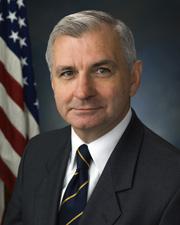
Mr. President, I am pleased to join my colleagues, Senator Coleman, and Representatives Eshoo and Ramstad, in reintroducing the Consortium on the Impact of Technology in Health Services Act. We face…
Mr. President, I am pleased to join my colleagues, Senator Coleman, and Representatives Eshoo and Ramstad, in reintroducing the Consortium on the Impact of Technology in Health Services Act.
We face a challenging and exciting time in the evolution of America's health care system. Today, roughly 45 million men and women are over age 65. A full doubling of the elderly population is predicted to occur by the year 2030--with the first of the baby boom generation turning 65 in the year 2011--only four years from now.
Nowhere is the aging of the population more apparent than in my home State of Rhode Island. We exceed the national average in terms of citizens over the age of 65 as well as those over the age of 85. In a State of slightly more than a million people, almost 15 percent of the population is over the age of 65 today. According to Census Bureau estimates, the number of elderly is expected to increase to 18.8 percent of Rhode Island's population by 2025.
Dramatic increases in life expectancy over the last century can be attributed to tremendous advances in health and medical research. These demographic changes also pose new challenges to our health care system that require creative and innovative solutions.
In addition to Americans living longer, keeping up with advancements in medical science poses unique burdens and challenges for our health care system. We are facing shortages in a number of critical health care fields--nurses, primary care physicians, and geriatricians--to name a few. These workforce issues further hinder our ability to keep up with the health care needs of aging Americans.
Greater use of technology has the potential to enhance the quality of care to our aging population and enable seniors to remain healthy and live independently longer. The overwhelming
majority of seniors in my State and across the Nation want to ``age in place''--in their homes--close to their loved ones. Indeed, a growing number of the baby boom generation support funding aging services technology research, and believe technology will allow them to live longer and more independently.
The application of technology in the aging health care services field would also help mitigate the burden on providers, by allowing physicians, home health care workers, and family members to keep in regular contact with patients and loved ones. Better monitoring of elderly patients would also serve to identify changes in their health condition before a serious problem arises.
The bill we are introducing today would build on groundbreaking research and public-private partnerships to find evidence-based approaches to behavioral assessment and non-intrusive health monitoring. Improving in-home monitoring technologies and remote diagnostics will provide seniors and their caregivers with greater independence and flexibility. A recent study found that Americans, particularly those with chronic conditions, are already utilizing the Internet and online tools to better manage their health. Using technology to enhance health care professionals ability to access vital health information will not only improve diagnosis and treatment, but it will also inform the health decisions of seniors and their families.
Smarter applications of technology in caring for the aged could also address some of the growing concerns with skyrocketing budget deficits. As we grapple with Medicare and Medicaid taking up a growing proportion of overall federal spending, we need to carefully balance health care expenditures while also improving the quality of care. We need to use precious health care dollars wisely and prudently as we seek creative ways to continue to provide quality health services to the elderly.
The Consortium on the Impact of Technology in Health Services Act will bring together experts from the medical, aging, and technology fields to build a vision and a framework for the development and implementation of a 21st century health care system able to meet the needs of our burgeoning aging population.
We need to change the way we think about health care for our Nation's seniors. We need a model that is oriented toward health promotion and disease prevention. This legislation gives us a jumpstart on developing and implementing the tools and strategies to serve the senior population of America more effectively and with greater cost savings.
I am pleased to join with my colleagues in introducing this important initiative and hope the Senate will give it careful consideration.
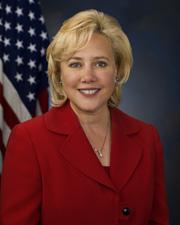
Mr. President, as we all know, there was a tremendous amount of criticism of the Federal Government's response to Hurricanes Katrina and Rita last year. Things are better now and the region is slowly…
Mr. President, as we all know, there was a tremendous amount of criticism of the Federal Government's response to Hurricanes Katrina and Rita last year. Things are better now and the region is slowly recovering. But, having luckily survived the 2006 hurricane season with no major storms, and with the 2007 season a few months away, we must be sure that if we have another disaster, the Federal Government's response will be better this time around. Disaster response agencies have to be better organized, more efficient, and more responsive in order to avoid the problems, the delays, mismanagement, and the seeming incompetence that occurred in 2005.
Today, I am proud to sponsor legislation to improve the disaster response of one agency that had a great deal of problems last year, the Small Business Administration (SBA). This bill, the ``Small Business Disaster Recovery Improvement Act,'' makes a major improvement to the SBA's disaster response and provides them with an essential tool to ensure that they are more efficient and better prepared for future disasters--big and small. I should note that this bill is a result of intensive bipartisan work over the past couple of months on a larger SBA Disaster Reforms bill, S. 137, the ``Small Business Disaster Response and Loan Improvements Act,'' which was introduced early in the 110th Congress. I feel strongly that this provision, an Expedited Disaster Assistance Loan Program for businesses, should be passed during this session of Congress, therefore I wanted to also introduce it in separate legislation for the 110th Congress. That said, I will continue to work with my colleagues on the Small Business Committee, Senators Kerry and Snowe, respectively Chair and Ranking Member of the Senate Small Business Committee, as well as with my colleague Senator Vitter to include this provision along with more comprehensive SBA Disaster Assistance reforms that we hope to enact in the coming months.
After Hurricanes Katrina and Rita hit, our businesses and homeowners had to wait months for loan approvals. I do not know how many businesses we lost because help did not come in time. What these businesses needed was immediate, short-term assistance to hold them over until SBA was ready to process the tens of thousands of loan applications it received.
That is why this legislation provides the SBA Administrator with the ability to set up an expedited disaster assistance business loan program to make short-term, low- interest loans to keep them afloat. These loans will allow businesses to make payroll, begin making repairs, and address other immediate needs while they are awaiting insurance payouts or regular SBA Disaster Loans. However, I realize that every disaster is different and could range from a disaster on the scale of Hurricanes Katrina or Rita or 9-11, to an ice storm or drought. This legislation gives the SBA additional options and flexibility in the kinds of relief they can offer a community. When a tornado destroys 20 businesses in a small town in the Midwest, SBA can get the regular disaster program up and running fairly quickly. You may not need short-term loans in this instance. But if you know that SBA's resources would be overwhelmed by a storm--just as they were initially with the storms of 2005--these expedited business loans would be very helpful.
The Small Business Disaster Recovery Improvement Act will provide an
essential tool to make the SBA more proactive, flexible, and most important, more efficient during future disasters. If SBA is not in the business of short-term assistance for future disasters, I feel that we will again see businesses fail while waiting for SBA to get its act together. The agency has implemented some major changes to its Disaster Assistance Program but, if the storms of 2005 taught us anything it was that the best laid plans can fail. This Expedited Disaster Assistance Loan Program would ensure that SBA has a backup tool to provide immediate assistance to impacted businesses. Again, I look forward to working with both Senator Snowe and Senator Kerry during the coming weeks to ensure that the SBA has everything it needs to respond to future disasters.
I ask unanimous consent that the text of the legislation be printed in the Record.
Mr. President, I rise today to re-introduce legislation that will close an egregious loophole in federal law. Currently, this loophole permits solid waste management facilities operated near…
Mr. President, I rise today to re-introduce legislation that will close an egregious loophole in federal law. Currently, this loophole permits solid waste management facilities operated near railroads to go unregulated--free from meeting any minimum level of safety, health, and environmental standards. Basically, this loophole prevents state or local law from regulating the operation of these facilities on property owned or controlled by railroads.
In fact, just last week, a United States District Court judge declared this loophole alive and well. By shutting down the State of New Jersey's efforts to regulate solid waste rail facilities, this ruling allows the continuing proliferation of these unregulated facilities--which are already spreading quickly throughout the Northeast United States.
These unregulated facilities present an imminent threat to public health and the environment. My bill, the Clean Railroads Act of 2007, will close this loophole once and for all. Almost 2 years ago, I first introduced legislation to address this problem, and I renew that effort today.
This problem could easily be solved by proper interpretation of current federal law. Such an interpretation could be made by the federal Surface Transportation Board (STB), an independent board charged with economic regulation of railroads. However, despite several opportunities, the STB has chosen not to define a clear position on this issue. I have urged the Board members to address this problem, as the loophole in federal law has allowed even more of these unregulated facilities to operate.
Last week's court ruling has highlighted the need to find a solution to this problem immediately, and my bill would do just that.
Let me be clear that my concern is not the transport of solid waste by rail. Railroads provide a vital role in commerce in the United States and the benefits of rail transportation are numerous, as we in New Jersey know. Further, the transportation of waste via rail is not at issue here, and I am not opposed to the operation of solid waste management facilities on property owned or controlled by railroads.
My chief concern is the lawful management of solid waste facilities. If a solid waste management facility is to be operated on rail property, it must be regulated like any other such facility. That is not happening today.
The threats posed by unregulated waste management facilities operating on property owned or controlled by railroads are so great that a broad and diverse coalition of public and private sector entities have been formed to oppose these rogue operations. I thank these coalition members for their continued efforts, and will be looking forward to the day in which their fears over this issue can be permanently assuaged.
Responsible management of solid waste requires safeguards to protect public health and the environment. As Chairman of the Commerce Committee's Subcommittee on Surface Transportation and Merchant Marine Infrastructure, Safety, and Security, which has jurisdiction over railroads and the Surface Transportation Board, I will work to ensure this loophole does not continue to let the hazards of unregulated solid waste rail facilities affect the lives of New Jerseyans and other Americans.
I ask unanimous consent that the text of the bill be printed in the Record.
Mr. President, I rise today to re-introduce legislation that will close an egregious loophole in federal law. Currently, this loophole permits solid waste management facilities operated near…
Mr. President, I rise today to re-introduce legislation that will close an egregious loophole in federal law. Currently, this loophole permits solid waste management facilities operated near railroads to go unregulated--free from meeting any minimum level of safety, health, and environmental standards. Basically, this loophole prevents state or local law from regulating the operation of these facilities on property owned or controlled by railroads.
In fact, just last week, a United States District Court judge declared this loophole alive and well. By shutting down the State of New Jersey's efforts to regulate solid waste rail facilities, this ruling allows the continuing proliferation of these unregulated facilities--which are already spreading quickly throughout the Northeast United States.
These unregulated facilities present an imminent threat to public health and the environment. My bill, the Clean Railroads Act of 2007, will close this loophole once and for all. Almost 2 years ago, I first introduced legislation to address this problem, and I renew that effort today.
This problem could easily be solved by proper interpretation of current federal law. Such an interpretation could be made by the federal Surface Transportation Board (STB), an independent board charged with economic regulation of railroads. However, despite several opportunities, the STB has chosen not to define a clear position on this issue. I have urged the Board members to address this problem, as the loophole in federal law has allowed even more of these unregulated facilities to operate.
Last week's court ruling has highlighted the need to find a solution to this problem immediately, and my bill would do just that.
Let me be clear that my concern is not the transport of solid waste by rail. Railroads provide a vital role in commerce in the United States and the benefits of rail transportation are numerous, as we in New Jersey know. Further, the transportation of waste via rail is not at issue here, and I am not opposed to the operation of solid waste management facilities on property owned or controlled by railroads.
My chief concern is the lawful management of solid waste facilities. If a solid waste management facility is to be operated on rail property, it must be regulated like any other such facility. That is not happening today.
The threats posed by unregulated waste management facilities operating on property owned or controlled by railroads are so great that a broad and diverse coalition of public and private sector entities have been formed to oppose these rogue operations. I thank these coalition members for their continued efforts, and will be looking forward to the day in which their fears over this issue can be permanently assuaged.
Responsible management of solid waste requires safeguards to protect public health and the environment. As Chairman of the Commerce Committee's Subcommittee on Surface Transportation and Merchant Marine Infrastructure, Safety, and Security, which has jurisdiction over railroads and the Surface Transportation Board, I will work to ensure this loophole does not continue to let the hazards of unregulated solid waste rail facilities affect the lives of New Jerseyans and other Americans.
I ask unanimous consent that the text of the bill be printed in the Record.
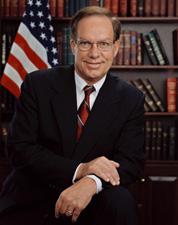
Mr. President, I will be introducing a piece of legislation today which is a bill to cut at the heart of a rampant problem in this country; that is, identity theft. Last month, a bipartisan group of…
Mr. President, I will be introducing a piece of legislation today which is a bill to cut at the heart of a rampant problem in this country; that is, identity theft.
Last month, a bipartisan group of Senators and I met with Secretary Chertoff on this very issue. Secretary Chertoff explained that under current law, Government agencies are prevented from sharing information with one another that, if shared, could expose cases of identity theft. My bill tears down the wall that prevents the sharing of existing information among Government agencies. It permits the Commissioner of Social Security to secure information with the Secretary of Homeland Security where such information is likely to assist in discovering identity theft, Social Security number misuse, or violations of immigration law.
Specifically, it requires the Commissioner to inform the Secretary of Homeland Security upon discovery of a Social Security account number being used with multiple names or where an individual has more than one person reporting earnings for him or her during a single tax year. It seems logical that we would already be doing this, but we are not. In the meantime, identity theft is plaguing innocent victims all across the country. We were reminded of the pervasiveness of this problem by the recent ICE raids of six Swift and Company meat-packing plants across the country last December. In total, agents apprehended 1,282 illegal alien workers on administrative immigration violations. Of these, 65 have also been charged with criminal violations related to identity theft or other violations.
Unfortunately, for the victims of identity theft, by the time the identity theft is discovered, the damage has already been done. Ranked fifth in the Nation for identity theft, citizens of Colorado are no strangers to identity theft. For instance, an 84-year-old Grand Junction woman was deemed ineligible for Federal housing assistance because her Social Security number was being used at a variety of jobs in Denver, making her income too high to qualify. A 10-year-old child in Douglas County had his identity stolen, and his Social Security number was being used at 17 different jobs. Others get stuck with big tax bills for wages they never earned.
Clearly, identity theft is an issue that affects people of all ages and walks of life. Yet when the Social Security Administration has reason to believe that a Social Security number is being used fraudulently, they are prevented from sharing it with the Department of Homeland Security. Withholding this information effectively enables thieves to continue to perpetrate the crime of identity theft against innocent victims. By simply sharing this information, cases of identity theft could be discovered much sooner. Victims of identity theft deserve to have this existing information acted on, and my bill allows for this to happen. I urge colleagues to support this commonsense legislation.
Later on, when we are on S. 4, called Improving America's Security Act, which deals with implementation of more of the 9/11 Commission recommendations, I plan on offering an amendment that has similar language to this bill. This is an issue which is extremely important to victims. It is something we should address. I will give the Senate plenty of opportunity to deal with this issue.
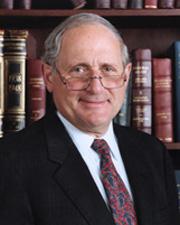
Mr. President, I am pleased to join with Senators Craig Thomas, Debbie Stabenow, Chuck Grassley and Tom Harkin in introducing the Federal Prison Industries Competition in Contracting Act. Our bill is…
Mr. President, I am pleased to join with Senators Craig Thomas, Debbie Stabenow, Chuck Grassley and Tom Harkin in introducing the Federal Prison Industries Competition in Contracting Act. Our bill is based on a straightforward premise: it is unfair for Federal Prison Industries to deny businesses in the private sector an opportunity to compete for sales to their own government.
We have made immeasurable progress on this issue since I first introduced a similar bill ten years ago. It may seem incredible, but at that time, Federal Prison Industries (FPI) could bar private sector companies from competing for a Federal contract. Under the law establishing Federal Prison Industries, if Federal Prison Industries said that it wanted a contract, it would get that contract, regardless whether a company in the private sector could provide the product better, cheaper, or faster.
Six years ago, the Senate took a giant step toward addressing this inequity when we voted 74-24 to end Federal Prison Industries' monopoly on Department of Defense contracts. Not only was that provision enacted into law, we were able to strengthen it with a second provision a year later. In 2004, we took another important step, enacting an appropriations provision which extends the DOD rules to other Federal agencies. This means that, for the first time, private sector companies should be able to compete against for contracts awarded by all Federal agencies.
Despite this progress, work remains to be done. We have heard reports from Federal procurement officials and from small businesses that FPI continues to claim that it retains the mandatory source status that protected it from competition for so long. This kind of misleading statement may undermine the right to compete that we have fought so hard for so long to establish.
In addition, FPI continues to sell its services into interstate commerce on an unlimited basis. I am concerned that the sale of prison labor into commerce could have the effect of undermining companies and work forces that are already in a weakened position as a result of foreign competition. We have long taken the position as a Nation that prison-made goods should not be sold into commerce, where prison wages of a few cents per hour could too easily undercut private sector competition. It is hard for me to understand why the sale of services should be treated any differently than the sale of products.
The bill that we are introducing today would address these issues by making it absolutely clear that FPI no longer has a mandatory source status, by reaffirming the critical requirement that FPI must compete for its contracts, and by carefully limiting the circumstances under which prison services may be sold into the private sector economy.
I look forward to working with my colleagues on these important issues.
Show 3 more

Mr. President, I am pleased to join Senator Boxer as a co-sponsor of the ``Pell Grant Equity Act of 2007'' that would provide all low-income students with the same opportunity to receive a Federal…
Mr. President, I am pleased to join Senator Boxer as a co-sponsor of the ``Pell Grant Equity Act of 2007'' that would provide all low-income students with the same opportunity to receive a Federal Pell Grant by eliminating the current tuition sensitivity provision in the Pell Grant Program.
Federal Pell Grants are the cornerstone of our need-based financial aid system ensuring that all students have access to higher education.
However, the Pell Grant program's eligibility formula penalizes low- income students who attend very low-cost colleges by reducing the amount of the Pell Grant they can receive.
The formula bases eligibility for Pell Grant awards on the amount of tuition charged by the college and provides a lower ``alternate'' amount for low tuition colleges, known as the ``tuition sensitivity'' provision.
Community college students are significantly impacted by the tuition sensitivity provision because of low student tuition fees.
In California, due to a drop in tuition fees from $26 per unit to $20 unit, community college students enrolling this spring will otherwise be penalized with a $56 reduction in their 2007 Pell Grants and will endure another $112 hit in the 2007-2008 academic year if the tuition sensitivity provision is not eliminated.
Community college students represent approximately 46 percent of higher education students in California
receiving Pell Grants and are the only ones negatively impacted by this provision.
Any reduction of these vital grants to our lowest income students would have a major impact in their ability to afford college and continue their education, and we cannot allow this to happen.
This bill would ensure that our nation's community college students are not unduly penalized for receiving an affordable education at a low-cost college.
We must continue to do all we can to make a college education more accessible and affordable for all of our Nation's students.
I urge my colleagues to join Senator Boxer and I in supporting this important legislation.

Mr. President, I rise to introduce a bill to reauthorize Title VIII of the Native American Housing Assistance and Self- Determination Act. Senator Akaka joins me in sponsoring this measure. Title…
Mr. President, I rise to introduce a bill to reauthorize Title VIII of the Native American Housing Assistance and Self- Determination Act. Senator Akaka joins me in sponsoring this measure. Title VIII provides authority for the appropriation of funds for the construction of low-income housing for Native Hawaiians and further provides authority for access to loan guarantees associated with the construction of housing to serve Native Hawaiians.
Three studies have documented the acute housing needs of Native Hawaiians--which include the highest rates of overcrowding and homelessness in the State of Hawaii. Those same studies indicate that inadequate housing rates for Native Hawaiians are amongst the highest in the Nation.
The reauthorization of Title VIII will support the continuation of efforts to assure that the native people of Hawaii may one day have access to housing opportunities that are comparable to those now enjoyed by other Americans.
I ask unanimous consent that the text of the bill be printed in the Record.
Mr. President, I ask unanimous consent that my legislation, Consortium on the Impact of Technology in Aging Health Services Act of 2007, be printed in the Record.
Mr. President, I ask unanimous consent that my legislation, Consortium on the Impact of Technology in Aging Health Services Act of 2007, be printed in the Record.
Bill Text
Latest available legislative text
        [Congressional Bills 110th Congress]
[From the U.S. Government Publishing Office]
[S. 719 Introduced in Senate (IS)]

1st Session
S. 719

To amend section 10501 of title 49, United States Code, to exclude
solid waste disposal from the jurisdiction of the Surface
Transportation Board.

_______________________________________________________________________

IN THE SENATE OF THE UNITED STATES

February 28, 2007

Mr. Lautenberg (for himself, Mr. Menendez, Mr. Kennedy, and Mr. Reed)
introduced the following bill; which was read twice and referred to the
Committee on Commerce, Science, and Transportation

_______________________________________________________________________

A BILL

To amend section 10501 of title 49, United States Code, to exclude
solid waste disposal from the jurisdiction of the Surface
Transportation Board.

Be it enacted by the Senate and House of Representatives of the
United States of America in Congress assembled,

SECTION 1. SHORT TITLE.

This Act may be cited as the ``Clean Railroads Act of 2007''.

SEC. 2. AMENDMENTS TO EXCLUDE SOLID WASTE FACILITIES FROM THE
JURISDICTION OF THE BOARD.

Section 10501 of title 49, United States Code, is amended--
(1) by striking ``facilities,'' in subsection (b)(2) and
inserting ``facilities (except solid waste management
facilities (as defined in section 1004 of the Solid Waste
Disposal Act (42 U.S.C. 6903))),''; and
(2) by striking ``over mass transportation provided by a
local governmental authority.'' in subsection (c)(2) and
inserting ``over--
``(A) mass transportation provided by a local governmental
authority; or
``(B) the processing or sorting of solid waste.''.
<all>