











II
110th CONGRESS
1st Session
S. 963
IN THE SENATE OF THE UNITED STATES
March 22, 2007
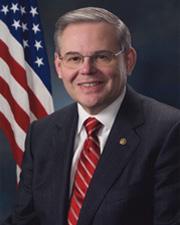
Mr. Menendez introduced the following bill; which was read twice and referred to the Committee on Health, Education, Labor, and Pensions
A BILL
To authorize the Secretary of Education to make grants to educational organizations to carry out educational programs about the Holocaust.
Short title
This Act may be cited as the Simon
Wiesenthal Holocaust Education Assistance Act
.
Findings and purposes
Findings
The Congress makes the following findings:
The Holocaust was an historical event that resulted in the systemic, state-sponsored mass murders by Nazi Germany of approximately 6,000,000 Jews, along with millions of others, in the name of racial purity.
Six States (California, Florida, Illinois, Massachusetts, New Jersey, and New York) now mandate that the Holocaust be taught in the educational curriculum, 11 States (Connecticut, Georgia, Indiana, Nevada, North Carolina, Ohio, Pennsylvania, South Carolina, Tennessee, Virginia, and Washington) recommend teaching the Holocaust but do not provide sufficient funds to assist in the training and educating of teachers, and 3 States (Alabama, Mississippi, and West Virginia) have established councils or commissions that promote Holocaust education.
The Holocaust is a sensitive and difficult issue about which to teach, and to do so effectively, educators need appropriate teaching tools and training to increase their knowledge to enhance the educational experience.
Purposes
The purposes of this Act are the following:
To educate Americans so that they can—
explore the lessons that the Holocaust provides for all people; and
be less susceptible to the falsehood of Holocaust denial and to the destructive messages of hate that arise from Holocaust denial.
To provide resources and support for education programs that—
portray accurate historical information about the Holocaust;
sensitize communities to the circumstances that gave rise to the Holocaust;
convey the lessons that the Holocaust provides for all people; and
by developing curriculum guides and providing training, help teachers incorporate into their mainstream disciplines the study of the Holocaust and its lessons.
Authority to make grants
From any amounts made available to carry out this Act, the Secretary may make grants under this Act to educational organizations to carry out proposed or existing Holocaust education programs.
Use of grant amounts
In General
An educational organization receiving grant amounts under this Act shall use such grant amounts only to carry out the Holocaust education program for which the grant amounts were provided.
Requirements
An educational organization receiving grant amounts under this Act shall comply with the following requirements:
Continuation of eligibility
The educational organization shall, throughout the period that the educational organization receives and uses such grant amounts, continue to be an educational organization.
Supplementation of existing funds
The educational organization shall ensure that such grant amounts are used to supplement, and not supplant, non-Federal funds that would otherwise be available to the educational organization to carry out the Holocaust education program for which the grant amounts were provided.
Additional Conditions
The Secretary may require additional terms and conditions in connection with the use of grant amounts provided under this Act as the Secretary considers appropriate.
Selection criteria
In General
The Secretary shall award grant amounts under this Act in accordance with competitive criteria to be established by the Secretary.
Consultation With Holocaust Educators
In establishing the competitive criteria under subsection (a), the Secretary shall consult with a variety of individuals, to be determined by the Secretary, who are prominent educators in the field of Holocaust education.
Application
The Secretary may award grant amounts under this Act only to an educational organization that has submitted an application to the Secretary at such time, in such manner, and containing such information as the Secretary may require.
Review and sanctions
Annual Review
The Secretary shall review at least annually each educational organization receiving grant amounts under this Act to determine the extent to which the educational organization has complied with the provisions of this Act.
Imposition of Sanctions
The Secretary may impose sanctions on an educational organization for any failure of the educational organization to comply substantially with the provisions of this Act. The Secretary shall establish the sanctions to be imposed for a failure to comply substantially with the provisions of this Act.
Annual report
Not later than February 1 of each year, the Secretary shall submit to the Senate and House of Representatives a report describing the activities carried out under this Act and containing any related information that the Secretary considers appropriate.
Definitions
For purposes of this Act, the following definitions shall apply:
Educational organization
The term educational organization means an entity—
described in section 501(c)(3) of the Internal Revenue Code of 1986;
exempt from tax under section 501(a) of the Internal Revenue Code of 1986; and
organized and operated for cultural, literary, or educational purposes.
Holocaust education program
The term Holocaust education program means a program that—
has as its specific and primary purpose to improve awareness and understanding of the Holocaust; and
to achieve such purpose, furnishes one or more of the following:
Classes, seminars, or conferences.
Educational materials.
Teacher training.
Any other good or service designed to improve awareness and understanding of the Holocaust.
Holocaust
The term Holocaust means the historical event that resulted in the systemic, state-sponsored mass murders by Nazi Germany of approximately 6,000,000 Jews, along with millions of others, in the name of racial purity.
Secretary
The term Secretary means the Secretary of Education.
Regulations
The Secretary shall issue any regulations necessary to carry out this Act.
Authorization of appropriations
For grants under this Act, there is authorized to be appropriated to the Secretary $2,000,000 each fiscal year for five fiscal years, beginning with the first fiscal year to commence after the date of enactment of this Act, to remain available until expended.