A resolution encouraging the elimination of harmful fishing subsidies that contribute to overcapacity in the world's commercial fishing fleet and lead to the overfishing of global fish stocks.
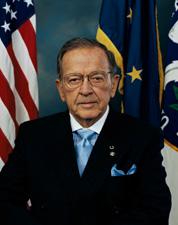 Sen. Ted Stevens (R-AK)
Legislative Activity
Stay on top of the latest movement without scrolling through every action
Submitted in the Senate, considered, and agreed to without amendment and with a preamble by Unanimous Consent. (consideration: CR S6358-6359; text as passed Senate: CR S6359; text of measure as introduced: CR S6311)
May 17, 2007
View full timeline
Introduced in Senate
May 17, 2007
Submitted in the Senate, considered, and agreed to without amendment and with a preamble by Unanimous Consent. (consideration: CR S6358-6359; text as passed Senate: CR S6359; text of measure as introduced: CR S6311)
May 17, 2007
Floor Debate
2 membersWhat members said about S.Res. 208 on the floor

Floor Debate
2 membersWhat members said about S.Res. 208 on the floor
Mr. President, I have come to the floor to discuss the overcapitalization of the world's fishing fleets, which is being fueled by the subsidies foreign governments direct to their fishing industries.…
Mr. President, I ask unanimous consent that the Senate proceed to the consideration of S. Res. 208. Mr. President, I ask unanimous consent that the resolution be agreed to; that the preamble be…
Bill Text
Latest available legislative text
        [Congressional Bills 110th Congress]
[From the U.S. Government Publishing Office]
[S. Res. 208 Agreed to Senate (ATS)]

1st Session
S. RES. 208

Encouraging the elimination of harmful fishing subsidies that
contribute to overcapacity in the world's commercial fishing fleet and
lead to the overfishing of global fish stocks.

_______________________________________________________________________

IN THE SENATE OF THE UNITED STATES

May 17, 2007

Mr. Stevens (for himself, Mr. Inouye, Mr. Cochran, Ms. Cantwell, Ms.
Snowe, Mr. Lott, Mrs. Murray, Ms. Murkowski, Mrs. Boxer, Mr. Sununu,
Ms. Landrieu, Ms. Collins, Mr. Kerry, Mr. Lautenberg, and Mr. Vitter)
submitted the following resolution; which was considered and agreed to

_______________________________________________________________________

RESOLUTION

Encouraging the elimination of harmful fishing subsidies that
contribute to overcapacity in the world's commercial fishing fleet and
lead to the overfishing of global fish stocks.

Whereas 2.6 billion people in the world get at least 20 percent of
their total dietary animal protein intake from fish;
Whereas the Food and Agriculture Organization of the United Nations
has found that 25 percent of the world's fish population
are currently overexploited, depleted, or recovering from
overexploitation;
Whereas scientists have estimated that populations of many large
predator fish such as tuna, marlin, and swordfish have been
overfished by foreign industrial fishing fleets;
Whereas the global fishing fleet capacity is estimated to be
considerably greater than is needed to catch what the ocean
can sustainably produce;
Whereas the United States Congress recognized the threat of
overfishing to our oceans and economy and therefore
included the requirement to end overfishing in United
States commercial fisheries by 2011 in the Magnuson-Stevens
Fishery Conservation and Management Reauthorization Act of
2006 (Public Law 109-479);
Whereas the United States Commission on Ocean Policy and the Pew
Oceans Commission identified overcapitalization of the
global commercial fishing fleets as a major contributor to
the decline of economically important fish populations;
Whereas harmful foreign fishing subsidies encourage
overcapitalization and overfishing, support destructive
fishing practices that would not otherwise be economically
viable, and amount to $10 to $15 billion annually, an
amount equivalent to 20 to 25 percent of the global
commercial trade in fish;
Whereas such subsidies have also been documented to support
illegal, unregulated, and unreported fishing, which impacts
commercial fisheries in the United States and around the
world both economically and ecologically;
Whereas harmful fishing subsidies are concentrated in relatively
few countries, putting other fishing countries, including
the United States, at an economic disadvantage;
Whereas the United States is a world leader in advancing policies
to eliminate harmful fishing subsidies that support
overcapacity and promote overfishing; and
Whereas members of the World Trade Organization, as part of the
Doha Development Agenda (Doha Development Round), are
engaged in historic negotiations to end harmful fishing
subsidies that contribute to overcapacity and overfishing:
Now, therefore, be it
Resolved by the Senate, That the United States should continue to
promote the elimination of harmful foreign fishing subsidies that
promote overcapitalization, overfishing, and illegal, unregulated, and
unreported fishing.
<all>