Madam Speaker, today I have introduced two bills to increase the percentage of clean water state revolving loan funds and drinking water state revolving loan funds annually reserved for American…
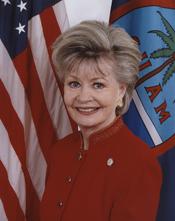
Madam Speaker, today I have introduced two bills to increase the percentage of clean water state revolving loan funds and drinking water state revolving loan funds annually reserved for American Samoa, the Commonwealth of the Northern Mariana Islands (CNMI), Guam, and the Virgin Islands under the Federal Water Pollution Control Act and the Safe Drinking Water Act respectively. The effect of these bills would be, if enacted, to increase by approximately 50% the amounts of federal funding awarded by the United States Environmental Protection Agency (USEPA) annually under these state revolving loan funds to each of the governments of these territories to help them finance critical water and wastewater infrastructure projects.
I am joined by my colleagues from the territories, Mr. Faleomavaega of American Samoa, Mrs. Christensen of the Virgin Islands, and Mr. Sablan of the Northern Mariana Islands, in introducing these two bills. H.R. 1889 would amend the Federal Water Pollution Control Act with respect to the Clean Water State Revolving Fund and H.R. 1890 would amend the Safe Drinking Water Act with respect to the Drinking Water State Revolving Fund. These bills help ensure that all Americans, including our constituents, enjoy access to clean and safe drinking water.
Specifically, H.R. 1889 and H.R. 1890 would require the reservation of one half of a percent of amounts made available each fiscal year for grants to the states and territories under both revolving funds. Currently, the four territories are limited by statute to a third of a percent of total funding, meaning that they actually receive less on a per capita basis than a number of states. This inequity persists in spite of the fact that the territories have some of the most severe needs for federal assistance for clean water and drinking water infrastructure projects. With respect to the Pacific territories, the USEPA generally estimates that over 25% of the population lacks access to sanitary drinking water. That figure is a mere 0.6% nationwide. Furthermore, federal courts have ruled that the territories' water and wastewater systems are in non-compliance with federal laws and regulations and have ordered a wide range of improvements and upgrades. However, the territorial governments are currently challenged in financing these court-ordered projects as a result of budget shortfalls and declining revenues associated with the economic downturn. As a result, the territorial governments remain, in certain cases, unable to comply with the court mandates without risking bankruptcy. In sum, the very regions of the United States that have the direst need for assistance in financing water and wastewater infrastructure are limited by federal law to a diminutive fraction of a percent of total funding. In contrast, each state is guaranteed under the Federal Water Pollution Control Act and the Safe Drinking Water Act to receive each fiscal year no less than a full one percent of total funding irrespective of need or population.
Madam Speaker, raising the cap on funding made available to assist the territories from a third of a percent to one-half a percent would be a significant step toward fulfilling critical needs for new infrastructure in the territories. A one-half of a percent funding level is consistent with funding set-asides for the territories under other laws enacted by Congress governing formula grant programs. Finally, because the states are each guaranteed a minimum level of funding as opposed to the ceiling set on the territories, these bills will not significantly impact funding made available to help finance projects in the rest of the United States.
In effect, raising the cap from a third of a percent to a half a percent involves less than five one-thousandths of one percent of the federal budget. It would, however, have a tangible and measurable impact on the health and quality of life for hundreds of thousands of American citizens and nationals residing in the territories. Madam Speaker, I urge a thorough review of this issue and these bills by the committees of jurisdiction.