Madam President, how much time remains in opposition to this first amendment? Let me take 2 of the 4 minutes because I know my colleague from Alaska was hoping to speak also. If she arrives, I will…
Madam President, how much time remains in opposition to this first amendment?
Let me take 2 of the 4 minutes because I know my colleague from Alaska was hoping to speak also. If she arrives, I will yield that time to her. If she does not, I will reclaim it.
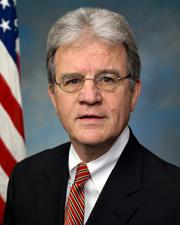
Madam President, let me go ahead and briefly describe my reasons for urging we not support this first amendment. This first amendment is an amendment Senator Coburn offered and is very nearly identical to an amendment he offered to the Consolidated Natural Resources Act of 2008. That was the package of public land bills the House sent us that year.
Most of the Senate voted against the amendment. I hope they will again. The amendment required the Director of the Office of Management and Budget to post an annual report on the Internet detailing a great deal of information about lands owned by the Government: buildings, structures on those lands, extensive information on which are used, which are not used, the cost of operation of those lands, and those structures estimated backlog for maintenance of various structures of the agencies.
The issue the Senator is trying to get at was dealt with in the previous administration, when President Bush issued Executive Order 13327. Therein, he set up the Federal Real Property Council, a Federal real property council, that has, as its job, tracking asset management, inventory of assets, setting up systems to do that, working
under the auspices of the General Services Administration; the Government Accountability Office or the General Services Administration.
I believe that is a much better thought-through way to proceed with this. The cost of this amendment would be fairly extensive. We do not have an exact estimate, but we have been told there are 1.2 billion pieces of real property or real property assets worldwide, over 636 million acres of land we are talking about here, that would have to be inventoried and reported on in an updated fashion every year. So this is an extensive undertaking.
Madam President, how much time remains on my side?
I withhold my time until the Senator from Alaska can have a chance to get her thoughts together.
Madam President, I yield myself 1 minute.
Let me speak on that one issue. I think my colleague from Alaska is correct, this does involve a change in current law. It says that the decision as to what affects national security will be made by OMB for purposes of this inventory and display. It will not be made by agencies such as the Department of Defense, CIA, Department of Energy, and others that currently make those decisions. That is a mistake. It also specifies that items can be left out for national security reasons. The Executive order made clear that items could also be left out or should be left out if they involved foreign policy issues or safety issues for the public.
The amendment is not consistent with what I believe we ought to be doing in this area. I urge colleagues to oppose it.
I move to table the amendment and ask for the yeas and nays.
Madam President, I move to reconsider the vote, and I move to lay that motion on the table.
The motion to lay on the table was agreed to.
Amendment No. 682
Madam President, this amendment No. 682 is one I have advised the Senator from Oklahoma is acceptable to Senators on this side of the aisle.
Let me briefly describe what it does. It would modify the underlying provisions of the substitute amendment dealing with the protection of fossil resources on Federal land by making three changes. First, the underlying bill says the Secretary of the Interior or the Secretary of Agriculture may allow casual collecting of common fossils without a permit for personal use. That is consistent with the management policies of the Federal land in question. The Coburn amendment says it requires that the two Secretaries allow that casual collecting for personal use. Secondly, the Coburn amendment would remove a provision that would have authorized agencies under some circumstances to acquire new lands. Finally, the amendment removes a provision in the underlying bill that would have authorized forfeiture of any vehicle or equipment used by someone illegally removing fossil resources.
I think all three of these changes improve the bill and I support the amendment. I believe we can act on this with a voice vote, but I will leave it to the Senator from Oklahoma to make his statement.
Madam President, we yield 2 minutes in opposition to this amendment to Senator Feinstein from California.
Madam President, I move to table the amendment and ask for the yeas and nays.
Madam President, let me take 5 of the 15 minutes we have. If you will advise me when that time is used.
In just a few minutes, the Senate will vote on final passage of H.R. 146, the Omnibus Public Lands Act. I believe our actions this week will make it
more likely that the House of Representatives will be able to consider and approve the Senate amendments expeditiously.
Today's vote will culminate many years of work on more than 160 bills that are included in this package and represents a major achievement for the protection of our Nation's cultural, natural, and historic resources. As I have observed before, when you take all of these bills together, I believe they represent the most significant conservation legislation passed by the Senate, at least in the last 15 years.
In addition, the bill will finally resolve three very important and complex water rights settlements in three different States and literally decades of litigation and controversy about that water. The wilderness and other conservation areas designated in the bill represent years and years of efforts by local citizens, through countless public meetings, in an effort to find a way to protect some of the most important scenic areas in their States, while balancing wilderness designations against other uses. In my opinion, the sponsors of these provisions have gone to great lengths to find that balance.
Some contend that the wilderness, national parks, wild and scenic rivers, and other conservation designations will frustrate our Nation's ability to develop new domestic energy supplies. I strongly disagree. We have gone to great lengths to assess the energy potential of the new areas, and in almost all cases the Bureau of Land Management has concluded that the wilderness areas do not have significant energy development potential.
The Energy and Natural Resources Committee which I am privileged to chair and of which Senator Murkowski is ranking member is assembling a comprehensive energy bill. We hope to bring it to the Senate floor for consideration soon. That bill will provide an opportunity to promote programs to expand the development of domestic energy resources.
I believe the question of whether we should protect our Nation's natural and cultural heritage or instead develop our energy and other resources is a false choice. They are mutually exclusive goals. We can accomplish them both.
A former Senator from my State, who also chaired the then-Interior Committee in the Senate, once said the following:
Wilderness is an anchor to windward. Knowing it is there,
we can also know that we are still a rich Nation, tending our
resources as we should--not a people in despair searching
every last nook and cranny of our land for a board of lumber,
a barrel of oil, a blade of grass, or a tank of water.
Let me also indicate that there are many provisions in this bill that are of particular importance to my State: the Navajo Nation Indian Water Rights Settlement; the Eastern New Mexico Rural Water Project; the Rio Grande Pueblo Irrigation Infrastructure legislation; the SECURE Water Act, which has national implications but is important to my State as well; Prehistoric Trackways National Monument; Fort Stanton-Snowy River Cave National Conservation Area; Sabinoso Wilderness, which Senator Udall has spearheaded; Rio Puerco Watershed Act; and also the Forest Landscape Restoration Act.
This bill will have a far-reaching and positive impact on New Mexico's precious and scarce water resources. The most significant provision is the settlement of the Navajo Nation's water rights claims in the San Juan River basin.
This settlement will avoid conflicts, risks, and costs that would be borne by the Navajo Nation, individual water users, municipalities, the State of New Mexico, and the Federal Government if the Navajo claims were litigated in-full. Instead, defining the Navajo Nation's water rights by agreement will improve water management in the basin and ensure that future water demands can be addressed through an efficient administrative process.
Most important, however, is that the settlement will provide a sustainable water supply to Navajo communities in the eastern portion of the Navajo Reservation. Currently, 40 percent of the population on the reservation--approximately 70,000 people--must haul water for use in their homes. This situation has resulted in serious health, education, and economic consequences for the Navajo people. This legislation will begin to address these issues, as well as the United States' obligations to the Navajo Nation.
On the opposite side of the State, several communities are facing an uncertain water future due to falling levels of groundwater in the Ogallala aquifer. To address this problem, the bill authorizes the Bureau of Reclamation to help develop the Eastern New Mexico Rural Water System. This project will use an available water supply in Ute Reservoir to provide communities in eastern New Mexico with a renewable water supply and the long-term security that is critical to the region's future. As a measure of its importance, the State of New Mexico already has provided about $8 million to develop the project. Enacting this legislation will help communities in Curry and Roosevelt Counties secure the water needed to sustain current economic activity and support future development in the region.
In the heart of New Mexico is the Rio Grande. Over the past decade, there have been many conflicts over this magnificent, but limited resource. Conserving water and improving inefficient infrastructure has been a key factor in minimizing these conflicts. Unfortunately, Native Americans residing in the Rio Grande basin have not benefited greatly from these improvements. This bill will change that situation by directing the Bureau of Reclamation to work with the Rio Grande Pueblos to assess irrigation infrastructure and initiate projects to rehabilitate and repair such infrastructure on Pueblo lands.
By focusing Federal resources and expertise on this problem now, the Federal Government, as part of its trust responsibility, will help prevent further deterioration of Pueblo irrigation systems and avoid additional rehabilitation costs in the future. The Pueblos will benefit markedly from increased agricultural productivity, increased water conservation, and safer facilities. More importantly, however, these improvements will help the Pueblos to sustain their historical way of life, both economically and culturally. Finally, the overall health of the Rio Grande basin will likely benefit through increased efficiency in water use.
The final water provision I want to mention is one that will benefit New Mexico and many other States. The SECURE Water Act is based on the view that effectively addressing water issues requires a better understanding of the resource, and increasing the efficiency of its use. For that reason, the bill seeks to strengthen the national streamflow program, improve ground water monitoring efforts, enhance our understanding of water uses and availability, and provide grants to implement water conservation and efficiency projects.
It also will improve our understanding of the impacts of climate change on water and ensure that adaptation strategies are formulated and implemented. This is particularly important in New Mexico, where one recent study by researchers at the University of New Mexico and New Mexico State predicts that surface water in the Rio Grande basin could decline by as much as 12 percent by 2030 and 33 percent by 2080.
New Mexico will also benefit from a number of important public land provisions, including the designation of a new national monument.
The Prehistoric Trackways National Monument in Dona Ana County, New Mexico, will protect a remarkable ``megatracksite'' of 290 million- year-old fossils. This site of worldwide scientific significance has preserved the trackways of some of the earliest creatures to make their way out of the ocean, which will help fill in the gaps left from studying only their fossilized bones.
Las Cruces resident Jerry MacDonald first brought the find to light in 1988, and thanks to a more recent discovery by MacDonald, we now know that the National Monument also will protect a well-preserved 290 million-year-old petrified forest where three new species of trees already have been discovered. The local curation of these specimens should provide unique scientific and educational opportunities for the surrounding community and visitors to the region.
The Fort Stanton-Snowy River Cave National Conservation Area in Lincoln
County, NM, will permanently protect the cave system, including a passageway containing a more than 4-mile-long continuous calcite- crystal river bed, a unique formation that is believed to be the longest one of its kind in the world.
While exploration of this cave began centuries ago, it was not until 2001 that volunteers with the Fort Stanton Cave Study Group discovered the Snowy River passageway, which defied their wildest expectations. This discovery already has yielded valuable scientific research in hydrology, geology, and microbiology, the last of which may even have applications in interplanetary exploration. We will be proud to include the Fort Stanton-Snowy River Cave on New Mexico's prestigious list of world-class sites.
The bill also includes legislation spearheaded by Senator Tom Udall-- the designation of the 16,000 acre Sabinoso Wilderness in San Miguel County, NM. The Sabinoso Wilderness will protect a rugged and beautiful landscape that provides important wildlife habitat and represents an important watershed to our State.
New Mexico is the home of the first congressionally designated wilderness area, and the Sabinoso Wilderness represents a well-deserved addition to the National Wilderness Preservation System. I hope our efforts to permanently protect this area will ensure that future generations can enjoy this outstanding public resource.
This bill also will reauthorize the Rio Puerco Watershed Act, which formalized the Rio Puerco Management Committee in New Mexico. The committee has become one of the most effective collaborative land management efforts in the Southwest. And for more than 10 years, it has helped facilitate the restoration of the highly degraded Rio Puerco Watershed, the largest tributary to the Rio Grande. There is much more work to be done to restore this watershed, and this legislation will assist the committee in that effort.
Title IV of the bill--the Forest Landscape Restoration Act--holds great promise for our fire-dependant forests and communities in New Mexico and across the country. Wildfire activity and suppression costs have grown dramatically in recent years. The affects of global warming are increasingly impacting forest and watershed health. And communities across the country are struggling economically.
This legislation will establish a program to select and fund collaborative landscape-scale forest restoration projects that will improve forest health, reduce wildfire management costs, and benefit local economies. The positive response that we have seen from Members of Congress, State and local officials, and communities across the country speaks to the importance of these issues and the promise of this approach. I hope we can quickly provide funding to implement the legislation, as we cannot afford to wait to begin this critical work.
It is past time for us to enact these measures to provide water to our communities, to protect our natural wonders, and to restore our natural resources. Many New Mexicans have worked for years to see these provisions enacted into law, and I am pleased the Senate is taking the important steps toward achieving that goal.
I yield the remainder of my time to the Senator from Alaska.
Madam President, before the Senator from Oklahoma has the final say, which he certainly should, let me say there are a great many people, excellent staff working for the Democratic side of the Energy and Natural Resources Committee and staff working for Senator Murkowski on the Republican side of the committee who deserve great credit. We enumerated those staff when we dealt with this legislation 2 months ago, and we will do so again in the Record. Let me particularly indicate David Brooks here with me and Kara Finkler as the two who have done the most to make this possible. Without their good work, this would not be legislation coming up for final consideration.
Madam President, let me add two additional individuals to the list of folks I particularly mentioned by name. Mike Connor, who is responsible for all the water rights legislation contained in the legislation in the Secure Water Act, I note for my colleagues that he has been named just today as the President's choice to be head of the Bureau of Reclamation, which I think is a great thing for the country; and Scott Miller, who worked very hard on the forest issues involved with this legislation.
I yield the floor.
Madam President, I ask unanimous consent that the order for the quorum call be rescinded.
Madam President, I am informed the time to vote has arrived, and I yield back any time that remains on our side.
Madam President, today the Senate has passed H.R. 146, the Omnibus Public Lands Management Act of 2009. As I said during the debate, H.R. 146 includes over 160 bills from the Committee on Energy and Natural Resources and reflects many years of hard work.
This achievement would not have been possible without the hard work of our outstanding staff. Both our ranking member, Senator Murkowski, and I are very fortunate to have a very dedicated and experienced professional staff. They service the committee and the Senate well. They deserve our thanks.
On the Democratic staff of the committee, I would like to thank the committee's staff director, Bob Simon, and chief counsel, Sam Fowler, for all of their work on this legislation, as on all the legislation that comes through our committee. I would also like to thank senior counsel Patty Beneke; counsel Mike Connor, who worked on all of the water issues included in the bill; counsels David Brooks, Kira Finkler, and Scott Miller, who coordinated all of the park and public lands bills; professional staff members Jorge Silva-Banuelos, who worked very hard on many of the New Mexico land bills; and Jonathan Epstein; and two National Park Service fellows, Karl Cordova, who worked on the committee last year, and Mike Gauthier, who is on the staff for the current year.
I would also like to thank the committee's chief clerk, Mia Bennett; executive assistant Amanda Kelly; communications director Bill Wicker; press secretary David Marks; and staff assistants Rachel Pasternack, Anna-Kristina Fox, Gina Weinstock, and Rosemarie Calabro.
On the Republican side, let me acknowledge Senator Murkowski's new staff director, McKie Campbell, and chief counsel Karen Billups. I would also like to note my thanks to former Senator Domenici's staff director during the previous Congress, Frank Macchiarola, former minority chief counsel, Judy Pensabene, and former professional staff member Tom Lillie. I would also like to recognize counsel Kellie Donnelly; as well as professional staff members Frank Gladics, Josh Johnson, Chuck Kleeschulte, and Kaleb Froehlich, all of whom made significant contributions to this bill.
In addition, I am very grateful to the committee's nondesignated staff: Allison Seyfurth, Dawson Foard, Nancy Hall, Amber Passmore, Monica Chestnut, and Wanda Green.
H.R. 146 contains over 1,200 pages of text, and was the subject of numerous revisions. I am grateful to the help of the Senate legislative counsel office, and Gary Endicott, Heather Burnham, and Colin Campbell in particular.
I would also like to thank Cliff Isenberg from the Senate Budget Committee for his help; as well as Deb Reis from the Congressional Budget Office, and Tyler Kruzich, formerly with CBO.
Finally, let me acknowledge the great help in bringing the bill to the floor we received from the majority leader and his staff: Neil Kornze, Chris Miller, Randy DeValk, Gary Myrick, and, as always, the secretary for the majority, Lula Davis, as well as Tim Mitchell, the assistant secretary for the majority. I would also like to thank the cloakroom staff, Joe Lapia, Meredith Mellody, Brandon Durflinger, and Estaban Galvan, for all of their assistance.
All of these fine staff members had a hand in putting H.R. 146 together and moving it through the legislative process. We would not have been able to pass the bill without their hard work and their professionalism. I wish to thank each and every one of them for their good work.