













I
111th CONGRESS
1st Session
H. R. 3332
IN THE HOUSE OF REPRESENTATIVES
July 24, 2009
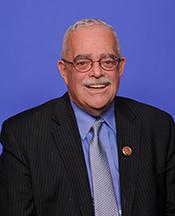
Mr. Connolly of Virginia (for himself and Mr. Lance) introduced the following bill; which was referred to the Committee on Oversight and Government Reform
A BILL
To establish the National Commission on Intergovernmental Relations to facilitate the fullest cooperation and coordination between all levels of government.
Short Title
This act may be cited as the
Restore the Partnership Act of
2009
.
Establishment
There is established a permanent bipartisan
commission to be known as the National Commission on Intergovernmental
Relations
(in this Act referred to as the
Commission
).
Declaration of purpose
In order to facilitate the fullest cooperation and coordination between all levels of government in an increasingly complex society, it is essential that a commission be established to give continuing attention to intergovernmental issues. It is intended that the Commission, in the performance of its duties, will—
bring together representatives of Federal, State, and local governments for the consideration of common problems;
provide a forum for discussing the administration and coordination of Federal aid and other programs requiring intergovernmental cooperation;
give critical attention to the conditions, controls, and oversight involved in the administration of such Federal programs; and
encourage discussion and study during the early stages of emerging public challenges that are likely to require intergovernmental cooperation.
Membership
Number and appointment
The Commission shall be composed of 30 members, as follows:
6 appointed by the President of the United States, 3 of whom shall be officers of the executive branch of the government, and 3 private citizens, each of whom shall have experience or familiarity with relations between the levels of government.
3 appointed by the President of the Senate, who shall be Members of the Senate.
3 appointed by the Speaker of the House of Representatives, who shall be Members of the House.
4 appointed by the President from a panel of at least 8 Governors submitted by the National Governors' Association.
4 appointed by the President from a panel of at least 8 members of State legislative bodies submitted by the National Conference of State Legislatures.
4 appointed by the President from a panel of at least 8 mayors submitted jointly by the National League of Cities and the United States Conference of Mayors.
4 appointed by the President from a panel of at least 8 elected county officers submitted by the National Association of Counties.
2 tribal officials appointed by the Secretary of the Interior from a panel of at least 4 submitted by the National Congress of American Indians.
Political and geographical composition
The members appointed from private life under paragraph (1) of subsection (a) shall be appointed without regard to political affiliation.
Of each class of members enumerated in paragraphs (2) and (3) of subsection (a), 2 shall be from the majority party of the respective houses.
Of each class of members enumerated in paragraphs (4), (5), (6), and (7) of subsection (a), not more than 2 shall be from any 1 political party.
Of each class of members enumerated in paragraphs (5), (6) and (7) of subsection (a), not more than 1 shall be from any 1 State.
At least 2 of the appointees under paragraph (6) of subsection (a) shall be from cities with a population of less than 500,000.
At least 2 of the appointees under paragraph (7) of subsection (a) shall be from counties with a population of less than 50,000.
1 of the appointees under paragraph (8) of subsection (a) shall be from a gaming tribe and 1 shall be from a non-gaming tribe.
Terms
In general
The term of office of each member of the Commission shall be 2 years. Members shall be eligible for reappointment. Except as provided in paragraph (2), members shall serve until their successors are appointed.
Termination of service in official position from which originally appointed
Where any member ceases to serve in the official position from which originally appointed under section 3(a), his or her place on the Commission shall be deemed to be vacant.
Vacancies in membership
Any vacancy in the membership of the Commission shall be filled in the same manner in which the original appointment was made; except that where the number of vacancies is fewer than the number of members specified in paragraphs (4), (5), (6), and (7) of section 3(a), each panel of names submitted in accordance with the aforementioned paragraphs shall contain at least 2 names for each vacancy.
Organization of Commission
Initial meeting
The President shall convene the Commission not later than 90 days after the date of enactment of this Act at such time and place as the President may designate.
Chairman and Vice Chairman
The Commission shall designate a Chairman and a Vice Chairman from among members of the Commission.
Quorum
13 members of the Commission shall constitute a quorum, but 2 or more members, representing more than 1 of the class of members enumerated in section 4(a), shall constitute a quorum for the purpose of conducting hearings.
Duties of Commission
The Commission shall—
engage in such activities and make such studies and investigations as are necessary or desirable in the accomplishment of the purposes set forth in section 2;
consider, on its own initiative, mechanisms for fostering better relations between the levels of government;
make available technical assistance to the executive and legislative branches of the Federal Government in the review of proposed legislation to determine its overall effect on all levels of government;
recommend, within the framework of the Constitution, the most desirable allocation of governmental functions, responsibilities, and revenues among the levels of government;
recommend methods of coordinating and simplifying tax laws and administrative policies and practices to achieve a more orderly and less competitive fiscal relationship between the levels of government and to reduce the burden of compliance for taxpayers; and
submit an annual report to the President and the Congress on or before January 31 of each year.
Powers and administrative provisions
Hearings and Sessions
The Commission or, on the authorization of the Commission, any subcommittee or members thereof, may, for the purpose of carrying out the provisions of this Act, hold such hearings, take such testimony, and sit and act at such times and places as the Commission deems advisable. Any member authorized by the Commission may administer oaths or affirmations to witnesses appearing before the Commission or any subcommittee or members thereof.
Cooperation by Federal agencies
Each department, agency, and instrumentality of the executive branch of the government, including independent agencies, is authorized and directed to furnish to the Commission, upon request made by the Chairman or Vice Chairman, such information as the Commission deems necessary to carry out its functions under this Act.
Executive Director
The Commission shall have power to appoint and remove an Executive Director. The Executive Director shall be paid at the rate of basic pay for level III of the Executive Schedule. Such appointment shall be made solely on the basis of fitness to perform the duties of the position and without regard to political affiliation.
Staff
Subject to such rules and regulations as may be adopted by the Commission, the Executive Director shall have the power—
to appoint, fix the compensation of, and remove such other personnel as he deems necessary; and
to procure temporary and intermittent services to the same extent as is authorized by law.
Applicability of other laws to employees
Except as otherwise provided in this Act, persons in the employ of the Commission under subsections (c) and (d)(1) shall be considered Federal employees for all purposes.
Maximum compensation of employees
No individual in the employ of the Commission under subsection (d)(1) shall be paid compensation for such employment at a rate in excess of the highest rate provided for under the General Schedule.
Reimbursement
Members of the Commission shall be entitled to reimbursement for travel, subsistence, and other necessary expenses incurred by them in the performance of their duties as members of the Commission.
Authorization of appropriations
There are authorized to be appropriated such sums as may be necessary to carry out the provisions of this Act.
Receipt of funds; consideration by Congress
The Commission is authorized to receive funds through grants, contracts, and contributions from State and local governments and organizations thereof, and from nonprofit organizations. Such funds may be received and expended by the Commission only for purposes of this Act. In making appropriations to the Commission, Congress shall consider the amount of any funds received by the Commission in addition to those funds appropriated to it by Congress.