Mr. Speaker, I thank you for the recognition, and I thank on the minority side, my side, the Republican side for allowing me to take this hour this evening to talk about health care reform and talk…
Mr. Speaker, I thank you for the recognition, and I thank on the minority side, my side, the Republican side for allowing me to take this hour this evening to talk about health care reform and talk about what happened on the floor of the House today in regard to what's known as the doc fix bill. I think it's very important, Mr. Speaker, that we take this time so that all of our colleagues will have a full understanding of what's been going on. Certainly we've all been here, but we each have not had equal access to the deliberations and the writing of bills and the writing of amendments and of course motions to recommit and this sort of thing. So this, hopefully, Mr. Speaker, will be an information hour for all of our colleagues as we move forward.
When the bill was first marked up--the bill, the Pelosi health care reform act of 2009, Mr. Speaker, when it was first marked up back in July of this year in the three committees of this House, the Energy and Commerce Committee, the Ways and Means Committee, and the Education and Labor Committee, there were certain issues that gave me great pause. I do happen to sit on one of those three committees, Energy and Commerce.
When we began to mark up that bill at the time, Mr. Speaker, as you recall, it was H.R. 3200. Now the bill that we voted on and passed last Saturday night is H.R. 3962. But in their original bill, and in the bill that has passed the House, I had great concern, as did many of my colleagues, especially on this side of the aisle, Mr. Speaker, with a section in there called Comparative Effectiveness Research Council. We had trouble with another section in there that created something known as the health services coordinator. But let me get back to that Comparative Effectiveness Research Council, Mr. Speaker, for just a second because basically, as you read through that portion of the bill, it was obvious that these bureaucrats would decide based on hopefully accurate research, scientific research, what was the best treatment for each and every disease known unto man, but that hopefully it would be a recommendation that this research council could give to our practicing physicians.
We know, Mr. Speaker, that medicine is not an exact science like physics and chemistry. It's a science, yes, but not an exact science. There is a lot of art to the practice of medicine. Doctors have a sixth sense, if you will, many times where a diagnosis is made based on just an observation or a feeling or, indeed, a sixth sense and not necessarily a scientific test or a specific lab result. So that was why, Mr. Speaker, I felt very concerned with this Comparative Effectiveness Research Council, if this bill is enacted in its current form.
Of course it looks like the Senate is going to be taking up the bill sometime soon. And if this is in there, indeed, these people, these bureaucrats, these nonmedical government folks will have the opportunity to say, Doctor, you can or cannot do that procedure. You can or cannot order that test. You can or cannot prescribe that medication based on, hopefully, what is best based on research. But could they do it, Mr. Speaker, simply based on cost? And the answer, regrettably, is, yes, they could. Yes, they could. That's why I proffered, submitted an amendment when we were marking up the bill that said that no bureaucratic decision or recommendation from this Comparative Effectiveness Research Council could force a physician, especially based on cost, that could lead to denial and eventually to rationing.
Now that seemed like such a good amendment, Mr. Speaker, that I was very optimistic, indeed, that my colleagues on both sides of the aisle--there are about 56 of us on the Energy and Commerce Committee. I think there are 35 Democrats and 21 Republicans. But I was optimistic. And yes, indeed, that amendment passed on a voice vote, and people on the committee I think realized that that was a concern, and they didn't want this to happen either. Now unfortunately, Mr. Speaker, when the Speaker--you are sitting in for her--but when the Speaker of the House of Representatives, Nancy Pelosi, got the three bills from the three committees and sort of combined and came up with H.R. 3962 that, indeed, we voted on last Saturday night, that amendment disappeared miraculously, as did 15 other Republican amendments that were passed in committee. And in the dark of night, poof, they're gone.
You know, this is a pretty serious retraction, subtraction from the bill, and my fear, my concerns, Mr. Speaker, just this week have really come home to roost. Now I don't know how many of my colleagues have had the opportunity to read about, see about on television the United States Preventive Services Task Force, an entity embedded within the Department of Health and Human Services. Oh, by the way, Medicare and Medicaid is also embedded within the Department of Health and Human Services. Well, this little-known-to-some but well-known-to-many United States Preventive Services Task Force has come out, Mr. Speaker, with a recommendation that says that women should no longer practice breast self-examination in trying to detect early, at the earliest opportunity, if they have a suspicious lump.
They went even further and said that women should not routinely have a mammogram done every 2 years starting at age 40; they should put that off until age 50.
Now when an entity like this makes a recommendation, Mr. Speaker, it eventually becomes not a suggestion, but it essentially becomes, for all intents and purposes, a mandate.
Now, Ms. Sebelius, the Secretary of Health and Human Services, immediately said, no, no, doctors can still do whatever they want to. We are not telling the doctor what to do.
But, Mr. Speaker, as most of my colleagues know, I am a physician, and I just happen to be an OB/GYN specialist and practiced for 26 years before I had the privilege to be elected to Congress back in 2002. I am also a very proud member of the American College--a fellow we call it-- of the American College of Obstetrics and Gynecology, and I am a board certified fellow. The recommendation from our college, our subspecialty, has been to commence routine screening mammograms for women at age 40 and to do that every 2 years, and of course not only allow, but to encourage and even to teach them how to do breast self- examination, probably commencing that in their early thirties if not their late twenties. It is something that I am just shocked that any so-called credible organization other than my own subspecialty of OB/ GYN or, indeed, the American Cancer Society would make that kind of recommendation, and they haven't. I think they are appalled at this recommendation.
And like I say, when the Secretary of Health and Human Services says not to worry, doctor, patient, you can continue to do whatever you want to, but the patients are already very confused and frightened. And even if the doctor recommends to, let's say, a woman in her early forties, Hey, it is time to get that mammogram done. I don't feel anything on the exam, and I am glad you are checking yourself on a regular basis. Everything looks good, but it is time to go ahead and get that screening mammogram because we would certainly hope, if you are unfortunate enough to develop breast cancer, that we can detect it with the mammography, which is an x-ray, before a lump has developed, certainly before the patient can feel it, and certainly before the doctor can detect.
You write out that prescription and that order and you send the patient to the hospital and she gets over there and she is told, Well, we can do it, but you are going to have to write us a check or you are going to have to pay cash for it because your insurance company doesn't pay for this anymore, and they don't pay for it anymore because the U.S. Preventive Services Task Force of the U.S. Department of Health and Human Services says it is not necessary. We will be glad to do it. You have to write us a check, cash on the barrelhead, and we will do it; otherwise, we will see you in 10 years, at age 50. And at that point, that patient might happen to have, since she has been discouraged from doing breast self-examination, cancer the size of a golf ball, and that being cancer that has already spread to the point where her chances of survival over a 5-year period of time is down around 10 percent instead of 95 percent.
Mr. Speaker, this is serious stuff. This is life and death that we are talking about. That is why so many of us are so concerned about this massive takeover of our health care system by the Federal Government, by bureaucrats. We have got 13 practicing physicians on our side of the aisle that probably, in the aggregate, have 400 years of clinical experience. All kinds of specialists. In fact, I have a family practitioner with me tonight.
Mr. Speaker, maybe you wish that we had been consulted, and there are four or five doctors on the Democratic majority side. I don't think that they were consulted. It is a waste of talent and the waste of an opportunity for bipartisanship. This is the result of it, though. This is what happens when things are done behind closed doors. Folks overlook, forget. I am not saying that it is deliberate, but the unintended consequences have life and death consequences.
And with that, I yield to my good friend, the gentleman from Athens, Georgia (Mr. Broun).
If I understand the gentleman correctly, Mr. Speaker, the gentleman is holding a poster. That poster is a representation of this health choices administrator in this new bill, this H.R. 3962 which has already passed this House, and it also could be representative of the U.S. Services Task Force. And I want to yield back to the gentleman from Athens, Georgia, and I want us all to focus in just for a minute on Boss Hogg, because I think it is a great characterization of what we are trying to point out here.
I thank Dr. Broun for that point.
As we continue this colloquy, Mr. Speaker, Boss Hogg could also restrict other screening procedures. It is probably never going to be proven that screening, mass screening for many different diseases is going to be cost effective, but it is going to save lives. You ask yourself, if we are going to get to the point where Boss Hogg or the health choices administrator or the U.S. Preventive Services Task Force or the Comparative Effectiveness Research Council decides that something is not going to be cost effective, as Dr. Broun points out occurs in Canada. And he has some experience. He lived there. We know it occurs in the U.K. They have a group, an oversight entity that goes by the nice acronym of NICE, N-I-C-E, the National Institute for Clinical Excellence, but it is a rationing body that decides what can and cannot be done.
Indeed, talking about breast cancer, Dr. Broun, the survival rate, the 5-year survival rate for breast cancer in the U.K. is something like 15 points lower than it is in the United States, and it is simply because they are denied these routine screening procedures.
The point I also wanted to make in regard to other things, how many children, how many young children have to be screened with a blood test for sickle cell anemia before you find one? How many young children in preschool have to have a hearing examination before you find one that is hearing impaired, or vision screening before you find one that is visually impaired? How do you put a dollar value on these kinds of things, Mr. Speaker? You cannot do it. And if you start trying to do it, then you ration everything and it becomes a matter of what is a person's life worth, whether it is at the beginning or the end.
I yield to my colleague.
Representative Broun, Dr. Broun, I thank you very much.
Before we move on, Mr. Speaker, to another subject that's hugely important, indeed, what we took up here today on the floor of our great House of Representatives, I just want to make one closing comment in regard to this issue of rationing of care and in particular in regard to this new recommendation to dumb down the care, indeed, the screening, for breast cancer. I don't know how to put it any other way than to say that it dumbs down that care and that opportunity for early detection and lives saved.
Mr. Speaker, there are female Members of this body, great, great Members on both sides of the aisle, women that represent their districts all across this country that serve in this 435-Member House of Representatives. And, unfortunately, a number of them, a number of them have been stricken with breast cancer. In fact, Mr. Speaker, it may have even been before you were here that a Member on our side, a wonderful, wonderful Member from Virginia, struggled with her breast cancer for several years with great, great courage and fortitude and hopefulness and faithfulness, and God called her home. She died from the spread of that breast cancer. And it was such a sad day.
And then I think of Members, Mr. Speaker, on your side of the aisle that at a young age, in their early 40s, have been stricken with breast cancer, women with beautiful young toddler children. I've seen them walking down the Hall of the Cannon Building, you know, a great Member, a great friend, but I'm very thankful for her that early detection occurred because of, I don't know, probably a combination of breast self-exam but maybe it was mammography, and we hope and pray and really feel very confident that our colleague has a complete cure.
So when we bring up a subject like this, it's not to be morbid and not to scare people, Mr. Speaker, but just to inform in the reality and the unintended consequences sometimes of the things that we do. Particularly when we draft 2,000-page bills that you don't bring everybody together on both sides of the aisle in a bipartisan way and utilize the doctors, the doctors, not just the leadership and people that have been on these committees of jurisdiction for 30 years who write these bills in the dark of night and then just throw them out there in front of us and say you've got 24 hours to read it and vote up or down and, oh, by the way, you can't amend, it's a closed rule. It's wrong. It's wrong but it also is dangerous.
Mr. Speaker, in the time that I have remaining, I want to shift gears a little bit because today on the floor of the House the main thing that we dealt with was a bill called H.R. 3961. Now, the number is insignificant really except to look it up on the Internet, but let's call it what most people would recognize it as, certainly most physicians, all physicians across the country would understand, the ``doc fix'' bill. The ``doc fix'' bill.
Our physicians for the last 15-or-so years, maybe more, maybe closer to 20 years, but there is a flawed formula for calculating how much they are reimbursed for the procedures that are done under the Medicare program. And for the last at least 6 or 7 years when you calculate that formula--we'll call it for abbreviation purposes the SGR formula, sustainable growth rate--and every year for the last 6 or 7, the calculation says you doctors who are just barely breaking even, maybe not even
breaking even, maybe losing money, seeing Medicare patients out of the goodness and compassion of your heart, for which we commend you, are going to have to take next year a 5 percent cut, and then we calculate it and then the next year a 4\1/2\ percent cut, and on and on and on.
Well, each year over the last several years, we have come in and passed a law that would say we're going to mitigate that cut for this year, and we're going to let you get reimbursed on the basis of what you got last year and we're going to bump it up 1 percent or .5 percent or whatever, and we're going to do that for a couple of years.
We literally are going to kick the can, kick the can down the road, Mr. Speaker. You know that expression. Because that's what we're doing. Maybe we kick it soccer style. But the problem doesn't really go away. So the next time in the aggregate, instead of a 5 percent cut, you've got a 10 percent cut or a 15 percent cut. Indeed, January 1, 2010, in the aggregate that cut will be 21 percent if we don't do something about it.
Well, Mr. Speaker, what the Democratic majority and what President Obama said to the American Medical Association way back in June is in this bill, this health reform act that we're going to pass that we're going to totally reform one-fifth of our economy, we're going to have in there a permanent fix for the doctors. We're going to solve the problem.
And, doctors, also we know you have another concern. Mr. Speaker, you're aware of this. My colleagues, I know are aware of it. You doctors have this concern over medical malpractice and this need to defend yourself against these frivolous lawsuits by ordering all these tests on patients that are not only unnecessary but indeed could be downright dangerous to the patient, but yet you keep doing them because you don't want to be dragged into a court of law and have some slick attorney or some expert witness hired by some very capable, smart attorney saying, Oh, yes, this doctor practiced below the standard of care because he didn't order a fizzle phosphate level, whatever the heck that is.
So I was so thrilled when Mr. President said to the AMA, Mr. Speaker, that there would be medical liability reform. We would solve the low payment based on that flawed formula, SGR, and we would at last have medical liability reform.
This bill, 3962, that we passed last Saturday night had none of that in there, and the Democratic majority just took out the ``doc fix'' because, guess what. To do it costs about $290 billion, Mr. Speaker, and would push the cost of this massive monstrosity of a bill over the $900 billion, which the President had put a cap on, a ceiling, and said he wouldn't sign anything that cost more than $900 billion. I say even if you pay for something that costs $900 billion, if the final result is an Edsel, you have not accomplished very much.
But, indeed, the bill was pulled out and the President and Ms. Pelosi said, basically, not to worry, not to worry. We're going to come and we're going to introduce this bill as a stand-alone, and indeed that's what we did today, 3961, and we're going to pass it. But you know what? It ain't paid for. And whether it costs $210 billion, $230 billion, $275 billion, I'm not sure of the exact figure, but it's north of $200 billion, and my Georgia Tech math tells me that that's about a quarter of a trillion dollars. It's going to cost that much money and we're not going to pay for it.
The debt now is something like $12 trillion. So we're going to add another quarter-trillion dollars to the debt. In fact, we're going to even have to add to the debt ceiling because we're going beyond what the law allows us to do.
So, Mr. Speaker, my side of the aisle looked at this very carefully, particularly the physician Members, the 13 of us that form the GOP Doctors House Caucus. And we said, you know, we want to do right by our doctors and we want to do right by our patients and we want to do right by the country, and we can fix this and we can pay for it. So we had one opportunity today to offer a motion to recommit with our design of how we pay the doctors a 2 percent increase every year for the next 4 years under Medicare and we pay for it.
And the way we pay for it, Mr. Speaker, in that motion to recommit, is to have that medical liability reform in the bill among a couple of other things to generate revenue, and it's revenue that the CBO says is at least $54 billion. So our motion to recommit, our bill, on ``doc fix'' is paid for. It's a real ``doc fix.''
But you know what, Mr. Speaker? You were here. All my colleagues were here. We got ruled out of order. The Chair said our motion to recommit was nongermane because H.R. 3961, the Democrats' ``doc fix'' bill, the $290 billion not-paid-for bill, well, we weren't consistent with that because we paid for our bill; therefore, it was nongermane. Now, what can kind of idiocy, what kind of idiocy is that, Mr. Speaker and my colleagues?
This is something the American people need to understand, and certainly I think the doctors understand. We had an opportunity to do this and do it right, and we were denied even to vote on that motion to recommit. It was tremendously disappointing to me because, Mr. Speaker, I had the opportunity, the privilege, the distinction of offering that motion to recommit, and I wanted to explain to my colleagues exactly what our bill does. And the chairman of the Energy and Commerce Committee denied me the opportunity even to speak, getting the Chair to rule that our motion to recommit was nongermane.
So every time I tried to speak, I was gaveled down. Mr. Speaker, that's not what the American people want. If we were in the leadership, they would be appalled. I think they're appalled tonight with your party in the leadership. The American people don't want that. They want Members to have an opportunity to represent their districts, to represent their principles, and to represent and fight for this country and not be silenced.
And that's what happened on this floor today. And it's got to stop, Mr. Speaker. It's got to stop. And we will continue to fight. This bill that was passed here today, there was not--I think there may have been one Republican that voted for it, and there were 9 Democrats that voted against it. So there was bipartisan opposition. But your party, Mr. Speaker, had the votes, and you passed it.
But it's a sham of a bill, and you know it, because the Senate, 3 weeks ago, totally rejected the bill with 14 Democratic Senators voting no. They couldn't even get a cloture vote. That bill is dead on arrival when it gets to the Senate. Our bill had an opportunity to pass and get to the President's desk and give the doctors relief for the next 4 years, at least. But, no. We had to do it the same old same old way of forcing things on the American people. It's not right, Mr. Speaker, and it's not going to stand.
I appreciate the opportunity, as I said at the outset, to come and to talk about this with my colleagues, because I only had 5 minutes to speak about our motion to recommit this afternoon. Five minutes to explain, not hyperbole, not harsh rhetoric, just to explain what our bill did in contrast to 3961, the majority bill, which, as I say, is not going anywhere and the Democratic leadership knows it's not going anywhere. So it is a sham. It's not a ``Doc Fix,'' it's a ``Doc Trick.''
And I want to be, as I move to wrap up, I want my colleagues to just look at this one chart, one poster that I have to show. And this is my depiction of a Trojan horse. And you might not can read this writing, but on the Trojan horse is a saddle, and it says, the Democratic ``Doc Fix'' Bill, H.R. 3961. But on the back of the horse you see the overall health care reform act, the Pelosi Health reform act of 2009, yes, with the $500 billion cuts to our precious seniors under the Medicare program, kind of slipping right on in there. That Trojan horse is this democratic ``Doc Fix.''
But when they, and if they, and I hope and pray to God, Mr. Speaker, that it doesn't pass, but if it does, this is what's going to happen to the American people, not only to our doctors, but to our patients and especially to our seniors.
With that, Mr. Speaker, I want to yield a little time to my great friend from Texas, Judge Louie Gohmert.
After we don't pay.
Reclaiming just for a second on this point. The gentleman from Texas, Mr. Speaker, is so right. And to do this, of course, now they're going to have--they're going to go over the current debt ceiling by law. They're within, I think, $70 billion of the current debt ceiling, so they're going to have to, in the next couple of weeks, before Christmas, they're going to have to increase the debt ceiling once again.
And you know what? That's not going to be a stand-alone bill, because they don't want that, the light of day to shine on that. That's going to be embedded in something else, is it not, my friend?
Mr. Speaker, reclaiming my time, the gentleman from Texas is dead on. He's absolutely right. This 3961, the so-called ``Doc Fix,'' and Representative Gohmert and I agree, it's a ``Doc Trick.'' It mitigates the 21 percent cut that's coming due January 1st. And it gives a positive update, I think, of 1 percent for 1 year. But then after that, Mr. Speaker, here comes the trick that Judge Gohmert was talking about. There's going to be a formula, a new formula, not the SGR, but this new formula, based on GDP. So if you're a primary doc and you're doing examinations, histories and physicals in your office, so-called ``evaluation and management,'' you get GDP plus 2 percent.
But if you're a specialist, like I was, an OB-GYN or, say, a urologist or general surgeon, it's going to be GDP plus 1 percent. Well, if the GDP is a negative number, then here again the doctors have no confidence that they're going to get paid a decent reimbursement for their services. So indeed, it is a trick. It is not a fix.
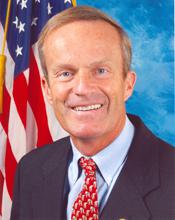
Mr. Speaker, I want to take an opportunity--we've been joined by our good friend from Missouri, who has been with us on a number of occasions on health care and other issues, and I want to yield to him some time. And I'll yield to the gentleman, Representative Todd Akin from Missouri.
If the gentleman would yield. Is that similar to a triple-dog dare?
I thank my colleagues. And they're well on target, of course. We're just, Mr. Speaker, trying to make sure that all of our colleagues, all of our colleagues and their constituents understand that we on this side of the aisle, the Republican Party, we feel that we have the best health care system in the world. We think doing routine screening mammograms starting at age 40 and emphasizing and recommending breast self-examination, screening young African American children for sickle cell anemia, doing routine screening of hearing and vision in preschool for all of our children, we think all of these things are good.
We have a great health care system, and it's not perfect. We know that there are things that can and should be done. But in an incremental way, Mr. Speaker. Not spending $1.5 trillion, not spending $900 billion. I guess the Senate got a score of $785 billion, and they're just elated.
Mr. Speaker, when you spend $250 billion--when you spend $100,000, for that matter, on something that is bad for the American people, you have done them a grave disservice--and especially all of the spending at a time when our unemployment rate is 10.2 percent. Some of us have members of our own family who have children who have lost their jobs-- 16 million across this country.
And we have this situation in Afghanistan where a four-star general, Mr. Speaker, a commander who was put there by President Obama, says to his Commander in Chief, ``Mr. President, I need help. We can win. I need help.''
Well, how can that not be a higher priority than totally reforming our health care system, throwing the baby out with the bath water, spending a trillion dollars, or $2 trillion, or $2\1/2\ trillion? How can that be more important than putting people back to work?
The President, Mr. Speaker, was just over there on a 9-day trip. I wish he had been right here inside the Beltway in the Oval Office working on this issue and this economy. But I hope while he was over there that he got some advantage out of it, Mr. Speaker, and maybe asked Hu Jintao, the Chinese President, to write him a check for $210 billion so he can bring it back and pay for this Trojan horse that we just passed here on the floor of the House today in the name of H.R. 3961.
I want to yield to my good friend from Texas, Judge Gohmert.
I have heard it said, ``I'm here from the government. Trust me. I'm here to help you.''
I think Mr. Reagan said it right. ``Trust but verify.'' The verification is yet to come.
I thank the gentleman from east Texas so much for being with me tonight.
Mr. Speaker, as I bring this to a conclusion, let me just say that we hear the term all the time in the military about collateral damage, and we worry about it. Every time we fire a rocket or use a predator drone to get the really bad guys, we worry about collateral damage.
Well, we should be just as worried about collateral damage in the social programs that we are enacting up here as the representatives of the people, especially when it's dealing with health care, because in both instances, both in the military and socially, the collateral damage can result in lost lives. We're talking serious business here. We will continue to fight for the right thing.
With that, Mr. Speaker, I yield back the balance of my time.