Mr. Speaker, I move to suspend the rules and pass the bill (H.R. 3606) to amend the Truth in Lending Act to make a technical correction to an amendment made by the Credit CARD Act of 2009. Mr.…
Mr. Speaker, I move to suspend the rules and pass the bill (H.R. 3606) to amend the Truth in Lending Act to make a technical correction to an amendment made by the Credit CARD Act of 2009.
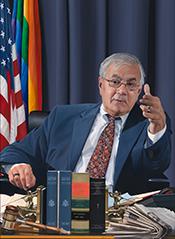
Mr. Speaker, I yield myself such time as I may consume. We made an error, Congress did, when we passed the credit card bill, not in passing the bill. The only error we made there was we didn't make it go into effect immediately because the abusive behavior by the credit card companies has been even worse than some people have feared, and I hope we will soon be trying to move up that effective date. But there was a drafting error in which the restrictions applied not just to credit cards if you read the bill literally, as you have to, with the bill, but all open-end credit agreements. Credit unions in America, which have not been any part of a pattern of abuse of credit cards, were inadvertently swept into this.
The gentleman from Vermont (Mr. Welch) and the gentleman from Missouri (Mr. Skelton) called this to the attention of the committee, as did the National Credit Union Administration and the Credit Union National Association; the latter, of course, being the private association of credit unions, the former being the administrative agency. They asked us to fix it. They were quite correct.
Credit unions are a very important part of the structure of this country and it serves our consumers. And so this bill would correct that error and allow the credit unions to continue to perform their function.
I reserve the balance of my time.
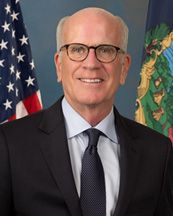
I yield 4 minutes to the gentleman from Vermont, the lead author of this bill, Mr. Welch.
Mr. Speaker, first I would ask unanimous consent that all Members have 5 legislative days in which to revise and extend their remarks and submit extraneous material both on this bill, H.R. 3606, and the preceding bill, H.R. 1327.
Finally, Mr. Speaker, this has been well- covered by the two Members, the gentleman from Vermont (Mr. Welch) and the gentleman from New York (Mr. Lee), who have been major movers in it. I would just ask, although we have general leave, I would note that I am inserting in the Record a letter from the National Credit Union Administration, a letter from the Credit Union National Association, both asking for this, and then two documents which I hope will give people some sense of how this institution works at its best.
Credit Union National Association,
Washington, DC, October 7, 2009.
Hon. Barney Frank,
Chairman, Committee on Financial Services, U.S. House of
Representatives, Washington, DC.
Hon. Spencer Bachus,
Ranking Member, Committee on Financial Services, U.S. House
of Representatives, Washington, DC.
Dear Chairman Frank and Ranking Member Bachus: On behalf of
the Credit Union National Association (CUNA), I am writing
regarding a specific issue that credit unions are
experiencing with respect to the recently-enacted Credit Card
Accountability, Responsibility and Disclosure (CARD) Act.
CUNA is the nation's largest credit union advocacy
organization, representing approximately 90% of America's
8,000 state and federal credit unions and their 92 million
members.
Credit unions are currently reeling from an unintended
consequence of the CARD Act. Section 106 of the CARD Act
prohibits creditors from treating payments as being late
unless the creditor adopts reasonable procedures to ensure
that periodic statements are mailed or delivered to the
consumer no later than 21 days before the payment due date.
We believe this provision was intended to cover only credit
card accounts; however, the provision, as enacted, applies to
all open-end loans, including general lines of credit, lines
of credit associated with share draft and checking accounts,
signature loans, and home equity lines of credit (HELOCs) as
well as multi-featured, open-end lending programs.
Consolidated Billing May Cease, Increasing Costs for Credit Unions
Members
Most credit unions provide monthly consolidated membership
statements that combine information on a member's savings,
checking, and loan accounts, other than for credit cards.
Since these statements may include a number of open-end
credit plans with different due dates, changing these due
dates to comply with the 21-day requirement may lead credit
unions to discontinue the use of consolidated statements or
send statements for each loan in addition to the consolidated
one.
The alternative is to send separate statements for each
loan. This will greatly increase both processing and mailing
costs (in addition to the environmental impact), which credit
unions have estimated will be $1-$2.25 per month per loan.
Notwithstanding the additional costs, we are also very
concerned that some credit unions currently do not have the
capacity to print and mail these increased number of
statements in order to meet the rule's timing requirements.
Not only will credit unions need to pass on these costs to
their members in the form of higher loan rates, lower deposit
rates, or higher fees elsewhere, but credit union members
will be very confused and concerned when they receive
multiple statements from their credit union, depending on how
many loans they have outstanding. Credit union relationships
with their members will suffer, all in an effort to comply
with an unintended application of a law that is intended to
benefit consumers.
Credit Union Members May No Longer Be Able to Choose Their Payment Date
For certain loans, particularly vehicle loans, credit union
members are often permitted to choose the due date to best
suit their financial needs; for example, members may choose
due dates that coincide with pay days or to avoid other
payment due dates. This practice will have to be discontinued
if the member-chosen date no longer complies with the new 21-
day requirement. Changing the express choice by members would
not be consumer-friendly, and members will not understand
that a Federal law requires this action.
Additionally, many credit unions provide their members with
the convenience of automated payments, in which payments are
automatically withdrawn from the credit union account on a
certain date. Again, this may often be chosen by the member,
who may choose a date that is related to when he or she
receives a paycheck. This may now need to be changed based on
the new 21-day requirement, imposing hardship and
inconvenience if the new date no longer coincides with the
receipt of a paycheck.
Bi-Weekly Payments Are No Longer Permitted
Many loans are structured so that payments are made bi-
weekly, which serve to minimize the amount of interest that
is charged, as compared to loans in which payments are made
monthly. These loans are often repaid through payroll
deduction. If bi-weekly programs are no longer permitted
under the new 21-day requirement, the result will be that
these members will pay additional interest and may no longer
have the benefit and convenience of payroll deduction.
HELOC Terms and Conditions Must Be Changed
The 21-day requirement will also apply to HELOCs, the terms
of which cannot be easily changed. Regulation Z lists
exceptions for changing terms of HELOCs and although the
Regulation Z commentary permits changing the due date, we
note that the due date is often a contractual term, which
adds to the difficulty of complying with these new
requirements.
A Technical Correction is Necessary and Appropriate
To address these concerns, Representative Peter Welch (D-
VT) has introduced legislation, H.R. 3606, the CARD Act
Technical Corrections Act. This legislation very simply
inserts the words, ``a credit card account under'' to Section
106 of the CARD Act. These words were included in the House-
passed version of the CARD Act, and we believe the effect of
their omission in the enacted version of the legislation was
unintended. We hope the Committee will agree that a technical
correction is appropriate and will support passage of
technical corrections legislation as quickly as possibly.
On behalf of America's credit unions, thank you very much
for your consideration.
Sincerely,
Daniel A. Mica,
President & CEO.