Mr. Chairman, I yield myself such time as I may consume. Mr. Chairman, the parliamentary situation must be understood. Last year, when we responded to the urgent pleas of the Bush administration to…
Mr. Chairman, I yield myself such time as I may consume.
Mr. Chairman, the parliamentary situation must be understood. Last year, when we responded to the urgent pleas of the Bush administration to authorize the $700 billion deployment of Federal funds to unstick the credit markets, we resisted their insistence that all the money be made available rapidly, and at least said that they would have the right to spend the first half, but after having spent the first half, would have to notify Congress of any intent to spend the second half, and that we would have 15 days in which to consider, under expedited procedures, resolutions to disapprove that.
As the Bush administration began to administer this program, many of us became very unhappy, in particular, we felt that they had repudiated commitments they had given to us to use a significant part of the fund to diminish foreclosures.
We also thought it was a mistake to provide infusions of capital to banks without any requirements as to what was done with that capital. The infusion of capital was not, in itself, a bad idea, but doing it in a way without conditions was in error.
Because of the dissatisfaction with that and some other aspects, we made it clear, many of us, to the Secretary of the Treasury that any requests to free up the second 350 would be voted down by the Congress, possibly by a sufficient majority to override a veto. The Secretary of the Treasury, therefore, withheld using any of those funds.
We now have a new administration coming in, and many of us believe that the new administration should have the opportunity to spend, lend, deploy the 350. The main argument against it is very simple; because the Bush administration messed this up, we must not allow the Obama administration to do it.
People talk about this program, the TARP, it is called, the Troubled Asset Relief Program, and they impute to it a personality. It becomes, in some of the rhetoric, a living organism. We can't trust the TARP. The TARP was bad.
Well, the TARP is not an organism. It has no mind; it has no spirit. It is a set of policy tools. And at the outset, the argument that because the Bush administration used those tools in ways that we disagree with, we should deny them to the Obama administration goes much too far.
If I were to follow the principle that where the Bush administration did things badly, I would deny the Obama administration the chance to do them, we would not have a State Department because I don't like the Bush administration's foreign policy on the whole. But I do not think we should therefore deprive the new President of the chance to do it.
Instead, what we do, and here's where the parliamentary situation comes in. We have a vote coming under the bill that we passed last year on resolutions of disapproval in the Senate and the House, and they cannot be stopped, thanks to the way we wrote this, by the Rules Committee, by a filibuster or by anything else. Prior to that vote, many us believe we, in the House, should make clear what conditions we would want to impose on this if it does go forward.
Now, I believe the Obama administration will do this better than the Bush administration, but I want to go more than simply believing that. I think it is important that we pass this bill that makes clear what we believe should be in it, and hope that it passes the Senate, but even if it does not get taken up there for a while, and we've had long delays, have the administration commit to it.
Now, I'm somewhat bemused by my colleagues on the other side of the aisle. Trying to follow their path on this whole program has made me dizzy. Last year they were, at various points, ardently for it, then against it, then for it again. They were for it in the end only with a condition that had to be added to it involving insurance, which the Secretary of the Treasury of their administration said he did not think made any sense and he did not plan to include it.
The leadership, I sympathize on the other side. They've got a membership that they have found hard sometimes to work with, and that has led the leadership to go, in my judgment, in the last year, from obstruction to irrelevance to self-delusion. First they said, let's not do anything. Then they absented themselves from negotiations involving the White House and the Treasury, the Senate Republicans and Democrats and ourselves. They just weren't there, and they wouldn't tell us what they thought. Then finally they felt they had to do something, so they said they would support the bill on condition that it include this insurance plan which the Secretary of the Treasury has made very clear to people he intended to ignore. That gave enough of them enough comfort to vote for the bill.
Now, we found that leaders on the other side who supported this when it was for the Bush administration, now want to deny it to the Obama administration because they correctly realized that the Bush administration did not do it well.
I know that quoting the Bible is in vogue in some circles. I'm not the best exegete, but I will say there is an analogy, you were told, I think, not to visit the sins of the father on the son, or maybe you're told that you should. I'll be honest and say I don't quite remember.
But I certainly do know that when you are dealing with important matters of public policy and tools that you give a President, visiting the sins of one administration on that administration which is not only coming after it, but repudiated it politically would be a great mistake.
Now, the last point I would make is again to emphasize. This vote that we will take on this bill does not free up the money. It does not free up the money. It does not mean the money should be spent. It will mean, after we have dealt with the amendment process, that if the money is spent, we want it spent in this way. There will be a separate vote on whether or not it should be spent.
Now as I understand, I realize that my Republican colleagues in the leadership, on the whole, intend now to repudiate their support for this retroactively, but it comes too late. Punishing the Obama administration, denying the incoming administration the opportunity to deploy these resources, particularly after they have agreed, as I believe they will, very explicitly with what the House thinks should be included, would be a great mistake.
And the last point I would make is this. If we do not pass this bill today, and I believe that, in a subsequent and independent decision, agree to release the $350 billion, we will make no progress in what is the single biggest economic problem we've been facing, namely, the foreclosure crisis, which has been the cause of so much else.
There has been very little done in the foreclosure crisis. We have tried. We
passed a bill. It didn't work very well. The one chance we have to bring relief to a substantial number of people facing foreclosure and, importantly, undo the economic harm that does for the country, because foreclosures don't just hurt the person who's losing the property. They have been a central cause of our economic problem, widely agreed upon by a wide range of economists.
Passing this bill, and then in a subsequent vote, unrelated, but independent, but as part of a package, freeing up the second $350 billion, subject to the conditions we put today, is the only way Members will have to see that foreclosure diminution becomes a reality.
So I hope this bill is passed. More importantly, next week, I hope that if it is passed, we will then defeat the motion of disapproval.
I reserve the balance of my time.
Mr. Chairman, I yield 2 minutes to the gentlewoman from Wisconsin (Ms. Moore), a member of the committee.
If the gentlewoman would yield, in title IV of the bill, we list some high-priority items where we expect these funds to be deployed, and we say that, if they are not deployed, we have to get an explanation in writing as to why that wasn't possible. In general, aid to municipal finance and housing, as part of that, is clearly included.
Mr. Chairman, California has been one of the epicenters of this foreclosure crisis, and the delegation has worked very closely together. One of those leading that effort is the gentlewoman from California (Mrs. Tauscher). I yield her 2\1/2\ minutes.
If the gentlewoman would yield, I completely agree with that statement.
As she knows, because she was a major part of this, there is an amendment included in the manager's amendment that was authored by herself and by her colleague from California, Mr. Cardoza, whose eloquence on behalf of the people facing foreclosure cannot fail to move anyone who listens to him. That says it beyond the current foreclosure relief that will be in this bill, and it will be the only foreclosure relief we will get if this money isn't made available. We are mandating that a further study be made to help people who might be facing foreclosure in the future and to deal with the broader aspects of the problem.
So I thank the united efforts of the people of California, the Members from California, for helping improve this bill. I give them my commitment that, as chairman of the committee, I will be working with them to go further.
Mr. Chairman, time is limited so I want to give myself 30 seconds to rebut the inaccuracies we've just heard.
First of all, the gentleman said we've closed the process. I have no idea what he is talking about. I suspect he does not either. This is a very open process. We solicited amendments. A number of amendments were offered, a number of amendments from both parties will be made in order, a number of amendments from both parties have already been accepted in the manager's amendment.
The accusation that this is closed is just wildly off base. It has been a very open process, and I would say a majority of the amendments that have been offered made sense, and we've agreed to them. And to say it is a one-person bill, in fact we have opened it up.
Now, Members who did not offer amendments--I will acknowledge. If you didn't offer an amendment, Mr. Chairman, it wasn't put in the bill. But this bill has been open, and the rule tomorrow will make that clear.
I now yield 2\1/2\ minutes to the gentleman from New Jersey (Mr. Pascrell) who's had a lot of input in this bill, which I guess makes it still a one-man bill.
If the gentleman would yield, absolutely.
I believe that the difference in the way the TARP will be administered in the new administration and the last administration will be very glaring, and frankly, I think that one of the motivations on some of my Republican colleagues to kill this now is that they fear the contrasts that will be presented between the very responsible and effective administration of this by the new administration and the inappropriate way of the last administration.
Mr. Chairman, I yield the gentleman 30 additional seconds, and ask him to yield to me.
Absolutely. This is a necessary component of our efforts to keep the American automobile manufacturers from going under. We give this authority--we reassert this authority to Treasury, and we intend to be very, very insistent that they use it.
Mr. Chairman, I yield the gentleman 10 additional seconds.
He is absolutely right, and once again, we underlined this authority and we intend to be very insistent that it be used.
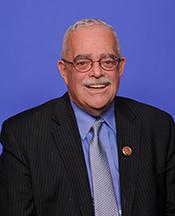
Mr. Chairman, I yield 2\1/2\ minutes to one of our freshman Members, a man with great experience in municipal government, the gentleman from Virginia (Mr. Connolly).
If the gentleman would yield, yes, I very much agree.
I think one of the most sympathetic victims of this financial crisis has been the municipalities. The capacity to finance what's necessary for the quality of the life of their constituents has been impaired by factors well beyond their control. And the gentleman is absolutely right that we have an obligation to try to come to their aid which this bill would mandate be done.
Would the gentleman yield?
I am in complete agreement, and while that would be beyond the scope of this, as the gentleman knows--I know he's not suggesting we do it here--I guarantee we will be having hearings later this year on the proposal.
My own view is that some form of insurance would be there.
The most unjustified risk premium being paid in America is by those municipalities that issue particularly full faith and credit general obligation bonds.
I welcome the gentleman as someone with the municipal government experience that he's most recently had, and I look forward to drawing on that experience as we help correct this situation.
Mr. Chairman, I yield 2 minutes to one of the most energetic and informed members of the committee, the gentleman from Georgia (Mr. Scott).
Well, Mr. Chairman, I am tempted to defend George Bush against the charge that he is un-American at this point because this was his program, but I'll defer that until later.
I yield 2 minutes to the gentleman from Missouri (Mr. Clay).
If the gentleman would yield, obviously we aren't doing anything for any one company--the gentleman wasn't suggesting that we were--there are other companies. And yes, unsecured paper should be covered. Obviously we don't expect any investment by Treasury to be made irresponsibly; they have to check to make sure that it's a good investment. But ruling out the unsecured, no, that was not our intention. In fact, under the underlying bill, which we do not change, the Secretary has the authority fully to respond to that sort of situation.
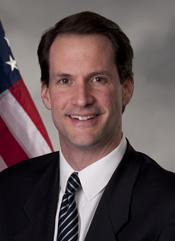
Mr. Chairman, I yield 2 minutes to another freshman member of the committee, the gentleman from Connecticut (Mr. Himes).
If the gentleman will yield, Mr. Chairman, he's absolutely correct. The form of ownership should have no relevance to the decision here.
If the gentleman would yield, he understates my view when he says they should be encouraged. I believe I will be glad to join with him in insisting that they do that. And, frankly, we don't want any form to be disfavored and certainly not the mutual form, which has a great deal in terms of our history to commend it. So the gentleman is absolutely right, and I think on this one we can be pretty certain that, particularly if the House gives the kind of endorsement to it that I suspect that it will, we'll be able to accomplish that.
If the gentleman would yield, that's right. And I would say some of my colleagues understandably wanted to put very severe restrictions on the recipient institutions, and we put restrictions on them. But we don't want to be so restrictive that we drive out private capital. This will only work if the public capital leverages and unlocks and reassures private capital.
Mr. Chairman, not being a person who holds grudges, I yield 2 minutes to someone who left our committee, the gentleman from New York (Mr. Crowley).
If the gentleman would yield, he is absolutely correct. We think that it is a very important use of it. It's one of those things that was not done sufficiently previously, and we are convinced it will be done with this House's taking the lead in the future.
If the gentleman will yield, yes, he's correct. What we, in fact, say here is that nothing should be advanced to a bank without an agreement in advance as to how it should be used. Now, we would expect a great bulk of the funds, the agreement would say, be re-lent, but that's not the exclusive purpose. There are other valid purposes. What this bill says, however, is that that would have to be clear up front as one of the permitted purposes, and we do believe that this Treasury Department, given that, yes, they would accept that as a very valid use.
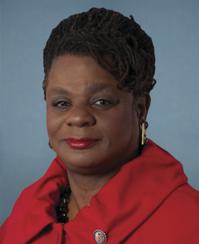
Mr. Chairman, I will now yield 3 minutes to one of the leaders in this House on the important issue of foreclosure, the gentlewoman from California (Ms. Waters).
Mr. Chairman, I move that the Committee do now rise.