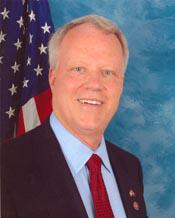
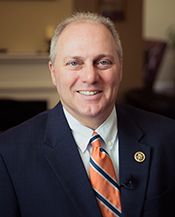
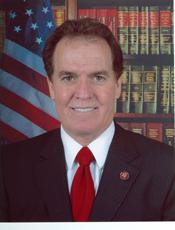
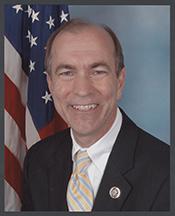
Mr. Speaker, it is great to be down here, and I am going to turn immediately to my colleague, Dr. Paul Broun from Georgia, to talk on the cap-and-tax, global climate change, destruction of jobs in…
Mr. Speaker, it is great to be down here, and I am going to turn immediately to my colleague, Dr. Paul Broun from Georgia, to talk on the cap-and-tax, global climate change, destruction of jobs in America,
a bill that may be coming to the floor soon.
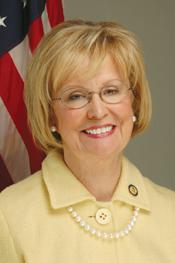
I thank my colleague, and I appreciate him coming down. I am going to turn quickly to my colleague from Tennessee, Congresswoman Marsha Blackburn, for such time as she may consume.
I thank my colleague for coming down and making the time. We have already had a colleague from Georgia and now from Tennessee. I'm now going to be followed by Dr. Fleming of Louisiana, a new Member, and I think this shows the diversity of representation in this country.
I appreciate your coming down and you're free to open with your comments.
Thank you, Dr. Fleming, for joining us. Now I'm pleased to be joined by the ranking member of our Agriculture Committee from the Commonwealth of Virginia.
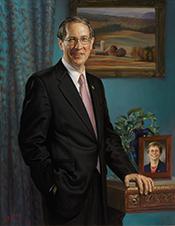
Ranking Member Goodlatte, thanks for joining us.
Would the gentleman yield on coal just for a second? I think this is an important issue, of course, for me. But a couple of recent occurrences highlight the fact that this bill really is an assault on coal. And however they try to clean it up, it is not working. Yesterday in the local paper, what did Speaker Pelosi do? She said the coal-fire power plant here in the Capitol is now switching to natural gas, that coal is gone. At a news conference briefing held last week at the United States Energy Association, FERC Chairman Wellinghoff told reporters that nuclear and coal power was too expensive. He estimated the cost of building a nuclear plant at about $7,000 per kilowatt and discouraged investors from undertaking such ventures.
So the signals are no nuclear and no coal.
They don't like coal. They don't like hydro. But don't like nuclear. But they like electricity.
Here is the President's comments.
And here is the President's statement during the campaign: ``What I have said is that we would put a cap-and-trade system in place that is as aggressive, if not more aggressive, than anybody else's out there. So if somebody wants to build a coal-fired power plant, they can. It is just that it will bankrupt them because they are going to be charged a huge sum for all that greenhouse gas that is being emitted.''
So the signals are ``no'' in a venue when the demand for electricity is going to go up by 30 percent. But we want to limit the ability to produce electricity which is why we fear the real price escalations.
I just want to tie this in with the leadership of this House in Washington and down at the White House and through the Federal agencies. They are saying ``no'' to coal and ``no'' to nuclear when we have all these challenges that face us.
I appreciate the gentleman coming down, and I would like to now recognize the gentlewoman from Illinois (Mrs. Biggert).
I thank my colleague.
It is very important that we continue this discussion, this dialogue, and help inform the American public.
The reality is the 686-page bill, so it is $1 billion a page, but the reality is that there are large portions that are to be written later. Part of our challenge to really debate this bill is to call my friends out and say, okay, you promised transparency. You promised openness and regular order. What are the scores so we can figure out the winners and losers? But it is crafted behind closed doors.
In fact, I heard today that this bill will now bypass the subcommittee and hopefully go to the full committee, which is really a shame for individuals who have promised regular order to continue to disregard it.
In fact, Chairman Waxman, Chairman Markey, and Chairman Emeritus Dingell all sent a letter making sure that this would not be done in reconciliation, and pushing for regular order. They sent a letter to President Obama.
And it is now these very same people who sent a letter begging for regular order who are not going to allow regular order to occur on this bill. That is sad because it hurts our ability to educate our constituents, our voters, and let them make a decision. And they do that every 2 years.
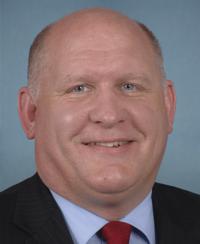
With that, I am pleased to be joined by a new Member from Pennsylvania, Mr. Glenn Thompson.
I thank my colleague from Pennsylvania for joining us. I look forward to working with him as we move to defeat this, wherever we get a chance to.
Now, just for my colleagues to know, I think there are about 10 minutes remaining. I would like to now give the time to Dr. Phil Gingrey, a colleague of mine from Georgia on the Energy and Commerce Committee.
I appreciate my colleague from Georgia. Georgia has some significant challenges on the renewable electricity standard that they are trying to cram down, which will definitely increase rates in the Southeast. We need you in the fight--and we are glad you are here.
I would now like to turn to my other colleague and friend, also from the Energy and Commerce Committee, Congressman Steve Scalise from Louisiana.
I appreciate my colleagues--all my colleagues--for coming down here tonight. In fact, I didn't have to spend much time, we had so many people involved. I think it shows the concern of this debate.
One of our new Members recently elected--and when you are elected out of cycle, you get a chance to get sworn in and speak here. And he actually had one of the best speeches I have ever heard. In fact, I wrote it down to a point that I wanted to highlight his comments.
He said, ``It is a humbling experience to take a job when people back home are losing theirs, and become a member of this House when people are losing theirs.''
It made me appreciate the great honor that the people of southern Illinois have bestowed on me to come here and represent them. How dare I come here and cast votes that would cause them to lose their jobs in even greater numbers. I am here to protect their jobs.
Why am I so impassioned? In the 1990 Clean Air Act amendments, this mine, Peabody No. 10 in Kincaid, Illinois, closed. Twelve hundred jobs were lost in just one mine. Fourteen thousand in southern Illinois.
The Special Order before this had a lot of members from Ohio, and one of them mentioned Bob and Betty Buckeye, which I thought was cute. Ohio lost 35,000 coal mine jobs. Ohio. About 92 percent of their energy portfolio is coal.
If you follow President Obama's quotes and you follow the FERC chairman and you follow the bill, this is an assault on every State that relies on coal-fired power and the miners that get that coal from the ground.
We will have a chance to talk, debate, offer amendments to make sure that these jobs are protected, and then when my colleague makes a comment, ``it is humbling to be given a job when people are losing theirs,'' we best be about the business of protecting the jobs of our constituents.
And this cap-and-tax, this national energy tax, will destroy jobs; and that is what we are here to fight.
I see my colleague is here. I have 1 minute left, and I recognize the gentleman from New Jersey.
I appreciate my colleague joining me.
Mr. Speaker, I yield back the balance of my time.