Thank you, Mr. Speaker. Sorry for the confusion this evening. Tonight I am joined by several of my colleagues from around the country who want to talk to you about the economy and how we are working…
Thank you, Mr. Speaker. Sorry for the confusion this evening.
Tonight I am joined by several of my colleagues from around the country who want to talk to you about the economy and how we are working hard here in Congress to set the record straight, but also, more importantly, to put our people back to work.
If you remember when we took office, Mr. Speaker, we were suffering from one of the worst recessions since the Great Depression. In fact, many have called this the Great Recession. And ironically, of all commercials, there is a contemporary insurance commercial out on the airwaves today that says, ``How will we remember the time and our experience? Will we remember this time as the great recession or the recession that made us great?'' I think
tonight you are going to hear from my colleagues who say that we are going to be remembered for the recession that will once again make this country as great as it has been in the past by focusing on real things, real challenges, and offering up real solutions.
When we took office, Mr. Speaker, the economy was in freefall. We didn't know where we were going to land. Record job losses were across the airwaves, people were standing in lines waiting for unemployment checks, and we found out that it was the most significant job loss since the Great Depression.
Record job losses. We didn't know where the economy was going to fall. Two undeclared, unfunded wars. A banking system in chaos. Greed on Wall Street. It was a perfect prescription for a perfect storm, and one that has led us to where we now have enormous challenges in front of us. The job market was losing 750,000 jobs a month, and unemployment was climbing just as fast. The economy was contracting at a rate of over 6 percent, the worst in decades. Foreclosures were at record levels. Home prices had plummeted by 30 percent. The decline of home prices, stock values, pensions and other retirement plans had cost American households over $10 trillion in wealth.
In fact, since the Great Recession had started, Mr. Speaker, since 2007, Americans' wealth had plummeted by $17.5 trillion according to the Federal Reserve. Seventeen and a half trillion dollars of loss of wealth since the recession started in June of 2007. It didn't start to pick up until the American Recovery and Reinvestment Act.
Now, we have heard a lot of hype about the American Recovery and Reinvestment Act. We heard a lot about the fact that this was the largest investment of capital in our Nation's history. We have heard a lot about the fact that this was the largest tax reduction in our country's history. Faced with this economic meltdown that we were handed when we walked into the door here in the 111th Congress, it required swift action.
Mr. Speaker, I believe that Members of Congress will be judged by two measures: by action or inaction. And the Congress took swift action to act as a backstop against further job loss, to create some jobs along the way. That is what the stimulus was about. And every economic expert you speak to today says that this brought us back from the brink of a great depression.
So I want to tell those detractors today that it wasn't until we enacted the stimulus bill, the American Recovery and Reinvestment Act, that Americans' wealth started to grow again. And in fact we see pensions are starting to climb, we see the fact that Americans' IRAs and 401(k)s are back on the path towards prosperity, and in fact we have recognized a $5 trillion recovery since the American Recovery and Reinvestment Act, the stimulus.
We are starting to create jobs, albeit not at the pace that I would like to see. But we have to understand the ditch that we are trying to climb out of. And I want to say to you that while we see manufacturing increasing, while we see home sales increasing, we need to see more and more people get back to work. And that is what my colleagues are focusing on here today.
Around the world over the last century the typical financial crisis caused jobless rates to rise almost 5 years, according to the economist Carmen Reinhart. Over the timeline our rate would still be rising by early 2012. And as Ben Bernanke and Henry Paulson, who were both Republicans, said, that many others warned in 2008 if dramatic action was not taken to break back the recession, the United States could spiral into another Great Depression. These are experts. These are economists. These are people who have distinction and recognition all around the world. It is important that we recognize that we had to take swift action here.
In the fourth quarter of 2009, the economy grew by almost 6 percent. Six percent. Job losses for the fourth quarter in 2009 were one-seventh of what they were when we took office, Mr. Speaker. The nonpartisan Center for Budget and Policy Priorities said that the American Recovery and Reinvestment Act kept more than 6 million Americans out of poverty and reduced the severity of poverty for more than 33 million more.
Can you imagine what it would be like if we didn't enact a robust policy to extend unemployment benefits, to extend coverage for health care so folks could keep their health care during this time of great need? Could you imagine if we didn't help our people what kind of condition we would find the people that we represent?
Well, it is disappointing because the challenges that confront us, Mr. Speaker, aren't Democrat or Republican challenges. They are not conservative or liberal challenges. They are not even moderate challenges. They are American challenges. And it is so frustrating to me that we have got to find the courage to stand up and confront these together. That is why I am so disappointed in my colleagues who didn't lend their support to help America recover in her greatest time of need.
A few more facts before I ask some of my colleagues to be recognized here.
According to economists polled in a recent USA Today survey, unemployment would have hit 10.8 percent higher than December's 10 percent rate without the Recovery Act. The difference would have translated into another 1.2 million jobs lost. These problems were years in the making, and they are not going to be fixed overnight. In fact, I can argue it is a decade of failed economic policies that have led us here.
A lot of our colleagues on the other side like to talk about the national debt. You know, when President Clinton left office, our country was facing a $5.6 trillion surplus, a $5.6 trillion surplus, and when President Bush left office, we were facing almost a $13 trillion deficit. So it is very clear that after two tax cuts to the wealthiest among us, after two undeclared, unfunded wars and a prescription drug plan that left a huge doughnut hole for average working families and seniors, we have a deficit now that has put us on the brink. And that's why we had a quick reaction and that is why we passed the American Recovery Act.
Now I want to call on my colleague from California, because she is going to talk about how this has impacted one of the largest States in the country, and I yield to the gentlewoman from California (Ms. Chu).
I thank the gentlelady from California who made some very compelling arguments about why California needs to have this investment.
While we are joined by several of my colleagues tonight, let me just say a little bit about what we are doing to create jobs in Ohio.
In Ohio's 16th Congressional District, we have had some good news recently. Rolls Royce, an international company, has announced that they are going to move their fuel cell research from Singapore to Stark County, Ohio. They are going to expand their fuel cell research and development activities, investing $3 million in equipment, creating up to 60 jobs and retaining 32, while offering apprenticeship and training programs with the local college.
Barbasol Shaving Cream invested $7.2 million to buy land and a new plant in Ashland, Ohio; a 78,000-square-foot plant to start, 30 new employees, and grow up to about 75.
Scotts Miracle-Gro is opening a manufacturing plant in Orrville, where they are expected to create nearly a hundred jobs in the next several months.
Shearer's Foods, they make potato chips, and they are mighty good, I might add. They broke ground earlier this summer to build a new production facility in Massillon's Northeast Commercial Park. They will hire as many as a hundred employees in the first phase of development. These are the type of success stories that have been helped, if not augmented, by the efforts of the American Recovery and Reinvestment Act.
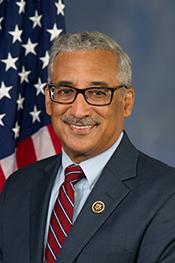
With that, I yield to the gentleman from Virginia (Mr. Scott).
Well, I thank the senior gentleman from Virginia.
I just want to be clear about your chart. It looks as if we stabilized the job losses in this country and started to grow them again after the Recovery Act was passed.
Well, these are exciting numbers. We have got to get people back to work. And I concur with the gentleman from Virginia.
Let me revisit for just a moment exactly what the Recovery Act and the stimulus bill included.
Thirty-seven percent of the package was tax cuts. $288 billion was given to small businesses so that they could help grow and invest in our new economy. In my opinion, that is going to be our investment in energy. $288 billion was invested back so small businesses could start growing again and investing back.
Largest tax cut in America's history, largest tax cut for working middle class families. In fact, 95 percent of middle class families in our country got some tax relief through their employer. $144 billion, or 18 percent of the Recovery Act, was allocated to State and local fiscal relief. More than 90 percent of the State aid is going to help folks who are finding themselves on Medicaid rolls. Fighting to make sure that we didn't have double-digit increases in tuition across State universities and so that our local school districts could keep teachers hired and we could keep custodians in the building. This is very important, Mr. Speaker, that we understand that we help bring our economy back from the brink of a great recession.
As that contemporary commercial says today, How will we remember this time? How will we remember it? Will we remember it as the great recession or the recession that made us great? I think with these key investments into our people, into our workforce, and into our country, we are definitely making our country stronger.
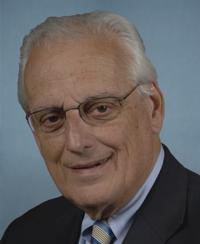
I want to take a moment to recognize a distinguished gentleman that I have a lot of respect for. Not only do we share a common heritage, but we share a common belief that we should invest in our people, in our country, and in
our way of life. Congressman Pascrell from New Jersey is a man who I have a lot of respect for, and I would like to yield him some time so that he can talk about exactly what we're doing to help put America back to work. Congressman Pascrell, my friend, you have the floor.
The gentleman from New Jersey has some very good ideas, which we have got to look at very seriously, about putting our country back to work and about long-term investments.
You know, I have often said that we have got to be the producers of wealth, not just the movers of wealth, and that we have got to build things here.
In 1950, over half the jobs in our country were in manufacturing. Today, one out of 10 of our jobs is in manufacturing. We are actually building. Some of that has been because of the fact that we have gained in productivity and because we have gained in efficiency. Yet we have still outsourced too many of our jobs. In States like New Jersey, Ohio, Pennsylvania, Michigan, and Illinois, we have seen some of those manufacturing jobs go overseas.
Our great trade imbalance that we have, the trade deficit that we have every year, is very troubling to me. We have a trade imbalance with China--$280 billion every year. We have a trade imbalance with oil-producing countries because they send $330 billion of oil over to the United States. Those two account for some of the largest imbalances our country has ever known in terms of our trade policy.
We know that 95 percent of the marketplace is outside the United States, and Ohio is leading the Nation. Some of our local municipalities have begun to start exporting some of their goods overseas, creating their own trade relationships. We need more help here from the American Government, from the Federal Government, so that States like Ohio, Virginia, New Jersey, and Pennsylvania can help make those needed investments into our local communities.
We have to be the producers of wealth. We have to build things again in this country. It's not only a matter of our economic security. It's a matter of our national security. That's why it is so key and strategic that the American Recovery and Reinvestment Act invests in our people, in our country and in our future, and that we also lay the groundwork for future prosperity by investing in energy.
Energy is a key component of our Nation's economy, but it is very troubling when we import 66 percent of our oil from overseas and 40 percent from the Middle East. We see that the largest user of energy in our country is our Nation's military. The Department of Defense is the largest user of energy in our country. So it is very key, not only to our economic interests but to our national security interests, that we move away from our dependence on foreign oil, that we invest and create jobs here that cannot be outsourced, and that we make sure that we put our people back to work. That's why it is so important that we make these needed investments.
According to Andrew Stettner, I have to say--he is a deputy director of the National Employment Law Center--14.9 million jobless Americans have been out of work for an average of 30 weeks, which is the highest level since the government began keeping those records in the 1950s. It is the highest record.
We have some on the other side who are suggesting that we shouldn't have extended unemployment benefits. I've even heard some who have had the audacity to say that we shouldn't be giving them government/ taxpayer money because they don't want to work. Are you kidding me? We have millions of people out of work in this country who are now just being called back to work. In fact, some of my friends on the other side voted against an extension of unemployment benefits which would have helped 11,600 Ohioans who have found themselves struggling just to put bread on their tables for their families.
To me, we have got to invest in our people. If we can spend $1 trillion on war, we can spend money to invest in our people, in our country, and we can put Americans back to work.
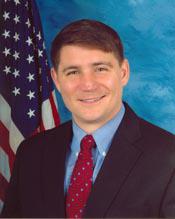
I want to yield some time before we close today, Mr. Speaker, to a good friend of mine from Virginia, a gentleman who has the passion and vigor to take on the challenges of our great country, Tom Perriello.
Congressman Perriello, enlighten us for a few moments, sir.
I agree with the gentleman from Virginia. We have seen almost a flip from a 6 percent job loss, when we began the 111th Congress in January of 2009, to nearly a 6 percent job growth in our gross domestic product. Yet we know that this is not about the GDP. This is about the j-o-b-s. We have got to put people back to work. That's why we are focusing on doing that.
There are some things that we have done for our small businesses, to help struggling small businesses stay open:
There is the net operating loss carry-back. We have also extended tax credits for renewable energy production because, as my colleague and I know, the cheapest energy is the energy we never use. Small businesses can save a lot by writing that off. They can save by weathering their businesses and by weathering their homes. That's what is going to save money in the long term.
We are also going to give bonus appreciation, which extends to businesses
that are buying equipment, such as computers. It speeds up the appreciation through 2009. That is helping our small businesses write off those losses so that they can get folks back to work.
Well, Mr. Speaker, he is exactly right. The gentleman from Virginia is exactly right that we have got to invest in our people, in our country, in our way of life. As that contemporary commercial says on the airwaves, Is this going to be remembered as the great recession or the recession that makes us great?
I believe that we can do this if we work together, if we invest in our people. Again, if we can spend $1 trillion on war, we can certainly spend money to make sure that we invest in our people and do the things that are going to set us on the track towards prosperity.
We are starting to begin to see the glimmers of light. We are starting to see the glimmers of hope that people once again are going to be on to a path of prosperity.
I want to thank the gentleman from Virginia, because he believes that our greatest days are still yet to come. We will be stronger, we will be more robust, and we will be smarter on how we handle these future downturns. This is the time that we cannot let go away from us. We have got to invest in our people, in our country, and that is why I am so proud of the gentleman from Virginia, who stands with me saying that we will again be the producers of wealth, not just the movers of wealth.