Mr. Speaker, I move to suspend the rules and pass the bill (H.R. 5446) to designate the facility of the United States Postal Service located at 600 Florida Avenue in Cocoa, Florida, as the ``Harry T.…
Mr. Speaker, I move to suspend the rules and pass the bill (H.R. 5446) to designate the facility of the United States Postal Service located at 600 Florida Avenue in Cocoa, Florida, as the ``Harry T. and Harriette Moore Post Office''.
Mr. Speaker, I ask unanimous consent that all Members may have 5 legislative days in which to revise and extend their remarks.
I yield myself such time as I may consume.
Mr. Speaker, I rise in support of H.R. 5446, a bill to designate the facility of the United States Postal Service located at 600 Florida Avenue in Cocoa, Florida, as the Harry T. and Harriette Moore Post Office.
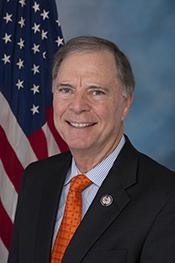
H.R. 5446 was introduced by our colleague, the gentleman from Florida, Representative Bill Posey, on May 27, 2010.
Mr. Speaker, Harry Tyson Moore was born in Houston, Florida, on November 18, 1905. He excelled in his schooling and graduated from Bethune-Cookman College in 1936. He soon after accepted a teaching position in a segregated school in Cocoa, Florida, and later became principal of the Titusville Colored School in Brevard County. There, he met Harriette Simms. The two married on Christmas Day, 1926, and had two daughters, Annie and Juanita.
After the birth of their two daughters, Harry and Harriette Moore founded the first branch of the NAACP in Brevard County, Florida, in 1934. They also helped the Florida State Conference of the NAACP in 1941, and Harry Moore took an unpaid position as its secretary.
The Moores led a successful effort to advance civil rights. In 1937, Harry Moore filed the first lawsuit in the Deep South to equalize salaries of black teachers with white teachers in public schools. This effort failed at first, but it laid the foundation for other lawsuits that succeeded.
In 1943, Moore began reviewing every incident of lynching involving black people in the State of Florida, taking affidavits from victims' families and launching investigations. He pursued this effort for the rest of his life.
In 1944, the Supreme Court ruled in Smith v. Allwright that all-white primaries in Texas and other States were unconstitutional, a major victory for the NAACP. Moore then organized a group called the Progressive Voters League and spent 6 years registering over 116,000 black voters in the Florida Democratic Party. This activism led the Florida public school system to fire and blacklist the Moores in 1946, after which Harry Moore became a full-time paid activist for the Florida NAACP.
In July 1949, he got involved in a police brutality case in Groveland, Florida, where he uncovered evidence that four black men accused of rape had been beaten. Moore leveled brutality charges against Lake County Sheriff Willis McCall. Three of the defendants were convicted in 1949, but two of the convictions were overturned by the U.S. Supreme Court. Lake County prepared to put the two on trial again, and on November 6, 1951, while Sheriff McCall drove them back to Lake County for a pretrial hearing, he shot the two handcuffed men, killing one and critically wounding the second. Moore immediately called for Sheriff McCall to be suspended and indicted for murder.
Six weeks later, on Christmas Day, 1951, Harry Moore was killed when a bomb exploded beneath the floor joists under his bed. Harriette died of her injuries 9 days later. Harry Moore was the first NAACP official murdered in the civil rights struggle, and Harry and Harriette Moore remain the only married couple to be murdered for their activism in the era. The FBI was unable to file charges due to a lack of evidence, but it was suspected to be the work of central Florida members of the Ku Klux Klan.
Harry Moore has been called the first martyr of the 1950s civil rights movement. The Moores' murder sent a shock around the country and around the world, drawing attention to the movement.
Mr. Speaker, the extensive efforts of the Moores during the civil rights movement is worthy of our greatest praise. Let us now pay tribute to the life and work of Harry T. and Harriette Moore by designating the postal facility on Florida Avenue in Cocoa, Florida, in their honor. I urge my colleagues to vote in favor of H.R. 5446.
I reserve the balance of my time.
Mr. Speaker, I again urge my colleagues to join me in supporting this measure, and I yield back the balance of my time.
Mr. Speaker, on that I demand the yeas and nays.