Madam Speaker, I move to suspend the rules and agree to the resolution (H. Res. 1611) expressing support for designation of the week beginning September 19, 2010, as ``National Hispanic-Serving…
Madam Speaker, I move to suspend the rules and agree to the resolution (H. Res. 1611) expressing support for designation of the week beginning September 19, 2010, as ``National Hispanic-Serving Institutions Week''.
Madam Speaker, I request 5 legislative days during which Members may revise and extend and insert extraneous material on House Resolution 1611 into the Record.
Madam Speaker, I yield myself such time as I may consume.
Madam Speaker, I rise today in support of House Resolution 1611, which encourages establishment of the week of September 19 as National Hispanic-Serving Institutions Week. Hispanic-Serving Institutions are degree-granting institutions of higher education with a student population that is at least one-quarter Hispanic. In 1990, there were only 137 recognized Hispanic-Serving Institutions. Today, there are 268 such institutions, educating nearly half of all Hispanic college and university students nationwide.
Overall, Hispanic students are more likely than their peers to face multiple obstacles in their access to, and completion of, higher education. They are less likely than their white peers to complete their bachelor's degrees due to issues such as poverty, immigration status, language barriers, family responsibilities, and the demands of part-time employment. Hispanic-Serving Institutions play a crucial role in addressing these issues and obstacles by providing the support services necessary to help their students focus on and complete their degrees.
Hispanic-Serving Institutions provide opportunities for their students to get involved in campus and community leadership activities, and also work to prepare students for careers in a 21st century workforce by expanding the ranks of Hispanics in science, technology, engineering, and math fields.
Recently, the nonprofit organization Excelencia in Education began a national initiative known as Ensuring America's Future By Increasing Latino College Completion. This initiative aims to focus attention on serving Hispanic students by organizations, institutions, and policymakers, to delineate degree completion goals, and encourage Federal, State, and institutional policies which promote the success of Hispanic students. The initiative also aligns with President Obama's goal to increase our Nation's degree attainment by 2020.
Over 50 organizations have partnered with Excelencia to support the campaign, including groups such as the Hispanic Association of Colleges and Universities, the Alliance for Excellent Education, and the National Governors Association.
According to the United States Census, only 19 percent of Hispanics in the United States had earned an associate's degree or higher in 2008. In comparison, 59 percent of Asians, 39 percent of whites, and 28 percent of African Americans had earned an associate's or higher in the same year. A report by Excelencia states that 5.5 million Latinos will have to earn college degrees between now and 2020 in order for the United States to reach the Obama administration's degree completion goal. That means 3.3 million more Latinos will have to complete
college than are currently projected. Our Nation's Hispanic-Serving Institutions will help us lead the way to greater access to and completion of higher education for all of America's students.
Madam Speaker, I ask my colleagues to support this important resolution and join me in recognizing the week of September 19 as the 2010 National Hispanic-Serving Institutions Week and honoring the important contributions these institutions make to the education of our students.
I thank my good friend Representative Grijalva for his leadership in bringing this important resolution forward.
I reserve the balance of my time.
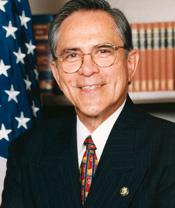
Madam Speaker, I am pleased to yield 5 minutes to the gentleman from Texas (Mr. Hinojosa), a leader in education for all students, including Hispanic students.
Madam Speaker, I also urge the support of H. Res. 1611.
I have no further requests for time, and I yield back the balance of my time.