Mr. Speaker, by direction of the Committee on Rules, I call up House Resolution 1742 and ask for its immediate consideration. Mr. Speaker, for the purpose of debate only, I yield the customary 30…
Mr. Speaker, by direction of the Committee on Rules, I call up House Resolution 1742 and ask for its immediate consideration.
Mr. Speaker, for the purpose of debate only, I yield the customary 30 minutes to the gentleman from Florida (Mr. Lincoln Diaz-Balart). All time yielded during consideration of the rule is for debate only.
General Leave
I ask unanimous consent that all Members be given 5 legislative days within which to revise and extend their remarks on House Resolution 1742.
Mr. Speaker, I yield myself such time as I may consume.
H. Res. 1742 provides a closed rule for consideration of S. 3307, the Healthy, Hunger-Free Kids Act of 2010. The rule provides 1 hour of debate equally divided and controlled by the chair and ranking minority member of the Committee on Education and Labor.
The rules waives all points of order against consideration of the bill except those arising under clause 9 of rule XXI. The rule provides that the bill shall be considered as read. The rule waives all points of order against provisions of the bill. Finally, the rule provides one motion to recommit the bill with or without instructions.
Mr. Speaker, before I begin, as many of my colleagues know, my colleague from Florida (Mr. Lincoln Diaz-Balart) has decided not to seek reelection and move on to other endeavors in his home State of Florida. I just want to publicly thank him for his friendship over the years, and also thank him for his great service not only to the people of Florida but to the people of this country. This may be the last rule that we handle together, so I wanted to take this opportunity simply to acknowledge his service and to thank him.
Mr. Speaker, we have the opportunity today to pass a very good bill that will improve the lives of our children. And I believe that we must seize that opportunity.
I want to thank Speaker Pelosi and Chairman Miller, Congresswoman DeLauro, Congresswoman McCarthy, and others who have worked so hard on this issue. And I want to say a special thank you to First Lady Michelle Obama. She has been an incredible champion for our children, particularly in the areas of nutrition and obesity.
She has challenged us to live up to one of our highest moral obligations--to make sure that the children of this Nation have the nutritious food they need to grow, to thrive, and to succeed.
Mr. Speaker, as many of my colleagues know, I chair both the House Hunger Caucus and the Congressional Hunger Center, and I've said many times that hunger is a political condition. We have the resources to end hunger, particularly childhood hunger, and what we need is the political will to make it happen.
President Obama has pledged to end childhood hunger in America by 2015. If we support that goal, then we must pass this bill. I hope that the Members of this House, all of us, Democrats and Republicans, can come together today to summon the political will necessary to move forward on this issue.
There is not a single community in America that is hunger free. Talk to any food bank. They will tell you that the demand has never been greater, and far too many of the people who need help are children.
The child nutrition bill that we will take up today gives us a chance to provide healthy meals to hundreds of thousands of children who need them. It's also important to remember that hunger and obesity are two sides of the same coin. The fact is that highly processed, empty calorie foods are less expensive than fresh, nutritious foods. That's why so many families are forced to make unhealthy choices. This bill increases the reimbursement to schools for meals by 6 cents a meal, 6 cents, and that's the first increase in 30 years.
Too often, the only nutritious food our kids get is in a school setting, and this bill also increases access to after-school programs. And the bill helps communities to establish farm-to-school networks, which are not just good for children, but they're also good for our local farmers.
Now, it's no secret, Mr. Speaker, that I've had concerns with how this bill is paid for, and I remind my colleagues that this bill is fully paid for. The cuts to the SNAP, or food stamp, program don't make a lot of sense to me. I don't believe we should be taking access to food away from some people in order to provide it for others. But we have been assured, repeatedly, by the President and the White House that they will work with us to restore these cuts, and I look forward to working with the administration and my colleagues to make sure that the White House lives up to that commitment. Quite frankly, if I did not believe that this commitment to restore SNAP funding was real, I would have had a hard time voting for the underlying legislation.
Mr. Speaker, this bill, this exact same piece of legislation, passed unanimously in the Senate. Every single Member in the Senate, including a Who's Who of the most conservative Republicans, voted for reauthorizing our child nutrition programs. Unfortunately, from what I heard in the Rules Committee last night, that probably won't happen today in the House.
Some of my friends on the other side of the aisle have no problem expanding wasteful weapons systems. They have no problem expanding tax cuts for millionaires and billionaires on Wall Street, but apparently, some of them have a problem with expanding access to nutritious food for our children.
They say it's an outrageous example of Big Government or that a high school basketball team would be prohibited from having a bake sale. Nonsense. Utter nonsense. As the president of the national PTA has said, ``The measure will effectively eliminate the constant presence of junk food in school while allowing reasonable practices like periodic PTA or other school group fundraisers, such as bake sales, and the sale of hot dogs and sodas at after-school sporting events.''
An extra few million for a hedge fund manager who doesn't need it? No problem, so my Republican friends say, but heaven forbid we spend another 6 cents to make sure our kids have a more healthy school lunch. Those may be their priorities, Mr. Speaker, but they're not mine, and they're not the priorities of the people in my district.
Some of my friends on the other side will say that they want no children in our country to go hungry. Fair enough. Here's their opportunity to put their vote where their rhetoric is. Here's their opportunity to demonstrate that their concern for the hungry in this country is more than just lip service.
Mr. Speaker, I understand the politics here. It's pretty simple. If the President's for it, my Republican friends are against it. But I would ask them and I would plead with them to check those politics at the door just this once. Please don't sacrifice an opportunity to improve the lives of millions of our children on the altar of partisan politics.
The need to act is clear. Our moral obligation is clear. Our children are getting sicker and sicker and sicker. If kids don't have enough nutritious food to eat they don't learn. We are wasting millions and millions of dollars on health care for diseases like diabetes and heart disease that are preventable with healthier diets.
Today, we could begin to turn that tide. Please join us in doing the right thing. I urge my colleagues to support this rule and the underlying bill.
I reserve the balance of my time.
Let me just respond to my colleague briefly by saying, when he talks about borrowing, I can't help but be reminded of the fact that my friends on the other side of the aisle have borrowed countless billions of dollars to pay for tax cuts for millionaires and billionaires. They have no problem with doing that. They have no problem with borrowing money to pay for wars. That all goes onto our credit card. They have no problem with that.
Mr. Speaker, what we are doing here is improving the quality of nutritious food that our kids will have access to. In doing so, we accomplish a number of things.
One is we end up with healthier kids who, quite frankly, will grow up to be healthier adults, which--guess what?--will cost less to our public systems. We are ensuring when our kids get healthy meals that they can learn better in school. I don't think there is any debate-- maybe there is on that side of the aisle--about the fact that there is a tie between kids' ability to concentrate and learn and having adequate food and having healthy food.
So I would say to my colleague Mr. Diaz-Balart, we are paying for it, and I know we are paying for it because I don't like the offset. I don't like the fact that the offset that the Senate gave us was in the SNAP Program. I've been fighting that offset. That is a real offset and it has real consequences. It is one of the reasons we are lobbying the White House: to find an alternative offset.
But let's not diminish the fact that, by passing this bill, we are actually saving this government countless billions, if not trillions, of dollars down the road by making sure that our kids have access to nutritious food in the school setting.
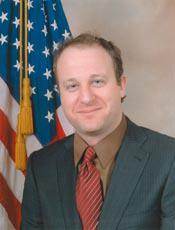
At this point, I yield 3 minutes to a valued member of the Rules Committee, the gentleman from Colorado (Mr. Polis).
I yield the gentleman an additional 30 seconds.
Mr. Speaker, I yield 2 minutes to the gentleman from California (Mr. Baca), who will focus on the important issue of child nutrition.
I yield the gentleman from California an additional 30 seconds.
Mr. Speaker, let me just say to the gentlewoman that when they are in charge next year, I am happy to support her in eliminating excessive paperwork. But I wish she and others would understand the importance of what we are discussing here today, feeding hungry kids, making sure that our children get nutritious meals at schools. I mean, I've got to be honest with you. I think that's a hell of a lot more important. The fact that, to some of my friends on the other side of the aisle, this appears as if it's some sort of a trivial issue tells me that they haven't been to food banks and they haven't been in some of their schools talking to teachers and talking to the people who oversee the food service program about the challenges that so many school districts face in providing healthy meals to our kids.
We all talk about how we want to control health care costs. Let's give our kids healthy food in school settings. That will do more to control health care costs and ensure that kids will have a healthy adulthood. You want to deal with the issue of better test scores? Making sure kids have a good, nutritious meal in a school setting is one of the ways to do that.
That's an important issue. This is a big deal what we're talking about here today. This is one of the most important pieces of legislation that has come to this floor, and I would appreciate if my friends on the other side of the aisle would join us in supporting this underlying bill so we can get it on the President's desk at the end of the day to get him to sign this so we can move forward in an area that is of great importance.
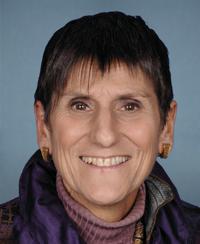
Mr. Speaker, at this time I would like to yield 4 minutes to the gentlewoman from Connecticut (Ms. DeLauro) who's been a champion on this and so many issues dealing with food insecurity and hunger and good nutrition.
I yield the gentlewoman an additional 1 minute.
Mr. Speaker, I yield myself such time as I may consume.
When my friends talk about passing on to future generations debt, I can't help but wonder where they were when President Bush passed these tax cuts that added over a trillion dollars to our debt, totally unpaid for, most of it going to millionaires and billionaires. And I want to know where they are right now, they want to extend the tax cuts for millionaires and billionaires and they still don't want to pay for it.
But somehow when it comes to debt and piling it on to future generations, when it comes to tax cuts for very wealthy people, they're silent. Where were they when President Bush at 2 o'clock in the morning, they kept a roll call open for 3 hours and passed a Medicare prescription drug bill that cost hundreds of billions of dollars that was totally unpaid for. That cost a lot more than was advertised. Totally silent.
Where are they when some of us are saying, we ought to pay for these wars. If you want them, you ought to pay for them or end them. I'd prefer to end them, but for those who want them you ought to pay for them. They're silent.
When it comes to closing loopholes for big corporations that routinely stick it to the American people, no, no, we can't do that. Even though it might save money for taxpayers, we can put it toward deficit reduction. No, no, no. Those are very wealthy special interests. They want to protect them, whether it's Big Oil or big pharmaceuticals or whatever, at any cost.
So when I hear them talk about debt, I am reminded of the fact that when President Clinton left office we had a surplus. They ran this place and drove this economy into a ditch. And quite frankly, it's been a nightmare trying to dig us out of this ditch.
And I give the President great credit for his courage in trying to move this country forward in the area of health care, and today in the area of trying to move this bill forward on child nutrition. So they have no credibility when it comes to talking about reducing deficits or debt.
And, in fact, as we speak, they are trying to figure out a way I think probably to defeat this bill, to take the money that this bill costs, the offsets for this bill, take that money and put it toward tax cuts for rich people. I mean, that's what they want do.
So again, I would urge my colleagues to understand the importance of what we are doing today. We are trying to make sure that our kids get healthy food and nutritious food in school settings. We are trying to pave the way for healthy futures for our kids. We want to make sure our kids can learn better. This is important stuff that we are talking about here today, and I would urge all my colleagues to support the rule and to support the underlying bill.
I reserve the balance of my time.
I yield myself the balance of my time.
Mr. Speaker, my Republican friends will do what they always do. They will come up with some stunts to try to get us to delay or to not pass this bill today. That's just what they do. And the fact is that if we change this underlying bill in any way--and I would urge my colleagues to be prepared for probably an uncomfortable or an ugly motion to recommit later on in the debate. But if any of their procedural stunts prevail, then we will end up not passing this bill-- the Senate will not consider an amended child nutrition bill; it ends it right here and now--and that would be a tragedy.
I would urge my colleagues on both sides of the aisle to stop the politics just for a few minutes and do the right thing when it comes to this child nutrition bill. This is a bill that will improve access for our kids. This is a bill that increases the focus on nutrition quality and on children's health. It is a
bill that will improve program management and program integrity. It is fully paid for at no cost to the taxpayers.
And I would say to my colleagues on the Democratic side who are concerned about the current offset, that we have a commitment from the White House to fix that in a future vehicle so that the offset is not the SNAP cuts. But the underlying bill here is a good bill, is a good bill that will mean a world of difference for hundreds of thousands, if not millions, of our kids all throughout this country. Making sure that hungry kids get at least one, hopefully more than one nutritious meal a day in a school setting is something we all should be for. It should not be the subject of partisan politics.
Making sure our kids get healthy, nutritious food and not junk in school should be a priority of all of ours, Republican and Democrat alike. This shouldn't be a partisan issue. I mean, the fact that we are here today and there is some controversy around this bill tells me that it's just politics as usual. My friends on the Republican side don't like it because the President likes it. Well, you know what? That's been the routine throughout the entire tenure of this President. But for once, for once, just put the party politics aside and do what's right.
I cochair the House Hunger Caucus and the Congressional Hunger Center. Hunger is a problem in this country. There are tens of millions of our citizens who are hungry. Seventeen million children in this country, the United States of America, the richest country on this planet, are hungry. It's a national disgrace. All of us in this Congress should be ashamed of that fact, that we haven't been able to help be part of the solution in a more significant way. This is one way that we can be part of that solution.
I have a list of national organizations and State organizations, too many to put in the Congressional Record, but it is significant. The support across this country for this legislation is significant.
I want to thank the Speaker of the House and Chairman George Miller and Rosa DeLauro and Carolyn McCarthy and Barbara Lee and so many others who have been part of this legislation. I want to thank Senator Blanche Lincoln, who was a champion of this legislation over in the Senate.
But we must act today. We must do what's right for our kids, not for our political party, but for our kids. So enough of the stunts. Let's say ``no'' to all the stunts today. Let's say ``yes'' to this important child nutrition reauthorization bill, ``yes'' to a healthier future for our kids, ``yes'' to making sure they can better learn in school, ``yes'' to developing better and healthier habits that will last them a lifetime. This is a good, this is an important bill. This is a big deal today. This is a huge deal, and everybody should join and support the final passage of the bill.
So I urge a ``yes'' vote on the previous question and on the rule. I urge my colleagues not to fall for any motion to recommit stunts when the bill is under consideration.
I yield back the balance of my time, and I move the previous question on the resolution.