Mr. Speaker, pursuant to House Resolution 463, I call up the conference report on the bill (S. 454) to improve the organization and procedures of the Department of Defense for the acquisition of…
Mr. Speaker, pursuant to House Resolution 463, I call up the conference report on the bill (S. 454) to improve the organization and procedures of the Department of Defense for the acquisition of major weapon systems, and for other purposes, and ask for its immediate consideration.
I ask unanimous consent that all Members may have 5 legislative days in which to revise and extend their remarks on the conference report currently under consideration.
Mr. Speaker, I yield myself such time as I may consume.
Mr. Speaker, I'm pleased to bring before the House the conference report on S. 454, the Weapon System Acquisition Reform Act of 2009.
Last week, the House overwhelmingly approved H.R. 2101, the House Armed Services Committee's version of the bill, in a vote of 428-0 and sent us to conference with the Senate. Our conference concluded on Tuesday, and I can report that we reached agreement on strong legislation that will reflect well on the Congress as a whole.
Every Member attending the conference committee, House and Senate, on a bipartisan basis signed the conference report, and it passed the Senate last evening on a vote of 95-0.
It's tempting to conclude that a bill so unanimously supported must not do anything. How often are we able to agree unanimously on issues of real substance? However, in this instance, Congress will speak with a single voice and will, at the same time, adopt tough medicine for the acquisitions system.
This bill is landmark legislation, the strongest effort to reform the acquisition of weapons systems since the days of Les Aspin. In fact, I strongly believe this bill will be much more successful than earlier reform efforts. The consensus on this legislation is simply the result of a problem that has become so obvious and so urgent that every Member has concluded that strong action is required.
Too often in our current acquisition system, we end up with too few weapons that cost us too much and arrive too late. GAO tells us that DOD will exceed its original cost estimates on 96 major weapons systems by $296 billion. That's more than 2 years of pay and health care for all our troops. We can no longer tolerate this state of affairs.
To those who oppose change, the vote yesterday in the Senate and the vote today in the House will send the message that the Congress means business, for maintaining the status quo of indiscipline and inefficiency in acquisition is no longer an option.
Let me briefly summarize the bill's provisions.
It establishes a new director of cost assessment and program evaluation who will ensure that in the future DOD uses realistic cost estimates as the basis for its decisions. The bill re-establishes a director of developmental test and evaluation who will coordinate closely with the director of systems engineering to ensure that we rebuild the technical expertise to oversee complex weapons programs.
To ensure that the Department follows through on these measures, the bill requires DOD to make an official response for performance assessment. It also assigns additional responsibility to the director of defense research and engineering for assessing technological maturity and to unified combat commanders, those leading the fight, for helping to set requirements.
In the area of policy, we required DOD to balance its desire for cutting-edge capabilities with the limits of its resources in setting military requirements. We require competitive acquisition strategies. We require DOD to get programs right in the early stages, when problems can be solved at a low cost. We also require DOD to put intense management focus on problem programs until they are either healed or terminated. We strengthen the Nunn-McCurdy process, and we ask DOD to eliminate or mitigate organizational conflicts of interests among its contractors.
Now, I know that many Members of the House have a deep interest in acquisition reform. Let me assure you that with the passage of this bill, the House Armed Services Committee has no intention of resting on its laurels. S. 454 deals almost exclusively with major weapons system acquisition, which is only 20 percent of the total that DOD spends on acquisition on an annual basis. There are also serious problems with the other 80 percent of the acquisition system and, as a result, the House Armed Services Committee established the Panel on Defense Acquisition Reform led by Rob Andrews and Mike Conaway to investigate further improvements to the acquisition systems.
Mr. Speaker, I ask that the Members of this body vote for the conference report on S. 454, move this legislation to the President's desk for his signature this week, and continue to work with us on acquisition reform in this Congress.
With that, I reserve the balance of my time.
Mr. Speaker, may I mention first that we did not rush to judgment on this issue. The gentleman from New York, my friend, the ranking member, John McHugh, and I thought it best to establish a panel on military acquisition, which we did. And as a result of briefings and hearings headed by Rob Andrews, Mike Conaway, the faith that Mr. McHugh and I had in the panel has been justified with the first work product of their efforts. That work product, of course, is the bill that stands before us today. And it has been a great bipartisan effort. It is also a monument to the outstanding staff work that we have across the board in the Armed Services Committee. We could not be more blessed.
With that, I yield 10 minutes to my friend and colleague, the chairman of the Armed Service Committee Special Oversight Panel on Defense Acquisition Reform, the gentleman from New Jersey (Mr. Andrews).
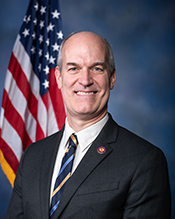
At this time, I yield 3 minutes to my friend, my colleague, the distinguished member of the Armed Services Committee, the gentleman from Rhode Island (Mr. Langevin).
(Mr. LANGEVIN asked and was given permission to revise and extend his remarks.)
Mr. Speaker, first, I must thank my friend, my colleague, the gentleman from New York, for his outstanding leadership, cooperation, intelligence and integrity. This bill is a great reflection of bipartisan hard work in our committee. And I thank, in particular, the gentleman from New York (Mr. McHugh).
Mr. Speaker, as we are on the brink of passing legislation that will completely reform the acquisition system of involving major weapon systems in the Department of Defense, I think back to the moment we were preparing to pass a bill known as the Goldwater-Nichols bill which dealt with jointness within the military. We knew what it said. We wrote it. But we had no idea that it would actually have a tremendous impact creating the culture of jointness within the various stovepiped services that existed prior to that day in 1986.
This reform act will do the same. It is not only landmark legislation, it is not only reform legislation, it is legislation that will change the culture of acquisition for major weapon systems. It's good. It's thorough. It's well thought out.
And I cannot close without saying a special word about our staff. It's very difficult, Mr. Speaker, to single out people who work so hard because you're bound to leave some out. But we must mention Erin Conaton, Bob Simmons, Andrew Hunter, Jenness Simler, Cathy Garman, Joe Hicken, and all of the efforts that they put forth, the tireless nights in drafting and redrafting the legislation before us today. So a special tribute goes to them.
So with that--and thanks to our colleagues on both sides of the aisle, Bob Andrews, Mike Conaway, and all of those who work so hard for this--let's get it passed, let's get it to the President for his signature, and let reform take place and change the acquisition culture that is so sorely needed.
With that, I yield back the balance of my time.
Mr. Speaker, on that I demand the yeas and nays.