Mr. Speaker, pursuant to H. Res. 691, I call up the bill (H.R. 2749) to amend the Federal Food, Drug, and Cosmetic Act to improve the safety of food in the global market, and for other purposes, and…
Mr. Speaker, pursuant to H. Res. 691, I call up the bill (H.R. 2749) to amend the Federal Food, Drug, and Cosmetic Act to improve the safety of food in the global market, and for other purposes, and ask for its immediate consideration in the House.
Mr. Speaker, I yield myself 3 minutes.
Mr. Speaker, I rise in strong support of H.R. 2749, the Food Safety Enhancement Act of 2009.
I remind my colleagues that this bill was up before us yesterday and got 280-something votes in favor of it. It is a good piece of legislation. It is bipartisan. It will fundamentally change the way in which we ensure the safety of our food supply and protect American consumers, farmers and business. I would note it came out of committee in a bipartisan fashion, unanimously, by voice vote.
A series of foodborne disease outbreaks have laid bare unacceptable gaps in our food-safety laws, and this will be the first major change in our food-safety laws with regard to food and drugs since 1938.
In the past 2 years alone, we have witnessed issues of melamine in infant formula and in milk products, and we have seen tainted peppers from Mexico, harmful seafood and shellfish from China, E. coli in spinach, and problems with strawberries and raspberries. Each year, in spite of the fact that we have the most careful and safe food in the world, we find that 76 million people contact a foodborne illness in the United States. According to CDC, some 5,000 die.
This legislation contains significant policy solutions that will address this situation. It is largely based upon legislation I introduced last year along with Energy and Commerce subcommittee Chairmen Pallone and Stupak.
We have worked for months with our Republican colleagues in a bipartisan fashion on the Committee on Energy and Commerce to get this bill right. We have worked with our colleagues on the Agriculture and the Ways and Means Committees to address their concerns, and I believe we have done so.
In the end, we have a bill that strikes an important balance; it does not create unnecessary burdens for farmers and small businesses, but it does allow FDA to retain all its existing authority. It takes no authority from the Department of Agriculture or the Committee on Agriculture, and it gives FDA new authorities that it needs to trace and prevent food-safety problems that may originate on the farm or in other sectors of the food supply chain. And we have carefully protected the farmers against intrusion by the Food and Drug Administration.
I want to talk about key provisions in the bill. Under the legislation, FDA has clear authority to issue and require manufacturers to meet strong, enforceable performance standards to ensure the safety of different types of food.
FDA will establish a food trace-back system so that the public health officials can easily determine the source of foodborne disease outbreaks and protect farmers and producers against unwise and inadequate judgments because of lack of personnel and money.
FDA is going to be required to inspect all food facilities more frequently. And the bill requires FDA to inspect the riskiest ones at least once per year.
FDA will be given new authority to ensure that imported foods are safe, a source of major concern and hazard to our people.
FDA will be given new tools--recalls, record access, penalties to punish bad actors, and the ability to act quickly when presented with a food-safety emergency.
FDA will get a new dedicated source of funding from a $500 million annual registration fee on food facilities to help it conduct its work of keeping America safe. And this provision and the rest of the bill are supported by American food producers.
FDA will not be the only cop on the beat. Our food producers will focus also on prevention and have a well-deserved and shared responsibility between FDA and food manufacturers to keep our food supplies safe.
The bill will require manufacturers to implement preventive systems to stop outbreaks before they occur. All food facilities will be required to conduct hazard analyses, assess potential food-safety risks, and develop plans to keep the food supply safe.
Mr. Speaker, there is nothing in this bill that is overly burdensome for farmers small or big. We have worked hard--and I believe we have succeeded--in protecting farms of the family size from burdens that could harm their business and their way of life. My own district has many small farms and people with whom I work closely on agricultural matters, and I believe that they will be satisfied with this legislation.
It is a fact here--and I want to address the concerns that I have heard--that farmers who sell a majority of their product direct to the consumers are exempt from the fee system in this bill. Farms that sell directly to consumers, restaurants, and grocery stores will also be exempt from the trace-back system.
Some have expressed concern that FDA will have access to confidential farm records and make them available for distribution. This is not so. FDA is already limited in the types of records they can access under the law, and they cannot access financial data, pricing data, personnel data, research data, or sales data other than shipment data regarding sales.
Mr. Chairman, I yield myself 1 additional minute.
I have also heard concern that FDA will have the authority to issue safety standards that will apply to farms and interfere with organic farming practices. I want to make it clear that that is not so. In fact, FDA is prohibited from imposing safety standards unless it determines those standards are ``reasonably necessary to minimize the risk of serious adverse health consequences or death,'' a very, very high standard that they have to meet. This will ensure protection of the concerns of organic farmers and that they are taken into consideration before issuing standards. This is why it has the support of the distinguished chairman of the Agriculture Committee and members of that committee from both sides of the aisle.
Mr. Speaker, this is a product of bipartisan cooperation. It is supported by industry. It was approved unanimously by a voice vote in the Energy and Commerce Committee. It reflects findings of more than 20 hearings on the failure of our food system safety processes conducted by five different committees of the House over 3 years. It addresses weaknesses in the food-safety system at FDA that were identified under the Bush administration and included in concerns under the current administration.
H.R. 2749 it is a well-vetted, mature piece of legislation. I urge my colleagues to support H.R. 2749. It is old enough to vote; it is over 21 years old.
I urge my colleagues to support this legislation. It is a good bill. It will protect the American people, the American consumers, and it will not hurt American industry, which supports this bill.
Mr. Speaker, I reserve the balance of my time.
I want to thank the gentleman for his hard work both in the Investigations Subcommittee and on the legislation. He and Mr. Deal and the ranking Republican member, our good friend Mr. Barton, have been enormously valuable in the work that has been done to bring us to where we are. I commend him and I thank him.
Mr. Speaker, I yield at this time 2 minutes to the distinguished chairwoman of the Appropriations Subcommittee of jurisdiction on this matter, Ms. DeLauro.
Mr. Speaker, I yield the distinguished gentlewoman an additional 30 seconds.
Mr. Speaker, I yield at this time 3 minutes to the distinguished gentleman from California (Mr. Farr).
If the gentleman would yield, the answer to that question is, yes.
The answer to that question is, no.
The answer to that question is, yes; and I will have a more detailed response.
If the gentleman from California would yield, I would like to give a more exhaustive response to my friends.
First, we've been hearing complaints that the bill will put unfair, inappropriate, and unnecessary burdens on farmers, particularly small, diversified, and organic farms. We have worked hard to avoid doing that. I want to tell my good friends we would be extremely concerned if this bill created a conflict between food safety and other farm practices aimed at protecting and sustaining the environment. The bill therefore has a number of important provisions designed to prevent such conflicts.
For example, it requires FDA to take into consideration the impacts of any produced food safety standards on small-scale and diversified farms or on wildlife habitat, on conservation practices, watershed protection efforts, and organic production methods. It prohibits FDA from setting any such standards unless these standards are necessary to minimize the risk of serious adverse health consequences or death.
The bill also requires FDA to work in coordination with the U.S. Department of Agriculture to issue such standards. USDA administers the National Organic Program and will be working with FDA to ensure that the safety standards are compatible with organic standards.
Let me speak now to the question about the traceability system in the bill. The traceability provisions in the bill are a critically important part because they allow FDA to quickly track down the sources of food-borne outbreaks. Before FDA can establish any traceability requirements, the bill requires FDA to go through an extensive information-gathering process with public meetings and a pilot project.
As a part of the process, it requires FDA to consider the costs and the benefits and the feasibility for different sectors of the food industry of any traceability technologies under consideration. And for any regulation that would have an impact on farms, FDA must coordinate with USDA and take into account the nature of the impact on the regulation on farms.
Additionally, FDA will be prohibited from requiring farms selling food directly to consumers, restaurants, or grocery stores to participate in this system.
So I believe we can be confident that whatever traceability system is developed will appropriately take into account the needs and interests of the farmers. And I assure my two good friends that I will work with them to see to it that these commitments are kept.
I thank my two colleagues for their valuable assistance to the committee.
If the gentleman will yield to me just briefly, I want to commend the gentleman not just for a fine statement, but also for the long and strong support he has given for this kind of legislation and protection for industry and for the consumers.
I would like to observe that the concerns the gentleman has expressed are very valuable and are included in the legislation, particularly in seeing to it that foreigners now have to meet the same requirement that Americans do.
Americans produce and process safe food. Foreigners do not. This will assure our people that they can rely on Food and Drug to protect them not just from American producers and from American processors, but also from the foreigners, who are slipping in dangerous substances.
I want to commend the gentleman and thank him.
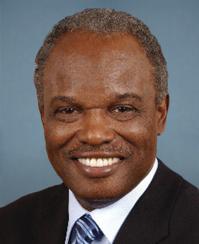
Mr. Speaker, I am delighted at this time to yield 1 minute to the distinguished gentleman from Georgia (Mr. Scott), the chairman of the Subcommittee on Livestock, Dairy and Poultry.
Mr. Speaker, I yield to the distinguished gentlewoman from New York (Mrs. Maloney) for purposes of making a unanimous consent request.
(Mrs. MALONEY asked and was given permission to revise and extend her remarks.)
Mr. Speaker, at this time I yield 2 minutes to my distinguished friend, the gentleman from Utah (Mr. Matheson), a superb Member of this body and a great friend of mine.
Mr. Speaker, if the gentleman will yield, I would appreciate it if the gentleman didn't praise me, and instead let me say good words about him.
He is a valuable member, a valuable member of our committee. He works hard. He is smart and decent and has been great on this issue. We are proud of him.
Mr. Speaker, at this time it is my privilege to yield 3 minutes to the gentleman from Minnesota (Mr. Peterson), a very distinguished Member of this body, the chairman of the Agriculture Committee in the House and an extremely wise defender of American agriculture and American farmers.
Mr. Speaker, I am the only speaker remaining on this side, so if my good friend from Illinois would like to proceed, I will follow him in closing.
Mr. Speaker, I yield myself such time as I may consume. First, I want to commend my friend and colleague, Mr. Shimkus, and I want to express my gratitude to him. I also want to express my gratitude to Chairman Waxman, Chairman Stupak and Chairman Pallone, the legislative and appropriation and investigative committee chairmen of the Commerce Committee for the outstanding work they did in preparing this legislation. Also Representative DeGette and Representative Sutton.
My colleagues Mr. Barton, Mr. Deal and Mr. Shimkus on the minority side have worked very well, carefully, thoughtfully with us, and I owe them a debt of thanks and gratitude. Staff Members like Rachel Sher and Eric Flamm have worked hard on this, as has my friend, Virgil Miller. Chairman Peterson and Jim Costa of the Agriculture Committee have been wise advisers and helpers in coming to a bill that could be agreed on by the two committees. Representative Levin, Chair of the Subcommittee on Trade of the Ways and Means Committee has been extremely important, as has Representative DeLauro, the Chair of the Appropriations Subcommittee. And Jeanne Ireland, a former staff member of this committee, has been of enormous help in the drafting of the legislation.
We had a long list of supporters. The Obama administration; Grocery Manufacturers Association--the people who sell are going to understand that they're being charged a participation fee; the Wine Institute; Wine America; Distilled Spirits Council of the United States; Center for Science in the Public Interest; Consumers Union; Consumers Federation of America; Center for Foodborne Illness Research & Prevention; Food & Water Watch; Government Accountability Project; National Consumers League; Pew Charitable Trusts; and Safe Tables Our Priority are all active supporters of this legislation.
And these agencies which previously had concerns about the legislation have either lifted their opposition, become neutral or actively support H.R. 2749: United Fresh Fruit and Vegetable; Western Growers; American Farm Bureau Federation; National Association of Wheat Growers; National Cattlemen's Beef Association; National Turkey Federation; National Chicken Council; National Pork Producers Council; National Corn Growers Association; American Soybean Association; U.S. Rice Federation; American Feed Industry Association; United Egg Producers; and the American Sheep Industry.
We have seen that in the long time since legislation was passed to bring food and drug up to national needs back in 1938, that many changes have occurred that have required significant changes, both in the authority of FDA, in its moneys and its abilities to deal, not just with domestic producing problems, but with problems overseas, from which we are receiving lots of dangerous and unsafe food commodities and food products.
This legislation gives food and drug the authority that it needs, the ability to trace, the ability to hold producers abroad accountable, and it sets up a system where foreigners have to participate in the same responsibilities American producers, manufacturers and growers have to, and it enables Food and Drug, for the first time, to have real authorities to enforce the laws of the United States on food safety to protect Americans against unsafe foods coming in from abroad.
And I would remind my colleagues that Food and Drug has neither the resources at the points of entry, nor do they have the personnel at those places to inspect foods coming in. This changes that situation. It is also true that the legislation does something else of importance to our people, and that is, it sees to it that where misbehavior occurs abroad, those same penalties that would be assessed against Americans are assessed against foreigners. This is an important matter of competition to American producers and manufacturers. It sees to it that they are fairly treated, and that there is no more unfair competition by people who could market unsafe commodities to the detriment of American consumers and American growers, producers and processors.
So the legislation is good. A system of assuring responsibility and traceability is available for the first time. And Food and Drug has the authority to terminate the ability of foreigners to sell in this country for the first time in a way which is consistent with American trade laws and the obligations of American people with regard to the safety of food. So, it is a good piece of legislation, and I would urge my colleagues to support it. I would have them know that this is bipartisan, this is a good piece of legislation. It is legislation which protects American people, which sees to it that Americans will no longer be dying of dangerous foods imported into the United States, and it will see to it that American producers are treated fairly in the world marketplace without jeopardy of violation of our law.
It also will see that Food and Drug has the personnel, the resources that it needs to protect the American people, and it is kind to the budget of the American taxpayers.
I yield back the balance of my time.
I reserve a point of order, Mr. Speaker.
Mr. Speaker, I raise a point of order against the motion to recommit.
Under rule XVI, clause 7, and the language of the rule, it says no motion or proposition on a subject different from that under consideration shall be admitted under color of amendment. And I'd point out that that is applicable to the questions before us. I would note that the language of the motion does take and separates the receipts that will be gotten from the registration fees, so that 50 percent are available to defray the costs of additional safety inspection of food; but 50 percent shall be available for use under section 137. But the purpose of that is, rather, for the preemptive purchase of product from facilities as defined in section 415. This allows the broadest kind of purchase of food.
The legislation itself allows certain specific actions, none of which involve purchase of food, particularly under such broad circumstances as the motion allows. The bill only allows expenditure of these registration fees for the following purpose: records access, traceability, recall authority, authority to detain, subpoena authority, prohibition or restriction on the movement of bad food. No further authorities for purchase or expenditure of this money are permitted.
This goes well beyond the fundamental purpose of the legislation and, as such, it constitutes a violation of the rules, going beyond that which is the fundamental purpose of the legislation and so constituting a violation of rule XVI, clause 7 of being not germane.
Mr. Speaker, I would observe that the language of the legislation nowhere authorizes purchase of food. Under the number of the legislation appears the language, to amend the Food, Drug and Cosmetic Act to improve the safety of food in the global market and for other purposes. And then, down there where you follow, following the words, a bill, and it says, to amend the Federal Food, Drug and Cosmetic Act to improve the safety of food in the global market and for other purposes. Nowhere in the legislation, in my reading, have I been able to find the authorization for the purchase of food or the purchase of food to achieve safety.
I would observe that the language of the motion to recommit permits the purchase of the food without restriction, without restraint or limit. It is some of the grandest authority that is given and well beyond any authority which Food and Drug now has or seeks. Food and Drug has no authority in this area whatsoever for the purchase of food. And the purchasing of food is not for the purpose of protecting the American people, of seeing to it that Food and Drug can properly assure the safety of the food or the protection of the American consumers. And the language that is, I think, most particularly descriptive of what the proposal does, it follows line 3 at page 2. It says, the Secretary of Health--and this is, I'm reading at line 6--the Secretary of Health and Human Services may make a preemptive purchase related to activities by the government in carrying out any provisions of this act or amendment made by this act.
That might be good language for the Committee on Agriculture to present to the House, but it is no language that you will find in Food and Drug and none that would be suggested by the commerce committee.
Mr. Speaker, we have before us a bad motion to recommit. With all due respect for its author, we know that the FDA has been chronically starved of resources, particularly in the food area and particularly in its ability to protect the American people.
The amendment offered before us would raid that money and would use it for the purpose of purchasing food. The food is not designated as to how or why it might be purchased. I would point out that this breaks an agreement and an understanding that the committee had in this legislation with regard to the support by the food production industry, especially the parts of the industry that will pay the tax.
The bill only authorizes a modest $500 registration fee for food facilities. The motion to recommit asserts the bill does not require the FDA to spend one additional penny on the inspection of food. This is a serious untruth.
On Page 23, the bill directs the FDA to spend its registration fees on food safety activities. The bill explicitly provides that food safety activities include conducting inspections. This money will be diverted from the inspection and the protection of the American people, and it will not be available for the activities of Food and Drug. It might give relief to somebody,
and it might even be somebody who needs relief, but there's no standards whatsoever given as to who will get the money, how it will be spent, on what, and for what purposes.
The bill requires the FDA to adhere to a rigorous mandatory inspection schedule based on risk. This bill does nothing to enhance that, but it takes money away from the protection of the American consumer by having proper inspections at points of entry or inspections in other countries. That is a bad situation and one which is going to seriously hurt the safety of the American public.
The bill is carefully crafted to ensure that the American Food and Drug Administration will protect American consumers and American manufacturers, processors, growers, and the farmers of this Nation. It enables them to focus on where there is danger, and it enables them to provide the kind of protection that all of those entities need, especially the farmers, the processors and the producers, because today the broad authority that Food and Drug has is no longer sufficiently focused to enable the correct and direct focus on the dangers to the American public.
The bill gives Food and Drug modern authorities to safeguard the food supply, but it gives them the money to do the things that they have to do to protect the American industry and the American-consuming public.
This legislation diverts 50 percent of the receipts that we would get under the legislation from the protection both of producers and from the protection of the American-consuming public.
The bill has provisions that ensure that FDA cannot use its ability to stop distribution recall or to detain or to prohibit or to restrict the movement of food. The Food and Drug Administration will have to use modern authorities in a very careful way, in a way which has the support of the consuming public and of the people whose names and whose organizational structures I mentioned earlier.
We have found out what an inadequately funded FDA does. This legislation will ensure that those evils will persist. The amendment reduces funds to FDA. It thereby increases the likelihood of outbreaks and of danger to the health of the American people and of hurt to the American producers, growers, and farmers.
This is a bad amendment. It is an amendment which threatens the support of industry for this legislation by diverting the money into unwise, unnecessary and undue expenditures which threaten the basic purposes of the legislation. It is bad legislation, and it will worsen what is a carefully thought-out bipartisan bill, which has been produced in consultation, not just with the industry but with the Agriculture Committee, with the administration and with both the Department of Agriculture and the Food and Drug Administration.
I urge my colleagues to reject this amendment, which wastes money and which jeopardizes the life, safety and the well being of American consumers and the well being of American farmers, agriculture, and producers. It's a bad, bad motion to recommit.
I urge the House to reject it.
Mr. Speaker, I understand that the majority on the committee that handles the bill is entitled to close; is that correct?
Then I ask unanimous consent that I be permitted to proceed.
Mr. Speaker, I will simply observe as follows: the motion to recommit asserts that the bill does not require FDA to spend one additional penny on the inspection of food. That is totally false.
On page 23 of the bill, it directs FDA to spend its registration fees on food safety activities. On line 18, the bill explicitly provides that food safety activities include conducting inspections. The bill also requires FDA to adhere to a rigorous mandatory inspection schedule based on risk.
I yield now to the distinguished gentleman from Georgia (Mr. Scott).