






S. 1789Senate111th Congress (2009-2011)Enacted

Fair Sentencing Act of 2010

Introduced October 15, 2009

Legislative Activity

Stay on top of the latest movement without scrolling through every action

22 earlier actions
Became Law Latest Action

Became Public Law No: 111-220.

August 3, 2010

View full timeline
SenateIntro Referral

Introduced in Senate

October 15, 2009

SenateIntro Referral

Sponsor introductory remarks on measure. (CR S10490-10492)

October 15, 2009

SenateIntro Referral

Read twice and referred to the Committee on the Judiciary.

October 15, 2009

SenateCommittee

Committee on the Judiciary. Ordered to be reported with amendments favorably.

March 11, 2010

SenateCommittee

Committee on the Judiciary. Reported by Senator Leahy with an amendment in the nature of a substitute. Without written report.

March 15, 2010

SenateCalendars

Placed on Senate Legislative Calendar under General Orders. Calendar No. 316.

March 15, 2010

SenateFloor

Passed Senate with an amendment by Unanimous Consent. (consideration: CR S1680-1683; text of amendment in the nature of a substitute: CR S1682)

March 17, 2010

HouseFloor

Received in the House.

March 18, 2010 • 10:02 AM

SenateFloor

Message on Senate action sent to the House.

March 18, 2010

HouseIntro Referral

Referred to House Judiciary

March 18, 2010

SenateIntro Referral

Referred to the Committee on the Judiciary, and in addition to the Committee on Energy and Commerce, for a period to be subsequently determined by the Speaker, in each case for consideration of such provisions as fall within the jurisdiction of the committee concerned.

March 18, 2010

HouseIntro Referral

Referred to House Energy and Commerce

March 18, 2010

HouseCommittee

Referred to the Subcommittee on Crime, Terrorism, and Homeland Security.

June 15, 2010

HouseFloor

Mr. Scott (VA) moved to suspend the rules and pass the bill.

July 28, 2010 • 1:19 PM

HouseFloor

Considered under suspension of the rules. (consideration: CR H6196-6204)

July 28, 2010 • 1:19 PM

HouseFloor

DEBATE - The House proceeded with forty minutes of debate on S. 1789.

July 28, 2010 • 1:19 PM

SenateFloor

Passed/agreed to in House: On motion to suspend the rules and pass the bill Agreed to by voice vote.(text: CR H6196-6197)

July 28, 2010 • 1:58 PM

HouseFloor

On motion to suspend the rules and pass the bill Agreed to by voice vote. (text: CR H6196-6197)

July 28, 2010 • 1:58 PM

HouseFloor

Motion to reconsider laid on the table Agreed to without objection.

July 28, 2010 • 1:58 PM

SenateAction

Cleared for White House.

July 28, 2010

President

Presented to President.

July 29, 2010

Became Law

Signed by President.

August 3, 2010

Became Law

Became Public Law No: 111-220.

August 3, 2010

Floor Debate

18 members

What members said about S. 1789 on the floor

5 Republicans13 Democrats
Richard J. Durbin
Sen. Richard J. DurbinD-IL · Oct 15, 2009

Mr. President, I rise to speak about the Fair Sentencing Act of 2009, which I am introducing today. This narrowly tailored bill would eliminate the sentencing disparity that exists in the United…

Richard J. Durbin
Sen. Richard J. DurbinD-IL · Oct 15, 2009

Mr. President, I rise to speak about the Fair Sentencing Act of 2009, which I am introducing today. This narrowly tailored bill would eliminate the sentencing disparity that exists in the United…

Richard J. Durbin
Sen. Richard J. DurbinD-IL · Mar 17, 2010

Mr. President, prior to making the next unanimous consent request, I wish to make a statement on the Record relative to the bill that I will be asking for unanimous consent on. It is S. 1789. This…

Sheila Jackson Lee
Rep. Sheila Jackson LeeD-TX-18 · Jul 28, 2010

I want to thank the gentleman from Virginia for being a champion of this issue of eliminating the disparities that have so long plagued so many communities. I thank the chairman, John Conyers, for…

Byron L. Dorgan
Sen. Byron L. DorganD-ND · Oct 15, 2009

Mr. President, today I introduced the Indian Health Care Improvement Reauthorization and Extension Act of 2009. We face a bona fide crisis in health care in our Native American communities, and this…

Show 8 more
Lamar Smith
Rep. Lamar SmithR-TX-21 · Jul 28, 2010

Mr. Speaker, I yield myself such time as I may consume. Mr. Speaker, those who fail to learn the lessons of history often pay a price. Unfortunately, the real cost usually falls on others. In the…

Ron Paul
Rep. Ron PaulR-TX-14 · Jul 28, 2010

I thank the gentleman for yielding. Mr. Speaker, I rise in support of this legislation. It's called the Fair Sentencing Act. I'd like to rename it, though. I'd like to call it the Slightly Fairer…

Patrick J. Leahy
Sen. Patrick J. LeahyD-VT · Oct 15, 2009

Mr. President, today, I am proud to join Senators Durbin, Specter, Feingold, Cardin, Whitehouse, Kaufman, Franken, and others to introduce the Fair Sentencing Act of 2009. Our bill will eliminate the…

Patrick J. Leahy
Sen. Patrick J. LeahyD-VT · Oct 15, 2009

Mr. President, today, I am proud to join Senators Durbin, Specter, Feingold, Cardin, Whitehouse, Kaufman, Franken, and others to introduce the Fair Sentencing Act of 2009. Our bill will eliminate the…

Henry C. "Hank" Johnson, Jr.
Rep. Henry C. "Hank" Johnson, Jr.D-GA-4 · Jul 30, 2010

Mr. Speaker, I rise today in support of S. 1789, the Fair Sentencing Act of 2010. For too long, crack cocaine users, predominantly minorities, have been subject to excessive penalties when compared…

Patrick J. Leahy
Sen. Patrick J. LeahyD-VT · Mar 17, 2010

Mr. President, today, I join Senators from both sides of the aisle to pass the historic and bipartisan Fair Sentencing Act. The racial imbalance that has resulted from the cocaine sentencing…

Tom Udall
Sen. Tom UdallD-NM · Oct 15, 2009

Mr. President, I rise today to mourn the untimely deaths and celebrate the lives of two New Mexico heroes. One died just last week from injuries he sustained while serving his country in Afghanistan.…

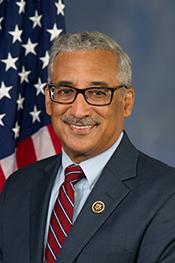
Robert C. "Bobby" Scott
Rep. Robert C. "Bobby" ScottD-VA-3 · Jul 28, 2010

Mr. Speaker, I move to suspend the rules and pass the bill (S. 1789) to restore fairness to Federal cocaine sentencing. Mr. Speaker, I ask unanimous consent that all Members have 5 legislative days…

Show 11 more
Daniel E. Lungren
Rep. Daniel E. LungrenR-CA-3 · Jul 28, 2010

Mr. Speaker, I rise in support of S. 1789, but as someone who helped to write the Drug Control Act of 1986 that we seek to amend, I'd like to make a few observations to set the record straight. It is…

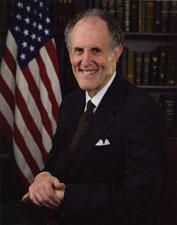
Edward E. Kaufman
Sen. Edward E. Kaufman D-DE · Aug 5, 2010

Mr. President, I rise today to praise the enactment of the Fair Sentencing Act of 2010, S. 1789, which was signed into law on Tuesday by President Obama. This reform, which significantly narrows the…

Steny H. Hoyer
Rep. Steny H. HoyerD-MD-5 · Jul 28, 2010

Mr. Speaker, I rise in support of this legislation and thank Mr. Scott for yielding to me. I also want to thank the former attorney general from California, Dan Lungren, for working with me on this…

Arlen Specter
Sen. Arlen SpecterD-PA · Oct 15, 2009

Mr. President. I have sought recognition to urge support for the legislation introduced today by Senator Durbin to completely eliminate the unfair and unwarranted sentencing disparity between crack…

Arlen Specter
Sen. Arlen SpecterD-PA · Oct 15, 2009

Mr. President. I have sought recognition to urge support for the legislation introduced today by Senator Durbin to completely eliminate the unfair and unwarranted sentencing disparity between crack…

Al  Franken
Sen. Al Franken D-MN · Oct 15, 2009

Mr. President, today I am introducing a bill to help keep our country's invaluable nurses and health care workers safe from debilitating injuries suffered on the job. This legislation will require…

Bob Inglis
Rep. Bob InglisR-SC-4 · Sep 16, 2010

Madam Speaker, I rise to celebrate our steps towards restoring a single standard within our criminal justice system. For too long, Federal sentencing guidelines have placed far harsher penalties on…

James E. Clyburn
Rep. James E. ClyburnD-SC-6 · Jul 28, 2010

Mr. Speaker, I want to first thank my good friend, subcommittee Chairman Bobby Scott, for yielding me this time and for his leadership on this very important issue. He and committee Chairman Conyers…

Keith Ellison
Rep. Keith EllisonD-MN-5 · Jul 28, 2010

Let me thank Chairman Scott, Chairman Conyers, and also let me thank my colleagues on the other side of the aisle who see the wisdom of moving forward based on what we know about the disparity in…

Jeff Sessions
Sen. Jeff SessionsR-AL · Oct 15, 2009

Mr. President, I see my colleague, the assistant majority leader. I know we have been talking about improvement in the sentencing process for crack cocaine. I have offered legislation for almost a…

Jeff Sessions
Sen. Jeff SessionsR-AL · Oct 15, 2009

Mr. President, I see my colleague, the assistant majority leader. I know we have been talking about improvement in the sentencing process for crack cocaine. I have offered legislation for almost a…

Bill Text

6 versions available

Reading Mode
Latest
Enrolled BillPublication date not provided

One Hundred Eleventh Congress of the United States of America

2d Session

Begun and held at the City of Washington on Tuesday, the fifth day of January, two thousand and ten

S. 1789

AN ACT

To restore fairness to Federal cocaine sentencing.

1.

Short title

This Act may be cited as the Fair Sentencing Act of 2010.

2.

Cocaine sentencing disparity reduction

(a)

CSA

Section 401(b)(1) of the Controlled Substances Act (21 U.S.C. 841(b)(1)) is amended—

(1)

in subparagraph (A)(iii), by striking 50 grams and inserting 280 grams; and

(2)

in subparagraph (B)(iii), by striking 5 grams and inserting 28 grams.

(b)

Import and Export Act

Section 1010(b) of the Controlled Substances Import and Export Act (21 U.S.C. 960(b)) is amended—

(1)

in paragraph (1)(C), by striking 50 grams and inserting 280 grams; and

(2)

in paragraph (2)(C), by striking 5 grams and inserting 28 grams.

3.

Elimination of mandatory minimum sentence for simple possession

Section 404(a) of the Controlled Substances Act (21 U.S.C. 844(a)) is amended by striking the sentence beginning Notwithstanding the preceding sentence,.

4.

Increased penalties for major drug traffickers

(a)

Increased penalties for manufacture, distribution, dispensation, or possession with intent To manufacture, distribute, or dispense

Section 401(b)(1) of the Controlled Substances Act (21 U.S.C. 841(b)) is amended—

(1)

in subparagraph (A), by striking $4,000,000, $10,000,000, $8,000,000, and $20,000,000 and inserting $10,000,000, $50,000,000, $20,000,000, and $75,000,000, respectively; and

(2)

in subparagraph (B), by striking $2,000,000, $5,000,000, $4,000,000, and $10,000,000 and inserting $5,000,000, $25,000,000, $8,000,000, and $50,000,000, respectively.

(b)

Increased penalties for importation and exportation

Section 1010(b) of the Controlled Substances Import and Export Act (21 U.S.C. 960(b)) is amended—

(1)

in paragraph (1), by striking $4,000,000, $10,000,000, $8,000,000, and $20,000,000 and inserting $10,000,000, $50,000,000, $20,000,000, and $75,000,000, respectively; and

(2)

in paragraph (2), by striking $2,000,000, $5,000,000, $4,000,000, and $10,000,000 and inserting $5,000,000, $25,000,000, $8,000,000, and $50,000,000, respectively.

5.

Enhancements for acts of violence during the course of a drug trafficking offense

Pursuant to its authority under section 994 of title 28, United States Code, the United States Sentencing Commission shall review and amend the Federal sentencing guidelines to ensure that the guidelines provide an additional penalty increase of at least 2 offense levels if the defendant used violence, made a credible threat to use violence, or directed the use of violence during a drug trafficking offense.

6.

Increased emphasis on defendant’s role and certain aggravating factors

Pursuant to its authority under section 994 of title 28, United States Code, the United States Sentencing Commission shall review and amend the Federal sentencing guidelines to ensure an additional increase of at least 2 offense levels if—

(1)

the defendant bribed, or attempted to bribe, a Federal, State, or local law enforcement official in connection with a drug trafficking offense;

(2)

the defendant maintained an establishment for the manufacture or distribution of a controlled substance, as generally described in section 416 of the Controlled Substances Act (21 U.S.C. 856); or

(3)
(A)

the defendant is an organizer, leader, manager, or supervisor of drug trafficking activity subject to an aggravating role enhancement under the guidelines; and

(B)

the offense involved 1 or more of the following super-aggravating factors:

(i)

The defendant—

(I)

used another person to purchase, sell, transport, or store controlled substances;

(II)

used impulse, fear, friendship, affection, or some combination thereof to involve such person in the offense; and

(III)

such person had a minimum knowledge of the illegal enterprise and was to receive little or no compensation from the illegal transaction.

(ii)

The defendant—

(I)

knowingly distributed a controlled substance to a person under the age of 18 years, a person over the age of 64 years, or a pregnant individual;

(II)

knowingly involved a person under the age of 18 years, a person over the age of 64 years, or a pregnant individual in drug trafficking;

(III)

knowingly distributed a controlled substance to an individual who was unusually vulnerable due to physical or mental condition, or who was particularly susceptible to criminal conduct; or

(IV)

knowingly involved an individual who was unusually vulnerable due to physical or mental condition, or who was particularly susceptible to criminal conduct, in the offense.

(iii)

The defendant was involved in the importation into the United States of a controlled substance.

(iv)

The defendant engaged in witness intimidation, tampered with or destroyed evidence, or otherwise obstructed justice in connection with the investigation or prosecution of the offense.

(v)

The defendant committed the drug trafficking offense as part of a pattern of criminal conduct engaged in as a livelihood.

7.

Increased emphasis on defendant’s role and certain mitigating factors

Pursuant to its authority under section 994 of title 28, United States Code, the United States Sentencing Commission shall review and amend the Federal sentencing guidelines and policy statements to ensure that—

(1)

if the defendant is subject to a minimal role adjustment under the guidelines, the base offense level for the defendant based solely on drug quantity shall not exceed level 32; and

(2)

there is an additional reduction of 2 offense levels if the defendant—

(A)

otherwise qualifies for a minimal role adjustment under the guidelines and had a minimum knowledge of the illegal enterprise;

(B)

was to receive no monetary compensation from the illegal transaction; and

(C)

was motivated by an intimate or familial relationship or by threats or fear when the defendant was otherwise unlikely to commit such an offense.

8.

Emergency authority for United States sentencing commission

The United States Sentencing Commission shall—

(1)

promulgate the guidelines, policy statements, or amendments provided for in this Act as soon as practicable, and in any event not later than 90 days after the date of enactment of this Act, in accordance with the procedure set forth in section 21(a) of the Sentencing Act of 1987 (28 U.S.C. 994 note), as though the authority under that Act had not expired; and

(2)

pursuant to the emergency authority provided under paragraph (1), make such conforming amendments to the Federal sentencing guidelines as the Commission determines necessary to achieve consistency with other guideline provisions and applicable law.

9.

Report on effectiveness of drug courts

(a)

In general

Not later than 1 year after the date of enactment of this Act, the Comptroller General of the United States shall submit to Congress a report analyzing the effectiveness of drug court programs receiving funds under the drug court grant program under part EE of title I of the Omnibus Crime Control and Safe Streets Act of 1968 (42 U.S.C. 3797–u et seq.).

(b)

Contents

The report submitted under subsection (a) shall—

(1)

assess the efforts of the Department of Justice to collect data on the performance of federally funded drug courts;

(2)

address the effect of drug courts on recidivism and substance abuse rates;

(3)

address any cost benefits resulting from the use of drug courts as alternatives to incarceration;

(4)

assess the response of the Department of Justice to previous recommendations made by the Comptroller General regarding drug court programs; and

(5)

make recommendations concerning the performance, impact, and cost-effectiveness of federally funded drug court programs.

10.

United States Sentencing Commission report on impact of changes to Federal cocaine sentencing law

Not later than 5 years after the date of enactment of this Act, the United States Sentencing Commission, pursuant to the authority under sections 994 and 995 of title 28, United States Code, and the responsibility of the United States Sentencing Commission to advise Congress on sentencing policy under section 995(a)(20) of title 28, United States Code, shall study and submit to Congress a report regarding the impact of the changes in Federal sentencing law under this Act and the amendments made by this Act.

Speaker of the House of Representatives

Vice President of the United States and President of the Senate