Distracted Driving Prevention Act of 2010
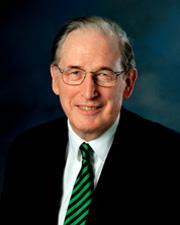 Sen. John D. Rockefeller IV (D-WV)
Legislative Activity
Stay on top of the latest movement without scrolling through every action
Placed on Senate Legislative Calendar under General Orders. Calendar No. 656.
November 30, 2010
View full timeline
Introduced in Senate
October 27, 2009
Sponsor introductory remarks on measure. (CR S10785-10786)
October 27, 2009
Read twice and referred to the Committee on Environment and Public Works.
October 27, 2009
Senate Committee on Environment and Public Works discharged by Unanimous Consent.
October 29, 2009
Referred to the Committee on Commerce, Science, and Transportation.
October 29, 2009
Committee on Commerce, Science, and Transportation. Ordered to be reported with an amendment in the nature of a substitute favorably.
June 9, 2010
Committee on Commerce, Science, and Transportation. Reported by Senator Rockefeller with an amendment in the nature of a substitute. With written report No. 111-355.
November 30, 2010
Placed on Senate Legislative Calendar under General Orders. Calendar No. 656.
November 30, 2010
Floor Debate
6 membersWhat members said about S. 1938 on the floor



 +1
+1
Floor Debate
6 membersWhat members said about S. 1938 on the floor
Mr. President, today I am introducing comprehensive, bipartisan legislation to reduce deaths and injuries caused by drivers texting and holding cell phones, I am delighted to have four original…
Mr. President, today I am introducing comprehensive, bipartisan legislation to reduce deaths and injuries caused by drivers texting and holding cell phones, I am delighted to have four original…
Mr. President, today I am introducing the Natural Resources Climate Adaptation Act. I am pleased that Senators Whitehouse, Baucus, and Tom Udall have joined me as original cosponsors. The science is…
Mr. President, today I am pleased to be joined by Senator Michael Bennet in introducing the Post-9/11 Troops to Teachers Enhancement Act. This legislation would allow more veterans and school…
Mr. President, I rise today to introduce the Strengthening the Oversight of Nuclear Nonproliferation Act of 2009. This legislation will enhance the ability of Congress to oversee nuclear…
Show 2 more
Mr. President, today, I am pleased to introduce the Foreign Account Tax Compliance Act of 2009. The bill gives the IRS powerful tools to find US taxpayers who are hiding their money in offshore…

Mr. President, I ask unanimous consent the bill, S. 1938, be discharged from the Committee on Environment and Public Works and that it be referred to the Committee on Commerce, Science and…
Bill Text
3 versions available
        [Congressional Bills 111th Congress]
[From the U.S. Government Publishing Office]
[S. 1938 Reported in Senate (RS)]

Calendar No. 656
111th CONGRESS
2d Session
S. 1938

[Report No. 111-355]

To establish a program to reduce injuries and deaths caused by
cellphone use and texting while driving.

_______________________________________________________________________

IN THE SENATE OF THE UNITED STATES

October 27, 2009

Mr. Rockefeller (for himself, Mrs. Hutchison, Mr. Lautenberg, Mr.
Schumer, Mr. Thune, Ms. Klobuchar, Mr. Vitter, Mr. Casey, Mr. Warner,
Mr. Nelson of Florida, and Mr. Udall of New Mexico) introduced the
following bill; which was read twice and referred to the Committee on
Environment and Public Works

October 29, 2009

Committee discharged; referred to the Committee on Commerce, Science,
and Transportation

November 30, 2010

Reported by Mr. Rockefeller, with an amendment
[Strike all after the enacting clause and insert the part printed in
italic]

_______________________________________________________________________

A BILL

To establish a program to reduce injuries and deaths caused by
cellphone use and texting while driving.

<DELETED>    Be it enacted by the Senate and House of Representatives
of the United States of America in Congress assembled,</DELETED>

<DELETED>SECTION 1. SHORT TITLE; TABLE OF CONTENTS.</DELETED>

<DELETED>    (a) Short Title.--This Act may be cited as the
``Distracted Driving Prevention Act of 2009''.</DELETED>
<DELETED>    (b) Table of Contents.--The table of contents for this Act
is as follows:</DELETED>

<DELETED>Sec. 1. Short title; table of contents.
<DELETED>Sec. 2. Distracted driving incentive grants.
<DELETED>Sec. 3. Distracted driving national education program.
<DELETED>Sec. 4. Research and data collection.
<DELETED>Sec. 5. Research program.
<DELETED>Sec. 6. FCC report on distracted driving technology.
<DELETED>Sec. 7. Provision of information to States.
<DELETED>Sec. 8. Commercial motor vehicles and school buses.
<DELETED>Sec. 9. Funding.

<DELETED>SEC. 2. DISTRACTED DRIVING INCENTIVE GRANTS.</DELETED>

<DELETED>    (a) In General.--Chapter 4 of title 23, United States
Code, is amended by adding at the end the following:</DELETED>
<DELETED>``</DELETED><DELETED>413. Distracted driving incentive
grants</DELETED>
<DELETED>    ``(a) In General.--The Secretary shall make a grant under
this section to any State that enacts and implements a statute that
meets the requirements of subsections (b) and (c) of this
section.</DELETED>
<DELETED>    ``(b) Prohibition on Texting While Driving.--A State
statute meets the requirements of this subsection if the statute--
</DELETED>
<DELETED>    ``(1) prohibits the use of a personal wireless
communications device by a driver for texting while
driving;</DELETED>
<DELETED>    ``(2) makes violation of the statute a primary
offense;</DELETED>
<DELETED>    ``(3) establishes--</DELETED>
<DELETED>    ``(A) a minimum fine for a first violation
of the statute; and</DELETED>
<DELETED>    ``(B) increased fines for repeat
violations; and</DELETED>
<DELETED>    ``(4) provides increased civil and criminal
penalties than would otherwise apply if a vehicle accident is
caused by a driver who is using such a device in violation of
the statute.</DELETED>
<DELETED>    ``(c) Prohibition on Handheld Cellphone Use While
Driving.--A State statute meets the requirements of this subsection if
the statute--</DELETED>
<DELETED>    ``(1) prohibits a driver from holding a personal
wireless communications device to conduct a telephone call
while driving;</DELETED>
<DELETED>    ``(2) allows the use of hands-free devices that
enable a driver, other than a driver who has not attained the
age of 18, to initiate, conduct, or receive a telephone call
without holding the device;</DELETED>
<DELETED>    ``(3) makes violation of the statute a primary
offense;</DELETED>
<DELETED>    ``(4) requires distracted driving issues to be
tested as part of the State driver's license
examination;</DELETED>
<DELETED>    ``(5) establishes--</DELETED>
<DELETED>    ``(A) a minimum fine for a first violation
of the statute; and</DELETED>
<DELETED>    ``(B) increased fines for repeat
violations; and</DELETED>
<DELETED>    ``(6) provides increased civil and criminal
penalties than would otherwise apply if a vehicle accident is
caused by a driver who is using such a device in violation of
the statute.</DELETED>
<DELETED>    ``(d) Permitted Exceptions.--A statute that meets the
requirements of subsections (b) and (c) may provide exceptions for--
</DELETED>
<DELETED>    ``(1) use of a personal wireless communications
device by a driver to contact emergency services;</DELETED>
<DELETED>    ``(2) manipulation of such a device by a driver to
activate, deactivate, or initialize the hands-free
functionality of the device;</DELETED>
<DELETED>    ``(3) use of a personal wireless communications
device by emergency services personnel while operating an
emergency services vehicle and engaged in the performance of
their duties as emergency services personnel; and</DELETED>
<DELETED>    ``(4) use of a device by an individual employed as
a commercial motor vehicle driver, or a school bus driver,
within the scope of such individual's employment if such use is
permitted under the regulations promulgated pursuant to section
31152 of title 49.</DELETED>
<DELETED>    ``(e) Grant Year.--The Secretary shall make a grant under
this section to a State in any year in which the State--</DELETED>
<DELETED>    ``(1) enacts a law that meets the requirements of
subsections (b) and (c) before July 1; or</DELETED>
<DELETED>    ``(2) maintains a statute, that meets the
requirements of subsections (b) and (c), enacted in a previous
year that is in effect through June 30th of the grant
year.</DELETED>
<DELETED>    ``(f) Disbursement and Apportionment.--Grants to
qualifying States shall be disbursed after July 1 each year according
to the apportionment criteria of section 402(c).</DELETED>
<DELETED>    ``(g) Use of Grant Funds.--A State that receives a grant
under this section--</DELETED>
<DELETED>    ``(1) shall use at least 50 percent of the grant--
</DELETED>
<DELETED>    ``(A) to educate and advertise to the
public information about the dangers of texting or
using a cellphone while driving;</DELETED>
<DELETED>    ``(B) for traffic signs that notify
drivers about the distracted driving law of the
State;</DELETED>
<DELETED>    ``(C) for law enforcement of the
distracted driving law; or</DELETED>
<DELETED>    ``(D) for a combination of such uses;
and</DELETED>
<DELETED>    ``(2) may use up to 50 percent of the grant for
other projects that improve traffic safety and that are
consistent with the criteria in section 402(a).</DELETED>
<DELETED>    ``(h) Definitions.--In this section:</DELETED>
<DELETED>    ``(1) Driving.--The term `driving' means operating
a motor vehicle on a public road, including operation while
temporarily stationary because of traffic, a traffic light or
stop sign, or otherwise. It does not include operating a motor
vehicle when the vehicle has pulled over to the side of, or
off, an active roadway and has stopped in a location where it
can safely remain stationary.</DELETED>
<DELETED>    ``(2) Hands-free device.--The term `hands-free
device' means a device that allows a driver to use a personal
wireless communications device to initiate, conduct, or receive
a telephone call without holding the personal wireless
communications device.</DELETED>
<DELETED>    ``(3) Personal wireless communications device.--
The term `personal wireless communications device' means a
device through which personal wireless services (as defined in
section 332(c)(7)(C)(i) of the Communications Act of 1934 (47
U.S.C. 332(c)(7)(C)(i))) are transmitted. It does not include a
global navigation satellite system receiver used for
positioning, emergency notification, or navigation
purposes.</DELETED>
<DELETED>    ``(4) Primary offense.--The term `primary offense'
means an offense for which a law enforcement officer may stop a
vehicle solely for the purpose of issuing a citation in the
absence of evidence of another offense.</DELETED>
<DELETED>    ``(5) Public road.--The term `public road' has the
meaning given that term in section 402(c).</DELETED>
<DELETED>    ``(6) Texting.--The term `texting' means reading
from or manually entering data into a personal wireless
communications device, including doing so for the purpose of
SMS texting, e-mailing, instant messaging, or engaging in any
other form of electronic data retrieval or electronic data
communication.''.</DELETED>
<DELETED>    (b) Conforming Amendment.--The table of contents for
chapter 4 of title 23, United States Code, is amended by adding at the
end the following:</DELETED>

<DELETED>``413. Distracted driving incentive grants.''.

<DELETED>SEC. 3. DISTRACTED DRIVING NATIONAL EDUCATION
PROGRAM.</DELETED>

<DELETED>    (a) In General.--The Administrator of the National Highway
Traffic Safety Administration shall establish and administer a program
under which at least 2 high-visibility education and advertising
campaigns related to distracted driving will be carried out for the
purpose specified in subsection (b) for fiscal years 2010 and
2011.</DELETED>
<DELETED>    (b) Purpose.--The purpose of an education and advertising
campaign under this section shall be to educate the public about the
risks associated with distracted driving, including those associated
with--</DELETED>
<DELETED>    (1) texting (as defined in section 413(h)(6) of
title 23, United States Code) while driving; and</DELETED>
<DELETED>    (2) the use of personal wireless communications
devices (as defined in section 413(h)(3) of that title) while
driving.</DELETED>
<DELETED>    (c) Advertising.--The Administrator may use, or authorize
the use of, funds available to carry out this section to pay for the
development, production, publication, and broadcast of electronic and
print media advertising in carrying out traffic safety education and
advertising campaigns under this section. The Administrator--</DELETED>
<DELETED>    (1) shall give consideration to advertising
directed at non-English speaking populations, including those
who listen, read, or watch nontraditional media; and</DELETED>
<DELETED>    (2) may use a portion of the funds available for
this program to target local jurisdictions that have enacted
laws prohibiting texting or the use of personal wireless
communications devices while driving.</DELETED>
<DELETED>    (d) Coordination With States.--The Administrator may
coordinate with the States to carry out the education and advertising
campaigns under this section to coincide with high-visibility
enforcement of State laws prohibiting texting while driving or the use
of personal wireless communications devices while driving.</DELETED>
<DELETED>    (e) Annual Evaluation.--The Administrator shall conduct an
annual evaluation of the effectiveness of the education and advertising
campaigns under this section, and report the results to the Senate
Committee on Commerce, Science, and Transportation, and the House of
Representatives Committee on Energy and Commerce.</DELETED>

<DELETED>SEC. 4. RESEARCH AND DATA COLLECTION.</DELETED>

<DELETED>    (a) In General.--Section 408(e)(2) of title 23, United
States Code, is amended to read as follows:</DELETED>
<DELETED>    ``(2) Data on use of electronic devices.--
</DELETED>
<DELETED>    ``(A) The model data elements required
under paragraph (1) shall include data elements, as
determined appropriate by the Secretary, in
consultation with the States and appropriate elements
of the law enforcement community, on the impact on
traffic safety of the use of electronic devices while
driving.</DELETED>
<DELETED>    ``(B) In order to meet the requirements of
subparagraph (A), State and local governments shall--
</DELETED>
<DELETED>    ``(i) require that official
vehicle accident investigation reports include
a designated space to record whether or not the
use of a personal wireless communications
device (as defined in section 413(h)(3)) was in
use at the time of the accident by any driver
involved in the accident;</DELETED>
<DELETED>    ``(ii) require that all law
enforcement officers, as part of a vehicle
accident investigation, inquire about and
record the information required by clause (i);
and</DELETED>
<DELETED>    ``(iii) incorporate the
information collected under clause (i) into its
traffic safety information system.''.</DELETED>
<DELETED>    (b) Effective Date.--The amendment made by subsection (a)
shall apply with respect to grants under section 408 of title 23,
United States Code, for fiscal years beginning after fiscal year
2010.</DELETED>

<DELETED>SEC. 5. RESEARCH PROGRAM.</DELETED>

<DELETED>    (a) In General.--The Secretary of Transportation shall
establish a research program to study distracted driving by passenger
and commercial vehicle drivers.</DELETED>
<DELETED>    (b) Scope.--The program shall include studies of--
</DELETED>
<DELETED>    (1) driver behavior;</DELETED>
<DELETED>    (2) vehicle technology; and</DELETED>
<DELETED>    (3) portable electronic devices that are commonly
brought into passenger or commercial vehicles.</DELETED>
<DELETED>    (c) Research Agreements.--</DELETED>
<DELETED>    (1) In general.--In carrying out this section the
Secretary may grant research contracts to non-governmental
entities to study distracted driving.</DELETED>
<DELETED>    (2) Limitations.--The Secretary may not grant a
research contract under this section to any person that
produces or sells--</DELETED>
<DELETED>    (A) electronic equipment that is used in
vehicles;</DELETED>
<DELETED>    (B) portable electronic equipment commonly
brought into passenger or commercial vehicles;
or</DELETED>
<DELETED>    (C) passenger or commercial
vehicles.</DELETED>

<DELETED>SEC. 6. FCC REPORT ON DISTRACTED DRIVING TECHNOLOGY.</DELETED>

<DELETED>    Within 180 days after the date of enactment of this Act,
the Federal Communications Commission shall submit a report to the
Senate Committee on Commerce, Science, and Transportation and the House
of Representatives Committee on Energy and Commerce that identifies--
</DELETED>
<DELETED>    (1) data the Commission can collect and analyze
that will assist in understanding and reducing the problem of
distracted driving involving the use of personal communications
devices;</DELETED>
<DELETED>    (2) existing and developing wireless
communications technology that may be used to reduce problems
associated with distracted driving; and</DELETED>
<DELETED>    (3) existing authority that the Commission may use
to assist in reducing those problems.</DELETED>

<DELETED>SEC. 7. PROVISION OF INFORMATION TO STATES.</DELETED>

<DELETED>    Section 30105 of title 49, United States Code, shall not
apply to providing government-sponsored research and highway safety
data, or providing technical assistance, relating to legislative
proposals addressing the dangers or potential dangers of--</DELETED>
<DELETED>    (1) texting while driving a passenger vehicle,
school bus, or commercial vehicle; or</DELETED>
<DELETED>    (2) the use of personal wireless communications
devices (as defined in section 413(h)(3) of title 23, United
States Code) while driving a passenger vehicle, school bus, or
commercial vehicle.</DELETED>

<DELETED>SEC. 8. COMMERCIAL MOTOR VEHICLES AND SCHOOL BUSES.</DELETED>

<DELETED>    (a) In General.--Subchapter III of chapter 311 of title
49, United States Code, is amended by adding at the end the
following:</DELETED>
<DELETED>``</DELETED><DELETED>31152. Regulation of the use of
distracting devices in commercial motor vehicles and
school buses</DELETED>
<DELETED>    ``(a) In General.--No later than 1 year after the
enactment of the Distracted Driving Prevention Act of 2009, the
Secretary of Transportation shall prescribe regulations on the use of
electronic or wireless devices, including cell phones and other
distracting devices, by an individual employed as the operator of--
</DELETED>
<DELETED>    ``(1) a commercial motor vehicle while that
individual is engaged in the performance of such individual's
duties as the operator of the commercial motor vehicle;
or</DELETED>
<DELETED>    ``(2) a school bus (as defined in section
30125(a)(1)) that is a commercial motor vehicle (as defined in
section 31301(4)(A)) while that individual is engaged in the
performance of such individual's duties as the operator of the
school bus.</DELETED>
<DELETED>    ``(b) Basis for Regulations.--The Secretary shall base the
regulations required by subsection (a) on accident data analysis, the
results of ongoing research, and other information, as
appropriate.</DELETED>
<DELETED>    ``(c) Prohibited Use.--The Secretary shall prohibit the
use of such devices in circumstances in which the Secretary determines
that their use interferes with the driver's safe operation of a school
bus or commercial motor vehicle.</DELETED>
<DELETED>    ``(d) Permitted Use.--Under the regulations, the Secretary
may permit the use of a device, the use of which is prohibited under
subsection (c), if the Secretary determines that such use is necessary
for the safety of the driver or the public in emergency
circumstances.''.</DELETED>
<DELETED>    (b) Conforming Amendment.--The table of contents for
chapter 311 of title 49, United States Code, is amended by inserting
after the item relating to section 31151 the following:</DELETED>

<DELETED>``31152. Regulation of the use of distracting devices in
commercial motor vehicles and school
buses.''.

<DELETED>SEC. 9. FUNDING.</DELETED>

<DELETED>    Section 2001(a) of Public Law 109-59 is amended--
</DELETED>
<DELETED>    (1) by striking ``and'' in paragraph
(4);</DELETED>
<DELETED>    (2) by striking ``2009.'' in paragraph (4) and
inserting ``2009, $94,500,000 for fiscal year 2010, and
$94,500,000 for fiscal year 2011. If any amount of the funds
authorized by this paragraph has not been allocated to States
meeting the criteria of section 406 of title 23, United States
Code, by July 1 of a fiscal year beginning after fiscal year
2009, the unallocated amount shall be allocated to States
meeting the criteria of section 413 of that title.'';
and</DELETED>
<DELETED>    (3) by redesignating paragraph (11) as paragraph
(12) and inserting after paragraph (10) the
following:</DELETED>
<DELETED>    ``(11) Distracted driving program.--For carrying
out section 3 of the Distracted Driving Prevention Act of 2009,
$30,000,000 for each of fiscal years 2010 and
2011.''.</DELETED>

SECTION 1. SHORT TITLE; TABLE OF CONTENTS.

(a) Short Title.--This Act may be cited as the ``Distracted Driving
Prevention Act of 2010''.
(b) Table of Contents.--The table of contents for this Act is as
follows:

Sec. 1. Short title; table of contents.
Sec. 2. Distracted driving incentive grants.
Sec. 3. Distracted driving national education program.
Sec. 4. Research and data collection.
Sec. 5. Research program.
Sec. 6. FCC report on distracted driving technology.
Sec. 7. Provision of information to States.
Sec. 8. Commercial motor vehicles and school buses.
Sec. 9. Funding.
Sec. 10. Prohibition on electronic visual entertainment in driver's
view.

SEC. 2. DISTRACTED DRIVING INCENTIVE GRANTS.

(a) In General.--Chapter 4 of title 23, United States Code, is
amended by adding at the end the following:
``413. Distracted driving incentive grants
``(a) In General.--The Secretary shall make a grant under this
section to any State that enacts and implements a statute that meets
the requirements of subsections (b) and (c) of this section.
``(b) Prohibition on Texting While Driving.--A State statute meets
the requirements of this subsection if the statute--
``(1) prohibits the use of a personal wireless
communications device by a driver for texting while driving;
``(2) makes violation of the statute a primary offense;
``(3) establishes--
``(A) a minimum fine for a first violation of the
statute; and
``(B) increased fines for repeat violations; and
``(4) provides increased civil and criminal penalties than
would otherwise apply if a vehicle accident is caused by a
driver who is using such a device in violation of the statute.
``(c) Prohibition on Handheld Cellphone Use While Driving.--A State
statute meets the requirements of this subsection if the statute--
``(1) prohibits a driver from holding a personal wireless
communications device to conduct a telephone call while
driving;
``(2) makes violation of the statute a primary offense;
``(3) requires distracted driving issues to be tested as
part of the State driver's license examination;
``(4) establishes--
``(A) a minimum fine for a first violation of the
statute; and
``(B) increased fines for repeat violations; and
``(5) provides increased civil and criminal penalties than
would otherwise apply if a vehicle accident is caused by a
driver who is using such a device in violation of the statute.
``(d) Permitted Exceptions.--A statute that meets the requirements
of subsections (b) and (c) may provide exceptions for--
``(1) use of a personal wireless communications device by a
driver to contact emergency services;
``(2) allows the use of hands-free devices that enable a
driver, other than a driver who has not attained the age of 18,
to initiate, conduct, or receive a telephone call without
holding the device;
``(3) manipulation of such a device by a driver to
activate, deactivate, or initialize the hands-free
functionality of the device;
``(4) use of a personal wireless communications device by
emergency services personnel while operating an emergency
services vehicle and engaged in the performance of their duties
as emergency services personnel; and
``(5) use of a device by an individual employed as a
commercial motor vehicle driver, or a school bus driver, within
the scope of such individual's employment if such use is
permitted under the regulations promulgated pursuant to section
31152 of title 49.
``(e) Grant Year.--The Secretary shall make a grant under this
section to a State in any year beginning fiscal year 2011 in which the
State--
``(1) enacts a law that meets the requirements of
subsections (b) and (c) before July 1; or
``(2) maintains a statute, that meets the requirements of
subsections (b) and (c), enacted in a previous year that is in
effect through June 30th of the grant year.
``(f) Disbursement and Apportionment.--Grants to qualifying States
shall be disbursed after July 1 each year according to the
apportionment criteria of section 402(c).
``(g) Use of Grant Funds.--A State that receives a grant under this
section--
``(1) shall use at least 50 percent of the grant--
``(A) to educate and advertise to the public
information about the dangers of texting or using a
cellphone while driving;
``(B) for traffic signs that notify drivers about
the distracted driving law of the State;
``(C) for law enforcement of the distracted driving
law; or
``(D) for a combination of such uses; and
``(2) may use up to 50 percent of the grant for other
projects that improve traffic safety and that are consistent
with the criteria in section 402(a).
``(h) Definitions.--In this section:
``(1) Driving.--The term `driving' means operating a motor
vehicle on a public road, including operation while temporarily
stationary because of traffic, a traffic light or stop sign, or
otherwise. It does not include operating a motor vehicle when
the vehicle has pulled over to the side of, or off, an active
roadway and has stopped in a location where it can safely
remain stationary.
``(2) Hands-free device.--The term `hands-free device'
means a device that allows a driver to use a personal wireless
communications device to initiate, conduct, or receive a
telephone call without holding the personal wireless
communications device.
``(3) Personal wireless communications device.--The term
`personal wireless communications device' means a device
through which personal wireless services (as defined in section
332(c)(7)(C)(i) of the Communications Act of 1934 (47 U.S.C.
332(c)(7)(C)(i))) are transmitted. It does not include a global
navigation satellite system receiver used for positioning,
emergency notification, or navigation purposes.
``(4) Primary offense.--The term `primary offense' means an
offense for which a law enforcement officer may stop a vehicle
solely for the purpose of issuing a citation in the absence of
evidence of another offense.
``(5) Public road.--The term `public road' has the meaning
given that term in section 402(c).
``(6) Texting.--The term `texting' means reading from or
manually entering data into a personal wireless communications
device, including doing so for the purpose of SMS texting, e-
mailing, instant messaging, or engaging in any other form of
electronic data retrieval or electronic data communication.''.
(b) Conforming Amendment.--The table of contents for chapter 4 of
title 23, United States Code, is amended by adding at the end the
following:

``413. Distracted driving incentive grants.''.

SEC. 3. DISTRACTED DRIVING NATIONAL EDUCATION PROGRAM.

(a) In General.--The Administrator of the National Highway Traffic
Safety Administration shall establish and administer a program under
which at least 2 high-visibility education and advertising campaigns
related to distracted driving will be carried out for the purpose
specified in subsection (b) for fiscal years 2011 and 2012.
(b) Purpose.--The purpose of an education and advertising campaign
under this section shall be to educate the public about the risks
associated with distracted driving, including those associated with--
(1) texting (as defined in section 413(h)(6) of title 23,
United States Code) while driving; and
(2) the use of personal wireless communications devices (as
defined in section 413(h)(3) of that title) while driving.
(c) Advertising.--The Administrator may use, or authorize the use
of, funds available to carry out this section to pay for the
development, production, publication, and broadcast of electronic and
print media advertising in carrying out traffic safety education and
advertising campaigns under this section. The Administrator--
(1) shall give consideration to advertising directed at
non-English speaking populations, including those who listen,
read, or watch nontraditional media; and
(2) may use a portion of the funds available for this
program to target local jurisdictions that have enacted laws
prohibiting texting or the use of personal wireless
communications devices while driving.
(d) Coordination With States.--The Administrator may coordinate
with the States to carry out the education and advertising campaigns
under this section to coincide with high-visibility enforcement of
State laws prohibiting texting while driving or the use of personal
wireless communications devices while driving.
(e) Annual Evaluation.--The Administrator shall conduct an annual
evaluation of the effectiveness of the education and advertising
campaigns under this section, and report the results to the Senate
Committee on Commerce, Science, and Transportation, and the House of
Representatives Committee on Energy and Commerce.

SEC. 4. RESEARCH AND DATA COLLECTION.

(a) In General.--Section 408(e)(2) of title 23, United States Code,
is amended to read as follows:
``(2) Data on use of electronic devices.--
``(A) The model data elements required under
paragraph (1) shall include data elements, as
determined appropriate by the Secretary, in
consultation with the States and appropriate elements
of the law enforcement community, on the impact on
traffic safety of the use of electronic devices while
driving.
``(B) In order to meet the requirements of
subparagraph (A), State and local governments shall--
``(i) require that official vehicle
accident investigation reports include a
designated space to record whether or not the
use of a personal wireless communications
device (as defined in section 413(h)(3)) was in
use at the time of the accident by any driver
involved in the accident;
``(ii) require that all law enforcement
officers, as part of a vehicle accident
investigation, inquire about and record the
information required by clause (i); and
``(iii) incorporate the information
collected under clause (i) into its traffic
safety information system.''.
(b) Effective Date.--The amendment made by subsection (a) shall
apply with respect to grants under section 408 of title 23, United
States Code, for fiscal years beginning after fiscal year 2010.

SEC. 5. RESEARCH PROGRAM.

(a) In General.--The Secretary of Transportation shall establish a
research program to study distracted driving by passenger and
commercial vehicle drivers.
(b) Scope.--The program shall include studies of--
(1) driver behavior;
(2) vehicle technology; and
(3) portable electronic devices that are commonly brought
into passenger or commercial vehicles.
(c) Research Agreements.--
(1) In general.--In carrying out this section the Secretary
may grant research contracts to non-governmental entities to
study distracted driving.
(2) Limitations.--The Secretary may not grant a research
contract under this section to any person that produces or
sells--
(A) electronic equipment that is used in vehicles;
(B) portable electronic equipment commonly brought
into passenger or commercial vehicles; or
(C) passenger or commercial vehicles.

SEC. 6. FCC REPORT ON DISTRACTED DRIVING TECHNOLOGY.

Within 180 days after the date of enactment of this Act, the
Federal Communications Commission shall submit a report to the Senate
Committee on Commerce, Science, and Transportation and the House of
Representatives Committee on Energy and Commerce that identifies--
(1) data the Commission can collect and analyze that will
assist in understanding and reducing the problem of distracted
driving involving the use of personal communications devices;
(2) existing and developing wireless communications
technology that may be used to reduce problems associated with
distracted driving; and
(3) existing authority that the Commission may use to
assist in reducing those problems.

SEC. 7. PROVISION OF INFORMATION TO STATES.

Section 30105 of title 49, United States Code, shall not apply to
providing government-sponsored research and highway safety data, or
providing technical assistance, relating to legislative proposals
addressing the dangers or potential dangers of--
(1) texting while driving a passenger vehicle, school bus,
or commercial vehicle; or
(2) the use of personal wireless communications devices (as
defined in section 413(h)(3) of title 23, United States Code)
while driving a passenger vehicle, school bus, or commercial
vehicle.

SEC. 8. COMMERCIAL MOTOR VEHICLES AND SCHOOL BUSES.

(a) In General.--Subchapter III of chapter 311 of title 49, United
States Code, is amended by adding at the end the following:
``31152. Regulation of the use of distracting devices in commercial
motor vehicles and school buses
``(a) In General.--No later than 1 year after the enactment of the
Distracted Driving Prevention Act of 2010, the Secretary of
Transportation shall prescribe regulations on the use of electronic or
wireless devices, including cell phones and other distracting devices,
by an individual employed as the operator of--
``(1) a commercial motor vehicle while that individual is
engaged in the performance of such individual's duties as the
operator of the commercial motor vehicle; or
``(2) a school bus (as defined in section 30125(a)(1)) that
is a commercial motor vehicle (as defined in section
31301(4)(A)) while that individual is engaged in the
performance of such individual's duties as the operator of the
school bus.
``(b) Basis for Regulations.--The Secretary shall base the
regulations required by subsection (a) on accident data analysis, the
results of ongoing research, and other information, as appropriate.
``(c) Prohibited Use.--The Secretary shall prohibit the use of such
devices in circumstances in which the Secretary determines that their
use interferes with the driver's safe operation of a school bus or
commercial motor vehicle.
``(d) Permitted Use.--Under the regulations, the Secretary may
permit the use of a device, the use of which is prohibited under
subsection (c), if the Secretary determines that such use is necessary
for the safety of the driver or the public in emergency
circumstances.''.
(b) Conforming Amendment.--The table of contents for chapter 311 of
title 49, United States Code, is amended by inserting after the item
relating to section 31151 the following:

``31152. Regulation of the use of distracting devices in commercial
motor vehicles and school buses.''.

SEC. 9. FUNDING.

(a) In General.--Section 2001(a)(4) of Public Law 109-59 is amended
by striking ``2010.'' and inserting ``2010, of which $7,500,000 shall
be for carrying out section 3 of the Distracted Driving Prevention Act
of 2010. If any amount of the funds authorized by this paragraph has
not been allocated to States meeting the criteria of section 406 of
title 23, United States Code, by July 1 of a fiscal year beginning
after fiscal year 2009, the unallocated amount shall be allocated to
States meeting the criteria of section 413 of that title. Unallocated
amounts from sections 406 and 413 in a fiscal year shall be carried
over to the next fiscal year for use under sections 406 and 413.''.
(b) Conforming Amendment.--Section 406 of title 23, United States
Code, is amended by striking subsections (c) and (d).

SEC. 10. PROHIBITION ON ELECTRONIC VISUAL ENTERTAINMENT IN DRIVER'S
VIEW.

(a) Visual Entertainment Screens in Driver's View.--The Secretary
of Transportation shall initiate a rulemaking proceeding to prescribe a
Federal motor vehicle safety standard that would prohibit electronic
screens from displaying broadcast television, movies, video games, and
other forms of similar visual entertainment that is visible to the
driver while driving. The standard shall allow electronic screens that
display information or images regarding operation of the vehicle,
vehicle surroundings, telematic functions such as the vehicle's
navigation and communications system, weather, time, or the vehicle's
audio system.
(b) Deadline.--The Secretary shall issue a final rule under
subsection (a) within 2 years after the date of enactment of this Act.
(c) Deadline for Rulemaking.--If the Secretary determines that a
deadline for a final rule under this Act or an amendment made by this
Act cannot be met, the Secretary shall--
(1) notify the House of Representatives Committee on Energy
and Commerce and the Senate Committee on Commerce, Science, and
Transportation and explain why that deadline cannot be met; and
(2) establish a new deadline for that rule.
Calendar No. 656

111th CONGRESS

2d Session

S. 1938

[Report No. 111-355]

_______________________________________________________________________

A BILL

To establish a program to reduce injuries and deaths caused by
cellphone use and texting while driving.

_______________________________________________________________________

November 30, 2010

Reported with an amendment