ROADS SAFE Act of 2010
Legislative Activity
Stay on top of the latest movement without scrolling through every action
Read twice and referred to the Committee on Commerce, Science, and Transportation.
February 25, 2010
View full timeline
Introduced in Senate
February 25, 2010
Sponsor introductory remarks on measure. (CR S797-798)
February 25, 2010
Read twice and referred to the Committee on Commerce, Science, and Transportation.
February 25, 2010
Floor Debate
9 membersWhat members said about S. 3039 on the floor
 JC
JC RPC
RPC AS
AS EEKTU+4
Floor Debate
9 membersWhat members said about S. 3039 on the floor
Madam President, I ask unanimous consent that the order for the quorum call be rescinded. Madam President, I wish to speak as in morning business, and I ask unanimous consent to do so. Madam…
Madam President, I ask unanimous consent that the order for the quorum call be rescinded.
Madam President, I wish to speak as in morning business, and I ask unanimous consent to do so.
Madam President, as are many of us, I have been watching with great interest the bipartisan health care summit that is being broadcast on television. I am happy there is a bipartisan meeting at the White House to discuss health care reform. The practicalities are that only 38 of the 535 Members of Congress can participate directly in the summit, but I know that representatives of our political parties are there, along with the President. They are talking about something that is very near and dear to all of our hearts, and that is how to bring down the costs of health care which is priced out of the reach of many of the American people, including too many in my State of Texas.
Unfortunately, sometimes in Washington what happens is, you see what is happening on TV or what is happening on the floor of the Senate, and it looks like one thing. Then you find out that behind the scenes something very different is happening. What I am speaking about in particular is, in contrast to a bipartisan summit on health care, my understanding is there are efforts underway on the part of the staff of the majority party to consider the use of reconciliation to try to pass an unpopular health care bill with 51 votes on a party-line basis.
I think that contrast between what people are seeing on TV and what is actually happening behind the scenes is pretty telling. I would say it is disappointing because I think health care reform is too important. It affects one-sixth of our economy. It affects 300 million Americans. It is simply too significant a step to take to try to do so strictly along partisan party lines.
So while it is true that reconciliation has been used in the past, it has never been used for anything such as this. This would be unprecedented. I think it would be an act of defiance toward the American people who overwhelmingly disapprove of this legislation.
There is no doubt that we need health care reform. Premiums have more than doubled over the last decade. Medicare, which provides access to health care for our seniors, has a $38 trillion unfunded liability which translates into an IOU for every American family in the amount of $325,000.
If we heard anything out of the recent election in Massachusetts, I think it is that the American people think there is too much spending and too much borrowing taking place in Washington, DC; too many responsibilities, such as this unfunded Medicare liability, that are simply not being met.
We know Medicaid continues to be problematic in not providing access to enough low-income people who are ostensibly beneficiaries of Medicaid. In the Metroplex in Texas, Dallas-Fort Worth, only 38 percent of doctors will see a new Medicaid patient because reimbursement rates are so low. That is not keeping the promise of access. It is, unfortunately, too much like appearing to do one thing on the one hand and actually delivering something far different on the other hand.
I think everyone agrees we need to solve these important problems. But how we go about solving the problem is important to maintaining the confidence and trust of the American people. I think bipartisanship on this subject is absolutely crucial.
After Massachusetts sent our newest Senator, Scott Brown, to Washington, we know there was more talk about bipartisanship. But instead of working together to solve these problems, bipartisanship has so often translated into: Take it or leave it; if we can do this strictly with a majority party vote, we will.
That is what happened on Christmas Eve. I remember that 7 a.m. vote on Christmas Eve when 60 Senators on the other side voted to pass a health care bill that the American people have simply said in poll after poll they do not want. Of course, now we see the White House repackaging an unpopular House bill with an unpopular Senate bill and posting 11 pages on the White House Web site and claiming this is somehow a package that is sacrosanct and cannot be touched. But in no sense could it possibly be considered a bipartisan piece of legislation. To only let the majority party say: Well, this is the basic template, and you can tweak it around the edges but you cannot change any part of it--that is not bipartisanship.
So now after the election of Senator Scott Brown, who campaigned on the pledge that he would be the 41st vote to defeat the Senate health care bill because of its spending, its raising taxes, and its raising premiums on people with insurance, its taking $\1/2\ trillion from Medicare--already another fiscally unsustainable entitlement program, with $38 trillion in unfunded liabilities--to create yet another entitlement program, the people of Massachusetts sent Senator Scott Brown here to stop the health care bill that they don't want.
Now we find the majority party wanting to use reconciliation, a hyperpartisan tactic, to ram a bill through that the American people have rejected, most recently in Massachusetts. If we are talking about trying to regain the public's confidence, not only is bipartisanship important in terms of bringing solutions to health care but transparency is crucial when we are talking about something so big that affects so many.
You will remember in 2008 when President Obama was Senator Obama running for President of the United States, he promised to broadcast negotiations on C-SPAN for the American people to see who was arguing on their behalf and who was not.
In stark contrast, again, between what was said then and what was actually done, we saw the White House cutting deals with special interest groups, such as the pharmaceutical industry. We saw individual Senators demand and get special deals for their States as a condition to giving their votes to pass that bill.
As much as anything else in the bill, I think the way the bill was passed with the sweetheart deals, secret negotiations, and lack of transparency turned the American people off to these health care bills. I know the President said that after his election Washington would not be business as
usual. Unfortunately, it has been, and the American people don't like it.
This subject--health care reform--is too big and too important and too costly to do through sweetheart deals, backroom negotiations, and with utter disregard for transparency. The American people are smarter than I think many folks in Washington, DC, give them credit for because they know this health care proposal is not lasting reform, and it simply would not work as advertised.
The White House proposal will still increase premiums on American families; that is, if you have health insurance now, this White House proposal, an amalgam of the Senate and House bills, will raise your insurance premiums because of costly Federal Government mandates. But this White House bill does one thing the Senate bill did not. It actually spends $75 billion more than the Senate bill that passed this body on Christmas Eve, at 7 a.m.
The White House bill does share some common elements with the Senate proposal. It still cuts nearly $500 billion from Medicare to create a new entitlement program, including a program that is very popular in my State called Medicare Advantage, which gives seniors access to more choices and the quality care they like. Rather than allow them to continue to keep that Medicare benefit, this proposal, the White House bill--like the Senate bill--would cut $500 billion from Medicare, including Medicare Advantage.
The basic problem, again, is that we call this ``health care reform,'' but the health care bill offers no long-term plan for the Medicare Program's solvency--in other words, that $38 trillion I mentioned a moment ago. This actually makes it worse by taking another $\1/2\ trillion out of Medicare and makes things worse, not better, when it comes to the program's long-term solvency. I simply think the choice the President has made, and that the Senate and House health care bills have made, to force millions of low-income people onto Medicaid is simply not right, giving them no choices but a government- run program which, as I mentioned earlier, denies them access too many times to a doctor because they cannot find a doctor who will see patients and accept government rates for Medicaid reimbursements.
I mentioned the 38-percent figure in the Metroplex of Dallas-Fort Worth. Only 38 percent of the doctors there will see these patients because of the rates. Yet these health care bills force millions of people onto that program along with, in the process, promising them access to care but then not delivering as advertised.
Then there is this problem. As you know, the Medicaid Program--the cost of that is borne by the Federal Government and the State governments. In my State alone, the health and human services commission in Texas estimates that the expansion of Medicaid under the President's proposal will cost Texas taxpayers an additional $24.3 billion over the next 10 years. That $24.3 billion is an unfunded mandate that is contained in this bill.
Where does that money come from? Well, too often--I think some of our former Governors will tell you that what happens is, that is money that has to be used for an unfunded mandate from the Federal Government that comes from education, higher education budgets, law enforcement budgets, and other State priorities. It is simply irresponsible for Congress to force on State taxpayers this responsibility to pay for this unfunded mandate when there are other priorities the States have chosen that they think are important--things such as education, as I mentioned, and law enforcement.
The unfunded mandate in this bill is simply unacceptable. The Wall Street Journal summed up the President's proposal this way:
It manages to take the worst of both the House and Senate
bills and combine them into something more destructive. . . .
It includes more taxes, more subsidies, and even less cost
control than the Senate bill.
And it purports to fix the special interest favors in the
Senate bill not by eliminating them--but by expanding them to
everyone.
We know the furor it caused across the country when some Senators were able to negotiate more favorable Medicaid reimbursements than the rest of the country and when everybody found out those who were not in those favored States would end up paying for those special favors that were necessary in order to get 60 votes. This bill doesn't repeal those; it simply expands them to everybody, vastly increasing the cost of this legislation and making it even worse, not better.
The President and his congressional allies who support this legislation seem to think the only reason the American people oppose these bills is ``misinformation.'' I suggest we simply look at the facts--in this case straight from the Congressional Budget Office--and see what they, the official scorekeeper for Congress, have to say about these pieces of legislation.
The CBO said premiums for those who have health insurance of some kind--85 percent of the American people--whether it is through government programs like Medicare, the VA, or the like, but those who have private insurance, their premiums will go up by 10 to 13 percent or an average of $2,100 for families buying policies on their own. That is in the individual market where most small businesses and individuals have to shop for their insurance. Their health insurance premiums will go up an average of $2,100 a family or 10 to 13 percent.
No wonder the more people learn about this legislation the less popular it becomes, and individuals who get health care through small businesses or larger employers, which is 83 percent of Americans, will see the status quo. They will see their premiums continue to increase by 5 to 6 percent a year.
I thought health care reform was about bringing down the cost and making it more affordable, ``bending the cost curve,'' to use the jargon that has been used here time after time over the last year and a half. But we find out that for those in the individual market, premiums will go up 10 to 13 percent. For those in the larger employer market, it will go up 5 to 6 percent. It will not bend the cost curve down. It will either be ineffective at all and keep premiums basically where they would have been anyway or it will make it worse.
Then there is the gamesmanship in how it deals with the budget deficit. Here is what CBO said about the bill's impact on the budget deficit:
Washington budget gimmicks allow the White House to pretend
the bills reduce the deficit by $132 billion, which is a
fraction of Washington's $1.3 trillion budget deficit.
Americans don't believe ``reducing the deficit'' is possible at the same time we are spending $2.5 trillion over the next 10 years, and they are right. It is easy to pretend we are reducing the deficit when we are raising taxes by $500 billion and taking another $500 billion from Medicare in order to pay for this program.
The Obama administration's own actuaries have worried that future Congresses would not let the $500 billion in Medicare cuts happen. In other words, the bills spend now but would not pay later.
I assume the majority leader will bring up the doc fix sometime soon because he needs to. The 23-percent cut in reimbursement rates for doctors who don't take Medicare patients is not taken care of in this bill, and it should be. If this is really about health care reform, shouldn't it be making sure that our seniors on Medicare have access to doctors and that they can actually find a doctor who will see them? If you cut 23 percent in the doctor reimbursement rates, which is where we are headed now, they are not going to have access to doctors.
Here is what the Obama administration's own experts say about the cost curve. The Senate bill, they say, will increase overall American health care expenditures by $222 billion.
It will not bend the cost curve down. It will actually bend it up, making things worse, not better.
The American people have been pretty smart about this. They have been more engaged, better informed on this subject than I have seen in a long time. Of course, health care reform is a very complicated area. But they have gotten very well informed about it. They want lasting reform that will lower costs.
Here is what we know works to lower costs, but this is not something that is in the President's bill and, apparently, not something the majority party is even willing to consider. If they did, I submit this would be a big step forward to bending the cost curve down, making health care more affordable, and
yield a bipartisan product the American people could support.
I believe we need to give control over health care dollars to patients, not to Washington bureaucrats or to insurance company bureaucrats either. The American Academy of Actuaries found that consumer-driven health care plans have saved as much as 12 to 20 percent in health care premiums--12 to 20 percent. That is a lot.
Then, of course, there is a practice of defensive medicine, ending lawsuit abuse which would save $54 billion over the next 10 years, according to the CBO.
We also support allowing small businesses to pool together such as big companies do to pool their risks to help bring down premium costs. According to the Congressional Budget Office, this would lower premiums for small businesses by 2 to 3 percent--that is not a huge amount, but I am sure they will tell you every little bit helps--and in conjunction with these other reforms would have a real, meaningful impact in terms of bringing down health care costs.
I also support and our side of the aisle supports allowing Americans to purchase health insurance from any State they want to, and that would create national competition. It would allow people to buy policies they can afford that suited their family's needs rather than those loaded with State government mandates with no choices, which would result in higher costs.
If Congress would allow Americans to purchase their health insurance in any State they choose and thereby increasing competition, the Congressional Budget Office says the cost of their health care premiums would go down by 5 percent.
Clearly, competition, transparency, keeping the power in the hands of the consumer not in government are some of the things that would lower the costs, not cause them to go up. Are these part of the bipartisan health summit at the White House? Unfortunately, apparently not.
I would also support--and I think there would be a lot of support on a bipartisan basis--giving Medicaid patients, the ones who cannot find doctors because of low reimbursement rates, premium assistance; that is, to supplement what they can pay so they can buy private sector coverage which pays doctors at more of a level they would accept in terms of seeing those Medicaid patients. Providing Medicaid premium assistance rather than forcing people onto a Medicaid Program that is dysfunctional and does not work would be an improvement, and you could do it cheaper. According to CBO, this would reduce Federal spending by $12 billion over 10 years.
My conclusion from all this is, the American people want us to start over. We need lasting health care reform. I have offered some concrete suggestions on how we could lower the costs and make it more affordable. I believe that if Republicans and Democrats can work together, we can achieve it. On something as big and important and as costly as this, we need to do it on a bipartisan basis. It needs to be transparent. It needs to be devoid of special interest deals and secret negotiations and done out in the open where people can see it and trust it for what it is.
We have to reject purported solutions that will do nothing but increase spending, increase taxes, and increase premiums. We need to start over and implement commonsense steps that will lower costs.
I yield the floor.
Madam President, today, the Senate will resume consideration of the House message with respect to H.R. 1299, the legislative vehicle for the Travel Promotion Act. Yesterday, the majority leader filed…
Madam President, today, the Senate will resume consideration of the House message with respect to H.R. 1299, the legislative vehicle for the Travel Promotion Act. Yesterday, the majority leader filed cloture on the motion to concur. That vote will occur tomorrow morning, unless we are able to reach an agreement to vote today.
In addition, we are also working on an agreement to consider a bill that would extend certain expiring tax provisions for 30 days. If we are able to reach an agreement, we could see votes on that after 4 p.m. There will be no rollcall votes prior to 4 p.m. to allow Senators to attend the health care summit with the President of the United States.
Madam President, I ask unanimous consent that the order for the quorum call be rescinded.
The PRESIDING OFFICER (Mrs. Hagan.) Without objection, it is so ordered.
American Hikers Held in Iran
Madam President, I rise today to discuss the ongoing imprisonment of three young Americans--Joshua Fattal from Pennsylvania and two other Americans who have been in prison in Iran with him, Sarah Shourd and Shane Bauer. These are three Americans who have now spent more than 7 months in solitary confinement in Iran's Evin Prison for allegedly crossing a poorly marked border, the border between Iran and Iraq.
Since their detention along the Iran-Iraq border on July 31, 2009, the Iranian Government has refused requests from their attorney for visits. The Government of Iran has delayed due process and rejected requests from family members to call or visit them. The Iranian regime has also delayed requests for Iranian visas for the families and stonewalled the Swiss Embassy's attempt to carry out diplomatic visits.
The longer the detainment of these young Americans continues, the more clear it becomes to the international community that the Iranian Government, the Iranian regime, is engaged in political games rather than seeking to grant them a fair and timely judicial process. On this basis, I request that Supreme Leader Khamenei, President Ahmadinejad, Judiciary Chief Larijani, and other Iranian officials make the humane and just decision to release Josh, Sarah, and Shane immediately.
Keeping these three innocent Americans in prison without due process violates the international human rights standards as well as Iran's own laws. It has been more than 2 months since Foreign Minister Motaki claimed they would be tried in court. Yet no trial date has been set. According to Iranian law, no detainee can be held temporarily for more than 4 months; thus, judiciary officials must either schedule a court hearing or set the three young Americans free. The only conclusion the international community can draw from the Iranian Government's words and actions is that they intend to keep these three young Americans in limbo for domestic or foreign policy aims. It has nothing to do with the actions or intentions of these three American tourists who were simply admiring the natural beauty of the Kurdish mountains near the Iran-Iraq border. The world is a much worse off place when idealism, especially held by innocent young people, is squashed by cynical politics.
Among ancient Persia's greatest legacies is a transparent and efficient justice system. Innocent people do not appear on the court docket. We ask the Iranian Government--we ask them to send the world the unambiguous message that transparent, timely, and fair judicial processes remain a cornerstone of Iranian civilization. Keeping Josh, Sarah, and Shane indefinitely in solitary confinement and without access to legal counsel or their families is unjust and is sure to color the visions of Iranian society for young people the world over.
Do not make Josh, Sarah, Shane, and their desperately concerned parents wait another day before being reunited. Supreme Leader Khamenei, release these young hikers now.
Unemployment
Madam President, in addition to those remarks about those young Americans, I want to talk for a few minutes about unemployment and what is happening, certainly across the country but in particular in the Commonwealth of Pennsylvania. We have 560,000 people out of work right now in Pennsylvania. Our rate is lower than a lot of places, but we still have that many people out of work, a very high number--maybe not historic but close to a historically high number, 560,000 Pennsylvanians.
There are lots of ways to try to understand what people are going through and try to get a sense of what people are living through. I had a chance a couple of weeks ago to sit with 8 of those 560,000 people in what is called a career link, a job center in Pennsylvania where people are filling out scores of applications, applying for jobs. In the case of these eight individuals, they are all over the age of 50 and many are over the age of 60 and 70--some of the worst situations for those who are in that age bracket, who worked for years, 20, 30 years at one job and did it very well, and now, through no fault of their own, are out of work.
Listening to their stories gave me a better insight into what people are up against every day. A number of comments were significant and relevant and poignant, but one in particular by a woman by the name of Debi who said something very simple but telling about what is in her heart and what she is living through--she said simply: We just want to get back to work. That is a very simple statement, but I think that is on the minds of a lot of Americans who are out of work, and their family members. They just want to get back to work.
They also want to see that Washington is not just legislating--that is obviously important, and I will talk a little bit more about that in a moment--but that we are trying to understand what they are up against. They do want to get back to work. It is that simple. One of the ways we can do that is by making sure those who are out of work, those something like 15 million Americans out of work through no fault of their own, that we do something to help them in the next couple of days to get through the next couple of weeks, literally, with unemployment insurance, COBRA health insurance, and so many other ways.
We should note that the eligibility for emergency unemployment compensation and for COBRA--known as COBRA premium assistance, really health insurance for the unemployed--that both of those will expire this Sunday, February 28. If an extension of the unemployment programs authorized by the Recovery Act is not passed, 1.2 million workers will lose their unemployment benefits by the end of March. So we have to act now to prevent that from happening. It is unfortunate that it seems there is only an agreement to keep extending it from December to February, then from February into March or the end of March. We should extend it a lot further than that. Maybe we will have an opportunity to do that. But, at a minimum, we have to make sure unemployment insurance is extended and COBRA health insurance is extended. There are other reasons to do that as well. The most important reason is the people who will be positively impacted by those actions.
An extension of the federally funded unemployment compensation and COBRA programs through December 31, 2010--what we should do is extend it that far. They are necessary for a number of reasons. State labor departments will not be under pressure to constantly update their systems and inform constituents of changes in national law. We should give them the kind of certainty and predictability that they have a right to expect, certainly the State government officials but more importantly, the families and affected persons who are recently laid off--not constantly be reminded that their unemployment benefits may run out sooner than expected. This is especially true at a time when there are six applicants for every one job.
It is important to take action on unemployment insurance and COBRA health insurance coverage for a third reason as well.
At a time when millions of people don't have health care coverage, failure to provide an adequate safety net to ensure people have affordable health insurance coverage will only add to the rolls of the uninsured in the midst of this debate on health care.
Two other points before I conclude. According to the CBO, which we keep quoting in the health care debate and in many others, for every $1 spent on unemployment insurance benefits, up to $1.90 is contributed to the gross national product. This is further evidence, in addition to what I and many others have quoted--Mark Sandy from moodys.com--you spend a buck on unemployment insurance or COBRA benefits and/or food stamps, all of those safety net provisions to help workers who lost their job, you not only help someone who needs help and should have the help we can provide, you also help our economy literally by jump starting spending.
We know that in the past couple of days we passed the jobs bill, the HIRE Act, a good piece of legislation for small business, for economic vitality but also for preserving and creating lots of jobs. That jobs bill is not enough. We have to pass these safety net provisions on unemployment and COBRA health benefits. We also have to put more job creation strategies on the table and get bills passed to create more jobs. The recovery bill is still having an effect, still having a tremendous impact in Pennsylvania, with still a whole year left of spending and benefits of that spending in Pennsylvania and other States.
I see Senator Specter is with us. He and I have seen that up close in Pennsylvania, a tremendous impact already, but there is still more to do on the recovery bill he voted for under great pressure not to vote for it. Thank goodness he did. Without his vote, that bill would not have passed. Millions of Americans' lives would be adversely impacted if we did not pass the Recovery and Reinvestment Act of 2009. We have a long way to go, more work to do across the country and to have a positive impact on Pennsylvania.
One concluding thought. When you look at Pennsylvania, we might have a lower rate than a lot of States but we do have 560,000 people out of work. Unfortunately, more and more we are seeing in different labor markets, such as the Erie labor market, which is at 10 percent, the Lehigh Valley, Allentown, Bethlehem, and Easton at 9.8 percent, northeastern Pennsylvania, my home area, at 9.7 percent--even though our rate has not yet hit statewide 9 percent, we are seeing in different pockets that number going up. We have to continue to put job creation strategies in the pipeline, continue to have the recovery act have an even more positive impact. And thirdly, we need to make sure we pass the safety net provisions.
I yield the floor and suggest the absence of a quorum.
I ask unanimous consent that the order for the quorum call be rescinded. Madam President, I have sought recognition to talk briefly about two subjects: a recent CODEL where I participated and,…
I ask unanimous consent that the order for the quorum call be rescinded.
Madam President, I have sought recognition to talk briefly about two subjects: a recent CODEL where I participated and, secondly, on the passing of a beloved staff member. I ask unanimous consent that the time for business be extended until 12:45.
Madam President, from December 28 to January 7, I participated on a congressional delegation which visited in Cypress, Syria, India,
Afghanistan, and Morocco, and have submitted a lengthy report, which is my practice.
I ask unanimous consent that the full text of that report be printed in the Record at the end of my remarks.
For purposes of comment at this time, I will focus on what we found on our trip to Afghanistan and India as it relates to the current war in progress in Afghanistan which has, as a practical matter, been extended into Pakistan and a comment about our trip to Syria, our meetings with President Assad, as it bears upon the potential for a peace treaty between Israel and Syria.
Our visit to Afghanistan was very revealing to get a firsthand impression as to what is going on on the ground. I approached the trip with serious reservations about the President's proposal to add an additional 30,000 troops there. My concern arose in the context of why fight in Afghanistan when al-Qaida could organize as well in many other places, Yemen or Somalia. There had been such a lack of success in efforts in Afghanistan by the Soviets, by the Brits, going all the way back to Alexander the Great.
There is no doubt we have to do whatever it takes to defeat al-Qaida, because they are out to annihilate us. The question is, where? Where we face reports that there were only about 100 al-Qaida actually in Afghanistan, we are really looking at a battle with the Taliban.
In our meetings with General McChrystal and other key officials, they emphasized the point that we should not retreat and that it would be a watershed event if the United States did not provide whatever military force was necessary in Afghanistan.
Our delegation replied that the NATO support was lacking and we ought to rethink exactly how we are going to deal with the Taliban. The efforts to persuade the Taliban to come back and support the Karzai government--because there are many there who could be brought back if the inducements were sufficient and they were sufficiently confident-- the Karzai government did not lend a whole lot to inspire confidence. They had an election which was clouded with fraud. They have sustained reports about dealing in the narcotics trade with high-ranking officials, repeated evidence of corruption at the highest levels-- hardly inducive to a stable government.
When the President projected a withdrawal by mid-2011, that was not what President Karzai had suggested. He was quoted in the press as saying, U.S. troops would have to be in Afghanistan for 15 years. When our delegation had an opportunity to meet with President Karzai, we pressed him on that issue, and he said: Well, 2 years would be required for an adequate presence of the U.S. military. He never could quite define what ``adequate'' was, but he said U.S. forces would have to stay for another 10 years.
More recently, in the intervening weeks, the war there has shaped up. We still have only committed a small fraction of the 30,000 troops-- something like 5,000. Perhaps it will not be necessary to commit the additional 25,000 troops.
We had a very productive meeting with the Prime Minister of India, Prime Minister Singh. A point which we pressed was whether India and Pakistan could enter into an arms reduction pact similar to the pacts which the United States and the Soviet Union have had, which would reduce the number of troops from India and the number of troops from Pakistan on the border to liberate more Pakistan military to help in the fight against al-Qaida and the Taliban.
Prime Minister Singh said he would certainly be willing to consider that, but Pakistan would have to control the terrorists. We questioned him as to whether the Pakistani Government could control the terrorists, and his reply was very blunt: Yes, the terrorists are the creation of Pakistan, which is the way he responded to that situation.
In the intervening weeks, again, there has been unique cooperation between Pakistani intelligence and the CIA, with many joint maneuvers, so perhaps there could be a material improvement along that line.
The written text, which will be submitted, goes into some greater detail, which I shall abbreviate because of the shortness of time.
In Syria, our meeting with President Bashar al-Asad was cordial and I think constructive. I had first visited Syria in 1984, and this was the 19th visit there. I have gone there repeatedly, as I have to the region generally, and even more often to Israel, because I have long thought Syria was the key to the Mideast peace process.
Syria desperately wants to regain the Golan Heights, and only Israel can decide whether it is in Israel's interest to cede the Golan Heights. But it is a different world in 2010 than it was in 1967, when Israel took the Golan. The strategy is very different in an era of rockets. It is not quite the same situation.
There is a great deal Israel could gain if a peace treaty was entered into with Syria: stopping Syria from continuing the destabilization of Lebanon, which Syria denies but I think happens to be a fact. For Syria to stop supporting Hezbollah and Hamas would be very important to Israel's security. To try to drive a wedge between Syria and Iran would be helpful not only to Israel in the context of the Iranian President wanting to wipe Israel off the face of the Earth but would be good not only for the region but for the entire world, if we can find a way to contain Iran in their determination to acquire nuclear weapons.
Secretary of State Hillary Clinton testified yesterday before the Foreign Operations Subcommittee, and I asked her if she would consider a recommendation to have the President call the Israeli leaders, Prime Minister Netanyahu, and the Syrian President, Bashar al-Asad, to the Oval Office to be an intermediary there. The office of the Presidency could have great forcefulness and great weight. The Secretary was noncommittal, and the record will reflect the exact words which she used.
The trip was very worthwhile. I find that when we leave the Beltway and leave Washington and see what is actually happening in the field, wearing a flak jacket in a helicopter across Afghanistan or talking to Foreign Minister Walid Mualem, who was the Ambassador here for 10 years, and getting a feel for what is going on in India, it gives us a much better insight into how we handle our foreign aid, how we handle our budget, and how we handle our military operations.
Exhibit 1
Statement of Senator Arlen Specter
Foreign Travel
I seek recognition to speak about a Congressional
Delegation I took part in from December 28, 2009 to January
7, 2010. The CODEL, led by Senator Gregg, comprised of
Senators Bayh, Cornyn, Enzi, Klobuchar and their spouses. I
was accompanied by my wife, Joan, and my Legislative
Director, Christopher Bradish.
Madam President, Kenny Evans recently passed after being with me for some 30 years. I had known Mr. Evans in Philadelphia for a long time, but when I ran for the Senate in 1980, I asked him to be my campaign deputy in the African-American community. When I was elected, I brought him in as my key operative in the African-American community because of the urgency of having active minority representation.
He came to be known and loved and admired as a leading public official in the city. He served longer than most anybody else who had been in public office. He took on a great role in housing and in job training and in education, on civil rights issues and on immigration.
When we had a proposal advanced by Congressman Chaka Fattah called GEAR UP almost a decade ago, with a $300 million price tag, I consulted with Kenny Evans, listened to his advice and recommendations and helped provide $300 million a year, which has now come to be in the $2.5 billion range, not only servicing Philadelphia but the entire country.
When we had a controversy last summer about African-American children being excluded from a swim club which said they were not welcome there, Kenny Evans took the lead in consultation and advice on how to handle it with the Civil Rights Division, and action has been taken to correct a wrong there.
He was an unusual public servant and an extraordinary man.
Madam President, I ask unanimous consent that a statement which was prepared by Michael Oscar, my executive director for southeastern Pennsylvania, which Mike Oscar gave at Kenny's funeral, be printed in the Congressional Record.
Madam President, I thank the Chair and yield the floor.
I suggest the absence of a quorum.
I do.
Mr. President, I am proud to cosponsor a bill Senator Snowe introduced today to conduct a study on the technical policy decision-making process and the availability of technical personnel at the…
Mr. President, I am proud to cosponsor a bill Senator Snowe introduced today to conduct a study on the technical policy decision-making process and the availability of technical personnel at the Federal Communications Commission, or FCC.
Professionals in the STEM fields of science, technology, engineering, and mathematics have always been our Nation's problem solvers. They help us solve great challenges in energy, health, security, and transportation. Their innovation creates jobs, jobs that will continue to lead us on the path to economic recovery.
Still, the number of STEM professionals in some of our government's most critical agencies has been declining. In 1948, the FCC had 720 engineers on staff. Today, while communications technologies have become increasingly complex, it has fewer than 300 engineers. Over the years, there has been a shift in the FCC from hiring engineers to hiring professional staff, resulting in a shortage of network engineers. What is more, a high proportion of these experienced engineers are eligible to retire within the next few years. That means that, as communications technology continues to change the way we engage our world, the FCC may face a critical shortage.
This legislation proposes a study by the National Academy of Sciences to address these issues. Specifically, the study will examine the FCC's technical policy decisionmaking, including if the FCC has the adequate resources, processes, and personnel in place to evaluate properly and to account for the technical aspects of the Commission's rulemaking process. It will also examine the current technical personnel staffing levels and FCC recruiting and hiring processes of technical staff and engineers. Finally, the study will provide recommendations to improve each of these areas.
It is critical that we include engineers in our Nation's technical policy and decision making, at the FCC and across the government. I am pleased that this study will explore the implications and offer recommendations for the decline of engineers in this important agency and I urge my colleagues to join me in supporting Senator Snowe's efforts.
Mr. President, I rise today to support the Engineering Education for Innovation Act, or E-squared for Innovation Act. I am proud to cosponsor this bill with Senator Gillibrand, introduced today, along with Senators Snowe, Cantwell, Klobuchar, and Murray. This bill will help us meet the engineering education challenges I have often spoken about on the Senate floor by awarding, planning, and implementation grants to States to integrate engineering education into their K-12 curriculum and instruction. It also funds the research and evaluation of all such efforts.
I believe we are at a crucial moment for science, technology, engineering, and math, or STEM education. Today's engineers have a central role to play in developing the innovative technologies that will help our economy recover and promote real job growth. In turn, we must promote policies and programs that help to generate greater interest in STEM and actually lead to the production of a greater number of engineers.
Last year, the National Academy of Engineering and National Research Council released their seminal report on engineering in K-12 education. According to their report, K-12 engineering education can improve student learning and performance in science and math and increases students' technological literacy. It can also increase awareness of the engineering profession and boost student interest in pursuing a career in the field.
The report stressed the need for greater coordination among key stakeholders to develop common definitions and grade level appropriate goals for engineering education. It also emphasized the need for more research on the impacts of engineering education and potential models for implementation. The E-squared for Innovation Act seeks to address these recommendations in three ways.
First, the legislation awards planning grants to State educational agencies to review any existing engineering education resources in the State and to develop implementation plans to integrate K-12 engineering education into curriculum and instruction. Grantees must coordinate these activities with a number of partners, including the Governor's office, institutions of higher education, teachers and administrators
at public elementary and secondary schools, and other relevant players in the State.
Second, the E-squared for Innovation Act provides implementation grants to State educational agencies to carry out a number of activities, including developing academic standards, curricula, and assessments that include engineering; recruiting and training qualified teachers to deliver engineering education; and investing in afterschool engineering education programs. Priority will be given to applicants who serve a significant percentage of student populations underrepresented in engineering.
Third, the bill charges the Institute of Education Sciences with conducting research and evaluation on the grants awarded. These studies will determine the effectiveness of the programs and activities at improving student achievement in STEM education and assess how successful programs can be replicated.
The E-squared for Innovation Act is supported by a diverse list of 77 organizations. To name a few, supporters include the National Center for Technological Literacy, the American Society for Engineering Education, the Delaware Foundation for Science and Mathematics Education, IBM, Intel, the University of California, the National Society of Black Engineers, and the American Society of Mechanical Engineers--just to name a few. I am truly amazed but genuinely pleased at the wide-reaching support for this bill.
Norm Augustine, former CEO of Lockheed Martin, expressed strong support for the E-squared for Innovation Act, adding:
One of the many reasons our nation does not seem to attract
young people into engineering is that many seem to have no
idea what an engineer does. Although we attempt to teach math
and science in K-12, seldom do we expose students to
engineering.
Many in my home State recognize this problem and, consequently, support for STEM programs is growing in Delaware. Governor Jack Markell recently launched a STEM education council in Delaware to bring together teachers, business leaders, curriculum specialists, higher education representatives, and others to focus on innovative STEM programs and curricula that engage young people in Delaware in STEM education. The council will assist in Federal grant applications for STEM-related programs and support effective professional development programs in STEM areas.
In STEM-focused schools across Delaware, students are learning how to extract DNA from fruit, build robots that can throw balls, perform forensic investigations, make ``slime'' and lip balm, and more. It is through these types of comprehensive, hands-on activities that we will get young people interested in tackling and learning STEM subjects and eventually pursuing engineering jobs. The E-squared for Innovation Act is just the kind of program we need to bolster these activities in Delaware and ensure more students nationwide have access to these exciting engineering opportunities.
I cannot stress enough how much I believe this Nation is at a crossroads in STEM education and that this is our opportunity to push forward and create an environment that will cultivate and encourage our next generation of engineers. They will foster the research and innovation that will help us solve challenges such as clean drinking water, lifesaving cures for cancer and disease, renewable energy, affordable health care, and environmental sustainability.
Our country is counting on these future engineers, and the E-squared for Innovation Act is a step in the right direction to support and encourage them.
Mr. President, I rise to introduce the ROADS SAFE Act of 2010. I am pleased to be joined in introducing this legislation by my colleague, the Senator from Tennessee, Mr. Bob Corker. This legislation…
Mr. President, I rise to introduce the ROADS SAFE Act of 2010. I am pleased to be joined in introducing this legislation by my colleague, the Senator from Tennessee, Mr. Bob Corker.
This legislation will encourage the development of new tools to fight drunk driving and has the potential to save 8,000 lives every year.
Tragic drunk driving crashes often prompt communities to do more to prevent drunk driving. This was the case in my home State of New Mexico back in 1992, when a drunk driver killed a mother and her three girls on Christmas Eve. He was speeding down the highway 90 miles an hour, going the wrong way down an interstate highway. This crash helped change attitudes in my State. But it should not take a tragedy for us to do more to prevent drunk driving.
In 2008, drunk driving killed about 12,000 Americans, including 143 people in New Mexico. That is an average of 32 people killed every day by drunk driving. This unacceptable death toll is all the more shocking when you consider that each one of those deaths was preventable.
The United States has already made significant progress. Compared to 20 years ago, our roads are much safer today. Yet even as the overall number of people killed on our highways has
declined, drunk driving still accounts for about one-third of all traffic fatalities.
It is even more worrisome that a drunk driver has just a 2-percent chance of being caught. In fact, one study found that a first-time drunk driving offender has, on average, driven drunk 87 times before being arrested. Imagine, 87 times. This is unacceptable. Something must be done to prevent these drivers from getting on the road in the first place.
The good news is, there are potential technologies out there that could do that. That is why Senator Corker and I are introducing the ROADS SAFE Act today. New safety technology has already transformed the automobile and saved countless lives. For example, airbags and antilock brakes are now standard features in many vehicles. These safety devices are built into the car and are unobtrusive to the driver. Such technologies are an important reason we have fewer traffic fatalities today.
Imagine a future with vehicles that could detect whether a driver is drunk when he or she gets behind the wheel--before he or she even starts their vehicle. That would be no drunk driving crashes if it were impossible for drunk drivers to drive. If such technology were widely deployed in cars, an estimated 8,000 lives could be saved every year.
I realize many may think this is a farfetched idea. Yet consider that vehicles today can already give driving directions, thanks to GPS satellite navigation devices. Some cars can even parallel park themselves. New Mexico and other States require convicted drunk drivers to use an ignition interlock, a breathalyzer device they blow into before their vehicle's engine will start. The success of ignition interlocks for preventing repeat drunk driving offenses suggests a better technology could be used to prevent all drunk driving.
In 2006, Mothers Against Drunk Driving convened an international technology symposium in Albuquerque, NM. The goal of the meeting was to review efforts to develop advanced ignition interlocks technology.
In 2008, the National Highway Traffic Safety Administration partnered with leading automakers to explore the feasibility of in-vehicle technologies to prevent drunk driving. The recent progress of this cooperative effort fuels optimism that such technology could be deployed within 5 to 10 years.
Clearly, such advanced technologies must win widespread public acceptance in order to be effective. They must be moderately priced, absolutely reliable, and unobtrusive to sober drivers.
The aim is to stop drunk driving, not discourage responsible social drinking. A recent Insurance Institute for Highway Safety poll found that 64 percent of Americans believe advanced alcohol detection technology is a good idea and that it is reliable.
What would the ROADS SAFE Act do? This legislation would authorize $12 million in annual funding for 5 years for the Driver Alcohol Detection System for Safety Program, also known as DADSS.
DADSS is a public-private partnership between NHTSA and the Automobile Coalition for Traffic Safety. The goal is to explore the feasibility, potential benefits, and public policy challenges associated with using in- vehicle technology to prevent drunk driving.
This increased Federal funding to combat drunk driving is a smart investment in public safety. Drunk driving has direct and indirect economic costs in terms of damaged property, medical bills, and lost productivity. In economic terms, drunk driving costs $129 billion per year. Of course, such monetary costs cannot be compared to the value of saving 8,000 lives every year.
Several organizations dedicated to fighting drunk driving already support this bipartisan proposal. Mothers Against Drunk Driving, the Century Council, and the Distilled Spirits Council all support the ROADS SAFE Act.
I urge my Senate colleagues to join me, Senator Corker, and these important organizations in the fight against drunk driving by supporting the ROADS SAFE Act. We have made much progress in our efforts to prevent drunk driving, but there is so much more to be done.
Show 8 more
Mr. President, I rise to introduce the ROADS SAFE Act of 2010. I am pleased to be joined in introducing this legislation by my colleague, the Senator from Tennessee, Mr. Bob Corker. This legislation…
Mr. President, I rise to introduce the ROADS SAFE Act of 2010. I am pleased to be joined in introducing this legislation by my colleague, the Senator from Tennessee, Mr. Bob Corker.
This legislation will encourage the development of new tools to fight drunk driving and has the potential to save 8,000 lives every year.
Tragic drunk driving crashes often prompt communities to do more to prevent drunk driving. This was the case in my home State of New Mexico back in 1992, when a drunk driver killed a mother and her three girls on Christmas Eve. He was speeding down the highway 90 miles an hour, going the wrong way down an interstate highway. This crash helped change attitudes in my State. But it should not take a tragedy for us to do more to prevent drunk driving.
In 2008, drunk driving killed about 12,000 Americans, including 143 people in New Mexico. That is an average of 32 people killed every day by drunk driving. This unacceptable death toll is all the more shocking when you consider that each one of those deaths was preventable.
The United States has already made significant progress. Compared to 20 years ago, our roads are much safer today. Yet even as the overall number of people killed on our highways has
declined, drunk driving still accounts for about one-third of all traffic fatalities.
It is even more worrisome that a drunk driver has just a 2-percent chance of being caught. In fact, one study found that a first-time drunk driving offender has, on average, driven drunk 87 times before being arrested. Imagine, 87 times. This is unacceptable. Something must be done to prevent these drivers from getting on the road in the first place.
The good news is, there are potential technologies out there that could do that. That is why Senator Corker and I are introducing the ROADS SAFE Act today. New safety technology has already transformed the automobile and saved countless lives. For example, airbags and antilock brakes are now standard features in many vehicles. These safety devices are built into the car and are unobtrusive to the driver. Such technologies are an important reason we have fewer traffic fatalities today.
Imagine a future with vehicles that could detect whether a driver is drunk when he or she gets behind the wheel--before he or she even starts their vehicle. That would be no drunk driving crashes if it were impossible for drunk drivers to drive. If such technology were widely deployed in cars, an estimated 8,000 lives could be saved every year.
I realize many may think this is a farfetched idea. Yet consider that vehicles today can already give driving directions, thanks to GPS satellite navigation devices. Some cars can even parallel park themselves. New Mexico and other States require convicted drunk drivers to use an ignition interlock, a breathalyzer device they blow into before their vehicle's engine will start. The success of ignition interlocks for preventing repeat drunk driving offenses suggests a better technology could be used to prevent all drunk driving.
In 2006, Mothers Against Drunk Driving convened an international technology symposium in Albuquerque, NM. The goal of the meeting was to review efforts to develop advanced ignition interlocks technology.
In 2008, the National Highway Traffic Safety Administration partnered with leading automakers to explore the feasibility of in-vehicle technologies to prevent drunk driving. The recent progress of this cooperative effort fuels optimism that such technology could be deployed within 5 to 10 years.
Clearly, such advanced technologies must win widespread public acceptance in order to be effective. They must be moderately priced, absolutely reliable, and unobtrusive to sober drivers.
The aim is to stop drunk driving, not discourage responsible social drinking. A recent Insurance Institute for Highway Safety poll found that 64 percent of Americans believe advanced alcohol detection technology is a good idea and that it is reliable.
What would the ROADS SAFE Act do? This legislation would authorize $12 million in annual funding for 5 years for the Driver Alcohol Detection System for Safety Program, also known as DADSS.
DADSS is a public-private partnership between NHTSA and the Automobile Coalition for Traffic Safety. The goal is to explore the feasibility, potential benefits, and public policy challenges associated with using in- vehicle technology to prevent drunk driving.
This increased Federal funding to combat drunk driving is a smart investment in public safety. Drunk driving has direct and indirect economic costs in terms of damaged property, medical bills, and lost productivity. In economic terms, drunk driving costs $129 billion per year. Of course, such monetary costs cannot be compared to the value of saving 8,000 lives every year.
Several organizations dedicated to fighting drunk driving already support this bipartisan proposal. Mothers Against Drunk Driving, the Century Council, and the Distilled Spirits Council all support the ROADS SAFE Act.
I urge my Senate colleagues to join me, Senator Corker, and these important organizations in the fight against drunk driving by supporting the ROADS SAFE Act. We have made much progress in our efforts to prevent drunk driving, but there is so much more to be done.
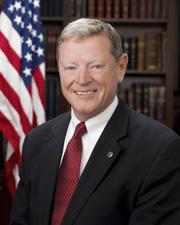
Mr. President, I rise today to introduce The Small System Drinking Water Act of 2009. This is the third Congress that I have introduced this bill which would assist water systems throughout the…
Mr. President, I rise today to introduce The Small System Drinking Water Act of 2009. This is the third Congress that I have introduced this bill which would assist water systems throughout the country comply with the ever growing number of federal drinking water standards. I am pleased to be joined by Senators Mike Crapo, James Risch, John Barrasso and David Vitter as cosponsors of this legislation. My bill will require the Federal Government to live up to its obligations and require the EPA to use the tools it was given in the 1996 Safe Drinking Water Act amendments, SDWA.
My goal here is to ensure that small towns across the country have safe, affordable drinking water and that the laws are fair to small and rural communities. Currently EPA assumes that families can afford water rates of 2.5 percent of their annual median household income, or $1,000 per household. For some families, paying $83 a month for water may not be a hardship but for so many more, it is nearly impossible. There must be some flexibility inserted into the calculation that factors in the ability of the truly disadvantaged to pay these costs. Forcing systems to raise rates beyond what their ratepayers can afford only causes more damage than good.
EPA needs to look more closely at how it determines affordability. My bill directs EPA to take additional factors into consideration when making this determination. These include ensuring that the affordability criteria are not more costly on a per-capita basis to a small water system than to a large water system.
In EPA's most recent drinking water needs survey, Oklahoma identified a total of over $4.1 billion in drinking water needs over the next 20 years. $2.4 billion of that need is for community water systems that serve fewer than 10,000 people. The $4.1 billion does not include the total costs imposed on Oklahoma communities to meet federal clean water requirements, the new Groundwater rule, the DBP II rule or the Long Term 2 Enhanced Surface Water Treatment Rule. Oklahoma continues to have municipalities struggling with the 2002 arsenic rule. Many of our small systems are having difficulty with the Disinfection Byproducts, DBP, Stage I rule, and small systems who purchase water from other systems and did not have to test, treat or monitor their water must now comply with DBP II. EPA estimates that over the next 20 years, the entire country will need $52.0 billion to come into compliance with existing, proposed or recently promulgated regulations.
My bill proposes a few simple steps to help systems comply with all these rules. First, it reauthorizes the technical assistance program in the Safe Drinking Water Act. The DBP rules are very complex and involve a lot of monitoring and testing. If we are going to impose complicated requirements on systems, we need to provide them with help to implement those requirements.
The bill creates a pilot program to demonstrate new technologies and approaches for systems of all sizes to comply with these complicated rules. It requires the EPA to convene a working group to examine the science behind the rules in order to compare new developments since each rule's publication.
Section 1412(b)(4)(E) of the SDWA Amendments of 1996 authorizes the use of point of entry treatment, point of use treatment and package plants to economically meet the requirements of the Act. However, to date, these approaches are not widely used by small water systems. My legislation directs the EPA to convene a working group to identify barriers to the use of these approaches. The EPA will then use the recommendations of the working group to draft a model guidance document that states can use to create their own programs.
Most importantly this bill requires the federal government to pay for these unfunded mandates created by laws and regulations. In 1995, Congress passed the Unfunded Mandates Reform Act to ensure that the Federal Government pays the costs incurred by State and local governments in complying with Federal laws. My bill is designed to ensure that EPA cannot take an enforcement action against a system serving less than 10,000 people, without first ensuring that it has sufficient funds to meet the requirements of the regulation.
Since the 108th Congress, I have coauthored and cosponsored legislation to provide additional resources to communities through the State Revolving Loan Funds. Unfortunately, not much has changed. We still have too many regulations and not enough money to pay for them. Funding legislation is important but until that money becomes available, it is unreasonable to penalize and fine local communities because they cannot afford to pay for regulations we imposed on them. I thank my colleagues and look forward to their support of this commonsense proposal.
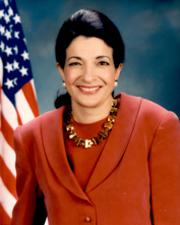
Mr. President, I rise today, along with Senator Kaufman, to introduce legislation that puts a greater focus on efforts to improve the technical resources and decision-making process at the Federal…
Mr. President, I rise today, along with Senator Kaufman, to introduce legislation that puts a greater focus on efforts to improve the technical resources and decision-making process at the Federal Communications Commission. The bill proposes a study by the National Academy of Sciences on the technical policy decision-making process and the availability of technical personnel at FCC.
Over the past several years, there have been concerns voiced by the technical community and even Commissioners themselves about the lack of technical resources and expertise at the Federal Communications Commission, FCC. It is for good reason: in 1948, the FCC had 720 engineers on staff; today, it has fewer than 300--an astonishing 62 percent reduction--even though the FCC now must face technical issues concerning the Internet, advanced wireless communications, and broadband. Also, FCC officials have recently acknowledged a shortage of network engineers and that a large number of experienced engineers are eligible to retire within the next few years.
Yet, communications technologies are becoming increasingly complex-- evolving from the traditional circuit-switched phone networks to packet-based dynamic-routing high-bandwidth data networks. The need to thoroughly address these issues challenges staff and leads to delays or even inaction in technical rulemakings since the Commission doesn't have the appropriate resources for timely technical evaluation and decisionmaking.
Technical proceedings, including those to authorize new technologies, have been dismally slow--typically taking 2-5 years for approval-- creating a bottleneck for innovation and competition.
A December 2009 report by the Government Accountability Office, GAO- 10-10-79, reaffirms these concerns and provides additional evidence of the need for such a study. The GAO concluded that ``weaknesses in FCC's processes for collecting and using information also raise concerns regarding the transparency and informed nature of FCC's decisionmaking process.'' Furthermore, the report found the ``FCC faces challenges in ensuring it has the expertise needed to adapt to a changing marketplace.''
With the rapid advancement of technologies and innovation within the telecommunications industry, the FCC must be better equipped and more agile to address the ever-changing technical landscape from a regulatory perspective. If it isn't, our Nation's technical leadership in this area will continue to erode and it will be even more difficult to lay the proper policy foundation necessary to meet future telecommunications needs.
To better examine these significant issues and make tangible recommendations toward a comprehensive solution, this legislation proposes a study by the National Academy of Sciences on the technical policy decisionmaking process and the availability of technical personnel at FCC. Specifically, the study would include an examination of the FCC's technical policy decisionmaking, current technical personnel staffing levels, and agency recruiting and hiring processes of technical staff and engineers, and recommendations to improve these areas. The study would provide tangible and specific proposals to streamline processes and rulemakings as well as how the FCC can be more competitive in hiring the required technical personnel to make it more effective. The bill authorizes $1 million over a 2-year period to conduct this comprehensive technical study.
This bill takes a step towards ensuring the Commission has the adequate resources and proper technical decisionmaking processes in place to be a more effective agency. This is absolutely critical given how rapidly technologies are changing and the implications that regulation could have on the underlying technical catalysts of innovation. It is also critical to overall reform at the Commission because in
order to properly regulate communications, the FCC must be deeply knowledgeable of both the legal and technical aspects of the issues before it. That is why I sincerely hope that my colleagues join Senator Kaufman and me in supporting this important legislation.
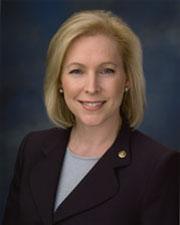
Mr. President, I am pleased to lead a bipartisan group of Senators today to introduce the Engineering Education for Innovation Act, also called the E\2\ for Innovation Act. Joining me in leading this…
Mr. President, I am pleased to lead a bipartisan group of Senators today to introduce the Engineering Education for Innovation Act, also called the E\2\ for Innovation Act. Joining me in leading this are Senator Kaufman, Senator Snowe, Senator Murray, Senator Cantwell, and Senator Klobuchar. The intent of this legislation is to competitively award planning and implementation grants for State educational agencies to integrate engineering education into K-12 curriculum and instruction to spark student interest in engineering through comprehensive K-12 engineering education including hands-on design and engineering components.
The bill increases the availability of K-12 engineering education curriculum and teacher professional development programs, encourages broader participation of girls and underrepresented minorities in K-12 engineering education, invests in afterschool engineering education programs, and the legislation also funds the research and evaluation of such efforts.
Our Nation today faces pressing technological challenges in renewable energy, biotechnology, health care technology, material science, and information technology. According to the National Science Board's 2010 Science and Engineering Indicators, only 5 percent of college graduates in the United States major in engineering, compared with 12 percent of European students, 20 percent of those in Asia and one-third in China. In addition, while women earn 58 percent of all bachelor's degrees, they constitute only 18.5 percent of bachelor's degrees awarded in engineering. African Americans hold only 4.6 percent and Hispanics hold only 7.2 percent of bachelor's degrees awarded in engineering.
As a woman, I am a strong proponent of programs that support girls and underrepresented minorities. Many K-12 students, especially girls and students from underrepresented groups or who are economically disadvantaged, and their teachers have little knowledge about the engineering design process or the many career possibilities in engineering. Today, we continue to have an untapped pool of potential technical workers, and we must leverage the diversity of these individuals to fuel the innovation necessary for our future global competitiveness.
I am committed to initiatives that enhance student participation in STEM, diversify the STEM pipeline and promote competence and confidence to teach engineering for preparing the next generation of our Nation's high tech workforce for a sustainable and competitive economy. Long term investments in STEM education will pay rich dividends to our future economy by building capacity to innovate.
The introduction of engineering education has the potential to improve student learning and achievement in science and mathematics, increase awareness about what engineers do and of engineering as a potential career, and boost students' technological literacy. I want to thank all my colleagues for joining together to address the critical needs of our Nation in a bipartisan manner. I look forward to working together to move this legislation through this Congress.
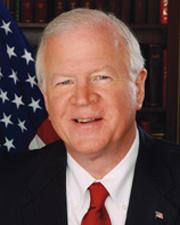
Madam President, I rise this morning to thank our distinguished guest Chaplain, Dr. Benny Tate, of Milner, GA, who has brought us an inspirational message with which to begin our day. Dr. Tate is the…
Madam President, I rise this morning to thank our distinguished guest Chaplain, Dr. Benny Tate, of Milner, GA, who has brought us an inspirational message with which to begin our day.
Dr. Tate is the senior pastor of Rock Springs Church in Milner, GA, and has served his congregation well for 20 years. When Dr. Tate began preaching at Rock Springs Church, only 20 people came to worship on a given Sunday. Today, Dr. Benny Tate preaches to more than 4,000 people on any given Sunday. Rock Springs Church is now the largest church in the Congregational Methodist denomination.
Dr. Tate is the kind of pastor who finds creative ways to go out to the community and spread the word of God. He hosts the ``Apples of Gold'' radio program, reaching out to central Georgians through 15 radio stations.
He has worked with local civic organizations, leading his flock by example. He served as the Chappell Mill Fire Station Chaplain and as a Georgia
Youth Camp board member, just to name a couple of his activities. He has also written three books as well as pieces for the local Griffin Daily News.
One of his books has been read by both my wife and myself and has a very unique and very appropriate title called ``Happy Wife, Happy Life.'' All of us males have a great appreciation for that title.
I have had the privilege of attending Dr. Benny Tate's church on many occasions. I have always found Rock Springs Church to be a very holy, spirit-filled church.
Dr. Tate has a very unique way of spreading the gospel in a manner that is mixed with humor and yet direct, personal feelings and the word of the Holy Spirit and the message that Jesus Christ gives to him. In short, he has effected positive changes in the church and the community through his outreach. We appreciate his efforts and his words of worship this morning, and I am very pleased to have my dear friend, Dr. Benny Tate, with us today.
I yield the floor and I suggest the absence of a quorum.
Madam President, I ask unanimous consent the order for the quorum call be rescinded. Madam President, this afternoon it is my understanding we are going to have one more vote. It is going to be on…
Madam President, I ask unanimous consent the order for the quorum call be rescinded.
Madam President, this afternoon it is my understanding we are going to have one more vote. It is going to be on the Travel Promotion Act. I have opposed this in the past. I have already voted against it three times. I am not going to hang here and waste the whole day just to vote against it a fourth time.
I ask unanimous consent that I make a very brief statement and it be printed in the Record immediately following the vote that takes place this afternoon.
I suggest the absence of a quorum.
I thank the Chair. (The remarks of Mr. Udall of New Mexico pertaining to the introduction of S. 3039 are printed in today's Record under ``Statements on Introduced Bills and Joint Resolutions.'')…
I thank the Chair.
(The remarks of Mr. Udall of New Mexico pertaining to the introduction of S. 3039 are printed in today's Record under ``Statements on Introduced Bills and Joint Resolutions.'')
Madam President, I suggest the absence of a quorum.
Madam President, I ask unanimous consent that the order for the quorum call be rescinded.
Madam President, I ask unanimous consent that the Senate stand in recess from 12:30 to 2 p.m. today.
Madam President, I ask unanimous consent that the order for the quorum call be rescinded. Madam President, I ask unanimous consent to speak as in morning business for up to 5 minutes. Madam…
Madam President, I ask unanimous consent that the order for the quorum call be rescinded.
Madam President, I ask unanimous consent to speak as in morning business for up to 5 minutes.
Madam President, I yield the floor and suggest the absence of a quorum.
Bill Text
Latest available legislative text
        [Congressional Bills 111th Congress]
[From the U.S. Government Publishing Office]
[S. 3039 Introduced in Senate (IS)]

111th CONGRESS
2d Session
S. 3039

To prevent drunk driving injuries and fatalities, and for other
purposes.

_______________________________________________________________________

IN THE SENATE OF THE UNITED STATES

February 25, 2010

Mr. Udall of New Mexico (for himself and Mr. Corker) introduced the
following bill; which was read twice and referred to the Committee on
Commerce, Science, and Transportation

_______________________________________________________________________

A BILL

To prevent drunk driving injuries and fatalities, and for other
purposes.

Be it enacted by the Senate and House of Representatives of the
United States of America in Congress assembled,

SECTION 1. SHORT TITLE.

This Act may be cited as the ``Research of Alcohol Detection
Systems for Stopping Alcohol-related Fatalities Everywhere Act of
2010'' or the ``ROADS SAFE Act of 2010''.

SEC. 2. FINDINGS.

Congress finds the following:
(1) Alcohol-impaired driving fatalities represent
approximately \1/3\ of all highway fatalities in the United
States in a given year.
(2) In 2008, there were 11,773 alcohol-impaired driving
fatalities.
(3) An estimated 9,000 road traffic deaths could be
prevented every year if alcohol detection technologies were
more widely used to prevent alcohol-impaired drivers from
operating their vehicles.
(4) The National Highway Traffic Safety Administration has
partnered with automobile manufacturers to develop alcohol
detection technologies that could be installed in vehicles to
prevent drunk driving.
(5) Alcohol detection technologies will not be widely
accepted by the public unless they are moderately priced,
absolutely reliable, and set at a level that would not prevent
a driver whose blood alcohol content is less than the legal
limit from operating a vehicle.

SEC. 3. DRIVER ALCOHOL DETECTION SYSTEM FOR SAFETY RESEARCH.

(a) In General.--The Administrator of the National Highway Traffic
Safety Administration shall carry out a collaborative research effort
under section 301 of title 49, United States Code, to continue to
explore the feasibility and the potential benefits of, and the public
policy challenges associated with, more widespread deployment of in-
vehicle technology to prevent alcohol-impaired driving.
(b) Reports.--The Administrator shall submit a report annually to
the Senate Committee on Commerce, Science, and Transportation and the
House of Representatives Committee on Energy and Commerce--
(1) describing progress in carrying out the collaborative
research effort; and
(2) including an accounting for the use of Federal funds
obligated or expended in carrying out that effort.

SEC. 4. DEFINTIONS.

In this Act:
(1) Alcohol-impaired driving.--The term ``alcohol-impaired
driving'' means operation of a motor vehicle (as defined in
section 30102(a)(6) of title 49, United States Code) by an
individual whose blood alcohol content is at or above the legal
limit.
(2) Legal limit.--The term ``legal limit'' means a blood
alcohol concentration of 0.08 percent or greater (as specified
by section 163 of title 23, United States Code) or such other
percentage limitation as may be established by applicable
Federal, State, or local law.

SEC. 5. APPLICATION WITH OTHER LAWS.

Nothing in this Act shall be construed to modify or otherwise
affect any Federal, State, or local government law, civil or criminal,
with respect to the operation of a motor vehicle.

SEC. 6. AUTHORIZATION OF APPROPRIATIONS.

(a) In General.--There are authorized to be appropriated out of the
Highway Trust Fund (other than the Mass Transit Account) $12,000,000
for each of fiscal years 2011 through 2015 to carry out the
collaborative research effort under section 3(a).
(b) Excess Funds.--Any amounts appropriated pursuant to subsection
(a) that are not needed to carry out collaborative research under
section 3(a) may be used by the Secretary of Transportation for highway
safety research in accordance with section 301 of title 49, United
States Code, and section 403 of title 23, United States Code.
<all>