Madam President, before my colleague leaves the floor, let me thank him as well. Of course, hope always springs eternal. The vote hasn't occurred yet, so we never know. We might get his vote yet. I…
Madam President, before my colleague leaves the floor, let me thank him as well. Of course, hope always springs eternal. The vote hasn't occurred yet, so we never know. We might get his vote yet.
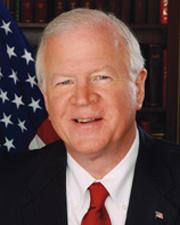
I don't serve on the Agriculture Committee with him. Senator Chambliss was a very valued member of this conference. Obviously, a lot of work took place in the Agriculture Committee dealing with areas of the bill that he has spent several minutes talking about. He raises very good points. I would be the last person to suggest as a coauthor of the bill that we have crafted the perfect piece of legislation. As he points out, these are highly complicated areas. One of the reasons we tried not to write a series of regulations far beyond the competency of those of us in this Chamber is because it is complicated. Obviously, we have delegated the ultimate responsibility that we now have, which is to watch, the oversight, to the regulatory community, to make sure they do this right.
I pointed out yesterday, and he has pointed out again today, when we get into a situation such as this crisis, certain words become pejorative, and ``derivatives'' unfortunately has become that, and it shouldn't. These are very critical components for capital formation, job growth, and wealth in our country. Hedging against risk is absolutely essential. So they are vitally important elements in our economy. I hope people, when they hear the word ``derivative'' being spoken won't assume this is somehow a bad idea. One almost gets the sense that people feel that way. I don't at all.
I look forward in the coming weeks and months, as regulators begin to work with this bill if, in fact, it passes, that we will do that. A lot of the record has been established in this area, and through no small measure due to the Senator from Georgia, and I thank him for his work as well.
Madam President, I yield the floor.
Madam President, I note the absence of a quorum, and I ask that the time be equally divided on both sides.
Madam President, I thank my colleague from Alabama. Once again--I say this with the respect--I feel as if I am listening to the first speech back in November when I offered the original proposal of this bill and wonder if we have been in the same
Chamber and same city over the last several years.
I am not going to use the time between now and 11 a.m. when we are going to vote on the cloture motion. I will not go through the long list, page after page of amendments that were adopted as part of this bill offered by my good friends on the minority side.
We had 80 hearings held over 2 years, with countless efforts to reach out and bring in people. One can make a lot of accusations about the bill, but this was a very inclusive process. Half the amendments adopted on the floor in this Chamber during consideration of this legislation over 4 weeks were ones offered by the minority and were accepted and bipartisan amendments. There was never an alternative offered. There was never a substitute offered. It was a question of whether people wanted to amend this legislation.
It is not a perfect bill, I will be the first to admit. We do not know ultimately how well the ideas we incorporated will achieve the results we all desire. It will take the next economic crisis--as certainly it will come--to determine whether the provisions of this bill will provide this generation or the next generation of regulators with the tools necessary to minimize the effects of that crisis when it happens. But we believe we have done the best we could under the circumstances to see to it we never have another bailout of another major financial institution at taxpayer expense.
In fact, it was the Shelby-Dodd amendment adopted in this Chamber--it was the second amendment we considered--that actually completed the process of seeing to it there would be bankruptcy or resolution of financial institutions that got themselves into so much trouble that they put the entire system at risk. We set up an oversight council to make sure we could observe what was occurring not only here at home but around the globe--matters such as Greece or Spain that could put our economy at risk. So it isn't just one set of eyes but having those responsible for seeing to it that our economy remains safe and sound have the opportunity to provide the early warning that never occurred.
We didn't need a Pecora Commission to find out what was going wrong. We had mortgages being sold in this country to people who couldn't afford them, marketing them in a way that guaranteed failure, securitizing them so they could be paid and then skipping town in a sense. I didn't need to have hours of hearings to find out what was the cause of it. The question was, How do we try to put a system in place to minimize the future kind of risks our Nation would face. It wasn't just to deal with those who created the problem but, rather, to look ahead--not in a punitive way--and to set up an architecture and structure to allow us to get to that point where we could be confident we were addressing these issues.
Thirdly, of course, we tried to deal with exotic instruments that had caused so much of the difficulty. The derivatives market was a $90 billion market, and it mushroomed in less than a decade to $600 trillion, putting our Nation at risk because of a lack of transparency and accountability to determine what was occurring in those markets. To consider it a radical idea that we might want to have accountability and transparency I find remarkable considering what our country has been through.
Also, we provided a consumer protection bureau. What a radical idea that is--the idea that people who buy mortgages or have a student loan, a credit card, a car loan, might have someplace in this city that watches out for them so their jobs, their homes, their retirement accounts are not lost. So while this bureau is in place in this bill, the idea was at least to see to it that people, when they have the problems they have been through or are going through, someone is watching out for them.
We have a Consumer Product Safety Commission to address the purchase of a faulty product, but what happens when someone abuses or takes advantage, as happens in so many cases in financial areas? People should have a chance to have a redress of their grievance or to at least from the outset have an opportunity to address that before it becomes a broader problem.
So, Madam President, again, we have debated this now for 2 years and countless opportunities. We spent 4 weeks on the floor of this Chamber, amendments were offered, and never once--I guess on one occasion we had a supermajority vote. There was only one tabling motion I know of. I did everything I could to make this as inclusive a process as possible.
I understand some people don't like the bill. It saddens me, in a way, that it has once again become sort of a mindless partisan argument rather than talking about what we need to be doing. This is not the end of all of it, obviously. Oversight will be required, consultation in the coming weeks and months and years, to make this work well. But, Madam President, I can't imagine another process that has been as inclusive.
My colleagues will recall that almost 10 months, going on almost a year ago, I invited both Democrats and Republicans on the Banking Committee to assume responsibility for major sections of this bill, which they did do, by the way, and made a significant contribution to the product. So while I respect those who want to vote against the bill, and that is their right to do so, find some arguments based on the merits rather than arguing about whether there was a process that was inclusive or that allowed people the opportunity to be heard.
Again, we have the right to be heard, but we don't have the right necessarily to have our ideas become the law of the land. That is what a body like this is for.
So this is a major undertaking, one that is historic in its proportions, and it is an attempt to set in place a structure that will allow us to minimize problems in the future. I can't legislate integrity. I can't legislate wisdom. I can't legislate passion or competency. What we can do is to create the tools and the architecture that allow good people to do a good job on behalf of the American public. That is what a bill like this is designed to do.
I regret I can't give jobs back, restore foreclosed homes, or put retirement monies back into accounts. What I can do is to see to it that we never, ever again have to go through what this Nation has been through. That is what this effort has been about over the last several years, to try to create that structure, that architecture. It will be incumbent now on the present administration and those who follow to nominate good people to head up these operations, to attract good public servants who will fill the jobs of these various regulatory bodies to see to it that they do the work we all want them to do.
Again, I can't legislate that. I can merely create the opportunity for that kind of protection to occur--to modernize a financial system, to lead the world, if we can, in harmonizing rules so we don't have the kind of sovereign shopping that was going on with regulatory bodies, where major financial institutions would shop around the world as to the nation of least resistance or the regulator of least resistance.
We need to see to it that we have the unanimity or at least the harmonization of rules that will allow us to have a more orderly system in our globe because, as we have all painfully learned, matters that occur thousands of miles away can affect the economy in our own country.
So for all those reasons, Madam President, I thank my colleagues for their efforts over the last 2 years. I thank the leadership for providing the opportunity and time for us to do this in this Chamber. I thank my colleague in the House, Barney Frank, and his colleagues for the work in which they engaged in order to produce a bill there. We spent 2 weeks, some 70 hours of debating the conference report, where more amendments were adopted--again, offered by my colleagues, Republicans and Democrats--to make this as good a bill as we could in all of this.
So with that, Madam President, I will reserve some comments for later, but as we approach this vote in the next few minutes, I urge my colleagues to invoke cloture, to allow us to then have an up-or-down vote on this bill, and to do what we can to restore some trust and confidence and optimism for the American people. In the midst of the worst economic crisis in the lives of most Americans, this institution--the Senate--rose to the occasion and crafted a bill to address the financial
service structure of our Nation to once again give us the hope that we can see wealth created, jobs produced, and an economy that will offer opportunities for the next generation of Americans.
I urge my colleagues to support the cloture motion, and I urge them to support the bill when the vote occurs later today.
I yield the floor.
Madam President, I suggest the absence of a quorum, and I ask unanimous consent the time during the quorum be equally charged to both sides.
Madam President, I am about to propose a unanimous-consent request that has been agreed to by the respective leaders.
I ask unanimous consent that the postcloture time be considered expired at 2 p.m., with the time until then equally divided and controlled between Senators Dodd and Shelby or their designees; that during this period, if and when a budget point of order is raised against the conference report, then an applicable waiver of the point of order be considered made; that at 2 p.m., the Senate proceed to vote on the motion to waive the applicable budget point of order; that if the waiver is successful, without further intervening action or debate, the Senate vote on adoption of the conference report.
Madam President, pursuant to section 904 of the Congressional Budget Act of 1974 and the waiver provisions of applicable budget resolutions, I move to waive all applicable sections of that act and those budget resolutions for purposes of the pending conference report and ask for the yeas and nays.
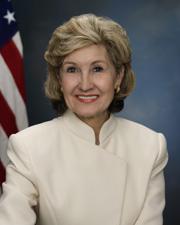
Madam President, I see my colleague from Texas is seeking recognition. I wish to publicly thank her. She made a substantial contribution to this bill on several amendments that were adopted during debate on the floor. I thank her for them. They added to the value of the legislation. I am not sure what her comments will be right now, but I thank her for her contributions.
Madam President, my friend and colleague from Texas serves on the Banking Committee. I thank her and Senator Klobuchar. There was a series of amendments in which Senator Hutchison was involved. They added value to this bill, and I thank her for it.
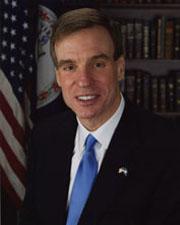
I mentioned yesterday, as a relatively junior member of the Banking Committee, there was no Member of this Chamber who added as much to the bill as the Senator from Virginia. There are not words nor time for me to adequately express my gratitude for his involvement. Literally almost on an hourly basis, he was involved, along with Senator Corker of Tennessee. They spent hours on their own talking with other people about how to fashion two of the most critical titles of this bill. Let me express my gratitude once again to Senator Mark Warner of Virginia and thank him immensely for his contribution. He did a great job.
Madam President, I recognize my friend and colleague from Delaware.
Madam President, I thank my colleague from Delaware. He highlighted the difficulty in passing legislation. There are those who think it goes too far and those who think it does not go far enough. We do not write a bill on our own. There are 100 of us in this Chamber and 435 in the other. There are stakeholders, the administration--all sorts of people we deal with on these matters. What we try to do is fashion the best proposal we can that moves us forward and addresses the underlying causes, as we tried to with this bill.
I appreciate the Senator's points that were raised during the debate and discussion. We tried to accommodate them where we could in fashioning legislation. It is always a difficult process. You do not get to write your own bill. You can write your own bill and introduce it, but ultimately, for it to become law requires cooperation. We had that cooperation. I appreciate his involvement very much.
Madam President, my colleague talked about 41. There are a number of Republicans who played a very critical and supportive role on this bill. I do not want the record to persist in suggesting that was not the case. Even people on the other side who ended up not voting for the bill--at least have not so far--added substantially to the value of this bill. In some cases, they might not want to acknowledge that, but they did.
In the case of our two colleagues from Maine and our colleague from Massachusetts, they have taken an awful lot of abuse in the last number of weeks because they worked with us on the bill and made significant contributions. While they do not agree with every dotted ``i'' and crossed ``t,'' as I do not with this bill, they decided our country would be better off with the passage of this legislation than not.
I do not want the record to be uncorrected when it comes to the number of people, including those three in particular, who will, I presume, continue to take some abuse from others because they did not toe the party line, nor have they on repeated occasions. They have acted as U.S. Senators, which is our first responsibility. I know what that feels like. I have been there on numerous occasions in my 30 years. Several times, I was the only Democrat to vote with Republicans on substantive matters. It is a lonely moment. I can tell my colleague what happens. It is painful, and you get those long looks from your colleagues. It is uncomfortable, to put it mildly. I will also tell my colleague that some of the proudest moments a colleague will have when they serve here is when they make those decisions and do so for the right reasons.
While I am deeply grateful to my Democratic colleagues, many of whom had concerns about the bill, as my friend from Delaware did, and have been supportive all the way through, I guess there is a bit of the prodigal son--prodigal daughter in the case of our colleagues from Maine and prodigal son in the case of our colleague from Massachusetts--when they decided to stand up and help us get a bill done despite the criticism they have received. Everyone who has been supportive and helpful deserves credit, but I think those who were willing to take an awful lot of abuse in the process of doing so deserve commendation.
I did not want to let that number stand--41--because it implies somehow there were people on the other side who were not helpful, and they were, including people who did not vote for the bill who were helpful as well.
Madam President, I see our colleague from New Hampshire is here. I will save this for a later debate, but I know there is talk about changing the rules of the Senate because of the frustration Senators feel. I will make, in my waning hours here, as strong a plea as I can to not succumb to the temptation to change the institution because of the current frustrations people feel. There is a reason this institution exists and has the rules it does. All of us one day are in the minority or majority. The fact that some may abuse the rules, as has happened here without any question, ought not to be a justification for fundamentally changing them. There are ways to deal with the problem without losing the essence of the Senate. He is no longer with us, but my seatmate, Robert C. Byrd, would speak for hours on end about the importance of not letting the vagaries of the moment dictate the long-term interests of the institution.
I will leave that for another day, but I appreciate it.
My colleague from New Hampshire is here.
Madam President, briefly, I thank my colleague from New Hampshire. I see my other colleague from New Hampshire as well. It is a New Hampshire moment. I thank Senator Shaheen and our colleague from Maine, Senator Snowe, for working as they did on the community bank issues.
I was pleased, as I noted yesterday, that the Independent Community Bankers Association, while not endorsing the entire bill but specifically on their issues involving community banks expressed strong support for this bill and how much stronger these banks are today as a result of our efforts than would be the case if we were to defeat the legislation. Their ability to compete with these larger banks has been enhanced tremendously by what we have done in this bill. If these provisions were not adopted, they would be back in a situation where there would be significant disadvantages for them under the current law.
I am very grateful to Senator Shaheen and Senator Snowe and others who supported their efforts to strengthen the role of our community banks that play such a critical role. As the Senator from New Hampshire pointed out, they were never a source of the problems in the residential mortgage market at all. That deserves to be repeated over and over.
I thank the Senator for her comments.
I see my other colleagues here, including Senator Specter who wants to be heard, but I want to address my colleague from New Hampshire because we are both going to be walking out of this Chamber in about 5 months. I thank him for his work going back to 20-some-odd months ago when we were involved in the critical weeks and days in September and October. Judd Gregg was invaluable putting together a moment here while, not terribly popular, I think saved the economy and the country. I will not address all his concerns here. We have a different point of view on the issues he raised. They are not illegitimate issues. We think we addressed them properly. He has a different view, and I respect that. I appreciate his work and that of his staff on this bill. He made a significant contribution to this effort and I thank him for it.
I see my colleague from Pennsylvania here and I yield the floor.
Reserving the right to object, I want to be clear so my colleague will understand this. I had a sheet of paper in front of me-- I do not have it in front of me now--with the order of those who sought time. I want to be careful, as my colleague from Pennsylvania will understand. We are going to vote at 2 o'clock. I want to be sure I can accommodate my colleagues.
I know Senator Conrad, chairman of the Budget Committee, has to be heard and it is critical to me he be heard on the budget point of order.
Could you make it a little less than 20?
After 2 o'clock? Any point after----
Certainly I would have no objection to that whatsoever. Take some time at this juncture too, if you wish.
Again, let me reserve the right to object. I see the minority wants to check on such a request. I have no objection myself but obviously that is a matter--in fairness to the minority, we want to let them know of such a request. Here we are eating up time right now. I see my friend from North Dakota here as well. I am deeply grateful to the chairman of the Budget Committee.
Go ahead with that request. I am told it is OK.
I thank my colleague from Pennsylvania and the unknown persons in the cloakroom. Let the record show they acknowledged the Senator's request.
Mr. President, before my friend, the chairman of the Budget Committee, leaves, let me thank him immensely for his analysis of this issue. He has it, as we saw as well, exactly right. In fact, it is not only repaying 100 percent but with interest. There is an interest requirement, that if we borrow from the taxpayers in order to wind down substantially risky firms, then not only do you get paid back, but the interest on the cost of that money is also part of the deal. So it is 100 percent-plus coming back to the Treasury.
But his analysis and that of his committee--and there is no one who has been more disciplined or guarded about the budgetary process over the years we have served together, and so I appreciate the Senator's analysis of this particular point on the long-term deficit.
I commend the Senator for including the provisions he has and trying to build some discipline into the process of how we expend taxpayer moneys, collect taxes in the first place to pay for the needed expenditures of our government. So I thank the Senator for that.
I thank him for his comments as well about the bill and his support and also the substantive contributions the Senator from North Dakota has made, because one of the things we tried to be very careful about-- Jon Tester of Montana, who sits on the committee with me, has been very careful and been tremendously active in seeing to it that rural America is going to be well served by this legislation. And there are differences. It is not all Wall Street, New York, and major financial centers. The importance of the availability of credit in rural communities is critical, as my colleague from North Dakota has informed me over the years we have served together. That ability of a local farmer to borrow that money in the spring, to be able to pay back in the fall, at harvest time, has been essential, and knowing how difficult it has been throughout the country to have access to credit is essential.
So his contributions to the legislation make sure that what we do here is going to enhance the capability of rural America to not only come out of this crisis we are in but to prosper in the years ahead with this legislation. So beyond the budgetary considerations and the points of order before us, I thank him for his contributions to the substance of the bill, which has made it a far better bill to begin with.
I see my colleague from Oregon is here. I yield the floor.
Mr. President, I said so yesterday, and I will say it again: I thank Senator Merkley. I guess there are four new Members of the Senate serving on the Banking Committee. Senator Merkley, Senator Warner, Senator Tester, and Senator Bennet are all new Members of the Senate from their respective States of Oregon, Virginia, Montana, and Colorado. To be thrown into what has been the largest undertaking of the Banking Committee, certainly in my three decades here--and many have argued going back almost 100 years--was certainly an awful lot to ask.
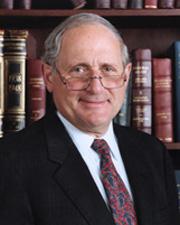
I have already pointed out the contribution Senator Warner has made to this bill. But I must say as well that Senator Bennet of Colorado has been invaluable in his contributions. I just mentioned Senator Tester a moment ago for his contribution on talking about rural America and the importance of those issues. And Senator Merkley, as a member of the committee, on matters we included here dealing particularly with the mortgage reforms, the underwriting standards, the protections people have to go through, and credit cards as well--we passed the credit card bill--again, it was Senator Jeff Merkley of Oregon who played a critical role in that whole debate not to mention, of course, working with Carl Levin, one of the more senior Members here, having served for many years in the Senate. But the Merkley-Levin, Levin- Merkley provisions in this bill have added substantial contributions to this effort. So I thank him for his contribution.
I see my colleague from North Dakota is here. I suggest the absence of a
quorum and ask unanimous consent that the time be equally divided among both sides.
I ask unanimous consent that the order for the quorum call be dispensed with.
Mr. President, we listened to Senator Conrad, the chairman of the Budget Committee, address the budget point of order. I urge my colleagues to waive the point of order.
We came up with an alternative offset in the conference committee, much at the insistence--and I thanked him for that--of Senator Brown of Massachusetts, looking for a better offset than the ones which were originally in the conference report. I know my colleague from Maine as well had reservations about what we originally included.
The offset here ends TARP, which I presume most people would welcome with open arms, saving us $11 billion by terminating it early, as well as then complying with the request by the chairperson of the Federal Deposit Insurance Corporation, Sheila Bair, to provide for additional assessments to meet the obligations of the FDIC and the insurance fund. Both of those items provide the necessary offsets to the cost of this bill.
The long-term deficit point of order is caused by the orderly liquidation authority for systemically significant financial institutions.
Let me note that this critically important aspect of the legislation was developed in very close cooperation with Senator Shelby in the Shelby-Dodd amendment. It also reflects the bipartisan cooperation of Senators Corker and Warner. The Shelby-Dodd amendment passed this body overwhelmingly with over 90 votes.
Even though the liquidation authority is the source of long-term budget costs, it is still 100 percent paid for. The Shelby-Dodd amendment and the Boxer amendment made sure that this would be the case. Let me repeat, the liquidation authority, which is the dominant source of the budget cost in the bill, is 100 percent paid for over time.
The only reason that the liquidation authority scores at all is because of timing. The FDIC may initially have to borrow funds from the Treasury in order to wind down the failed company and put it out of business. Because it will take time to liquidate a large, interconnected financial company, there is a lag between when the funds are borrowed and when they are repaid by the sale of the failed companies' assets, its creditors and assessments on the industry if necessary.
One more important point on budget scoring and the liquidation authority. CBO cannot factor in the costs to our nation of a failure to address the possibility of future bailouts. We have lived through that nightmare and it has cost our country dearly.
Now I would like to discuss the way in which we address the budget consequences of the legislation. In particular, I would like to respond to some comments that have been made about the provisions increasing the long-term minimum target for the FDIC and thereby strengthening the Deposit Insurance Fund, a goal that no one can credibly argue with in light of the recent crisis.
In fact, this provision is supported by FDIC Chairman Sheila Bair, and she has sent us a letter expressing her support. I will submit that for the Record at the end of this statement.
Some of my colleagues on the other side of the aisle have claimed that the use of the FDIC in this way is unprecedented and questioned how this could count as budget savings or offsets and at the same time preserve the funds for bank failures.
Let us clear up the misinformation. First, no FDIC funds are being spent on, or transferred to, other programs. Premiums paid by banks remain, as they have for over 75 years, in the FDIC fund solely to protect insured deposits.
And counting FDIC premiums as budget savings in legislation absolutely does have precedent. We have to look no further than relatively recent actions of Republican Congresses to find them.
Budget reconciliation legislation enacted in February 2006 and sponsored by my colleague from New Hampshire, who was then the Chairman of the Budget Committee, included FDIC reforms authored by my colleague from Alabama, who was then Chairman of the Banking Committee. Those provisions resulted in higher FDIC premiums, which CBO said yielded almost $2 billion in budget savings over 10 years.
So, my colleagues from New Hampshire and Alabama in fact relied on reforms to the Deposit Insurance Fund to obtain savings that CBO favorably scored.
And 10 years earlier, Congress attached to an omnibus spending bill enacted in September 1996 a provision calling for a special premium on thrifts to capitalize the FDIC's thrift insurance fund.
The appropriators in that earlier Republican Congress justified higher discretionary spending based partly on the budget savings scored by CBO for the FDIC assessment.
I would also like to respond to some comments that have been made about the treatment of TARP in this legislation.
We end TARP in the conference report. With the comprehensive financial reform put in place under this bill, we think it is the right time to bring TARP to a close, ending it earlier than had been planned. I think that is something everyone should be happy about. And ending TARP saves the government money. That is not just my conclusion. It is the conclusion of the Congressional Budget Office, $11 billion in savings.
It is true that the original TARP legislation passed as an emergency, its costs were declared an emergency when it passed, so rescinding those funds or ending the program now is ending spending that is considered ``emergency'' spending.
But the savings are no less real because of that. Interestingly, my Republican colleague who has raised the point of order offered an amendment in conference that would have rescinded stimulus funding to pay for this bill. Why is that relevant? Because the stimulus money was also designated as an emergency, so it would have received the same accounting treatment here in the Senate as TARP. Both were emergencies.
Both ending TARP early and rescinding stimulus funding would reduce the deficit, but the burden of cuts in stimulus funding would fall disproportionately on families and small businesses who have been victims of the economic fallout from the Wall Street crisis. Cutting such spending would be exactly the wrong thing to do as we try to get the economy back on track and people back to work.
The fact is that overall this bill does not do damage to our budgetary outlook.
It does make vital changes to make our financial system stronger and more stable and should be passed as soon as possible.
So I urge my colleagues to support a motion to waive the long-term deficit point of order.
Federal Deposit
Insurance Corporation,
Washington, DC, June 29, 2010.
Hon. Chris Dodd,
Chairman, Committee on Banking, U.S. Senate, Washington, DC.
Hon. Richard Shelby,
Ranking Minority Member, Committee on Banking, U.S. Senate,
Washington, DC.
Hon. Barney Frank,
Chairman, Committee on Financial Services, House of
Representatives, Washington, DC.
Hon. Spencer Bachus,
Ranking Minority Member, Committee on Financial Services,
House of Representatives, Washington, DC.
Dear Chairmen Dodd and Frank and Ranking Members Shelby and
Bachus: Thank you for your interest in our views regarding
increasing the Deposit Insurance Fund (DIF) ratio to 1.35.
Federal deposit insurance promotes public confidence in our
nation's banking system by providing a safe place for
consumers' funds. Deposit insurance has provided much needed
stability throughout this crisis. Moreover, insured deposits
provide banks with a stable and cost-effective source of
funds for lending in their communities. Importantly, the DIF
is funded by the insured banking industry.
A key measure of the strength of the insurance fund is the
reserve ratio, which is the amount in the DIF as a percentage
of the industry's estimated insured deposits. Current
law requires us to maintain a reserve ratio of at least 1.15
percent. One of the lessons learned from the current crisis
is that a minimum reserve ratio of 1.15 is insufficient to
avoid the need for pro-cyclical assessments in times of
stress. One of my first priorities when I assumed the
Chairmanship of the FDIC in June of 2006 was to begin
building our reserves. Regrettably, there was insufficient
time before the crisis hit. Indeed, we started this crisis
with a DIF reserve ratio of 1.22 percent (as of December 31,
2007). Beginning in mid-2008, as bank failures increased and
the insurance fund incurred losses, the Fund balance and
reserve ratio dropped precipitously. The reserve ratio became
negative in the third quarter of 2009 and hit a low of
negative 0.39 percent as of December 31, 2009. To date, we
have collected more than $65 billion in assessments, and are
projected to collect another $80 billion by 2016 to restore
the fund.
Given this experience, we believe it is clear that as the
economy strengthens and the banking system heals, the reserve
ratio needs to be increased. In fact, our Board has acted
through regulation to target the reserve ratio at 1.25
percent, and a further increase to 1.35 percent is consistent
with our view that the Fund should build up in good economic
times and be allowed to fall in poor economic times, while
maintaining relatively steady premiums throughout the
economic cycle, thereby reducing the procyclicality of the
assessment system.
Please let me know if you have any questions or would like
to discuss further.
Sincerely,
Sheila C. Bair.
I again urge my colleagues to vote to waive the budget point of order, and, of course, I urge them as well to support the legislation when that vote occurs.
intent behind sections 691-621
I thank the Senator, and I strongly concur with the intentions and interpretations set forth by the principal authors of these provisions, Senators Merkley and Levin, as reflecting the legislative intent of the conference committee. I thank Senators Merkley and Levin for their
leadership, which was so essential in achieving the conference report provisions governing proprietary trading and prohibiting conflicts of interest.
Assessing Individual Entities
Yes, that is correct. The language is not intended to reduce such charitable and educational activities that are legally required for tax-exempt, not-for-profit organizations that are so important to communities across the country. I thank the Senator for his continued help on these efforts.
section 603 trust companies
I would be glad to clarify the nature of trust companies subject to the moratorium under section 603(a). The moratorium applies to an institution that is directly or indirectly owned or controlled by a commercial firm that functions solely in a trust or fiduciary capacity and is exempt from the definition of a bank in the Bank Holding Company Act. It does not apply to a nondepository trust company that does not have FDIC insurance and that does not offer demand deposit accounts or other deposits that may be withdrawn by check or similar means for payment to third parties.
The Senator is correct. The council must consider a number of factors, including, for example, the extent of leverage, the extent and nature of off-balance-sheet exposures, and the nature, scope, size, scale, concentration, interconnectedness, and mix of the company's activities. Where a company is engaged only in traditional insurance activities, the council should also take into account the matters you raised.
Yes. The size of a financial company should not by itself be determinative.
Yes, I do not believe that the council should decide to designate an insurer simply based on whether the insurer would meet bank capital requirements.
Preemption Standard
I thank the Senator. As the Senator knows, his amendment received strong bipartisan support on the Senate floor and passed by a vote of 80 to 18. It was therefore a Senate priority to retain his provision in our negotiations with the House of Representatives.
The Senator is correct. That is why the conference report specifically cites the Barnett Bank of Marion County, N.A. v. Nelson, Florida Insurance Commissioner, 517 U.S. 25(1996) case. There should be no doubt that the legislation codifies the preemption standard stated by the U.S. Supreme Court in that case.