





II
111th CONGRESS
2d Session
S. 3550
IN THE SENATE OF THE UNITED STATES
June 29, 2010
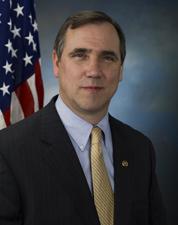
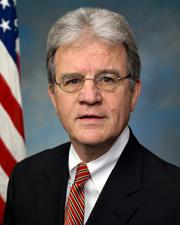
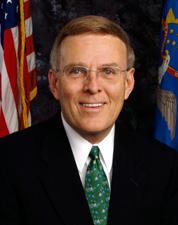
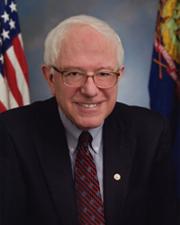
Mr. Merkley (for himself, Mr. Crapo, Mr. Baucus, Mr. Tester, and Mr. Wyden) introduced the following bill; which was read twice and referred to the Committee on Environment and Public Works
A BILL
To amend the Federal Water Pollution Control Act to establish within the Environmental Protection Agency a Columbia Basin Restoration Program.
Short title
This Act may be cited as the
Columbia River Basin Restoration Act
of 2010
.
Findings
Congress finds that—
the Columbia River is the largest river in the Pacific Northwest by volume;
the river is 1,253 miles long, with a drainage basin that includes 259,000 square miles, extending to 7 States and British Columbia, Canada, and including all or part of—
multiple national parks;
components of the National Wilderness Preservation System;
National Monuments;
National Scenic Areas;
National Recreation Areas; and
other areas managed for conservation.
the Columbia River Basin and associated tributaries (referred to in this Act as the Basin) provide significant ecological and economic benefits to the Pacific Northwest and the entire United States;
traditionally, the Basin includes more than 6,000,000 acres of irrigated agricultural land and produces more hydroelectric power than any other North American river;
the Basin—
historically constituted the largest salmon-producing river system in the world, with annual returns peaking at as many as 30,000,000 fish; and
as of the date of enactment of this Act—
supports economically important commercial and recreational fisheries; and
is home to 13 species of salmonids and steelhead that area listed as threatened species or endangered species under the Endangered Species Act of 1973 (16 U.S.C. 1531 et seq.);
the Lower Columbia River Estuary stretches 146 miles from the Bonneville Dam to the mouth of the Pacific Ocean, and much of that area is contaminated with toxic chemicals;
the Middle and Upper Columbia River Basin includes 1,050 miles of the mainstem Columbia River upstream of the Bonneville Dam, including the 1,040 miles of the largest tributary, the Snake River, and all of the tributaries to both rivers;
toxic contamination in the Basin poses a significant threat to the environment and human health;
the nuclear and toxic contamination at the Hanford Nuclear Reservation and the toxic contamination at Superfund sites throughout the Basin present an ongoing risk of contamination throughout the Basin;
polychlorinated biphenyls (commonly known
as PCBs
) and polycyclic aromatic hydrocarbons that have been
found in the tissues of salmonids and their prey at concentrations exceeding
levels of concern;
legacy contaminants, including PCBs and
dichlorodiphenyltrichloroethane, the pesticide commonly known as
DDT
, were banned in 1972, but are still detected in river water,
sediments, and juvenile Chinook salmon;
pesticides and emerging contaminants, such as pharmaceutical and personal care products, have been detected in river water and may have effects including hormone disruption and impacts on behavior and reproduction;
the Environmental Protection Agency's Columbia River Basin Fish Contaminant Survey detected the presence of 92 priority pollutants, including PCBs and DDE (a breakdown of DDT), in fish that are consumed by members of Indian tribes in the Columbia River Basin, as well as by other individuals consuming fish throughout the Columbia River Basin, and a fish consumption survey by the Columbia River Intertribal Fish Commission showed that tribal members were eating 6 to 11 times more fish than the estimated national average of the Environmental Protection Agency;
toxic contamination in the Middle and Upper Columbia River Basins have a direct impact on water quality in the Lower Columbia River Estuary, and reducing toxic contamination in the Middle and Upper Columbia River Basin can have significant benefits for human health and for fish and wildlife throughout the entire Basin; and
with regard to the Flathead River Basin, in the easternmost portion of the Columbia River Basin—
the Flathead River Basin—
has high water quality and aquatic biodiversity;
supports endangered species and species of special concern listed under United States and Canadian law;
contains Flathead Lake, the largest freshwater lake in the western United States;
is an important wildlife corridor that is home to the highest density of large and mid-sized carnivores and the highest diversity of vascular plant species in the United States; and
supports traditional uses such as hunting, fishing, recreation, guiding and outfitting, and logging;
the Flathead River originates in British Columbia and drains into the State of Montana;
such transboundary waters are protected
from pollution under the Treaty Relating to the Boundary Waters and Questions
Arising Along the Boundary Between the United States and Canada, signed at
Washington on January 11, 1909 (36 Stat. 2448; TS 548) (commonly known as the
Boundary Waters Treaty of 1909
);
in 1988, the International Joint Commission determined that the impacts of mining proposals on the environmental values of the Flathead River Basin, including on water quality, sport fish populations, and habitat, could not be fully mitigated;
the Flathead River forms the western and southern boundaries of the world’s first International Peace Park, Waterton–Glacier, which was inscribed as a World Heritage Site in 1995 under the auspices of the World Heritage Convention, adopted by the United Nations Educational, Scientific, and Cultural Organization General Conference on November 16, 1972;
at the 33rd session of the World Heritage Committee in 2009, Decision 33 COM 7B.22 (Annex 3) 2009, the World Heritage Committee urged Canada in 2009 not to permit any mining or energy development in the Upper Flathead River Basin until the relevant environmental assessment processes have been completed and to provide timely opportunities for the United States to participate in environmental assessment processes; and
on February 18, 2010, British Columbia and Montana entered into a memorandum of understanding—
to remove mining and oil and gas development as permissible land uses in the Flathead River Basin;
to cooperate on fish and wildlife management;
to collaborate on environmental assessment of projects of cross border significance with the potential to degrade land or water resources; and
to share information proactively.
Columbia River Basin restoration
Title I of the Federal Water Pollution Control Act (33 U.S.C. 1251 et seq.) is amended by adding at the end the following:
Columbia River Basin restoration
Definitions
Administrator
The term Administrator means the Administrator of the Environmental Protection Agency.
Columbia River Basin
The term Columbia River Basin means the entire United States portion of the Columbia River watershed.
Columbia River Basin Provinces
The term Columbia River Basin Provinces means the United States portion of each of the Columbia River Basin Provinces identified in the Fish and Wildlife Plan of the Northwest Power and Conservation Council.
Columbia River Basin toxics reduction action plan
In general
The term Columbia River Basin Toxics Reduction Action Plan means the plan developed by the Environmental Protection Agency and the Columbia River Toxics Reduction Working Group in 2010.
Inclusions
The term Columbia River Basin Toxics Reduction Action Plan includes any amendments to the plan.
Estuary partnership
The term Estuary Partnership means the Lower Columbia River Estuary Partnership, an entity created by the States of Oregon and Washington and the Environmental Protection Agency under section 320.
Estuary plan
In general
The term Estuary Plan means the Estuary Partnership Comprehensive Conservation and Management Plan adopted by the Environmental Protection Agency and the Governors of Oregon and Washington on October 20, 1999, under section 320.
Inclusions
The term Estuary Plan includes any amendments to the plan.
Lower Columbia River estuary
The term Lower Columbia River Basin and Estuary means the mainstem Columbia River from the Bonneville Dam to the Pacific Ocean and tidally influenced portions of tributaries to the Columbia River in that region.
Middle and Upper Columbia River Basin
In general
The term Middle and Upper Columbia River Basin means the region consisting of the United States portion of the Columbia River Basin above Bonneville Dam.
Inclusions
The term Middle and Upper Columbia River Basin includes—
the Snake River and associated tributaries; and
the Clark Fork and Pend Oreille Rivers and associated tributaries.
North Fork of the Flathead River
The term North Fork of the Flathead River means the region consisting of the North Fork of the Flathead River watershed, beginning in British Columbia, Canada, ending at the confluence of the North Fork and the Middle Fork of the Flathead River in the State of Montana.
Program
The term Program means the Columbia River Basin Restoration Program established under subsection (b)(1).
Transboundary flathead river basin
The term transboundary Flathead River Basin means the region consisting of the Flathead River watershed, beginning in British Columbia, Canada, and ending at Flathead Lake, Montana.
Working group
The term Working Group means—
the Columbia River Basin Toxics Reduction Working Group established under subsection (c); and
with respect to the Lower Columbia River Estuary, the Estuary Partnership.
Columbia River Basin Restoration Program
Establishment
The Administrator shall establish within the Environmental Protection Agency a Columbia Basin Restoration Program.
Delegation of authority; staffing
The Administrator shall delegate such authority and provide such additional staff as are necessary to carry out the Program.
Scope of program
In general
The Program shall consist of a collaborative stakeholder-based approach to reducing toxic contamination throughout the Columbia River Basin.
Relationship to existing activities
The Program shall—
build on the work and collaborative structure of the existing Columbia River Toxics Reduction Working Group representing the Federal Government, State, tribal, and local governments, industry, and nongovernmental organizations, which was convened in 2005 to develop a collaborative toxic contamination reduction approach for the Columbia River Basin;
in the Lower Columbia River Basin and Estuary, build on the work and collaborative structure of the Estuary Partnership; and
coordinate with other efforts, including activities of other Federal agencies in the Columbia River Basin, to avoid duplicating activities or functions.
No effect on existing authority
The Program shall not modify any legal or regulatory authority or program in effect as of the date of enactment of this section, including the roles of Federal agencies in the Columbia River Basin.
Duties
The Administrator shall—
provide the Working Group with data, analysis, reports, or other information;
provide technical assistance to the Working Group, and to States, local government entities, and Indian tribes participating in the Working Group, to assist those agencies and entities in—
planning or evaluating potential projects;
implementing plans;
implementing projects; and
monitoring and evaluating the effectiveness of projects and the implementation of plans and projects;
provide information to the Working Group on plans already developed by the Administrator or by other Federal agencies to enable the Working Group to avoid unnecessary or duplicative projects or activities;
provide coordination with other Federal agencies to avoid duplication of activities or functions;
complete and periodically update the Columbia River Basin Toxics Reduction Action Plan and the Estuary Plan; and
ensure that those plans, when considered together and in light of relevant plans developed by other Federal or State agencies, form a coherent toxic contamination reduction strategy for the entire Columbia River Basin; and
implement, including by providing grants pursuant to subsection (e), projects and conduct activities, including monitoring, assessment, and toxic contamination reduction activities, that are—
identified by the Working Group;
included in the Columbia River Basin Toxics Reduction Action Plan and the Estuary Plan; or
identified under subsection (d) and located in the Transboundary Flathead River Basin.
Stakeholder working group
Establishment
The Administrator shall establish a Columbia River Basin Toxics Reduction Working Group.
Membership
The members of the Working Group shall include, at a minimum, representatives of—
each State located in whole or in part within the Columbia River Basin;
each Indian tribe with legally defined rights and authorities in the Columbia River Basin that elects to participate on the Working Group;
local governments located in the Columbia River Basin;
industries operating in the Columbia River Basin that affect or could affect water quality;
electric, water, and wastewater utilities operating in the Columba River Basin;
private landowners in the Columbia River Basin;
soil and water conservation districts in the Columbia River Basin;
environmental organizations that have a presence in the Columbia River Basin; and
the general public in the Columbia River Basin.
Geographic representation
The Working Group shall include representation from each of the Columbia River Basin Provinces located in the Columbia River Basin.
Appointment
Nontribal members
The Administrator, with the consent of the Governor of each State located in whole or in part within the Columbia River Basin, shall appoint nontribal members of the Working Group not later than 180 days after the date of enactment of this section.
Tribal members
The governing body of each Indian tribe described in paragraph (2)(B) shall appoint tribal members of the Working Group not later than 180 days after the date of enactment of this section.
Duties
The Working Group shall—
assess trends in water quality and toxic contamination or toxics reduction, including trends that affect uses of the water of the Columbia River Basin;
collect, characterize, and assess data on toxics and water quality to identify possible causes of environmental problems;
develop periodic updates to the Columbia River Basin Toxics Reduction Action Plan and, in the Estuary, the Estuary Plan;
submit to the Administrator annually a prioritized list of projects, including monitoring, assessment, and toxic contamination reduction projects, that would implement the Columbia River Basin Toxics Reduction Action Plan or, in the Lower Columbia River Estuary, the Estuary Plan, for consideration for funding pursuant to subsection (e); and
monitor the effectiveness of actions taken pursuant to this section.
Lower Columbia River Estuary
In the Lower Columbia River Estuary, the Estuary Partnership shall function as the Working Group and execute the duties of the Working Group described in this subsection for such time as the Estuary Partnership is the management conference for the Lower Columbia River National Estuary Program.
Participation by States
At the discretion of the Governor of a State, the State—
may elect not to participate in the Working Group established under this paragraph; and
may provide comments to the Administrator on the prioritized list of projects submitted pursuant to paragraph (5)(D).
Transboundary Flathead river basin
Short title
This subsection may be cited as the
Transboundary Flathead River Basin Protection Act of
2010
.
Action by President
The President shall take steps to preserve and protect the unique, pristine area of the transboundary Flathead River, with a particular focus on the North Fork of the Flathead River.
Transboundary cooperation
In taking such steps, the President may engage in negotiations with the Government of Canada to establish an executive agreement, or other appropriate tool, to ensure permanent protection for the North Fork of the Flathead River watershed and the adjacent area of Glacier-Waterton National Park.
Participation in cooperative efforts
In general
The President may participate in cross-border collaborations with Canada on environmental assessments of any project of cross-border significance that has the potential to degrade land or water resources by providing for on-going involvement of appropriate Federal agencies of the United States in such assessments.
Collaboration
In carrying out subparagraph (A), the President shall include in collaborations under that subparagraph appropriate Federal agencies, such as—
the Environmental Protection Agency;
the Department of Interior;
the United States Fish and Wildlife Service;
the National Park Service;
the Forest Service; and
such other agencies as the President determines to be appropriate.
Assessments and projects
The President, acting through the Administrator, may provide grants under subsection (e) for the following purposes:
Developing baseline environmental conditions in the transboundary Flathead River Basin.
Assessing the impact of any proposed projects on the natural resources, water quality, wildlife, or environmental conditions in the transboundary Flathead River Basin.
Implementation of transboundary cooperative efforts identified by the governments of the United States and Canada under subsection (b)(2).
Projects to protect and preserve the natural resources, water quality, wildlife, and environmental conditions in the transboundary Flathead River Basin.
Grants
In general
The Administrator may provide grants to State and regional water pollution control agencies and entities, other State and local government entities, Indian tribes, nonprofit private agencies, institutions, organizations, and individuals for use in paying costs incurred in carrying out activities that would develop or implement plans or projects updated, developed, or authorized under this section (including for purposes described in subsection (d)(4)).
Federal share
In general
Except as provided in subparagraph (B), the Federal share of the cost of any project or activity carried out using funds from a grant provided to any person (including a State, interstate, or regional agency, an Indian tribe, or a local government entity) under this subsection for a fiscal year—
shall not exceed 75 percent of the total cost of the project or activity; and
shall be made on condition that the non-Federal share of that total cost shall be provided from non-Federal sources.
Exceptions
With respect to cost-sharing for a grant provided under this subsection—
an Indian tribe may use Federal funds for the non-Federal share; and
the Administrator may increase the Federal share under such circumstances as the Administrator determines to be appropriate.
Allocation
In making grants using funds appropriated to carry out this section for fiscal years 2012 and 2013, the Administrator shall use—
not less than 1/3 of the funds to make grants for projects, programs, and studies in the Lower Columbia River Estuary; and
not less than 1/3 of the funds to make grants for projects, programs, and studies in the Middle and Upper Columbia River Basin.
Reporting
Not later than 18 months after the date of receipt of a grant under this subsection, and biennially thereafter for the duration of the grant, a person (including a State, interstate, or regional agency, an Indian tribe, or a local government entity) that receives a grant under this subsection shall submit to the Administrator a report that describes the progress being made in achieving the purposes of this section using funds from the grant.
Annual budget plan
The President, as part of the annual budget submission of the President to Congress under section 1105(a) of title 31, United States Code, shall submit information regarding each Federal agency involved in protection and restoration of the Columbia River Basin, including an interagency crosscut budget that displays for each Federal agency—
the amounts obligated for the preceding fiscal year for protection and restoration projects, programs, and studies relating to the Columbia River Basin;
the estimated budget for the current fiscal year for protection and restoration projects, programs, and studies relating to the Columbia River Basin; and
the proposed budget for protection and restoration projects, programs, and studies relating to the Columbia River Basin.
Authorization of appropriations
There is authorized to be appropriated to the Administrator to carry out this section $33,000,000 for each of fiscal years 2012 through 2017, to remain available until expended.
.