A resolution making majority party appointments to certain Senate committees for the 111th Congress.

Legislative Activity
Stay on top of the latest movement without scrolling through every action
Submitted in the Senate, considered, and agreed to without amendment by Unanimous Consent. (consideration: CR S729-730; text as passed Senate: CR S729-730; text of measure as introduced: CR S726)
January 21, 2009
View full timeline
Introduced in Senate
January 21, 2009
Submitted in the Senate, considered, and agreed to without amendment by Unanimous Consent. (consideration: CR S729-730; text as passed Senate: CR S729-730; text of measure as introduced: CR S726)
January 21, 2009
Floor Debate
24 membersWhat members said about S.Res. 18 on the floor
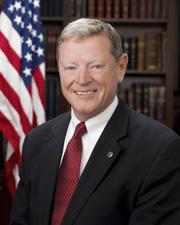 JMI
JMI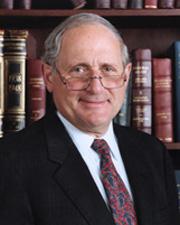 CL
CL JM
JM RJDHR+19
Floor Debate
24 membersWhat members said about S.Res. 18 on the floor
Mr. President, I wish to pause for a moment. I know we are on the bill, and I am most anxious to proceed with the Defense authorization bill, having served on the committee since 1994 and before then…
Mr. President, I wish to pause for a moment. I know we are on the bill, and I am most anxious to proceed with the Defense authorization bill, having served on the committee since 1994 and before then in the House. It is imperative now that we get as robust a bill as possible.
Before doing that, let me mention one thing because I haven't yet spoken about this. I have been watching several of our colleagues who have come to the floor to speak about a great Senator, Norm Coleman, who is no longer seated in the Senate but who is a remarkable character.
A good friend of mine, Paul Weyrich, who recently died, wrote an op- ed piece, and it is called ``The Workhorses and the Show Horses.'' He talked about so many of the Members of the House and the Senate who are out there just to make themselves look good. They are the ones who are show horses. Then there are the workhorses. We talk about someone such as Norm Coleman, who was always there and getting deeply involved in issues, many of which are not popular issues if you are using them to run for reelection. I am thinking of a close friend, a mutual friend of ours named Ward Brehm. Ward Brehm and I have been working together for a long time on some things in Africa, as the Chair is aware, and he was talking about being from Minnesota and how much involved Norm Coleman got in various international affairs issues that don't have any votes behind them, but he was willing to do it. Every time you turned around, he was willing to do things that other people weren't willing to do.
I remember several years ago when he and I met with a delegation from Burundi and Rwanda and the DRC. This was a group that was over here in conjunction with the National Prayer Breakfast. He and I always worked together during the time that we had the National Prayer Breakfast. We would get these people to come all the way over here from different countries, but we kind of concentrated on Africa. I remember him standing there talking about, for a long period of time--keep in mind he is a Jew. I was never real clear where in New York he was from--I think the Bronx or someplace. But anyway, he was very strong in the Jewish community, and I am not. I am on the Christian side. But we would always get together and talk to them about Jesus and talk to them about loving God. And then when he would pray--at the end of these things, we would offer a prayer, and he would end up giving a prayer in Hebrew--an amazing guy.
At the National Prayer Breakfast African dinner 2 years ago--I had sponsored the dinner that was for all the Africans who had come over for the Prayer Breakfast and stayed for the African dinner--he was a major player in that. So these are things people didn't know about Norm Coleman.
The idea is scripturally based; it is Acts 2:42. It is kind of a genesis of these weekly Prayer Breakfasts in the Senate. On Wednesday mornings, we had a Prayer Breakfast and about 20, 25 Senators showed up every Wednesday and Norm Coleman was the chairman of that and was always in these groups. But he was also one who was helping us in forming these same groups with members of Parliament from all over Africa. He was a tireless worker in that effort, which was not something out there to get any votes.
I talked to him the other day, having gone through this election and then the 8 months or so, whatever it was, in recounting and all of that. I told him that many years ago I was mayor of Tulsa, and I did a pretty good job, I thought. I was supposed to win hands down. Someone came out of obscurity and because of a set of circumstances that should have gotten votes, not lost votes, I had lost unexpectedly on that Tuesday.
Well, we had scheduled our Tulsa Mayor's Prayer Breakfast the next morning. Bill Bright, who died not too long ago, came by as the speaker. Keep in mind, here he was the speaker at the Mayor's Prayer Breakfast the morning after I lost the election. He gave the most brilliant speech. I remember how he said it and the words he used. He said: A lot of times we think in terms of what is happening to us today, looking at our own careers, but, he said, God is still up there and there is a plan for all of us. He said in a very clear way that I thoroughly understood, the day after I lost the election I wasn't supposed to lose, that God opens a window and he closes a door and that window is going to be bigger. I can tell you right now I wouldn't be doing what I am doing today if it had not been for that.
So I would just say about my friend, Norm Coleman, God has a plan in mind for you, Norm, and it is one we will look back someday and say perhaps this is the best thing that could have happened to you. In the meantime, we love you, Norm, and God bless you.
Amendment No. 1511
I wish to also speak in terms of a program that I think a lot of people don't understand, and on which I know there is honest disagreement.
The F-22, people have said, is something like a Cold War aircraft. It is not. To quote Secretary Donnelly and General Schwartz both, because they both said the same thing, they said the F-22 is unquestionably the most capable fighter in our military inventory, not just air to air, as some on this floor have insinuated, but also precision attack air to ground, as well as intelligence collection. In contrast, almost every other piece of military equipment in our inventory today--air, land, and sea--is Cold War equipment that needs to be replaced.
I think about the Bradley vehicle. It has been around since the 1960s. I think about the Abrams tank. It has been around since the 1970s. I think about the Paladin, even though we have had about five major upgrades on the Paladin, that is our artillery beast, and that was actually World War II technology where you had to get out of the thing after every shot and swab the breach. You hear that and people can't believe it. Well, fortunately, we are going to go through an improvement on that. But the point I am trying to make is most of the stuff we have is Cold War stuff and to find that F-22 isn't needed because it wasn't flown in Iraq and Afghanistan, I think, is pretty narrow-minded. We have a lot of people we have to defend America against for contingencies that we don't know are out there and we don't know what our needs are going to be. The need certainly wasn't there in terms of Afghanistan and Iraq, but we don't know where the next enemy is going to be coming from or what the next contingency is. I wish we did. I can remember being on the House Armed Services
Committee my last year there in 1984. We had people testify. They said--these are smart people. They said: You know, in 10 years, we will no longer need ground capability. And look what has happened since that time.
So no matter how smart our people are, there is no way we are going to be able to determine where the next guy is going to come from and what our capability is going to have to be. Is it going to be in the air, sea, strike vehicles, lift capacity, cannons? So we need to keep that in mind because the only thing we have in the form of a fifth- generation fighter is the F-22, and it is uniquely designed and equipped to penetrate a hostile environment and be a savage air dominance for our ground forces. The F-22, I look at it as an investment in the future, not just 10 years down the road but 20 years and beyond. What we build today is going to have to be able to determine and deter and defeat adversaries for decades. Just look at the age of our entire military today. We talked about all these vehicles, but we have such things as the national security in long term, 40 years. We can't even see what we are going to need 10 years from now.
Now we talk about the F-35. Well, the F-35 is great. I am a strong supporter of the F-35 and working on it and getting it up as fast as possible. Its mission requirements are not the same as the F-22. The F- 22 is out flying today, and we have that capability today. Only five F- 35s are flying, and it is still in the testing period. It is impossible to assess the full capabilities of the F-35 until operational tests are completed in, I think, 2014. Well, that is 2014. This is 2009. There is a lot of time between now and 2014.
While we discuss cutting the only fifth-generation fighter in production today, China and Russia are continuing to move forward with the development of their fifth-generation fighters. I think they call the Chinese one the J-12 and the Russian is the T-50. They are out there right now talking about building these things. Today our Legacy, our F-15s, F-16s, F-18s are less capable than other fourth-generation fighters, such as the SU-27 and the SU-30 series aircraft.
I might remind the President that we have--we already know other countries are buying these capable fourth-plus generation aircraft that are better than what we have now, except for the F-22. We know of one sale, and I remember this--it has been quite awhile ago now--for F-27s from China, 240 of these. Now they are talking about cutting our number of F-22s--and I will talk about the numbers in a minute--down to the 187 and stopping the amendment that would increase that by seven vehicles. I don't want to see our Legacy fighters outmatched by fifth- generation fighters developed by China and Russia. I have always said our pilots are better, our training is better, but they have to have at least comparable equipment to survive.
So our air-to-air threat is only one aspect of the threat our Air Force faces today. Our surface-to-air threat remains to be a real serious problem. You just think about what the Russians are making now, the S-300s and the Chinese 4000s. They are capable of tracking up to 100 targets and getting as high as 90,000 feet in the air.
Now, that is priceless. These systems that make penetrating hostile airspace difficult and deadly for a legacy aircraft, including unmanned vehicles, such as our Predator, which has performed brilliantly, are uncontested facts. Only the F-22, with its advance stealth technology and weaponry and supersonic speeds, can successfully penetrate what we call denied airspace, hunt and destroy strategic ground targets during the day or night, and collect and provide battle intelligence and awareness, and maintain our superiority in the air.
The Air Force officials have repeatedly stated no less than 243 F-22s would be sufficient to maintain a moderate level of risk. We are talking about the deaths of Americans. If that is the goal, that is what we should have. In the beginning, it was 750 F-22s. We have slowly gone down. That is what this amendment is about today.
GEN John Corley, Commander of the Air Force Combat Command, said:
At Air Combat Command, we have held the need for 381 F-22s
to deliver a tailored package of air superiority to our
Combatant Commanders and provide a potent, globally arrayed
asymmetric deterrent against potential adversaries. In my
opinion, a fleet of 187 F-22s puts the execution of our
current national military strategy at high risk in the near
to mid term. To my knowledge, there are no studies that
demonstrate that 187 F-22s are adequate to support our
national military strategy. Air Combat Commandment analysis,
done in concert with the Headquarters Air Forces, shows a
moderate risk force can be obtained with an F-22 fleet of
approximately 250 aircraft.
So we are talking about a bare minimum number, and whether it is 243 or 250, that should be a bare minimum number.
While the F-22 hasn't deployed to Iraq or Afghanistan, a theater security package of six F-22s are on a continuous rotation to Guam in the Pacific Theater of Operations and have been forward deployed in Japan.
Why? Because it is the only fighter capable of stealthy penetration of North Korea's air defenses.
Finally, there continues to be allegations about the costs and operations of the F-22--to include an article last week in the Washington Post. The bottom line is, these allegations are false or intentionally misleading. The F-22 cost per flying hour is $19,750, not more than $44,000, as they were trying to say. The F-22 maintenance trends have improved from 62 percent to 68 percent. The F-22 skin is not vulnerable to rain. Finally, the fly-away cost for F-22s multiyear this Congress approved is $142.6 million, not $350 million.
One final point on all of these supposed studies about the F-22: We have been through this before with the approval of the multiyear and are going through it again. I have been briefed on both classified and unclassified studies, and while the range of numbers varied, each study concluded that 183 F-22s is not enough. So we need to continue to build the F-22s and look at exporting this aircraft to our allies. Fortunately, some of that is taking place today. Japan, Australia, and Israel have expressed considerable interest in the purchase of F-22s.
Nations around the world realize the F-22A Raptor is the only operational fighter-bomber available that can successfully defeat and destroy air and ground threats of today and tomorrow.
So what we are talking about is--in the markup, we increased the number by seven aircraft. The chief mover of this, I have to say, was Senator Saxby Chambliss. As I told him, this is not enough. He agreed, but it was the most we thought we could do.
I believe when the time comes for an amendment to cut that number down, we need to give serious consideration to that amendment and not allow it to pass.
There is an expectation of the American people--and I have gone through this before with other airframes and other ground platforms-- the American people think we give our kids who go into battle the very best of everything. I can tell you that is not true. I gave an example. There are five countries, including South Africa, that make a better non-line-of-sight cannon than we have today.
To me, that is unacceptable. It is unacceptable to the American people when we explain that is the situation. The F-15, F-16, and the F-14 have done a great job, but they need to move on to the fourth and fifth generation, and the only way to do that is with the F-22, which has been a success story.
Guantanamo Bay
I have another interest I want to share today, and that has to do with Gitmo. People are probably tired of hearing me talk about Gitmo, but I think we are about to make a mistake. The administration is making the demand that we close Gitmo. I have stood on the floor of the Senate many times and talked about my experiences there--the fact that anybody who wants to close Gitmo, if you ask why, they will say that for some reason people associate that with the types of torture that allegedly went on at Abu Ghraib and all of that.
This has nothing to do with that. There has not been a documented case of waterboarding at Gitmo. It is a state-of-the-art prison.
When President Obama talked about the 17 locations in America where we can take terrorists and relocate them from Gitmo to America, one happened to be Fort Sill in my State of Oklahoma. I went down to Fort Sill, and there was a lady in charge. She is a young major in charge of the prison where they would put these terrorists.
She said, ``I don't understand what people are thinking.'' This young lady, named SMA Carter, said she had two tours at Gitmo, and it is designed for terrorists. They have a court system where they can do tribunals.
We have six classifications of security in Gitmo. It is one of the few good deals the government has. We have had it since 1903. I have told the Presiding Officer this before. We only pay $4,000 a year for it. Do you have a better deal than that in government? There isn't one.
I have to say the terrorists are still at war with the United States, and we are legally entitled to capture and hold enemies and fighters in the hostilities. We detain terrorists and supporters to prevent them from returning to the battlefield, saving the lives of our service men and women and the lives of civilians who are innocent victims. I have spent a lot of time there. I am familiar with some of the terrorists there who are really bad people. They want to kill everybody who is listening right now. That is their mission in life.
We have had about 800 suspected al-Qaida and Taliban terrorists who have been sent to Gitmo since 9/11--people who are really bad. I looked through there, and we saw Khalid Sheikh Mohammed. He was the architect of 9/11. There was also the guy who was the explosives trainer for 9/ 11, who provided information on the September 2001 assassination of the Northern Alliance leader, Masood, and on the al-Qaida organization's use of mines. There was also the terrorist financier who provided detailed information on Osama bin Laden's front companies. There was the Taliban fighter linked to al-Qaida operatives connected to the 1998 East Africa Embassy bombings. Remember that, in Tanzania and Kenya? Down there we also had an al-Qaida explosives trainer who designed a prototype shoe bomb for destroying airplanes, as well as a magnet mine for attacking ships.
These people are unlike the types of prisoners we have had in other wars. If we look back during any of our wars, we had soldiers fighting for their countries. These people are not soldiers fighting for a country. They are fighting for a cause, and that cause is to destroy us.
To date over 540 prisoners have been transferred or released, leaving approximately 230 at Gitmo. They include members of al-Qaida and related terrorist organizations, planners of major terrorist attacks worldwide, including 9/11. These are the types of people there.
The intelligence gained from detainees at Gitmo helped the United States and its allies identify, exploit, and disrupt terrorist operations worldwide, saving untold lives. There have been a number of terrorist attacks. For a long time, they were classified, but most are no longer classified.
In 2007, the Senate voted 94 to 3 on a nonbinding resolution to block detainees from being transferred to the United States, declaring:
Detainees housed at Guantanamo should not be released into
American society, nor should they be transferred State-side
into facilities in American communities and neighborhoods.
On May 20, 2009, the Senate voted 90 to 6 on a bipartisan amendment by myself and Senator Inouye to prohibit funding for the transfer of Gitmo detainees to the United States. Unfortunately, the supplemental appropriations conference report deleted that provision, allowing detainees to be transferred to the United States for trial.
If we put them into our Federal system--I can speak this way because I am not an attorney, so I can stand back and cite the obvious. If we do that, then the rules of evidence are different.
There are a lot of these guys who are picked up, and even now they talk about Miranda rights. That blows my mind when I think about it-- when this goes on now and we have the opportunity to get these people and extract information from them. Thinking about the idea of trying them in the Federal court system where, if they cannot get a conviction--and many times they could not for one reason, which is that the rules of evidence are different.
When they were captured, they went by the rules of evidence for military tribunals. So we could have some who would be turned free, and many of them in the United States.
Recent polls show that a majority of Americans oppose closing Gitmo and moving detainees to the United States. By a margin of 2 to 1--which is huge in polls--those surveyed said Guantanamo should not be closed, and by more than 3 to 1 they oppose moving some of the accused terrorists housed there to prisons in the United States.
Again, one of the prisons the Obama administration talked about of the 17 prisons happened to be in Oklahoma. It should be obvious to everybody if we have 17 locations where we are housing terrorists, that becomes a magnet for terrorism--17 magnets in the United States.
A recent Fox News poll said President Obama made a mistake when he signed the order to close Gitmo. Seventy-seven percent of all Americans say that was a mistake, that Gitmo should not be closed, 60 percent of all Americans, up from 53 percent in April and 45 percent in January. You can see the trendlines. The vast majority--nearly two-thirds--is saying he should not close Gitmo and Gitmo prisoners should not be transferred into prisons in the United States. Sixty percent of all Americans say that is true. Sixty percent in polling is a huge number, a vast majority.
I encourage Senators who will be voting on this significant amendment to keep that in mind. Since President Obama announced he intended to close Gitmo, it has become widely circulated that these detainees could be transferred to American prisons for prosecution in U.S. criminal courts and potentially released in the United States. Moving detainees to prisons here would require significant investment in restructuring existing facilities and would cost taxpayers millions of dollars.
Currently, the United States only has one Supermax facility located in Florence, CO. According to the Bureau of Prisons, as of May 21, ``only 1 bed was not filled at Supermax.'' So if we want to give maximum security to these people, such as Khalid Sheikh Mohammed, we better decide who is going to be in that one bed because we don't have the capacity. The capacity of all the high security Bureau of Prison facilities at the beginning of this month was 13,448 inmates, while the total prison population was approximately 20,000.
So what we are talking about is they are overcrowded, and that is flat not going to happen. Despite claims by Senator Durbin that the Supermax prisons in the United States are ready to receive Gitmo detainees, the Supermax prisons in the United States are at or above their maximum capacity.
FBI Director Robert Mueller said there is the very real possibility that the Gitmo detainees will recruit more terrorists from among the Federal inmate population and continue al-Qaida operations inside the walls of prison. That cannot happen in Gitmo because they are all terrorists there. That is how the New York synagogue bombers were recruited, in our own prison system.
In 2002, an entire wing of a jail in Alexandria, VA, was cleared out for the 9/11 ``20th hijacker,'' Zacarias Moussaoui, to be housed for his trial--just for one detainee. Bringing Gitmo detainees to the United States could also place America and its citizens at risk by inevitably creating a new set of targets for the jihadist terrorists. Gitmo, on the other hand, is a state-of-the-art prison. I cannot find anyone who has gone over there, including unfriendly media, media that was bent on closing Gitmo--once they go over there and see it, almost all of them change their mind. It is a state-of-the-art facility that provides humane treatment for all detainees. It is fully compliant with the Geneva Conventions and provides treatment and oversight that exceed any maximum security prison in the world, as attested to by human rights organizations, the Red Cross, Attorney General Holder, and an independent commission led by Admiral Walsh. This is state of the art, and this is not a place where torture takes place. It is the only facility of its kind in the world that was specifically designed to house and try these types of dangerous detainees.
If President Obama ever decides to visit Gitmo, I am sure he would equally
be impressed as everyone else, including, I might say, Attorney General Holder. He came back and gave a glowing report and said how great this was and, at the same time, said the President still wants to close it.
When you look at the Gitmo situation, there are, on average, two lawyers for every detainee. There are 127 doctors and nurses. The ratio is 1 to 2 in terms of health care specialists to take care of these prisoners. Here we are talking about health care in this country. Maybe they want to go to Gitmo. They would be a lot better off. Current treatment and oversight exceeds that of any maximum security prison in the world.
There is also a $12 million expeditionary legal complex. This is very significant because if we are going to do tribunals, we cannot do tribunals in our court system in the United States because it is not set up for that. Obviously, there are some things in testimony that takes place that have to be private. You cannot have these things go out because that would endanger American lives. We spent $12 million on this complex. It is a courtroom at Gitmo to try detainees, and specifically that is what it is there for. It is the only one of its kind in the world, and it provides a secure location to try detainees charged by the Federal Government. They have full access to sensitive and classified information, full access to defense lawyers, and protection by the full media, access by the press. But it is set up to take care of that specific type of an incarcerated individual.
Senator Harry Reid declared, in a press conference after my bipartisan amendment was adopted, that ``We will never allow terrorists to be released into the United States.'' I applaud Senator Reid for that statement and hope he will stay with that because that is something the American people are not willing to tolerate.
He went on to say he opposes imprisoning detainees on U.S. soil, saying:
We don't want them around the United States . . . I can't
make it any more clear than the statement I have given to
you. We will never allow terrorists to be released in the
United States.
Senator Durbin said:
The feeling was at this point we were defending the
unknown. We were being asked to defend a plan that hasn't
been announced.
I think Senator Durbin was correct then and is correct now.
There are lots of questions, very few answers. What is the impact? Let's say we close Gitmo. What is the impact of placing detainees in the U.S. prison system--pretrial and posttrial? Has an assessment been done to determine the risk of escape, as well as potentially creating targets in the United States for terrorist attacks? Will Gitmo detainees be segregated from the regular prison population? Keep in mind, these guys are trained to recruit. That would be a garden spot for them to get into the American prison system to recruit people to become terrorists. What facilities exist in the United States today that can hold these detainees? We talked about that. They tried to locate 17 facilities, and it will not work.
By the way, the State legislatures in each one of those States that have one of these facilities have passed resolutions or some type of a document saying: We don't want them in our States. That is what they are saying from the States, and we need to listen to them. One might ask, where will the military commissions be held--at Guantanamo or the United States? Obviously, if you close Guantanamo, you lose that facility. Assuming military commissions are held in Guantanamo, where will detainees who are convicted serve out their sentence, if not there, because there is no other place that has the capability of doing that. There are all these questions.
What additional constitutional rights will a detainee gain if they are tried in the United State versus Guantanamo?
Are there differences in the rights awarded to detainees tried in a Military Commission versus civilian court? Could location or geography affect the right afforded to detainees--somewhere in the U.S. versus Gitmo?
How do we handle protection of classified information during trials?
What are the long-term implications on future conflicts of trying these detainees in a civil court versus military commissions?
Why is the administration reading Miranda rights to some detainees captured or held in Iraq and Afghanistan? How many are being read Miranda rights? How many have invoked their rights?
What is the impact of requiring the reading of Miranda rights to terrorists captured on the battlefield and advising them they have the ``right to remain silent''?
What if a detainee is found not guilty--where will he be released?
What does the administration plan to do when a Federal judge orders the release of a detainee but the administration knows is too dangerous to release of transfer?
What do you do with a detainee you cannot try or release due to national security concerns?
Despite not having a plan, the administration continues in its quest to empty Gitmo regardless of the cost or the risk.
The Obama administration initially talked with the small South Pacific island of Palau, population 20,000, to accept transfer of a group of 17 Chinese Muslims currently at Gitmo, called Uighurs, at the cost of some $200 million. That is $11.7 million per individual. This is not a cheap thing he is talking about doing. The total cost to build Gitmo was only $275 million. As I said, it has been on lease since 1903 for $4,000 a year. The Wall Street Journal just yesterday had a government official who said that well over 50 detainees have been approved for transfer to other countries and that negotiations are continuing with Saudi Arabia to take a large group of Yemeni detainees. Attorney General Eric Holder has estimated that more than 50 detainees may end up on trial by U.S. authorities. This news comes as more and more Americans are growing opposed to the closure of Gitmo, placing them unnecessarily at risk in order to satisfy political goals.
I think we need to stop, sit back, take a deep breath, and look at some of the things that are going on today. The idea that we would have Miranda rights for terrorists, people who have killed Americans, is pretty outrageous.
Finally, on June 9, the Obama administration again went against the will of the Congress and the American people by transferring the first Gitmo detainee to the United States for his trial in New York City.
Ahmed Khalfan Ghailani has been indicted for the 1998 al-Qaida U.S. Embassy bombings in Kenya and Tanzania that killed more than 224 people, including 12 Americans. Ghailani was later captured in Pakistan in 2004 while working for al-Qaida, preparing false documents. Intelligence shows he met both bin Laden and Khalid Shaikh Mohammed in Afghanistan and remained a close associate with al-Qaida until his capture in 2004.
This bonafide terrorist will have the privilege of a U.S. civilian court trial in the United States--I think it is New York. To me, it is inconceivable that could happen. The press reported that Ghailani was smiling when the charges were read to him in New York.
Despite the Obama administration's intentions, they will find themselves in a position where they cannot even try or safely transfer or release Gitmo detainees. As of May 2009, 74 transferred/released detainees have returned to the fight--74. These are the ones we captured again. We know they returned to the fight. How many more are there out there? If you release these people, they go right back to their practice of killing Americans. Former Guantanamo Bay inmate Mullah Zakir, also known as Abdullah Ghulam Rasoul, is leading the fight against the U.S. Marines in the Helmand Province in Afghanistan. He surrendered in north Afghanistan in 2001, was transferred to Gitmo in 2006, and then released. He is out there killing marines today. That is what is happening currently. There is no alternative to Gitmo.
I go through all this not to be disagreeable with anyone except to say there is an answer, and there is only one answer.
Today, we are considering the Defense authorization bill. I have an amendment to that bill. I now have, in a matter of 3 hours, 22 cosponsors. This is amendment No. 1559 to the Defense authorization bill, S. 1390. This does something very simple. I like simple bills because they cannot be misunderstood. They are not like the health insurance bill with over 1,000 pages no
one has read. They are not like the cap-and-trade bill that passed the House with no one reading it, over 1,000 pages. This is just two pages. That is all. It is easy to read. Let me tell you what it says. I am wrong, it is one page. It says an amendment offered by Senator Inhofe:
Sec. 1059. Prohibition on transfer of Guantanamo Detainees.
No department or agency of the United States may
(1) transfer any detainee of the United States housed at
Naval Station, Guantanamo Bay, Cuba, to any facility in the
United States or its territories.
That is No. 1.
No. 2 is, we cannot ``construct, improve, modify, or otherwise enhance any facility in the United States or its territories for the purpose of hous- ing any detainee described in para- graph (1) . . .''
No. 3: We cannot ``permanently or temporarily house or otherwise incarcerate any detainee described in paragraph (1) in the United States or its territories.''
That is a very simple solution. It is all in three sentences on one page.
I have a feeling there are going to be many people who know that we are on the right side of this issue, know that the American people are overwhelmingly, by more than two to one, in support of an amendment such as this, and are going to offer some amendment full of loopholes that will still allow them to close it. It will sound good. But this is the only one out there.
Mr. President, I say to my colleagues, if their interest is to really do something about keeping Gitmo open, there is only one vehicle out there. We are on it right now--the Defense authorization bill. That is amendment No. 1559. All it does is prohibit us from transferring any detainee from Gitmo to any facility in the United States of America or its territories; it prohibits us from constructing, improving, modifying, or otherwise enhancing any facility in the United States or its territories for the purpose of housing any detainee described in paragraph 1 above--that is the terrorist; and No. 3, it prohibits us from temporarily or otherwise incarcerating any detainee described in paragraph 1 in the United States or its territories. Period. That is all it does.
I say to those two-thirds people of America, there is a vehicle now we can use to make sure that facility, one of the really true state-of- the-art resources we have in this country, stays open and keeping those detainees, those terrorists out of America. If you want to keep them out of America, this is the way to do it.
Mr. President, I yield the floor and suggest the absence of a quorum.
Mr. President, I ask unanimous consent that the order for the quorum call be rescinded.
Mr. President, I notice no one else is on the floor right now. I was only going to address those three subjects, but I do want to make a couple of additional comments. If anyone comes in and seeks the floor, I will come to a close.
There is one other major issue that we are dealing with right now--we have had a number of hearings--and I would like to kind of put it in perspective so people will understand.
There are a lot of complaints around the country about the cap and trade bill that was passed by the House of Representatives-- interestingly by one vote over the majority--which is 219. Most of the bill actually was written at about 3 o'clock in the morning and passed the same day--a thousand pages. I applaud John Boehner over there for saying that we want to establish some kind of a program whereby anything we are going to consider on the floor should be on a Web site so all of America can read it at least 72 hours before it is voted on. I applaud that, and I hope we will be able to do that.
I certainly hope we will be able to do that with a bill that I am sure will be passed from the Environment and Public Works Committee of the Senate--the cap and trade bill that has yet to be drafted. The chairman of that committee, Senator Boxer, has stated it is going to basically be the framework of the Waxman bill from the House that was passed by a margin of 219 votes to 212, I think it was.
Anyway, that at least gives us something to talk about. I would like to go back historically to my first exposure to this whole issue. Back about 10 years ago, when we had the Kyoto Treaty, the Kyoto Treaty was a treaty the Clinton-Gore administration was trying to get us to ratify in the Senate. It was a treaty that would establish a cap-and-trade type of arrangement to limit the number of CO2--and the proper term is anthropogenic gases--anthropogenic, man-made gases, methane, CO2.
The theory behind that, and I believed it at that time because everyone said it was true, was that these man-made gases were causing global warming. I assumed the science was there and was settled. As I say, everybody thought it was. It was at that time that the Wharton School of Economics came out with the Wharton econometrics survey. That survey quantified how much it would cost America in taxes if we in the United States ratified the treaty and lived by its requirements. The result was in the range between $300 billion and $330 billion a year.
Now, I have often said one of the most egregious votes ever taken in the Senate was the vote that took place in October of 2008 when we gave an unelected bureaucrat the $700 billion to do with as he wished. It was just unconscionable. I voted against it. I was opposed to it, but we lost. We did it, and now, most of the people who voted for it, are sorry. I tried to equate at that time what $700 billion was, and I said if you take all of the families who file tax returns and pay taxes and do your math, it is $5,000 a family--$5,000 for every American family, not just the ones in Oklahoma but everywhere. So I thought, as bad as that was, that was a one-shot deal. If we pass cap and trade, we are talking about a $300-plus billion tax increase every year, not just once.
So at the time we looked at this, and the Wharton School came out with these figures, I thought, let me be sure in my own mind, as a member of the Environment and Public Works Committee, that the science is there. So I looked into it, only to find out this whole thing came from the United Nations' IPCC--the Intergovernmental Panel on Climate Change. All we have seen are just the reports not from scientists but from politicians on the summaries they give policy donors. So we started talking to real scientists only to find out that really well- established scientists--and this is 10 years ago--who looked at this said: Well, yes, there could be a connection between man-made gases, CO2, and global warming. However, it is not a major significant contribution.
Now, to fortify this, then-Vice President Gore was trying to build his case on why we should ratify this convention and he did his own study. He hired a guy--one of the top scientists in America--named Tom Wigley to do an analysis. Now, here was his challenge. If all of the developed nations in the world--America, France, Western Europe and the rest of the developed nations--would ratify this treaty and would live by its emission requirements, how much would that lower the temperature in 50 years? So if all the countries in the developed nations did this, how much would it lower it in 50 years? The result of the study was seven one-hundredths of a degree Celsius. Well, I said that is not even measurable. And I said, if his own scientist says that, we have to have a wake-up call here in America. And that is when I made this statement that people have been throwing at me for 10 years--the idea of the notion that man-made gases significantly contribute to global warming is probably the greatest hoax ever perpetrated on the American people.
Well, when we stop and look back now at what has happened in the scientific community, many members of the community were the recipients of grants and had those grants held up unless they would come in and say, yes, we are going to have to do something about CO2 in order to stop global warming.
By the way, I have to just say that at this time we are in our ninth year of a global cooling. People seem to forget we have been going through these ups
and downs all throughout recorded history. God is still up there, and we are going to have warming and cooling periods.
The same individuals who are so hysterically behind this idea of passing a cap and trade--putting a huge tax on America at this time-- are the same ones in 1975 that were saying we are going to have to do something because another ice age is coming. Well, anyway, this has been going on for a long period of time.
So as we have progressed through the years, more and more scientists have come over who were on the other side. And I call to mind now, just from memory, Claude Allegra, from France. Claude Allegra is a socialist over there--very prominent scientist. He was marching through the aisles with Al Gore 15 years ago, and he has now reversed his position and said, wait a minute, everything we thought from the modeling didn't happen. This thing is not real. He is solidly on the skeptic side now, saying I was wrong back then. This Claude Allegra is the guy Sarkozy now is talking about putting in as the environmental minister of the country of France. Now that is the caliber of people we are talking about.
David Bellamy was the top scientist in the U.K. and David Bellamy was solidly on the other side 10, 12 years ago. He is now saying, we have looked at the modeling and we have changed and this is just flat not true.
A guy named Nir Shaviv from Israel, another top scientist, he was on the other side of this issue and he has now come over.
And for my colleagues who want to really see the fortification, see the numbers we are talking about in terms of scientists who have reversed their position, go to my Web site, Inhofe.Senate.Gov, and look it up. There are a lot of speeches I have made from the floor of the Senate, but one was about the 700 scientists, most of whom were on the other side of the issue and are now saying the same thing as Claude Allegra, David Bellamy, Nir Shaviv, and others have said because they have changed their minds on this thing.
So clearly the science has turned around, and that gives a sense of urgency for some people who want to respond to some of the extremists-- mostly in California, and mostly in Hollywood--to go ahead and pass something. Get something passed and get it passed quickly. It is kind of like health care. They want to get it passed before people have a chance to read it.
So now we have a bill that is going to be put together and drafted in the Environment and Public Works Committee, which was going to be coming to the floor of the Senate prior to the August recess--just a few weeks from now--but Chairman Boxer has now decided to put it off until after the recess. I applaud her for that, because time is not the friend of the people who are trying to make believe we are going to have to pass an expensive tax to address what they consider to be a more serious problem than I consider it to be. And during the August recess, during those 30 days, you are going to have a lot of Members of this Senate be approached by people--such as people in the agricultural community.
I had the opportunity of going and talking to the National Farm Coop the other day and discussing with them what would happen if we were to pass a cap-and-trade system and what that would do to the farmers of my State of Oklahoma and all throughout America. Stop and think about it. Seventy-one percent of the cost of a bushel of wheat is in fertilizer and in energy costs. That is what would go up. So you would be talking about doubling the price of wheat, or I could use soybeans or any other commodity. It would be disastrous for our farmers in America.
So the years have gone by, and slowly people have caught onto this thing, and that is why there is such a sense of urgency by people who want to pass this before the public realizes what it is. Fortunately, the public already understands, and the vast amount of recent polling shows that, just like the issue of closing Gitmo, which I talked about a few minutes ago, they are solidly on the side of not passing a cap- and-trade tax which would constitute the largest tax increase in the history of America to address a problem that people aren't really sure exists to start with.
So I think we will defeat that in the Senate. It will, of course, pass out of the committee. It is a very liberal committee. I love everyone on that committee, but they will pass anything that has to do with a cap-and-trade package, so it will be on the floor of the Senate. But it will not pass the Senate. And the reason I say that is we have had several votes in the Senate--the House had never had any votes. We have considered this five times, and actually voted three times--2003, 2005, and 2008.
In 2003, it was called the McCain-Lieberman bill. At that time, I was the only one on the floor. For 5 days, 10 hours a day, I talked about this and was trying to defeat that thing. For 50 hours, only two or three Senators came down for a short period of time to help me. Now, fast forward from 2003 to 2005 to 2008. The bill was called the Warner- Lieberman bill. We had 23 Senators who came down, and it didn't take 5 days to defeat it; it was just 2 days.
So I think in terms of passing the tax increase called cap and trade, they have about maybe 34, 35 of votes, and it takes 60 votes in the Senate to pass it. Really, I am happy our forefathers were divined and inspired when they thought of the two Houses so we could have checks and balances.
So I think that is what will happen. I know there are other names I could mention but cannot because some of the things I know are at a level of confidence. But some of the new Senators who have been elected, they don't really want to go back and say--whether Democrats or Republicans, but, in fact, it is the Democrats I have in mind-- saying to the people who have just elected them: Aren't I doing a good job for you, coming back from my first session and passing the largest annual tax increase in the history of America? That isn't going to happen, Mr. President. People are so sensitive right now with the level of spending that is going on in this country.
I can remember in 1993, it was the first year of the Clinton administration, and I was complaining at that time on the floor--I was serving in the House of Representatives--of the huge tax increase he was pushing, and all of the things that were going on--with gun control, the Hillary health care, which we all remember. At that time, I remember complaining on the floor: He even has a budget of $1.5 trillion. Well, guess what. This one is $3.5 trillion. We can't sustain that. We can't do that in America.
So I think one at a time we are going to have to stop these expensive programs, one being the health care program--I know we can't afford that--another being cap and trade. I think we will defeat that, and I believe America is now going to look a lot more carefully, and they are going to applaud the efforts being made to make sure any bill that comes up for consideration of this magnitude should be on a Web site, as Mr. Boehner suggested, and several other Senators have suggested, including myself, for at least 72 hours so we and the American people can read and see what it is going to be. I can assure you, if that had happened when the cap-and-trade bill passed the House, it would not have passed the House.
With that, I see there is someone else on the floor wanting to have the floor, so I yield the floor.
Mr. President, I withdraw Senate amendment No. 1469. Mr. President, to explain where we are, let me take a few minutes, first of all, on the procedures. Then I want to go back and make some comments…
Mr. President, I withdraw Senate amendment No. 1469.
Mr. President, to explain where we are, let me take a few minutes, first of all, on the procedures. Then I want to go back and make some comments about the Levin-McCain amendment, which will come back. This is temporarily withdrawn because we could not get to a vote.
The bottom line is we were here all day yesterday. We attempted repeatedly to obtain an agreement as to when we could vote on the Levin-McCain amendment.
We had a lot of time yesterday for people to make speeches. We had time the day before. We have time anytime. But we have to get to a vote on that amendment.
The reason we were not able to get to a vote is because of the next amendment, which the majority leader indicated is going to be taken up on this bill, the so-called hate crimes amendment. We have a law relative to hate crimes. This had been an important amendment to the law to add a group who had been left out, two groups previously left out of the existing hate crimes law. It would have also had an important definition of Federal interest in this hate crimes legislation.
Hate crimes legislation is not new. This body had approved hate crimes legislation a couple years ago on the Defense authorization bill. The argument was made at that time that the hate crimes bill should not be offered on a Defense authorization bill. Senator Kennedy offered hate crimes legislation a couple years ago on the Defense authorization bill. The debate was extensive at that time as to why on this bill.
The reason it was offered on this bill is obvious. This is legislation. The Senate rules allow for amendments such as hate crimes or any other amendment to be offered on legislation that is pending before the Senate. The minority has offered many nonrelevant amendments this year on legislation. On the American Recovery and Reinvestment Act, there was an amendment relative to ACORN. On the DC voting rights bill, there were amendments relative to guns and to the fairness doctrine. On and on and on. The Senate rules permit nongermane, nonrelevant amendments to be offered to pending legislation. It is not at all new. The opportunity to do that has been taken by many of us this year, last year, the year before and, I am sure, next year. First, it is not new. It is common in the Senate to offer amendments which are not relevant to a bill that is pending. That is allowed under our rules.
The hate crimes amendment is an important amendment. I don't think anybody would deny the importance of this amendment. With hate crimes going up in the United States, it is critically important we strengthen our hate crimes law. There are Senators who oppose the amendment. That is the reason we are here, to debate, to argue for or to argue against. But I don't think one can argue it is uncommon, unusual or improper to offer nonrelevant amendments to legislation which is pending. Regardless of one's position on hate crimes, it is very difficult to argue it is not significant legislation.
Thirdly, as Senator Kennedy so powerfully argued--and those of us who joined with him a few years ago on this amendment surely agreed--the values that are involved in this legislation, the effort to make America a better place, a place freer of hate crimes, surely is one of the values our men and women put their uniforms on and fight for. The closer we can come to a society which is freer of hate crimes, the better off we are internally, the closer we will live up to what we stand for in our basic fundamental documents and our history. It is what men and women who fight for the United States and carry out their missions are fighting for--not just physical threats to this country but for the values for which we stand, for freedom from hate, for diversity, for freedom from intimidation and violence based on one's religion, ethnicity or the other attributes listed in the hate crimes legislation.
It is important legislation. It relates to the values of this country, values which our men and women take such risks for when they go into harm's way. The rules of this body allow for it.
Somehow or other, the fact that we were going to proceed to a hate crimes amendment on this bill, even whether it was next in line or whether it was down the line in terms of amendments, the fact that it was made clear that, again, on a Defense authorization bill, as we have in the past, in the past with 60 Members of this body supporting it, the fact that that was made known in an open and honest way to Members of this body apparently precipitated a determination on the part of some that they not allow us to get to a vote on the pending Levin- McCain amendment. That prospect, that open statement
that there would be a hate crimes amendment offered on this bill became the impediment, apparently, from all we can determine, to our getting agreement for a time for a vote on Levin-McCain.
The question is, How to remove that impediment. There were two choices: Either agree not to offer the hate crimes amendment or remove the impediment. We have to now remove the impediment. There is not a willingness on the part of a significant number of Senators--and I believe a majority--not to offer a hate crimes amendment. It is pending legislation that is before us.
The amendment is an important amendment. It has been offered before. There is precedent for offering it on the Defense authorization bill. The rules allow for it, so we don't need a precedent, but there is a precedent for doing so. There are dozens of precedents for offering nonrelevant amendments to legislation which is pending before the Senate.
We will come back, obviously, to the Levin-McCain amendment. The Levin-McCain amendment is a very important amendment on this bill. We have to deal with the decision of the Armed Services Committee, on a close vote, to add F-22 planes, which uniformed and civilian leaders of the military indicate they do not want and do not need and we cannot afford. We have had some debate. We had plenty of time for others to debate it. Everyone who wanted to speak on the subject, I believe, had more than enough opportunity to do so. Last night we heard from the Senator from Georgia as to his reasons for offering the amendment in committee to add the additional F-22s. I compliment the Senator from Georgia for all the hard work he has done on our committee. It is another example of how the Armed Services Committee works together. Our Presiding Officer is a distinguished member of the committee so he knows this firsthand, how we work together, guided by one basic principle: for the good of the Nation, for the good of the men and women in the armed services. We disagree, obviously, on the Levin- McCain amendment. There is surely, however, agreement that our intentions are always to adhere to that principle--what is best for our Nation, what is best for the men and women who put on the uniform of the Nation.
So while there was committee disagreement and disagreement on this floor on the question of whether additional F-22s should be produced, the disagreement is not along party lines and rarely, if ever, is along party lines on the Armed Services Committee. I wish to, again, compliment not only the Senator from Georgia but also other members of the committee for sticking to that very important principle.
I also agree with something the Senator from Georgia said last night relative to another of our operating principles. We have the right and the duty to challenge assumptions made in the bill sent to us by any administration and to act in accordance with our best judgment about what is right and what is in the best interests of the Nation. We are not a rubberstamp to every proposal offered by the executive branch. The Congress, hopefully, never will be.
The Senator from Georgia pointed out a number of cases where we have acted as anything but a rubberstamp to a budget request. We added funds, for instance, in this bill for a larger pay raise than the executive branch requested to honor the service of the men and women in the military who have been bearing an extraordinarily heavy burden for the country fighting in Iraq and Afghanistan. We added $1.2 billion for a more mobile variant of the Mine Resistant Ambush Protected Vehicle, called the MRAP. This MRAP variant is called the MRAP all-terrain vehicle. The reason we did this is because we knew there was an emerging requirement for these new vehicles to support our forces in Afghanistan that had not been reflected in the budget request. I don't believe any member of the Armed Services Committee or any Member of this body should act as a rubberstamp for any budget request, and the evidence will show over and over again, year after year, that our committee does not act as a rubberstamp.
The question on the Levin-McCain amendment is whether we are right, that the leadership of our military, both civilian and uniformed, made a sound judgment when they, similar to their predecessors in the Bush administration, determined that we should end production of the F-22. The debate is not about whether we will have the capability of the F- 22. It is a debate about how many F-22 aircraft we should have and at what cost.
We are talking about whether we will accept the recommendation of two Commanders in Chief, two Secretaries of Defense, plus the Joint Chiefs of Staff and their chairmen, that 187 F-22s is all we need, all we can afford, and all we should buy. Senator McCain and I have made a number of arguments about why we believe stopping the F-22 program at 187 is the right thing to do. I will not repeat all those arguments now, particularly since we have temporarily withdrawn the amendment. But it is important that I clarify promptly a number of points made by the Senator from Georgia during the debate yesterday so they do not remain uncontested.
First, the Senator said that the Air Force had not been involved in any of the studies that led to determining that 187 F-22s was the correct number of aircraft to buy. A few days ago, the committee heard contrary testimony from the vice chairman of the Joint Chiefs of Staff that there are at least two studies that support the department's plans for tactical aviation, including stopping F-22 production, including a recently completed study.
This is what he said:
There is a study in the Joint Staff that we just completed
and partnered with the Air Force on that, number one, said
that proliferating within the United States military fifth-
generation fighters to all three services was going to be
more significant than having them based solidly in just one
service, because of the way we deploy and because of the
diversity of our deployments.
So the Vice Chairman of the Joint Chiefs referred to a recent study that led to the conclusion that Senator McCain and I support. That study was partnered with the Air Force, unlike what was stated last night by the Senator from Georgia that these studies did not have Air Force involvement.
There is a strong analytical underpinning for the decision of the administration, including the Air Force. A letter from the Secretary of the Air Force and the Chief of Staff of the Air Force on this matter is one underpinning, one of the strong evidences that that conclusion is correct. The letter is already part of the record so I will quote briefly from it. The Secretary of the Air Force and the Chief of Staff of the Air Force concluded in part, as follows:
In summary, we assessed the F-22 decision from all angles,
taking into account competing strategic priorities and
complementary programs and alternatives, all balanced within
the context of available resources. We did not and do not
recommended that F-22s be included in the FY10 defense
budget. This is a difficult decision, but one with which we
are comfortable.
That is from the letter of the Secretary of the Air Force and the Chief of Staff of the Air Force, so it should make very clear what the Air Force's position is on the matter.
On another matter that was raised by the Senator from Georgia last night, listening to his arguments, one might conclude that the F-22 is the only aircraft we have or are planning to have that could operate effectively in the presence of very capable enemy surface-to-air missile systems. But the Department has provided contrary evidence. In his letter to myself and Senator McCain on July 13, the Secretary of Defense said the following:
. . . the F-35 is a half generation newer aircraft than the
F-22, and more capable in a number of areas such as
electronic warfare and combating enemy air defenses. To
sustain U.S. overall air dominance, the Department's plan is
to buy roughly 500 F-35s over the next five years and more
than 2,400 over the life of the program.
The key words in that sentence by the Secretary of the Defense in his letter is that there will be a ``more capable'' aircraft in the F-35 than the F-22 ``in a number of areas such as . . . combating enemy air defenses.''
I think we all agree our military needs to maintain air dominance. But as the Secretary's letter points out, the F-22 aircraft is not the only aircraft the Department is relying upon to contribute to making that air dominance a reality. In fact, in certain areas, such as electronic warfare and combating surface-to-air missiles, the Department of Defense is counting on
the F-35 fleet to meet those missions with greater effectiveness even than with the F-22.
The Senator from Georgia, last night, argued that proposing cuts in a number of areas--just like the committee 13-to-11 vote indicated and his proposal accomplished--that shifting funds to the F-22 program and shifting money from other areas was not doing any harm to other programs within the Defense Department.
I have previously talked about the specifics relative to this issue, and I wish to summarize the difference on this point very briefly, as, again, we will be coming back to this issue. It is withdrawn temporarily, but, obviously, we will return to this issue and resolve this issue prior to the determination of this bill.
First, we did not assume any first-year savings from acquisition reform or business process reengineering. Both these initiatives will yield savings. The Senator from Arizona and I, and with the support of our colleagues on the Armed Services Committee, all unanimously supported acquisition reform.
At the time we adopted that, and at the time the President signed our bill, we indicated there will be significant savings from reforming the acquisition system. But those savings do not occur in 2010. Nobody has alleged, and there is no support for any conclusion, that savings from acquisition reform are going to occur in the first year it is in effect. As a matter of fact, its main thrust is to apply to new weapons systems to make sure their technologies, for instance, are mature so we do not end up producing equipment that has technologies incorporated in it that have not been adequately tested.
So we are not going to see savings in fiscal year 2010, as the Senator from Georgia assumed in his amendment that was adopted barely by the committee to fund the F-22 add-on. The result is $500 million he assumed from savings ends up as across-the-board real program cuts.
I also would point out that the cost estimate of S. 1390 that we just received from the Congressional Budget Office did not assume any savings from those initiatives. Those, again, were savings which helped to fund the additional F-22s--alleged savings. They are phantom savings in the first year.
Secondly, on the operation and maintenance reductions that were used to fund the F-22 add, the original committee position on this matter-- O&M, operation and maintenance reductions--was developed consistent with the Government Accountability Office analysis. The reductions, however, that were taken in operation and maintenance by the Senator from Georgia when he offered this amendment in committee to add the F- 22s go far beyond what was indicated by the Government Accountability Office's analysis and far beyond what is prudent.
Finally, relative to the offsets that were taken, the $400 million cut applied to the military personnel funding top line will greatly complicate the Department's ability to manage the All-Volunteer Force and to provide for bonuses and incentives that will be needed to support the force. It might even be troublesome enough that the Department of Defense would be forced to ask for a supplemental appropriations--something we wanted to get away from this year and finally have.
So one other thing is, there are some who suggest: Well, the F-35 is just a paper airplane that is the future. We have the F-22 now. The F- 35 is not here yet. It is here. There are--in this budget alone, in the fiscal year 2010 budget, which is the fourth year, by the way, of production of the F-35--there are 30 F-35s being produced for the military. So this is not a future deal when we talk about F-35s. This is a here-and-now deal. We are already into low-rate initial production. There are already at least five test aircraft flying, and we have 30 F-35s funded in this bill which is before this body now.
Let me summarize the situation relative to the Levin-McCain amendment that would strike the additional funding for the F-22s, the additional planes that the military does not want, does not need, and says we cannot afford.
First, the F-22 is a very capable aircraft. There should be no doubt about it. We have them. We need them. And they are valuable.
Next, the Air Force has already bought, and will pay for, 187 F-22 aircraft. So the debate is not about whether we will have that capability of the F-22 for the next 20 years. We will. We should, and we will. The debate is over how many F-22s are enough to meet the Nation's requirements. Two Presidents--President Obama and President Bush--two Secretaries of Defense, three Chairmen of the Joint Chiefs, current members of the Joint Chiefs of Staff all agree that 187 F-22s is all we need to buy and all we should buy.
The debate also concerns what damage will be done if we do not reverse the cuts that were taken to pay for the additional F-22s--to pay for the $1.75 billion in the F-22 add. Those cuts are $400 million to military personnel accounts, $850 million to operations and maintenance accounts, and $500 million across-the-board reductions to the Department of Defense budget.
We received a letter from the President this week saying he will veto the Defense authorization bill if it includes the F-22 production.
So our amendment is a critically important amendment. It involves a lot of money, and there is a lot of principle involved as to whether we should continue to be building weapons we no longer need and we have enough of. We need the F-22. There is no doubt about that. But we have enough of the F-22, according to all our military leaders--civilian and uniformed leaders alike.
But we cannot get to a vote, and that is the fact of the matter. We have waited for an agreement to get to a vote on the Levin-McCain amendment. Repeatedly, I have asked whether we can set a time for a vote, and the answer has come back: We cannot set a time for a vote. It is clear that for some reason, which, frankly, I do not fully understand--the reason we are not permitted to get to a vote on the Levin-McCain amendment is because of the prospect, the fact that either the next amendment or somehow down the line on this bill there is going to be offered a hate crimes amendment.
How that and why that should result in a denial of an opportunity to vote on the Levin-McCain amendment escapes me, I must say. Because we are going to get to the hate crimes amendment whether we are allowed a vote on the F-22 amendment. Not allowing us a vote, not agreeing to a time for a vote on the Levin-McCain amendment does not obviate the fact there is going to be a hate crimes amendment offered. As a matter of fact, it is now the actual amendment before us. And everyone knew that.
So I do not understand the logic behind the refusal to permit a vote on an amendment--the Levin-McCain amendment--because of objection to going to a vote on hate crimes, when we are going to that hate crimes amendment anyway and when we are going to have to come back to the Levin-McCain amendment. Everybody knows it. We are going to have to resolve both those amendments. So the decision some made to deny us an opportunity to vote at this time on Levin-McCain simply stymies this body from doing what it is going to do.
There are many people who disagree with the Levin amendment. Fine. There are many people who disagree on the hate crimes amendment. That is their right. But what is undeniable is, we are going to resolve both, one way or the other. We are going to resolve both of those and hopefully a lot of other material and a lot of other amendments. They are both going to be resolved, one way or the other, on this bill. Argue both sides, argue neither side, but you cannot argue, it seems to me, that we should not allow a vote on the first amendment before us-- Levin-McCain--because of opposition to another amendment which is going to be offered.
I know there is strong opposition to hate crimes. I understand it. I understand why people say it should not be on this bill, despite the rules which allow it. I respect the right to disagree with it. But I do not understand the logic or the strategy which denies us the opportunity to vote on an amendment which has been thoroughly debated-- the Levin-McCain amendment--because there is another amendment down the line which is going to be offered which people object to, when they know it is coming up. Despite strong feelings that it should not come up, it is coming up. It is now before us. Everyone knew it was going to come up.
So now we are stymied. We are stymied from resolving an amendment which has to be resolved, one way or the other--Levin-McCain--because of objection to another amendment being offered. I don't get the logic. I don't understand the strategy. I understand the feelings and I respect the feelings, although I disagree with people who oppose the Levin-McCain amendment and I disagree with people who oppose the hate crimes amendment. So I understand the feelings. I don't share the feelings, but I respect them, and I respect their right to fight against these amendments. But for the life of me, I do not understand why we are denied an opportunity to vote on Levin-McCain because of an objection to another amendment. All it does is slow down this body. It stymies this body from resolving issues which are going to be resolved. As certain as this body is here, this is going to be resolved. These are going to be resolved like a lot of other amendments. I don't know how they will be resolved. That is not certain; it never is. But they will be resolved because that is the nature of the Senate, to resolve these issues.
Again, I thank my good friend from Arizona. I know there are differences on the question of whether hate crimes ought to be offered on this bill. I respect him deeply, and I respect his positions and his right to hold them. While I surely disagree with the decision that has been made to not permit us to move at this time to a resolution of Levin-McCain, I nonetheless have a great understanding of the feelings here. I appreciate them and I respect them.
I yield the floor.
Mr. President, I thank the Senator from Colorado, not just for his statement and for his support for this bill but for his work on this committee. He has made a major contribution already. We look forward to his continuing work with us. As he knows and has so well expressed, this is a bipartisan effort on the part of the committee. It is important that we continue that way, and his instincts have shown already very dramatically that those are his views as well.
So I thank him very much, not just, again, for the support of an amendment that we plan on getting back to as soon as we dispose of the hate crimes bill but also, and even more importantly, for his great work on our committee.
I yield the floor.
Mr. President, I ask unanimous consent that after my remarks, which will be no more than 5 minutes, Senator Brown be recognized for up to 10 minutes, and then Senator Chambliss be recognized for 15 minutes.
Mr. President, first, my dear friend from Arizona has spoken very eloquently about the transcendent importance of the Levin- McCain amendment. I could not agree with him more. We tried for 2 days to get an agreement to vote on that amendment. It is a critically important amendment for the reasons he has given and for the reasons I hopefully have given persuasively around here, and others have as well.
We have this President, the previous President, this Secretary of Defense, the previous Secretary of Defense, this Chairman of the Joint Chiefs, the previous Chairman of the Joint Chiefs, the Vice Chairman of the Joint Chiefs, the Chief of Staff of the Air Force, and the Secretary of the Air Force saying we have enough F-22s. We have to move on to the F-35, which is under production, by the way. We have 30 F-35s funded in this bill.
We have tried to get the Levin-McCain amendment to a vote. We tried to reach an agreement and a time. We could not get an agreement on the time. That is what has then precipitated the decision of the majority leader to move on to the hate crimes amendment. We have simply tried, day after day, to get a vote, without success.
I could not agree more that this is a critically important amendment, and we have to end production of a weapon system that we no longer need, according to top civilian and military experts, and focus more on the F-35, which is going to be used by all three of the services, not just one. It will have greater capabilities in very critical areas than the F-22, and it will cost significantly less than the F-22. But we could not achieve that.
I don't understand the logic or the strategies involved that say we cannot have a vote on the amendment that is pending--Levin-McCain amendment--and then when faced with the majority leader's amendment on hate crimes, forces that to a cloture vote, which is going to be held-- in other words, everybody understands both of these amendments are going to be addressed on this bill one way or the other. Nobody can guarantee the outcome on these amendments. But what can be guaranteed is that these amendments are going to be debated on this bill because the majority leader has made that clear for a long time. The procedures of this body allow for it.
The precedents of this body are full of amendments such as this. As a matter of fact, the hate crimes amendment was adopted on the Senate Defense authorization bill 2 years ago, after the same kind of debate. Debate is fair. Debate is important. Every one of us should protect the right of everyone else to debate. Whether it should go on this bill or another, we can debate that. But it is offered on this bill, as was noticed by the majority leader days ago. It is what we have done years ago. It is totally consistent with the rules of the Senate. As a matter of fact, it has been done repeatedly in the Senate.
Maybe we should adopt a new rule that says you have to be relevant or germane to offer an amendment to a pending bill. We don't have that rule, never had that rule, and probably never will have that rule.
But that is the way the Senate operates. These are important amendments. Again--and I am going to close with this--I don't get the logic of not allowing us to proceed to the Levin-McCain amendment because another amendment that some people don't like and don't think should be offered is going to be offered on this bill, when what is certain is that both amendments are going to be offered on this bill. Nothing is accomplished by refusing that vote on the Levin-McCain amendment except delay. That is the only thing accomplished by the refusal of whoever it was who refused to agree to a time to vote on Levin-McCain, nothing was accomplished except delay. And that, I don't think, is in anybody's interest, for the reasons Senator McCain gave.
We want to get this bill passed. We want to get it conferenced. We want to get it to the President, hopefully, by the time this fiscal year is over because the troops deserve us to act.
I am going to vote for the hate crimes amendment. I believe it is very appropriate that it be on this bill. I spoke 2 years ago to this effect, and I will speak again at the right time, perhaps tomorrow if there is time, as to why the hate crimes amendment belongs on this bill. It is an important amendment. It involves acts, as the leader and others have said, of domestic terrorism. The values reflected in the hate crimes legislation are values which our men and women who put on the uniform of this country fight for and put their lives on the line for, a country which believes in diversity, a country that believes you ought to be able to have whatever religion you want, be whatever ethnic group, whatever religious group, whatever racial group you are part of, whatever your sexual orientation, whether you are disabled, regardless of your gender, that you should be free from terror and physical abuse.
That is what the hate crimes law does now, except it does not include some groups who should be included, including the disabled and including people who are gay. That is what is involved here.
It is not a new debate. We debated it 2 years ago. It is not new on this bill. It was added in the Senate 2 years ago.
I hope we can reach an agreement to get to a vote on both these amendments. They are both going to be resolved on this bill. That is a certainty. Again, how they are going to be resolved no one knows. We can guess as to what the outcome will be. They will both be close votes, I believe. Let's get on it and get through those votes.
I yield the floor.
Mr. President, I know there are a lot of other issues that are consuming the interests of my colleagues and the American people, such as the confirmation hearings of Judge Sotomayor; the HELP…
Mr. President, I know there are a lot of other issues that are consuming the interests of my colleagues and the American people, such as the confirmation hearings of Judge Sotomayor; the HELP Committee, of which I am a member, is reporting out one of the most massive takeovers and expenditures of taxpayer dollars in history; and we have this bill on the floor, and there are other issues. So it has probably gone unnoticed that we have seen another really--if not unprecedented, certainly highly unusual action on the part of the majority.
Frankly, to my colleagues on this side of the aisle and the American people, elections have consequences. What we have just seen is an amendment before this body and a piece of legislation before this body that I think one could argue is probably of more importance than any other we consider because it authorizes the measures necessary to preserve the security of this Nation, care for the men and women who are serving in the military, and meet the future threats we will face in the 21st century.
So what has happened here is that the majority leader, with the agreement of my friend from Michigan, whom I highly respect and regard, has made it clear that their highest priority is not that. Their highest priority is a hate crimes bill--a hate crimes bill that has nothing to do whatsoever with defending this Nation.
My friend from Michigan just complained that we haven't had a time for the vote. Of course we haven't had a time for the vote on the Levin-McCain amendment because we have been made aware that a hate crimes bill--and by the way, not an ordinary, small, specific amendment, but 17 pages, plus 6 additional pages, encompassing a piece of legislation that is before this body that has never moved through the Judiciary Committee. It has not moved through the Judiciary Committee, the appropriate committee of oversight.
So the majority leader of the Senate comes to the floor, after prevailing upon the distinguished chairman to withdraw his amendment-- an amendment of some consequence, a $1.75 billion expenditure, and, far more important than even the money, a real confrontation between special interests and the national interests--so that we can move to the hate crimes bill.
The hate crimes bill is not without controversy, I say. In fact, it is interesting that on June 16, 2009, the U.S. Commission on Civil Rights sent a letter to the Vice President and to the leaders of the Congress opposing the hate crimes bill.
I ask unanimous consent to have this letter printed in the Record.
The U.S. Commission on Civil Rights sends a letter saying:
Dear Mr. President and distinguished Senators: We write
today to urge you to vote against the Matthew Shepard Hate
Crimes Prevention Act.
That is basically the bill the majority leader has just inserted into the process of legislation designed to defend this Nation's national security. Of course there are strong feelings on it. This is a complete abdication of the responsibilities of the Judiciary Committee but, more importantly, could hang up this bill for a long period of time. While we have young Americans fighting and dying in two wars, we are going to take up the hate crimes bill because the majority leader thinks that is more important--more important--than legislation concerning the defense of this Nation. I am sure the men and women in the military serving in his home State would be interested to know about his priorities.
So here we are. Now we will go through--I am sure the majority leader will file cloture, we will go through 30 hours of debate, and we will have another vote. All of this is unnecessary. Why couldn't we move the hate crimes bill--remember, this is not a single-shot amendment on a specific small issue; this is a huge issue, the whole issue of hate crimes. It is a huge issue. It deserves hearings and debate and amendment in the Judiciary Committee. But what are we going to do? For reasons that I guess the majority leader can make clear because I don't get it, he wants to put it on the national defense authorization bill and pass it that way. He will probably succeed, and he will call it ``bipartisan.'' The last time I checked, it has 44 Democratic cosponsors and 2 Republicans. That is the definition, by the way, around here of bipartisan bills. That is the way the stimulus package was bipartisan. That is how the omnibus spending bill was bipartisan. And I am pretty confident that if health care ``reform'' passes, it will probably be in another ``bipartisan'' fashion.
So we will have some hours of debate. We will have more exacerbated feelings between this side of the aisle and that side of the aisle. I would imagine that the hate crimes bill, given the makeup of this body, may even be put on a defense authorization bill--a huge issue. A huge issue will now be placed on a defense authorization bill and passed through the Congress and signed by the President. That is a great disservice to the American people. The American people deserve debate and discussion and hearings and witnesses on this legislation. They deserve it. They don't deserve to have a hate crimes bill put on this legislation which has no relation whatsoever to hate crimes.
I will probably have a lot more to say about this in the hours ahead. I have been around this body a fair amount of time. I have watched the Defense authorization bill wind its way through Congress, and occasionally, including at other times, I have seen amendments put on bills which are nongermane, but I haven't seen the majority leader of the Senate--the majority leader of the Senate, whose responsibility is to move legislation through the Senate--take a totally nonrelevant, all-encompassing, controversial piece of legislation and put it on a bill that is as important to the Nation's security as is this legislation. We are breaking new ground here, let's have no doubt about it. It is one thing to sometimes have one Member or two or others propose amendments that happen to be their pet project or their pet peeve. It is an entirely different thing--it is an entirely different thing, and I have never seen it before--that the majority leader of the Senate comes to the floor and introduces an irrelevant piece of legislation that is controversial, that is fraught with implications for this and future generations, to a bill that is totally nonrelevant. After 30 hours of debate, we will have a vote on closing that debate and including it in the legislation. I am deeply, deeply disappointed, and I question anyone's priorities who puts this kind of legislation ahead of the needs of the men and women who are serving our military with bravery, courage, and distinction.
Mr. President, I suggest the absence of a quorum.
Mr. President, I wish to repeat and emphasize the unprecedented fashion that we are now addressing legislation that concerns our Nation's security and the well-being and welfare of the men and women who are serving it.
I always thought the job of the majority leader of the Senate was to move legislation through the Senate. Obviously, the majority leader has come to the floor of the Senate and, at the request of the majority leader, the chairman of the committee has taken out an amendment that addresses a $1.75 billion F-22 amendment that the President has placed his personal stamp on passing, that the Secretary of Defense has viewed as one of his highest priorities, as did the Secretary of the Air Force and other administration officials. What did we do? We come to the floor and withdraw the amendment, withdraw it so we can take up a major piece of legislation.
I am reminded that there are amendments proposed by various Members of this body who believe their amendments need to be proposed and believe there is no other avenue but to put them on pending legislation. The majority leader of the Senate can bring up legislation wherever he wants to. That is the privilege of the majority. That is the right of the majority.
Here we are trying to address an issue of paramount importance to the well-being of the men and women of the United States of America. Here we are trying to address an issue of $1.75 billion, which has far more importance, in many respects, than the actual cost of the F-22s themselves, and without a hearing in the Judiciary Committee, without a bill reported out by the Judiciary Committee, which is the committee of oversight, the majority leader of the Senate has one very important amendment pulled and then puts in a piece of legislation which is far- reaching in the consequences and very controversial.
I introduced into the Record a little while ago the U.S. Commission on Civil Rights opposes this legislation. Doesn't this legislation, the hate crimes bill, deserve the amending and debate process that legislation is supposed to go through--committees and then on the floor of the Senate, open to amendments? No, it has been inserted now on the Defense authorization bill, and within a short time, I am sure the majority leader will come to the floor and file a motion for cloture to cut off debate on an issue of significant importance to all Americans and railroad it through on a ``bipartisan basis,'' with possibly two Republican votes.
That is not the way this body should work. It is an abuse of power. It does not make for comity on both sides of the aisle. In fact, those of us who are committed to seeing this authorization bill done as quickly as possible because we are worried about the security of this Nation take great offense when the majority leader of the Senate, whose job is to move legislation through the Senate, brings extraneous
and unrelated legislation to a bill as important as this to the men and women of this country and our Nation's security. To somehow equate that with other amendments that have been proposed, from time to time, by Members on both sides, I think is not an appropriate comparison. I resent it a great deal. It is not good for the health of this body, in my view.
Perhaps there is precedent for this. Perhaps there is precedent when a Defense authorization bill, an issue probably, as I say, of the highest criticality, with an amendment on it that the President of the United States has fully weighed in on and committed on, is taken off the floor, is taken away from consideration in order to put in an extraneous and very controversial full package of legislation.
The hate crimes bill before us is not an amendment. It is legislation. It is an encompassing bill, 20-some pages long. We are going to have about 30 hours of debate, a discussion on it, the majority leader will come and cut off debate and we will probably pass it, thereby exacerbating a situation where those of us who oppose this legislation--and it is important legislation--will be faced with a dilemma of choosing between a bill which will harm, in my view, the United States of America and its judicial system and defending the Nation. I do not think that is fair to any Member of this body.
I yield the floor.
I will just take a few minutes.
That would be fine with me.
I am not sure what the Senator's reaction will be to what I have to say. I can't give him a specific time agreement. I am sorry. This is a vital issue we are addressing.
I will make my remarks as short as possible. I believe the Senator from Illinois has the floor; is that correct?
Madam President, I want to point out again, the legislation which is now pending has replaced the F-22, the Levin- McCain amendment. My argument is that the majority leader has put in legislation which is not relevant to the pending legislation, which is the Department of Defense authorization bill. I am perfectly willing for the hate crimes bill to come up under the regular order. Why it should be put on the Defense authorization bill, which will then not allow adequate debate and discussion of amendments, not to mention the fact that it hasn't gone through the committee of jurisdiction-- frankly, I do not think it is the appropriate way of using the Defense authorization bill. In fact, I think it is highly inappropriate. Therefore, why don't we do this, I ask the Senator from Illinois: agree that as soon as the Defense authorization bill is complete, we take up the Matthew Shepard Hate Crimes Prevention Act under the regular order and do business the way the Senate should do business?
Unanimous Consent Request--S. 909
So therefore, Mr. President, I now ask unanimous consent that the pending amendment be immediately withdrawn; that no amendments on the topic of hate crimes be in order to the pending legislation; further, I ask that when the Senate completes action on the Department of Defense authorization bill, it be in order for the Senate to proceed to S. 909, the Matthew Shepard Hate Crimes Prevention Act, under the regular order.
So, Mr. President, here are the facts. The fact is, the majority leader, whose job it is to move legislation through the Senate, is now blocking progress of Defense authorization--that progress through the Senate--by proposing an unneeded, irrelevant amendment, which is a large piece of highly controversial legislation.
The Senate majority leader will come to the floor and he will file cloture. Then, after some hours--with no amendments because he will probably fill up the tree--the Senate will pass a highly controversial, highly explosive piece of legislation to be attached to the authorization for the defense and the security of this Nation. That is wrong. And why--I want to put it this way: It is unanswerable that we do not just take up the hate crimes bill in the regular order and allow Senate debate and discussion. That is how the Senate is supposed to work--not put it on a major piece of legislation.
I will also point out to my friend from Illinois something he knows. It is one thing for someone who sits back there to propose an amendment to pending legislation because they feel that is the only way they can get their argument heard. The majority leader of the Senate has the authority to move whatever legislation he wants. And the majority leader of the Senate should move the hate crimes bill if he wants it considered rather than give it priority over the legislation that accounts for the national security of this country and the men and women who serve it.
So I am sure there will be all kinds of comments about the Republicans blocking a vote, blocking this, blocking that. Why don't we take up legislation in the regular order? Hate crimes has been opposed by the U.S. Commission on Civil Rights. This is a very controversial issue. By putting it on the DOD bill, we are not going to have the adequate debate, discussion, and amendment an issue such as this deserves. There is passion on both sides of the aisle.
So it is obvious, whether it is the intention or not, what is happening here is the whole process of debate and amendment will be short-circuited, because we on this side of the aisle are more than willing to take up the legislation as a separate piece of legislation, debate, amend, and discuss it, and let the American people decide. Instead, the men and women in the military right now today are being shortchanged by putting irrelevant legislation that is highly controversial and highly complex on a bill designed for defense of this country and for the men and women who serve it.
Actually, I will be glad to yield. But if the Senator wants to have a colloquy, go ahead.
Could I respond to that?
It is one thing to have the chairman of the committee support it; it is another thing to have the legislation go through the committee with the proper debate and discussion and amendment. But go ahead.
In deference to the Senator from California, I will make my answer brief, just to say I do not think--as I have said in my previous argument, it does not belong on a defense authorization bill, particularly so moved by the majority leader of the Senate. But, Mr. President, the Senator from California is waiting, and I yield the floor.
Mr. President, reserving the right to object, and I will object, I am not asking that there be a time agreement on hate crimes, I am asking that the hate crimes bill be brought up as a standing bill. The Senator has 60 votes. The Senator could bring it up whether this side of the aisle objects or not as a freestanding piece of legislation. I object to it being considered on the Department of Defense authorization bill. It has no place for it. It should not be there. The longer we wait, the longer the delay is in providing the men and women of the military the tools they need. So I do object. And we should take this up. I am sorry my unanimous consent request was not agreed to--that we would take it up as a freestanding bill after the consideration of the Department of Defense bill.
Mr. President, I yield the floor. I thank the Senator from California for her courtesy.
I ask unanimous consent that the order for the quorum call be rescinded.
Mr. President, I ask unanimous consent to speak as in morning business.
Mr. President, from the story of the Burmese prison, let me quote:
Human rights campaigners say incarceration at the top
security prison, which is known as the ``darkest hell-hole in
Burma'', could be tantamount to a death sentence--especially
as the 63-year-old's health--
Referring to Aung San Suu Kyi's health----
is known to be fragile.
Bo Kyi, now joint secretary of Assistance Association for
Political Prisoners (Burma), has firsthand experience of life
in Insein jail.
He was jailed for more than seven years for political
dissent, and was kept in solitary confinement for more than a
year, in a concrete cell that was about 8ft by 12ft. . . .
There was no toilet in the cell--just a bucket filled with
urine and faeces. He slept on a mat on the floor.
Mr. Kyi says he was tortured and beaten by the prison
guards. He was shackled in heavy chains, with a metal bar
between his legs, which made it difficult to walk.
Every morning for about two weeks, he says he was made to
``exercise''--forced to adopt awkward positions and if he
failed he was brutally beaten.
During this time he was not allowed to shower and was
forced to sleep on bare concrete.
It goes on.
So she is there in that prison. I hope and pray the treatment she is receiving is not anywhere along the lines of what this prison is well known for.
Mr. President, I yield the floor.
Mr. President, I thank the majority leader for his words concerning the parliamentary situation we are in. Of course, I am very appreciative of his words about the long service we have shared together, both in the other body and in the Senate. Since I have returned from the campaign trail, I have appreciated his kind words about my service to the country. I must say, while the majority leader is still on the floor, I might point out that they are dramatically different from the comments he made about me during the campaign--not just our political differences but my qualifications to serve and other statements about my character. All those things are said in political campaigns, but I am certainly glad to see sort of a significant change in his comments concerning me, and I am always very grateful.
Can I also say that the distinguished leader said he couldn't understand that I couldn't understand. Well, the thing I can't understand is the fact that the majority leader can, by virtue of being majority leader, put legislation at any time before this body. I have never been majority leader, and in all candor I never want to be majority leader. I think the majority leader in the Senate has a very tough job. I appreciate the hard work he does in trying to move legislation through the Senate. My former colleague and one-time majority leader, Senator Lott, once said that being majority leader of the Senate was like herding cats, and I certainly agree with that assessment.
So let me say I appreciate the work the majority leader does, but if I had been majority leader, I would never have had to do any of those amendments. The majority leader sets the agenda for the Senate. All he has to do if he wants the hate crimes bill up is to schedule it to be taken up and debated and discussed and amended--but in the
regular order of the Senate. Instead, he chooses to put it on the Defense authorization bill, a bill that is vital to the future of the security of this Nation.
I understand his passion concerning hate crimes. I have heard speakers come to the Senate floor all day, and they, in very graphic and moving terms, described events, as I am sure the next speaker will--about the terrible crimes committed in this country by some of the worst of the worst people who have ever inhabited this country.
But the question remains: Why should a bill of this importance--the hate crimes legislation--not have been, at the majority leader's direction, moved through the Judiciary Committee, reported out, and reported to the floor of the Senate? We have been in session since January. I am sure the Judiciary Committee has a lot to do. This has been described by proponents, as they come to the floor, as one of the most important issues of our time. If it is, why not move it through the Judiciary Committee, move it to the floor, and allow us to amend, debate, and discuss the issue? Instead, it is put, as an amendment, on the Defense authorization bill.
That is not right, Mr. President. The fact is, the amendment the majority leader just, very rightfully, extolled, the Levin-McCain amendment--and I appreciate his strong remarks about the importance of it--is the one he wanted withdrawn. The reason we are not debating it now is because the majority leader told the chairman of the committee to withdraw the amendment.
I appreciate his passionate advocacy of this issue. I also want to reemphasize this isn't just about $1.75 billion. This amendment is about whether we are going to change, fundamentally, the way we do business.
If the opponents of the amendment succeed, and we fund additional F- 22 aircraft, which as the majority leader pointed out has never flown in Iraq or Afghanistan, that signal to the military industrial complex, which President Eisenhower warned us about is business as usual in our Nation's Capitol.
So this is an amendment that has transcendent importance. The President has guaranteed a veto. The Secretary of Defense came out and staked his reputation on succeeding here and eliminating, bringing to an end the F-22 production line and moving forward with the F-35 production line.
A lot of my friends ought to understand this is not just about cutting or eliminating or ending production of the F-22. It is also about the F-35 aircraft. If I had been majority leader, I would have-- when he described those amendments I put on bills that were before the Senate, it was because I could not get them up in any other way.
Let me say this: Hate crimes legislation deserves the attention of the Senate in the normal legislative process with amendments, debate, and discussion. If it is so important, and speaker after speaker, including the majority leader, came to the Senate floor talking about how important and vital it is and all of the terrible things that have happened as a result of, in their view, not having this bill--although that is not in agreement with the U.S. Commission on Civil Rights. But the fact is, then you would think we would want to take it up in the regular fashion and debate it, and that we would want to improve it and make it more effective through the amending process. But, no, we are not going to do that. We are going to take down the pending amendment that is probably one of the most significant amendments we have had in recent history of the Senate--at least as far as defense is concerned-- and replace it with a piece of legislation that is complex, certainly controversial, and certainly deserves the full attention of the Senate.
I proposed earlier a unanimous-consent request, which was rejected by the majority, that we move back to the F-22 amendment, that we dispose of this legislation, and then that we move to the hate crimes bill, the Matthew Shepard Hate Crimes Prevention Act, even bypassing the Judiciary Committee, which is not a normal thing to do given the complexity of the issue.
I am deeply moved by the stories the majority leader told, and both Senators from California came to the floor, and many others have given very graphic and dramatic and compelling stories recounting terrible things that have happened to our citizens--horrible, awful, horrifying things. I understand that and my sympathies and thoughts and prayers go out to their families. We must do everything in our power to make sure these kinds of horrendous acts are never repeated.
Let me point out another thing, if I could. There are also men and women in the military who are in harm's way now and who have been gravely wounded. The sooner we enact this legislation, we will make preparation and be able to better care for them.
Mr. President, I don't usually tell these anecdotes. I heard a lot today, and I sympathize with them. Before the majority leader took the floor, I was outside the Senate Chamber. There was a young man there who said he wanted to meet me--a young marine in a wheelchair, badly wounded. He was there with his family. He was escorted by Congressman Kennedy. I was gratified and moved that he wanted to meet me.
Do you know what. That made me want to come back here and pass this legislation as quickly as possible because this legislation, No. 1, provides fair compensation and first-rate health care and addresses the needs of the injured and improves the quality of life of the men and women of the All-Volunteer Force--Active Duty, National Guard, Reserve, and their families. That is the No. 1 priority of this legislation.
Instead of moving this legislation as quickly as possible through the Senate, we have now withdrawn the amendment and moved on to a piece of legislation that has nothing to do with the purpose and our obligation to the men and women serving this country.
I understand what numbers are, and I understand what the outcome of elections is. I understand there is a majority on the other side of the aisle. But what is being done by withdrawing an amendment that has transcendent importance and putting another totally unrelated piece of legislation in--it may set a dangerous precedent for this body.
This is not a one-shot deal; this the hate crimes bill. This is not an amendment to say you can carry a gun in a national park. This is not a single specific issue bill--hate crimes. We are talking about a very large, encompassing piece of legislation that, by any rational observation, demands to be considered through the proper committee and on the floor through the proper process.
We are now holding up the progress of legislation that is important to the future security of this country and the men and women who serve it, to give them the resources, training, technology, equipment, force protections, and authorities they need to succeed in combat and stability operations.
I understand and appreciate the passion of the advocates of hate crime legislation. They have made it very clear and told compelling stories on the Senate floor. I believe we must take it up and enact it as immediately as possible. What we should be doing is taking up the hate crimes bill in the Senate for full debate and discussion as soon as we finish the Defense authorization bill. There is no connection between the Defense authorization bill and hate crimes. It is a complex and detailed--26 pages, as I recall--piece of legislation.
Again, I appreciate the kind comments of the majority leader, who came to the floor and said he couldn't understand certain things I have done. I hope the majority leader understands better now. If he doesn't, I will be glad to come to the floor again and point out that what we are doing is wrong. It is wrong for us to get off the legislation that provides for the defense and security of this Nation. It is wrong to take up a piece of legislation that should go through the appropriate committee.
This is what we teach kids in school in Civics 101--that a bill is proposed and goes through the proper committee, is reported out, and then it comes to the floor of the Senate for debate and amendment. Instead, we are violating the fundamental rules of procedure of the Senate.
As we continue and vote at 2 a.m.--or whatever it is that we are going to do--
all we will have done is delay the responsibility we have, which is to provide for the security of this Nation.
I yield the floor.
Mr. President, I ask unanimous consent that the order for the quorum call be rescinded. Mr. President, we are currently on the Department of Defense authorization bill and an amendment that has been…
Mr. President, I ask unanimous consent that the order for the quorum call be rescinded.
Mr. President, we are currently on the Department of Defense authorization bill and an amendment that has been offered by the Democratic majority leader relative to the creation of a new Federal crime of hate crimes.
Earlier, the Senator from Arizona, Mr. McCain, came to the floor to question the wisdom of adding that kind of legislation to a bill related to the Department of Defense. Most people, when they hear that argument, would say: Why don't they do these bills separately? It turns out that under the Senate rules, oftentimes there are few opportunities to move a bill forward. It is not at all unusual for Senators to come forward and offer what appears to be, and may in fact be, an unrelated amendment to a bill that is likely to pass and be signed by the President. Too often, we pass bills that die in transit to the House or once over in the House never see the light of day. They have the same complaint about the Senate.
This is legislation, hate crimes legislation, which we believe is timely, important, and which we want to make part of this debate and ultimately would like to offer it to the President for signature. It has been debated in the House of Representatives, and it is a bill that I think we can quickly come together with the House on and agree on common terms. So it is an important opportunity.
I might say to Senator McCain that I have offered what we would call unrelated amendments in the past, and he has as well. Going back many years, in 1993 Senator McCain offered a line-item veto amendment to a bill involving voter registration. He also offered that same amendment to research bills and to a bill involving the travel rights of blind individuals. He had a supermajority requirement to increase taxes added to a bill--unrelated--on the subject of unemployment compensation. So it is not unusual. I have done it. Senator McCain has done it.
In fact, this year we have seen it happen repeatedly. In fact, most of the amendments have come from the other side of the aisle. Senator Vitter--on a bill that tried to put the economy back on track--offered an amendment that was critical of an organization known as ACORN. It had nothing to do with the stimulus package. It was his personal feeling about that organization that led to the amendment. Senator Ensign of Nevada offered a controversial amendment which, in fact, stalled a bill that was relating to the voting rights of the citizens of the District of Columbia. Senator Ensign's amendment dealt with gun control, which didn't have a direct bearing on the question of DC voting rights. Senator DeMint raised the question of the fairness doctrine of the Federal Communications Commission--another amendment to the DC voting bill. Senator Thune of South Dakota offered an amendment relative to concealed firearms, again on the DC voting rights bill.
The list goes on. To suggest what was done this morning is unusual is to ignore the obvious. For the better part of this year, amendments have been coming from the Republican side of the aisle that are unrelated to the subject matter of the bill, and that has been a fact of Senate life.
This amendment being offered by Senator Reid, as well as many others relative to hate crimes, is a very important one. I would like to speak to it.
I speak in strong support of the passage of this hate crimes legislation. We plan on voting on it as an amendment to the Defense authorization bill. For several years, the Senate has taken up these two measures, and for several years both the House and the Senate have passed the hate crimes bill only to see it blocked by filibuster threats or veto vows.
We are fortunate to have a new President who supports this hate crimes legislation. When the House of Representatives took up this legislation just a couple months ago, President Obama issued a statement which said:
I urge Members on both sides of the aisle to act on this
important civil rights issue by
passing this legislation to protect all our citizens from
violent acts of intolerance.
What a difference a year has made. When Congress took up the hate crimes bill last Congress, President Bush called it ``unnecessary and constitutionally questionable.'' He promised to veto it.
The American people said last November that they wanted a President who will take our country in a different direction. President Obama is doing that, and he is doing it on this issue as well.
The hate crimes bill has another important supporter who, sadly, cannot be with us on the floor today, and that is Senator Ted Kennedy of Massachusetts, who has been our leader on this issue for over 10 years. I wish he were here to make another impassioned speech for its passage. Nobody speaks to this issue with more authority and clarity than Senator Kennedy. Senator Kennedy has been called the heart and soul of the Senate. Passing this bill will honor the great work he has given in his public career to the cause of civil rights.
The Kennedy hate crimes bill now before us is one of the most important pieces of civil rights legislation of our time. I am proud to cosponsor it. I generally believe Congress should be careful in federalizing crime. In the case of hate crimes, there is a demonstrated problem and a carefully crafted solution.
Here is the problem--in fact, it is twofold. First, the existing Federal hate crimes law, passed in 1968 after the assassination of Dr. Martin Luther King, covers only six narrow categories. In order for the current law to apply, a person has to be physically assaulted on the basis of race, national origin, or religion, while engaging in one of the following specific activities: using a public accommodation, serving as a juror, attending a public school, participating in a government program, traveling in interstate commerce, or applying for a job.
The Kennedy hate crimes bill now being considered would expand coverage so that hate crimes could be prosecuted wherever they took place as long as there is an interstate commerce connection, such as the use of a weapon. Federal prosecutors would no longer be limited to the six narrow areas I mentioned earlier in the bill passed some 41 years ago.
Secondly, the bill would expand the categories of people covered under the Federal hate crimes law. The current law provides no coverage for hate crimes based on a victim's sexual orientation, gender, gender identity, or disability. Unfortunately, statistics tell us that hate crimes based on sexual orientation are the third most common after those based on race and religion. About 15 percent of all hate crimes are based on sexual orientation. Our laws cannot ignore this reality.
Let me address some of the arguments that have been made against this hate crimes bill. Some of my constituents--in fact, most of those who write in opposition to the bill--are writing either personally or on behalf of churches. There are people who believe this bill would be an infringement on religious speech. Their concern is that a minister could be prosecuted if he sermonizes against homosexuality, and after that a member of his congregation assaults someone on the basis of their sexual orientation. I understand their concern, but it is misplaced.
The chair of the Judiciary Committee, Senator Patrick Leahy, held a hearing last month on the hate crimes bill. Attorney General Eric Holder was the star witness. I attended the hearing and asked the Attorney General pointblank whether a religious leader could be prosecuted under the facts I just described. I talked to him about a minister in a church who might stand before his or her congregation and argue that the Bible states clearly, from their point of view, that persons engaged in homosexual conduct are sinners, and if after that sermon someone sitting in the congregation, in anger, turns and strikes someone who is gay, can the minister be held responsible for inciting this person to strike someone of a different sexual orientation. This is what the Attorney General said in response to this hypothetical question I raised:
This bill seeks to protect people from conduct that is
motivated by bias. It has nothing to do with regard to
speech. The minister who says negative things about
homosexuality, about gay people, this is a person I would not
agree with, but is not somebody who would be under the ambit
of this statute.
Based on that representation from the Nation's top law enforcement officer, I hope some from religious communities who have been writing to my office will understand that my response to them over the months and years that they have been writing is consistent with the interpretation of this hate crimes bill by the Attorney General of the United States.
It is also important to point out that the Kennedy hate crimes bill requires bodily injury. It does not apply to speech or harassment. It does not apply to those who would carry signs with messages of their religious beliefs. Attorney General Holder assured the Senate that, unless there is bodily injury involved, no hate crimes prosecution could be brought. I don't know how he could have been clearer or more definitive. I am certain that some who don't want to accept the clear meaning of his words will dispute him, but he was very clear for all of the people of good faith who would listen.
And listen to the words of Geoffrey Stone, a first amendment scholar at the University of Chicago Law School:
It is settled First Amendment law that an individual cannot
constitutionally be punished for attempting to incite others
to commit crimes, unless the speaker expressly incites
unlawful conduct and such conduct is likely to occur
imminently. The last time the Supreme Court upheld a criminal
conviction for incitement was more than a half century ago.
I also note that 24 States--nearly half of the States in America-- have hate crime laws on the books that include sexual orientation, and religious leaders are not being prosecuted in those States. That is just not the purpose of the hate crimes laws. Prosecutors aren't going around looking to put ministers or people with religious beliefs contrary to certain sexual orientations in jail.
Moreover, I think it is time that many people in the religious community would come forward and support this legislation. They should take comfort in knowing that if they believe intolerance and hate are not part of their spiritual message, this law is a good law in support of their beliefs.
This law would go beyond the six narrow areas I covered earlier. It would be an important consideration since 20 percent of all hate crimes are committed on the basis of a person's religion. This hate crimes law will actually protect those discriminated against because of their religious belief. That should be another reason for those of faith to come forward and consider supporting it.
Another criticism of the Kennedy bill is one that has been around for a long time. It is an argument about States' rights. They argue there is no need to pass a Federal hate crimes law because the States can do the job on their own.
This argument is remarkably similar to one we faced almost a century ago when Congress debated an antilynching law. Between 1881 and 1964 there is evidence that almost 5,000 people--in fact, 4,749--were lynched in the United States. Predominantly the victims were African Americans. Yet Congress resisted addressing this problem for generations.
Let me read some quotes from a 1922 Congressional Record when Congress debated whether to pass a bill making lynching a Federal crime. One Member of Congress said:
The great body of the good people of the country know that
the Federal Government should let the States solve these
purely local questions. They know that peace and confidence
cannot come from distrust and suspicion and that this
Congress cannot, by statute, change God's eternal laws.
Another House Member said:
The question is whether or not we shall duplicate the State
function by conferring the same power upon the Federal
Government as to this class of crimes. Ours is a government
of divided Sovereignties.
The arguments this year against the hate crimes bill sound very similar to the arguments in 1922 against the antilynching law.
We can all agree that criminal law is primarily a State and local function. It is estimated 95 percent of prosecutions for crimes occur at that level. But there are some areas of criminal law in which we have agreed the Federal Government can and should step in to help.
There are over 4,000 Federal crimes, 600 of which have been passed in the last 10 years. Hate crimes are a sad and tragic reality in America. Last month's horrific shooting, not far from here, at the Holocaust Museum in Washington, DC, was the most recent reminder that hate- motivated violence still plagues our Nation.
Earlier this year in my home State of Illinois, two White men in the town of Joliet used a garbage can to beat a 43-year-old Black man outside a gas station while yelling racial epithets and stating: ``This is for Obama.'' The victim sustained serious injuries, lacerations, and bruises to his head.
Last year, a University of Illinois student was walking near his college campus with three friends when an attacker, yelling antigay slurs, pushed him so forcefully he was knocked unconscious and suffered a head injury.
These are incidents in my home State, which I am proud to represent, but I am not proud of this conduct, and I do not think America should be proud of this kind of intolerance and assault--physical assault-- that has taken place.
According to FBI data, which is based on voluntary reporting, incidentally, there are about 8,000 hate crimes in America every year. Some experts estimate the real number is closer to 50,000.
The Kennedy hate crimes bill will not eliminate hate crimes in America, but it will help ensure these crimes do not go unpunished.
When Senator Kennedy introduced the hate crimes bill in April, here is what he said--for Ted, whom I wish could be with us today, I will repeat his words so he is part of the Record in support of this bill. Here is what he said:
It has been over 10 years since Matthew Shepard was left to
die on a fence in Wyoming because of who he was. It has also
been 10 years since this bill was initially considered by
Congress. In those 10 years, we have gained the political and
public support that is needed to make this bill become law.
Today, we have a President who is prepared to sign hate
crimes legislation into law, and a Justice Department that is
willing to enforce it. We must not delay the passage of this
bill. Now is the time to stand up against hate-motivated
violence and recognize the shameful damages it is doing to
our Nation.
In the words of Senator Kennedy, and in my own words as well, I urge my colleagues to support this important legislation.
Mr. President, I suggest the absence of a quorum.
I ask unanimous consent that the order for the quorum call be rescinded.
Madam President, pending before the Senate is the National Defense Authorization Act which is an annual bill considered by
the Senate which basically authorizes the spending of money and certain policies for the Department of Defense. There is a lot of work that goes into this bill. It is put in primarily by the chairman of the committee, Carl Levin of Michigan, and by John McCain of Arizona. This bill looks to be over 1,000 pages long. They have put a lot of effort into this bill and are anxious to pass it.
An issue came up, an important issue about the F-22 airplane. This is a fighter plane that the current administration and others have said should be discontinued. Whenever a fighter plane is being built and is being discontinued, there are people who resist because each one of these Defense projects involves a lot of people, a lot of jobs, a lot of contracts that are important to businesses and families and communities. So there is resistance. But on the F-22 fighter plane, President Obama has gone so far as to say in writing: If you include more planes beyond the 187 allocated in previous legislation, I will veto the bill. That, of course, would call for a supermajority to override the veto, which is not likely to occur. So it is a promise or a threat from a President we have to take seriously.
The bill currently contains an amendment which expands the number of F-22 fighter planes that was adopted narrowly in the Armed Services Committee. The chairman and the ranking Republican have the same position as President Obama. They want to reduce or hold fast to the number of airplanes currently projected to be built and not to expand it, as this bill does. So they offered an amendment to stand with President Obama and delete the section of the bill which would call for more planes. That amendment, No. 1469, was offered on Monday to be considered by the Senate. A number of Members have come to support the amendment, and I am one of them. I support the President's position and the position of Senators Levin and McCain. There are others who oppose this amendment, clearly.
At one point, Senator Levin said: Let's move this to a vote. Senator McCain agreed, as we should. It had been pending for 2 days. Everyone knows what is at issue. It is contentious and clearly controversial, but we deal with those issues. That is part of our job.
At that point, the process broke down. The Republican side of the aisle objected to calling the amendment. That is when the bill came grinding to a halt. That is when Senator Levin said: We know that after this amendment on F-22s, we will go to an amendment on hate crimes legislation on the same bill. So he withdrew this amendment.
Clearly, the answer to this--one I hope we can work out at the leadership level--is for Republicans to agree that we have a vote on the F-22 airplane. We should. Senator McCain is anxious for that to happen so the bill can move forward. Once that vote is out of the way, we should schedule a reasonable time for debate and a vote on the hate crimes legislation, which is not new. We have considered this before. But we are bogged down.
At this point, tempers are flaring a little bit because this important bill is being held up over those two issues: whether the F-22 amendment by Senators Levin and McCain will come to a vote and whether the hate crimes legislation offered by Senator Reid will also then be considered and voted on. I hope both those occur. There is no reason why they should not. Those who think they might lose the F-22 amendment are resistant to calling it for a vote. But there will come a day when we have to face this issue with a vote. That is ultimately what the Senate is here for.
I might say about nonrelevant amendments, a position made on the floor by my friend from Arizona and others, it is a hard argument to understand in light of what we have been through.
I ask unanimous consent to have printed in the Record a long list of nonrelevant amendments offered this year by the Republican side of the aisle to a series of bills considered on the floor.
They run the range of things. I talked earlier about some of these amendments: an amendment relating to the regulation of guns in the District of Columbia put on the voting rights bill; an amendment relating to the fairness doctrine and telecommunications on the same DC voting rights bill; an amendment related to congressional pay on the Omnibus appropriations bill. The list goes on and on. I won't go beyond including it in the Record.
What the majority leader did today with the hate crimes legislation is not unlike what has been done repeatedly by the Republican side of the aisle over the last several months. Ultimately, these came to a vote. They were considered and voted on. That is all the majority leader is asking for, to bring the hate crimes legislation to a vote on this legislation.
There is clearly a way out of this. It is for the Senate to do its job, to vote on the Levin-McCain amendment on the F-22 fighters up or down. Let's see who prevails, understanding that if this provision stays in the bill and Levin-McCain fails, the President will veto the bill. That is a pretty ominous prospect.
Also keep mind that the hate crimes legislation is timely. It has passed the House of Representatives and should be considered by us.
I would like to say a word on it and ask unanimous consent to have printed in the Record a publication by an organization known as Third Way which consists of statements of support from religious leaders for the Senate hate crimes bill.
Madam President, those who spoke in favor of the bill should be noted, their identities should be noted, because there is some argument, at least in the mail I have received from some religious leaders against the bill. Dr. David Gushee, distinguished university professor of Christian ethics at Mercer University, has a well-thought- out statement in support of the bill; Rev. Derrick Harkins, senior pastor of the Nineteenth Street Baptist Church in Washington, DC, the same; Dr. Joel Hunter, senior pastor at Northland, has also come out in support; and Rev. Gabriel Salguero, executive and policy adviser of the Latino Leadership Circle.
The point I tried to make earlier and the one their support makes is that there are religious leaders who believe this bill is necessary to protect those who may be subjected to physical violence because of religious belief--we don't want that to occur--that intolerance is not consistent with American values.
Secondly, to those who argue that if we include sexual orientation in this bill, a pastor who sermonizes against homosexuality based on his interpretation of the Bible could be arrested for it, that is not true. As I quoted earlier, the Attorney General said, clearly, hate crimes legislation is focused on physical violence--not words, not harassment, but physical violence. If the religious leader is not engaged in physical violence against someone of a different sexual orientation, they will not be subject to prosecution under this bill. That has been made clear by the Attorney General, and the support of religious leaders indicates they understand that as well. We need to protect the people of our country against hate crimes and intolerance, but we also need to honor our constitutional guarantees when it comes to speech and religious belief. Those are consistent.
I look forward to the Senate coming to a conclusion, but I think those who have come to the floor and criticized the majority leader for this situation have not told the whole story. The whole story is the F- 22 amendment by Senators Levin and McCain was ready to be called, should have been called for a vote, and if it is scheduled for a vote, it can be dispensed with. I will support it. I have made that clear to the sponsors. Then we can move to the hate crimes legislation which the majority leader has brought before us, not unlike the many different instances this year when Republicans did exactly the same thing on the floor.
I urge those who might be off to lunch in a few minutes to use this opportunity. I see my friend from Arizona has taken the floor. I hope we can find an opportunity to work these two things out, perhaps bring to a vote the F-22 amendment, which I do support, the Levin-McCain amendment, to remove language in the bill on the expansion of the F-22 program. The sooner we can get approval from the leadership on the other side of the aisle, the sooner we can dispense with it one way or the other, up or down. Secondly, I hope we can then move to the hate crimes legislation which has been debated at length and is not unlike many of the other amendments which have been offered on the Republican side of the aisle on a variety of different bills during the course of the last few months. Bringing these two matters to a vote, perhaps we can then take up other pending matters on the Defense authorization bill on which I know the Senators from Arizona and Michigan have worked so hard.
I am happy to yield.
I am going to yield the floor. Is the Senator seeking recognition?
Could I yield to the Senator from Arizona with the understanding that after he has spoken, the Senator from California would be recognized?
Could the Senator give an indication of how much time he may require?
I understand it is.
I will.
I think Senator McCain has asked to be recognized first. If I have any response to him, I will try to make it very brief. I ask unanimous consent that after the Senator from Arizona has spoken, the Senator from California be immediately recognized.
I yield the floor.
Reserving the right to object, Mr. President, I would say that the Senator from Arizona knows that on 16 different occasions this year Republican Senators have offered nonrelevant amendments to pending legislation. The Senator has done that himself. I have done it myself. It is not unusual or beyond the custom and rules of the Senate. And I believe Senator Reid has the right to do it on this critically important legislation which we can move to with dispatch. Based on that, I do object.
Mr. President, will the Senator yield for a question?
I want to make sure Senator Boxer has her chance.
If I could make two points in the nature of a question to the Senator from Arizona.
First, Senator Reid offered this amendment on behalf of Senator Leahy, chairman of the Judiciary Committee, who is now presiding over the Sotomayor hearings. I know he supports it, and I support it as well, the hate crimes legislation, but I want to make that a matter of record.
Yes.
The second point I would like to make to the Senator from Arizona is, when we asked for unanimous consent from the Republican side to move to the hate crimes legislation, there was objection. So it is not as if we have not tried to go through regular order. This seems to be the only path we can use to bring this matter to a conclusion. And I think it can be done in a responsible way quickly. It does not have to drag out over a matter of days. The Senator knows that. If we can get agreement on both sides to have a reasonable time for debate and a vote on the bill, I think that would meet the needs the Senator has suggested to get back on the substance of the Defense authorization bill.
Mr. President, if the Senator from California will allow me to make a unanimous consent request before she speaks.
Unanimous-Consent Request
Mr. President, I ask unanimous consent that at 12 noon, on Thursday, July 16, the Senate proceed to vote on the motion to invoke cloture on the Leahy amendment No. 1511, with the time until then equally divided and controlled between the leaders or their designees; that if cloture is invoked on amendment No. 1511, then all postcloture time be yielded back and amendment No. 1539 be agreed to; that amendment No. 1511, as amended, be agreed to and the motion to reconsider be laid upon the table; that upon disposition of the hate crimes amendment, Senator Levin be recognized to offer the Levin-McCain amendment, and that the time until 5 p.m., Thursday, July 16, be for debate with respect to the amendment, with all time equally divided and controlled between Senators Levin and Chambliss or their designees; that at 5 p.m., Thursday, July 16, the Senate proceed to vote in relation to the amendment, with no intervening amendment in order during the pendency of the F-22 amendment; further, that the mandatory quorum be waived with respect to rule XXII.
The purpose of this unanimous consent request is to achieve just what the Senator from Arizona asked for: a timely consideration of both amendments. We will be back on the bill on his amendment. I ask unanimous consent that we accept this schedule and move forward.
On behalf of Senator Leahy, myself, and others, I call up amendment No. 1511, which is at the desk. Mr. President, I ask unanimous consent that the reading of the amendment be dispensed with. I now…
On behalf of Senator Leahy, myself, and others, I call up amendment No. 1511, which is at the desk.
Mr. President, I ask unanimous consent that the reading of the amendment be dispensed with.
I now ask for the yeas and nays.
I now call up a second-degree amendment which is at the desk.
I ask unanimous consent that the reading of the amendment be dispensed with.
I send a cloture motion to the desk.
Mr. President, Senator Levin will give an explanation as to why the amendment was withdrawn. But my friend, the Republican leader, has the first right of recognition.
Health Care Week VI, Day III
I ask unanimous consent that the order for the quorum call be rescinded.
Mr. President, under an order of May 5 and under the auspices of S. Res. 18, I made a temporary appointment of Sheldon Whitehouse to serve on the HELP Committee, while retaining my authority to make a permanent appointment to the HELP Committee. I now announce that as of today, Senator Al Franken is appointed to serve on a permanent basis to the slot that was occupied by Senator Sheldon Whitehouse.
Senator Whitehouse
Mr. President, Sheldon Whitehouse, since coming to the Senate, has truly been a workhorse. There isn't anything I have asked this fine man to do that he has not come forward with enthusiasm to do it. We have seen the brilliant work he has done on so many different occasions as a member of the Judiciary Committee.
His other assignments in the Senate have been just as auspicious as his work on the Judiciary Committee. His background is significant. He has a real interest in health care. His work on the bill that was reported out of the HELP Committee today was essential. All members of the committee, Democrats and Republicans, are astounded at how good he was.
I repeat, he enthusiastically accepted this temporary assignment while we waited for the long, never-ending situation in Minnesota to come to a close. Senator Whitehouse was far from just a seat-warmer. He dove into the issues and, to no one's surprise, was a substantive contributor to one of the most important bills the committee has ever marked up in the history of this country.
Without belaboring the point, on behalf of the entire Senate, I greatly appreciate his service on the committee, and I personally thank him, as does the entire Democratic caucus. I bet if a poll were taken of those who serve as Republicans on the HELP Committee, they would acknowledge his brilliance and hard work. I know Senator Kennedy, whom we have missed on that committee and the vital work he has done for decades in the Senate, is someone who has watched from afar and applauded Senator Whitehouse.
Mr. President, I came to the House of Representatives in 1982. In that class of 1982 was a young man from Arizona, someone who came with a certain degree of fame. His name is John McCain. He had served our country valiantly during the Vietnam conflict and spent 5 years in a prisoner-of-war camp in Vietnam. I have great admiration and respect for him. I want the record to reflect that my respect for John McCain is very deep. Not only did we come to the House together, but we also came to the Senate together. We were elected together in 1986. Our seniority is as close as it can get. We both have the same amount of service in the House of Representatives, so seniority is determined by how many people are in the State of Nevada and the State of Arizona. There are more people in the State of Arizona than in the State of Nevada, so he is one up on me in overall seniority in the Senate.
Having said that, recognizing who this man is, he was proudly the nominee for Republicans in the last election. I watched his campaign and admired his courage, the stands he took. While I may not have agreed with him,
I recognize he has strong feelings. But so do I.
The senior Senator from Arizona today said he was ``deeply, deeply disappointed'' that what he considers an unrelated amendment; that is, the Matthew Shepard Hate Crimes bill, has been added to this bill, the Defense authorization bill. I wonder on which recent morning did the Senator from Arizona wake up and suddenly feel so strongly. Where has he been in the past? Let me make a couple of comments about the remarks of my friend from Arizona.
First, his is a new outrage over a very old issue. The hate crimes bill was first added to the Defense authorization bill in a previous Congress. I didn't do it. The amendment today was an amendment I offered on behalf of the chairman of the Judiciary Committee and other sponsors of this legislation. Senator Leahy would have been here, but he is a little busy with the Supreme Court nomination. The hate crimes bill was first added to the Defense authorization bill when George Bush was President, a Republican. Where was the Senator's disappointment then? I heard no big statements at that time, and no one else did.
Second, the Senator from Arizona has evidently not always held the belief he discussed today. This is a new conversion. He has evidently not always believed that bills must only contain amendments that relate directly to the underlying legislation.
It was just a while ago a bill came before the Senate known as the motor-voter bill, a bill to make it easier for people to register to vote. When they got their registration changed on their car, they would at the same time have the opportunity to register to vote. It was a unique and good idea, and it has allowed millions of people to register to vote who ordinarily would not register.
On that legislation, motor-voter, Senator McCain offered a line-item veto amendment. It had nothing to do with registration to vote. So it is hard to understand how his was the kind of related amendment he demands today. In fact, that issue went to the Supreme Court, where the Supreme Court declared it illegal, unconstitutional.
It was a year before that that Senator McCain offered the same amendment to a research bill. Again, it is hard to understand how his was the kind of related amendment he demands today.
Additionally, Senator McCain offered an amendment that would change Senate rules about tax increases to a bill about unemployment compensation. It is hard to understand how his was the kind of related amendment that he suddenly today demands.
He also offered his line-item veto amendment to a bill that would give more rights to blind Americans. It is hard to understand how the line-item veto had anything to do with the visually impaired. But it appears this was the kind of amendment he demands today.
Again, Senator McCain offered an amendment about Medicare to a bill funding energy and water development, having no relation, obviously. It is hard to understand how his was a kind of related amendment that he demands today.
The third point I want to make is that the Senator from Arizona is not alone in offering such unrelated amendments. His Republican colleagues do it all the time. In fact, they are quite fond of doing it.
Where has his outrage been when that has happened, Mr. President? Where has the outrage been from the Senator from Arizona when, for example, one of his Republican Senator friends twice offered an amendment about the ACORN group? This is an organization around the country that is involved in a lot of different things. But he wanted to do an amendment on the economic recovery package related to the ACORN organization. That was a bill, of course, that had nothing to do with voting registration.
Another Republican Senator offered an amendment about prescription drugs to a bill that funds homeland security--no relation whatsoever. Where was the outrage of my friend from Arizona about that?
Another Republican Senator offered an amendment about the fairness doctrine--a fake issue meant exclusively to excite a very small segment of our population--to a bill that would give DC residents, finally, the right to vote. Where was the outrage of my friend from Arizona about that?
Another Republican Senator offered the same amendment; that is, the fairness doctrine; another Senator, same amendment, on the same conjured issue to the Omnibus appropriations bill. That is the bill we passed to keep our government running and complete unfinished business from the Bush administration. Where was my friend's outrage about that?
Another Republican Senator offered an amendment about union dues to that same Omnibus appropriations bill, having nothing to do with what we were trying to accomplish here.
Another Republican Senator offered an amendment about congressional pay to another appropriations bill, having no relationship whatsoever.
Another Republican Senator offered an amendment about rules surrounding charitable donations to the national service bill--no relationship whatsoever. I did not hear my friend say one word about that. The Senator from Arizona did not complain 1 minute about that.
Another Republican Senator offered an amendment about national language to a bill that helps us crack down on mortgage fraud. Now try that one. That is something that might stir up a little outrage but not from my friend from Arizona.
Another Republican Senator offered an amendment on auto dealers to a bill that funds our troops in Iraq and Afghanistan. Where was the outrage on that--an amendment on auto dealers on a bill that funds our troops in Iraq and Afghanistan, the supplemental appropriations bill?
Mr. President, there are lots of other examples. Those are just a few. It is hard to understand how any of these amendments were the kind of related amendment Senator McCain demands today. But it is even harder to understand why the Senator from Arizona did not feel the need to express, as I have said, the outrage he did this morning.
Finally, I want to say that I would gladly, as a matter of principle, keep each of these bills separate; that is, hate crimes, Defense authorization. But the reality is, the Republicans' relentless and reckless strategy of slowing, stopping, and stalling has made it impossible for us to do so. My friend, the senior Senator from Arizona, knows the most recent example of this all too well. His Republican colleagues refuse to let us vote on his amendment, which I support. I support the F-22 amendment. I support that. Why can't we vote on that? This could have been done yesterday, the day before, today, but for the stubbornness of the Senate Republicans.
We have lots of work to do, a lot of priorities to fulfill, and a lot of mistakes in the last 8 years to correct. And we are trying to do that. The bottom line is, we would not have to take the time for such steps if the Republican minority would not waste the American people's time and money by making us jump through procedural hoop after procedural hoop just to do our jobs. Last Congress, 100 filibusters; this Congress, I think we are at 21 already this year--21.
To my knowledge, Senator McCain has never supported hate crimes legislation. If I am mistaken, it certainly would not be the first time, but that is the information I have. It is my understanding he does not think there probably is ever a good time to pass this important and overdue bill.
This is an issue here, a very important issue. And that is the real reason the Republicans, I assume, do not like to talk about the Matthew Shepard hate crimes bill. But I am not afraid to talk about the issue.
A man by the name of Luis Ramirez was picking strawberries and cherries to support his three children and a woman he wanted to marry. When he was not working the fields, he worked a second job in a local factory in Shenandoah, PA. It is a coal town of only 5,000 people.
As he was walking home one Saturday night, six high schoolers jumped him in a park. They taunted and screamed racial slurs at Luis, who came to this small town in the middle of Pennsylvania from a small town in the middle of Mexico. But the boys did not stop with the taunting and screaming racial slurs. That was not enough.
They punched, beat, and kicked him. When Luis's friend pleaded with the teenagers to stop, one yelled back: Tell your Mexican friends to get out of town, or you'll be lying next to him.
These boys stomped on Luis so hard that an imprint of the necklace he was wearing was embedded into his chest. They beat him so badly and so brutally that Luis never regained consciousness. He is dead. On July 14, 2008--2 days after the beating and exactly 1 year ago yesterday-- Luis Ramirez died. He was 25 years old.
Hate crimes embody a unique brand of evil, and that is why the legislation is so important. It is terrorism; it is just a different kind than we normally see or think of. A violent act may physically hurt just a single victim and cause grief for loved ones. But hate crimes do more. They distress entire communities, entire groups of people, and our country.
Our friend, Senator Ted Kennedy, has for many years courageously fought for the legislation Senator Leahy and I offered as an amendment today to the Defense authorization bill. Senator Kennedy has correctly called hate crimes a form, I repeat, of domestic terrorism. It is our obligation to protect Americans from this domestic terror.
The hate crimes bill will help bring justice to those who intentionally choose their victims based on race, color, religion, nationality, ethnicity, gender, sexual orientation, sexual identity, or disability. Disability--there are examples all the time of someone who may not be what ``normal'' may be; maybe they are mentally challenged. There are all kinds of examples of people for that reason taking advantage and hurting them. That is a hate crime.
Hate crimes are rampant and the numbers are rising. The Department of Justice estimates that hundreds happen every day. Now State and local governments are on their own when it comes to prosecuting even the most violent crimes and conducting the most extensive and expensive investigations. State and local governments will always come first, as they should, but if those governments are unwilling or unable to prosecute hate crimes--and if the Justice Department believes that may mean justice will not be served--this law will let the Federal authorities lend a hand to State and local authorities.
I spent some time yesterday with Judy Shepard. I have five children. I have four boys. I had never met Judy Shepard until yesterday. My wife, within the past few months, had lunch with her and a number of other people and sat next to her. She told me what a wonderful person she is. When I met with her yesterday, the thing she said that was so traumatic to me was: I only have one boy left. Two children; Matthew is dead.
The bill we have is named after Matthew Shepard, Judy's son. He was a 21-year-old college student when he was tortured and killed for being gay--and did they torture, did they torture. And that was not good enough for them. In the cold Wyoming night, they took him, before he was dead, and hung him on a barbed-wire fence.
When Wyoming police pursued justice in Matthew's murder, they needed resources they did not have. Laramie, WY, is where it is. Police could not call in Federal law enforcement for help--the law would not allow it--and their expensive investigation devastated that small police department. It was a police department of 40 people--not all police officers. As all police officers, some of them took care of the little jail, did jail duty, and they were responding to phone calls. Out of this 40-person police department, they had to lay off 5 people so they could prosecute this crime, this vicious crime, this hate crime. But it cost that little town a lot. When this bill becomes law, that will never happen again in Laramie, WY, or anyplace else in the country.
We must not be afraid to call these crimes what they are. The American people know this is the right thing to do. Hundreds of legal, law enforcement, civil rights, and human rights groups know this is the right thing to do. The U.S. Senate knows this is the right thing to do.
This bill simply recognizes that there is a difference between assaulting someone to steal his money or doing so because he is gay or disabled or Latino or Jewish; that there is a difference between setting fire to an office building and setting fire to a church, a synagogue, or a mosque; that there is a difference, as we learned so tragically last month, between shooting a security guard and shooting him because he works at the Holocaust Museum.
It is a shame that we often do not discuss our responsibility to do something about horrific hate crimes until after another one has been committed. It means we always tend to act too late. But does this mean we should not act now? Of course not. It means, in fact, the opposite: it means we must act before another one of our sons or daughters or friends or partners is attacked or killed merely because of who they are.
We must act in the name of people such as Thomas Lahey, who, in 2007, was beaten unconscious in Las Vegas. Why? Because he was gay.
Not far from my hometown of Searchlight, NV, is a place called Laughlin, NV--25 miles away. It is on the river, a little resort community. We must act in the name of Jammie Ingle, who, in 2002, was beaten and bludgeoned to death in Laughlin, NV. Why? They thought he was gay.
We must act in the name of Tony Montgomery, who was shot and killed in Reno. Why? Because he was an African American.
We must act in the name of those who worship at Temple Emanu-El in Reno, a synagogue that has been firebombed time and time again by skinheads. We must act in the name of Luis Ramirez, whom I already talked about who died 1 year ago this week. We must act in the name of Judy Shepard, of her son, Matthew Shepard, whose family has fought tirelessly since his brutal death, his brutal murder, so others may know justice. If their country doesn't stand for them, if we don't stand for them, who will?
The F-22 is an airplane I have seen. A number of them are stationed at Nellis Air Force Base. Nellis Air Force Base has almost 15,000 people who are involved in that air base, civilian and military personnel. We are so proud of that. Nellis Air Force Base is named after Bill Nellis from Searchlight, NV. Bill Nellis was a war hero in World War II. He joined then the Army Air Corps, already having two children, was way beyond the age when he would be drafted, but he volunteered. He served 69 missions before a dive bomber went down in Belgium where he is now buried. We are proud of Nellis. We are proud the F-22s are there. But we have had enough F-22s at Nellis Air Force Base. We have enough F-22s anyplace else.
The F-22 is a Cold War weapon that has not flown a single mission over Iraq or Afghanistan--not one; not a training mission, not any kind of a mission. It is a powerful plane built to fight superpowers. But as we all know, the wars we fight today are not against superpowers. This generation of our military bravely fights a new generation of warfare against terrorists and insurgents. For today's national security needs, the F-22 is an overpriced and underperforming tool. And the nearly 200 we already have in our fleet is sufficient. It is a sufficient deterrent to the potential of conventional war. But some want us to spend at least $2 billion to keep making more of them. That is only the first step. Actually, it is $1.75 billion. I rounded it off to $2 billion. It is a very expensive plane to build and a very expensive plane to fly. It costs taxpayers $42,000 an hour to operate.
This technology is not suited for today's warfare. The radar in the F-22 means that when it flies over heavily populated cities such as the ones in Iraq and Afghanistan, its position is easily given away. We have at Nellis Air Force Base in the ranges there what we call red flag activities.
A couple times a year, we bring our fighting forces there, our air fighting forces, and they do mock exercises. It is a wonderful place, one of the few places in the world this can take place. They do all kinds of good things. Aircraft from all over the world come there to participate in these war games. If the F-22's radar is turned off to avoid being so easily detected, its agility is significantly compromised. We know that. This was proven recently in a recent exercise at Nellis Air Force Base, when an F-16 brought down in a war game an F-22 that simply had turned its radar off in a test fight.
There is broad bipartisan consensus that ending the F-22's production is in our national security interests. Here is a list of some who agree: Chairman Levin; Ranking Member McCain; Commander in Chief Barack Obama; the previous Commander in Chief, President Bush; the Secretary of Defense; the previous Secretary of Defense; the chairman of the Senate Armed Services Committee, I repeat; the ranking member, I repeat, of the Senate Armed Services Committee; the Chairman of the Joint Chiefs of Staff; the Vice Chairman of the Joint Chiefs of Staff; the Secretary of the Air Force; the Chief of Staff of the Air Force. Can you believe that? And we are going to try to move forward in doing this, and no one wants it in the military. All of those have prudently pointed out that buying more F-22s that we don't need means doing less of something we do need.
Some have encouraged us to continue making this Cold War-era plane because it creates jobs for those who build them. Being a little bit personal here, the stealth airplane was developed in the deserts of Tonopah, NV. It was a wonderful thing our country did. Each of these airplanes had its own hangar up in the desert because the Soviet satellites came over, and they couldn't come out in the daytime. These pilots were trained so efficiently; everything they did was in pitch darkness, but that is where these airplanes were developed and flown.
There came a time after it became public that we had these stealth aircraft that they had to put them someplace. They put most of them at Nellis Air Force Base. The Pentagon, after they had been stationed there for a matter of months, made a decision: That is not good. We need to move them to New Mexico to an airbase. Pete Domenici, my friend, was concerned about whether they should go to New Mexico or Nevada. I said: Pete, I got a deal for you. I, personally, don't believe that what we do for the military is a jobs program. I think it is to make our Nation more secure. Let's have the General Accounting Office do a study, and if they come back and say it will save the country money and it will make our country more secure if they move them to New Mexico, I am not going to say a word about it. It took the General Accounting Office a matter of a few months to do this. They came back and said these stealth aircraft would be better off in New Mexico, and it will make our country more secure; they can train better there because of how much activity there is at Nellis, and it will save the country money.
That is how I feel about the military. I think we have to have the most sophisticated, secure weapons systems that exist, but it has to be something that is good for our country. It is obvious--with all these people from President Obama to President Bush to the Secretaries of Defense in the past to now--these airplanes are not necessary. They prudently point out that buying more F-22s that we don't need means doing less of something else that we do need.
I repeat: Some have encouraged us to continue making this airplane because it creates jobs for those who build it. I don't believe that is the purpose of why we are here. I understand the importance of jobs, but a more advanced jet, the F-35, which can be used by all branches of the military service, would create similar jobs--jobs that actually will enhance our national security. That is what this is all about. That is what this bill is about, the Defense authorization bill.
Finally, President Obama has pledged to veto this Defense authorization bill if it includes continuing to build this obsolete airplane. And he will veto it. That is a risk, and why would anyone want to take it? I spoke to the President's Chief of Staff yesterday. The President is going to veto this bill. This is kind of an: Oh, he will never do that. He will.
Cutting funding for wasteful programs is good for our economy, good for our workers, and good for the continued military dominance of our country. I oppose continuing to build a weapon that will compromise our national security. I oppose continuing to fund a program that will jeopardize our economy. I oppose wasting billions of dollars of taxpayer money on a plane that doesn't defend us in our wars that we fight today and will not defend us in tomorrow's wars. I support moving our military into today's century the 21st century, not go back to the last century.
Now, finally, let me say this: I have called my friend, the Republican leader, and he will call in just a minute when he has some time because I didn't call him while he was in a meeting. I wanted to speak to him before I came to the floor, but I have something else I have to do tonight. We are going to vote on invoking cloture. We will see if we can get 60 votes on this hate crimes amendment that is on this bill. I would like to work it out so we can do it conveniently for everyone, sometime tomorrow. What I would like to do is set aside some more time if we want to debate more the hate crimes, set aside more time to do that, and if people want to do the F-22, let's do that. Let's get these two out of the way. I can't force an amendment vote on the F-22, but I can force a vote on cloture, and we are going to do that. We will do that tomorrow. Tomorrow may spill over until a little after midnight Friday morning, but we are going to do this. So everyone should understand the hate crimes bill is going to be voted on either tomorrow or very early Friday morning. I have said Friday there will be no votes, and that is by day. This will be in the middle of the night. I hope we don't have to do that, but that is when time runs out on this.
I think these two amendments are important. I understand the anxiety of those who would rather not have hate crimes legislation on this bill. I accept that. But I spent a lot of my time here on the floor, as I have outlined, wondering why in the world other people don't complain when they offer these ridiculous amendments on legislation that is so important. I have indicated that we are going to go back to the way we used to do business in the Senate. I have done that during the time I have had this job. We have this--this year we have had an open amendment process except on rare occasions. I have stood here when we have done abortion amendments, gun amendments, you name it. I have told Senator McConnell I wish this were not the case, but that is why we are here, to make tough votes and easy votes both.
So I hope we can work something out, where we can resolve this matter tomorrow during the daylight hours; otherwise, we will do it tomorrow night.
Show 8 more
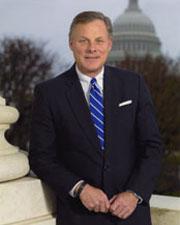
Mr. President, I wanted to pick up where I was before lunch. I am glad to see my good friend from Ohio. We were having conversations before lunch on this bill. Clearly, it is an important piece of…
Mr. President, I wanted to pick up where I was before lunch. I am glad to see my good friend from Ohio. We were having conversations before lunch on this bill. Clearly, it is an important piece of legislation.
As Dr. Coburn and I said before lunch, I think every Member of the Senate, I think every Member of Congress, and probably everybody in the country believes it is important that we cover children; that the prevention and wellness aspects of having coverage means we have a healthier community; that we take those who, by the way, are historically more healthy, younger folks, and we give them the assurances of check-ups and the ability to visit a doctor so that we minimize anything that can happen to them. In 1996 and 1997, the Senator from Ohio and I were both on the Energy and Commerce Committee. We were involved in crafting the original legislation. I remember it today as well as I do then. The legislation was targeted at a specific group of our country's children: those over 100 percent of poverty whose families made too much for Medicaid but those with not enough income between their parents to be able to afford health care at the time.
My gracious, health care has done nothing but get more expensive since 1997. We appropriated and authorized $40 million for a 4-year program. The target--I can't remember what the target was for the number of kids--but today, at 100 percent of poverty for a family of four, they would have an income of $22,000. At $22,000 they apply for Medicaid, regardless of what State they live in, and health care is provided under Medicaid for that family.
As Dr. Coburn pointed out, I think rather clearly, for Medicaid and SCHIP today, we have probably eliminated access to about 40 percent of health professionals because they choose not to
participate in the programs. Why? It is because the reimbursements are so pitiful in those two programs, regardless of the State. Doctors have chosen to opt out of providing that care and focus just on the Medicare and private market or just on the private market.
So just the creation of Medicaid and SCHIP means we have eliminated some choices for these people where this coverage is their only option, it is their safety net. Now, if I had my druthers, I would rather be here debating overall health care reform because I believe every American should have the ability to be insured.
I am not sure I would have much disagreement in Congress or in America on that. We will have a big disagreement on how we get there, but we can get there. Were we to have that debate today, we would not be here talking about the expansion of one program that hits a small group of Americans and is targeted to put them in a one-size-fits-all program that only 40 percent of the health care professionals even participate in.
Now, having said all of that, SCHIP is up for reauthorization. We are now 10 years down the road, and we are talking about, How do you change this bill to apply what we have learned? Can we reach new efficiencies in cost? Can we cover more people? If so, how? Which States have done well? Which states can we learn from? Which have done poorly? Which states should we work with in the legislation to try to prod?
Well, we find in this legislation that in 10 years, we have moved from 200 percent of poverty to 300 percent of poverty. I do not have any big disagreement with that, with the rise in health care costs. Three hundred percent of poverty for a family of four is $66,000 a year.
So under this program--SCHIP currently, not under the reauthorization bill--if a child lives in a household that has an income of $66,000, above $22,000, they are eligible in several states for SCHIP today.
So what is our experience so far? As we get ready for this reauthorization, we have 7.4 million children enrolled in SCHIP in 2008. But the average monthly enrollment for 2008 was 5.5 million, meaning that somewhere, somehow we have had almost 2 million drop out. They have moved to a different State. The income of their family changed. They are no longer eligible. So 5.5 million covered children today seem to be sort of the fixed point.
Well, how many are eligible today but not covered? I think my colleagues would be amazed to find out it is 5.4 million. We are covering 5.5 million, but we are not covering 5.4 million who are eligible under today's guidelines.
So in typical Washington response, what do we do? We come out with a reauthorization that expands the eligibility. Already we have in place a waiver where New Jersey can currently go up to 350 percent of poverty. Well, what is that? That is $77,175. Now in the reauthorization bill, we are going to grandfather the 350 percent, and we are going to go up to 400 percent for New York. What is 400 percent? Well, that is $88,200. How do those 5.4 million who were eligible before get enrolled? Well, the answer is, they are not. This is what Dr. Coburn was talking about. How about the kids nobody is going out to enroll? Do auto enrollment. It is easy.
But that is not what this bill is attempting to do. This bill is attempting to increase the eligibility to get a bigger slice of America eligible for Government programs so that at some point the number of folks who are on Government programs--Medicaid, Medicare, SCHIP, VA, the list goes on--is well over 50 percent of America, and then the die is cast. We go to a single-payer system. The Government runs it, the Government tells us how much we get, the Government tells us where we go, and the American taxpayer pays for everybody.
Now, here is the decision the Senate has--the House has already voted this bill out. We have a decision whether we are going to stand up for those 5.4 million. Those are the tough ones. Those are the ones who did not walk into the door and raise their hand when their parents were told they were eligible and say: I want to enroll. I would like health care. I would like prevention. I would like a primary care doctor. I would like a medical home. No, they are the 5.4 million children who are out there to whom no State is reaching out. They are just letting them fall by the wayside. Rather than focus on the 5.4 million, we are focusing on how we increase eligibility, how we change the income parameters.
Let me point out New Jersey, which is grandfathered to 350 percent of poverty under this bill, ranked 47th in the country at enrolling children who are at 100 percent to 200 percent of poverty. Let me say that again. A State that we have allowed to be grandfathered in at 350 percent of poverty ranks 47th out of 50 in the United States at enrolling kids between 100 and 200 percent of poverty.
As a matter of fact, 28 percent of their children are uninsured in that 100 to 200 percent of poverty. Yet once again we are going to grandfather them and allow this incredible expansion to continue. So where is their focus? Let's go after the easy ones. Let's go after the ones in families who are easier to find and who are easy to enroll.
Well, why does that happen? Let me point out to my colleagues, Medicaid gets a matching rate from the federal government, depending upon which State you are from, and that rate is from 50 percent to 75.9, with a ceiling of 83. So as the State makes a Medicaid payment of $1, depending upon what State you are from, the Federal Government reimburses anywhere from 50 cents to 83 cents.
But if you are enrolled in SCHIP, the range goes from 65 to 85. So if you are on the bottom, if you are a State on the bottom, why would you lobby for expanded eligibility? It is because if you are on the bottom, you are going to have an increase in the Federal share of what you pay out from 50 to 65 cents. It is 15 cents of every dollar. You are crazy, if you are a State, for not lobbying for this because you are going to spread the cost over the entire taxpayer base. It makes a lot of sense if your focus is not on 5.4 million children and how they get covered and how they get health care.
If you are only focused on how you get a bigger piece of the Federal pie, if you are only focused on how you get a bigger share of space at the trough, then this makes a tremendous amount of sense. But from the standpoint of developing health care policy, it makes absolutely no sense whatsoever.
I don't take my position just looking at one section of the bill. Dr. Coburn pointed out, as I did earlier, that the financing of this bill is suspect. In fiscal year 2012, which is the last of 5 years, we allocate $14.98 billion to fund the program, almost $15 billion. Yet in 2013, the bill reduces the allocation to $5.7 billion. How do you have a health care program for children, with all these people enrolled, that is sucking up $15 billion a year, and all of a sudden, the next year it drops to $5.7 billion? The answer is, you don't. We all know it. The reality is, you have to go to the next 5-year period to find the answer. The answer is, starting in year 6, out of the next 5-year budget, we do a one-time payment of $11.7 billion on top of what it costs us to run the program for 2013.
So what does that mean? Frankly, it means the accounting methods used in Washington are not accounting methods any family in America could use because their creditors would walk in the door and shut them down. Yet we get up here every day and claim we do things just like people at home. In fact, we know when it comes to budgets, there is no American family who can get away with what we get away with, especially when it is this obvious. One year it costs us $15 billion. The next year it costs $5.7 billion. There are only two ways you accomplish that. You either reduce enrollment drastically or you magically come up with the money and you stick it in and say: Oops, we didn't understand that was going to happen.
We understood it was going to happen. It is done to fit the parameters, to get around pay-go rules so you can actually take this money and stick it right onto the deficit and the debt of the country. In other words, we are going to provide our children health care with one hand, and we are going to rob their financial future with the other, all at the same time. It is miraculous that we would even attempt to do this. At least we could ask for honesty and transparency in how we are funding this program.
It is important that we sort of recap. What is SCHIP? I think a lot of people
who might not have been in Congress very long, certainly weren't here in 1996 and 1997 when we passed it, people across the country might be saying: I have never heard of this program. Again, we saw the need in 1996 to create an insurance product for children's health, for those people who financially didn't qualify for Medicaid and didn't make enough to purchase insurance on the open market. SCHIP was created with the vision of trying to take kids from 100 percent of poverty to 200 percent of poverty and make them eligible for a program where 100 percent of them would have health care. Nationally, the parameters grew from 100 percent to 300 percent, and we still haven't met the original 1996 mission of covering all the kids. Because with 5.5 million people covered today, average monthly number, we still have 5.4 million over here who are eligible and don't have insurance. Clearly, we have a tremendous amount of work to do to get the SCHIP program to fulfill its original mission.
Let me go specifically to the bill before us. CBO estimates the bill will increase outlays by $32.3 billion above the baseline over 5 years and $65 billion over 10. The cost is offset by a tobacco tax. I am from North Carolina. I can get up and wail about how this is unfair. It is not the first time Congress has done it. It is the most regressive tax there is. In essence, we are taking a group who financially are challenged and, according to every analysis I have looked at, the people who are going to be most taxed by a tobacco increase are those people in the lower socioeconomic levels. So, in essence, we are not spreading this across taxpayers. We are asking the parents of these children to pay for the expansion in eligibility because we are going to tax them for every cigarette they buy and consume. We are going to hope that they quit. When they quit, I am not sure how we are going to fund the program except probably do it the same way we are doing it in the year 2013. We will come up with the money in some way and some fashion.
It is important we realize today we have something we call a Medicaid sandwich. Medicaid starts here; SCHIP goes here; Medicaid wraps on the top. It is hard to believe we could have something designed that is so complicated for the States, that Medicaid applies here to some; SCHIP applies here to others; and Medicaid applies on top of that to an even larger group. If it seems confusing, it is. If it is this confusing, one has to ask: Why don't we change it? Why don't we fix it? Yet as I continue to go through the Baucus bill, what I find is that we are making it more complicated. We are designing it in a fashion that aggressively goes after an increase in enrollment but does not go after the 5.4 million children who currently today are unenrolled in the program but are certainly eligible. As a matter of fact, the Baucus bill spends $34 billion over 5 years. It targets 5.7 million new children. I might add, 2 million of those children today are currently covered under their parents' insurance. So we have actually got a net pickup of 3.7 million kids who were uninsured. That is $34 billion.
There is an alternative plan. It is called the McConnell substitute. It is called Kids First. It uses $19.3 billion over 5 years to enroll 3.1 million kids who are uninsured today. So what do we get with the $34 billion investment that we are not getting with a $19.3 billion investment? The answer is quite simple: 600,000 uninsured kids who are enrolled under the Baucus bill. When you do the simple math on that, you find out you are paying $4,000 per enrollee under the Baucus bill.
Now, I don't expect everybody to associate with this, but last year I had a son who was a senior in college. Because we have these funky Government rules that say no matter where you are in your education process, when you become 22, you are no longer eligible to be under Government insurance for your family--it doesn't apply just to Members of the Senate or to Congress; it applies to every Federal employee--I was forced, as a parent, to go out and go through the thought process of getting my son insurance. Sure, he is 22 years old. He is healthy as a bull. There is no reason I should suspect he is going to get sick. But what if something happens to him.
So I immediately did what every good Federal employee would do. I called the correct office up here, and I said: This has to be something you have run into. Have you got some type of gap insurance I can turn to and I can purchase for that 22-year-old healthy son? They said: Certainly, Senator. We have negotiated with the same company, the same plan he was under, and he can go on that tomorrow. I said: How much is that? They said: $5,400 a year, for a 22-year-old, healthy-as-a-bull senior in college.
I did probably what every parent would do. I called the college and said: Have you got a plan? Here is the situation. They said: Absolutely. We have negotiated with the same company, with the same plan he was under as a child of a Federal employee. I said: What is the premium? They said: $1,500 a year.
Now, that lesson I actually learned when I became a Member of Congress. When I became a Member of Congress, I chose the same insurance plan I was under in Winston-Salem, NC, working for a company of 50 employees, the same exact plan paying the same 25 percent, and the only difference was my health insurance cost went up $100. Why? Because a company of 50 employees negotiated a better plan than the U.S. Government on behalf of 2 million employees. But it had been 14 years. I had forgotten that. I relearned it firsthand though with my son, when all of a sudden I realized he got a plan for $1,500 that the University of North Carolina Chapel Hill had negotiated, and the Federal Government had negotiated the same plan at $5,400. No wonder parents are confused. No wonder most Americans are confused. What a screwed up market this is. How unbelievably complicated is it for an individual to try to go out and access insurance, and at what point do you actually know that you have found a value?
Let me try to bring some relevance to this story. For that 22-year- old, healthy-as-a-bull senior in Chapel Hill, his health care plan was $1,500 a year. For all these 600,000 kids we are adding to SCHIP, we are spending $4,000 a year to insure them. The average cost per policy for somebody under 18 in America today is about $1,132. Yet under the Baucus bill we are going to invest $4,000 per child, per those 600,000 children, to make sure they are covered--not a wise investment. But considering my experience with the Federal Government, I can understand why, for some people here, that makes absolutely perfect sense.
Let's assume for a minute somebody is going to say my numbers are wrong. I am sure they will before the debate is over. Let's assume for a minute we are trying to figure out the number of increased enrollees--and I am not talking about the ones who had their own insurance and we just shifted them over to government insurance--what are we paying for them? We are paying about $2,200. They are still paying $700 more a year to insure every child 18 and under than I paid in premiums to cover my 22-year-old, healthy-as-a-bull senior in college. So we are overpaying at least by $700. At most, we are overpaying by almost $2,500. Somewhere in that range, I would hope the American people would say: Hey, let's stop for a second. Let's call time out. Let's go back and get Congress to re-look at this program because this doesn't make a lot of sense.
I am not getting into any of the aspects that have already been addressed which deal with the loopholes that were created. I actually sat on the floor and heard somebody say this was a bipartisan bill. If you count one Republican vote out of the Finance Committee, then you are right, it is bipartisan. But I am not sure that is President Obama's interpretation of what bipartisanship is. He came to the Hill. He had lunch with us today because he is trying to get more Republicans to support a stimulus package because he doesn't want to just win it, and he doesn't want to win it by one vote. He wants the American people to understand that there is confidence up here in the legislation that is passed. He probably should have talked about this bill. It is going to be bipartisan, not by many votes.
If that is the type of bipartisanship we want, then it is going to be a long couple of years.
My hope is we can actually get something done. There are so many areas I
could talk about on this bill, but it would keep me here forever, and I see my good friend, Senator Whitehouse, is in the Chamber.
Let me end with this. I am sure I will come back. What I want Members to search their souls and ask is, Is it really the Federal Government's responsibility and, more importantly, the taxpayers' responsibility that a family making $88,000 be included in a plan that is designed and was originally designed to take care of kids between 100 and 200 percent of poverty? Do we feel bad that today 5.4 million children who are eligible at 100 percent to 200 percent of poverty are not enrolled in the program?
This is not the first time I have had a test like this. My own President, last year, proposed we increase spending for HIV/AIDS patients in Africa from $15 billion to $50 billion, and to many people's amazement, Tom Coburn and I supported the President. Then all of a sudden they made a change in the program. The program had always said 50 percent of the money had to go to the treatment of HIV and AIDS patients, meaning they actually had to deliver medicine to them.
Well, when all of a sudden the countries that got these Federal grants to carry out these programs in Africa looked at the program, they said: My gosh, for us to get from committing $7.5 billion all the way up to $22.5 billion in delivering medicines to people who have HIV or AIDS, that is going to be tough. We are going to have to work to find these people. It is going to be dangerous in some cases for us to get drugs out.
What did the White House do? They dropped the requirement in total. They did not require one dime of that $50 billion to actually go to the delivery of drugs to HIV and AIDS patients. So what did we do? We held up the bill. We were taking flak from our own President because other people wrote a bill that was structured poorly. It actually did not accomplish what we set out to have with PEPFAR originally.
At the end of the day, they put back in the requirement of 50 percent, and today, for the multiple countries this applies to, we have a commitment that $22.5 billion is going to go to actually treat individuals who have HIV and AIDS--our original intent of the program. We just expanded it.
Now, we were not going to get there just by saying it is difficult, therefore we do not think we should do that. And we are not going to cover these 5.4 million kids who are eligible but not enrolled if we say: Do you know what. This is hard. And since it is hard, why don't you change the program so the eligibility is wider so we can get some of the kids who are out here in different income groups who are easier for us to enroll than for us to go and find the 5.4 million who are so hard to find.
Well, I am going to say to my colleagues, just like I said to my President: No. That is not what we intended to do. We put this program together to make sure the most at-risk kids in this country had health coverage, so they had a medical home. To suggest we are now going to change the parameters of this and allow a larger income pool to come in because it is hard to reach out and find these 5.4 million people, no; it is not going to happen. It may happen, but it should be as difficult at happening as it possibly can.
I look forward to the debate we are going to have. It is my hope we will have an opportunity to actually look at honest budget numbers that share with the American people exactly what this costs, that we can look at the eligibility requirements with predictability, understand who is going to have an opportunity to be enrolled, and, hopefully, at the end of the day, when a bill passes--whether we vote for it or not-- that we can all look at it and say: There is a real chance that 100 percent of the kids at 100 percent to 200 percent of poverty have a real opportunity to be enrolled in this program. I fear without changes to this legislation that will not happen. We will not have fulfilled what we set out to do.
Mr. President, I yield the floor.
Mr. President, will the Senator yield for a question?
Would any of those 3.3 million children have been in 100 percent to 200 percent of poverty?
Let me suggest to the Senator--and I will not ask him to yield much longer--there was the same expansion of eligibility in last year's bill, so the likelihood is any increase in enrollment would have been spread across not just the 100 percent to 200 percent of poverty, but all the way up to the 400 percent of poverty.
Mr. President, I would be happy to disclose to my colleague that I voted against the bill, for the same reasons that without changes I will oppose it this year because the eligibility requirement is being expanded.
As I said, and I thought fairly clearly, when you expand eligibility, you take the pressure off of making sure the enrollees come from the most at risk. It is my hope we can modify this bill. I am not embarrassed to be on the Senate floor and talk about the aspects of this legislation that I am unhappy with. But certainly I can count, and I know the majority can move this bill at any point they feel comfortable, and I am sure they will.
At the end of the day, it is my hope we will cover as many of the originally targeted children in that 100 percent to 200 percent of poverty as possible.
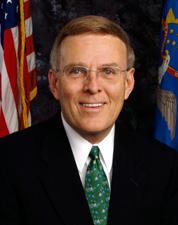
Mr. President, I ask unanimous consent the order for the quorum call be rescinded. Mr. President, we are on the Defense authorization bill, apparently stranded, unable to vote on an amendment that…
Mr. President, I ask unanimous consent the order for the quorum call be rescinded.
Mr. President, we are on the Defense authorization bill, apparently stranded, unable to vote on an amendment that had been offered dealing with the issue of the F-22. The F-22 airplane is a remarkable airplane. I have talked to pilots who have flown it. I have seen it at Edwards Air Force Base. It is an extraordinary airplane.
It costs a lot of money. We have built as many as the Defense Secretary wants built at this point. The Chairman of the Joint Chiefs, the Defense Secretary, the head of the Air Force, has indicated they want to cap the F-22 at that number--I believe it is 187--and do not wish to build more. They say that is all we need. That is all we want.
There is a $1.75 billion fund that was put in this bill, now, as an amendment in the Armed Services Committee, to build more F-22s. So the amendment by the chairman of the committee and by Senator McCain, the ranking member, was to take the $1.75 billion out of the bill. I support the amendment--not because I don't like the airplane, I do; but if those who are in charge of the Pentagon, Secretary Gates; Admiral Mullen; the head of the Air Force, Secretary Donnelly; General Schwartz and others say we do not want anymore F-22s, don't need anymore F-22s to do the mission that we believe is necessary for that airplane, and instead we want to move toward the Joint Strike Fighter--if that is their judgment, in my judgment we ought not put another billion back into this bill. Yet that is what happened in the subcommittee.
I wish to call attention to the fiscal policy and where we are in this country. President Obama has been in office a relatively short period of time. He inherited an unbelievable mess. There is no question about that. We are in the deepest recession since the Great Depression. There is a substantial decrease in revenues and increased spending this year as a result of this very steep recession. Social service costs are going up, and there's more unemployment, more food stamps and so on. I believe there is close to a 20-percent reduction in revenue for the government and close to a 20-percent increase in spending. On top of that, Congress passed a stimulus or economic recovery program. All of this has driven the deficit up in this fiscal year, a very sizable deficit. That deficit will be very sizable next year and the year after.
It begins to go down and then goes back up in the outyears. This is a fiscal policy that is not sustainable for our country. It just is not. It is not a Democratic or Republican policy that is not sustainable, it is a fiscal policy of trillions and trillions of dollars of red ink that we must change.
If we cannot even deal with the issue of adding $1.75 billion to build more planes that the Defense Department says they do not want, we will hardly be able to deal with the more difficult fiscal problems in the future. So I support the amendment offered by the chairman and the ranking member. I hope we get a chance to vote on that amendment.
The issue of spending money we do not have, often on things we do not need, is not new in any committee in this Congress. There are plenty of areas where we can take a pretty big slice out of spending. You can do it, not with just big programs, you can do it with smaller programs. I brought to the floor a couple charts that show an issue that, in my judgment, is flatout total, complete, thorough government waste. I have tried, now, about 5 years in a row to get rid of it and have been unsuccessful. I finally got an amendment this past week added to an appropriations bill that shuts down the funding. But now we will see, there will be a big fight on the floor to restore the funding. Let me tell you what this is.
Again, we are not talking about a lot of money. In my hometown, this would be a lot of money, but my hometown is 300 people, so $20, $30 million is a lot of money.
This is a picture of Fat Albert, which is an aerostat blimp or aerostat balloon. This is Fat Albert, purchased by the government. In fact, we purchased a couple of them so we can put it way up in the air on a tether, and it would broadcast television signals into the country of Cuba because the Castro brothers run an operation down there that doesn't provide any freedom to the Cuban people, so we are sending them television signals to tell them how wonderful things are in the United States and how awful things are in Cuba.
Actually, the Cuban people do not need those television signals to know that because they can simply listen to Miami radio, or they can listen to what is called Radio Marti, which actually gets into the market in Cuba. We broadcast Radio Marti. I don't object to that. It costs a fair amount of money. I don't object to that. We get radio signals into Cuba to tell the Cuban people what is going on in our country and the problems they face in their country.
I have been to Cuba. I think the Cuban people know pretty much the problems they face with the Castro regime, a regime that squeezes the freedom out of the Cuban people.
But here is the deal. We have aerostat balloons, first of all, to put television signals into Cuba. The problem is we have spent a quarter of a billion dollars doing it and the Cubans can't get the TV signal. Why? Because the Castro government jams it easily. They jam it just like that. We used to broadcast from 3 in the morning to 7 in the morning a signal no one can see, so we use these balloons on a big tether and broadcast a television signal to people who can't see it. We kept spending money thinking it was a great thing to do, broadcasting a television signal nobody can see. In fact, one of these balloons got loose, got off its mooring, and wound up somewhere in the Everglades. They had a devil of a time trying to catch this balloon; and another balloon disappeared in a hurricane, and they have never seen it since.
They decided, you know what, we can actually clip the American taxpayer for more than a balloon. What we will do is buy an airplane and broadcast the television signal the Cuban people can't see from an airplane, so the American taxpayers bought an airplane. It flies, I think, 5 or 6 days a week, broadcasting television signals into Cuba that the Cubans block, that no one can see.
You talk about ignorant? At a time when we are deep in debt, spending money we don't have to broadcast television signals to people who can't get it? That is unbelievable to me.
Here is what the Cuban people see. All of us have seen bad television with snow covering the entire screen. Here is what is broadcast--it is programs with caricatures of the Castro brothers. The Cubans don't need to be reminded the Castro brothers are a scourge in that government.
Let me describe what John Nichols, who is a professor of communications and international affairs at Penn State University, has said:
TV Marti's response to this succession of failures over a
two-decade period has been to resort to ever more expensive
technological gimmicks, all richly funded by Congress. And
none of these gimmicks, such as the airplane, have worked . .
. It's just the laws of physics. In short, TV Marti is a
highly wasteful and ineffective operation. . . .
Even as I speak, I assume our airplane is broadcasting a television signal to the Cuban people who cannot receive it.
TV Marti's quest to overcome the laws of physics has been a
flop.
John Nichols says, the same witness.
Aero Marti, the airborne platform for TV Marti, has no
audience currently in Cuba, and it is a complete and total
waste of $6 million a year in taxpayer dollars. The audience
of TV Marti, particularly the Aero platform is probably zero.
. . .
Talking now about the airplane platform.
We are talk about the GAO report.
The best available research indicates that TV Marti's
audience size is small . . . telephone surveys have reported
less than 1 percent had watched TV Marti over the last week.
I don't know what 1 percent is. I don't know what less than 1 percent is. That is minuscule, right? But I have offered an amendment that takes out about $15 million to support TV Marti, which is a program that has now wasted about a quarter of a billion dollars sending television signals to Cuba that no one in Cuba can see. You know what, it is very hard to get this kind of thing stopped.
The reason I wish to mention it today is we are on the floor talking about $1.75 billion for the F-22. We are, I assume--almost everyone here is supporting the next generation fighter we are building, the Joint Strike Fighter. But the Pentagon says they want to stop and not order anymore of the F-22s. It is a reasonable thing, to me, that being deep in debt, choking on red ink, at least we might want to accept the recommendation of not building that which they do not want. At least with respect to Aerostat balloons and airplanes and television signals to Cuba that no one can see, the very least the taxpayers should expect of us is that perhaps we would stop spending money sending television signals to no one. Maybe that is not too much to ask.
Let me ask consent to speak in morning business for 5 minutes on a different subject.
Mr. President, today House and Senate leaders appointed members for a Financial Crisis Inquiry Commission. That is the title, the Financial Crisis Inquiry Commission. I have been calling for both a commission and also a select committee of the Congress because I think that we have a requirement and responsibility to establish what is the narrative that has caused this economic and financial crisis in this country. We are in a deep financial crisis and have been for some long while.
This didn't happen as a result of some giant hurricane or some tornado or some flood, or some other natural disaster visiting our country. No, this was not a natural disaster. This happened as a result of decisions being made by human beings here among us. The question is who? And what decisions? How did this happen? What is the narrative that has caused the most significant crisis since the Great Depression?
Very smart economists have said, you know what, over a long period of time from the Great Depression forward, we created stabilizers in this country so we would not see steep recessions or certainly not a depression in our future. We are evening things out, they would say, and that was probably true for a while, but this recession is deep, this hole is steep. The question is, What caused it? What happened.
I support the creation of a commission today. I offered legislation in January of this year, called the Taxpayer Protection Act, which called for the creation of a commission to investigate this financial crisis. My colleagues, Senator Conrad and Senator Isakson, similarly offered a commission proposal, a piece of legislation during debate earlier this year. I support the notion of going forward. The appointments today to this Commission are welcome. I hope the Commission does all that is necessary to uncover what has happened here.
I still believe we need a Select Committee in the Senate. The New York Times said it in an editorial, nothing can substitute for the work the Senate must do itself. I say that because we now have, in recent days, additional news items in the paper you read. Let me pick one. I don't mean to pick this company out just to be punitive, but it is a good example in recent days: Wells Fargo.
Wells Fargo is a FDIC-insured bank. It is one of the biggest banks in America:
Wells Fargo to expand securities business. It plans to grow
and invest in securities activities that it largely inherited
from Wachovia. The business is to be called Wells Fargo
Securities.
What is Wachovia? Wachovia is a bank that was failing because Wachovia had all kinds of problems. Wachovia was a bank that had purchased Golden West Financial, which had about $120 billion, we are told, in toxic option adjustable rate mortgages.
By the way, related to this, I saw in the newspapers the other day that pick-your-payment mortgage plans have actually now had a higher default rate than other subprime mortgage loans. Think of that. You look at that and think, What was the pick-your-payment plan? That was the plans put out by these mortgage companies--sophisticated, exotic plans--saying to people, you know what, pick your own payment. You tell us what you will pay and we will write a mortgage around it.
So we had all of these strange plans out there, exotic plans, some of which were creating an unbelievable bubble of speculation. We had bank holding companies buying them and we had FDIC-insured banks actually trading them. Pretty soon you got toxic assets lying in the belly or the gut of these financial institutions, and they are going to go belly-up unless somebody else buys them.
So Wells Fargo buys Wachovia, and then Wells Fargo announces that, well, our investment banking and our capital markets businesses are now going to operate under a new name, ``Wells Fargo Securities.''
The question is this: With the biggest banks in the country operating, in many cases with holding companies engaged in real estate and securities issues, having demonstrated now that these holding companies do not have firewalls that are much thicker or much more beneficial than tissue paper, are we still going to continue to see all of this?
Are we still going to see FDIC-insured institutions, for which the taxpayers are ultimately responsible for failure, talking about: We are going to get involved in more risk trading, more securities?
Wachovia. Well, Wachovia Bank, I have spoken of them before. Wachovia Bank was one of those banks buying sewer systems in Germany. Why? Because an American bank wanted to own a sewer in a German city? No. They wanted to avoid paying U.S. taxes, so they did sale-lease back transactions with German sewer systems.
That is part of a culture issue with companies, it seems to me, when you do that sort of thing. But now we have Wells Fargo that bought Wachovia, announcing the best part of what they bought was Wachovia's securities business. The fact is, Wachovia was not going to make it. That is why Wells Fargo purchased them.
We ought to be asking a couple of questions these days about the Administration's announced plans for new financial reform, which I welcome by the way. This President inherited this mess, so he is talking about financial reform, and I welcome that discussion.
One, I think we ought to have a healthy and robust discussion about whether the Federal entity that shall become the systemic risk regulator in this country should be the Federal Reserve Board.
Not me. Not me. The Federal Reserve Board is what has helped cause this
problem. I mean, the Federal Reserve Board acted blindly for over a decade. In addition, the Federal Reserve Board by itself is almost totally unaccountable to anyone and operates in very substantial secrecy.
Why would we decide to have an agency that has failed over the last decade or so in managing and supervising the financial industry in this country, that watched the creation of these big holding companies, watched what happened with the mortgage companies with unbelievably speculative instruments, watched the advertisements on television saying: If you have been bankrupt, slow pay, no pay, got bad credit, come to us. We will give you a loan--the Federal Reserve watched all of that and did nothing. Now we are going to be told they are the ones to save us with respect to systemic risk in our economy? I do not think so. That is No. 1; the Federal Reserve Board is going to be the entity to deal with systemic risk? Boy, there is no evidence, at least in recent years, to suggest that makes much sense.
No. 2, no discussion yet, and there might be, on this issue of too big to fail. Does it matter that we have allowed the creation of entities in the financial sector that are too big to fail? In my judgment it matters because if they are too big to fail, then the American taxpayer bails them out. That is what happened last fall.
The Treasury Secretary leaned over the lectern to us one Friday and said: Look, if you do not pass a bailout bill in 3 days, a three-page bill giving me $700 billion, this economy is going to fall off a cliff.
Well, I did not believe it. I did not vote for the bailout. But the fact is, all of this was because some of the largest financial institutions in the country, he said, were in deep trouble.
Why were they in trouble? Because they loaded up with substantial risk. Congress, in the last decade, has passed laws that allowed them to do that. They said this is modernization. But when we create institutions that are too big to fail and then they load up with substantial risk, especially those that are FDIC-insured with holding companies now, engage in securities, and that is exactly what Wells Fargo is announcing: We bought Wachovia. Now we will take the securities on with Wachovia and decide to juice it up.
Should we continue with the doctrine of too big to fail? I do not believe so. Yet in the intervening months, the last 8 months or so, the very institutions that were judged too big to fail and were required to get bailouts from the American taxpayer are still engaged in merging with other institutions, making them bigger and even less able to fail.
So is there someone willing to intervene to say too big to fail has to change? Must we perhaps at least have a discussion about breaking up some institutions that are too big to fail? What about very large strong regional interests that are not too big to fail? I am just asking the question because nobody, in talking about financial reform that I am aware of these days, is willing to address the question of too big to fail. And you cannot address this question of financial reform without including it.
All of us want the same thing for this country. We want this country to recover. We want our economy to expand and grow and create jobs and be healthy again. The fact is--I have talked about this many times. I taught economics briefly in college. The fact is, all of the charts and graphs and indices are irrelevant as compared to the confidence of the American people.
When the American people are confident about the future of this country and about their future, about their job, about their family, then they do things that manifest that confidence. They buy some clothes, buy a car, take a trip, buy a house. They do the things that expand the economy because they are confident about the future.
When they are not, they do exactly the opposite and that contracts the economy. The question is, how do we give the American people confidence going forward that things are going to be better? Month after month, because unemployment has a long tail even past recovery, we see hundreds of thousands of people having lost their jobs. Obviously, those folks do not have a lot of confidence. They feel helpless and hopeless.
How do we give people confidence we are going to fix things that are wrong so this will not happen again? That is where this issue of financial reform comes in. Part of that confidence, it seems to me, can come from this institution, from the Congress and the President. Part of it can come from the people watching this institution.
Take a look at this amendment, an amendment that says: Let's not spend $1.75 billion we do not have on something the Pentagon says they do not want.
Confidence can come from affirmative action on that. Part of that confidence could come from 100 or 1,000 of these examples, a little program called TV Marti, broadcasting television signals to people who cannot see it, and doing it for 5, 10, 15 years and spending a quarter of a billion dollars. Part of that confidence could come from the American people taking a look at our deciding to shut these kinds of things down and trimming back government that has become bloated. So we can do some of this to create confidence.
But another part of it, it seems to me, has to come from the administration's judgment about what is real reform in financial reform. That must include, in my judgment, the issue of too big to fail. It must include effective regulatory oversight so we do not have the kind of activities going on that we saw for the last 10 years: financial institutions engaged in unbelievable practices with no one minding the store and no one watching who were the referees of the system, wearing striped shirts and whistles and blowing the whistle when they saw a foul in the market system. We cannot continue that. We need effective regulation. We need effective reform. When we get that, the American people will feel: You know what. They fixed that which caused this serious problem, and we feel better about the future of this country.
We have a lot to do in a short time. Some big issues of health care, energy, and climate change, and others. I am going to visit about the issue of climate change tomorrow. But we have very big issues that have great consequences for this country. But at the moment, we stand in a very deep recession.
The American people are concerned about the future and want some assurance that all of us are doing the things necessary to put the country back on track.
One step today is the amendment that was offered by the chairman and the ranking member of this committee. It is $1.75 billion. That is a lot of money. But step after step after step in the right direction can give people confidence about the future of this country.
I yield the floor and suggest the absence of a quorum.
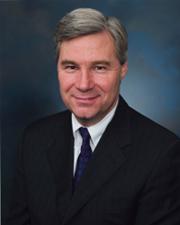
Mr. President, I see my colleague and friend from Virginia, Senator Webb, who is prepared to speak, and we will recognize him in just a moment. I would note there would have been, by our estimates,…
Mr. President, I see my colleague and friend from Virginia, Senator Webb, who is prepared to speak, and we will recognize him in just a moment.
I would note there would have been, by our estimates, 3.3 million children who would have been covered had the bill passed in 2007. That would have been one very good way to reduce the number of children in this country who are not protected by health insurance.
Of course.
As I understand it, the bill contained both funds and programs for outreach that would have supported the States in their initiatives to find the children who, because their parents were moving or for one reason or another, were eligible but had not entered into these State programs. So I think the answer to that question would be yes.
I think the increase in enrollment would have spread wherever the program went. There are very few areas, as the Senator knows, where the eligibility level is 400 percent of poverty. In the vast majority of the country, in my State, for instance, it is well below that. It is a program that supports working families, that supports low-income working families, that makes sure their children get health care.
But for a number of reasons, probably the most prominent of which is people moving from location to location and not being registered with the local program, there are outreach requirements. I would be happy to work with the Senator on improving those outreach requirements in any way he wishes. But I think to hold the entire bill and his support--I think in this case we are estimating it will now reach 4.1 million children--hostage because of not having gotten the outreach better is a strategic mistake.
If your goal is to insure more children, then you should go about it by insuring more children. If the outreach is a problem, then we can happily make that better. But for outreach to be criticized, when it was President Bush who vetoed that bill, I am not sure how the distinguished Senator from North Carolina voted on that--
I understand the Senator from Virginia wishes to speak. I will simply respond before I yield the floor to Senator Webb that I have had quite a number of years of experience with our Children's Health Program in Rhode Island, back to the years when I came in with Governor Sundlun in a bad economic crisis in Rhode Island--probably the largest percentage deficit in the State budget of any State ever recorded. Even in that very gloomy fiscal environment, Governor Sundlun insisted we build a statewide universal health care program that protected children.
SCHIP is very much in line with that. The people who have been working on that for these many years in Rhode Island--and I suspect it is the case in many other States--feel a real passion for trying to make sure children get health care, that they get the health care to which they are entitled.
So I am not sure the notion that by just putting more pressure on them, by just refusing to add any other children until they have done this, is really a productive or fair way to go about
reaching the children who have not been reached. What the bill does is provide outreach funds and empower these people who care so deeply about this issue to actually get out there and work harder to find them, have the additional resources to find people. From my work in law enforcement, my work with schools, my work on health care, there are a lot of people who live apartment to apartment, very hand to mouth, and it is a very significant challenge to keep up with them. The resources to do that, I submit, would be the best way to solve that problem, not holding one set of children hostage to providing health care for another set of children.
With that, Mr. President, I yield the floor for the distinguished Senator from Virginia.
Mr. President, this week we have the chance in the Senate to provide health insurance to 4.1 million children in this country who now don't have it, to cover 11 million children total. All we have to do is the right thing and pass H.R. 2, the Children's Health Insurance Program.
I know the distinguished Presiding Officer from Nebraska and the distinguished Senator from Virginia, who has just spoken so eloquently, have shared the experience I have had in my home State of Rhode Island, and that is to travel around and hear personal stories from people whose lives and whose health have collided with our broken, dysfunctional health care system. Too often, families in this country can't afford to pay for the care they need. As our economic troubles worsen, that problem only grows more acute. Too often, they can't even get in to see a doctor. Too often, when they do receive care, it falls short in quality, in efficiency, in effectiveness, and in timeliness.
The crisis in our health care system affects all of us, but it is greatest and it is most tragic when it affects our children. That is why Congress created the Children's Health Insurance Program which for years has given millions of uninsured, hard-working American families access to health care for their kids.
The program has not only expanded health care coverage for children, it has encouraged States to be flexible, innovative, and responsive in meeting their families' health care needs. We come from 50 different States with 50 different sets of history, demographics, and economics, and as a result, the States come up with different programs. That is something to celebrate, not to bemoan. The program has safeguarded the vulnerable, it has united families, and it has invested in the future of our Nation. It is a special program of all the things that we do here.
The Children's Health Insurance Program means that children are more likely to receive medical care for common conditions such as asthma or ear infections. It means that children end up with higher school attendance rates, and that children have higher academic achievement. It means that children have more contacts with medical professionals. It means that children receive more preventive care. It means that children go to the emergency room when it is an emergency, and when it is not, they have someplace else to go that allows them and their families to stay out of those expensive urgent care settings. So as we have done for the past 2 years, this week we are working to pass legislation to ensure that every eligible uninsured child in America can get regular checkups when they are well and can get medicine when they are sick.
Not long ago, former President Bush denied children needed health care coverage by vetoing this legislation. But the American voters have spoken and we are in a new era in this country--a new era for peace of mind, for security, and for dignity for American children and for their families. With a new Congress and a new President committed to health care for all American families, I could not be more hopeful as we discuss this bill today.
I am especially proud to serve with my senior Senator, Jack Reed of Rhode Island, and to support him in this fight. I have been in the Senate for 2 years now. Before I even got here, Jack Reed was one of the most prominent, most ardent, and most determined fighters for our Nation's children. Frankly, it is in significant part due to his relentless work that we have come this far.
I am proud also to represent a State that has one of the lowest rates of uninsured adults and children in the Nation. It was not easy. Rhode Island worked hard over the past 15 years to achieve this success. It began with the RIte Care Program in 1993. In 2001, the creation of the Children's Health Insurance Program allowed Rhode Island to further reduce uninsurance rates in the State. I am proud to be on the team of former Governor Bruce Sundlun who turned 89 a few days ago. When he was Governor, he created the original RIte Care Program. His vision and determination to do this, in a time of grave economic straits for Rhode Island, has yielded immense rewards. Now, as health care costs skyrocket and the number of people in this country who lack health insurance approaches the staggering number of 50 million--50 million Americans, and so many of them children--we in Congress have an obligation to strengthen initiatives like RIte Care through which States have made health care more accessible.
Today, 4.1 million uninsured children are waiting for us to pass this bill; 4.1 million children who might not see a doctor this winter when they get the flu because their parents can't afford to pay out of pocket for the visit; 4.1 million children who might delay needed vaccinations or other preventive care because their parents have to buy food instead; 4.1 million children who might not get an inhaler or insulin or--heaven forbid--chemotherapy because in this economic downturn, the money just isn't there.
Who could say no to uninsured, vulnerable children? Should we not at least be able to agree on that? Why would anyone say no? We plan to raise taxes on cigarettes, a tax that the American Cancer Society says could prevent nearly 1 million deaths and keep nearly 2 million children from starting to smoke; a tax with health savings that could ultimately decrease government costs for government health care programs; a tax that the Congressional Budget Office confirms will fully offset this bill so as not to add to our deficit. I don't think that would be a good reason to deny vulnerable children the safety and security of health insurance.
During the course of this discussion, some Members have tried to make this debate about illegal immigration. It is not. We should not permit the very difficult issue of illegal immigration to affect this bill to deny millions of children the health care they badly need. That would be a grave mistake. That would be a wrong.
Let me be very clear: Only children who are legally in the United States are eligible to receive coverage under Medicaid or the Children's Health Insurance Program. They must document their immigration status. Medicaid agencies use information provided by the Bureau of Citizenship and Immigration Services to confirm the status of legal immigrants applying for benefits. Further, this bill does not even require States to cover legal immigrant children. It simply provides and supports that option.
Legal immigrants pay taxes, they serve in our Armed Forces, and just like the rest of us, they play by the rules. They are our future citizens, and insuring their children makes sense. This was the law until 1996 when sweeping restrictions affecting legal immigrants were made. Since 1996, we have become wiser, and many of those restrictions have been reversed on a bipartisan basis by Congress. The provision in this legislation covering legal immigrants is fully consistent with that trend back to 1996 levels.
This Nation is slowly emerging from a dark time when our ideals and our virtues were too often hidden in the shadows, when we let our fear overcome our principles and our better judgment, when we lost sight of our priorities and left millions of people in the cold and millions of children uninsured. That time can end now.
This bill is a chance to show these millions of Americans that we have heard them and that we stand ready to help. We know how tough it is for working families in this economy. If there is one worry, one burden we can take off those parents' shoulders so they can be sure their children have the health insurance every American deserves, we should stand ready to help. This country should once again own its duty to protect those who cannot protect themselves and to restore dignity and hope where it has diminished.
I close by applauding Chairman Baucus and the Finance Committee for bringing this vitally important and long overdue legislation to the floor.
I urge all of my colleagues--it would be wonderful if we could do this together--to allow these 11 million children to be covered by health insurance, to have access to the health care they need, to grow up healthy and strong and ready to seize the boundless opportunities that are at the heart of the American dream.
I think we will find in the months and in the years ahead that there will be things we cannot do to help families. I know everybody in this Chamber wants to do everything they can, and we want to work as hard as we can, but the economic situation is dire, and we are not going to be able to do everything we would like. But this is something we can do. This is something we can do for American families and for their children, and I hope very much we will do it.
I yield the floor. I suggest the absence of a quorum.
Madam President, I ask unanimous consent that the order for the quorum call be rescinded.
Madam President, I see the very distinguished Senator from Arkansas in the Chamber to take over managing this bill.
Before I leave the floor, I want to make two points. I have been here while a great deal of discussion has taken place about 5.4 million children who are eligible for children's health care but who, through lack of effort, it is claimed, the State programs are not finding. The purpose of the argument has been to argue if we could make the States find these kids, they would be the ones for whom the program was truly designed, and that the 4.1 million additional children we are going to help with this legislation are sort of a distraction from that figure.
I have not been able to source that 5.4 million number to anything. I would note on a population basis, my State of Rhode Island is one three-hundredth of the country. So if there are 5.4 million kids out there, in that circumstance, Rhode Island should have, by my math, 18,000 of them. We only have 12,000 kids in the CHIP-funded portion of what we call the RIte Care Program.
From my own experience, the likelihood of there being 18,000 eligible children in our small State who cannot be found makes no logical sense at all, which gives me significant pause about the validity of this 5.4 million number upon which so much of our colleagues' argument stands.
The other point I would make is there are many States that could reach more eligible children, but the funding is not there for them. Rhode Island is one such State. When other States return funds, we get access to that pool, and we can expand our coverage.
So, in fact, by supporting this legislation, you will enable the State programs to reach whatever that group of kids is, whether it is 5.4 million or 540,000. I do not know what the number is. Madam President, 5.4 million sounds very unlikely. But even setting that question aside, the fact that we would vote against this piece of legislation in order to help those 5.4 million kids makes no sense whatsoever because this legislation contains both the funding and the outreach tools to allow the State programs to reach those very kids.
So that argument, at least from this Senator's perspective, appears to hold no water whatsoever, or at least requires substantially better justification and support before it should be counted on, at least in my view, by any Senator as a reason to oppose this piece of legislation.
With that observation, I yield the floor and suggest the absence of a quorum.
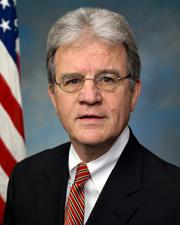
Mr. President, I wonder if anybody has ever asked the question--it has certainly never been answered--if you are a family and you qualify at the new 300 percent and you are buying your own insurance…
Mr. President, I wonder if anybody has ever asked the question--it has certainly never been answered--if you are a family and you qualify at the new 300 percent and you are buying your own insurance and you are covering your two kids, what happens when you transfer your kids to SCHIP, the Children's Health Insurance Program? What happens to your premium? I can tell you what happens to the premium. Do you know what happens to the premium? It goes down zero because health insurance is sold as an individual or a family product. So by taking two children, if I am earning 300 percent of poverty, and taking them off and transferring--now I am paying for it--and transferring that to the State Children's Health Insurance Program, the taxpayers of this country now will pay for that premium about $2,200 a piece when you can buy it in the private market for $1,100 a piece, but the parents will get no decrease in their insurance premium. That is why the crowdout provision is so negative for the American taxpayer and the generations that follow us.
My friend, the Senator from Ohio, mentioned that everybody wants to cover the 200 percent and below. The fact is, we have done a terrible job of covering the 200 percent and below. There are 5.4 million children out there today who do not have health insurance, whose parents do not have health insurance, who are eligible for Medicaid and SCHIP today, and they are not signed up. What are we doing? We are expanding a program that has only gotten about 51 percent of the kids who are eligible right now signed into the program. We are also being dishonest about what it costs. It is actually going to cost $42 billion more than what we say it is going to cost. Nobody will deny that. So why would we not want to have something that will limit the amount of crowdout because as we take money for kids who are now insured and put it to them through a Government program, it means these same 5.4 million kids are still not going to get covered.
We have not improved the program by increasing the eligibility. What we have done is we have just moved the income scale up to $60,000, some $62,450 a year, and we say: We will now cover your kids, and even if you have them covered now, you will not get any break from your insurance. But the same 5.4 million kids who are in poverty or at 200 percent of poverty still are not covered.
What are we doing? Why wouldn't we want to fix it to where all the kids who are out there today who do not have insurance, who are 200 percent and below the poverty level, why aren't we making sure they are covered? Why are we not doing that? Why are we not saying: States, you can go to the 300 percent if you want but only after you have covered the kids whom the program was designed for in the first place.
There is an amendment by Senator Hatch in that regard. Why would we spend all this extra money?
By the way, we just met with the President. Other than the short-term financial struggles we are in, one of the big concerns with him is the fact that we have an unending entitlement disaster before us and we are getting ready to make it worse. Why would we not address that? Why would we say we are going to help kids but not really help kids? Why would we say we want to help the poorest children and the families who need it the most but still ignore them?
There is an answer to it. There is an answer to it, in that we want to move whichever way we can to eventually have a single-payer system in this country. We gutted the Premium Assistance Program. The Senator from Pennsylvania listed all the great things about the Premium Assistance Program. He listed all the different programs in Pennsylvania. Those are gutted under this bill. You can have one, but by the time you get it, nobody will want to have it.
We have taken what people have and said maybe we could spend $500 per kid per year to keep them in a health insurance program that the parents might have at work, but instead we are taking them all out and putting them in a Government program that costs twice as much as it does to buy them the same insurance in the open market.
Crowdout is a real phenomenon, but the most important thing is it helps the people who need it the least the most. And it helps the least those people who need it the most. That is what we are doing in this bill. We are not helping the lowest. We are only moving it up the chain and we are saying if you make $62,000 a year in this country, your children can be covered by the Government.
Why would you not want to do that? We do not have any other Government program that people do not voluntarily take if we put it out there. That is in the face of the fact that this year--hear my words very clearly--this year the true Federal budget deficit will be $1.6 trillion. The Government will spend $24,000 per family more than it takes in. Hear those words--$24,000 more per family it will spend than it takes in.
What is the future to be for this child at the 300 percent above poverty level? Their parents make $62,000 and we are going to give them this gift of health insurance today. But you will not be able to afford a college education. You certainly will never afford a home. It is doubtful you will ever be able to afford a car that is reliable. You will be in a debtor nation. Those are the consequences of our actions in the name of wanting to expand a program that today is highly ineffective in addressing the needs of the real poor children in this country.
Why would we do that, and just say: Don't worry, you have a pricetag to pay if you ever hope to get out of college or have the ability to get out of college? By the way, we are going to up your taxes if you get out there and get it up here on the front end.
This body is abandoning the very principles this country was built on. This country was built on a heritage of sacrifice, sacrifice by the common man for the common good to create a great, bright shining future for the generations that follow. This bill doesn't fit with that heritage. This bill, as a matter of fact, undermines that heritage. In the name of helping children, we are hurting those children's children. We are stealing opportunity from those children's children.
As I said earlier this morning, I want every child in this country insured. If we took the money that was out there today in Medicaid and SCHIP and the State contribution to it, we could insure every child in this country. We could create an insurance policy for every child in this country that gives them total screening exams, could give them prevention care, could give them acute care, and could give them hospital care. Yet when we run it through the Government, it costs twice as much because of the inefficiencies that are inherent in the system.
Later on I am going to offer a limitation based on improper payments. The American public may not know this. Certainly Members of Congress know. We do not know how much money is wasted in Medicaid because Medicaid has refused to report it. By law they are mandated to report it. They have refused to report it. We now have the information on 17 States on improper payments. The average is 10.5 percent on the 17 States we have looked at. Of that, 90 percent of those are overpayments. In New York City alone their own inspector general said at a minimum $15 billion a year is wasted in fraud, abuse, and deceit on the Medicaid Program. Where have we addressed any of that in this? Where have we put the safeguards to make sure this doesn't happen here? We have not done that.
We are not fixing the problems that are in front of us. What we are doing is creating more problems in the name of expanding a children's insurance program and limiting the future of the things that have been very successful with it, such as premium assistance, and taking that away.
There is going to be crowdout and the crowdout is going to benefit the most wealthy of the upper middle income because in some States, by the time you count exclusions, you can earn $120,000 a year and have your kids on SCHIP. We are going to help them. But not the kids of the parents working at $7 an hour, both of them, making $28,000 or $30,000 a year, of which half of them are not on either Medicaid or SCHIP. Why would we do that? Do we truly care about children's health? Are we really about trying to solve it?
Where are the ideas of combining where the biggest health care disparities are in our country? We know where those are. Why not design a program to go and attach and direct health care dollars to the large health care disparities? We know it pays big returns in terms of childhood obesity, in terms of precluding the onset of smoking, in terms of prevention and vaccinations, in terms of well-child care? Why would we not look at where the problems are and try to direct dollars to where the problems are? Instead, we are going to allocate across this country, to those who can now afford it, we are now going to start paying for it.
Even if we wanted to do that, why would we do it at twice the cost of what you could buy in a private market? Mr. President, $1,156 is the average market cost to insure a child in this country. Why would we spend $2,200 to get the same thing? So we can say we did something?
If, in fact, you could take $1,156 or $1,200 for every child out there--we have more than enough money with what we are spending today to accomplish that--we could buy them all an insurance policy.
I am not sure this bill is about children. I am not sure it is about children's health care. I have some doubts when we are not frugal. If it is about children's health care now, it is certainly not about those children's long-term financial security, when we are not even going to be honest with how much this bill costs. We have pulled a trick so we do not have a pay-go rule, and the trick keeps us from offsetting $42 billion in expenses associated with this bill. Everybody knows that. Nobody will say that is not right. Nobody wants to talk about that. That is what is wrong.
That is why people do not have confidence in the Congress. It is because we have this sleight-of-hand. We want to do something good but we don't want to tell you what it costs and we don't want to get rid of programs that don't work in order to be able to do something good. We are going to hide it under the blanket. So we are hiding $42 billion under the blanket. We are playing the inside baseball game, not being honest with the American people about what it costs; not being honest with the American people that it is a lot cheaper to give premium assistance than it is to give a program directly to a child; not being honest about the fact that this costs twice as much as what you could buy a health insurance policy for, for every child in this country.
We are not being honest at all, so our integrity is in question. Would we do the right thing in the long term for these kids that we say we care about their health care? I do not have the confidence we will. I have the confidence that this train is going to roll, we are going to do it just the way we have done it. There are still going to be 5.4 million kids out there 10 years from now, when we look at eligibility. It will be the same 5.4 million under the 200
percent of poverty level that we did not reach, that we didn't get out and actually make a difference. And then we are going to pay a larger cost as they mature as adults because what we could have prevented will not have been prevented, what we could have taught will not be taught, and the health care costs associated with that will be tremendous.
Mr. President, 5.4 million children are presently eligible for either SCHIP or Medicaid and we have done nothing to make sure those kids get a program that is readily available to them today. We have done nothing. We put $100 million in for outreach and said we will feel good about it because maybe that will reach some of them. We will still have millions of children who are eligible for these programs who will not get it.
We are going about approaching it the wrong way. We ought to be saying let's have a bill that insures every American child. Let's do that. Every American child, universal access with an insurance policy for every American child, why won't we do that? That is what we should be doing. Let's do it for every child. Then the insurance rates on adults will modulate and then husband and wife will not be paying a falsely elevated price once their kids get pulled off of their insurance policy and go into a Government program. Why not buy them all something, from then until the time they are 21, that covers them, that gives them the prevention care, that gives them the counseling, that gives them the immunizations? We know what it costs and we know what we can do it for. Why not do that?
Instead, we have created this complex, convoluted system that can be gamed. The estimate on Medicaid fraud--listen to this--the estimate on Medicaid fraud is $60 billion a year. That is enough to pay for where we cheated on this program if we would get rid of 10 percent of it a year over the next 10 years, if we got rid of 10 percent of the fraud. There is nothing in here on fraud. There is nothing in here to make the States accountable for the money we send out there.
We have done a poor job. We claim we want to help children, we claim we want children to have health insurance, yet we mortgage those very children's futures by not being honest about how we are going about doing it, about how we are going to pay for it and what the ultimate results will be.
I yield the floor.
Mr. President, I thank my colleague for his comments. There is an easy way to solve this; it is called auto enrollment. You just write a bill. Anybody in any region under 200 percent who has a claim of deduction for children is automatically enrolled in SCHIP or Medicaid. It is not hard. We do not want to do that. Why are we not doing that? Because we do not want to help all of these 5.4 million children. We do not want to do that.
We have all of these incentives that have not worked in the past. We have done all of these things. All you have to do is auto enrollment. We can write a law. We can pass it. We can say: The IRS can look at every family who has children under 200 percent who files a tax return or files for the earned income tax credit, and their children are automatically enrolled. They automatically get a notice that says: Here is your insurance. Here is your State card. You have coverage.
It is not hard. We can do that. But we have not done it.
I yield the floor.

Will the Senator yield for a question? I just have a question, while my friend has the floor. I have been waiting to speak on the hate crimes bill. I am wondering if it would be possible, because I…
Will the Senator yield for a question?
I just have a question, while my friend has the floor. I have been waiting to speak on the hate crimes bill. I am wondering if it would be possible, because I am not sure if Senator McCain has a lengthy statement, for him to work with us so we could get a time certain when I may make that statement.
Will the Senator yield for another question?
I am trying to get a sense for timing's sake. We all have obligations in our various committees and with constituents. I am wondering if I should speak first. My statement is only about 6 minutes. Then I could yield to Senator McCain. I think this hate crimes legislation is landmark legislation.
Mr. President, I thank Senator McCain and Senator Durbin for moving through their debate swiftly so I would have this opportunity to speak in support of a landmark piece of legislation that has been offered as an amendment, the hate crimes prevention amendment named after Matthew Shepard.
This bill is a long time coming. I know we could make a process argument. We do it well around here. But it seems to me, we can move this Defense bill through quickly. We are doing that. We will do that. It has strong support. But we can also take care of this long- neglected, important piece of legislation whose passage will protect and defend our citizens from hate crimes.
So it is funny, because technically speaking, of course, the Defense bill is
about our military, and we all support doing what we have to do to keep it strong and to be prepared. That is why I will support that. But there is no reason why we cannot take a little time to look at the fact that it is time for the Matthew Shepard Hate Crimes Prevention Act to really be passed. It will not slow us up really. We have just seen that Senator Durbin has asked for a unanimous consent agreement to do this quickly. It is not going to delay. My Republican friends do not seem to mind it when they offer nonrelevant amendments to bills. They have done it 16 times this year. Oh, they do not have a problem. But if it is something they do not like, suddenly they make this process argument. Rather than debate process, why don't we just get on with it? We can do a couple of important things this week--one of them, the Defense bill, and the other, protecting our citizens from hate crimes.
The importance of the amendment that was offered by Senator Leahy through our leader is that it would strengthen the ability of Federal, State, and local authorities to investigate and prosecute hate crimes.
It has been more than 10 long years since the senseless death of Matthew Shepard--a tragedy that showed us we have a long way--a long way--to go before we can truly say in this country there is equal justice for all.
Let's look back at what happened to Matthew Shepard 10 long years ago. Two men offered Matthew Shepard, a gay man, a ride in their car. Subsequently, Shepard was robbed. He was pistol whipped. He was tortured. He was tied to a fence in a remote rural area. And he was left to die. Mr. President, this was not a robbery. This was not a spur of the moment situation. We know from the pair's then-girlfriends, who testified under oath, that the two men plotted beforehand to rob a gay man in particular. That crime occurred because Matthew Shepard was a gay man. Well, they robbed him. They tortured him. And they killed him.
This crime should be a Federal crime. And yes, we have tried to pass that hate crimes legislation for years and years. There is always an excuse: We do not have the time. It is not relevant to the bill. Well, Matthew Shepard's family--what happened to them will never go away. The loss they carry in their hearts will never disappear. But the one thing we can do to ease their burden is to pass this legislation.
Look, we have offered this on Defense bills before. This is not the first time. We dealt with it and we voted and we moved on. So the only thing you can say as to why there is all this objection is because people do not want to vote on this bill, and they are making it more and more difficult for us to be able to get to it. I hope we will, in fact, stick to it and get this done. Again, it is not going to weigh down the Defense authorization. In my mind, again, it is something we need to do and we can do with no harm to the underlying bill.
We should be proud to support this legislation, not afraid to vote on it, not trying to postpone a vote on it. Hate crimes are particularly offensive because they are propelled by bias and bigotry. They not only inflict harm on the victims, but they instill fear in entire communities.
That is why I have--and I ask to put into the Record--a strong letter of support from my sheriff from Los Angeles, Lee Baca. I ask unanimous consent to have this letter printed in the Record.
I want to note that Lee Baca happens to be a Republican. I want to note that this law enforcement individual is very strong on this. He says this hate crimes bill deals with a civil rights issue, and he quotes President Obama, ``to protect all of our citizens from violent acts of intolerance.'' Lee Baca adds in his own words:
Hate crimes are a scourge on our society and they have no
place in humanity.
What we are dealing with is not a Republican issue or a Democratic issue. There are gay people who are Republicans. There are gay people who are Democrats. There are gay people in the closet. There are gay people out of the closet. But I can tell my colleagues that too many gay people live in fear. They live in fear that two people or one person could attack them simply because they are gay, and that is not right in this, the greatest country in the world, and we can fix it.
I also wish to point out this bill also protects women who are attacked simply because of their gender. So this bill is about making sure women are protected and gays are protected.
I wish there was no need for this law. I wish we lived in a world where such a law would be unnecessary. We all do. One of our Founders said, if people were perfect, we wouldn't need a government. People are not perfect. There has to be right and wrong and it has to be spelled out. People who are innocent need to be protected.
A man gets in a car with two people who claim to be his friends, and he winds up robbed, tortured, and killed, and put on a fence, I might add.
So, Attorney General Holder, when he testified before the Senate Judiciary Committee, reported that the FBI said there were 7,624 hate crime incidents in 2007. That is the most recent data: 7,624 hate crime incidents.
If we pass this bill, we send a signal that the Federal Government will not stand by and watch this sort of thing happen. We send a message that we will be a backup, that we will supply the law enforcement personnel, the forensic assistance, anything the local prosecutor needs and the local police need to help them.
Eric Holder also testified that between 1998 and 2007, more than 77,000 hate crime incidents were reported by the FBI. That is one hate crime for every hour of every day for a decade, one hate crime every hour of every day for a decade.
Senator McCain--and I have full respect for him--said: Let's just do this another day.
We shouldn't wait another day. This should receive unanimous support from everyone across party aisles, and I believe it will receive tremendous support across party aisles. I do. So let's get to vote on it.
Statistics are one thing; the individual stories are horrifying. I will give my colleagues another example, the case of Lawrence ``Larry'' King, a 15-year-old boy from Oxnard, CA. Larry, an eighth-grader, was shot and killed by a fellow student in the middle of a classroom in February of 2008. According to news reports, the shooting occurred the day after the students had a verbal altercation about Larry's sexual orientation. The police and the district attorney classified the murder as a hate crime. The district attorney said there had never been a violent shooting like this before in Ventura County in
my State. A young life ended too soon by a violent act of hate.
My State is not immune from these crimes.
In Richmond, CA, four men were arrested and charged for brutally gang-raping a young lesbian. According to news reports, one of the attackers taunted her for being a lesbian during the attack.
After that heinous incident, a young Black man in Richmond was attacked. According to the young man's police report, his attackers yelled racial epithets and slurs as they broke six of his bones.
Finally, another example: In 2006, a man walked into an Amish school in Pennsylvania. Taking several female students hostage and releasing all the male students, he shot 10 of the girls, killing 5--killing 5-- before shooting himself. The age of these girls was from 6 to 13 years old. These girls lost their lives because of a despicable act of hate based on their gender.
There is no reason to come to the floor and say we can't do this bill because we have other very important business on our plate. Of course we do. Of course we need to do the Defense bill. Of course we will do the Defense bill. The last I checked, the Defense authorization usually passes practically unanimously. This isn't a problem. So we can deal with this. We have done it before.
These stories demonstrate if America is to serve as a model for tolerance and justice, we must do everything in our power to fight hate-motivated violence, and this amendment is an important step in that fight.
So to summarize what this amendment does, it would add gender, sexual orientation, gender identity, or disability as protected categories under our hate crimes laws. Second, the amendment removes the requirement that a victim be engaged in a federally protected activity such as serving on a jury or attending a public school before the government can act. Third, and very important, the amendment provides additional Federal assistance to State and local authorities to investigate and prosecute hate crimes. I talked about the letter from my sheriff in Los Angeles County. Our law enforcement people need all the help they can get when they are trying to solve a hate crime and then trying to prosecute a hate crime. This bill will give them the assistance they deserve to have if they ask for such assistance. If they don't act, this is a backup law. This says it is a Federal crime. There is a nexus with interstate commerce, but as we know, that is not too hard to make.
So this basically says we are going to protect these individuals in our society who may be disabled and if they are discriminated against because they are a woman or a man--gender bias--or because of their sexual orientation.
Opponents of this amendment will say it punishes free speech and thought and that every crime will become a Federal hate crime. That is patently untrue. The hate crimes prevention amendment, as I said, is narrow, and we know these crimes do occur. This isn't about punishing speech. This isn't about punishing thoughts. If all that Matthew Shepard had to deal with were taunts about his sexuality, his sexual orientation, that would be one thing. He had to deal with murderers who tortured him. That is different. If they had said something to him and walked out, that would be one thing. They acted on their hatred, and that is un-American. It is un-American.
This amendment doesn't attempt to federalize all crimes, or even hate crimes. The certification provision prevents the Federal Government from stepping into a case unless it can certify that doing so is necessary to secure justice and is in the public interest. Thus, prosecutions that normally take place at the State and local level will continue to be handled there. The difference is we will then give them as a Federal Government all the tools they need from us.
This amendment is an important step as we continue to form a more perfect union, and we can't rest until we do this--and more. We can't rest until we pass laws to create a fair workplace for all. We can't rest until we pass a law that repeals ``don't ask, don't tell'' and allows our capable Americans and our patriotic Americans to serve our country. We are losing some of the best and brightest from our military because they don't want to live a lie. We can't rest until we pass laws to end racial profiling in our society. We can't rest until we pass comprehensive laws to protect our children from violent crimes.
Years ago I wrote the Violence Against Children Act. I am still waiting to get it passed. When someone takes up a hand against a child and injures that child and hurts that child, that is un-American too. If there is a violent crime against a child, I believe the Federal Government ought to care and ought to help the local governments who are trying to solve that crime and punish that crime if they need help.
So we have a lot of work to do to form that more perfect union. Instead of arguing process today, why don't we have our friends come to the floor and say: This is a wonderful opportunity now to take a step forward and pass this Hate Crimes Prevention amendment, which we have been trying to do for so long, and, of course, not slow down the Defense bill. There is no need to slow down the Defense bill. We can do both.
I urge my colleagues to vote for this amendment and any kind of procedural vote it takes to make it available to us on the floor of the Senate.
I thank you very much, and I yield the floor.

Mr. President, I ask unanimous consent that the order for the quorum call be rescinded. Thank you, Mr. President. Mr. President, I rise today as a member of the Armed Services Committee in the Senate…
Mr. President, I ask unanimous consent that the order for the quorum call be rescinded.
Thank you, Mr. President.
Mr. President, I rise today as a member of the Armed Services Committee in the Senate to support this bipartisan bill in front of us that is critically important to our national security.
I applaud Chairman Levin and Ranking Member McCain for their leadership in guiding this bill to the floor today. They have done a tremendous job. I also want to acknowledge the expert staff they have been ably supported by who serve on the committee the Acting President pro tempore and I are both so honored to be a part of.
I am particularly grateful to them for including provisions important for Colorado, including $560 million in authorized military construction.
I would like to highlight in particular the military construction dollars for Fort Carson, which is in the wonderful city of Colorado Springs and the County of El Paso. Millions of dollars have been allocated to Fort Carson for military construction projects to prepare to expand the post so it could house a 47th Brigade Combat Team, and millions more are in the pipeline for fiscal year 2010.
But the future of that funding was put in doubt when Defense Secretary Gates announced earlier this year that the Army would not create a new brigade combat team at Fort Carson.
I remain disappointed that brigade will not be coming to Fort Carson, at least in the near future. But I understand Secretary Gates's concern that we need to fill out the brigades we have, expand the amount of dwell time service members have between deployments, and meet readiness requirements before we create new brigades.
Still, I wanted to ensure that Fort Carson and the Colorado Springs community are not punished because of the Army's decision. Many of the soldiers at Fort Carson live and work in substandard buildings. They still need new barracks, mess halls, vehicle maintenance shops, and other infrastructure--even if that new brigade combat team will not be located there.
A number of faculties were scheduled to be replaced in future years anyway, so with the dollars we have kept in the bill, the 43rd Brigade Combat Team will get its updated facilities a few years early. I am pleased the committee worked with me to preserve the most important construction dollars at Fort Carson. This ensures the soldiers at Fort Carson will have the quality of life they deserve.
The bill also includes language I offered in the committee with Senator
Lieberman that studies the benefits and risks of reducing the planned number of BCTs from 48 to 45. The relationship between the number of brigades and dwell time and demands on specific military occupational specialties, so-called MOSs, is complicated. I want to make sure the reduction of BCTs results in the upsides we expect and does not present unforeseen problems or downsides.
Staying on the topic of what is important in the bill to Colorado, there is $246 million in funding to keep the cleanup of the Pueblo Chemical Depot on track. This will allow the destruction of weapons there and the cleanup at the depot to be completed by the congressionally mandated date of 2017. Significantly, the bill funds the disposal, onsite, of these hazardous wastes left after the chemical treatment of the mustard agent. I worked with the people of Pueblo to fight a proposal to ship this waste offsite, so I am glad the bill underscores the DOD's commitment to onsite disposal. It is the safest thing to do and makes the most sense.
Finally, in regards to Colorado, the committee approved an amendment I offered regarding reimbursement for health care providers, such as Pikes Peak Behavioral Health Group in Colorado Springs. This center, and many centers like it, want to help our soldiers and their families, but TRICARE--which is the civilian health care system for military personnel and their dependents--cannot keep up with the high costs of medical care, and sometimes providers are not reimbursed at all for their necessary services.
In particular, TRICARE providers are not reimbursed for providing case management services for soldiers with PTSD and traumatic brain injury, known as TBI. If we help these soldiers stay in treatment, if we make sure they get their medical appointments, and if we generally coordinate their care, we end up reducing costs, and we help those soldiers and their families who are facing these challenges with mental health function in their communities.
So this amendment directs the Defense Secretary to assess the efficacy and cost of case management services for those with serious mental health problems. My hope is the study will show the benefits of case management and then help further the DOD consider covering this important service under TRICARE.
If I might, let me turn to the broader legislation because it includes many provisions that do not directly relate to Colorado.
The bill supports our service members, and it keeps Americans safe. It authorizes $679 billion for defense programs, with $129 billion going to our ongoing operations in Afghanistan and Pakistan.
First and foremost, the bill focuses on our military's readiness needs. We need to do all we can to help make sure our men and women in uniform--who voluntarily put their lives on the line for us, and who have been stretched to the limit by repeated deployments--have the training, the equipment, and the facilities necessary.
To help our men and women in uniform support themselves and their families, the bill provides a 3.4-percent, across-the-board pay raise, as well as an extension of stop-loss pay for 2 more years. That is an important number.
Importantly, this bill gives Afghanistan the attention it deserves. I had the great privilege of traveling to that part of the world recently, and I think there is a window of opportunity to try to arrest deteriorating security conditions in both countries and to work with the civilian governments in Afghanistan and Pakistan to achieve stability and security in this all-important region.
This is not about ``staying the course.'' This is about finally committing resources and attention to an area that is a critical front in the war against Islamic extremism and correcting the mistakes and missteps of recent years.
That is what the bill would do. It would refocus our attention on this important region. It would protect our troops in harm's way by providing funds for MRAP all-terrain vehicles to be deployed in Afghanistan and additional Blackhawk helicopters to give mobility to our troops.
Our bill also supports the training and equipping of the Afghan Security Forces, as well as efforts to help the Pakistani Government understand and implement a counterinsurgency strategy on the part of their military forces.
Moreover, our bill cares for our wounded warriors. It expands TRICARE benefits for certain military retirees. It requires mental health assessments of service members prior to deployment, and it calls for an increase in the number of military and civilian behavioral health personnel.
We also include a comprehensive review of the activities of the Department of Defense for the prevention, diagnosis, and treatment of substance abuse disorders among service members. This is particularly important in light, today, of a report that has been released--the EPICON study--that directly focuses on Fort Carson.
This is a study that was initiated last year to examine the records of Fort Carson soldiers who have been involved in violent crimes since returning from Iraq and Afghanistan. The Army Surgeon General, Lieutenant General Schoomaker, put together a team of experts to identify any commonalities among the violent crimes.
I had a chance to sit down with General Schoomaker yesterday. He and his team have concluded that although risk factors alone do not explain a ``clustering'' of crime in the 4th Brigade Combat Team of the 4th Infantry Division--the 4 of the 4--a combination of factors converged to increase the risk that these soldiers would be engaged in violent crime.
One concern General Schoomaker expressed was that the stigma and lack of referral to the Army Substance Referral Program for required substance abuse screening may have increased the overall risk of violent behavior. The general talked about the need to reduce barriers to treatment for alcohol and drug abuse, which is an Army-wide concern. He mentioned pilot projects ongoing at a number of posts where soldiers who ``self-identify'' a substance abuse problem can get treatment without the knowledge of their commanders, helping them seek treatment without fear of appearing weak in the eyes of their superiors. I will be urging the Army to establish a similar pilot program at Fort Carson.
Mr. President, let me turn to the bill and what is notable for what it does not include. There are policies that are difficult to change because they are antiquated and no longer reflect the reality of our society. The failed policy, ``don't ask, don't tell,'' is a good example. But the fact that it will be difficult to repeal does not mean we should not try.
Since the implementation of this program in 1993, the Armed Forces have discharged over 12,000 brave and qualified combat troops--code- breakers, medical and intelligence specialists, and skilled translators--simply for being gay. This includes over 300 service personnel who have been discharged since President Obama took office.
Mr. President, this is 2009. I believe this discriminatory policy undermines the strength of our military and the fairness of our great Nation. We are engaged in two wars. It is counterproductive to discharge service members who have critical skills to winning these wars, even as the military has to spend scarce dollars to replace them. In my opinion, we need to bring the injustice of this policy to the forefront now, and I plan to work with my colleagues and with the administration to see that we accomplish, in a timely manner, the full repeal of ``Don't Ask, Don't Tell.''
There are things this bill doesn't include that it shouldn't include, such as spending on underperforming, unnecessary, and outdated weapons systems. It took courage for Secretary Gates to make the recommendations he did, since it is never easy to stop spending programs in our Defense budget. But we need to stop funding programs that significantly exceed their budget and we need to stop spending limited dollars to buy more capability than the Nation needs.
There are also provisions in this bill that shouldn't be included, such as additional spending on the F-22. I voted in committee against an amendment to add $1.75 billion to the bill to purchase F-22 aircraft that the military does not
want, does not need, and says we cannot afford. The F-22 is a valuable, capable aircraft, but the question is whether we need more than 187 F- 22s to meet the Nation's requirements, and there is bipartisan agreement that we do not. Presidents Obama and Bush, two Secretaries of Defense, three Chairmen of the Joint Chiefs, and current members of the Joint Chiefs agreed that 187 aircraft are sufficient.
So let me conclude by saying that this is a good bill. It is a bill that balances the need to sustain our current war-fighting abilities with the need to prepare for the next threat to our national security. It is critical that we are able to meet the operational needs of our military today, even as we continue to prepare our men and women in uniform to be the best trained and equipped force in the world.
This is a good bill for our Nation and for my home State of Colorado; it is a carefully drafted and considered bipartisan bill, and I urge its passage.
I yield the floor.

Mr. President, I ask unanimous consent that the order for the quorum call be rescinded. Mr. President, it is my understanding that we are now on the hate crimes amendment which takes the form of the…
Mr. President, I ask unanimous consent that the order for the quorum call be rescinded.
Mr. President, it is my understanding that we are now on the hate crimes amendment which takes the form of the Hate Crimes Prevention Act introduced by Senator Kennedy. I wish to speak on that amendment.
I begin by commending and thanking Senator Kennedy for his leadership and dedication on this issue for a long time. He has been the leader, he has been persistent, and I know he remains fully supportive.
This has been offered as an amendment to the Defense authorization bill. The reason is because it is so long overdue.
This amendment will expand the Federal definition of a hate crime so that the Federal Government can prosecute crimes committed because of a person's gender, gender identity, disability, or other sexual orientation.
It would increase the Justice Department's authority to prosecute by removing old restrictions that say a hate crime must involve a victim who is attacked because of hate and attacked while voting, attending a public school, serving on a jury or involved in another specially designated activity. So the application of the existing legislation is highly limited, and this would remove that limitation.
It would authorize $5 million in Federal grants to help States, localities, and Indian tribes investigate and prosecute hate crimes. It would also allow the Federal Government to give important technical, forensic, and prosecutorial assistance to States and localities that prosecute these kinds of crimes.
It would authorize the Department of Justice to begin programs to combat hate crimes committed by children and teenagers. This is important because this is a rising area of concern.
It would allow law enforcement to gather more data about violent hate crimes so we know how big the problem is and can work to fight against it.
Let me give a little bit of history. I have been working on hate crimes since I joined the Senate and the Judiciary Committee almost 17 years ago. I know the history of this amendment very well. In the 103rd Congress, I introduced the Hate Crimes Sentencing Enhancement Act to substantially increase criminal sentences whenever a crime was committed on Federal land that had an element of hatred to it relating to race, color, religion, national origin, ethnicity or sexual orientation. The bill was actually enacted into law in 1994, and it was an important first step.
In the 105th Congress, Senator Kennedy introduced the Hate Crimes Prevention Act for the first time, and I was one of 33 cosponsors. That was 1997, and this is the bill we are still talking about today, 12 years later. In the 106th Congress, Senator Kennedy reintroduced the bill. The bill was bipartisan, it had 43 cosponsors, but it did not pass.
In the 107th Congress, 2 years later, Senator Kennedy reintroduced it again. It was bipartisan, and this time it had 50 cosponsors. In July of 2001, it was reported out of the Judiciary Committee, but a cloture vote in 2002 failed by a vote of 54 to 43. That was 7 years ago. One- half of the Senate was cosponsoring this bill, but we lost by six votes on a cloture vote.
Senator Kennedy reintroduced the bill in the 108th, the 109th, and the 110th Congresses. Each time there was broad and bipartisan support, but the bill did not pass. In this Congress, the bill has 45 cosponsors. The Attorney General has testified in support of it, and a similar bill has already passed the House. I believe it is time to pass this legislation.
Let me be candid and say I still do not understand the opposition to the bill. It does not criminalize speech. It only applies to violent acts. These are acts where the victim is targeted because of who they are--because of their race, or national origin, or disability, or religion, or gender, or their sexual orientation. We should have passed this bill many years ago.
According to the FBI, hate crimes occur in the United States at a rate of approximately one for every single hour of the day. FBI statistics are not complete because they rely on voluntary reporting from local law enforcement agencies, but they are, nonetheless, I think, chilling and compelling. In 2007, 7,264 hate crimes incidents were reported to the FBI with a total of 9,535 victims. Approximately 50 percent of the victims were attacked because of their race, 18 percent because of their religion, 16 percent because of their sexual orientation, 13 percent because of their ethnicity or national origin, and 1 percent because of a disability.
The nonprofit Southern Poverty Law Center estimates that if we had information about all the hate crimes that occur in the United States, the total number would be close to 50,000.
These crimes come in all sizes and all shapes, but they have one common theme: They leave people terrified, hurt, even dead, and they rip communities apart.
I think we all remember the story of James Byrd, Jr., a 50-year-old Black man, who was savagely murdered in Jasper, TX, in 1998, 11 years ago, while this bill was under consideration. Mr. Byrd was walking home from his parents' home late one night. He was picked up by three White men in a pickup truck. They took him to the woods, they savagely beat him, they chained him to the back of the truck, and they dragged him 2 miles to his death. His torso was found at the edge of a paved road. His head and arm were found in a ditch a mile away. The three men were later discovered to be Ku Klux Klan supporters, bearing racist tattoos.
A crime like this is not just tragic for the victim and his family but it makes an entire group of people terrified to leave their homes at night, and
it tears communities apart in a potentially irreparable way. This is a heinous crime. Hate was the driving motivation and the law and the punishment ought to reflect that.
Mr. Byrd was killed 11 years ago, and things have not gotten better. Let me tell you about three trends I find particularly disturbing. First, hate crimes targeting Hispanic Americans rose 40 percent between 2003 and 2007. FBI statistics show these crimes are rising every single year. In 2003, 426 crimes against Latinos; in 2004, 475; 2005, 522;-- see it ratcheting up--2006, 576; and 2007, 595. That is a 40-percent increase in 4 years.
The Leadership Conference on Civil Rights has reported that this increase in violence correlates with the heated debate over comprehensive immigration reform, and we have all heard the talk shows that preach hatred. This is part of the result. Regardless of the reason, though, for the trend, it is unacceptable for us to stand by and let these crimes increase.
Another example: In Shenandoah, PA, this year, a 25-year-old Mexican immigrant and father of two was beaten to death by a group of high school football players who yelled ethnic slurs as they punched and kicked him. They beat him until he was unconscious and convulsing. He died 2 days later from those injuries.
Just last week, a Latina janitor in Ladera Ranch, CA, was doing her maintenance round when two men hit her on the head and stabbed her with a switchblade while yelling racial slurs at her. Another hate crime last week.
These are brutal, and the victims are attacked because of who they are--their skin color, their religion, their heritage--and their attackers' hate and vengeance.
There is a second troubling trend. The FBI reported 1,265 hate crimes against gay men and lesbians in 2007, and these are only the crimes reported. Many more crimes against this particular community are believed to go unreported to local law enforcement. The FBI has been reporting at least 1,000 hate crimes against this community every single year since 1995.
These crimes are equally chilling. Last December, a woman in my State, in the San Francisco Bay area--in Richmond, CA--who happened to be lesbian, was attacked by four men when she got out of her car, which had a gay pride sticker on its license plate. They raped her and made comments about her sexual orientation. Then they drove her 7 blocks away and raped her over and over again before leaving her naked on the ground near a burned-out apartment complex.
This is the United States of America. In my State, too, in Oxnard, CA, a 15-year-old openly gay boy named Larry King was harassed and bullied by his classmates for many years. One day, in 2008, he was sitting in an English class in school, when a fellow classmate stood, took out a handgun and shot him in the head. Larry King died in the hospital a few days later.
It is essential we give law enforcement all the resources we need to investigate, to solve, to prosecute, and to punish these crimes.
Finally, there is a third area I am very concerned about. Most of the worst of these crimes are being committed today by young people. On election night, just last year, four young men between the ages of 18 and 21 drove to a predominantly African-American neighborhood in Staten Island, where they brutally beat a Black teenager who was walking home from watching the election results. They went on to assault another Black man, and they used their car to run over a third man they believed to be black. They injured this man so badly he was left in a coma.
In Shenandoah, the individuals who savagely beat a 25-year-old Mexican immigrant to death were all 21 or younger. And in Oxnard, the boy who shot Larry King was 14 years old. Imagine being consumed by hatred at 14 years old and what that means for the future of your life.
Why would anyone oppose giving the Department of Justice more resources to fight these crimes? These hate crimes are terrifying. These are the daily lives of Americans we are talking about--innocent people who are walking to work, driving home at night, working or, yes, sitting in our Nation's school classrooms.
This legislation is important. It will allow the Federal Government to prosecute where States or localities are not willing to. It will allow the Justice Department to assist States and localities that want to prosecute but don't have the resources or expertise they need. It does not criminalize speech. It only applies to violent acts, not expressive conduct. It is bipartisan and supported by a majority of Congress.
Twenty-six State attorneys general are advocating for it and so are more than 41 civil rights groups, 55 women's groups, 79 Latino groups, 16 gay rights groups, 63 religious organizations that represent hundreds of individual congregations, by the International Association of Chiefs of Police, the Federal Law Enforcement Officers Association, the Major Cities Chiefs of Police, the International Brotherhood of Police Officers, the United States Conference of Mayors, the American Veterans Committee, and many others.
This legislation is long overdue. There is a problem out there. It deserves to be solved. It deserves to be deterred. It deserves to be punished. This bill is long overdue.
I thank Senator Kennedy for his long history of leadership on this issue. Indeed, if we are able to pass this bill today, or whenever we vote, it will, in fact, be a major tribute to him.
I yield the floor.
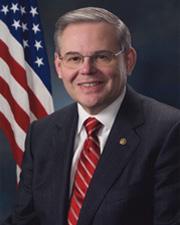
Mr. President, what is the status of the Senate right now? Mr. President, I rise to talk about the pending amendment. Let's all imagine a situation. You are a 25-year-old, a father of two, it is…
Mr. President, what is the status of the Senate right now?
Mr. President, I rise to talk about the pending amendment. Let's all imagine a situation. You are a 25-year-old, a father of two, it is night and you are walking home across a park. A group of teenagers come near and they throw a slur at you. When you respond and their verbal attacks escalate, they are nasty. They seek to dehumanize you because of where you were born, how you look or how you speak. There is a fight, four on one, in which you are pummeled to the ground and kicked in the skull repeatedly.
As you lie on the pavement in convulsions, foam oozing from your mouth, life slipping away, there is one more insult. They yell a warning to anyone who looks like you or talks
like you that they will do the same thing.
Imagine you are this man's two little children. Your father spends 2 days in intensive care, his face bruised and swollen, his head bandaged, tubes everywhere, and then he passes on from this world. You will never remember your father holding you or feeding you or kissing you; you are too young. What you will remember is growing up without a father. He was the victim of a needless death from a senseless beating, a beating fueled by red-hot hatred for the type of person he was.
The one hope for some small measure of fairness so that these two young children will one day know that justice was served after their daddy was killed would be an appropriate conviction for this unthinkable crime. But in the courthouse the verdict is read. The most serious charges, the most appropriate charges, are discarded. At most, two of the four young men who committed this murder in a bigoted rage will spend less than 2 years--less than 2 years--behind bars. But they could be there for as little as 6 months--6 months in jail. But this man, this father, he is gone forever.
It is as sad and heart wrenching a situation as you can imagine. How we wish it was only that, a horror story we simply imagined. But it is not a figment of our imagination, it is a dose of reality. This nightmare scene actually happened, and it did not happen in a society less open than ours, nor did it happen 100 or 200 years ago. It happened exactly 1 year ago in Shenandoah, PA, less than 150 miles from where this Chamber is; less than 50 miles from my home State of New Jersey.
Luis Ramirez was the target of the vitriol and the beating; struck in the chest so hard he bore a bruise in the shape of Jesus Christ from the medallion he wore on a chain around his neck. As he lay, seizing from the deadly blows, if he had still been conscious what he would have heard were words that, uncensored, do not befit the Senate.
Tell your [expletive] friends to get the [expletive] out of
Shenandoah or you will be [expletive] laying next to him.
Tell your [expletive] friends to get the [expletive] out of
Shenandoah or you will be [expletive] laying next to him.
This in the 21st century, in the United States of America, the land of the free--all men created equal--life, liberty, and the pursuit of happiness. Not for Luis Ramirez. He may have been born originally in a different country, but he was just as human as you or I. It did not matter. He was cursed and battered and put down like an abused animal would be, in the United States of America.
The people who did this, the people who beat their fellow man to death, treating him as subhuman--this gang gets a veritable slap on the wrist.
We can change that--no more circumstances such as that, not with this legislation. There is no better prosecutor of hate crimes in our country than Federal law enforcement. They are tough on these hate criminals and they are determined to serve justice in each and every one of these cases. If we are to make sure hate crimes are treated with the seriousness they deserve, if we are to make sure would-be perpetrators think twice, Federal law enforcement must have a greater involvement.
I can hear opponents of this legislation, this particular amendment: This is 2009. The President is African American. It is a reaction to an insignificant problem.
Ask Luis Ramirez, if you could. I would ask them to consider this, from the Leadership Conference on Civil Rights: Between 2003 and 2007, hate crimes reported against Hispanics increased not just a little bit but by 40 percent. In 2007, Hispanics were the target of 60 percent of hate crimes committed based on ethnicity, signifying an increasingly sharp rise.
But this is not just a problem confined to the Hispanic community. The man who packed up his rifle, got in his car, drove to Washington, entered a building, opened fire, and claimed the life of a noble security guard--he didn't just do that at any building. He did it at the Holocaust Museum, because this murderer hates Jewish people, hates them enough to kill.
Let's never forget the namesake of this legislation, Matthew Shepard, a University of Wyoming student who had his whole life ahead of him before it was snatched away on an October night in the countryside near Laramie. Two men, uneasy with Matthew's sexual orientation, drove off from a bar with him, only to beat him mercilessly with a pistol and rope him to a fence, as if a warning to the gay community. They hated Matthew because he was gay. He lost his life because he was gay.
I ask those who would argue against this legislation, how many more tragic stories do we have to hear before we make our laws tougher? How many more? Do we have to hear another story, such as the one of Jose Osvaldo Sucuzhanay, a father of two and native of Ecuador who ran a real estate agency, who was headed home with his brother from a bar after a church party. These brothers walked around the Brooklyn street with arms around each other, like men in Latino cultures often do.
Up drove three men, yelling slurs that were both homophobic and racist, they belted Jose on the head with a glass bottle. They smashed his head in with a metal bat. They continued to beat him and kick him and beat him and kick him. He clung to life for 2 days in a hospital and then he died.
How many more stories? Do we have to hear another story such as that of Marcelo Lucero? He, too, was born in Ecuador and he, too, was a real estate professional and he, too, was killed simply for the way he looked and the way he spoke, the innocent victim of a senseless gang of teenagers on Long Island, driving around in search of ``some Mexicans to [expletive] up.''
Here is how the prosecutor described this assault:
Like a lynch mob, the defendant and his friends got out of
a car and surrounded Mr. Lucero.
Like a lynch mob--in the 21st century in the United States--they beat Marcelo and stabbed him to death.
How many more of these stories? How many more? Do we have to hear another story such as that of Walter Sanchez? His horrific story happened earlier this year and it happened in my home State of New Jersey.
Walking to a restaurant with his cousin, a car with five men pulled up. Calling Walter a Hispanic son of a [expletive], they beat him senseless. He was one of the lucky ones, escaping with his life, but he still underwent hours of reconstructive surgery to put many of the bones in his face back together.
Again, how many stories do we have to tell? It is time to stop asking and it is time to start acting. We can pass this legislation and know, while there is still a ways to go until we have wiped our society clean of bigotry and hatred, we will have made it harder for the perpetrators of these evil acts to escape justice. As the law is written now, there are too many ways in which those who commit hate crimes can escape the kind of justice Federal law enforcement is prepared to bring.
Sometimes these loopholes are bewildering, even perverse. Remember the story of Luis Ramirez, whose murderers will serve as little as 6 months in jail? The cruel irony is that the deadly beating he suffered occurred in the street, not in the park 100 feet away, the park where Luis had walked minutes, if not seconds, before he was battered. If this murder of a hate crime had taken place in that park, it would have been Federal law enforcement's business. The delivery of justice may have been different. As it turned out, local law enforcement, some of whom were related to the assailants, took 2 weeks to arrest the four men, and we know how the rest of the process turned out.
We can all agree, a hate crime is a hate crime--whether it is in the park or in the street, on the grass or on the pavement, 100 feet this way or 100 feet that way. A hate crime is a hate crime.
I sponsored, when I was back in the New Jersey legislature, the law that became one of the first landmark pieces of legislation on hate crimes in our country. I said then that we cannot eliminate hate with the passage of a law, but we can send a clear societal message that we do not tolerate such crimes against individuals because of their race, because of their religion, because of their ethnicity or, for that matter, their sexual orientation.
Hate crimes are hate crimes. They are all an affront to the set of values
upon which this great Nation stands, and they all deserve the full scrutiny of our Federal law enforcement.
It is time to pass this legislation. I urge my colleagues to vote in favor of the amendment and make sure each hate crime is met appropriately with justice.
I ask you to remember, as I started this speech, that father kicked to death, with the two children who will never ever know their father as so many of us are fortunate to know ours. Remember when you cast your vote. Think that, but for the grace of God, it could be you. That is how momentous this decision is. That is how important this legislation is. That is why justice is served with the passage of this amendment.
I yield the floor and suggest the absence of a quorum.
Show 11 more
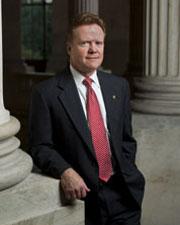
Mr. President, I thank the Senator from Rhode Island, and I am here to speak in favor of this legislation. This is a very important piece of legislation. It is long overdue. I also would like to…
Mr. President, I thank the Senator from Rhode Island, and I am here to speak in favor of this legislation. This is a very important piece of legislation. It is long overdue. I also would like to point out that I have an amendment I will offer.
I am very concerned about the way this legislation is going to be funded. We all have our own issues with respect to whether tobacco should be used or not used, but to fund an entire program based on a tobacco tax, I think, is not the way to go for a number of reasons. So I am offering an amendment that will help offset this highly regressive, 61-cent-per-pack increase in the cigarette tax that is being used to fund this bill, and to add on to the bill a tax on carried interest, which is the compensation that is received by hedge fund managers. This proposal would generate $11.2 billion in revenue over 5 years. Tobacco taxes would thus be raised by a more reasonable 37 cents a pack to make up for the shortfall between the revenue being generated by this amendment and the costs of the CHIP reauthorization.
Tobacco is already federally taxed at 39 cents per pack for the CHIP program. All 50 States and the District of Columbia also impose an excise tax on cigarettes above this tax. For instance, my State of Virginia adds 30 cents on top of the present tax. In these difficult times, many States, including Virginia, are considering an increase in their State excise tax.
So we would have, with the amendment I am going to offer, the 39-cent Federal tax that is already in place on a pack of cigarettes, an additional 37 cents--instead of an additional 61 cents--plus the State taxes on cigarettes; and a big proportion of this--all the Federal tax--going to fund a health program.
I would like to be clear that there is no question in my mind about the fact that we do need to reauthorize and expand this program. But I do not think it is a proper to fund this program on the backs of people who, for better or worse, smoke cigarettes. I am a reformed smoker. Many of my contemporaries in the Senate are reformed smokers. I am not encouraging anyone to smoke cigarettes. I hope you do not. I just believe although tobacco taxes are already a popular source of revenue, it does not change the reality that this tax is regressive.
We had a Congressional Research Service report brought to my office, and I am going to quote from it. It said:
Cigarette taxes are especially likely to violate horizontal
equity and are among the most burdensome taxes on lower-
income individuals. Only about a quarter of adults smoke, and
less than half of families have expenditures on tobacco.
Tobacco is more heavily used by lower-income families than
are other commodities, and is unusual in that actual dollars
(in addition to the percent of income) spent on tobacco
products decline in the highest income quintile.
My amendment will help soften the blow of the increase in the cigarette tax.
Let me provide some background on carried interest. A partner of a private equity or hedge fund receives two different types of compensation. First, hedge fund managers receive management fees that are linked to the assets they oversee. Second, they receive what is called ``carried interest,'' which is compensation based on the percentage of the profits generated by the assets they manage. Currently, carried interest is taxed at a capital gains tax rate. As noted by Peter Orszag, who is now a member of the Obama administration, in his 2007 testimony, many economists view carried interest as:
Performance-based compensation for management services
provided by the general partner rather than as a return on
financial capital invested by that partner.
Given that carried interest is performance-based compensation, it makes sense to tax it as ordinary income. This compensation has been earned by many of the same people who helped bring about the present financial crisis. The Financial Times stated these managers ``have made fabulous sums in recent years.'' Given the need to pay for children's health insurance, it makes more sense to have these persons, who are better positioned to pay for it, pay a greater percentage of the cost.
When it comes to taxing carried interest as ordinary income, there is a wide acceptance in support of this proposal among thinkers and editorial writers across the country. The Financial Times itself editorialized ``this repair should be done at once.'' They made that statement 2 years ago.
I have a string of editorials that support the idea of closing this carried interest loophole as a matter of fairness. I ask unanimous consent they be printed in the Record at the end of my statement.
They include editorials from the Washington Post, New York Times, USA Today, the Philadelphia Inquirer. In fact, the Washington Post in 2007, in talking about this particular tax break, said this:
The only mystery is why Senate Democrats don't have the
good sense to grab on to this as their centerpiece domestic
issue. It's hard to think of an issue that better taps into
the public anxiety about the markets and the economy, the
anger about income inequality, or the disgust with a
political system that bends to the will of powerful
interests.
The Washington Post continued:
This is a make-or-break issue for Democrats. If they can't
unite around this issue, then they aren't real Democrats and
they don't deserve to govern.
The New York Times in 2007 talked about this issue, mentioning:
With income inequality surging along with the need for tax
revenue, supporters rightly conclude that it is untenable for
the most highly paid Americans to enjoy tax rates that are
lower than those of all but the lowest income workers.
Congress will achieve a significant victory, for fairness
and for fiscal responsibility, if it ends the breaks that are
skewing the tax code in favor of the most advantaged
Americans.
There are others and, as I mentioned, I will insert the full text of these editorials at the end of my comments.
I also should point out that our new President, President Obama, has supported throughout his campaign the idea of taxing carried interest as ordinary income.
So the choice is this: Do we help fund this program, which we all agree is critically necessary, with a well-deserved tax adjustment for some of those who are the most capable of absorbing a new tax, or do we take money exclusively from tobacco, causing people who in large part are in the same economic circumstances as the beneficiaries of this health insurance program to foot the bill?
Let's think for a moment about the irony of that. We are taxing a practice that we deem unhealthy in order to fund a health program, and we supposedly want this practice to go away, but if it goes away, we are not going to be able to fund our health program.
So we need to find a way to fund health care needs that is sustainable and fair, and a declining revenue source is not sustainable. I hope my colleagues will join me in supporting this measure, which will partially offset the cigarette tax that is a part of the bill. I again wish to express my strong appreciation to Chairman Baucus and to others, such as my colleague from Rhode Island, who have worked so hard on this bill and who work to help those in our system who are most in need of medical care.
With that, I yield the floor.
Exhibit 1
Editorials Supporting Closing Private Equity/Carried Interest Loophole
as Matter of Fairness
[From the Washington Post, Sept. 9, 2007]
Private-Equity Tax Breaks, a Call To Be Up in Arms
Even by Washington standards, the private-equity industry
certainly went over the
top in conjuring up the economic woes that would befall the
United States if their cherished tax breaks were taken away.
Pensioners would be destitute. Wall Street would pack up
and move to Dubai. The hedge fund industry would disappear.
Federal revenue would plummet. Entrepreneurial risk-taking
would grind to a halt. And the urban underclass would slip
even deeper into poverty.
And all that just because some of the richest people in the
world would have to pay the same 35 percent tax rate on their
income as dentists, lawyers and baseball players.
There is no mystery as to why the industry bothers to make
these ridiculous and contradictory arguments--billions of
dollars in tax windfalls are at stake.
The only mystery is why Senate Democrats don't have the
good sense to grab onto this as their centerpiece domestic
issue as they head into the 2008 campaign. It's hard to think
of an issue that better taps into the public anxiety about
the markets and the economy, the anger about income
inequality, or the disgust with a political system that bends
to the will of powerful interests. And if Republicans go
through with their threats of a filibuster and a presidential
veto, Democrats ought to put aside all other business and
call their bluff.
This is a make-or-break issue for Democrats. If they can't
unite around this issue, then they aren't real Democrats and
they don't deserve to govern.
Mr. President, first, I commend my colleague from Arizona, Senator McCain, for his great leadership and for his important words about Burma. No one would know better than Senator McCain about the…
Mr. President, first, I commend my colleague from Arizona, Senator McCain, for his great leadership and for his important words about Burma. No one would know better than Senator McCain about the human rights violations of someone held in a prison such as that.
As he is aware, on a bipartisan basis, the women Senators have come together to support Aung San Suu Kyi and her fight in Burma.
I would also add, I recently met with a Burmese community in my State. They are concerned about their relatives there and everything that is happening in that country. We have someone in our office whose relatives are in Burma.
So I thank the Senator for his words and also for his leadership on the amendment, the Levin-McCain amendment to strike the $1.75 billion added to the bill that is on the floor to purchase additional F-22 aircraft that have not been requested by the Pentagon.
This is a very difficult issue for many people in this Chamber, including the Senator from Arizona. But we all know in the end what counts is to do the right thing for our troops and for our national security.
This amendment truly gives us an important choice: Will we continue to pour billions into unproven weapons systems, despite repeated cost overruns and program delays or are we going to make the hard choices necessary to ensure that our troops in the field have what they need to fight present and future conflicts?
These F-22s, we know, possess unique flying capabilities, but not one has ever flown over Iraq or Afghanistan. We have much more pressing needs. Both the past President and the current President support this amendment. I hope my colleagues will support it as well.
I am actually here to speak in support of the Matthew Shepard Hate Crimes Prevention Act. I am a cosponsor of this legislation which will help us fight hate crimes and make our communities safer.
Among other things, the bill would impose criminal penalties for targeting a victim on the basis of race, religion, sexual orientation or disability.
I wish to thank Senator Leahy for his work on this bill and, of course, Senator Kennedy for his work and leadership on the issue over the years.
I have been involved with this piece of legislation for many years. If you go way back to 2000, when I was the county prosecutor for Minnesota's largest county, I was actually called to Washington for the first time to take part in a ceremony in which the bill was introduced.
I remember this moment well because there I was with the President at the time, President Clinton, and Attorney General Reno. We were ready to walk in for this ceremony to introduce the hate crimes bill. I was standing outside, and the military band struck up ``Hail to the Chief'' because the President was entering the room. I started to walk, and all of a sudden I felt this big hand on my shoulder, and this voice said: I know you are going to do great out there, but when they play that song I usually go first.
It is something I will never forget.
So here I am now, 9 years later, with this same bill. We are working very hard to get this bill passed. I am hopeful we will be able to do that.
What I remember most about that day back in 2000, however, was the meeting I had with the investigators in the Matthew Shepard case. They were two burly cops from Wyoming, and they talked about the fact that until they had investigated that horrible crime, they had not considered what the victim's, Matthew Shepard's, life was like.
When they got to know the family in the case, when they got to know the mom, and they got to know the people surrounding Matthew Shepard, their own lives changed forever.
I hope by passing this bill we can prevent other Matthew Shepards from being targeted and deter hate crimes.
Attorney General Eric Holder recently appeared before the Senate Judiciary Committee to talk about his support for this bill, and he gave us some somber statistics. He reported that ``there have been over 77,000 hate crime incidents reported to the FBI'' from 1998 to 2007 or ``nearly one hate crime every hour of every day'' for the past decade.
In my State of Minnesota, there were 157 reported offenses in 2007. But when I think about this issue, it is not just about the statistics. It is about the victims of these crimes.
When I was county prosecutor, we had a number of cases that were clearly motivated by hate. That was one of the reasons, actually, I was chosen to go out to Washington. And part of it was we had worked well with the Federal prosecutors on some of the cases.
We had the case of a 14-year-old African-American boy who was minding his own business, and a guy who did have some mental health issues told his friends: I am going to go out and--he used a different word--but shoot a Black kid on Martin Luther King Day. And he did. And he almost killed this little 14-year-old boy. But he survived, and we prosecuted the case.
I also think about a young Hispanic man. He was working in a factory, and his boss got mad at him because he did not speak English and he was speaking Spanish at work. His boss took a 2 by 4 and hit him over the head, resulting in bleeding in his brain and brain damage--all for speaking Spanish.
I also think about the case we had with a Hindu temple that was severely vandalized by young kids. And I think about the case of a Korean church that had all kinds of hateful graffiti written on it. Some of these cases, as I said, were major attempted murder cases. Some of them were simply graffiti cases. But to the people in that church, to the people in that temple, it meant something much more.
That is why I was glad, at least in a few of these cases, we were able to use our State hate crimes legislation. Those were cases in Minnesota--a place where you might not think you would see these kinds of cases. But we did.
This bill in front of us, the Matthew Shepard hate crimes bill, will strengthen the ability of Federal, State, local, and tribal governments to investigate and prosecute hate crimes. It increases the number of personnel at the Treasury Department and the Department of Justice working on hate crimes. It gives grants to State and local law enforcement officials investigating and prosecuting hate crimes. It authorizes the Attorney General to provide resources and support to State, local, and tribal law enforcement officials for hate crime investigations and prosecutions.
In addition, this bill authorizes the Federal Government to step in when needed and prosecute hate crimes, when needed, after the Justice Department certifies that a Federal prosecution is necessary. While most of these cases will continue to be handled by State and local jurisdictions, the bill provides a Federal backstop for State and local law enforcement to deal with hate crimes that otherwise might not be effectively investigated and prosecuted or for when States request assistance. It is a backdrop. Think about how many other areas of the law where we have these kinds of backdrops. In the gun area, as the Presiding Officer is aware from his work in the State of
New Mexico, sometimes we have overlapping jurisdictions. The gun crime is a perfect example. State laws can apply, but sometimes the Feds will come in or you will want them to come in and handle the case. The same with drug crimes. It helps to have that Federal backdrop for the investigating power, for the sentencing power, and for many other things. So this bill won't usurp the role of local law enforcement but, rather, supplement it when needed.
Finally, I wish to note that this legislation has the support of numerous law enforcement organizations, including the International Association of Chiefs of Police, the Major Cities Chiefs, and the National District Attorneys Association.
For years we have recognized the need for this legislation. I think back to 2000 when I was standing outside of the East Room with President Clinton when it was first introduced. For years we have known we need this legislation, but year after year the forces of reaction have stalled and blocked and tried to do everything they can to make it go away. This must end.
A little over 40 years ago, Robert Kennedy broke the news to a crowd in Indianapolis that Martin Luther King, Jr., had just been assassinated. During his speech, Kennedy called on the crowd and the country to make an effort, to understand and to comprehend, and to replace that violence, that stain of bloodshed with an effort to understand with compassion and love. We should answer his call today.
I look forward to the day--and I hope it will be very soon--when the Hate Crimes Prevention Act becomes law. It is long overdue. I urge my colleagues to support it.
Thank you very much, Mr. President.
I yield the floor, and I note the absence of a quorum.
Mr. President, I have sought recognition to speak briefly on the hate crimes legislation. The details of the bill have been explained. The statistics have been enumerated by a number of my…
Mr. President, I have sought recognition to speak briefly on the hate crimes legislation. The details of the bill have been explained. The statistics have been enumerated by a number of my colleagues. Perhaps the most impressive statistic is the one from the Attorney General on 77,000 hate crimes.
I do believe it is time we act. This issue first came before the Senate back in 1997, some 12 years ago. Senator Kennedy was the originator. At that time, he searched for cosponsors among Republicans, and I believe it is accurate to say that I was the only one who would support cosponsorship, and we moved the legislation forward by publishing an op-ed piece in the Washington Post.
I ask unanimous consent that op-ed piece be printed in the Record at the conclusion of my remarks.
Mr. President, I am glad to say that since the time this issue has come before the Senate, there are now 18 Republican cosponsors. My sense is that there will be widespread, if not unanimous, support among the Democrats so that there is a very solid statement respectively in the Senate.
Ordinarily, matters of criminal prosecution are left to the States. The offense is prosecuted in the jurisdiction where it occurred. I have a strong bias for local prosecutions as a generalization and developed that concern from my own experience as a district attorney for the city and county of Philadelphia. Law enforcement ought to be local. But the brutal fact of life is that when you deal with hate crimes--and there are many examples. In 1997 when Senator Kennedy and I first introduced the bill, there was the case of racial matters--dragging an African- American through the streets of a Texas town. There has since been many other brutal cases, one highly publicized of a gay young man, a victim of a hate crime in Wyoming.
Regrettably, discrimination for race or national origin continues until this day. There has recently been a publicized matter that occurred in Huntingdon Valley, a suburb of the city of Philadelphia, at a swim club where the swim club operators negotiated with a group representing Hispanic and African-American children, ages 5 to 11, to occupy a swimming pool, with the swimming pool's permission. When the youngsters, Hispanics and African Americans, went to swim, there was, according to the media reports--and I have spoken to people on both sides personally to find out what went on--there was animus hostility, racial comments directed at African Americans and the Hispanics, conduct which one would have thought America would have passed long ago.
But it is as current as 2 weeks ago in the suburbs of my hometown of Philadelphia, PA. The matter has moved forward. It has resulted in lawsuits being
filed. It would be my hope that a way could be found to handle the matter to the satisfaction of all parties. But I can understand if the parents of the children involved want to pursue remedies. This is a matter that could be handled by the civil rights division, which has prosecutorial authority and also has authority for mediation and reconciliation.
I cite that as an illustration of a matter that is as current as today's news on animus based on race, whether it be African Americans or Hispanics. It is my hope that this matter will receive prompt attention in the Senate and will be part of the pending legislation and it will go to conference and become the law of the land.
Exhibit 1
[From the Washington Post, Dec. 1, 1997]
When Combating Hate Should Be a Federal Fight
(By Edward M. Kennedy and Arlen Specter)
The Post's Nov. 17 editorial criticizing the measure we
have introduced on hate crimes reflects a misunderstanding of
our proposal to close the gaps in federal law and a failure
to recognize the profound impact of hate crimes.
Hate crimes are uniquely destructive and divisive because
they injure not only the immediate victim, but the community
and sometimes the nation. The Post's conntention that a
``victim of a bias-motivated stabbing is no more dead than
someone stabbed during a mugging'' suggests a distressing
misunderstanding of hate crimes. Random street crimes don't
provoke riots; hate crimes can and sometimes do.
The federal government has a role in dealing with these
offenses. Although states and local governments have the
principal responsibility for prosecuting hate crimes, there
are exceptional circumstances in which it is appropriate for
the federal government to prosecute such cases.
Hate crimes often are committed by individuals with ties to
groups that operate across state lines. The Confederate
Hammerskins are a skinhead group that began terrorizing
minorities and Jews in Tennessee, Texas and Oklahoma a decade
ago.
Federal law enforcement authorities are well situated to
investigate and prosecute criminal activities by such groups,
and the federal government has taken the lead in successfully
prosecuting these skinheads.
Hate crimes disproportionately involve multiple offenders
and multiple incidents and in such cases, overriding
procedural considerations--including gaps in state laws--may
justify federal prosecution.
In Lubbock, Tex., three white supremacists attempted to
start a local race war in 1994 by shooting three African
American victims, one fatally, in three separate incidents in
20 minutes. Under Texas law, each defendant would have been
entitled to a separate trial in a state court, and each
defendant also might have been entitled to a separate trial
for each shooting. The result could have been at least three,
and perhaps as many as nine trials, in the state courts, and
the defendants, if convicted, would have been eligible for
parole in 20 years. They faced a mandatory life sentence in
federal court.
Federal and local prosecutors, working together, decided to
deal with these crimes under federal laws. The defendants
were tried together in federal court, convicted and are
serving mandatory life sentences. The victims and their
families were not forced to relive their nightmare in
multiple trials.
Federal involvement in the prosecutions of hate crimes
dates back to the Reconstruction Era following the Civil War.
These laws were updated a generation ago in 1968, but they
are no longer adequate to meet the current challenge. As a
result, the federal government is waging the battle against
hate crimes with one hand tied behind its back.
Current federal law covers crimes motivated by racial,
religious or ethnic prejudice. Our proposal adds violence
motivated by prejudice against the sexual orientation, gender
or disability of the victim. Our proposal also makes it
easier for federal authorities to prosecute racial violence,
in the same way that the Church Arson Prevention Act of 1996
helped federal prosecutors deal with the rash of racially
motivated church arsons.
The suggestion in the editorial that our bill tramples
First Amendment rights is ludicrous. Our proposal applies
only to violent acts, not hostile words or threats. Nobody
can seriously suggest that the neo-Nazis who murdered Fred
Mangione in a Houston nightclub last year because they
``wanted to get a fag'' were engaged in a constitutionally
protected freedom of speech.
In addition, hate-crimes prosecution under our bill must be
approved by the attorney general or another high-ranking
Justice Department official, not just by local federal
prosecutors. This ensures federal restraint and that states
will continue to take the lead in prosecuting hate crimes.
From 1990 through 1996, there were 37 federal hate crimes
prosecutions nationwide under the law we are amending--fewer
than six a year out of more than 10,000 hate crimes
nationwide. Our bill should result in a modest increase in
the number of federal prosecutions of hate crimes.
When Congress passed the Hate Crimes Statistics Act in
1990, we recognized the need to document the scope of hate
crimes. We now know enough about the problem, and it is time
to take the next step.
As the Lubbock prosecution shows, combating hate crimes is
not exclusively a state or local challenge or a federal
challenge. It is a challenge best addressed by federal, state
and local authorities working together. Our proposal gives
all prosecutors another tool in their anti-crime arsenal. The
issue is tolerance, and the only losers under our proposal
will be the bigots who seek to divide the country through
violence.
Mr. President, I have listened to the debate all day with regard to the national defense authorization bill, and, frankly, it is one of the frustrating aspects of serving in this great body, to sit…
Mr. President, I have listened to the debate all day with regard to the national defense authorization bill, and, frankly, it is one of the frustrating aspects of serving in this great body, to sit here and debate an issue like we have debated over the last couple of days and to think that you are going to come to the floor of the Senate and to cast a vote on a very important measure that has been characterized by Senator McCain earlier as one of the most important pieces of legislation or amendments that we will have--and I agree with him that is the case--and all of a sudden we are thrown into an entirely different atmosphere with regard to what has taken place on the floor.
All of a sudden we are not talking about defense, we are not talking about our troops, we are not talking about the national security of the United States, we are talking about hate crimes.
We are in some very difficult times with respect to the national security of our country. While Senator McCain and I disagree on the issue of the F-22 and this amendment, he and I agree strongly--and it is why he is my dear friend and why we agree on most things--about the fact that we ought to be here debating defense issues and voting on defense issues.
It truly is frustrating. I know our soldiers in the field can't understand what in the world is going on in the Senate now, when they thought we were going to be debating and voting on amendments that pertained to them--issues such as their pay raise, their quality of life, weapon systems--and all of a sudden we are thrown into doing something else. So I just want to associate myself with the remarks of my friend, Senator McCain, with respect to why we are here.
With regard to what Senator Levin said, frankly, Senator Dodd, on the other side of the aisle, who has been working very closely with me on the F-22 amendment, he and I had a meeting with Senator Levin and Senator McCain on Monday, and informally--or actually formally agreed between the four of us--which is an informal agreement--that we would have a vote on the Levin-McCain amendment on Wednesday morning. We thought that was kind of a done deal.
Now, all of a sudden we have debated and we have talked about this, we have debated it again, we have talked about the amendment, and now we are thrown into an entirely different scenario on the Senate floor when we have been prepared to vote. I would hope we still have the opportunity to vote in the short term on the issue of the F-22.
On that point, just very briefly, Mr. President, I want to state a couple of things with regard to that issue. I made a very long statement yesterday, and I am not going to go back into all the detail with the reference to the why-fors of the F-22 and its value to the national security of the United States, but there have been some comments made on the Senate floor that I think are important to address.
One of those comments made by Senator Levin was that I had made a statement that there had never been a study by the Air Force which validated the requirement that 187 aircraft be the top line number for the F-22.
What I said was there have been dozens of studies out there over the years on the F-22, and there has only been one study--and it was an internal study at the Department of Defense, without the input of the Air Force--that said 187 is the number. I want to make sure everybody in this body understands every single other study done internally, as well as outside the Pentagon, outside the Air Force, outside the Office of the Secretary of Defense, or inside, has concluded that the requirement for the number of F-22s we need far exceeds the number of 187. The minimum number that has ever been referred to is 243, which is some 56 airplanes more than the 187 we are talking about now.
Last week, in a hearing before the Senate Armed Services Committee, we had GEN James Cartwright, who is a Joint Chiefs of Staff Vice Chairman, and I asked General Cartwright if there was any study or any analysis done at the Pentagon that validated the number 187. General Cartwright told me:
There is a study in the Joint Staff that we just completed
and partnered with the Air Force which validates the number
of 187.
Well, on Monday afternoon, a reporter asked a Pentagon official, and the top spokesman from the Pentagon, Geoff Morrell, made the statement in response to that reporter's inquiry about that study as follows:
Well, it is not so much a study as work products. What I
think General Cartwright was referring to is two different
work products, one by the Program Analysis and Evaluation
shop and one by the Air Force. Not so much a study.
So what has happened is there have been discussions within the Pentagon to attempt to validate the number of 187. It is pretty obvious what I said on the floor of the Senate remains true, and that is that of all the dozens of studies that have been done on the F-22 requirement, the minimum number that has ever been validated is 243. The number goes up from there all the way to 781, which I think was our original number. The number of 381 is the number that has been used in most of the recent studies as the number we need.
Also, with respect to other statements regarding the Secretary of Defense, the Chairman of the Joint Chiefs, and others who are saying that 187 is the number, that is leadership at the Pentagon. The leadership at the Pentagon has the responsibility for sending a budget to the Senate and to the House, but it is our obligation as Members of the Senate and the House to review that budget--sometimes to agree with it; sometimes to disagree with it. We often disagree with it.
In this case, a number of us disagree with the number of 187 as being the top line for the F-22. That is not unusual. But with respect to what the leadership at the Pentagon has said, let me go back to a letter I talked about yesterday, and it is a letter that has been received from Rebecca Grant, the Director of the Mitchell Institute for Airpower Studies. What she says in her letter to me is: In the letter of July 13 from Admiral Mullen and Secretary Gates, the characterization of F-35 as a ``half-generation newer aircraft than the F-22 and more capable in a number of areas such as electronic warfare and combating enemy air defenses'' is incorrect and misleading.
Air Force Secretary Donley and General Schwartz have repeatedly stated: ``The F-22 is, unquestionably, the most capable fighter in our military inventory.''
The F-22 was designed with twice the fighting speed and altitude of the F-35 to preserve U.S. advantages in the air even if adversaries contest our electronic countermeasures or reach parity with us.
She also States in that letter:
If electronic jamming fails, the speed, altitude and
maneuverability advantages of F-22 remain. The F-35 was
designed to operate after F-22s secure the airspace and does
not have the inherent altitude and speed advantages to
survive every time against peers with counter electronic
measures. Only five F-35s are flying today. The F-35 has
completed less than half its testing. Developmental tests
will not be completed until 2013. It is impossible to assess
the full capabilities of the F-35 until operational test is
complete in 2014.
The Secretary of Defense and others in the administration are putting all of their tactical air eggs in one basket, Mr. President. That is a very dangerous road down which we should not travel with respect to the national security of the United States and the safety and security of our men and women.
Appointment to the HELP Committee
Mr. President, I ask unanimous consent that the order for the quorum call be rescinded. Mr. President, the legislation that is before us is a reauthorization of the Children's Health Insurance…
Mr. President, I ask unanimous consent that the order for the quorum call be rescinded.
Mr. President, the legislation that is before us is a reauthorization of the Children's Health Insurance Program, but it is, as I said yesterday in my remarks, seriously flawed in a number of respects. Because of that, the minority leader, the Senator from Kentucky, and I have offered an alternative. It is called the Kids First Act. The Kids First Act is an effort to reauthorize this important program but address the numerous flaws in the pending proposal so we can adopt something that literally puts kids first.
I spoke yesterday about several of the problems with the underlying bill. First, the problem of crowding out private coverage. We created this Children's Health Insurance Program in order to help families who did not have insurance. But the bipartisan Congressional Budget Office has noted that because of provisions in the underlying bill, there are actually over 2 million people--in fact, 2.4 million people--who will go to the Government insurance program who already have private health insurance that is perfectly adequate to their needs. The reason primarily is because their employers obviously appreciate the fact that it is costing them money to insure their employees' families and it will be a lot cheaper if those families go to this Government-run program. Our effort was never to cause people to leave the health insurance coverage they have to come to a new Government program. Our effort, when we adopted the kids insurance program, was to provide insurance for those who did not have it already.
This crowdout effect is well known, and it is well understood. It can actually be quantified as the Congressional Budget Office did. Last year, we offered a couple of amendments to ensure that the crowdout effect would be minimized. The amendment I offered was not adopted. But recognizing that there was a serious problem, when the Democratic leaders in the House and the Senate wrote the bill that ended up passing both the House and the Senate, though it was vetoed, it was supported by Democratic majorities in both the House and Senate, and it had some language related to crowdout. I thought it was insufficient language, but nevertheless I understood the necessity of dealing with the issue.
That language is not in this bill. So in the committee, I offered the Democratic language. The Senator from Montana, the chairman of the committee, helped draft it. As I said, it was supported by Democratic majorities in both the House and Senate. Essentially on a party-line vote, that amendment was rejected.
We need to deal with the problem of crowdout. The legislation Senator McConnell and I have drafted does put kids first. It tries to deal with the problem of kids who do not have insurance rather than taking families who are already insured and transferring them to a Government program.
Another problem we spoke of is the fact that as this program has expanded, it does not just relate to families who are at the poverty level or even twice the poverty level but three and four times the poverty level. In other words, it can actually cover families in two States--up to $88,000 a year in New York and about $10,000 less than that in New Jersey. That is clearly wrong. We are trying to talk about low-income families. In fact, if you add other assets of a family that are not counted in income, you could literally have $40,000 in additional assets and, in New York, be making $128,000 a year for a family and be eligible for this low-income children's health care-- $128,000-a-year income. That is wrong. What that does is take money from the State of the Senator from Oklahoma, it takes money from my State of Arizona and other States and transfers that. We are trying to be as frugal as we can. Our limit is 200 percent of poverty. That is twice the poverty level. That is what we pay for in Arizona. But we are having to pay for more than twice that much for families in New York. That is not fair. The program Senator McConnell and I have offered as an alternative deals with that problem as well.
In addition, we ask that people demonstrate that they are eligible for this coverage. That has always been a part of the program. The bill that is before us weakens those provisions so that you do not have to have the same kind of documentation that you are eligible for the program. It expands the program to legal immigrants in this country who have always had a contract that they will not become part of our public welfare system.
One of the really interesting things is the budget gimmick that is used which Senator McConnell and I believe should not be part of this program. It is a budget gimmick to circumvent the Senate's so-called pay-go rules by which we ensure whatever the costs are, there is a way to cover those costs. The way that is done is that the program, even though it is a 10-year program, as all of our authorizations are--after 5 years, there is just an assumption that it does not cost very much anymore. Of course, under that assumption, we would have to disenroll millions of people from this program. That is never going to happen. Everybody knows that. Everybody knows that gap in financing would be filled, and as a result, the program would actually cost $40 billion more than it is alleged to cost as the bill came out of the committee. And that is by CBO's number, $41 billion-plus.
Those are some of the deficiencies with the legislation.
The amendment Senator McConnell has offered, the Kids First Act, is very targeted and I think a much more responsible approach to the problem. It does reauthorize the children's health care insurance program. It preserves health care coverage for millions of low-income children. It actually adds 3.1 million new children to SCHIP. It minimizes the reduction in private coverage, the so-called crowdout I spoke about earlier, by targeting SCHIP funds to low-income children, not higher income families who may already have access to insurance. By the way, it is offset without new tax increases or a budget gimmick such as the program before us is.
I encourage my colleagues to ask us questions about this amendment. If they have concerns about it or would like to debate, I would love to have that debate on the floor, if anyone would like to engage me in a discussion about why this is not a superior alternative.
The bottom line is, we have two choices. We have a budget buster that does not protect SCHIP coverage for low-income children, that represents an open-ended financial burden on taxpayers and takes a significant step toward Government-run health insurance or the amendment Senator McConnell has filed, a fiscally responsible SCHIP reauthorization that preserves coverage for low-income children. It is fully offset without a budget gimmick or a tax increase, and it minimizes the so-called crowdout effect on employer-sponsored health coverage that people have today.
I think the answer is clear. The Kids First Act is the right solution. And when we have an opportunity to vote on that, hopefully a little bit later this afternoon, my colleagues will take a good hard look at it and see if they don't agree that is a good approach to the reauthorization of SCHIP and support the McConnell amendment.
The following Senator is necessarily absent: the Senator from Louisiana (Mr. Chambliss).
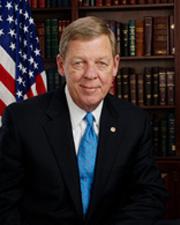
I ask unanimous consent that the order for the quorum call be rescinded. I ask unanimous consent to speak for 10 minutes in morning business. Mr. President, almost 7 months ago, Senator Conrad from…
I ask unanimous consent that the order for the quorum call be rescinded.
I ask unanimous consent to speak for 10 minutes in morning business.
Mr. President, almost 7 months ago, Senator Conrad from North Dakota and myself began an adventure attempting to convince this body and the one across the hall to create a Financial Markets Commission to study and do a forensic audit of what happened to our financial markets in 2007, 2008, and 2009. All of us recognize we have been through a catastrophic financial collapse with many potential components contributing to the gravity. It is not over yet.
I commend Leader Reid and Leader McConnell, Leader Boehner in the House, and Speaker Pelosi and others who had the authority under the legislation for announcing their appointments today to the Commission. I particularly commend the majority on the appointment of Ms. Born to the Commission. It was her outspoken words prior to the collapse that should have warned us better, or we should have paid more attention to, about the overleveraging of the economy and the underwriting of risk. Nonetheless, the
collapse has happened. The recession is here. Unemployment in Georgia today topped 10 percent. We are seeing predictions that it will top 10 percent for the entire country within the days ahead. It is critically important that we find out what went wrong, what the contributing factors were, and recommend back to the Congress those actions we need to take to ensure this never happens again.
For my children and grandchildren, if I have one last legacy, it is to say, when it was on my watch, we found out what the problem was, we corrected past errors, and we gave a little more security to their investments and future in the days to come.
I have my opinions as to what went wrong, but I know I am not smart enough to have all the answers. There are others who think they know what has gone wrong. We already have from the White House as well as from the Senate some who are making recommendations over creating czars or authorities or things to address the financial collapse. It would be a mistake beyond words for us to do that now in the absence of all the facts. This Commission has the authority, the money, and the power to get to the bottom of the problem. We gave them a $5 million budget, an 18-month timetable, and subpoena powers. As evidenced by those who have been named today, we have some of the best financial minds in the country--not elected officials, not members of government, some former servants, but some of the best minds in the business to begin the process of studying the collapse that began in 2007, continued through 2008, and in a protracted way continues today.
It is important that we get all the facts. There is plenty of blame to go around. Members of the House, in 1999, such as myself, who voted overwhelmingly for the repeal of Glass-Steagall--that very well could be one of the things the Commission finds was where we had too much deregulation in financial services. We ought to know that and what contribution it may have had. I have grave suspicions over the role Moody's and Standard & Poor's, the ratings agencies, played. I wonder, why should the agency that rates the security be paid by the creator of the security? They ought to be paid by the person buying the security if they are looking for a surety. And why were credit default swaps unregulated? Why did they fall outside the purview of government? What is it about FASB rule 114 that is hurting so bad in the community banking system today because of the devastation of mark-to-market on real estate? And congratulations on the change by FASB of rule 157, which has lessened some of the pressure on mortgage-backed securities and the valuation of those, which has helped some bigger institutions. But there are lots of things that could have gone wrong and some that did. We need to have all of them on the table, the best minds in the business looking at it, and we need to have a bipartisan, unfettered, comprehensive recommendation on what we need to do to ensure that it never, ever happens again.
I urge the President and our leadership to be cautious in moving ahead regulatorily without first getting the facts together. We are in an environment now where everybody does know what the rules are as they exist. In the few months ahead, long before this Commission reports, a lot of decisions will be made that will be dependent and predicated upon the environment the investment community thinks they are operating in or at least knows they are operating in today.
We have some bumps ahead. Commercial mortgage-backed securities are the next shoe to drop in this economic compromise we have been through, although those mortgage-backed securities are not in trouble as much because of their underwriting as they are from the effects of the poor underwriting of the residential mortgage-backed securities that caused a collapse of those markets and those securities. That comes ahead of us.
We have another wave of adjustments in terms of residential mortgages. That is not over. We have the pending problem of the number of mortgages in foreclosure, more performing, good loans at one time than subprime-originated loans at their beginning, meaning the unemployment rate and the protracted decline of the economy is contributing to people who were paying and are falling behind on payments on their houses. Now, because values have declined, they recognize they are better off to leave than to try to sell the house because they can't get anything out of it. We must put an end to this decline. We can best do it by having all the facts necessary at our disposal to know what went wrong when, who did wrong where, and what we need to do as quickly as possible to prohibit this from ever happening again.
I spent 33 years of my life in the private sector in the real estate business. I know lots of people in that business, and I know how much the families they represent, the customers they have had, and the families themselves have suffered in the months past and the pending suffering yet to come.
This is the most important thing this Senate and Congress can do, to do a forensic audit and diagnosis. Let the chips fall where they may and then make the corrections necessary so it never happens again.
I am happy to commend our leadership for their expeditious appointment of highly qualified and talented people. I hope all in this body will pay close attention to what they say and do and not rush to judgment thinking we know the answer, when all of us really know this Commission is essential to finding out what really did happen and what we really do need to do.
I suggest the absence of a quorum.
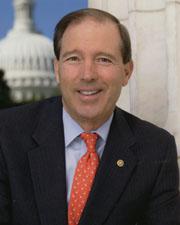
Madam President, I ask unanimous consent the order for the quorum call be rescinded. Madam President, watching the Senate floor during the debate over health care reform, I cannot help but feel that…
Madam President, I ask unanimous consent the order for the quorum call be rescinded.
Madam President, watching the Senate floor during the debate over health care reform, I cannot help but feel that some of my colleagues are a little confused. It is almost as if they have forgotten that this discussion is going on in America, not Canada. They don't want to talk about the 22,000 Americans who died in 2006 because they do not have insurance. They don't want to talk about the more than half a million Americans who file for bankruptcy after incurring unpayable medical bills. They don't want to talk about the millions of other Americans who worry that they are one layoff away from losing coverage and one heart attack away from losing everything.
No, they want to talk about Canada. I am not saying we should not sympathize with our neighbors to the north, but I wish to talk about how we can fix the health care system for the American people, for the people of New Mexico, since none of the plans we are considering would set up a Canadian system.
Let's look at how we can pass an American solution to the problems faced by Americans. If you like the coverage you have, you should be able to keep it, and none of the plans we are considering would take away the options Americans already have. But the status quo is not enough. We need to give consumers another option. We need to give them the freedom to choose a quality, affordable, public health option. After all, what is more American than competition and choice? Even if our private market functioned perfectly, it would make sense to give consumers another choice. But our health care system doesn't function perfectly. Our system provides too little choice and too little quality at too high a price. Too many of America's health care markets are effectively monopolies, or at best duopolies. According to a recent study by the American Medical Association, most American metropolitan areas are dominated by one private insurer, and others are largely dominated by just two. In New Mexico, the top two companies have 65 percent of the market. To put that in perspective, Dell, Compaq, Gateway, HP, and IBM combine for less than 54 percent of the U.S. personal computer market. I have to believe we can offer our consumers more than two choices of health plans.
My State is a rural State, and in rural areas such as ours consumers often have less choice. They get to pay whatever the local health care plan wants or go without insurance. Insurance companies have used this monopoly power to offer less and to charge more. As consolidation has increased since 2000, insurers have raised deductibles and copayments without increasing coverage, and they have continued to make healthy profits while their customers struggle to keep up with rising costs. Premiums for employer-sponsored health care have almost doubled since 1999, but rising costs have not hurt health care company CEOs. The top 10 CEOs managed to pull down $85.4 million in 2008.
Even worse, what competition we have doesn't keep companies honest. Instead, they compete to avoid the poor and the sick. In New Mexico, an insurance company can charge a customer more because of a health problem from 5 years ago or because he happens to be 45 years old and not 44. They can even charge a woman more because she might get pregnant. They have every incentive to do so.
When a private insurance company turns down somebody who needs help, its profits go up. When it denies needed care, it has more money for its shareholders. That is a broken system.
In New Mexico, we have seen the impact of unaffordable health care. Almost one in four New Mexicans is uninsured and nearly half our citizens have inadequate coverage. The vast majority of these people are employed, but they and their employers simply cannot afford coverage.
A constituent of mine from Cedar Crest, NM, wrote me the other day to
explain she and her husband cannot afford to offer their employees health care at a small manufacturing company they own. The rates for small businesses such as theirs are unaffordable.
Our high numbers of uninsured citizens cost the rest of us money. The average New Mexico family with insurance pays an additional $2,300 just to cover the price of the uninsured--$2,300. You see, if a New Mexican with diabetes has insurance, his insurance company can pay a small amount to have him receive routine tests and treatments from a podiatrist. But if a New Mexican is uninsured, he is less likely to receive checkups. As a result, he is more likely to miss the telltale signs of a circulatory problem and twice as likely to need an amputation.
Diabetes amputations cost almost $39,000, and New Mexico did 366 of these procedures in 2003 for a total of $4.2 million. When a diabetic has a limb amputated, the operation is only the beginning of the medical services he will need. For the uninsured, those costs fall on every family with insurance.
Some of my colleagues admit that the status quo does not work, but they claim a government regulator can keep the private HMOs in line; we will not need more regulation if open competition can be more effective. Others just claim that a public health care option will not work, but the evidence suggests otherwise. Experts have developed a number of viable plans to give Americans the choice of a quality, affordable public option. More than 30 State governments offer their employees a choice between private insurance and a State-backed public option, including my State of New Mexico. These States have not found this strategy unworkable. They have not seen either public or private coverage dominate the market. Their employees just have another choice. What would be wrong with that?
The truth is, this Congress has a very simple decision to make. We can stick with our current system or we can give Americans another option that guarantees quality, affordable care. Opponents of reform do not want to talk about that decision so they talk about Canada. But the decision before us has nothing to do with Canada. It is about the American people. They have been stuck in a broken system too long, and it is time to give them another choice.
I suggest the absence of a quorum.
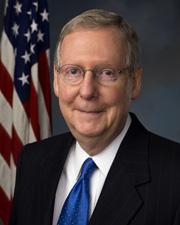
Mr. President, as Republicans and Democrats debate the best way to reform health care, Americans are increasingly concerned about the price tag and about who gets stuck with the bill. The Federal…
Mr. President, as Republicans and Democrats debate the best way to reform health care, Americans are increasingly concerned about the price tag and about who gets stuck with the bill. The Federal deficit suddenly stands at more than $1 trillion for the first time in history, and so far this year we are spending about $500 million a day in interest alone on the national debt. It is as if every single American gets up in the morning, walks over to the window, and tosses $2 out into the wind every day for the next 10 years. It is not a bad analogy, but that is what we are doing. And now the advocates of a government takeover of health care are talking about spending trillions more.
So Americans are worried about cost--and they have good reason to be.
Not only are we in a tough situation fiscally, we have no idea how much this reform will really cost. We know from experience with government-run programs like Medicare and Medicaid that early estimates often grossly underestimate what they end up costing. We know that some of the estimates we are hearing about health care reform are misleading. And we also know that the administration is building up a substantial track record of its own of dubious predictions that it has used to sell its ideas to the public.
We saw it with the stimulus. In selling one of the most expensive pieces of legislation in history, the administration said it had to be passed right away, with almost no scrutiny. If we did not pass it right away, they said, the economy would collapse.
Here is what the President said about the importance of passing the stimulus bill as quickly as possible: ``If we don't act immediately, then millions more jobs will disappear, the national unemployment rates will approach double digits, more people will lose their homes and their health care, and our nation will sink into a crisis that at some point is going to be that much tougher to reverse.''
As it turns out, the administration overpromised.
They predicted the stimulus would keep the unemployment rate from approaching double digits. We passed the stimulus, and unemployment is now approaching double digits. It was supposed to keep millions of jobs from disappearing. We passed it, and since then we have lost more than 2 million jobs. It was supposed to save or create between 3 and 4 million jobs. We passed it, and now the administration is backpedaling on that prediction too. Now it
says it is ``very hard to say'' how many jobs have been saved or created. The stimulus was supposed to have an immediate impact. We passed it, and it has not. Despite all the predictions about its effect on the economy, the administration now says it expects unemployment to continue to rise in the months ahead.
Now, in an attempt to pass an even costlier and far-reaching government action, a government takeover of health care, the administration is making similarly aggressive claims about the dangers of not approving its plan.
The administration says that if we do not pass its health care proposal then the economy will get even worse. It says that if we do not approve its health care proposal then the quality of everyone's health care will be jeopardized. It says that if we do not pass this trillion dollar bill now, then we will miss out on a chance to save money on health care down the road.
I do not know if these claims are accurate, and I do not believe the administration is making these claims in bad faith. But I do know that Americans got burned on the stimulus, and I know that some in the administration have said that a crisis is a terrible thing to waste. So at the very least, Americans have a right to be skeptical about the administration's latest effort to rush through a major piece of legislation without allowing us to evaluate it. It is a worthwhile question: Why does the administration say we have to send them a bill that would essentially nationalize one-sixth of the U.S. economy when many parts of the legislation itself would not even go into effect for another 4 years?
Americans are right to be skeptical when administration officials say we cannot fix the economy without fixing health care, or that the Democrat plan for health care will not cause people to lose their current insurance when the CBO says it will, or that a government-run takeover of health care will not add to the ballooning national debt. After the stimulus, Americans have a right to be skeptical about all these claims, especially when they are told these reforms have to happen quickly, and especially when our experience with Medicare and Medicaid and government health care at the State level shows us that initial estimates and predictions can be way off the mark.
Senator Collins, for example, has discussed the problems they have had in Maine as a result of its attempt to create a government-run health plan, of what a disappointment that has been. Six years ago, Maine instituted Dirigo Health as a government option after advocates made the same promises about what it would do to bring down costs and increase access that the advocates of a nationwide government health plan are making right now in Washington.
Yet 6 years later, the Dirigo experiment has turned out to be a colossal, and extremely costly, failure. Despite initial promises, it has not covered most of the uninsured. And yet it has led to higher taxes on thousands of Maine residents who were already struggling to pay for private coverage. In short: Dirigo turned out to cause the same problems in Maine that some of us are predicting for all Americans if Congress rushes to approve a national government plan.
Americans want us to take the time necessary to make health care less expensive and more accessible, while preserving what they like about our system. Americans want health care reform, but they do not want to give a green light to a reform that only ends up costing them more for worse care than they currently have. The fact that Americans are increasingly concerned about how much health care reform is going to cost should not be a reason to rush. It should be a reason for us to take the time to get it right.
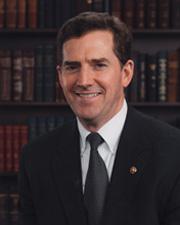
Madam President, I ask unanimous consent that the order for the quorum call be rescinded. Thank you, Madam President. I wish to take a few minutes to talk about an amendment I am offering as part of…
Madam President, I ask unanimous consent that the order for the quorum call be rescinded.
Thank you, Madam President.
I wish to take a few minutes to talk about an amendment I am offering as part of the children's health plan we will be voting on probably later this week.
I think it is important, as we talk about expanding the program, we do it responsibly and make sure we do everything we can to keep personal responsibility as part of the plan. All of us, Republicans and Democrats, look forward to the day when every American family has a health insurance plan they can afford and own and keep.
The children's health plan is, I see, maybe an interim step to that. It was started to help America's poorest children be insured. The plan we are discussing today, however, expands the children's health plan to children over 200 percent of poverty. One of the things we want to make sure does not happen is people who have private insurance and have taken responsibility for health insurance for their family are not encouraged to drop their private insurance and to join a government children's health plan.
There are ways we can do it, and some States already do this. This is by adding cost-sharing provisions for those who take advantage of the government children's health plan. That is what my amendment is about: making sure States that provide Government health coverage to families over 200 percent of poverty have some cost-sharing arrangement to send the signal that this is not a permanent subsidy from Government but a temporary bridge to help families who need some help getting health insurance for their children to get the help they need.
So let me talk a little bit about what is in there.
Again, the main goal of this amendment is to stop the people moving from private plans--that they are paying for and taking responsibility for--to a Government-sponsored plan so there is accountability, and that is what we want to make sure is in this system.
We need to remind our colleagues the children's health plan was created for America's poorest children. I wish a lot of our emphasis and debate was on: How can we get more children under 200 percent of poverty actually registered for the program? There are millions of children today who qualify for the current children's health plan who are not registered, either for what we call SCHIP or for Medicaid. Instead of
just taking those numbers up and expanding the people who can take advantage of the program, we should be trying to get those who are most needy registered for the program. Instead, I am afraid we are going to crowd out those folks, as we provide insurance for other families. In some States, under this plan, families making over $70,000 a year, with a family of four, can take advantage of Government health plans.
So what we are going to have is one person making $70,000 a year paying for their own private insurance and their neighbor making the same amount who has Government health care. There are ways we can discourage it. A number of States already require that the beneficiaries of this children's health plan pay a copay or a small part of the cost of the health insurance, and that is what this amendment does.
My amendment specifically would require that States that are offering the children's health plan to families above 200 percent of poverty have some minimum cost-sharing. We protect the beneficiaries by saying that no State can charge a user of the children's health plan more than 5 percent of their monthly income, and we don't have a minimum. So we expect most States to have a very minimum cost-sharing plan put in place.
What we are doing does not replace or change anything that States already have set up for cost-sharing. In fact, I think it will make it fairer for them. The way the system will work, unless we pass this amendment, is the people in States that are participating in the costs of this plan will help pay more for those States that don't have any cost-sharing. So it is not fair, if we have some States encouraging personal responsibility and cost-sharing, to put more of a burden on them to pay for States that might not do the same.
My belief is that every State would implement for families over 200 percent of poverty a cost-sharing arrangement. What this does is just lays out some basic parameters that give the States complete flexibility, whether it is a copay, whether it is a percent of the insurance, but not to exceed 5 percent of the income of any of the recipients.
I understand this is the next amendment to be voted on. I encourage all of my colleagues to do everything we can to stop any incentives that move people from private insurance to Government insurance, create some accountability and personal responsibility in this plan for the ones with higher incomes, and to save more of the dollars for those who are most needy in the plan.
Again, I encourage a vote, and I reserve the remainder of my time.
I yield the floor.
Madam President, reserving the right to object, I understand I have 2\1/2\ minutes left; is that correct?
And the quorum call will be applied against that time; is that correct?
If the Senator would agree, I don't have much time left, and if I could reserve that time. If there is no opposition, obviously, I don't need to use any additional time.
I thank the Senator.
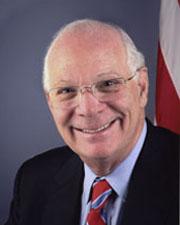
Madam President, I ask unanimous consent that the order for the quorum call be rescinded. Madam President, I take this time to speak in favor of the pending amendment, the Matthew Shepard Hate Crimes…
Madam President, I ask unanimous consent that the order for the quorum call be rescinded.
Madam President, I take this time to speak in favor of the pending amendment, the Matthew Shepard Hate Crimes Prevention Act. This is similar to an amendment we considered last year to try to advance the modifications of the Federal hate crimes statute.
Some have questioned whether we need this act. They claim that the instances of hate crimes in America have diminished. I wish that were the case. I wish we did not need to have a separate law to deal with hate-motivated violent acts in America.
All we need to look at is what happened at the Holocaust Museum on June 15 of this year, when Stephen Johns, a security guard, was murdered. He was murdered by someone who had extreme views. Look at Lawrence King, a 15-year-old who died on February 12, 2008, because he was gay; or look at what happened after the last elections, when two men went on a killing spree to find African Americans; or look at what happened in July 2008, when four teenagers were brutally beaten up because they were immigrants.
All we need to look at are the FBI statistics that indicate in 2007 there were 7,600 hate crimes in America. That is the reported hate crimes. We know many of these acts go unreported and the numbers are much larger. Ethnic communities are reporting an increase in violent acts motivated by hate.
Unfortunately, this law is needed, and we need to strengthen the law so it can effectively accomplish its purpose. What do I mean by that? This amendment, this law, builds on federalism. It builds on what our States are already doing to combat these crimes. Forty-five States have separate laws that deal with hate crimes--31 deal with violence against someone because of their sexual orientation, 27 include gender violence. What we need to do is strengthen our Federal law so federalism, in fact, can work.
The Federal Government has resources which the States don't always have to be able to pursue these types of violent acts. This amendment would strengthen the Federal statute so it would apply to acts of violence based upon someone's gender, sexual orientation, or disability. And it would go beyond the current Federal law, which only allows Federal involvement if the crime occurs during some protected activity.
It also provides the resources to help our States, in that the bill provides grants to State, local, and tribal law enforcement entities for prosecution, programming, and education related to hate crimes prosecution and prevention.
The bill contains a requirement that the Department of Justice certify that Federal prosecution is necessary because the States cannot or will not effectively prosecute the crime. This is to supplement the actions of the State, to work with our States, to respect what federalism should be about. Most of these matters will be handled by the State, but the Federal Government may be able to help the State, and this bill will allow us to do exactly that.
The bill also contains provisions broadening the categories of hate crimes tracked by the FBI. So these are improvements in the law that will maintain our ability to deal with this type of outrageous activity.
Some have questioned: Well, isn't every violent crime a hate crime? The answer is no. A hate crime occurs because the perpetrator intentionally selects the victim because of who the victim is. Similar to actions of terrorism, hate crimes have a greater impact because they cannot only affect the victim, they affect our entire community. We are all diminished when someone in our community is violated because of his or her ethnic background or because of race or sexual orientation.
We need to speak to our national priorities. This amendment speaks to what America should stand for--that we will not permit or tolerate someone to be victimized because of that person's gender or race or because of that person's sexual orientation or disability.
This is a bill that has enjoyed broad bipartisan support in this body. Many of us have worked for many years in order to improve the Federal Government's ability to respond in these areas. This is the next chapter that needs to be done. I hope my colleagues will do what we did in the prior Congress and pass this amendment to the Defense authorization bill so we can move forward to strengthen our resolve against this type of hate activity in America.
I yield the floor, and I suggest the absence of a quorum.
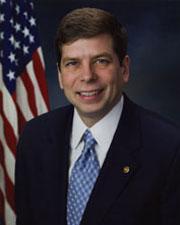
Mr. president, today I submitted amendment No. 1572 to S. 1390 that would provide for earned retirement payments to be restored to a group of selfless heroes in Alaksa. In 1942, after the Alaska…
Mr. president, today I submitted amendment No. 1572 to S. 1390 that would provide for earned retirement payments to be restored to a group of selfless heroes in Alaksa.
In 1942, after the Alaska National Guard was called overseas, a group of brave Alaska Native men formed a group called the Alaska Territorial Guard, ATG. These men helped protect the territory of Alaska during and after World War II by conducting scouting patrols and constructing military airstrips. The brave men received no pay or benefits for their sacrifices during their time of service in the ATG. After disbanding in 1947, many of these former ATG members continued their service in the army and Alaska National Guard and other services.
Recognizing the heroic and patriotic actions of the ATG members, in 2000 Congress passed a law that made former members of the ATG eligible for veterans' benefits. In 2008, approximately 25 of these guardsmen, mostly Native Alaskans in their mid-to-late eighties, were issued military retirement credit for their period of service in the ATG and began receiving a modest $500 a month in retirement pay.
However, in January of this year, the Defense Finance and Accounting Service abruptly ended these payments based on a finding that a misinterpretation of the law had resulted in erroneously awarding these payments. These men, who live in remote areas and rely on this payment for day-to-day needs, were devastated by the unexpected decrease in their monthly income.
Understanding the significant financial impact experienced by these heroes and their contributions during World War II, the Secretary of the Army provided them 2 months of pay from the emergency and extraordinary expense fund. The Alaska Legislature, further cushioning the economic loss experienced by this courageous group, enacted a bill that temporarily restores the entitlement to the ATG members until the earlier of the date that the Federal Government restores the entitlement or February 1, 2010.
My amendment permanently restores the earned Federal entitlement benefit to members of the ATG for their service. As Members of the Senate, it is our responsibility to take care of those who have served and sacrificed. Earlier this year, this body supported restoring this entitlement to the ATG in the Senate-passed budget resolution, S. Con. Res. 13. I ask my colleagues to support this amendment to honor those who have served.
Mr. President, amendment No. 1573 to S. 1390 would authorize the Department of Defense to reimburse military families for costs incurred for transport of a second personally owned vehicle on a change of permanent duty station to or from Alaska, Hawaii, or Guam.
Current law only authorizes servicemembers to be reimbursed for the cost to transport one personally owned vehicle. As with their counterparts in civilian life, many military families today own and rely on a second vehicle. For example, a significant number of military members live off base and commute to work, while their spouses work as well, making ownership of just a single vehicle impractical for most families.
Some military families ship their second vehicle back to the lower 48 States or Alaska, Hawaii, or Guam at their personal expense. Shipment of a second personally owned vehicle to Alaska, Hawaii, or Guam, or to the lower 48 States from these locations can cost our servicemembers as much as $2,000 out of pocket.
Other times, they opt to sell their second vehicle prior to the move and repurchase a second personally owned vehicle upon arrival of duty station. This is a costly option resulting in severe financial loss.
The current policy of reimbursing military families for only transport of one personally owned vehicle is an outdated policy that unfairly impacts the finances of these families who rely on a second vehicle to sustain their needs.
Authorizing reimbursement for a second privately owned vehicle will greatly enhance the quality of life for our servicemembers and their families stationed in Alaska, Hawaii, and Guam, and those returning to the lower 48 States and the District of Columbia from those locations, and will alleviate the unnecessary financial burdens on these families. I ask my colleagues to support this amendment.
Bill Text
Latest available legislative text
        [Congressional Bills 111th Congress]
[From the U.S. Government Printing Office]
[S. Res. 18 Agreed to Senate (ATS)]

111th CONGRESS
1st Session
S. RES. 18

Making majority party appointments to certain Senate committees for the
111th Congress.

_______________________________________________________________________

IN THE SENATE OF THE UNITED STATES

January 21, 2009

Mr. Reid submitted the following resolution; which was considered and
agreed to

_______________________________________________________________________

RESOLUTION

Making majority party appointments to certain Senate committees for the
111th Congress.

Resolved, That notwithstanding the provisions of rule XXV, the
following shall constitute the majority party's membership on the
following standing committees for the 111th Congress, or until their
successors are chosen:
Committee on Agriculture, Nutrition, and Forestry: Mr. Harkin
(Chairman), Mr. Leahy, Mr. Conrad, Mr. Baucus, Mrs. Lincoln, Ms.
Stabenow, Mr. Nelson of Nebraska, Mr. Brown, Mr. Casey and Ms.
Klobuchar, Majority Leader designee, and Majority Leader designee.
Committee on Appropriations: Mr. Inouye (Chairman), Mr. Byrd, Mr.
Leahy, Mr. Harkin, Ms. Mikulski, Mr. Kohl, Mrs. Murray, Mr. Dorgan,
Mrs. Feinstein, Mr. Durbin, Mr. Johnson, Ms. Landrieu, Mr. Reed, Mr.
Lautenberg, Mr. Nelson of Nebraska, Mr. Pryor, and Mr. Tester.
Committee on Armed Services: Mr. Levin (Chairman), Mr. Kennedy, Mr.
Byrd, Mr. Lieberman, Mr. Reed, Mr. Akaka, Mr. Nelson of Florida, Mr.
Nelson of Nebraska, Mr. Bayh, Mr. Webb, Mrs. McCaskill, Mr. Udall of
Colorado, Mrs. Hagan, Mr. Begich, and Mr. Burris.
Committee on Banking, Housing, and Urban Affairs: Mr. Dodd
(Chairman), Mr. Johnson, Mr. Reed, Mr. Schumer, Mr. Bayh, Mr. Menendez,
Mr. Akaka, Mr. Brown, Mr. Tester, Mr. Kohl, Mr. Warner and Mr. Merkley,
and Majority Leader designee.
Committee on Commerce, Science, and Transportation: Mr. Rockefeller
(Chairman), Mr. Inouye, Mr. Kerry, Mr. Dorgan, Mrs. Boxer, Mr. Nelson
of Florida, Ms. Cantwell, Mr. Lautenberg, Mr. Pryor, Mrs. McCaskill,
Ms. Klobuchar, Mr. Udall of New Mexico, Mr. Warner, and Mr. Begich.
Committee on Energy and Natural Resources: Mr. Bingaman (Chairman),
Mr. Dorgan, Mr. Wyden, Mr. Johnson, Ms. Landrieu, Ms. Cantwell, Mr.
Menendez, Mrs. Lincoln, Mr. Sanders, Mr. Bayh, Ms. Stabenow, Mr. Udall
of Colorado, and Mrs. Shaheen.
Committee on Environment and Public Works: Mrs. Boxer (Chairman),
Mr. Baucus, Mr. Carper, Mr. Lautenberg, Mr. Cardin, Mr. Sanders, Ms.
Klobuchar, Mr. Whitehouse, Mr. Udall of New Mexico and Mr. Merkley, and
Majority Leader designee.
Committee on Finance: Mr. Baucus (Chairman), Mr. Rockefeller, Mr.
Conrad, Mr. Bingaman, Mr. Kerry, Mrs. Lincoln, Mr. Wyden, Mr. Schumer,
Ms. Stabenow, Ms. Cantwell, Mr. Nelson of Florida, Mr. Menendez, and
Mr. Carper.
Committee on Foreign Relations: Mr. Kerry (Chairman), Mr. Dodd, Mr.
Feingold, Mrs. Boxer, Mr. Menendez, Mr. Cardin, Mr. Casey, Mr. Webb,
Mrs. Shaheen, Mr. Kaufman, and Majority Leader designee.
Committee on Health, Education, Labor, and Pensions: Mr. Kennedy
(Chairman), Mr. Dodd, Mr. Harkin, Ms. Mikulski, Mr. Bingaman, Mrs.
Murray, Mr. Reed, Mr. Sanders, Mr. Brown, Mr. Casey, Mrs. Hagan and Mr.
Merkley, and Majority Leader designee.
Committee on Homeland Security and Governmental Affairs: Mr.
Lieberman (Chairman), Mr. Levin, Mr. Akaka, Mr. Carper, Mr. Pryor, Ms.
Landrieu, Mrs. McCaskill, Mr. Tester, Mr. Burris, and Majority Leader
designee.
Committee on the Judiciary: Mr. Leahy (Chairman), Mr. Kohl, Mrs.
Feinstein, Mr. Feingold, Mr. Schumer, Mr. Durbin, Mr. Cardin, Mr.
Whitehouse, Mr. Wyden, Ms. Klobuchar, and Mr. Kaufman.
Committee on Rules and Administration: Mr. Schumer (Chairman), Mrs.
Feinstein, Mr. Dodd, Mr. Byrd, Mr. Inouye, Mr. Durbin, Mr. Nelson of
Nebraska, Mrs. Murray, Mr. Pryor, Mr. Warner, and Mr. Udall of New
Mexico.
Committee on Small Business and Entrepreneurship: Ms. Landrieu
(Chairman), Mr. Kerry, Mr. Levin, Mr. Harkin, Mr. Lieberman, Ms.
Cantwell, Mr. Bayh, Mr. Pryor, Mr. Cardin, Mrs. Hagan, and Mrs.
Shaheen.
Committee on Veterans' Affairs: Mr. Akaka (Chairman), Mr.
Rockefeller, Mrs. Murray, Mr. Sanders, Mr. Brown, Mr. Webb, Mr. Tester,
Mr. Begich, and Mr. Burris.
Special Committee on Aging: Mr. Kohl (Chairman), Mr. Wyden, Mrs.
Lincoln, Mr. Bayh, Mr. Nelson of Florida, Mr. Casey, Mrs. McCaskill,
Mr. Whitehouse and Mr. Udall of Colorado, Majority Leader designee,
Majority Leader designee, and Majority Leader designee.
Committee on the Budget: Mr. Conrad (Chairman), Mrs. Murray, Mr.
Wyden, Mr. Feingold, Mr. Byrd, Mr. Nelson of Florida, Ms. Stabenow, Mr.
Menendez, Mr. Cardin, Mr. Sanders, Mr. Whitehouse, Mr. Warner, and Mr.
Merkley.
Select Committee on Ethics: Mrs. Boxer (Chairman), Mr. Pryor, and
Mr. Brown.
Committee on Indian Affairs: Mr. Dorgan (Chairman), Mr. Inouye, Mr.
Conrad, Mr. Akaka, Mr. Johnson, Ms. Cantwell, Mr. Tester and Mr. Udall
of New Mexico, and Majority Leader designee.
Select Committee on Intelligence: Mrs. Feinstein (Chairman), Mr.
Rockefeller, Mr. Wyden, Mr. Bayh, Ms. Mikulski, Mr. Feingold, Mr.
Nelson of Florida, and Mr. Whitehouse.
Joint Economic Committee: Mr. Schumer (Vice Chairman), Mr. Kennedy,
Mr. Bingaman, Ms. Klobuchar, Mr. Casey, and Mr. Webb.
<all>