A resolution authorizing expenditures by the Committee on Commerce, Science, and Transportation.

Legislative Activity
Stay on top of the latest movement without scrolling through every action
Referred to the Committee on Rules and Administration. (text of measure as introduced: CR S2252)
February 12, 2009
View full timeline
Introduced in Senate
February 12, 2009
Committee on Commerce, Science, and Transportation. Original measure reported to Senate by Senator Rockefeller. Without written report.
February 12, 2009
Referred to the Committee on Rules and Administration. (text of measure as introduced: CR S2252)
February 12, 2009
Floor Debate
13 membersWhat members said about S.Res. 47 on the floor
 TC
TC BB
BB MC
MC LA
LA JK+8
JK+8
Floor Debate
13 membersWhat members said about S.Res. 47 on the floor
Madam President, how much time remains on the Republican side? Madam President, I ask unanimous consent to consume that 3 minutes and the other 15 minutes allotted to our side on the executive…
Madam President, how much time remains on the Republican side?
Madam President, I ask unanimous consent to consume that 3 minutes and the other 15 minutes allotted to our side on the executive nomination, and when that 18 minutes is up, the remainder be followed by the time on the Democratic side and the nomination be reported.
Madam President, I wished to spend a few minutes on this.
As a physician who cared for Medicare patients for 25 years, I cannot tell you how worried I am about what this bill is going to do to my senior patients. When Medicare was first written, two things were put into the law--very straightforward, very direct. Let me read them to you, for a minute. I hope Americans listen to this. Here is what the law is. CMS is breaking the law today and, with the new Medicare Commission, they are going to break it even further under this bill.
Section 1801 says this:
Nothing in this title shall be construed to authorize any
Federal officer or employee to exercise any supervision or
control over the practice of medicine or the manner in which
medical services are provided, or over the selection, tenure,
or compensation of any officer or employee of any
institution, agency, or person providing health services; or
to exercise any supervision or control over the
administration or operation of any such institution, agency,
or person.
That says that the Federal Government cannot practice medicine. That is what it says.
Section 1802 says this--and this is where it is important for my Medicare patients and everyone out there:
Any individual entitled to insurance benefits under this
title may obtain health services from any institution,
agency, or person qualified to participate under this title
if such institution, agency, or person undertakes to provide
him such services.
Well, what we have in this bill is the gutting of those two foundational principles of Medicare. The first is the Medicare Advisory Commission is going to tell you what you can and cannot have. Here is what we are going to see: You will choose what I tell you to choose if you are a Medicare patient.
Not only do we have almost $500 billion in cuts to Medicare, under the auspices that we have to control entitlement spending; not only are we taking away plans from people who are very satisfied with what they have today, but we have enhanced, and will enhance, the ability of the Federal Government to practice medicine.
My colleagues on the other side of the aisle, who have never practiced medicine, who know the legalese but don't know the consequences of right now the rationing of Medicare on drugs such as Epigen and Neupogen--you see, Medicare has decided when oncologists can use those drugs. They have taken a
blanket position, although they have released it somewhat. But what it says is this--I will give you a patient who has breast cancer. She is 67 years old. She is being treated for breast cancer. She becomes anemic and neutropenic. That means her white blood cell count, her ability to fight infection goes down.
We have wonderful drugs that raise the white blood cell count and raise the red blood cell count. But Medicare, in its obvious wisdom of practicing medicine, has told the oncologists when they can and cannot use it. That is fine for 75 percent of the patients, but it totally ignores the other 25 percent of the patients who happen to have complicating factors, such as congestive heart failure or if they become anemic under breast cancer chemotherapy and have congestive heart failure as well. The government says you cannot have erythropoietin at this level of hemoglobin regardless of whether you have congestive heart failure.
What happens is the practice of medicine out of Washington or Maryland, more specifically, determines who can and cannot have a drug; in this case, erythropoietin.
What is the consequence of that? The consequence is that the patient did not die of breast cancer; she died of congestive heart failure that could have easily been treated had we not had medicine practiced by CMS denying the ability of the physician to give the patient exactly what she needed when she needed it.
We are starting down that road with this bill--aggressively starting down that road--because the Medicare Payment Advisory Commission, combined with the Comparative Effectiveness Panel will not look at complications and will not look at secondary diseases. They will look at the average.
I want to tell my colleagues, when you are sitting in an office with your doctor, you are not average. You are you, and you are a specific individual with a set of factors that nobody else has. The judgment in the practice of medicine cannot be done by an insurance company or CMS at a distance without them having a hand on the patient. They never have their hand on a patient.
The whole art of medicine, which is 40 percent of getting people well, is the knowledge and training and experience and gray hair that comes with looking at the total patient, being one on one, not having the government between the doctor and their treatment of a patient.
What this bill does--this bill is a lie one of two ways. One, it says we are going to take this money out of Medicare and you are not going to notice any difference. That cannot be true. If we take $500 billion or $400 billion-plus out of Medicare, millions of seniors are going to notice a difference in their health care and what they get under Medicare. If we say that is not true, then the only way that is not true is the game that is being played on the financing of this program; that is to say, we are going to cut this money out of Medicare and then with a wink and a nod know we are never going to do it.
The majority leader said yesterday there is nothing more important in this Nation right now than passing health care reform. I differ with that statement. I think 10.2 percent unemployment is a whole lot more important, and finding those people jobs, than passing health care reform. I think a $12 trillion debt is more important to address than fixing health care right now. I think the fact that we have $350 billion worth of waste, fraud, and duplication in the Federal Government every year, and we are not addressing it, is more important than fixing health care right now. I think the fact that our economy is still on its back and people are continuing to lose jobs is more important than fixing health care right now.
I understand the political dynamics, but I also understand very well with my quarter of a century of practicing medicine that what this bill is going to do is destroy the best health care system in the world, and it is going to undermine the security of every senior in this country because what starts as a small couple of things, such as Neupogen and Epogen or like when you can have bone densitometry and whether your osteoporosis can truly be evaluated, CMS has already said how much you can do that, whether your bones are falling apart or not. It is the start of the government practicing medicine.
It is the beginning of our seniors having the government step in between them and their physician in terms of the physician wanting to do what is best for that senior and the government saying: No, I will tell you what you are going to have. I will tell you what you will have.
Thomas Jefferson taught us a lot. He predicted we would have ``future happiness for us if we can prevent the government from wasting the labors of the people under the pretense of taking care of them.''
I want to see a lot of things changed in health care. I want to see true competition in the insurance industry. I want to make sure nobody loses their insurance because they get sick. I want to make sure everybody can get insurance if they are sick. I do not disagree with the basic premise. What I disagree with is moving $2.5 trillion more under government control, which will raise costs ultimately in the health care sector. If it does not raise costs and we are truly going to take this money from Medicare, what it is going to do to our seniors, I have a message for you: You are going to die soon, and they are going to say that is not true, that it is not true.
When you restrict the ability of the primary caregivers in this country to do what is best for their senior patients, what you are doing is limiting their life expectancy. We are saying CMS, the Medicare Payment Advisory Commission, and the Comparative Effectiveness Panel will tell the doctors what they can and cannot do, ignoring the 20 percent of the people for whom that is exactly the wrong prescription. So for 20 percent of our seniors, this bill is going to be a disaster, but it is going to save money because you are not going to be around for us to spend any money on you because the government will have already told us what the treatment plan will be for you. We will decide in Washington through the Center for Medicare and Medicaid Services what you will receive.
They will dispute that, but the people who are going to be disputing that are lawyers; they are not doctors. They have never laid a hand on a patient. They have never put their hand forward on a Medicare patient knowing the consequences of the total patient, the background, the medical history, the sociologic factors that fit, the family dynamics, the past medical history, the family history, and the present state of mind of that patient.
Even more important, what this bill is going to do is divide the loyalty of your doctor away from you. When you go to the doctor today, most of the time that doctor's No. 1 interest is in you and your well- being. When you have this Medicare Payment Advisory Commission and you have this Comparative Effectiveness Panel, what that does is that causes the physician--he or she--to take their eyes off of you. Now they are going to put their eyes on what the government says because the consequences of not doing what the government says will ultimately result in some type of sanction.
Do we want physicians to be patient-centered and focused on their patients or do we want physicians to have their eye on the government and half of an eye on the patient? Which do you think is going to give us the best care? Which do you think is going to give us the greatest quality of life? What is going to give us the greatest longevity with the greatest quality of life? Is it the government practicing medicine, or is it the trust that has been developed through years between a patient and a doctor to do what is in the best, long-term interest of that patient?
I cannot tell you the number of people who die from the CMS regulations on Epogen for oncologists. But there were hundreds-- hundreds--because Medicare never looked at the patient; they looked at dollars.
As we go forward in this debate, what I want seniors in America to know--and I am fast approaching Medicare age; I am 3 years from it--I want them to know the key thing they are going to lose in this bill is the loyalty and primacy of their physician thinking about them. We are going to divide that loyalty to where the physician is going to be looking at the government. If you think that is not true, just look at what has happened so far when CMS
has decided to start practicing medicine.
In the HELP Committee, I offered an amendment to change the language so there would be absolutely a prohibition on rationing care and directing the care from Washington. It was rejected out of hand-- rejected out of hand. Not one of my colleagues on the other side of the aisle voted to prohibit rationing of health care.
Why would they do that? Because the ultimate intention through the Comparative Effectiveness Panel is to ration care. It is to ration the care. It is to limit the amount of dollars we spend and never look at the individual patient.
If we think about the Medicare cuts in this bill, we are going to take $135 billion out of the hospitals. Do you think seniors will ever notice that? I do. I think when you ring your button and you are hurting and you need pain medicines or you need to go to the bathroom, the time it takes for somebody to get there will not be sufficient. What will happen is you will wait. You will have a complication. If you have acute shortness of breath and press the button, the available nurses will not be there. There will be a consequence to cutting $135 billion from payments to hospitals in this country.
We are going to take $120 billion out of the seniors--the one in five seniors who now have Medicare Advantage. I agree, it is more expensive than Medicare. It needs to have some cost containment through competitive bidding, but we should not be decreasing the services, which is exactly what is going to happen. If you are a senior on Medicare Advantage, you are going to lose benefits you now have. You are going to lose them.
One of the ideas of Medicare Advantage was preventive services. One of the things that improved the care in rural America was Medicare Advantage. Yet we are going to take that away. The vast majority of the benefits we are going to cut in half.
We are going to take $15 billion from nursing homes. That may or may not be appropriate, but the way to do that is through a competitive experience based on quality and outcome rather than some green-eyeshade staffer saying we can take $15 billion out of Medicare from payments to nursing homes.
One little secret that is not in this bill, that has not been addressed in this bill, is the estimate by a Harvard researcher that there is $120 billion to $150 billion a year in fraud in Medicare alone. HHS admits to $90 billion. We know it is well over $100 billion a year. Cleaning up the fraud in Medicare would pay for a lot of health care for a lot of folks in this country. There is $2 billion in this whole bill to clean up the fraud.
Why would we not fix that first? Why would we take money from Medicare to create a new program when in fact we are wasting 10 to 15 percent?
I will close with this remark. If you are a senior and you are on Medicare, you better be afraid of this bill. I don't come to the floor and say that very often, but your health care is totally dependent, in terms of being decreased by this bill.
I yield the floor.
Mr. President, if I might respond. The plan is, women colleagues will be coming to the floor. As they come, I will yield to them, until Senator Mikulski gets here, and then she will yield the time,…
Mr. President, if I might respond.
The plan is, women colleagues will be coming to the floor. As they come, I will yield to them, until Senator Mikulski gets here, and then she will yield the time, if that is all right.
Mr. President, before I start, I want to say to my colleague from Connecticut how much I appreciate his work and the work of Senator Baucus and Senator Reid. What a remarkable moment we have here.
When I go home--and I was home for the holidays--people are urging us to get this done. They know their biggest chance of going into bankruptcy is a health care crisis--62 percent. They know, as my friend Senator Dodd has said almost every day of this debate, every morning 14,000 people lose their health care. They know if we do not intervene with a good bill, their premiums--in my home State, I say to the Senator--will be 41 percent of their income, the average income, by 2016.
Can you imagine? That is unsustainable. For people who say: Why don't we address the economy instead of health care, let me say what happens to my constituents if they have to pay 41 percent of their income for premiums. Even if they have a good job, I say to my friend from Connecticut, they cannot make it. So the status quo is cruel, and it is particularly cruel to women.
Amendment No. 2791
Mr. President, I am proud to support the Mikulski-Harkin- Boxer amendment to improve preventive health coverage for women. The Mikulski amendment addresses this critical issue by requiring that all health plans cover comprehensive women's preventive care and screenings--and cover these recommended services at little or no cost to women. These health care services include annual mammograms for women at age 40, pregnancy and postpartum depression screenings, screenings for domestic violence, annual women's health screenings, and family planning services.
The preventive services covered under this amendment would be determined by the Health Resources and Services Administration to meet the unique preventive health needs of women. HRSA is an agency within the Department of Health and Human Services. HHS Secretary Kathleen Sebelius has already said that ``Mammograms have always been an important life-saving tool in the fight against breast cancer and they still are today.'' The Secretary made clear that recommendations by the U.S. Preventive Services Task Force ``do not set federal policy and they don't determine what services are covered by the federal government.''
This is not the first time that experts have disagreed about this issue. I have been in this battle before, with Senator Mikulski, who called a hearing with all of the women Senators in 1994 where I insisted that routine mammograms for women over 40 must be covered. And thank goodness we fought back then, and in 1997 and in 2002 when this issue was raised again and again. Since 1991, the death rate from breast cancer has been reduced by over 20 percent.
According to a 2007 Partnership for Prevention report, 3,700 additional lives would be saved each year if we increased to 90 percent the portion of women age 40 and older who have been screened for breast cancer in the past 2 years. The most recent data show us that approximately 17 percent of breast cancer deaths occurred in women who were diagnosed in their forties. That is why the American Cancer Society continues to recommend annual screening using mammography and clinical breast examination for all women beginning at age 40. Mammograms are still the most effective and valuable tool for decreasing suffering and death from breast cancer. The Mikulski amendment will ensure women are able to get access to this and other lifesaving preventive services at no cost.
The underlying bill introduced by Senator Reid already requires that preventive services recommended by the U.S. Preventive Services Task Force be covered at little to no cost. These recommendations already include some women's preventive services such as osteoporosis screenings.
But they do not include certain recommendations that many women's health advocates and medical professionals believe are critically important, such as screenings for ovarian cancer--a disease that will claim the lives of nearly 15,000 women this year. We know that when ovarian cancer is diagnosed early, more than 93 percent of women survive longer than 5 years.
Women are often the decisionmakers for their families when it comes to health care. But women too often put the health needs of their family members and their children ahead of their own.
By passing this amendment, we are saving the lives of countless mothers, daughters, grandmothers and sisters who would otherwise forgo preventative health care because of high copays and expensive deductibles.
I would like to share with my colleagues a story from a doctor in my home State of California, William Leininger, that drives home the importance of this amendment:
In my last year of residency, I cared for a mother of two
who had been treated for cervical cancer when she was 23. At
that time, she was covered by her husband's insurance, but it
was an abusive relationship, and she lost her health
insurance when they divorced.
For the next five years, she had no health insurance and
never received follow-up care (which would have revealed that
her cancer had returned). She eventually remarried and
regained health insurance, but by the time she came back to
see me, her cancer had spread.
She had two children from her previous marriage--her
driving motivation during her last rounds of palliative care
was to survive long enough to ensure that her abusive ex-
husband wouldn't gain custody of her kids after her death.
She succeeded. She was 28 when she died.
That is not a story that should be told in the richest nation in the world.
As I said, I am so proud to support the Mikulski-Harkin-Boxer amendment to improve preventive health care coverage for women. Here is why. It is a fact that women are increasingly delaying or skipping altogether preventive health care, and they are doing it because of costs.
I read a statistic done by a nonpartisan group that said about 39 percent of men are delaying going to a physician to check on a problem. But over 50 percent of women are doing that either because they do not have health coverage or they are fearful of the copay. So we could sit here and do nothing--that is the easy thing to do: Scare people, do nothing--or we could step to the plate, save Medicare, which is very important to save, and that is what this bill does. Because we say we are not going to spend money on waste, fraud, and abuse. We are going to spend money on health care for our people.
And to believe that my friends on the other side are the ones who are going to save Medicare? You just have to read history. Senator Dodd explained it; Newt Gingrich saying: Let Medicare wither on the vine; Bob Dole, our friend, who said, at the time of his Presidential campaign: I fought against Medicare. It was a failure.
Well, if you ask our seniors, I think they are the group most pleased with their coverage. It is not perfect, but it is critical, and we save it here. We extend the life of Medicare.
So here we are in a situation where many women are delaying going to the doctor, getting their preventive services, and the Mikulski amendment addresses this critical issue. It requires that all health plans cover comprehensive women's preventive care and screenings, and cover them at little or no cost.
The reason this is so important is--first of all, in the HELP Committee, under Senator Dodd's and Senator Kennedy's leadership, this piece of the package was in the bill because Senator Mikulski and others pushed so hard to get it placed into the bill.
Mr. President, I would ask my friend from Maryland, Senator Mikulski, if I could complete my remarks and then give the floor over to her?
Mr. President, I thank the Senator.
I am so proud to work with Senator Mikulski. I say to the Senator, we worked on this issue over the years. I just asked my staff to go back and look at the first time we teamed up to ensure that women get mammograms at age 40. That was in 1994. Then, again, over the years, every 3 or 4 years, this whole notion would rear its ugly head: Well, women can do without mammography. The question I have is, What is going to replace it? They would keep trying to take away our tools of self- examination and mammography. We know if you look through the years--and Senator Mikulski and I are proud of a lot of the work we do, but this goes right at the top of the list--we know mortality for breast cancer is way down since the early 1990s. It is 20 percent down since the early 1990s. We have had to stand our ground to protect women, to make sure they get those services they need, those lifesaving services, at little or no cost.
I would also say the American Cancer Society continues to recommend annual screening using mammography and clinical breast exams for all women beginning at age 40. There are a lot of other very important tests that are included in the Mikulski amendment--very important tests--to deal with cervical cancer and ovarian cancer, finding the markers so we know how to deal with these deadly diseases. To give up the tools we have, to turn it over to some organization that does not report to the Secretary of HHS, makes no sense.
What my friend has done with her amendment is to make sure the group that decides this is under the jurisdiction of the HHS Secretary. We know the HHS Secretary has already said she wants to make sure women, starting at age 40, get those mammograms.
I am going to close by reading from an article in the March 10, 1994, San Francisco Chronicle. It says:
Joining what became a phalanx of six female Senators
staring down at federal health officials Boxer said she will
insist that routine mammograms and a host of other women's
health needs be part of any new nationwide benefit package.
The article goes on. It is very clear. What I said at the time is:
After all of these years of women being told it is crucial
by age 40 to get a baseline mammogram, now to have this
tremendous confusion hit us is very disturbing.
Well, it was disturbing on March 10, 1994, when I first got involved in this issue. It was disturbing when Senator Snowe, 3 years later, had us pass S. Res. 47 which said this is our only tool. Let's do it. Thank goodness we have now in this body women and men who get the fact that we refuse as women to be stripped of the only tools we have. Making all of these important tests part of this package is going to save lives. It is going to save money. It is going to mean our families can breathe a deep sigh of relief out there.
So I wish to thank Senator Mikulski for her leadership on this issue and to always stand right at her side on this issue of mammography. We also worked on standards for mammography. Remember that one? It was the deregulation fever that hit the Republican side. They wanted to take away the regulations for mammography, roll them back. We fought the fight, and we will continue to fight the fight.
So thank you very much. I strongly support this amendment.
I yield the floor for my friend, Senator Mikulski.
I thank the Senator from Tennessee. Very definitely we are hearing from seniors in Idaho who see through this. It is very clear to the folks in Idaho that what we are seeing is a proposed massive…
I thank the Senator from Tennessee. Very definitely we are hearing from seniors in Idaho who see through this. It is very clear to the
folks in Idaho that what we are seeing is a proposed massive growth of the Federal Government by over $2.5 trillion, when fully implemented, that is to be funded on the backs of American taxpayers and senior citizens through cuts in Medicare. In fact, in addition to those who have contacted me who are seeing their health benefits lost, I have also been contacted by a number of the providers. We are talking about those who are in home health care or hospice health care, skilled nursing facilities or hospitals and the like.
They make a very interesting point. Their point is that not only will senior citizens--in Medicare Advantage in particular--literally be losing their benefits dramatically, but that other senior citizens who are in traditional Medicare will also be losing access and quality of care. How is that the case? We know from the details of this bill that we are going to see major cuts in hospice care, home health care, skilled nursing facilities, and hospitals.
The points made to me by those providers are that they have already gone through a series of very deep cuts, cuts to the point that in Idaho for home health care, we have lost something like 30 percent of our facilities already. The way one of them explained to it me was that if you reduce the compensation we are receiving, then we have to reduce something in our budget. He said: We can't just start taking bricks off of our buildings. What we will end up having to do is to reduce personnel. That would be the nurses and the doctors and the other care providers who are there to provide support for these individuals. We will have to reduce the number of rooms we operate or the facilities we provide. In the end, there will be a reduction of services and access available to senior citizens, including a reduction in the quality of the care they are able to be provided.
Obviously, it will come from cuts in Medicare or increased taxes or simply more debt on the Federal level.
The Senator raises a very interesting point. This question of fixing the compensation rates for physicians in Medicare is a huge question, one which we have been fighting for for a number of years to try to find a solution to, as each year we delay the expected cuts that will happen. I have talked about this factor in the context of being a budget gimmick in this bill. What do I mean by that? Those who say this bill reduces the deficit are able to say so only because it has about $500 billion of new taxes, about $500 billion of Medicare cuts, and a number of budget gimmicks that delay the implementation of the spending side of the bill or, in this case, don't even include at all one of the major expenses that needs to be accommodated, and that is the fix for physician compensation. If any of those things were not in this bill, this bill would drive up the deficit tremendously.
What we are going to see, in addition to these fiscal impacts on the Federal Treasury in terms of huge increases in the debt or huge increases in more taxes, even more than we are talking about with this bill, is we are going to see the very real potential that access to medical care for seniors will be again reduced because of this factor.
Let me give a couple of statistics. In their June 2008 report, the Medicare Payment Advisory Commission, or MedPAC, said that 29 percent of Medicare beneficiaries who were surveyed were looking for a primary care physician and had trouble finding one to treat them. In other words, about 30 percent of Medicare beneficiaries today are having trouble finding a physician who will take a Medicare patient. That is before the $465 billion of cuts and before simply not including physicians at all in this legislation.
A 2008 survey by the Texas Medical Association found that only 58 percent of the State's doctors took new Medicare patients, and only 38 percent of the primary care doctors accepted new patients. Again, it is an example from MedPAC and from one State that indicates what we know is happening around the country; namely, that doctors in increasing numbers are no longer taking new Medicare patients, just as they have been doing with Medicaid patients for years. Yet we see these massive cuts to Medicare being proposed that will have the same impact on hospice care and home health service and skilled nursing facilities and hospitals, and we see that doctors are not even included at all, meaning they are projected now to receive major reductions. I think it is over 20 percent reduction in their compensation for taking Medicare patients.
The solution here to establishing a massive new Federal entitlement program is not to cut Medicare. I want to repeat something both the Senators from Arizona and Tennessee have already said that is critical. Reducing the Medicare budget by $464 billion, by any number, is something that has been encouraged in terms of trimming the growth path for Medicare. That is something this Congress has looked at in the past. But never was it intended by those who made these projections about needing to control the spiraling cost of Medicare that we address the fiscal circumstances in Medicare with the intended purpose of creating another new, massive Federal entitlement program that will grow the Federal Government by over $2 trillion--we talked about the numbers; the full 10-year period is $2.5 trillion--and leave Medicare with these dramatic cuts, this loss of service and loss of benefits to the recipients, while they see this new government growth with a new government program. That was not in the mind of anybody who was asking us to deal with the solvency issues on Medicare, and I don't think it was in the mind of anybody who asked that we have some kind of health care reform to deal with the rising cost of premiums.
Mr. President, how much time remains?
Thank you, Mr. President. I wish to conclude with our time this morning by focusing on the larger picture a little bit, as my colleague from Tennessee has done in his concluding remarks.
When you ask Americans whether they want health care reform, the vast majority would say yes. When you ask them what they mean by that, the vast majority in the polls and in my personal experience are saying: We want to see the spiraling costs of health care and our health insurance brought under control and reduced, and we want to see increased access to quality health care for those who do not have access today and for those who have limited access today.
This bill fails on those two central points. What this legislation does, instead, is increase the size of government by $2.5 trillion of new Federal spending, establishing massive new Federal controls over the economy, and even creating a Federal Government insurance company. It increases taxes by about $500 billion, and not just on the so-called wealthy. The vast majority of these taxes is going to squarely hit those who President Obama said would not be hit: those who make less than $200,000 a year and, frankly, all the way down the income chain.
It cuts Medicare by $464 billion. It puts a major new unfunded mandate on our States, which are already struggling in their fiscal budgets. As my colleague indicated, it causes the price of insurance premiums to go up for the individual market, to go up in the small group insurance market, and to be basically unchanged in the large insurance market, according to the CBO study.
By the way, one of the things that is not pointed out in that CBO study very much is in that large market, which it says will be the only part of the market that does not see insurance rates go up, one of the reasons is because their health care will go down. In other words, there is a tax on these larger, high-cost insurance premiums that is going to be either passed through and cause their insurance to go up or will be avoided by reducing the cost of their insurance and reducing coverage of the benefits in these policies. So one way or the other, all Americans are going to see their health care premiums go up or, in the large groups, see their health care premiums be held the same by reducing the quality of the insurance they have.
If you go back to those two reasons Americans wanted health care reform, did we see premiums go down? No. Did we see increased quality or increased access to care? Well, there are some who are going to get a subsidy in this program for this new massive Federal program. But at what price? Mr. President, $2.5 trillion, $464 billion of cuts in Medicare, the establishment of a major new government program that would essentially be funded on the backs of massive new tax increases, massive Federal tax increases, and Medicare cuts, and in the end we will still be in a system in which we are seeing spiraling increases in health care costs. To me, that is not the kind of reform we need.
My colleague from Tennessee indicated there are a number of reforms on which we can find common ground that will reduce health care costs. There are a number of reforms on which we can find common ground that will help us to increase access to quality care. That is where our focus should be. That is why I stand here today in support of my colleague John McCain, his motion to commit this legislation to the Finance Committee. As was indicated, it could be done in 1 day, to simply remove the Medicare cuts that are contained within it. Let's fix that part of this bill, and then let's work forward.
I see my time has expired. I encourage this Senate to focus closely on the legislation and to let us work together in a bipartisan fashion rather than speeding ahead and trying to pass legislation that has not had the opportunity for this kind of bipartisan effort to develop a good work product for the American people.
I congratulate the Senator from Arizona on his analysis of the Medicare cuts. I heard the Democratic leader talk about figures and how we have some figures and the Democrats have other figures. I…
I congratulate the Senator from Arizona on his analysis of the Medicare cuts. I heard the Democratic leader talk about figures and how we have some figures and the Democrats have other figures. I agree with him. I think someone watching this must think we are on two different planets sometimes, so let me focus in on the figures.
I believe I heard my colleague say to pay for this health care bill over 10 years there would be $465 billion in the Medicare cuts. Where does that figure come from?
I think the Senator from Arizona is right. The President of the United States, in his address to us about health care, and the New York Times, the Wall Street Journal--everyone who has reported on the Congressional Budget Office figures said the same thing. We are going to pay for this bill, which is $2.5 trillion over 10 years when fully implemented, by $465 billion cuts in Medicare.
What Senator McCain in his amendment that we are in support of is saying is, don't cut grandma's Medicare to pay for someone else's insurance. He goes on to say, if you are going to find some savings in waste, fraud, and abuse in grandma's Medicare, spend it on grandma. The reason for that is that the Medicare trustees have said to us that there is $38 trillion in unfunded liabilities for the Medicare Program and that the program will start going bankrupt between 2015 and 2017. According to the Medicare trustees, they say, ``We need timely and effective action to address Medicare's financial challenges,'' and the proposal, if I may say to the Senator from Arizona, who is on the Finance Committee and deeply involved in what we need to do about our Nation's finances, I don't think the Medicare trustees were thinking that the timely and effective action we could take to keep Medicare from going broke was to take $465 billion out of it and spend it on some new program.
I see the Senator from Idaho here. I wish to hear his observations. If there is any issue in this entire health care debate that symbolizes why we on the Republican side want to change the debate to a step-by-step approach to reducing the cost of premiums, it would be the Medicare issue. As the Senator from Arizona said, what we need to do about Medicare is make it solvent as quickly as we can, as effectively as we can. The Senator from Kansas said the other day that the proposal to take $465 billion from grandma's Medicare and spend on it some new program is like writing a check on an overdrawn account in a bank to buy a big, new car. There is a lot of truth to that.
The President said earlier this year something I agree with. He said this health care debate is not just about health care. It is about the role of the Federal Government in the everyday life of Americans. He is exactly right about that. This health care debate, which we are beginning this week, is not just about health care. It is about the stimulus package, about the takeover of General Motors. It is about the trillion dollar debt. It is about the Washington takeovers. It is about too much spending, too much taxes, too much debt. The Medicare provisions in this bill are a perfect symbol of that. That is why Senator McCain is right. What he is saying is, don't cut grandma's Medicare and spend it on some new program. If you can find some savings in the waste, fraud, and abuse of grandma's Medicare, spend on it grandma. Make sure those of us who are older and those of us who are younger and looking forward to Medicare can count on its solvency.
Later this week we will talk more about premiums going up. There was a lot of discussion yesterday because, according to the Wall Street Journal, some health premiums would rise. For people who get their insurance from large employers, this bill won't make much difference. And for small employers, if you get your insurance from a small employer, it won't make much difference. If you are going to the individual market to buy insurance yourself, your premiums will go up, except we are going to get some money from somewhere to help pay part of your premiums, at least for about half of Americans who are in the individual market. Where are we going to get that money? From grandma. We are going to get it from Medicare. So that is what is wrong with this bill. And what is right about the McCain amendment is, it says simply, don't cut Medicare. If we find savings, which we hope we can in Medicare, we should spend it on making Medicare solvent.
I wonder if the Senator from Idaho is hearing from seniors in his State about the proposed $465 billion cuts to Medicare and how they feel about taking that money and spending it to create a new program?
In discussing the Medicare cuts, another provision of the bill which we will be talking about this month and next month as we go through the health care debate is what about the problem of paying doctors and hospitals who see Medicare patients. They get paid about 83 percent of the rate they would be paid if they were seeing a private care patient. Every year Congress has to make an adjustment in something we did a few years ago which automatically cuts the amount of money that we pay doctors who are seeing Medicare patients.
That is a big problem for Medicare patients. Because if the doctors can't be paid, they won't see the patients, and Medicare patients may find themselves increasingly in the condition that Medicaid patients do, low-income Americans who are covered through the State program-- that is our largest government-run program--where they are paid about 60 percent of what doctors who see private patients are paid and about half of Medicaid doctors won't see new patients.
I ask the Senator, does he see anywhere in this bill a provision for the $\1/4\ trillion that will be needed to pay doctors 10 years from now what they are making today? If it is not in the bill, where is that $\1/4\ trillion going to come from? Is it going to come from Medicare cuts, or will it come from adding to the deficit?
Mr. President, how much time remains on the Republican side?
Would the Chair let me know when 4 minutes remain.
The Senator from Idaho will conclude our remarks at that time.
The Senator from Idaho has made an important point, anticipating our Democratic friends will have the next 30 minutes and some other things they may be saying the rest of the day. There was a lot of talk yesterday about the CBO report about the effect of this $2.5 trillion proposal on premiums. Rather than take my word for it, let's go to the news section of the Wall Street Journal of today which has the headline: ``Some Health Premiums to Rise.'' That means going up. That means the cost of your insurance is going up for some Americans.
So my question is, why would we spend $2.5 trillion over 10 years, cut Medicare, raise taxes, and run up the debt to raise some health premiums? I thought the whole exercise was to lower the cost of health care premiums.
The article says:
The analysis released Monday by the nonpartisan
Congressional Budget Office and the Joint Committee on
Taxation--
We are supposed to pay some attention to these outfits as nonpartisan--
painted a more complicated and uncertain picture. It said
people who pay for their own insurance would see a higher
bill, albeit for more generous benefits--
That is the government-approved insurance you are going to be forced to buy.
unless they are lower earners who qualify for a new
government tax credit.
Where is the money going to come from for those subsidies? It is going to come from grandma. It is going to come from Medicare. It is going to come from taxes. And it is going to come from increasing the debt.
Those are facts.
Employees of small firms--
Says the Wall Street Journal--
would effectively see their insurance premiums unchanged--
So for small firms, we are going to spend $2.5 trillion over 10 years, cut Medicare, cut taxes, and run up premiums for millions of Americans, so your insurance will continue to go up at about the rate it already was. Why should we be doing that?
while workers at large firms would see something between
unchanged and slightly lower premiums under the bill--
Compared to what would already happen--
according to the analysis.
We need to change the debate. We need to start over. Instead of this comprehensive 2,000-page bill that is full of taxes, mandates and, as a general effect, raises premiums and taxes and cuts Medicare, we should set a clear goal, reducing costs, and begin to go step by step toward that goal--reducing junk lawsuits against doctors, allowing health care to be purchased across State lines to increase competition, allowing small businesses to combine in health plans so they can offer more insurance to employees at a lower cost.
These three bills I mentioned have been offered and rejected so far by the Democratic majority. We should have more flexibility in health savings accounts, efforts at waste, fraud, and abuse, which are, in effect, Medicaid--the largest government program--and Medicare--the second largest--and more aggressive steps to encourage wellness and prevention.
One approach, the comprehensive 2,000-page bill, Washington-takeover approach, Americans are very leery of. In my respectful opinion, this bill is historic in its arrogance for thinking we could take a system that affects almost all 300 million Americans, 16 percent of the economy, and change it all at once.
Instead, why don't we go step by step to re-earn the trust of the American people? Republicans will be making those proposals on the floor this month and next month and as long as it takes to try to see that we get real health care reform. Cutting grandma's Medicare by $\1/ 2\ trillion and spending it on a new program at a time when Medicare is going broke is not real health care reform.
Mr. President, I ask unanimous consent that during the 30 minutes controlled by the Republicans, we be allowed to engage in a colloquy. Mr. President, I will begin by making some comments about the…
Mr. President, I ask unanimous consent that during the 30 minutes controlled by the Republicans, we be allowed to engage in a colloquy.
Mr. President, I will begin by making some comments about the amendment Senator McCain, my colleague from Arizona, has filed. This is an amendment that, as the minority leader just said, will protect America's seniors. It will disallow the Medicare cuts this bill includes.
The economist Milton Friedman famously said, ``There is no such thing as a free lunch,'' and that applies to health care as well. There is no such thing as free health care. Someone has to pay. Since this bill is a $2.5 trillion bill, the first question is, Who pays? The first answer to who pays is, it is America's seniors, because about half of the cost of the bill is allegedly paid for by cuts to Medicare.
Let me break down a little bit more specifically than the Republican leader did exactly what that means. This is about $500 billion in Medicare cuts as follows: $137.5 billion from hospitals who treat seniors; $120 billion from Medicare Advantage, which is the insurance program that provides benefits to seniors which will be cut more than in half as a result of this $120 billion reduction; $14.6 billion from nursing homes that treat seniors; $42.1 billion from home health care for seniors; and $7.7 billion from hospice care, one of the most cruel cuts of all.
Obviously, with cut this dramatic there is no way to avoid jeopardizing the care seniors now enjoy, and seniors know this. That is why they have been writing our offices and attending townhall meetings to let us know they disapprove. I quoted from two letters constituents of mine from Arizona sent asking to please not cut their Medicare Advantage Program. This has been called the crown jewel of the Medicare system, and many of them rely on Medicare Advantage for dental care or vision care or hearing assistance they have come to rely on. They are not buying the claims that somehow or other we can make $\1/2\ trillion cuts in Medicare without somehow hurting their care. They know better than that, and they are right. The care they have been promised will be compromised to pay for this new government entitlement under the bill.
Finally, many are wondering what happened to the promise that they get to keep the care they have. We all heard the President say that many times: If you like the care you have, you get to keep it. That is simply not true. There are 337,000 Arizonans who are Medicare Advantage patients. They like what they have. Yet we know, according to the Congressional Budget
Office, that the benefits they have under Medicare Advantage are going to be cut by more than half. They are saying: What happened to the policy I like? I am not going to be able to keep it if this bill passes.
This is why the McCain amendment must pass. If our Democratic colleagues are not willing to protect Medicare, then I cannot imagine how the bill could otherwise be made acceptable since it starts with the commitments that Congress and the President have made to our senior citizens.
Mr. President, I say to my friend from Tennessee, first of all it comes from a reading of the bill. It is very clear in the bill as to how much money is taken from Medicare. The number the Senator from Tennessee just articulated is the correct number.
In addition to that, the Congressional Budget Office and the Joint Tax Committee analyzed the specific numbers. Obviously they were given the numbers in the bill, but the numbers they are using are--I just broke it down into four or five general categories. There are other divisions within that. But as I said, for notional purposes here: $137.5 billion from hospitals; $120 billion from Medicare Advantage. That number might be $118 billion; I am not precisely certain of it, but it is very close. There is $14.6 billion from nursing homes, $42.1 billion from home health, and $7.7 billion from hospice care. If any of our colleagues would like to contest these numbers, I would be happy to be corrected, but I believe those are the correct numbers.
On a new program. That is exactly correct. What the Medicare trustees were saying is, if we can effect cost savings in Medicare, and surely there are some to be had there, they should go to strengthen the Medicare Program itself and not allow it to go bankrupt, rather than it being used to create a new government program.
Perhaps one of the reasons why there are different numbers from one side of the aisle to the other is that sometimes we are not talking apples to apples. We are talking apples to oranges, and perhaps both numbers are correct in their context. The Senator from Tennessee used the number $2.5 trillion when the program is fully implemented. That is a very important statement. The other side will argue it is only $1\1/ 2\ trillion for the first 10 years of the program. That is a correct statement. But it is $2.5 trillion for the first 10 years of total implementation of the program. What is the reason for the difference? For the first 4 years, money is being collected, but very few benefits are going out. The benefits start after year No. 4. So if we take the first 10 years of the program, we are collecting money to pay for it over the entire 10 years, but almost all of the benefits only occur during the last 6 years. Naturally, we have collected more money than we have paid out. But when we take the first 10 years of full implementation, it is as my colleague from Tennessee noted, a cost of $2.5 trillion. That is how sometimes we get somewhat different numbers.
As long as we are clear about what we are talking about, one thing is crystal clear: Whether it is $1\1/2\ trillion or $2.5 trillion, we are talking real money. Somebody has to pay for it. If America's seniors are being asked to pay for half of it, that is not fair to America's seniors, given the commitment we have made to them. That is the point of the McCain amendment. Protect Medicare, protect America's seniors. We can do that with the simple amendment Senator McCain has which is send the bill back to committee--it would only take 1 day--and send it back here without those Medicare cuts in the bill.
Show 8 more
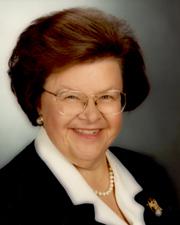
Mr. President, as we debate health care reform, we need to recognize in the United States of America that health care is a women's issue. Health care reform is a must-do women's issue, and health…
Mr. President, as we debate health care reform, we need to recognize in the United States of America that health care is a women's issue. Health care reform is a must-do women's issue, and health insurance reform must be a must-change women's issue.
Too often when we look at when health care is even available to us, we face discrimination. We face continually the punitive practices of insurance companies that charge women more and give us less in a benefit. A 25-year-old woman pays more for health insurance than her male counterpart of the same health status. A 40-year-old woman pays almost 35 percent more for her insurance than a male of the same age, same health status. We want to change that in health care reform. We want to end the punitive practices of the private insurance companies in their gender discrimination.
We, the women of the Senate, are concerned that even being a woman is being viewed by the insurance companies as a preexisting condition.
Now we have the opportunity to change the law and change the direction of health care. I have offered an amendment to expand the screening and preventive services available to women in order to save our lives, make sure our lives are not impaired as we get older and, at the same time, be able to save money. We know early detection saves lives, curtails the expansion of disease, and, in the long run, saves money.
There are certain killers of women, the dread ``c'' word, cancer-- breast cancer, ovarian cancer, cervical cancer that are unique to we women. Then there is the dread disease of lung cancer that affects men and women but is emerging as a main killer of women. Then there is the other issue of heart disease and vascular disease. We know for years women were often left out of the research on heart disease. For years women's heart disease went undetected and unrecognized because our symptoms are different. We can change this law.
In my amendment we expand the key preventive services for women, and we do it in a way that is based on recommendations from the Centers for Disease Control and from HRSA. It will be based on the benefit package available to Federal employees. It means if our amendment passes, the women of America will have the same access to preventive and screening services as the women of Congress. What is good enough for a United States Senator should be good enough for any woman in the United States of America.
That is why we ask not only the women to join us but the good men of quality who support us. We know people such as Senator Dodd, Senator Reid, Senator Baucus, men of quality, never fear we women who seek equality. They have raced for the cure as long and as hard as we have and have fought for mammogram standards. This is why we are wearing pink today. Pink is the universal color that says while we race for the cure, we want to have access to it when we find it. But to have access to the cure, we are going to need to have access to mammograms to be able to get that diagnosis, and then we are going to have to have health insurance to be able to pay for the treatment we have.
This is the Titanic battle we have today: Are we going to have access to health insurance and are we going to have access to these preventive services?
We do know in the area of heart disease and cancer and silent, undetected killers such as diabetes, it is often undetected. What happens is, for many women they do not get that early detection and screening, No. 1, because they can't afford it. They can't afford it because they either don't have health insurance and there are other demands on their family or, No. 2, when they go, if they do have insurance, they find their benefit might not be covered. So many of these benefits are based on State mandates, but worse than that it is the copayments and high deductibles.
Many women say: Well, my insurance company provides for it, but this copayment and deductible, I have to choose between my children's shoes or my deductible. We want to either
eliminate or shrink those deductibles and eliminate that high barrier, that overwhelming hurdle that prevents women from having access to these early detection and screening programs.
Much is being debated about mammograms. We believe access to mammograms should be universal, universal access. But the decision on whether to get one should be made with your doctor. Well, that is great to say, but you need to have access to your doctor. You need to not have to overcome the high hurdle of deductions or copayments to be able to do it.
We know mammogram screenings decrease breast cancer by over 40 percent. Regular pap smears reduce cervical cancer by 40 percent. This year, 4,000 women will die of cervical cancer. Then let's take the dread, but often overlooked, diabetic screening. Diabetes is the underlying cause of two-thirds of chronic illness in both younger and older women. If we find it early and get everybody in the right program, they are going to be able to get the treatment they need so they don't lose an eye, they don't lose a kidney, they don't lose a leg.
We can't lose any more time. We need to provide universal access to health care to the American people and we need to make sure they have access to the screening and early preventive actions that will save lives.
Mr. President, I urge the adoption of the Mikulski amendment, and I thank you for your leadership on this issue.
I ask unanimous consent that the remaining time be equally divided between Governor Shaheen, Senator Hagan, Senator Murray, and Senator Gillibrand.
Madam President, that concludes our discussion and our responses to this portion of the health care reform bill.
I must say: Alert, alert, alert. We have just been informed that a shrill advocacy group is spreading lies about this amendment. They are saying that because it is prevention, it includes abortion services. There are no abortion services included in the Mikulski amendment. It is screening for diseases that are the biggest killers for women--the silent killers of women. It also provides family planning--but family planning as recognized by other acts. Please, no more lies. Let's get off of it and save lives.

Madam President, our Nation is in the midst of a historic debate about how to reform our health insurance system. Three House committees and two Senate committees have spent countless hours trying to…
Madam President, our Nation is in the midst of a historic debate about how to reform our health insurance system. Three House committees and two Senate committees have spent countless hours trying to answer the question of how best to introduce competition and make health insurance affordable for all Americans. I applaud their efforts, and I applaud the efforts of the many Senators who have fought to bring this important debate to the Senate floor.
I have pushed and will continue to push for provisions that accomplish the ``three C's'' of health insurance reform: choice, competition, and cost control. I recently reaffirmed my support for a public option.
A public option would give consumers more choices to purchase an affordable and quality health insurance plan and will help drive down overall health care costs. I will continue to push for inclusion of a public option in the final Senate bill.
Amid this discussion of how best to introduce competition into the health insurance industry, it is important to remember that today the health insurance industry does not have to play by the same rule of competition as other industries. Due to a six decade-old special interest exemption, the business of insurance is not subject to the Nation's antitrust laws. If there was ever a good reason for such an exemption, it no longer exists.
While there are divergent views on the best way to introduce choice and competition into health insurance market, we can surely agree that health and medical malpractice insurers should not be allowed to collude to set prices and allocate markets.
Today, I am filing the Health Insurance Industry Antitrust Enforcement Act of 2009 as an amendment to the Patient Protection and Affordable Care Act. This legislation, which I introduced in September and which is cosponsored by 18 Senators, will repeal the antitrust exemption for health insurance and medical malpractice insurance providers, and ensure that the basic rules of fair competition apply to the industry as part of the reforms that the larger health care bill will enact. Our Nation's antitrust laws exist to protect consumers, and it is vital that the health insurance and medical malpractice insurance companies are subject to these laws.
These laws promote competition, which ensures that consumers will pay lower prices and receive more choices.
The Majority Leader, an original cosponsor of this legislation, testified before the Senate Judiciary Committee that ``[i]t is of the upmost importance that we make sure the insurance industry is playing by the same rules as everyone else, and that they are subject to competition.'' I could not agree more, and I encourage the leader to schedule a vote on this amendment early in this debate. The President also recently supported Congress's efforts to determine whether any justification remains for permitting price fixing.
The vast majority of the companies doing business in the United States are subject to the Federal antitrust laws.
However, a few industries have used their influence to maintain a special, statutory exemption from the antitrust laws. The insurance industry is
one of those few remaining industries. In the markets for health insurance and medical malpractice insurance, patients and doctors are paying the price, as costs continue to increase at an alarming rate, while patients and small businesses suffer. This is wrong, and this amendment fixes this problem.
The Health Insurance Industry Antitrust Enforcement Act is supported by a cross-section of groups interested in promoting competition, including the Consumer Federation of America, Health Care for American Now, and the American Hospital Association. I also received a letter from a coalition of 10 State attorneys general who voiced their specific need for this legislation.
The top law enforcement officers in those States argue that ``Repeal of the McCarran-Ferguson exemption would enhance competition in health and medical malpractice insurance by giving state enforcers, as well as federal enforcers, additional tools to combat harmful anti-competitive conduct.'' The letter goes on to state that ``The McCarran-Ferguson exemption serves no plausible public interest.''
This amendment will prohibit the most egregious anticompetitive conduct--price fixing, bid rigging and market allocations--conduct that harms consumers, raises health care costs, and for which there is no justification. Subjecting health and medical malpractice insurance providers to the antitrust laws will enable customers to feel confident that the price they are being quoted is the product of a fair marketplace.
The lack of affordable health insurance plagues families throughout our country, and this amendment is a first step towards ensuring that health insurers and medical malpractice insurers are subject to fair competition. I hope all Senators will join me in support of this important amendment.
Madam President, I note my amendment removes the outdated, antiquated, unnecessary antitrust protection given to our insurance companies, a protection which, instead of allowing them to thrive and give us lower premiums, has perversely acted in such a way that our premiums continue to rise 15 percent in the last year alone. This will help change that.
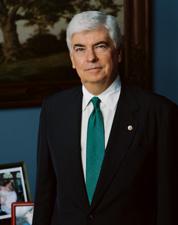
Mr. President, our colleague from Maryland, Senator Mikulski, I believe is on her way to the floor of the Senate. She and several other Members, in the time we have allocated to us between now and…
Mr. President, our colleague from Maryland, Senator Mikulski, I believe is on her way to the floor of the Senate. She and several other Members, in the time we have allocated to us between now and 11:30, will address her amendment she proposed yesterday. But pending her arrival, I want to respond, if I could, very briefly to some of the conversation here this morning.
First, I know some people have short memories, but I am somewhat intrigued to hear our good friends and colleagues talk about preserving Medicare. I have been around here a few years and recall very vividly the debates of 1995 and 1997 on the issue of Medicare, where our friends, who were in the majority in those days, were talking about slowing the growth of Medicare and one of the proposals they had for doing so was to cut into the benefits of Medicare recipients.
We do not do that in this bill at all. Quite to the contrary, despite the language about ``big cuts in Medicare,'' we strengthen the Medicare Program substantially. That is the reason the AARP and other major organizations involved with the elderly have endorsed our proposals. They would hardly be doing so if they thought this was some massive cut into the Medicare Program that has been so critical to so many of our fellow citizens.
Just for a little bit of history here--In 1995 our Republican colleagues proposed cutting benefits to Medicare beneficiaries. Newt Gingrich, our former Speaker and friend from the other body, was quoted as saying ``let's let Medicare wither on the vine.'' That is not ancient history. That is not 1965.
That is just a few years ago in all of this debate.
There are some very strong provisions in the bill that reduce premiums and co-pays for seniors, ensure seniors are able to see their own doctors, and keep Medicare from going bankrupt for an additional 5 years. If we adopt the McCain amendment, we are being told today by CBO and others that Medicare becomes insolvent in 8 years. So vote for the McCain amendment and you are going to have an insolvent program in 8 years. That is a fact.
We extend the life here an additional 5 years. We provide new preventive and wellness benefits for seniors, lower prescription drug costs, allow seniors to stay in their homes and not end up in nursing homes.
This is a long bill. It is a big bill. But instead of complaining about its size, I would encourage my colleagues to read it and understand what is being done for Medicare. This is a complicated area, but, nonetheless, critically important.
Mr. President, I see my colleague from California, Senator Boxer, who is here, and others who want to address the issue of the Mikulski amendment, and I will yield the floor so they can be heard. I believe it is going to be each for 5 minutes. There are about seven of our colleagues who want to be heard on the issue before 11:30.
Very good.
Madam President, I ask unanimous consent I be allowed to speak for 1 minute 7 seconds and the time be taken from that of my good friend and colleague from Vermont, the chairman of the Judiciary Committee.
Madam President, Senator Tom Coburn and I have become great friends. We have spent a lot of time together this summer in my HELP Committee. He talked with great eloquence about that distance that can occur between a doctor and patient, and obviously as someone who practiced medicine for a long time, he speaks from strong personal experience, and I admire and respect that immensely. But let me say to my colleagues, without this bill we are talking about here, this comes to a simple choice. Under existing law, the way things are today, one institution stands between a doctor and patient and that is your insurance company. They ration care all the time. In fact, I am a living example of rationed care, having been through surgery, getting preapproval twice before surgery and then being rejected by the very insurance company I paid premiums to for a long time as a Member of this body. We are working it out, I believe, because they thought--I am 65--that Medicare ought to pay for my surgery rather than the company I paid premiums to for a long time.
They were rationing my care. That insurance company, it wasn't some government entity or someone else, they are the ones. Without our bill, the only one getting to decide what health services anyone receives is the insurance industry.
I hope we would have a chance to debate this further, as I am confident we will.
Let me also say how much I support the effort by Senator Mikulski on her efforts to see to it that women are treated equally, and particularly in preventive care, and I strongly urge the adoption of her amendment and ask to be added as a cosponsor to that amendment.
I thank the Chair.
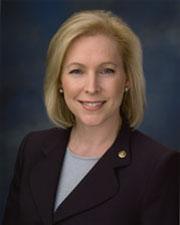
Mr. President, I rise in support of Senator Mikulski's amendment, which improves the health care measures that are already in this act. Women must shoulder the worst of the health care crisis,…
Mr. President, I rise in support of Senator Mikulski's amendment, which improves the health care measures that are already in this act.
Women must shoulder the worst of the health care crisis, including outrageous discriminatory practices in care and coverage. Not only do we pay more for the coverage we seek for the same age and the same coverage as men do, but in general women of childbearing age spend 68 percent more in out-of-pocket health care costs than men.
Some of the most essential services required by women are currently not covered by many insurance plans, such as childbearing, Pap smears, and mammograms. A standard in-hospital delivery can cost between $5,000 and $10,000 and much more if there are complications. You cannot imagine what it is like for a pregnant woman to recognize she may not have coverage for the essential services she needs for herself and her child. The health care bill before us ensures that this will no longer happen.
However, there is much room for improvement. In America today, too many women are delaying or skipping preventive care because of the costs of copays and limited access. In fact, more than half of women delay or avoid preventive care because of its cost.
This fundamental inequity in the current system is dangerous and discriminatory and we must act.
The prevention section of the bill before us must be amended so coverage of preventive services takes into account the unique health care needs of women throughout their lifespan.
With Senator Mikulski's amendment, even more preventive screening will be covered, including for post-partum depression, domestic violence, and family planning.
Covering more preventive screening at no cost to women will encourage that more women go to the doctor, improving their health, saving lives and, as Senator Mikulski brought out, saving money.
The whole point of this health care bill is to lower costs across the board. When you shift America's health care system to preventive services over the current emergency room services, you are going to do exactly that.
This amendment will ensure that the coverage of women's preventive services is based on a set of guidelines developed by women's health experts.
This amendment will also preserve the doctor-patient relationship, to allow the patient to consult with their doctor on what services are best for them.
This amendment will cost $490 million over 10 years and it is fully paid for.
The health care crisis in America must be addressed, and I am very supportive of Senator Mikulski's amendment.
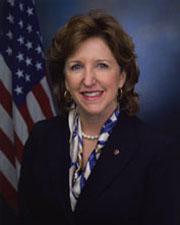
Mr. President, I rise in support of the amendment offered by the senior Senator from Maryland. This amendment tackles a serious problem: Women are increasingly skipping critical preventive health…
Mr. President, I rise in support of the amendment offered by the senior Senator from Maryland.
This amendment tackles a serious problem: Women are increasingly skipping critical preventive health care screenings because of costs, even when they have health insurance.
This summer, I received an e-mail from a woman named Julie in Raleigh, NC, about her sister who had no insurance and waited years to get a mammogram because she couldn't afford to pay the $125 fee for a mammogram. Then she found a lump in her breast.
Eventually, the mass grew so large Julie's sister finally got her mammogram and paid for it with cash. The mammogram confirmed what she had suspected, that she had breast cancer. But now that she had a diagnosis, she had no way to pay for the treatment.
She lost her battle with breast cancer in March of this year. Julie's sister, perhaps, could have beaten this cancer if she had had access to affordable, preventive care and, after her diagnosis, access to insurance or medical care to cover her cancer treatment.
In this heartbreaking situation, Julie's sister was sick and stuck. This health care reform bill will provide people such as Julie's sister with access to affordable, quality health insurance.
The President of Randolph Hospital in Asheboro, NC, wrote to me recently that a few years ago, he was in a meeting with 20 to 30 of his nursing assistants who were covered by the hospital's insurance plan. Of those who were old enough to require a mammogram, only 20 percent had actually gotten one. The reason, they said, was the
high out-of-pocket costs they would have to pay.
When these women had to choose between feeding their children, paying the rent, and meeting other financial obligations, they skipped important preventive screenings and took a chance with their personal health.
The hospital then decided to remove the financial barrier to preventive care and pay for 100 percent of preventive screenings.
With the passage of Senator Mikulski's amendment, we will do the same for all women. A comprehensive list of women's preventive services will be covered with no added out-of-pocket expenses.
With this amendment, we will ensure that, as the old saying goes, ``An ounce of prevention is worth a pound of cure,'' for women across America.
Madam President, I yield myself 1 minute. Very much straight to the point here, there has been some discussion about CBO's assessment on the health care premiums. The letter was out yesterday. That…
Madam President, I yield myself 1 minute. Very much straight to the point here, there has been some discussion about CBO's assessment on the health care premiums. The letter was out yesterday. That letter shows that for all Americans--all Americans--premiums will be lower. They will be modestly lower to those larger employers. We have a range between those small businesses of between a 1-percent reduction and a 2-percent increase, and for the individual market there is more variation because there is much more variation today currently in the individual market.
Those who purchase in the individual market will be getting a lot better quality of insurance than they are getting today--much better. About 60 percent of those in the individual market will find that their premiums are actually lower after the tax credit/subsidies are taken into consideration.
So netted all out together, all Americans are going to see their premiums are lower for what they get today. About 7 percent will see an increase, but they are getting better coverage than today--quite a bit better coverage. On a net basis, basically, bottom line, everyone were will see his or her premiums lower. For the 7 percent that are not lowered, they will get a lot better quality of insurance. That will more than offset the increase in premium. That is what that CBO letter says. I urge all folks who are interested to read that letter.
I have one other minor point on the so-called Cadillac plans. CBO said that those who receive Cadillac plans will find their premiums reduced, not increased--I think it is by about 6 or 7 percent. That, too, is very important. There has been a lot of discussion about the effect of premiums on Cadillac plans. CBO says those premiums will be reduced.
My minute is probably up. I wish to use the last seconds to just say that the net, all the way across the board, CBO says premiums will be reduced when you take subsidies into consideration and compare the plans people get today with what they would otherwise get in the future, the quality of coverage.

Mr. President, I rise today in support of Senator Mikulski's amendment to ensure that women have access to preventive health care screenings and care at no cost. I wish to thank Senator Mikulski for…
Mr. President, I rise today in support of Senator Mikulski's amendment to ensure that women have access to preventive health care screenings and care at no cost. I wish to thank Senator Mikulski for her leadership not just in this effort but over the years to make sure women are treated fairly when it comes to our health care.
As a woman, a mother of three daughters and a grandmother of three granddaughters, this is an issue that is critically important to me personally. But as a former Governor, now a Senator and a policymaker, I understand these preventive services are not just good for women but they are good for families--for the children and husbands and brothers and fathers of the women we are talking about today. This amendment is good for our society as a whole.
Women must have access to vitally important preventive services such as screenings for breast cancer, cervical cancer, pregnancy, and postpartum depression screenings, annual well-woman visits, and preconception counseling that promotes healthier pregnancies and optimal birth outcomes. It is the right thing to do, but it is also fiscally responsible.
Not only does diagnosing disease early significantly increase a woman's chance for survival, but it also significantly decreases the projected costs of treatment. In fact, one recent study estimated that almost 80 percent of all health care spending in the United States can be attributed to potentially preventable chronic illness. This amendment takes a great step forward to early diagnosis of these costly and potentially preventable diseases. We must ensure these important services are provided at no cost.
Too often, women forgo their health care needs because they are not affordable. We know cost plays a greater role in preventing women from accessing health care than it does men. In 2007, more than half of all women reported problems accessing needed health care because of costs.
It is clear we need to support Senator Mikulski's amendment that will give women access to important health care screening.
Madam President, I add my thanks to the Senator from Maryland, Ms. Mikulski, for bringing forth this important issue as we address health care reform in this country to ensure that all our families…
Madam President, I add my thanks to the Senator from Maryland, Ms. Mikulski, for bringing forth this important issue as we address health care reform in this country to ensure that all our families have access to health care.
One of the most important things we can do is make sure the caregivers in our families--the women--get access to preventive care so they can take care of their families.
This amendment will require all the health plans to cover comprehensive women's preventive care and screenings at no cost to women. That is extremely important. We all understand that--but especially in these tough economic times, when families across the country are struggling. One of the results has been that a lot of women are skipping or delaying their health care. We all know this personally. As moms, you take care of your kids first. When you do that, you often leave your families at risk because you haven't gotten the necessary preventive care.
We know that, in 2007, a quarter of women reported delaying or skipping health care because of the costs. In May of 2009, a report by the Commonwealth Foundation found that more than half of women delayed or avoided preventive care because of its cost.
This amendment will ensure that those women don't delay their preventive care because they cannot afford it. It is extremely important for this bill, it is important for women in this country, and it is important for men and children in this country as well.
I add my thanks to the senior Senator from Maryland and all our Senate colleagues who have been down here to make sure that one of the first things we do as we move the bill to the floor is make sure women's preventive care is covered.
I yield the floor.
Bill Text
Latest available legislative text
        [Congressional Bills 111th Congress]
[From the U.S. Government Printing Office]
[S. Res. 47 Reported in Senate (RS)]

111th CONGRESS
1st Session
S. RES. 47

Authorizing expenditures by the Committee on Commerce, Science, and
Transportation.

_______________________________________________________________________

IN THE SENATE OF THE UNITED STATES

February 12, 2009

Mr. Rockefeller, from the Committee on Commerce, Science, and
Transportation, reported the following original resolution; which was
referred to the Committee on Rules and Administration

_______________________________________________________________________

RESOLUTION

Authorizing expenditures by the Committee on Commerce, Science, and
Transportation.

Resolved, That, in carrying out its powers, duties, and functions
under the Standing Rules of the Senate, in accordance with its
jurisdiction under rule XXV of such rules, including holding hearings,
reporting such hearings, and making investigations as authorized by
paragraphs 1 and 8 of rule XXVI of the Standing Rules of the Senate,
the Committee on Commerce, Science, and Transportation is authorized
from March 1, 2009, through September 30, 2009, October 1, 2009,
through September 30, 2010, and October 1, 2010, through February 28,
2011, in its discretion (1) to make expenditures from the contingent
fund of the Senate, (2) to employ personnel, and (3) with the prior
consent of the Government department or agency concerned and the
Committee on Rules and Administration, to use on a reimbursable or non-
reimbursable basis the services of personnel of any such department or
agency.
Sec. 2. (a) The expenses of the Committee for the period from March
1, 2009, through September 30, 2009, under this resolution shall not
exceed $4,529,245, of which amount (1) not to exceed $50,000 may be
expended for the procurement of the services of individual consultants,
or organizations thereof (as authorized by section 202(i) of the
Legislative Reorganization Act of 1946, as amended), and (2) not to
exceed $50,000 may be expended for the training of the professional
staff of the Committee (under procedures specified by section 202(j) of
the Legislative Reorganization Act of 1946).
(b) For the period October 1, 2009, through September 30, 2010,
expenses of the Committee under this resolution shall not exceed
$7,963,737, of which amount (1) not to exceed $50,000 may be expended
for the procurement of the services of individual consultants, or
organizations thereof (as authorized by section 202(i) of the
Legislative Reorganization Act of 1946, as amended), and (2) not to
exceed $50,000 may be expended for the training of the professional
staff of the Committee (under procedures specified by section 202(j) of
the Legislative Reorganization Act of 1946).
(c) For the period October 1, 2010, through February 28, 2011,
expenses of the committee under this resolution shall not exceed
$3,391,751, of which amount (1) not to exceed $50,000 may be expended
for the procurement of the services of individual consultants, or
organizations thereof (as authorized by section 202(i) of the
Legislative Reorganization Act of 1946, as amended), and (2) not to
exceed $50,000 may be expended for the training of the professional
staff of such committee (under procedures specified by section 202(j)
of the Legislative Reorganization Act of 1946).
Sec. 3. The Committee shall report its findings, together with such
recommendations for legislation as it deems advisable, to the Senate at
the earliest practicable date, but not later than February 28, 2010,
and February 28, 2011, respectively.
Sec. 4. Expenses of the Committee under this resolution shall be
paid from the contingent fund of the Senate upon vouchers approved by
the chairman of the Committee, except that vouchers shall not be
required (1) for the disbursement of salaries of employees paid at an
annual rate, (2) for the payment of telecommunications provided by the
Office of the Sergeant at Arms and Doorkeeper, United States Senate,
(3) for the payment of stationery supplies purchased through the Keeper
of the Stationery, United States Senate, (4) for payments to the
Postmaster, United States Senate, (5) for the payment of metered
charges on copying equipment provided by the Office of the Sergeant at
Arms and Doorkeeper, United States Senate, (6) for the payment of
Senate Recording and Photographic Services, or (7) for the payment of
franked and mass mail costs by the Office of the Sergeant at Arms and
Doorkeeper, United States Senate.
Sec. 5. There are authorized such sums as may be necessary for
agency contributions related to the compensation of employees of the
Committee from March 1, 2009, through September 30, 2009, October 1,
2009, through September 30, 2010, and October 1, 2010, through February
28, 2011, to be paid from the Appropriations account for ``Expenses of
Inquiries and Investigations''.
<all>D23/