Mr. Speaker, today I introduced a resolution recognizing the significance of National Caribbean-American Heritage month. This resolution acknowledges the important contributions Caribbean-Americans…
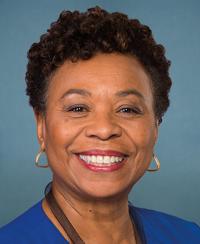
Mr. Speaker, today I introduced a resolution recognizing the significance of National Caribbean-American Heritage month. This resolution acknowledges the important contributions Caribbean-Americans have made to our nation's history and culture.
Let me begin by thanking my esteemed colleagues Representative Donald Payne, Chair of the Caribbean Caucus, Congresswomen Donna Christensen and Frederica Wilson, my esteemed friend Representative John Conyers, Congressman Ed Towns, and many others who have joined me in introducing this resolution today, the first day of Caribbean-American Heritage Month.
I am also pleased that the President issued a Proclamation on May 31, 2011, declaring June 2011 to be Caribbean-American Heritage Month, as has been the practice since Congress unanimously passed House Concurrent Resolution 71 in February 2006. As a long-time supporter of the Caribbean and a frequent visitor to the region, I was very proud to see us celebrate this important commemorative month for the fifth straight year.
I would also like to acknowledge Dr. Claire Nelson and the Institute of Caribbean Studies as well as all the other Caribbean American organizations in Washington, my home state of California, and across the country that have worked and continue to work to make Caribbean- American Heritage Month a great success.
As the President said in his proclamation, ``Immigrants from Caribbean countries have come to America for centuries. Some came through the bondage of slavery.
Others willfully left behind the world they knew in search of a better life. Regardless of the circumstances of their arrival, they had faith their descendants would have a chance to realize their greatest potential.''
Throughout the history of the United States, this nation has been fortunate to benefit from countless individuals of Caribbean descent who have contributed to American government, politics, business, arts, education, and culture--including one of my personal mentors, the Honorable Shirley Chisholm.
Shirley Chisholm was a woman of Ba-jan and Guyanese descent, who never forgot her
Caribbean roots. She was the first African American woman elected to Congress and the first woman to run for the Democratic presidential nomination.
My political involvement began as a volunteer for her historic presidential campaign in 1972. Through her mentorship, she strengthened my interest in issues important to the African Diaspora both here in the U.S. and abroad.
During Caribbean American Heritage Month, we recognize the important contributions of people like Shirley Chisholm, as well as Alexander Hamilton, Hazel Scott, Sidney Poitier, Wyclef Jean, Eric Holder, Colin Powell, Harry Belafonte, Roberto Clemente, Celia Cruz--and yes, Representatives Donna Christensen, Sheila Jackson Lee, Yvette Clarke, Frederica Wilson, Nydia Velazquez, Pedro Pierluisi--and many other persons of Caribbean descent who have helped shape this country.
Caribbean American Heritage Month reminds us of the large and diverse constituencies of Caribbean Americans in our nation, and provides us with an opportunity to celebrate and share in the rich culture of the Caribbean American community through showcases of Caribbean art, festivals, concerts, and film.
In my own district of Oakland, California, individuals and organizations celebrate the rich heritage of people of Caribbean descent through musical concerts and family picnics.
In addition to presenting us with an occasion to celebrate the legacy of Caribbean Americans, this month also provides us an opportunity to strengthen our long-term partnership with nations of the Caribbean community.
From trade, energy, and immigration to disaster preparedness and the challenging issues around HIV/AIDS, we have critical challenges we must face with our Caribbean neighbors. These challenges are regional in nature, so we must confront them together and in partnership.
One issue of the region which continues to deserve special mention is last year's earthquake in Haiti. At the international donors' conference in March 2010, fifty-eight donors pledged over $5.5 billion to support Haiti's Action Plan for Recovery and Development. According to the United Nations, as of March of this year, only about 37 percent of these funds have been disbursed. This is unacceptable. If we are to break the cycle of disaster--emergency relief--disaster in which Haiti has been trapped for many years, we must act with the same sense of urgency in reconstruction as we did immediately following the quake.
It is critical that any long-term reconstruction and development agenda is Haitian-led, that Haitian civil society and the Haitian Diaspora play a central role, and that such an agenda focuses on building the capacity of the Haitian Government to provide basic services and protect the social, civil, and political rights of its people.
Only by empowering Haitians to rebuild their own lives and their own country will we truly ``rebuild differently.''
I would like to end by stating that although the Caribbean faces many challenges, we understand that we must face them together. Despite the often turbulent history between the United States and Caribbean countries, our ties cannot be pinned down to geography alone, or economics alone, or even history alone. The region continues to shape us as Americans as much as we here continue to shape the Caribbean.
So I ask all of my colleagues to join me in supporting this measure to honor our nation's Caribbean American community and the rich gifts that they have given and continue to give this country.
Let us continue to celebrate the rich diversity of this nation of immigrants and recognize that it will forever be the great blessing and strength of our country.