I thank the gentleman from California for providing me the customary 30 minutes, and I yield myself 5 minutes of that time. Mr. Speaker, today we take up several trade bills. The Rules Committee had…
I thank the gentleman from California for providing me the customary 30 minutes, and I yield myself 5 minutes of that time.
Mr. Speaker, today we take up several trade bills. The Rules Committee had a chance to guarantee sufficient time for debate on each agreement and ensure that the time would be equally divided between those who support and those who oppose each bill. That's the way we should be debating these bills. That's the fair and the right thing to do.
But fairness was not part of the discussion in the Rules Committee. Instead, we have a rule that gives more
time to those in support of these bills and less time to those who have legitimate concerns about them. And if that weren't bad enough, this rule waives CutGo, just one more broken promise by this Republican Congress.
Mr. Speaker, I strongly support the TAA and GSP bills. These programs provide America's companies and workers with stability and fairness and some minimum resources for those that suffer because of trade agreements. They have earned our support.
But I cannot say the same for the free trade agreements, and I would like to focus my remarks on just one of them, the Colombia FTA.
Mr. Speaker, I've gone to Colombia seven times over the past 10 years. Nearly everyone I talk to--the poor, the most vulnerable, those who defend basic human rights and dignity--they all believe that the United States stands for human rights, that we stand for justice. And I'd like to believe that's always true. But not if we pass this FTA.
Colombia is still the most dangerous place in the world to be a trade unionist. Each year, more labor activists are killed in Colombia than the rest of the world combined. A staggering 2,908 union members murdered since 1986. That's about one murder every 3 days for the past 25 years. One hundred fifty in just the past 3 years. If 150 CEOs had been assassinated over the past 3 years, would you still think Colombia is a good place to invest?
In 2010, 51 trade unionists were murdered; 21 survived attempts on their lives; 338 received death threats; and 7 disappeared. Their bodies may never be found. Forty have been murdered since President Santos took office.
As for justice, well, in Colombia that's still just a dream. Human Rights Watch just released a study that looked at convictions in cases of murdered trade unionists over the past 4\1/2\ years. They found ``virtually no progress'' in convictions in these killings. Just six out of 195 cases. And not a single, solitary conviction for the more than 60 attempted murders and 1,500 death threats during that same period. There's a name for that, Mr. Speaker. It's called complete and total impunity.
Just look at the faces of six of the 23 unionists murdered so far this year.
This man in the top right, Luis Diaz, he was a regional leader of the University Workers' Union and a security guard at Monteria Public University in Cordoba. He was assassinated near his home, shot four times.
I was in Cordoba at the end of August. It's controlled by paramilitaries, drug traffickers, and criminal networks. They work hand in glove with wealthy landed interests, and many local officials, judges, prosecutors, and police are corrupt or benefit from the violence. They are also the most likely parties in Cordoba to profit from the Colombia FTA.
Another fellow here, Jorge de los Rios. He was a teacher and an environmentalist who exposed damage to communities by open pit mining. On June 8, he was shot several times on the campus of his school.
This young man right here, Dionis Sierra, was an elementary schoolteacher killed May 15, also in Cordoba.
Carlos Castro, an engineer, murdered in Cali on May 23. He was shot in the neck by two armed men. He was 41 and the father of three.
Here's Hernan Pinto right here, drinking a cup of coffee. He had taken the lead in the farm workers' struggle right before he was murdered in March.
Silverio Sanchez, just 37 years old, also a teacher. He died on January 24 from burns on 80 percent of his body from an explosive.
These men were husbands, fathers, brothers, and sons. If we don't stand up for them, then we also abandon the children, families, workers, and communities they left behind, those who continue to fight for labor rights, human rights, and basic human dignity.
As the old song goes, which side are you on?
Washington, DC, September 29, 2011.
Dr. Viviane Morales,
Attorney General, Diagonal 22B, No 52-01,
Bogota, Colombia.
Dear Attorney General Morales: I am writing to follow up on
the very constructive meeting we had in Bogota this June
regarding the problem of impunity for anti-union violence in
Colombia. We are encouraged by the steps the Attorney
General's Office is currently taking under your leadership to
address this longstanding problem. Yet we also believe
further measures are needed to ensure that your efforts
succeed and the era of unchecked violence against trade
unionists in Colombia is finally overcome.
As you know, Colombia continues to face an extraordinarily
high level of anti-union violence. While the number of trade
unionists killed every year is certainly less today than a
decade ago, it remains higher than any other country in the
world. The National Labor School (ENS), Colombia's leading
NGO monitoring labor rights, reports that in 2010 there were
51 killings of trade unionists, 22 homicide attempts, and 397
threats.
A major reason for this ongoing violence has been the
chronic lack of accountability for cases of anti-union
violence. Colombia has failed to deliver justice for more
than 2,500 trade unionist killings committed over the past 25
years. As Vice-President Angelino Garzon acknowledged during
a November 2010 speech, ``[T]he immense majority of crimes
[against] trade unionists remain in impunity . . . there have
been advances in the investigations . . . but we still have
not gotten to 200 court rulings, and there are thousands of
workers and union leaders killed and disappeared.''
In 2006, the Attorney General's Office sought to end this
impunity by establishing a sub-unit of prosecutors to focus
exclusively on crimes against trade unionists. This
initiative brought with it several important advantages: the
sub-unit's prosecutors would receive extra material and human
resources and have the opportunity to develop expertise in
solving these crimes. By working out of Bogota and other main
cities, the prosecutors would generally be less vulnerable to
pressure and threats than local justice officials.
Since its creation, the sub-unit has made important
progress: there are now scores of convictions for trade
unionist killings every year where before there were almost
none. Over the past four-and-a-half years, the sub-unit has
secured convictions for more than 185 trade unionist
killings.
Yet this progress, while welcome, has in fact been very
limited. And, unless urgent steps are taken to improve the
sub-unit's performance, it will almost certainly prove to be
unsustainable.
Over the past several months, Human Rights Watch has
carried out a comprehensive evaluation of the sub-unit's
work, reviewing hundreds of court judgments for crimes
against trade unionists, examining the most recent available
data provided by the Attorney General's Office on the status
of investigations, and conducting dozens of interviews with
prosecutors, judges, rights advocates, and victims.
Our research has found severe shortcomings in both the
scope of the sub-unit's work and the investigative
methodology that it employs. In terms of the scope, we found
that:
The increase in the number of convictions since the sub-
unit's creation, while substantial, represents only a small
fraction of the total number of cases of trade unionist
killings that still need to be investigated and prosecuted.
The increase in convictions is largely due to confessions
provided by paramilitaries under the Justice and Peace
process, which does not apply to cases of killings committed
after 2006.
The sub-unit has made virtually no progress in obtaining
convictions for killings from the past four-and-a-half years.
The sub-unit has made virtually no progress in prosecuting
people who order, pay, instigate or collude with
paramilitaries in attacking trade unionists.
In terms of the methodology of the investigations, we found
that:
The sub-unit has routinely failed to thoroughly investigate
the motives for the crimes.
The sub-unit has not conducted the type of systematic and
contextualized investigations that are necessary to identify
and prosecute all responsible parties.
While we were encouraged to encounter prosecutors in the
sub-unit who are very professional and committed to advancing
these cases, it is also clear that further measures must be
taken to support their work and ensure the sub-unit overcomes
its current limitations.
Under the current circumstances, what is at stake is the
justice system's ability to act as an effective deterrent to
anti-union violence. We are concerned that unless you take
action to improve the sub-unit's performance, the office will
continue to fall short in ensuring accountability for attacks
on trade unionists, and Colombia will remain a uniquely
dangerous country for workers seeking to exercise their basic
labor rights.
The Scope of the Sub-unit's Work
Convictions Represent Fraction of Total Killings
The annual number of convictions for cases of crimes
against trade unionists has risen about nine-fold since the
sub-unit began operating in 2007. Overall, the subunit has
obtained convictions for more than 185 trade unionist
killings.
Despite this accomplishment, a great deal of work remains
to be done. At this stage, Colombia has obtained a conviction
for less than 10 percent of the 2,886 trade unionist killings
recorded since 1986 by the ENS. The sub-unit reported to
Human Rights Watch that it had opened an investigation into
787
cases of trade unionist killings as of June 2011.
Investigations into the more than 2000 other reported trade
unionist murders presumably remain with ordinary prosecutors,
who have long failed to resolve such cases. As concluded by
the February 2011 International Labor Organization (ILO)
High-level Tripartite Mission to Colombia, ``The majority of
[trade unionist killings] have not yet been investigated nor
have the perpetrators, including the intellectual authors of
these crimes, been brought to justice.''
Recent Progress Is Largely Due to Justice and Peace Process
The sub-unit's progress in prosecuting anti-union violence
has largely been due to confessions by paramilitaries
participating in the Justice and Peace process. Human Rights
Watch reviewed all 74 convictions handed down over the past
year by the three specialized courts dedicated to crimes
against trade unionists and found that 60 percent of the
convictions were the direct result of plea bargains with
demobilized paramilitaries participating in the Justice and
Peace process. In a majority of the remaining rulings from
this period, testimony by defendants in the Justice and Peace
process also played an important role in producing the
conviction.
This increase in the number of convictions spurred by the
Justice and Peace process is certainly a positive
development. Unfortunately, it does not by itself represent
sustainable progress. The process has allowed prosecutors to
resolve cases because it has provided extraordinary
incentives for demobilized paramilitaries to confess to their
crimes. But these incentives do not apply to crimes committed
since paramilitary groups finished demobilizing in 2006 and
therefore will not help prosecute individuals who assassinate
trade unionists today or in the future.
Lack of Convictions for Recent Trade Unionist Killings
When it comes to obtaining convictions for cases from the
past several years--which are not covered by the Justice and
Peace process--the sub-unit has made virtually no progress.
Of the more than 195 such killings that have occurred since
the sub-unit started operating in 2007, the special office
had obtained convictions in only six cases as of May 2011. It
had not obtained a single conviction for the more than 60
homicide attempts, 1,500 threats and 420 forced displacements
reported by the ENS during this period.
The sub-unit has not opened investigations into the
majority of the trade unionist murders that have occurred
since the office began operating in 2007. As of March, it had
opened an investigation into only one of the 51 trade
unionist killings committed in 2010. And the vast majority of
the sub-unit's investigations into killings since 2007 (89
percent) remain in a preliminary stage in which
prosecutors have yet to formally identify a suspect.
We understand that the current Attorney General's Office
shares our concern with the lack of progress in prosecuting
recent killings. As discussed below, your office has
announced steps that could help address this problem, such as
instructing prosecutors to prioritize investigations of
crimes against trade unionists committed since 2007.
Lack of Prosecutions of Intellectual Authors and Accomplices
We are also concerned that the prosecutions have focused
almost exclusively on the commanders of armed groups or
triggermen and have not extended to include other individuals
who may have instigated or facilitated the crimes. Of the
more than 275 convictions handed down through May 2011 by the
specialized courts that handle the sub-unit's cases, 80
percent have been against former members of the United Self-
Defense Forces of Colombia (AUC). Yet there is compelling
evidence that paramilitaries and the groups that replaced
them have not acted alone in killing trade unionists. These
groups have historically operated with the toleration or even
active support of members of the public security forces, as
well as in collaboration with politicians and allies in the
private sector. According to several justice officials,
rights advocates and victims' lawyers close to these cases,
paramilitaries appear to have killed trade unionists at the
behest of employers, local officials, or other individuals
with particular interests in eliminating the victims.
A review of 50 recent convictions for anti-union violence
handed down by the specialized courts found that in nearly
half of the cases under consideration, the judgments
contained evidence pointing to the involvement of members of
the security forces or intelligence services, politicians,
landowners, bosses, or coworkers. Rulings in ten of these
cases contained evidence indicating that individuals outside
the armed groups (including two mayors, a hospital
administrator, a plant manager, a captain of the Sectional
Judicial Police, and a detective from the Colombian
intelligence service) may have hired, ordered, or otherwise
instigated paramilitaries to kill the trade unionists.
Yet despite the evidence of involvement and collusion by
third parties in crimes committed by armed groups, the sub-
unit has obtained virtually no results in bringing such
individuals to justice. Only 10 of the more than 275 rulings
handed down by specialized courts since 2007 have convicted
politicians, members of the security forces, employers, or
coworkers. Only one of the 50 rulings handed down between
September 2010 and May 2011 that Human Rights Watch reviewed
punished such individuals. Similarly, a comprehensive study
by the Center for the Study of Law, Justice, and Society
(DeJusticia) reveals that just 3 percent of the judgments in
trade unionist cases handed down through March 2010 included
the conviction of a ``strategic intellectual author'' (an
individual outside of an armed structure who ordered or
otherwise instigated the crime).
Prosecuting the triggermen and their commanders for these
crimes is a crucial step for accountability. But identifying
these individuals alone will not enable the justice system to
act as an effective deterrent to anti-union violence. As long
as some people believe they can get away with ordering,
paying, or instigating armed groups to kill trade unionists,
they will continue to find armed groups and gunmen for hire
to do their dirty work.
Flaws in the Investigative Methodology
Colombia's progress in curbing impunity for anti-union
violence, while important, has been limited by shortcomings
in the investigative strategy pursued by the subunit of the
Attorney General's Office. The first is a routine failure to
adequately investigate the motive in cases of trade unionist
killings. The second--and more troubling--is the failure to
conduct the sort of systematic and contextualized
investigation necessary to identify and bring to justice all
responsible parties.
As discussed below, the current administration of the
Attorney General's Office has recognized the problem of the
sub-unit's methodology and announced the adoption of measures
to improve it. But these correctives remain to be fully
implemented, and must be followed with additional measures to
shore up the quality of the sub-unit's work.
Inadequate Investigation of Motives
Prosecutors often base their charges almost entirely on
testimony by paramilitaries participating in the Justice and
Peace process without conducting a thorough investigation
that could determine the actual motive for targeting the
victim. According to one of the specialized judges, in many
cases prosecutors base their charges on ``two or three lines
from what the defendant in Justice and Peace says.''
Given the lack of additional evidence gathered by
prosecutors, the judges often rely primarily or exclusively
on paramilitaries' accounts to determine the motive for the
crime.
Paramilitaries' confessions frequently seek to justify
trade unionist killings as counter-insurgency operations,
claiming that their victims were guerrilla collaborators.
Consequently, a substantial share of judgments for trade
unionist killings have identified the victims' alleged links
to guerrilla groups as the motive behind the killings.
Yet, there are good reasons to suspect that in many cases
the paramilitaries label the victims as guerrilla
collaborators to disguise the true reasons for the killing.
By offering defendants the same reduced sentence no matter
how many abuses they admit to, the Justice and Peace Law
provides paramilitaries with extraordinary incentives to
confess to all of their crimes. But when it comes to
testifying about their accomplices--who may have ordered
trade unionist killings for their own political or economic
interests--paramilitaries often have strong incentives to
keep silent and justify the murders as part of their anti-
guerrilla campaign. As revealed by several recent judicial
investigations and news reports, there are credible
allegations that paramilitaries have been repeatedly bribed
or pressured to conceal the criminal activity of their
political and economic allies. In cases involving collusion
with powerful individuals, paramilitaries and their family
members could face severe reprisals should they expose their
accomplices.
In some court rulings, judges have found reason to doubt
the veracity of paramilitaries' anti-guerrilla justifications
for the killings. For example, in one recent ruling against
paramilitaries who claimed that the union leader had been
killed because he was a guerrilla collaborator, the judge
wrote that it appeared the group had been paid to murder the
victim because of his union activity, noting that: ``The
excuse provided by the [defendants] regarding the motive of
the killing . . . seems to actually be a form of hiding the
existence of a particular interest to silence the victim.''
The judgment explicitly described how the prosecutor had
failed to collect key pieces of evidence that would have
helped clarify the motive for the crime. According to
DeJusticia's 2010 study, while 102 of the 271 court rulings
they analyzed identified the trade unionist's alleged
guerrilla ties as the motive for the killing, the judges
explicitly rejected the allegations in nearly half of those
judgments.
Given the inadequacy of investigations, it is impossible at
this point to know how many killings were in fact motivated
by the victims' union activities. What is clear is that
without more thorough investigations, prosecutors will not be
able to determine with an adequate level of certainty whether
or not the crimes were related to the victims' participation
in their union. This is a serious problem in Colombia given
the tendency of some officials and commentators to downplay
anti-union violence by dismissing the attacks as isolated
crimes unrelated to the victims' union affiliation. And worse
still, if court rulings based on paramilitaries'
testimony indicate that the victims were guerrillas, the
stigmatization is confirmed and the risks are worsened for
those who exercise union activity.
Lack of Systematic and Contextualized Investigations
With few exceptions, the sub-unit's prosecutors have not
pursued investigations that take into account the context of
crimes against other members of the victim's union from the
same region and time period, and have often neglected to
conduct serious inquiries into the victim's union activity at
the time of the crime.
Instead, killings have generally been investigated in an
isolated case-by-case manner and without any serious effort
to determine how the crimes might form part of a broader
pattern of anti-union violence. As one top official within
the Attorney General's Office recently told Human Rights
Watch, until now, the sub-unit has treated each case as ``an
island.'' Similarly, in separate interviews, all three
current judges from the specialized courts that handle these
cases told Human Rights Watch that the cases brought to their
courts are investigated as isolated crimes. Victims' lawyers
also said that the sub-unit's failure to draw connections
between killings is one of the fundamental problems with the
investigations.
This serious deficiency in the sub-unit's investigations is
also evident in the judgments in cases of anti-union
violence. According to DeJusticia's 2010 study, a
``systematic approach'' to investigations--defined as taking
the general context of anti-union violence as the starting
point for the investigation--was reflected in five of the 271
court rulings handed down through March 2010.
As a result of this investigative approach, prosecutors
have not been able to identify patterns of crimes that could
lead them to the individuals--including public officials and
employers--who may have ordered, instigated, or otherwise
colluded with armed groups in attacking trade unionists. As
one of the three special judges who handle cases of anti-
union violence said, ``To know what's behind the crimes, if
there was a state policy or company policy or not, there has
to be a macro-investigation. [Prosecutors] have not done
that.'' Another judge specified that the piecemeal
investigations have impeded prosecutors from identifying
intellectual authors: ``It would make more sense to
analyze the historical context of the union and the
criminal organization that operates in the region. But in
reality, [the cases] come [to the courts] as isolated
victims. . . . The investigations have progressed very
little in providing the judges with the context. The
context would help identify intellectual authors.''
This shortcoming is compounded by the sub-unit's failure to
consistently conduct a thorough inquiry into the context of
the victim's union activity at the time of the crime, which
limits prosecutors' ability to establish leads that could
help clarify the motive for the killing and identify
potential suspects. While some prosecutors do make an effort
to look into such activity, two judges we spoke with said
that such rigorous inquiries are not the norm. In our review
of 50 recent convictions in these cases, we found the
majority of the rulings did not refer to the victim's union
activity in the period leading up to the crime. (If the
prosecutors had investigated such activity, a reference to
this line of inquiry should at least appear in the judgment,
according to jurists consulted by Human Rights Watch.) Of the
judgments that did mention the victim's union activity at the
time of the crime, most references were general, suggesting
that no in-depth probe had been undertaken.
Steps Your Office Has Announced To Advance Prosecutions
Based on our meeting last June, we know that your office is
aware of the problems outlined above and has announced some
important initial steps that could help address them.
In terms of increasing the quantity of cases investigated
and prosecuted by the subunit, we were encouraged by the
following measures announced by the Attorney General's
Office:
The addition of 100 judicial police from the Directorate of
Criminal Investigation and Interpol (DIJIN) and planned
incorporation of 14 new prosecutors to the subunit;
Your office's June 2011 memorandum instructing prosecutors
to prioritize cases of trade unionist killings committed
since 2007;
Your office's April 2011 memorandum mandating the early
identification in all new homicide cases of whether the
victim was a union member, which should help ensure that in
the future the sub-unit can immediately open investigations
into these new cases:
Your office's recent transfer of 35 cases of trade unionist
killings from 2009 to the sub-unit.
Your office also has announced measures that could improve
the sub-unit's investigative methodology, such as:
Providing instructions within the April memorandum for
prosecutors to take the urgent steps that will allow them
``to determine the motives for the crime and the causal
relationship between the [homicide] and victim's condition as
a trade unionist'';
Providing instructions within the June memorandum for
prosecutors to analyze cases of trade unionist killings based
on the region where the crimes occurred;
Adding six analysts to the sub-unit who will help identify
links between cases in order to detect patterns of crimes
against trade unionists.
In addition, the current coordinator of the sub-unit told
us in May that the sub-unit has adopted a new methodology
that involves grouping cases not only on the basis of
location, but also based on the victim's union and the
suspected responsible armed group.
Yet, we are concerned that the new methodology has not yet
been effectively implemented. In separate interviews this
May, the prosecutors within the sub-unit appeared to have
very different understandings of how they were expected to
proceed with their investigations. Two prosecutors said that
the sub-unit had not in fact adopted a new methodology.
``There is no policy that comes from the coordinators,'' one
told us. ``The methodology depends on each prosecutor. . .
Investigations are case-by-case. It would be important to
group [cases] by trade union, but it has not been done.''
Other prosecutors mentioned the new investigative policy, but
said that it remains to be carried out in practice.
Furthermore, your office's attempt to implement a
systematic approach is undercut by the sub-unit's limited
caseload and inefficient allocation of investigations among
prosecutors. As discussed above, the sub-unit is not
investigating the majority of reported trade unionist
killings. Consequently, cases from the same union, region,
and time period are often split between the sub-unit and
ordinary local prosecutors. And of those investigations that
have been assigned to the sub-unit, cases involving trade
unionists from the same organization and region have
generally been divided among the office's different
prosecutors.
Recommendations
In order to build on your initial correctives and fully
address the problems identified in this letter, we believe it
is crucial to adopt the following measures:
1) The sub-unit should investigate all reported cases of
killings, enforced ``disappearances,'' and homicide attempts
committed against trade unionists. In order to do so, we
recommend the Attorney General's Office:
a) Transfers to the sub-unit all reported cases of
killings, enforced ``disappearances,'' and homicide attempts
against trade unionists that are currently assigned to local
prosecutors;
b) Assigns to the sub-unit all future cases of killings,
enforced ``disappearances,'' and homicide attempts against
trade unionists.
2) The sub-unit should implement a policy to conduct
systematic, contextualized and thorough investigations. The
policy should ensure that:
a) Rather than treating each killing as an isolated case,
investigations also examine all other crimes against members
of the same union in the same region and time period to
identify possible connections and patterns of crimes that
could help to determine the motive for the killing, and
identify all the responsible parties;
b) Prosecutors do not rely inordinately on paramilitaries'
confessions to resolve cases, but instead use this testimony
as a starting point to pursue a solid judicial investigation;
c) Prosecutors conduct a thorough inquiry into the victim's
union activity at the time of the crime in order to collect
evidence that could help clarify the motive for the attack
and identify potential suspects;
d) Prosecutors vigorously pursue leads that point to the
possible involvement of state agents and other actors in
crimes against trade unionists.
3) Cases should be distributed among the sub-unit's
prosecutors based on the victim's union and the region where
the crime occurred.
As we have pointed out on numerous occasions, overcoming
ongoing impunity for violence against trade unionists
requires confronting complex challenges. There is an enormous
amount of work to be done, and success will not be achieved
overnight. Yet we also believe that, if your office
rigorously pursues the measures we are recommending here, it
will be possible to make significant progress in prosecuting
these cases and transform the sub-unit into an effective
deterrent to future attacks on trade unionists in Colombia.
I reserve the balance of my time.
Mr. Speaker, I yield myself 25 seconds to respond to the gentleman from California.
In 2009 the number of total murders per capita in the U.S.A. was 5 per 100,000. In Mexico, it was 18.4, and in Colombia it was 37.3. These are all government statistics.
If 23 labor leaders and 29 civil rights leaders and 6 priests were targeted and murdered in Los Angeles so far this year because of their work in the community, I would like to think that the city or the gentleman from California would be up in arms about that. But that's the reality in Colombia.
At this time I would like to yield 3 minutes to the gentlewoman from New York, the ranking Democrat on the Rules Committee, Ms. Slaughter.
I yield the gentlelady 1 additional minute.
Mr. Speaker, at this time I would like to yield 3 minutes to the gentleman from California, the ranking Democrat on the Education and Workforce Committee, Mr. Miller.
(Mr. GEORGE MILLER of California asked and was given permission to revise and extend his remarks.)
Mr. Speaker, at this time I would like to yield 3 minutes to the gentlewoman from Connecticut (Ms. DeLauro).
I yield myself 20 seconds.
Mr. Speaker, if Colombia is so safe, then why do 2,000 labor leaders need round-the-clock protection? I mean, if Colombia is so safe, why are there nearly 5 million internally displaced people and over 1 million Colombian refugees in neighboring countries? It is because they're fleeing the violence and civil unrest.
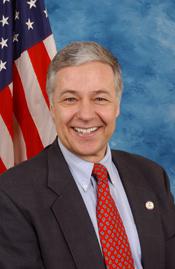
Mr. Speaker, at this point I would like to yield 3 minutes to the gentleman from Maine (Mr. Michaud).
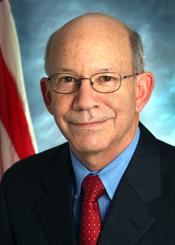
Mr. Speaker, at this time I would like to yield 2 minutes to the gentleman from Oregon (Mr. DeFazio).
I yield the gentleman an additional 30 seconds.
Mr. Speaker, I yield myself 25 seconds to respond to the gentleman from California.
He mentioned a labor leader, in his remarks before, as saying how wonderful the Labor Action Plan was. I should point out to him that last Monday, on October 3, that same labor leader joined in a press conference with other Colombian unions to express his frustration with the Colombian Government's failure to implement the Labor Action Plan.
I also would point out that the Colombia Labor School also has issued a long statement about how the Colombian Government has failed to enact the Labor Action Plan.
I don't care what the Canadians do. In the United States of America, we're supposed to respect human rights.
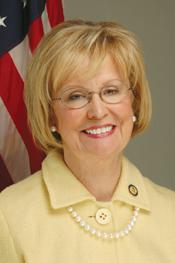
Mr. Speaker, at this time I would like to yield 3 minutes to the gentlelady from Illinois (Ms. Schakowsky).
Mr. Speaker, at this point it is my privilege to yield 2 minutes to the gentleman from Michigan, the ranking Democrat on the Ways and Means Committee, Mr. Levin.
(Mr. LEVIN asked and was given permission to revise and extend his remarks.)
We have the gentleman from Washington (Mr. McDermott), and then I will close.
Then I will reserve the balance of my time.
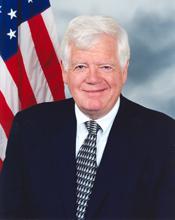
I would like to yield 2 minutes to the gentleman from Washington from the Committee on Ways and Means, Mr. McDermott.
(Mr. McDERMOTT asked and was given permission to revise and extend his remarks.)
Mr. Speaker, Congress was right in refusing to take up the Colombia FTA when it was signed in 2006. Supporters of the FTA now talk about those years as Colombia's dark past, but they supported the FTA then just as they do now. The House was right to block the FTA in 2008. Supporters then extolled the virtues of the Uribe government, but Colombia's new Attorney General has revealed mind-boggling corruption in every agency of Uribe's government. Criminal acts were the norm.
I believe the Santos government is Colombia's best chance to bring about much needed reforms and institutional change. I want him to succeed, but goodwill is not enough. We have had promises before. We need time to see if good intentions result in concrete change on labor and human rights.
This is Tito Diaz. He was the mayor of El Roble in Sucre. In 2003, he denounced the links between public officials and paramilitaries. For this, he was tortured and murdered. His body was found strung up like a crucifix and shot 11 times--his fingernails ripped out, his knees bludgeoned, and his mayor's I.D. card taped to his forehead.
His son, Juan David, carried on his father's work, leading the victims' movement in Sucre. He survived four assassination attempts but finally fled the country. Others took his place. Since 2006, five more victims' rights leaders in Sucre have been murdered--two this year.
This is the reality for Colombia's human rights defenders, 29 of whom have been killed this year; 51 priests murdered in the past decade, six so far this year. In this violent reality, Colombian workers attempt to exercise their rights.
I ask my colleagues to think about the lives of all the brave labor leaders, human rights defenders, religious and community leaders. Do not turn your backs on them. Demand concrete change on the ground before approving the Colombia FTA. You know that that is the right thing to do. If the United States of America stands for anything, we ought to stand out loud and four-squared for human rights. Let's remember that as we deliberate on the Colombia FTA. It is just wrong to rationalize, or explain away, the human rights situation in Colombia. We are better than that. We should demand more on behalf of the workers and the human rights defenders in Colombia.
Vote ``no'' on the rule, and vote ``no'' on the Colombia FTA.
A Brief History of the Victims' Rights Movement (MOVICE) in the
Department of Sucre (Colombia)
Eudaldo ``Tito'' Diaz
1. Biographical Note on Eudaldo ``Tito'' Diaz
Summary
Eudaldo ``Tito'' Diaz was the mayor of El Roble
municipality in Sucre Department, Colombia. He was killed for
denouncing the links between public officials and
paramilitary death squads. On the 5th of April 2003, Mr. Diaz
was disappeared, tortured for five days and murdered. His
body was found, strung up like a crucifix. He had been shot
eleven times, his fingernails ripped out and his knees
bludgeoned. On his forehead, the assassins had placed his
mayor's identity card, as a warning to others who would speak
out against the paramilitaries and public officials who
supported them.
Background
Eudaldo ``Tito'' Diaz was the mayor of El Roble
municipality in Sucre Department, Colombia. He was killed for
denouncing the links between public officials and
paramilitary death squads. After speaking out, he was sacked
and his security detail was withdrawn. He knew that his
actions carried a high price: ``they are going to kill me''
he said, at a televised public meeting on February 1, 2003,
at which he spoke out about the corruption and threats. The
meeting was attended by former president Uribe and then
governor of Sucre, Salvador Arana Sus, whom Mr. Diaz had
publicly denounced. Two months later, on April 5, 2003, Mr.
Diaz was called to a meeting by governor Arana, colonel
Norman Leon Arango (the former Police Chief of Sucre), Alvaro
Garcia Romero (former Senator, sentenced for his role in the
Chengue massacre and for his links to paramilitaries), Jaime
Gil Ortega (former Inspector General of Sucre), Guillermo
Merlano Martinez (former Inspector General of Sucre) and Eric
Morris Taboada (former governor of Sucre during 1997-2001,
sentenced for his links with paramilitary groups). On his way
to that meeting, Mr. Diaz was disappeared, tortured for five
days and murdered. On April 10th, his body was found, strung
up like a crucifix. He had been shot eleven times, his
fingernails ripped out and his knees bludgeoned. The ulcer in
his stomach showed that he had been deprived of food and
water. On his forehead, the assassins had placed his mayor's
identity card, as a warning to others who would speak out
against the paramilitaries and politicians who supported
them.
Mr. Diaz' son, Juan David, carried on his father's work. He
has survived four assassination attempts and received over 20
death threats. The day his father was killed, he received his
first death threat. Soon after, governor Arana was named
ambassador to Chile by president Uribe. Mr. Arana is
currently serving a 40-year sentence for Mr. Diaz' murder. At
least 12 of the witnesses in the case have been killed.
2. Prosecutions for Assassination of Eudaldo ``Tito'' Diaz
Salvador Arana Sus, former governor of Sucre, sentenced to
40 years for forced disappearance, aggravated homicide with
political motives, and promotion of illegal armed groups. He
had been appointed by former president Uribe as ambassador to
Chile 2003-2005.
Angel Miguel Berrocal Doria alias ``El Cocha,'' a
paramilitary, sentenced to 37 years for homicide.
Rodrigo Antonio Mercado Pelufo, alias ``Cadena,'' head of
the paramilitary group Heroes de los Montes de Maria,
sentenced in absentia to 40 years for aggravated homicide and
simple kidnapping.
Emiro Jose Correa alias ``Convivir'' and Jose Tomas Torres
alias ``Orbitel,'' known paramilitaries who allegedly carried
out governor Sus' instruction to kill Mr. Diaz, were absolved
in 2011. Diana Luz Martinez, former director of the La Vega
prison, who allegedly enabled the paramilitaries to leave the
prison where they were detained in order to carry out the
assassination, was absolved of all charges.
The paramilitaries Edelmiro Anaya, alias ``El Chino,''
Carlos Verbel Vitola, alias ``Caliche,'' Wilson Anderson
Atencia, alias ``El Gafa'' and Jhon Ospino, alias ``Jhon''
are also under investigation. Coronel Norman Leon Arango,
then police chief of Sucre, has been formally linked to the
assassination.
3. Members of MOVICE Assassinated (Nationwide)
Thirteen members of MOVICE have been assassinated since the
movement was created in 2005. Five of those were in the
Department of Sucre:
1. Garibaldi Berrio Bautista, MOVICE Sucre, 10 April 2007
2. Jose Dionisio Lozano Torralvo, MOVICE Sucre, 12 August
2007
3. Carlos Burbano, MOVICE Caqueta, 8 March 2008
4. Luis Mayusa Prada, MOVICE Arauca, 8 August 2008
5. Walberto Hoyos, MOVICE Choco, 14 October 2008
6. Carlos Rodolfo Cabrera, MOVICE Arauca, 28 November 2008
7. Carmenza Gomez Romero, MOVICE Bogota, 4 February 2009
8. Jhonny Hurtado, MOVICE Meta, 15 March 2010
9. Nilson Ramirez, MOVICE Meta, 7 May 2010
10. Rogelio Martinez, MOVICE Sucre, 18 May 2010
11. Oscar Maussa, MOVICE Choco, 24 November 2010
12. Eder Verbel Rocha, MOVICE Sucre, 23 March 2011
13. Ana Fabricia Cordoba, MOVICE Antioquia, 7 June 2011
I yield back the balance of my time.
Mr. Speaker, on that I demand the yeas and nays.