Mr. Speaker, I move to suspend the rules and pass the bill (H.R. 5512) to amend title 28, United States Code, to realign divisions within two judicial districts, as amended. Mr. Speaker, I ask…
Mr. Speaker, I move to suspend the rules and pass the bill (H.R. 5512) to amend title 28, United States Code, to realign divisions within two judicial districts, as amended.
Mr. Speaker, I ask unanimous consent that all Members may have 5 legislative days within which to revise and extend their remarks and include extraneous materials on H.R. 5512, as amended, currently under consideration.
Mr. Speaker, I yield myself such time as I may consume.
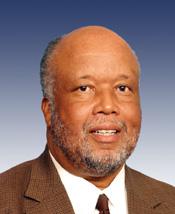
I support H.R. 5512, the Divisional Realignment Act of 2012, sponsored by Representative Bennie Thompson.
On March 13, 2012, the Judicial Conference of the United States adopted a draft bill that realigns divisions within the Eastern District of Missouri and the Northern District of Mississippi. The Divisional Realignment Act of 2012 reflects the draft developed by the Judicial Conference which the Judiciary Committee marked up on May 16. The realignments equalize workloads among divisions, maximize the use of court facilities, and shorten commutes for jurors and attorneys.
The bill is supported by the judges and attorneys from the two judicial districts and affected Members from Missouri and Mississippi.
The Congressional Budget Office states that H.R. 5512 will have ``only minimal administrative costs and thus no significant impact on the Federal budget.''
The only changes to the bill subsequent to our markup is the effective date. The local judges and the Judicial Conference asked Representative Bennie Thompson, the bill's sponsor, and the other members of the committee to include a 60-day delayed effective date. This provides the local judges in Mississippi and Missouri with more time to adjust their jury wheels to account for the new realignments. This is a good, commonsense change that helps with the administration of justice in the Northern District of Mississippi and the Eastern District of Missouri.
I hope, Mr. Speaker, that the Divisional Realignment Act of 2012 will be adopted by my colleagues, and I reserve the balance of my time.
I thank the gentleman from Georgia for his generous remarks.
Mr. Speaker, I am prepared to close, and I reserve the balance of my time.
I yield back the balance of my time.
Mr. Speaker, I rise today to debate H.R. 5512, the ``Division Realignment Act of 2012.'' The Division Realignment Act of 2012 proposes to amend title 28, United States Code, to adjust divisions within two judicial districts. The realignment will occur between Missouri and Mississippi boundaries within the U.S. District Court. In response to population shifts and other factors, this legislation will transfer counties divisions in an effort to ensure more resourceful productivity on the district court level.
In particular, H.R. 5512 will separate the Northern District of Mississippi into three divisions consisting of, Aberdeen, Oxford and Greenville. Additionally, it seeks to amend Iron and Saint Genevieve Counties, in Missouri, from the eastern subdivision to the southeastern subdivision.
This legislation will aid in the equitable distribution of cases and administration functions for a faster and more efficient processing within the courts.
H.R. 5512 is necessary in maintaining the regulation of Federal statutory authority governing the Federal judicial system. The passage of this bill will assist in reducing case loads, promoting speedy trials, and ensuring that there is accurate jurisdiction within the federal districts among the states.
It is essential that we continue to aim for judicial effectiveness and sufficiency while adjusting to the continued growth and shifts within our communities.
Consistency is critical when the issue of judicial efficiency arises. It should be noted that while this legislation was acted upon swiftly, other important acts have failed to follow it its path. Proficiency within our courts is imperative therefore I encourage the Senate to act on President Obama's nominees so that American citizens can rely on an organized and effective judicial system.
As noted by Senator Leahy, Chairman of the Senate Judiciary Committee, despite the political party of the President in office, nominations to fill the positions of federal district court judges have always been confirmed quickly with deference given to the home state Senators who best know the nominees and their states. Never before in the Senate's history have the district court nominees been blocked for months as we have seen since President Obama's election.
Like many of my colleagues, it is my hope that both Republicans and Democrats in the Senate can end the damage of filibusters and quickly work toward the purpose of easing the burdens on our Federal courts that risk delaying justice.
Federal district court judges play an essential role in ensuring that Federal courts are able to provide fair hearings for all Americans. Similar to H.R. 5512, this is the same judiciary efficiency that the American people deserve.