Mr. Speaker, by direction of the Committee on Rules, I call up House Resolution 43 and ask for its immediate consideration. Mr. Speaker, I am happy to yield the customary 30 minutes to my good friend…
Mr. Speaker, by direction of the Committee on Rules, I call up House Resolution 43 and ask for its immediate consideration.
Mr. Speaker, I am happy to yield the customary 30 minutes to my good friend from Worcester (Mr. McGovern). All time yielded will be for debate purposes only.
Pending that, I yield myself such time as I may consume.
(Mr. DREIER asked and was given permission to revise and extend his remarks.)
Mr. Speaker, runaway Federal spending is one of the most significant issues that this Congress is facing. Our national debt has implications for nearly every major challenge that we must confront. It's tied to our economic recovery, it's tied to our national security, it's tied to our ability to deliver on our constitutional mandate for transparent, limited and responsive government.
The time to exercise our power of the purse with discipline and restraint is long overdue. Let me say that again: the time for us to exercise our power-of-the-purse restraint is long, long overdue. We must return to pre-bailout, pre-binge spending levels for funding the Federal Government.
We know that a great deal of hard work and tough decisions lie ahead for every single Member of this institution. We know that a great deal of hard work is there; and we're going to face some very difficult, tough, tough decisions. They are going to be difficult decisions; but, Mr. Speaker, they are decisions that we're going to have to make.
First and foremost, we must get our economy growing and our workforce expanding again. Strong growth and job creation will increase tax revenues and provide greater resources that are needed; but, Mr. Speaker, that's only half of the equation. Economic growth is critically important. We need to do it so that we can enhance the flow of revenues to the Federal Treasury to deal with those essential items that are there, but it is half the equation.
We can't get back onto firm ground with sound fiscal standing unless we have a leaner Federal budget. Some of this can be accomplished by eliminating waste, fraud and abuse. Everybody is always in favor of eliminating waste, fraud and abuse. And what is the best way to do that? Robust oversight. Robust oversight will allow us to streamline Federal spending and make better use of taxpayer dollars, but we have to acknowledge up front that hard work and painful cuts lie ahead. We all know that this is not going to be an easy task, but it is absolutely essential.
Just as families and small businesses across this country have been forced to cut back during these difficult economic times, we here in this institution are going to have to do the same. That's the message that we got last November that brought people like my Rules Committee colleague, Mr. Scott, who is sitting next to me on the floor here, that's the message that has been carried here.
Some Federal programs, Mr. Speaker, are wasteful and duplicative and deserve to be cut. There will be others that have merit, but which we simply cannot afford at the current levels. We have to be honest about that. We have to engage in a responsible debate about what our priorities must be.
What we cannot do is allow this debate to degenerate into false accusations about the other side's intentions. And I'm going to repeat that, Mr. Speaker. We cannot let the kind of free-flowing, rigorous debate that we need to have degenerate into these accusations that we so often seem to hear around here.
There is no one in this body who wants to gut funding for key essential programs, like veterans' programs, or like education, child nutrition. No one wants to gut these programs. So I think it's important for us to state that. And there is no evidence that any proposal out there would undermine things like support for our Nation's veterans.
We are all entering into this debate with good faith, good intentions, and a commitment to responsibly address the need to implement fiscal discipline. We will have to make hard choices, but that process will not be served by unfair or disingenuous accusations.
We also recognize that this will be a lengthy process. We are just beginning what is going to be a 2-year process focused on this.
Today's underlying resolution, the measure that we're going to be considering through this rule and then on the floor tomorrow, is merely the first step in this ongoing effort to bring our Federal budget back into the black. Our committees will have to conduct extensive oversight, as I mentioned earlier, of Federal programs. We will have to dispense with fiscal year 2011 spending, which the last Congress failed to do, before we can even begin to deal with the coming fiscal year.
The underlying resolution that we have before us today lays down a marker for reducing spending and puts the House on record for its commitment to tackle this issue in a serious way. The hard work will follow.
As this process proceeds, rank and file Members of both political parties, Democrats and Republicans alike, will have the opportunity to participate in our effort to address these very tough decisions.
Through constructive debate, we can finally begin to impose real accountability and discipline in our Federal budget. In concert with pro-growth policies--and I said to me the most essential thing is implementing pro-growth economic policies--but going hand-in-hand with these pro-growth policies, Mr. Speaker, this effort will put us back onto the path of economic recovery and job creation.
Today's rule sets the stage for the start of that effort. I'm going to urge my colleagues to support this rule and demonstrate their resolve to tackle runaway Federal spending in a serious way.
I reserve the balance of my time.
Mr. Speaker, I ask unanimous consent that all Members have 5 legislative days in which to revise and extend their remarks on this rule that we are considering.
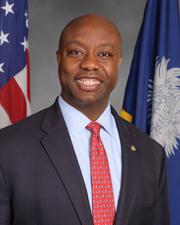
Mr. Speaker, at this time I am very happy to yield 2 minutes to one of our new Members whom I mentioned in my opening remarks, the gentleman from North Charleston, South Carolina, my Rules Committee colleague, Mr. Scott.
Mr. Speaker, Will the gentleman yield?
I would like to ask my friend what was the vote in the House on that budget that my friend was just talking about?
It was deemed. There was never a vote in this institution on it, Mr. Speaker.
I thank my friend for yielding.
I yield the gentleman an additional 30 seconds.
Mr. Speaker, I yield myself such time as I may consume.
Let me say that I think that one of the things that we have to recognize here--and I am happy to engage in rigorous debate, and I'm happy that we have not at this point had any of our friends on the other side of the aisle talk about the prospect of starving children, throwing people out of schools, depriving veterans of access to the things that they need. So I express my appreciation to my colleagues, because when we were up in the Rules Committee, that was the tenor of the discussion that took place upstairs.
One thing that I want to say, Mr. Speaker, is that, in 1974, the Congress put into place legislation known as the 1974 Budget and Impoundment Act. I happen to believe that that needs to be overhauled, because Democrats and Republicans alike recognize that the 1974 Budget and Impoundment Act has been a failure, an abject failure. And I've been working with my friend from Maryland, the distinguished ranking member of the Budget Committee, and Mr. Ryan, the chairman of the Budget Committee, as well as the chair and ranking member, Messrs. Conrad and Sessions, in the Senate on the notion of our working together in a bipartisan, bicameral way to bring about an overhaul of the 1974 Budget and Impoundment Act.
Now, one of the reasons that I believe it is essential is that last year was the first time ever that we have not seen a budget passed. It's the first time since implementation of the 1974 Budget and Impoundment Act. And, Mr. Speaker, with all due respect to the crocodile tears that are being shed so often on this House floor, I think it's important to note that that is why we are in the position where we are today. We wouldn't be here had we had a budget passed.
Now, many people talk about this calendar year, but we are 5 months-- we are 5 months--into the fiscal year, and that is the reason that we are in a position where we're having to make the kinds of tough decisions that we are.
My friend from North Charleston, my very, very thoughtful colleague is a new member of the Rules Committee, has been raising with me some very simple and commonsense questions about the process that we have been going through. One of the things that he just said in a meeting that we just participated in was that we need to recognize that we, at this moment, are beginning the process, we are beginning the process of cutting spending. This is going to be a 2-year struggle. So this is not going to be the end of our effort to try and rein in wasteful Federal spending.
I know my friend had some thoughts on that, and I would be happy to yield to him if he would like to either pose a question or offer any comments that relate to either the health care bill and the vote that we just had or any other issue.
I yield to my friend from South Carolina.
Reclaiming my time, I thank my friend for giving me the opportunity to repeat what I just said so that we can underscore it.
Never before have we failed to have a budget. And yet, for the first time in 36 years, that happened.
That's why I believe that we have a chance to work, Democrats and Republicans together, with our colleagues in the other body to bring about real reform of the Budget Act itself.
I am happy to further yield to my friend.
Reclaiming my time, let me say that my friend is absolutely right.
Throughout the debate that took place last week, we heard that, in fact, repealing the $2.7 trillion health care bill would end up costing $230 billion based on the numbers provided to us by the Congressional Budget Office's estimates. We kept hearing that, and in one of the exchanges we had with Mr. Pence, only in Washington, D.C. can bringing about the elimination of a $2.7 trillion expenditure actually cost money.
Now, Mr. Speaker, I think that the thing that we need to point to is not only the smoke and mirrors that went into the recommendations that were provided, whether it is dealing with the CLASS Act, which the chairman of the Senate Budget Committee has described as a Ponzi scheme--he used that term to describe it, whether it's that--or, to me, the most important thing to point to is the fact that in that measure there is a three-quarter of a trillion--Mr. Speaker, that's three- quarter of a trillion--dollar tax increase that is being posed along with the mandate.
So my friend from North Charleston is absolutely right, Mr. Speaker, when he points to the fact that we were, in fact, saving dollars with the action that we took last week, and we are very committed to ensuring that people have access to quality, affordable health insurance by allowing for the purchase of insurance across States lines, pooling to deal with preexisting conditions, associated health plans so that small businesses can get lower rates, the idea of meaningful lawsuit abuse reform, which the President of the United States talked about last year in his State of the Union message.
I mean, these are the kinds of things that we believe can immediately drive the cost of health insurance and health care down itself and at the same time we can disengage the Federal Government's dramatic involvement in this.
So my friend from North Charleston is absolutely right and I appreciate his, as a small businessman, coming to this body, bringing the common sense that he is sharing with us.
With that, Mr. Speaker, I reserve the balance of my time.
Mr. Speaker, I continue to reserve the balance of my time.
Mr. Speaker, I yield myself such time as I might consume to say to my friend that again this is just the first step in a long process which will allow the kind of free-flowing debate that we are talking about. Now my friend will recall that never before have we gone through the appropriations process the way we did the last 2 years, that being, when my friend and I arrived here in 1981, and when it came to the issue of spending, Members had the opportunity to stand up on the House floor and offer an amendment to the appropriations bill.
And I will tell you that it's our intention to once again have that kind of debate that we had all the way up until the last 2 years. So I can assure my friend that our goal of having a freer flowing debate is important.
The second point I would like to make, and then I will yield to my friend, is that while my friend has continually said that we didn't make amendments in order to this measure, there were no amendments submitted to the Rules Committee that would have given us the opportunity to do that.
We did make an amendment in order that modifies this, that came from Mr. Scott in the Rules Committee, that actually said that we should get to '08 levels or less, and it is true. My friend from Worcester did ask to make in order an amendment by Mr. Van Hollen, but, as I said, there were no amendments that had been actually submitted to the Rules Committee.
So that vote was taken by the Rules Committee. That decision was made.
I am happy to yield to my friend from Massachusetts.
Reclaiming my time, Mr. Speaker, what I would say is that amendments submitted to the Rules Committee we do not actually have. I mean my friend knows very well that when it comes to the Rules Committee, when we are getting ready to report out a rule, there are amendments that are submitted. There was one amendment that was proposed by Mr. McGovern. The Rules Committee chose not to make that amendment in order.
There was an amendment that did, in fact, bring us to lower spending----
If I might complete my statement. I think I control the time here.
It is very important to note that we did have an amendment that was considered in the Rules Committee by Mr. Scott which actually brought us to lower levels. It said 2008 levels or less.
I am happy to further yield to my friend.
Mr. Speaker, may I reclaim my time. I reclaim my time to say the following--and I will yield to my friend again. I want to clarify what it was that I said.
Amendments are submitted up to the Rules Committee. There were no amendments that actually had been submitted to the Rules Committee, and that's the point that I wanted to make.
There is another issue that we need to point to also, and that is there is going to be something that was often denied, I would say to my friend, and that is a motion to recommit with instructions is going to be included in this measure so that, in fact, the minority will have a bite at the apple that was more often than not denied in the past. And so that is a step in the direction towards a more open process.
And again, as I said, this is the beginning. This is the beginning of a process that will allow for consideration of a budget resolution and an appropriations process which will give Members, Democrats and Republicans alike, an opportunity to participate.
With that, I am happy to yield 2 minutes to my friend from San Diego----
Of course. I have yielded three times to my friend, and I know that Mr. McGovern has lots of time.
The gentleman from San Diego has asked to be recognized. I have had an exchange with him. And now I would like to yield 2 minutes to my friend from San Diego (Mr. Bilbray), and then if Mr. McGovern chooses to yield time to my friend, I am happy to engage in a discussion with him again.
Mr. Speaker, I would like to yield my friend 1 additional minute.
Of course I will. Mr. Speaker, I'm happy to yield my friend 30 seconds.
Mr. Speaker, I yield myself 15 seconds to say what it is that I said. What I said is there were no amendments submitted to the Rules Committee.
I reserve the balance of my time.
I thank my friend for yielding.
Obviously, and it has been indicated early on, we are not going to see across-the-board spending cuts. The goal, I would say to my friend, is to get to '08 levels, and I believe that we can preserve the FBI.
Mr. Speaker, I yield myself a minute and-a-half to respond to my friend with a couple of comments.
First, this is about job creation and economic growth. Today we live with an economy where there is a tremendous degree of uncertainty, and we know right now that there are job creators, investors, who have resources on the sidelines. I don't believe that there is anything that we could do--well, there are a number of things that we could do that may be as important, I mean, reducing the tax burden on job creators, opening up new markets around the world. But one of the things that I think is critically important for us to do is to begin getting our fiscal house in order so that that will provide an incentive for job creation and economic growth.
The next point I would like to make is that while I congratulated my friends, Mr. McGovern and Mr. Van Hollen, for not engaging in the sky- is-falling threats about what might happen down the road, or actually determining what would happen, I have to say that I was a little concerned and I have come to the conclusion that if one can't prioritize, Mr. Speaker, they resort to demonizing.
The fact of the matter is that we are beginning a process that will see us for the first time in 2 years have a free-flowing debate on appropriations. When my friend mentioned both the National Institutes of Health and the FBI, I believe those are important priorities that Democrats and Republicans alike want to fund.
I yield myself an additional 30 seconds.
My friend has concluded that somehow he knows exactly what will be cut based on this resolution. My friend has concluded that he knows exactly what level is going to be cut when it comes to the National Institutes of Health and the FBI. There are, as we move ahead with this appropriations level debate, debate that is going to be coming in the next several months, we obviously will be in a position where we will be able to, Democrats and Republicans alike, establish our priorities.
I yield to the gentleman from New Jersey.
Reclaiming my time, Mr. Speaker, let me say that obviously it does not have to be done within the National Institutes of Health, the notion of saying that it has to be cut there. We have seen a doubling in the level of funding under President Bush for the National Institutes of Health, Mr. Speaker, and I think that there are areas where we can bring about cuts.
I yield myself an additional 15 seconds, Mr. Speaker.
We can do that without in any way jeopardizing the important priorities that we have.
With that, Mr. Speaker, I reserve the balance of my time.
I thank my friend for yielding.
What I would say is that this is the beginning of a process which will allow us, with a free-flowing debate on appropriations, to do just that. The country survived at 2008 levels.
May I inquire of the Chair how much time is remaining.
I continue to reserve the balance of my time.
Mr. Speaker, will the gentleman yield?
I thank my friend for yielding.
Let me just say that this resolution did not emerge from the Budget Committee. This is a resolution of the House Rules Committee. We are the committee of jurisdiction for H. Res. 38.
I yield myself 1 minute to say to my friend that it is very interesting to have this debate, and I am happy to be standing on this side, saying that we got the message of last November 2, and I know the 87 new Members on our side who have come to this institution have made it very clear: The goal of moving in a direction of bringing about spending cuts is critically important.
Now, my good friend has just become the ranking member of the Committee on the Budget, and I know that it is a new assignment for my friend, but I'd like to take just a moment to explain what the budget process consists of.
We are going to see your committee proceed with establishing the broad 302(a) allocations, and that big number will be determined. In this institution, Democrats and Republicans alike--and, again, we haven't seen it in the last 2 years, unfortunately, because we shut down the appropriations process; but we are this year going to allow Members the opportunity, allow Members under a privileged resolution on the appropriations bills, to actually participate in establishing those priorities. That is going to be a joint effort.
I yield myself 15 seconds, Mr. Speaker.
Our priority is to get the economy back on track and create jobs. We know very well that getting our fiscal house in order is going to be essential if we are going to have the job creation that both Democrats and Republicans want.
I reserve the balance of my time.
I yield myself 30 seconds.
Mr. Speaker, I really appreciate the gentleman's dramatically raising the level of a simple two-paragraph House resolution that is the first step in a process that will allow the Budget Committee to do its work, to allow the appropriators and, through the appropriators, the full House--Democrats and Republicans alike--to establish those priorities.
I will yield in just a second.
So I would say to my friend that we do very much want, Mr. Speaker, to have a chance for this institution--and I hope Democrats will join in support of H. Res. 38 when it's voted on tomorrow--to go on record, demonstrating the institution's commitment to having heard the message from the American people.
Out of respect for my friend, I yield myself 15 seconds and I am happy to yield to my friend.
Reclaiming my time, I will say, Mr. Speaker, that across- the-
board cuts is not something that is being considered here. We are pursuing 2008 levels, and I believe that that's what this resolution says. We hope very much that we can get to lower levels of spending, and I suspect that some Members on the other side of the aisle will want to join us in working together in that effort so we can get our fiscal house in order.
I reserve the balance of my time.
I will say to my friend that that is the definition of ``security spending'': defense, homeland security, VA, and military construction.
I thank my friend for yielding.
Mr. Speaker, I yield myself 30 seconds to say to my friend that I very much appreciate his recognizing the commitment that I have had to security through foreign assistance programs and to make it very clear that, again, we are just beginning a process today. We are beginning a process today that will allow this House to work its will. It is obvious that going to 2008 levels is not going to gut all of the very important national security aspects that we have of foreign assistance programs. My friend knows very well, Mr. Speaker, that it is essential that we get our fiscal house in order, and this is the first step on a road towards doing just that.
With that, I have no further requests for time, and I reserve the balance of my time.
I yield myself the balance of my time.
Mr. Speaker, every Member of this institution, Democrat and Republican alike, knows full well that the American people are hurting. We have an unemployment rate that is at 9.4 percent. We have, in my State of California, a 12\1/2\ percent unemployment rate. I see my friend Mr. Lewis here on the floor. In the Inland Empire of California, the unemployment rate is 15\1/2\ percent. People are out there making very, very tough decisions, and the economic uncertainty that exists today is playing a big role in diminishing the kind of investments that we need to create jobs.
This resolution is a very simple one. It says that we shouldn't spend money we don't have. We shouldn't spend money we don't have. That's what we're saying as we begin this process. Those are the decisions that families are making all across this country. They're not spending money they don't have. In fact, we've seen, because of this economic downturn, lots of families today saving more than they have
in the past because they don't want to get themselves into this position that the Federal Government is.
We're going to have to make some tough choices around here. It's not going to be easy. No one is saying that it's going to be easy. But this resolution that we're going to debate tomorrow, H. Res. 38, simply says that we are going to go to 2008 levels or less, because frankly 2008 levels, as far as I'm concerned, were too high. I believe that we need to cut back even more.
Now we continue to hear this argument that we are going to decimate research into very important diseases out there. We began the debate, as I said in the opening, not going there, but we did go there. And, as I said, if you can't prioritize, you end up demonizing and creating this great deal of fear that is out there. Or the FBI is going to close down if we go to `08 spending levels. Well, Mr. Speaker, obviously that is not the case. This institution is not about to undermine the Federal Bureau of Investigation. But we do know that with adequate oversight-- which is our constitutional responsibility--and focusing, yes, on those three things that Democrats and Republicans alike say--waste, fraud and abuse--we will be able to rein in this behemoth.
Again, it's going to be tough, but this resolution is just the first step in a 2-year process to get our economy growing, create jobs, and to rein in the size and scope and reach of the Federal Government so that we can encourage individual initiative and responsibility.
So Mr. Speaker, I urge my colleagues to vote for this rule. And tomorrow, when we bring the resolution, H. Res. 38, to the floor, I urge their support of this measure. I hope very much that we will have Democrats joining with Republicans for this very commonsense approach to do exactly what these 87 new Members on our side of the aisle--and I suspect even some of the nine new Members on the Democratic side of the aisle--have come here to do, and that is to rein in this wasteful government spending that we have seen.
Mr. Speaker, I yield back the balance of my time, and I move the previous question.
Mr. Speaker, on that I demand the yeas and nays.