Mr. Speaker, pursuant to the order of the House of February 29, 2012, I call up House Resolution 562 directing the Office of the Historian to compile oral histories from current and former Members of…
Mr. Speaker, pursuant to the order of the House of February 29, 2012, I call up House Resolution 562 directing the Office of the Historian to compile oral histories from current and former Members of the House of Representatives involved in the historic and annual Selma to Montgomery, Alabama, marches, as well as the civil rights movement in general, for the purposes of expanding or augmenting the historic record and for public dissemination and education, and ask for its immediate consideration.
Mr. Speaker, I ask unanimous consent that all Members may have 5 legislative days to revise and extend their remarks.
Mr. Speaker, I yield myself such time as I might consume.
Mr. Speaker, I rise in support of House Resolution 562, which directs the Office of the Historian to compile and disseminate oral histories from current and former Members of the House of Representatives involved in the historic and annual Selma-to-Montgomery, Alabama, marches, as well as the civil rights movement in general.
In March of 1965, a defining 3-week period of the civil rights movement culminated with a historic 54-mile
march from Selma to Montgomery. Led by the Reverend Martin Luther King, Jr., it was the last of three marches that resulted in the passage of the Voting Rights Act of 1965 recognizing the right of all Americans to participate in the electoral process.
On March 7, 1965, our colleague from Georgia, Mr. John Lewis, and the Reverend Hosea Williams led 600 civil rights activists in the first march from Selma to Montgomery to protest the shooting of Jimmie Lee Jackson, killed just a few weeks earlier by State troopers while doing nothing more than registering African Americans to vote. The march lasted only six blocks before coming to a violent end on the Edmund Pettus Bridge. In what has become known as Bloody Sunday, troopers used tear gas and clubs to beat the protesters back from the bridge. The upsetting, horrifying images of peaceful marchers being brutally assaulted by authorities brought national attention to the plight of African Americans in the South and greater resolve to those seeking equality for all.
Two days later, the Reverend Martin Luther King, Jr., led a second symbolic march where 2,000 participants returned to the Edmund Pettus Bridge and proceeded to kneel and pray.
On March 21, this time with protection from Federal authorities and the Alabama National Guard, the Reverend Martin Luther King, Jr., led a 54-mile march to the State capitol building. Three days later, the group that started with 3,000 participants and grew to 25,000 strong, arrived in Montgomery, where Dr. King proclaimed:
We are on the move now. Like an idea whose time has come,
not even the marching of mighty armies can halt us. We are
moving to the land of freedom.
Mr. Speaker, the magnitude and importance of this historic event is undeniable, and its significance to American history must never be forgotten.
To commemorate these marches, Congress in 1996 created the 54-mile- long Selma to Montgomery National Historic Trail along the route of Dr. King's march, starting at the Brown Chapel AME Church in Selma and ending at the Alabama State Capitol in Montgomery.
Since 1998, Members of Congress have participated in an annual civil rights pilgrimage on the Selma to Montgomery National Historic Trail. In March of 2009, I had the privilege of participating with my wife in this event. We marched across the Edmund Pettus Bridge, and we were inspired by those with firsthand experiences from the events of 1965.
Documenting and sharing the experiences of Members who participated in historic and annual marches from Selma to Montgomery is critically important to the recognition and preservation of the achievements of the American civil rights movement. As I understand it, Mr. Lewis from Georgia and the majority leader whip, Mr. McCarthy, will lead the 2012 congressional civil rights pilgrimage starting tomorrow. It is fitting that we are here today with this resolution as another group of Members begin their journey.
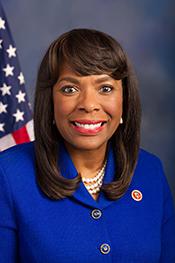
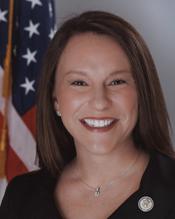
I want to thank my colleagues from Alabama, Ms. Sewell and Mrs. Roby, for introducing this important resolution.
I strongly urge all of my colleagues not only to support the resolution but also to take part in the annual congressional Selma to Montgomery march.
I reserve the balance of my time.
Mr. Speaker, it is my pleasure to yield 2 minutes to the gentleman from Wisconsin (Mr. Petri), a distinguished member of the Committees on Education and the Workforce and Transportation and Infrastructure.
Mr. Speaker, it is my privilege to yield 3 minutes to the gentlelady from Alabama (Mrs. Roby), a member of the Committees on Armed Services, Agriculture, Education and the Workforce, and she cosponsored this resolution.
(Mrs. ROBY asked and was given permission to revise and extend her remarks.)
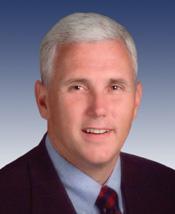
Mr. Speaker, at this time it is my pleasure to yield 3 minutes to the gentleman from Indiana (Mr. Pence), a member of the Foreign Affairs and Judiciary Committees.
(Mr. PENCE asked and was given permission to revise and extend his remarks.)
I yield an additional 1 minute to the gentleman.
Mr. Speaker, I yield myself such time as I may consume.
Mr. Speaker, although obviously the efforts in the civil rights movement were the culmination of efforts by people of all faiths, I find it instructive that this march takes place during the period of Lent, that in the Christian faith is a period of reflection and sacrifice as we prepare for Easter Sunday.
Last Sunday, in my home parish out in California, I recall the readings at the first Sunday of Lent were about the temptations of Christ in the desert. And we received a remarkable sermon at our church in which the theme was expressed with the words ``the crown without the cross,'' that the essence of the temptation of Christ was whether He, as God-made man, was able to make the decision or was tempted to make the decision to accept the crown without accepting the cross, that is, to accept the kingship as Godhead without going through the demands, the terror, and the death of the cross.
I'm reminded of that today because I think of that question that John Lewis and others had as they crossed that bridge, as they reached the crest and they saw the troopers at the other side: Do you turn back and do you not accept the cross that is coming in order to achieve that which needs to be done to redeem this country and its promise of equality of all as contained in the Constitution and the Declaration of Independence?
I would say that I was inspired as I was there with my wife and others on the march several years ago, Steny Hoyer leading those on the Democratic side and John Lewis, of course, being a regular Member. And he wrote to those of us who reflected on that period that perhaps the most magnificent piece of literature that came out of the civil rights movement, in my judgment, is the ``Letter From the Birmingham Jail'' by Dr. King. I would commend to my colleagues and to others who might hear our words that they go back and take time to read those words.
Dr. King, sitting in jail, without access to any texts, wrote a magnificent epistle of his generation and our generation to the conscience of the American people. And he found no difficulty whatsoever in utilizing his heartfelt religious values and principles in extending the promise of that Christian message and the religious values that are found in our Judeo-Christian tradition to the underpinnings of our Constitution and challenged us to understand the difference between just and unjust laws and our responsibility to ``render unto Caesar the things which are Caesar's, and unto God the things that are God's.''
It is an inspiration to me now, and it has been an inspiration to me my entire life.
I would say to anyone who wants to understand the civil rights movement, to understand the promise of America that was not fulfilled and will never perfectly be fulfilled but is certainly in a better state today than it was prior to the civil rights revolution, they should read those words of Dr. King and understand how that animated the civil rights movement and gave us heroes such as our colleague from Georgia, John Lewis.
And with that, I reserve the balance of my time.
At this time, it's my pleasure to yield 1 minute to the gentleman from Virginia, the majority leader, Mr. Cantor.
May I make an inquiry as to whether the gentleman on the other side, Mr. Lewis, has additional speakers?
And how much time do we have?
I reserve the balance of my time.
Mr. Speaker, I yield myself such time as I may consume.
Mr. Speaker, I just want to echo the words of my friend, Mr. Lewis. Let us have all Members vote for this resolution. It is a recognition, a simple, straightforward, symbolic resolution recognizing the efforts of so many, as embodied in the gentleman, Mr. Lewis, and others who worked so hard to change this country for the better.
I'm honored to be here on the floor with Mr. Lewis today. I appreciate the chance I had to be with him in this march several years ago.
I encourage all Members to take part in that, either this year or in the future, and I ask all Members to support this.
With that, I yield back the balance of my time.