I thank the gentleman for yielding. I had a long oration I was going to make, but I want to be quite honest. My good friend Chairman Smith and my good friend Ranking Member Lofgren have actually…
I thank the gentleman for yielding.
I had a long oration I was going to make, but I want to be quite honest. My good friend Chairman Smith and my good friend Ranking Member Lofgren have actually covered the case as well or better than I can. They're both distinguished attorneys. They understand the intricacies involved here, so there's no need for me to go through and literally repeat point by point what they have already made.
I do want to make one central point, or two points.
First, I want to thank both of them. This is a matter of justice. This is a bipartisan effort to try and make sure that an Indian nation that has a legitimate claim against the United States of America has an opportunity to go to court and make its case; no predetermination of the outcome, no settlement without coming back through Congress again, just simply an opportunity to make a case of an injustice that all sides admit occurred, and establish what's fair compensation.
I want to commend, again, both my colleagues, and particularly Chairman Smith. This simply could not have happened without his cooperation, his help, and the diligent work of his staff.
I urge passage of the legislation.
Introduction
Several hundred years ago, the Quapaw (``the Downstream People'') were part of a larger group known as the Dhegiha Sioux, which split into the modern tribes known as the Quapaw, Osage, Ponca, Kansa, and Omaha. The Quapaw's ancestral lands are located at the confluence of the Arkansas and Mississippi rivers in what is present day Arkansas. When first encountered by the Europeans in the 1670's, there were some 20,000 Quapaws living in four villages in this area.
A series of treaties with the U.S. Government resulted in most of the Quapaw land being ceded to the United States, and the
Tribe acquiesced to relocation to the far northeastern corner of present day Oklahoma. In the process, the tribal land base was whittled down to its current acreage.
After Quapaw lands in Oklahoma were found to contain rich deposits of zinc and lead in 1905, the Government allowed mining activities to be carried out largely unfettered, and not for the benefit of the Quapaws. For years the value of the Quapaw mineral estate was exported from their land with the Government failing to ensure that royalties, bonuses and other payments were properly made and managed.
Why H. Res. 668 is Necessary
The Office of Historical Trust Accounting (OHTA) was established by Secretary of the Interior Secretarial Order No. 3231 on July 10, 2001; OHTA is charged with planning, organizing, directing and executing the historical accounting of tribal trust accounts and non-monetary assets.
In 2002, the Tribe filed a lawsuit for an accounting and for asset mismanagement in the Federal District Court in Oklahoma alleging the U.S. Government owed them an accounting and had mismanaged their funds and non-monetary assets.
During this time, there were over 104 tribal lawsuits pending and the Department of the Interior--Office of Historic Trust Accounting's ability to fund the accountings and determine whether assets were mismanaged was severely limited. At the same time, the Department of Justice had similar concerns about its ability to respond to the myriad of tribal lawsuits
In July 2004, the U.S. Government and the Tribe negotiated and agreed to settle the pending lawsuit, and enter into an agreement under which the Department of the Interior would enter into a contract with Quapaw Information Services as contractor, to ``identify, select, and analyze documents, and prepare an analysis (the Quapaw Analysis), of Interior's management'' of the Tribe's Tribal Trust Fund Account, along with certain non-monetary land and natural resources assets held in trust on behalf of the Tribe, and eight individual members of the Tribe.
In 2010--after six years of work, Quapaw Information Systems gave its report to the U.S. Government. In turn, the U.S. Government accepted the accounting as being in conformity with the Federal standards, but refused to do anything with the accounting.
The Tribe fulfilled its end of the bargain. The U.S. Government did not.
By 2011, the Tribe was left with no choice but to seek relief in court from the Government's failure--not only its failure to fulfill its trust obligations, but its agreement to mediate and settle the matter once the accounting was completed. Accordingly, eight Quapaw tribal members filed a class-action lawsuit on behalf of themselves and all other similarly situated tribal members. This case, Goodeagle v. United States, seeks damages for the Government's breach of trust in the U.S. Court of Federal Claims.
In May 2011, the Tribe submitted a formal settlement demand to the Government, to which the Government has never responded.
Instead, the Government has filed repeated Motions to Dismiss the Goodeagle case.
With the settlement demand ignored, and the Government's ongoing refusal to resolve these claims through settlement, in September 2012, the Tribe filed a complaint for damages in the U.S. Court of Federal Claims.
In November 2012, the Government filed yet another motion to dismiss the Tribe's case.
The Mechanics of H. Res. 668
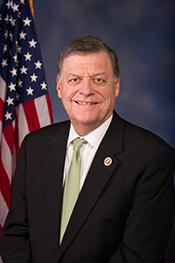
To ensure that the Tribe and its members can pursue their trust- related claims in the U.S. Court of Federal Claims, Rep. Tom Cole and Rep. Dan Boren introduced H. Res. 668. Notably, this resolution does not pre-determine the outcome of the U.S. Court of Federal Claims review of the Tribe's lawsuit.
It simply allows the Tribe and its members to plead their case to a neutral decision-maker in a judicial proceeding.
Some may assume that the sending of a congressional reference to the U.S. Court of Federal Claims has already predetermined liability in favor of a claimant. As observed by former House Member (Rep. Marion T. Bennett (R-MO)), who became a Claims Court judge, ``nothing could be further from the truth or the intent of Congress . . . Congress intends only to afford an impartial and independent forum for determination of the merits of a complex claim by judicial methods.'' Bennett, Private Claims Acts and Congressional References, 9 JAG L. Rev. 9 (1967).
H. Res. 668, as amended, simply affords the Tribe and its members the chance to present their case about the nature, extent, and character of the Indian trust related claims of the Quapaw Tribe and its tribal members for compensation as legal or equitable claims against the United States other than the legal claims that are pending in the Court of Federal Claims on the date of House approval of this to a neutral decision-maker in a judicial proceeding.