Children's Sports Athletic Equipment Safety Act
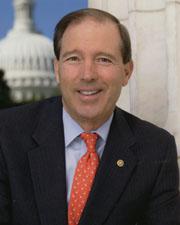 Sen. Tom Udall (D-NM)
Legislative Activity
Stay on top of the latest movement without scrolling through every action
Read twice and referred to the Committee on Commerce, Science, and Transportation. (text of measure as introduced: CR S1755-1757)
March 16, 2011
View full timeline
Introduced in Senate
March 16, 2011
Sponsor introductory remarks on measure. (CR S1754-1755)
March 16, 2011
Read twice and referred to the Committee on Commerce, Science, and Transportation. (text of measure as introduced: CR S1755-1757)
March 16, 2011
Floor Debate
5 membersWhat members said about S. 601 on the floor




Floor Debate
5 membersWhat members said about S. 601 on the floor
Mr. President, football fans today are wondering if there will be a National Football League season this fall. Many fans could find that their Sundays are not the same if team owners and players do…
Mr. President, football fans today are wondering if there will be a National Football League season this fall. Many fans could find that their Sundays are not the same if team owners and players do…
Mr. President, I am pleased to join today with my partner, Senator Cornyn, to reintroduce the Domestic Minor Sex Trafficking Deterrence and Victims Support Act. This bi-partisan legislation, which…
Mr. President, today I join the senior Senator from California and others to introduce the Respect for Marriage Act of 2011. This legislation would repeal the Defense of Marriage Act, DOMA, so that…
Mr. President, yesterday I offered three amendments to the SBIR/STTR Reauthorization Bill to make commonsense reforms to our regulatory system. Today, Senators Roberts and Barrasso join me in…
Show 1 more
Mr. President, I am very pleased to introduce today a bill to strike the law commonly known as DOMA, the Defense of Marriage Act. I want to thank my cosponsors--Senators Leahy, Gillibrand, Kerry,…
Bill Text
Latest available legislative text
        [Congressional Bills 112th Congress]
[From the U.S. Government Publishing Office]
[S. 601 Introduced in Senate (IS)]

112th CONGRESS
1st Session
S. 601

To encourage and ensure the use of safe football helmets and for other
purposes.

_______________________________________________________________________

IN THE SENATE OF THE UNITED STATES

March 16, 2011

Mr. Udall of New Mexico (for himself, Mr. Lautenberg, and Mr.
Blumenthal) introduced the following bill; which was read twice and
referred to the Committee on Commerce, Science, and Transportation

_______________________________________________________________________

A BILL

To encourage and ensure the use of safe football helmets and for other
purposes.

Be it enacted by the Senate and House of Representatives of the
United States of America in Congress assembled,

SECTION 1. SHORT TITLE; TABLE OF CONTENTS.

(a) Short Title.--This Act may be cited as the ``Children's Sports
Athletic Equipment Safety Act''.
(b) Table of Contents.--The table of contents for this Act is as
follows:

Sec. 1. Short title; table of contents.
Sec. 2. Findings.
Sec. 3. Football helmet safety standards.
Sec. 4. Application of third party testing and certification
requirements to youth football helmets.
Sec. 5. False or misleading claims with respect to athletic sporting
activity goods.

SEC. 2. FINDINGS.

The Congress finds the following:
(1) Participation in sports and athletic activities
provides many benefits to children and should be encouraged.
(2) Participation in sports and athletic activities does
involve some inevitable risk of injury that no protective gear
or safety device can fully eliminate.
(3) Sports-related concussion is a form of traumatic brain
injury that can lead to lasting negative health consequences.
(4) Direct medical costs and indirect costs of traumatic
brain injuries totaled an estimated $60,000,000,000 in the
United States in the year 2000.
(5) Sports are the second leading cause of traumatic brain
injury for Americans who are 15 to 24 years old, behind only
motor vehicle crashes.
(6) Every year, American athletes suffer up to an estimated
3,800,000 sports-related concussions.
(7) The potential for catastrophic injury resulting from
multiple concussions makes sports-related concussions a
significant concern for young athletes, coaches, and parents.
(8) Football has the highest incidence of concussions,
which also occur in many other sports such as baseball,
basketball, ice hockey, lacrosse, soccer, and softball.
(9) An estimated 4,500,000 children play football in
organized youth and school sports leagues, including
approximately 1,500,000 high school players.
(10) According to the Consumer Product Safety Commission,
more than 920,000 athletes under the age of 18 were treated in
emergency rooms, doctors' offices, and clinics for football-
related injuries in the year 2007.
(11) In any given football season, 20 percent of all high
school football players sustain brain injuries.
(12) One study that included a post-season survey of
football players found that 47 percent experienced at least one
concussion and almost 35 percent experienced multiple
concussions.
(13) Medical experts at Boston University School of
Medicine found that a deceased 18-year-old athlete, who had
experienced multiple concussions playing high school football,
suffered from chronic traumatic encephalopathy, a degenerative
brain disease caused by head trauma.
(14) A football helmet's ability to protect players from
injury by attenuating acceleration forces can decline over time
as the helmet experiences thousands of hits from use during
successive football seasons after its original date of
manufacture.
(15) According to industry estimates, 100,000 football
helmets more than ten years old, and thousands almost twenty
years old, were worn by players in the 2009 season.
(16) A high school football player who suffered brain
damage from being hit in the head soon after suffering a
previous concussion was wearing a 20-year-old football helmet
when he was injured.
(17) Children as young as 5 years old rely on football
helmets to protect against head injury.
(18) The widespread adoption of a voluntary industry
standard for football helmet safety led to an 80 percent
reduction in life-threatening subdural hematoma injuries.
(19) The voluntary industry safety standard for football
helmets does not specifically address concussion risk.
(20) There is no voluntary industry safety standard
specifically for youth football helmets worn by children, who
have different physiological characteristics from adults in
terms of head size and neck strength, especially those who are
younger than 12 years old.
(21) Some football helmet manufacturers and resellers have
used misleading concussion safety claims to sell children's
football helmets.
(22) Some used helmet reconditioners have falsely certified
that reconditioned helmets provided to schools and youth
football teams met voluntary industry safety standards.
(23) Used helmet reconditioners do not independently test
reconditioned helmets before certifying that they meet
voluntary industry safety standards.
(24) The industry organization that sets voluntary football
helmet safety standards does not conduct independent testing
nor market surveillance to ensure compliance with such
voluntary safety standards by manufacturers and reconditioners
that certify new and used helmets to such standards.
(25) Football helmet manufacturers and reconditioners place
product warning labels underneath padding where the warning
labels are obscured from view and not clearly legible.
(26) The Consumer Product Safety Act (15 U.S.C. 2051 et
seq.) charges the Consumer Product Safety Commission with
protecting the public from unreasonable risks of serious injury
or death from consumer products, including consumer products
used in recreation and in schools.
(27) The Federal Trade Commission Act (15 U.S.C. 41 et
seq.) empowers the Federal Trade Commission to prevent unfair
or deceptive acts or practices, and prohibits the dissemination
of misleading claims for devices or services.

SEC. 3. FOOTBALL HELMET SAFETY STANDARDS.

(a) Voluntary Standard Determination.--Within 9 months after the
date of enactment of this Act, the Consumer Product Safety Commission
shall determine, with respect to a standard or standards submitted by a
voluntary standards-setting organization regarding youth football
helmets, reconditioned football helmets, and new football helmet
concussion resistance (if feasible) whether--
(1) compliance with the standard or standards is likely to
result in the elimination or adequate reduction of the risk of
injury in connection with the use of football helmets;
(2) it is likely that there will be substantial compliance
with the standard or standards; and
(3) the standard or standards are maintained by a
standards-setting organization that meets the requirements of
the document ``ANSI Essential Requirements: Due Process
Requirements for American National Standards'' published in
January 2010 by the American National Standards Institute (or
any successor document).
(b) Consumer Product Safety Standard.--Unless the Consumer Product
Safety Commission makes an affirmative determination with respect to a
standard or standards under subsection (a) that addresses the matters
to which the following standards would apply, the Commission shall
initiate a rulemaking proceeding for the development of a consumer
product safety rule with respect to the following:
(1) Youth football helmets.--A standard for youth football
helmets which is informed by children's different physiological
characteristics from adults in terms of head size and neck
strength.
(2) Reconditioned football helmets.--A standard for all
reconditioned football helmets.
(3) New football helmet concussion resistance.--A standard
for all new football helmets that addresses concussion risk, if
the Commission determines that such a standard is feasible
given current understanding of concussion risk and how helmets
can prevent concussion.
(4) Football helmet warning labels.--A standard for warning
labels on all football helmets that, at a minimum, requires
clearly legible and fully visible statements warning consumers
of the limits of protection afforded by the helmet. This
standard may include requirements for pictograms, instructions,
guidelines, or other cautions to consumers about injury risk
and the proper use of football helmets.
(5) Date of manufacture label for new football helmets.--A
standard for a clearly legible and fully visible label on all
new football helmets stating the football helmet's original
date of manufacture and warning consumers that a football
helmet's ability to protect the wearer can decline over time.
(6) Date of reconditioning label for reconditioned
helmets.--A standard for a clearly legible and fully visible
label on all reconditioned football helmets stating the
helmet's last date of reconditioning, its original date of
manufacture, and warning consumers that a football helmet's
ability to protect the wearer can decline over time, despite
being properly and regularly reconditioned.
(c) Safety Standards.--
(1) In general.--The Commission shall--
(A) in consultation with representatives of
coaches, consumer groups, engineers, medical experts,
school sports directors, scientists, and sports
equipment standard-setting organizations, examine and
assess the effectiveness of any voluntary consumer
product safety standards for youth football helmets,
reconditioned football helmets, and new football helmet
concussion resistance proposed by a voluntary
standards-setting organization; and
(B) in accordance with section 553 of title 5,
United States Code, promulgate consumer product safety
standards that--
(i) are substantially the same as such
voluntary standards; or
(ii) are more stringent than such voluntary
standards, if the Commission determines that
more stringent standards would further reduce
the risk of injury associated with football
helmets.
(2) Timetable for rulemaking.--If the Commission does not
make an affirmative determination under subsection (a) within
the 9-month period, the Commission shall commence the
rulemaking required by subsection (b) within 30 days after the
end of that 9-month period. The Commission shall periodically
review and revise the standards set forth in the consumer
product safety rule prescribed pursuant to that proceeding to
ensure that such standards provide the highest level of safety
for football helmets that is feasible.

SEC. 4. APPLICATION OF THIRD PARTY TESTING AND CERTIFICATION
REQUIREMENTS TO YOUTH FOOTBALL HELMETS.

(a) In General.--The third party testing and certification
requirements of section 14(a)(2) of the Consumer Product Safety Act (15
U.S.C. 2063(a)(2)) shall apply to any youth football helmet (including
a reconditioned youth football helmet) to which any consumer product
safety rule prescribed under section 3(b) of this Act applies as if the
helmet were a children's product that is subject to a children's
product safety rule without regard to the age of the individual for
whom it is primarily designed or intended.
(b) Special Application of Definition of Children's Product for
Purposes of Testing and Certification of Football Helmets.--For the
exclusive purpose of applying the definition of the term ``children's
product'' in section 3(a)(2) of the Consumer Product Safety Act (15
U.S.C. 2052(a)(2)) to the requirements of subsection (a) of this
section, ``18 years'' shall be substituted for ``12 years'' each place
it appears.
(c) For the purposes of this section, third party testing and
certification shall be conducted by a testing laboratory that has an
accreditation--
(1) that meets International Organization for
Standardization/International Electrotechnical Commission
standard 17025:2005 entitled General Requirements for the
Competence of Testing and Calibration Laboratories (or any
successor standard that is from an accreditation body that is
signatory to the International Laboratory Accreditation
Cooperation for testing accreditation);
(2) that meets International Organization for
Standardization/International Electrotechnical Commission Guide
65:1996 entitled General Requirements for Bodies Operating
Product Certification Systems (or any successor standard that
is from an accreditation body that is signatory to the
International Accreditation Forum for product certification
accreditation); and
(3) that includes all appropriate football helmet standards
and test methods within the scope of the accreditation.

SEC. 5. FALSE OR MISLEADING CLAIMS WITH RESPECT TO ATHLETIC SPORTING
ACTIVITY GOODS.

(a) In General.--It is unlawful for any person to sell, or offer
for sale, in interstate commerce, or import into the United States for
the purpose of selling or offering for sale, any item of equipment
intended, designed, or offered for use by an individual engaged in any
athletic sporting activity, whether professional or amateur, for which
the seller or importer, or any person acting on behalf of the seller or
importer, makes any false or misleading claim with respect to the
safety benefits of such item.
(b) Enforcement by Federal Trade Commission.--
(1) In general.--Violation of subsection (a), or any
regulation prescribed under this section, shall be treated as a
violation of a rule under section 18 of the Federal Trade
Commission Act (15 U.S.C. 57a) regarding unfair or deceptive
acts or practices. The Federal Trade Commission shall enforce
this Act in the same manner, by the same means, and with the
same jurisdiction, powers, and duties as though all applicable
terms and provisions of the Federal Trade Commission Act (15
U.S.C. 41 et seq.) were incorporated into and made a part of
this Act.
(2) Regulations.--Notwithstanding any other provision of
law, the Commission may promulgate such regulations as it finds
necessary or appropriate under this Act under section 553 of
title 5, United States Code.
(3) Penalties.--Any person who violates subsection (a) or
any regulation prescribed under that section, shall be subject
to the penalties and entitled to the privileges and immunities
provided in the Federal Trade Commission Act as though all
applicable terms and provisions of the Federal Trade Commission
Act were incorporated in and made part of this Act.
(4) Authority preserved.--Nothing in this section shall be
construed to limit the authority of the Commission under any
other provision of law.
(c) Enforcement by State Attorneys General.--
(1) Right of action.--Except as provided in paragraph (5),
the attorney general of a State, or other authorized State
officer, alleging a violation of subsection (a) or any
regulation issued under that section that affects or may affect
such State or its residents may bring an action on behalf of
the residents of the State in any United States district court
for the district in which the defendant is found, resides, or
transacts business, or wherever venue is proper under section
1391 of title 28, United States Code, to obtain appropriate
injunctive relief.
(2) Initiation of civil action.--A State shall provide
prior written notice to the Federal Trade Commission of any
civil action under paragraph (1) together with a copy of its
complaint, except that if it is not feasible for the State to
provide such prior notice, the State shall provide such notice
immediately upon instituting such action.
(3) Intervention by the commission.--The Commission may
intervene in such civil action and upon intervening--
(A) be heard on all matters arising in such civil
action; and
(B) file petitions for appeal of a decision in such
civil action.
(4) Construction.--Nothing in this section shall be
construed--
(A) to prevent the attorney general of a State, or
other authorized State officer, from exercising the
powers conferred on the attorney general, or other
authorized State officer, by the laws of such State; or
(B) to prohibit the attorney general of a State, or
other authorized State officer, from proceeding in
State or Federal court on the basis of an alleged
violation of any civil or criminal statute of that
State.
(5) Limitation.--No separate suit shall be brought under
this subsection if, at the time the suit is brought, the same
alleged violation is the subject of a pending action by the
Federal Trade Commission or the United States under this
section.
<all>