Mr. Chairman, I yield myself such time as I may consume. I rise to strongly oppose H.R. 1062. This bill places significant additional requirements for economic analysis by the Securities and Exchange…
Mr. Chairman, I yield myself such time as I may consume.
I rise to strongly oppose H.R. 1062. This bill places significant additional requirements for economic analysis by the Securities and Exchange Commission, effectively bringing any efforts at rulemaking to a standstill.
Let's be clear: the purpose of this legislative effort is to stop implementation of the Dodd-Frank Wall Street Reform and Consumer Protection Act dead in its tracks. After losing in Congress, the fight against the Dodd-Frank act moved to the courts, beginning with overturning the proxy access rules they adopted under authority provided by that act.
Although I agreed fully with the SEC's position, they went with their friends to court and the court found that the SEC did not meet its already significant requirements to conduct an economic analysis.
After the proxy access case was overturned, the SEC adopted improved standards for conducting cost-benefit analyses. These procedures were cited by the GAO just last December as having all of the elements of good regulatory analysis. Basically, what the GAO is saying is we took a look, we studied it, and they do a good job.
Nonetheless, the bill before us today adds even more requirements, tying up the SEC resources, and putting it at even greater risk for litigation for every rule, despite the assurances of my Republican colleagues that they're only applying the terms of an executive order to the SEC. That executive order explicitly protects agencies from lawsuits based on their economic analysis. H.R. 1062 has no such protection for the SEC.
The Commission is undertaking a valiant effort to finish the Dodd- Frank and Jobs Acts rule, even in the face of attempts by the majority to restrict their funding. As the SEC attempts to balance capital formation with the need to protect investors, this bill weights the scales heavily in favor of industry over investors. In fact, the words ``investor protection'' do not appear anywhere in this bill.
Even without this bill, we can count on industry lobbyists to sue the SEC anytime it sees a weakness in the justification supporting a rule, as they have in several other cases currently before the courts.
And this bill does not apply only to new rules. This is extraordinary--and I want to say this so everybody understands--this bill would require the Commission to review every rulemaking ever issued--even those that have protected our securities markets since the Great Depression--1 year after the adoption of this bill, and then again every 5 years thereafter. As a result, the Commission will be forced to divert resources away from other key areas, such as enforcement.
This comes at a time when House Republicans want to hold SEC funding flat, despite the SEC's new responsibilities--the increase in the number of participants it oversees and the growth of complexity and the size of U.S. securities markets.
It is ironic that as House Republicans push this bill forward, they are also calling for the SEC to speed up its efforts on Jobs Act rules. This bill makes it impossible for the SEC to meet the very deadline we adopted just 2 days ago when we passed H.R. 701.
I urge my colleagues to oppose H.R. 1062, and I reserve the balance of my time.
At this time, I would yield 2 minutes to the gentlelady from New York (Mrs. Maloney).
I now yield 2 minutes to the gentlelady from Wisconsin, Representative Gwen Moore.
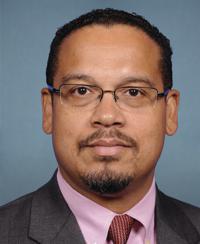
I yield 2 minutes to the gentleman from Minnesota, Representative Ellison.
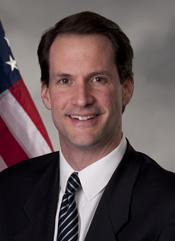
Mr. Chairman, I yield 2 minutes to the gentleman from Connecticut, Representative Himes.
I yield 2 minutes to the gentleman from Delaware (Mr. Carney).
Mr. Chairman, I yield 3 minutes to the gentleman from Illinois, Representative Foster.
I yield 3 minutes to the gentleman from Georgia (Mr. David Scott).
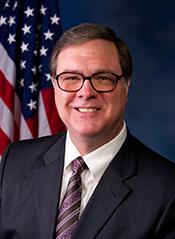
Mr. Chairman, I yield 2 minutes to the gentleman from Washington, Representative Denny Heck.
Mr. Chairman, I yield myself such time as I may consume.
First, I have a number of communications that I will insert into the Record.
I have a Statement of Administration Policy from the Executive Office of the President; I have American Federation of Labor and Congress of Industrial Organizations; I have Americans for Financial Reform; I have AFSCME; and I also have California Public Employees Retirement System, all in opposition to this bill, and asking us to please oppose the bill.
Executive Office of the President, Office of Management
and Budget,
Washington, DC, May 15, 2013.
Statement of Administration Policy
H.R. 1062--SEC Regulatory Accountability Act
(Rep. Garrett, R-NJ, and 23 cosponsors)
The Securities and Exchange Commission (SEC) plays a
critical role in protecting Americans' investments for
retirement, higher education, and other personal savings
while ensuring strong, efficient, safe financial activity
that contributes to the Nation's economic health and job
creation. While the Administration is firmly committed to
smart and effective regulations that advance statutory goals
in the most cost-effective and efficient manner, the
Administration opposes passage of H.R. 1062. By adding
burdensome and disruptive new procedures, H.R. 1062 would
impede the ability of the SEC to protect investors, maintain
orderly and efficient markets, and facilitate capital
formation.
The Administration believes in the value of cost-benefit
analysis. However, H.R. 1062 would add onerous procedures
that would threaten the implementation of key reforms related
to financial stability and investor protection. H.R. 1062
would direct the SEC to conduct time- and resource-intensive
assessments after it adopts or amends major regulations
before the impacts of the regulations may have occurred or be
known. The bill would add analytical requirements that could
result in unnecessary delays in the rulemaking process,
thereby undermining the ability of the SEC to effectively
execute its statutory mandates.
The Administration is committed to a regulatory system that
is informed by science, cost-justified, and consistent with
economic growth. Through efforts including Executive Order
13579, ``Regulation and Independent Regulatory Agencies,''
the Administration is taking important steps to encourage
independent agencies to follow cost-saving and burden-
reducing principles in their reviews of new regulations, and
to examine their existing rules to identify those that should
be modified, streamlined, or repealed.
Mr. Chair, how many minutes do I have left?
I yield myself the balance of the time.
In closing, allow me to quote one of the Financial Services Committee members in a hearing yesterday, because I think it is so important for us to understand that the SEC is our cop on the block that has the responsibility for protecting investors.
Let us understand that my colleagues on the opposite side of the aisle are opposed to the SEC having an adequate budget. They do everything that they can to cut the budget, to deny the resources; but they keep adding on additional responsibilities, recognizing that the SEC has a tremendous load. Not only do they have all of the work, the cost-benefit analysis that they do on everything, but they have the responsibility of rulemaking for all of Dodd-Frank, which is the reform legislation that will cause us to eliminate risk and to protect our constituents and the citizens of this country.
But let me just say that yesterday, during a Financial Services Committee hearing, Chairman Emeritus Spencer Bachus said that it would be penny-wise and pound foolish for there not to be a bipartisan agreement for raising the funding or increasing the funding for the
Mr. Chairman, I claim time in opposition to the amendment, although I do not oppose the amendment.
Mr. Chairman, I yield myself such time as I may consume.
This amendment adds a requirement that the SEC analyze the number of jobs created or lost as a result of a new rule or order, while differentiating between public and private sector jobs.
Although this amendment is not by itself problematic, it layers one more requirement onto a bill already bursting with onerous cost-benefit requirements. And while counting the jobs created or lost because of a particular regulation is a noble goal, we have to view this goal in the context of the overall bill, which tips the scales heavily in favor of industry over investors, including the pension plans for millions of Americans.
The criteria by which the SEC would need to engage in cost-benefit analysis under H.R. 1062 would have the Commission make all decisions on the basis of whether the rules impose the least burden on ``market participants.'' In fact, nowhere in the bill are the words ``investor protection'' used, despite the fact that a central mission of the Securities and Exchange Commission is to protect investors.
Let's be clear: H.R. 1062 is essentially a solution in search of a problem. This bill is not about refining the SEC's cost-benefit analysis. The Commission, in fact, has already done that by adopting a new set of guidelines to ensure that its analysis meets the very high bar set in the decision overturning their proxy access rule. Instead, this bill is about making it easier for industry groups to overturn SEC regulations in the courts.
After the 2008 financial crisis, the public spoke; and they demanded that Congress stand up and legislate rules of the road to prevent another crisis. So we took action to regulate the over-the-counter derivatives market, improve corporate governance, implement the Volcker rule to stop commercial banks from gambling with depositor money, and to reform the credit ratings agencies that slapped AAA ratings onto toxic securities.
Having lost that battle here in Congress, the industry--with the help of some of my colleagues on the other side of the aisle--is now waging a new, quiet battle to have these regulations thrown out in court. H.R. 1062 abets that goal by making it significantly easier for the industry to win in court. This is a key differentiation from the President's executive order on cost-benefit analysis, whose requirements cannot be used as a basis for litigation.
So, again, this amendment is harmless, but it amends what is a deeply problematic bill.
I yield back the balance of my time.
Mr. Chairman, I claim time in opposition to the amendment.
I yield myself such time as I may consume.
Mr. Chairman, this amendment doubles down on all of the problems raised by H.R. 1062 by imposing the same burdensome cost-benefit analysis requirements on the Municipal Securities Rulemaking Board, or MSRB, and certain self-regulatory organizations as the underlying bill imposes on the SEC.
Beyond the problems caused by H.R. 1062, this amendment would further put individual citizens and taxpayers at risk by tying the hands of the MSRB, which is entrusted with regulating dealers of municipal securities, including city bond issuances.
The Wall Street Reform Act expanded the mission of the board to protect State and local governments and to regulate, for the first time in history, the individuals who provide municipalities with financial advice.
We had good reason to expand the mission and responsibilities of the MSRB under Dodd-Frank. Like many borrowers who were sold exotic mortgages based on the representations made by mortgage brokers in the lead-up to the financial crisis, we saw that many municipalities entered into complex financial instruments that they didn't fully understand. At the same time, we saw that many financial advisers to municipalities were involved in pay-to-play scandals and recommended unsuitable investments, particularly to small communities. The result was the imposition of substantial costs on taxpayers in communities across the country. The most high-profile example is the case of Jefferson County, Alabama, which entered into the largest municipal bankruptcy in history after a simple sewer bond financing deal ended with the county going broke over faulty interest rate derivatives.
This amendment will make it much more difficult for the MSRB to regulate the financial entities selling these derivative products to our small counties, cities, and towns.
But that's just one example. The amendment would impose similar onerous requirements on the Financial Industry Regulatory Authority-- that is FINRA--the self-regulatory organization for broker-dealers, and the Public Companies Accounting Oversight Board, which regulates the auditing industry.
Again, this amendment doubles down on what is already a harmful bill by extending the same onerous requirements of self-regulatory organizations. I see no reason why the Congress would want to further tip the scales in favor of Wall Street over Main Street.
I reserve the balance of my time.
I yield the balance of my time to the gentleman from Georgia (Mr. David Scott).
Mr. Chairman, I demand a recorded vote.
Thank you very much.
Mr. Chairman and Members, I would like to thank the gentlelady from New York for bringing this amendment today. As a matter of fact, the opposite side should thank her, too, because she is giving them an opportunity to back out of this awful bill that will be harmful and that is ill-informed and to get
on with just saying that her resolution would make good sense. So I am eager to support this amendment from the gentlelady from New York.
The amendment strikes all bill text and replaces it with a sense of Congress, reiterating all the economic analysis requirements already imposed on the SEC.
Specifically, current law requires the SEC to conduct economic analyses pursuant to the Paperwork Reduction Act, the Congressional Review Act and the Regulatory Flexibility Act, as well as additional cost-benefit analysis per the National Securities Markets Improvement Act.
Mr. Speaker, I have a motion to recommit at the desk.
In its current form, I am.
This is the final amendment to the bill, which would not kill the bill or send it back to committee. If adopted, the bill will immediately proceed to final passage, as amended.
This motion ensures the ability of the SEC to continue to protect investors and enforce the securities laws. I want to emphasize that this motion does not stop the bill, but it does flag the very important ways in which we need to let the SEC act. The motion would ensure that the SEC can protect investors and enforce the securities laws in two specific areas:
First, the motion will ensure that this bill does not reduce the ability of the SEC to protect the pension plans of our firefighters and police, the people on whom we rely as our first responders, as well as the pension plans of teachers and other retirees against fraudulent and deceptive practices. Protecting investors is a core element of the SEC's mission and one that we ignore at our peril. This week is Police Officers Week. Do we really want to honor our men and women in service by stripping them of protections for their hard-earned and hard-won earnings? Mr. Speaker, these protections become ever more crucial as we rely increasingly on the securities markets for our retirement savings.
Second, the motion to recommit focuses on protecting investors by ensuring that the SEC can protect against the takeover of American firms by foreign companies, particularly Chinese companies, that are using such mergers to access the investor funds in our capital markets without going through the SEC registration process. The SEC has had numerous enforcement actions against such companies which purchase a small company and merge it with a larger, often fraudulent, foreign company. It has worked hard to protect the savings of hardworking Americans, including union pension holders and other pensioners, from being disadvantaged by these Chinese firms that don't play by the same rules.
Both of these areas highlight the importance of SEC action to protect investors, particularly those preparing for retirement. With Americans increasingly dependent on the securities markets to protect their retirement savings, it is more critical than ever to ensure that we preserve the ability of the SEC to act.
Just yesterday, we heard from the SEC's new chairwoman, Mary Jo White. When we asked her about this bill, she said that she found it ``very troubling.'' I don't imagine that a former prosecutor who took on the Mob and terrorists is easily troubled. Indeed, she said that she had already needed at least 45 new economists to meet the need for an expanded economic analysis under the SEC standards, but she couldn't hire them due to the sequester. This is troubling indeed.
Rather than helping the SEC to do its job better, we are cutting its budget and throwing up new roadblocks, like this bill. It is a mistake. I urge my colleagues to support this motion, and I yield back the balance of my time.
Mr. Speaker, I demand a recorded vote.