Madam Speaker, by direction of the Committee on Rules, I call up House Resolution 470 and ask for its immediate consideration. Madam Speaker, for the purpose of debate only, I yield the customary 30…
Madam Speaker, by direction of the Committee on Rules, I call up House Resolution 470 and ask for its immediate consideration.
Madam Speaker, for the purpose of debate only, I yield the customary 30 minutes to the gentleman from Massachusetts (Mr. McGovern), pending which I yield myself such time as I may consume. During consideration of this resolution, all time yielded is for the purpose of debate only.
Madam Speaker, I want to apologize for being 2 minutes late to come here. I apologize to not only you but also the staff and my friends from the Rules Committee for being late.
General Leave
Madam Speaker, I ask unanimous consent that all Members have 5 legislative days to revise and extend their remarks.
Madam Speaker, House Resolution 470 provides for a structured rule for consideration of H.R. 3590. This rule makes in order 11 amendments which provide for discussion and opportunities for Members of the minority and the majority to participate in this debate.
Yesterday in the Rules Committee, we held what I consider to be an open discussion about this bill where amendments were fully discussed and debated, and I am pleased to say that there will be these 11 amendments as a result of the action by the Rules Committee.
Madam Speaker, the bill before us today represents a yearlong bipartisan, bicameral legislative process to protect our public lands and to preserve traditional hunting, fishing, and recreational shooting for American sportsmen and sportswomen.
Specifically, H.R. 3590 improves access to Federal lands for hunting and fishing. It protects Second Amendment rights enshrined by the Constitution of the United States and promotes sportsmen's views by giving them a seat at the table through an innovative advisory committee to collaborate with the Secretaries of Interior and Agriculture on ways to better conserve wildlife, habitat, and traditional outdoor activities.
American sportsmen are some of the strongest stewards of our Nation's unparalleled natural resources. We have an abundance of natural resources, but they all must be in a protected and stewardship role, and that is what the American hunter does for this country. They direct conservation projects. They establish nonprofit organizations to protect wildlife and precious habitat. Sportsmen are leading advocates to ensure that we leave a stronger, more vibrant America for future generations, and, I might add, we teach our children and the next generation the same so that the legacy that we leave is prepared for our future.
Additionally, according to the 2011 National Survey of Fishing, Hunting, and Wildlife-Associated Recreation, American sportsmen contribute roughly $90 billion in economic activity every year. These resources sustain thousands of American jobs and protect our Nation's rich outdoor heritage. They also provide many of our rural areas of this country with needed jobs, jobs for people who live in rural areas who care very much about conservation and of their local areas to keep them natural.
Unfortunately, all too often the Federal Government erects unnecessary barriers which prevent Americans from participating in the many activities that also should be available on Federal lands. That is why H.R. 3590 is important. It streamlines government regulations to allow for greater access to our Nation's public lands so that all Americans can enjoy everything that our great outdoors have to offer.
As a sportsman myself, I will tell you I have enjoyed our national parks. I have enjoyed State parks and the outdoors, and in particular, as a young Boy Scout growing up all of the way through being an Eagle Scout and an adult leader, I have utilized these resources, which has allowed me an opportunity to know more about America and to be able to pass it on to my sons and others. It is a great way to spend an afternoon or a weekend or a week with your family, the outdoors and learning more about America.
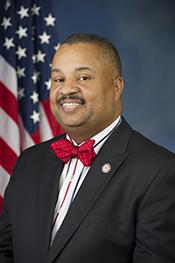
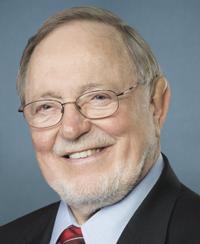
Today I want to thank the Natural Resources Committee Chairman Doc Hastings, who is from Washington. He understands the West, and he understands the outdoors. His leadership on this issue was essential, as well as that of the Congressional Sportsmen's Caucus cochairmen Bob Latta from Ohio and Bennie Thompson from Mississippi. Both of these men met with me and the committee early on to make sure that we would be prepared for their bills that would come to the floor as a package, with the understanding that on a bicameral, bipartisan basis, we would move this legislation.
I urge my colleagues to vote ``yes'' on the rule and ``yes'' on the underlying legislation.
I reserve the balance of my time.
Madam Speaker, I yield myself such time as I may consume.
I appreciate the gentleman from Massachusetts in not only his arguments, many of which were made in the Rules Committee last night as we properly went through, I believe rather meticulously, in answers to what the gentleman brought up. It is important to note that three Democrat amendments were withdrawn. One Democrat amendment was not germane, and several other Democrat amendments I think we effectively said they will be tackled either in another piece of legislation or, because they are a larger bill that needs to be heard by the committee, updated. And, in fact, the land bill is set to be done next year, 2015, with its expiration. The chairman of the committee, the gentleman from Washington, Doc Hastings, very meticulously covered his thoughts and ideas about that. And he told the Rules Committee that, in fact, he did believe that it would need to be updated on a bipartisan basis.
Doc Hastings, as the chairman, also stated that the majority of his bills that he had brought to the committee, at least under his chairmanship, were done on a bipartisan basis, where there was an agreement within the committee to move the bills, and while there may be disagreements about all the parts of the legislation, that they garnered respect from each other out of their committee. It was not the Republican leadership. In fact, it was the Rules Committee that made the decision based upon testimony that they heard upstairs, listening to the committee chairman, understanding the committee's thoughts and ideas, and then moving appropriately.
The gentleman from Massachusetts does make other points about jobs bills. And I would point to a Congressional Budget Office, nonpartisan CBO report that came out today that talks about the effects of a new update about the Affordable Care Act, which is known, as President Obama alluded to here, as ObamaCare. The word ``ObamaCare,'' when used in that context, will push the equivalent of about 2 million American workers out of the labor market by 2017 as employees decide either to work fewer hours or to drop out altogether, according to the latest estimates from the Congressional Budget Office.
They said that there is a major jump in the nonpartisan agency's projection. It suggests that the health care law's initiatives and the incentives in it are driving business and people to choose government- sponsored benefits rather then work.
CBO estimates that the ACA will reduce the total number of
hours worked, on net, by about 1.5 to 2 percent during the
period from 2017 to 2024, almost entirely because workers
will choose to supply less labor--given the new taxes and
other incentives they will face and the financial benefits
some will receive.
CBO analysts wrote this in their new economic outlook.
They further stated that the rollout problems with the Affordable Care Act, known as the ACA, last year will mean that only some estimated 6 million people will sign up through the State-based exchanges, rather than the 7 million that the CBO had originally said would sign up.
What this means is that the laws that were passed as a result of President Obama, Nancy Pelosi being Speaker of the House, and Harry Reid being the Senate Majority Leader, they passed laws which are substantially reducing the number of people who actually work in America. There was a net some 230,000 people that lost their job this last month. The Affordable Care Act continues to be the number one reason why American businesses and small business employers do not hire more workers in this country.
The gentleman is correct that the Democrat leadership as well as ranking members from the Ways and Means Committee and the Budget Committee have approached the Rules Committee and asked for us to extend by 1.3 million people the number of people who would be extended long-term benefits.
I had a discussion with both Sandy Levin of the Ways and Means Committee and Chris Van Hollen, the ranking member at the Budget Committee, and told them that the Republican Party in the House of Representatives has, since the President initiated this action and it was passed in the House, that we saw where there would be millions of people who would lose their jobs, that we would have unemployment at the numbers that we have, and that there is not one unintended consequence in this. These were well known, they were well understood. They were simply ignored by Democrats and the media as a possible probable outcome.
So I told both these gentlemen when they came to the Rules Committee that I would be very pleased to engage with them on a private basis, as a Member of Congress and them as a Member of Congress, on a way that we could add 1.3 million jobs if we were going to extend the unemployment compensation.
I believe it is immoral for this country to have as a policy extending long-term unemployment to people rather than us working on the creation of jobs. A job is the most important attribute, I believe, in a free enterprise system of a person, a family circumstance--for a husband, a wife, children when they are able at the appropriate age--to be able to have a job, to learn to take care of themselves, to be able to meet their needs, to be able to become engaged in their community and have self-respect enough to know that jobs are important.
I think too much time we have been hung up on--instead of the creation of jobs, we talk about the symptoms that are related to-- unemployment and long-term unemployment. In this case, the President of the United States thoughtfully articulates the need for us to make sure we help people, but I believe he errs on the side of not pushing jobs bills, coming to the table as the President--as he said he would when he was a candidate, as he should as President--of working with Republicans and Democrats on well-understood ways that you create more jobs.
The President has chosen not to do this. It continues to be a 5-year pattern. I would note that when we had many of these same issues, or similar, when President Clinton was in office, he worked with Republicans. Granted, they were Republican ideas: balance the budget, welfare reform, cutting taxes, reducing rules and regulations. I do admit that is a complete Republican agenda. But we saw where one Democrat President joined with Republicans to work for a great opportunity for us to grow our economy, to face down other nations who were willing to not only grow their economies at our expense, but to add American workers and a brighter future for all Americans.
The Republican Party House leadership--Speaker John Boehner and Majority Leader Eric Cantor--have repeatedly stood at this podium for 5 years, and we have a constant theme, and that is: let's work together, not on raising taxes, not on more rules and regulations, not on job- killing health care ideas, but, rather, initiatives that the private sector--CEOs, small business leaders--say will help them to understand better the things that they need to go employ Americans.
Instead, the Democrat majority chose to do a bill, the Affordable Care Act, that at that time more than 55 percent of Americans opposed. We were told wait until you learn about it, you are going to love this; not just read it to learn what is in it, but the longer that you have it out there, it is going to be a real attribute.
Well, let me tell you what. We are going to find out this October when, instead of 8 million Americans are going to lose their health care and have to make decisions, there are going to be 80 million people. It will be at that time, or perhaps slightly before, when the American people will understand it was one party, one group of people-- they are called the Republicans--who tried to warn us, who tried to hold some 47 individual votes on individual pieces of the Affordable Care Act that ruin employment, that make taxes even higher and move jobs overseas.
This is why the Republican Party is here today moving this bill. We will be here with a water bill tomorrow on the floor, and we will continue down the pathway of showing the differences of what we are for. We are for the American worker. We are for growing jobs. We believe the GDP is an embarrassment, and we believe that unemployment is immoral and we should add jobs.
So I am going to join my colleague Sandy Levin and my colleague Chris Van Hollen, and we are going to see if we can craft something that we would have on this floor. But it has got to net add over a million jobs, because that is what America needs, a real answer, not rhetoric.
I reserve the balance of my time.
I yield myself such time as I may consume.
Madam Speaker, I have great respect for the gentlewoman from Florida. I would like to affirm that she has come to the Rules Committee and that it is the Rules Committee that has been pondering these questions and will continue to.
The Rules Committee, as of several weeks ago, attempted to work with--on a bipartisan basis--the Financial Services Committee, and there were not agreements that were done there on a bipartisan basis, so I think the committee of jurisdiction needs an opportunity to be able to faithfully look at it and to come up with an answer. I think a backstop would be as the Senate has done, which is simply to delay things for 4 years because of this government's inability to effectively do what they were tasked with doing.
Notwithstanding, I very much appreciate the gentlewoman and her constant comments, not just to me but also to members of the Rules Committee, in order for us to understand that we do have to come up with an answer on this. I wish today were that answer. We will continue to work at it, and I appreciate the gentlewoman very much for her continued insistence with me. I have also told one of my and her colleagues--the gentleman from Florida (Mr. Hastings)--as well as members of the Rules Committee that, on the Republican side, we will continue to work on this, and I expect us to be successful.
I reserve the balance of my time.
Madam Speaker, I continue to reserve the balance of my time.
I yield myself such time as I may consume.
Madam Speaker, in fact, once again, the gentlewoman from Los Angeles, I believe, represents a truth. We need to get this done.
I think the committee last year, as I recall, began a process of re- looking at it, of trying to work through this issue. It is my belief and hope--and I have told members of the committee--that I intend to stay after this, but the Financial Services Committee does have the jurisdiction, and we are looking for an answer rather quickly.
I will continue to work with the gentlewoman from Los Angeles. I will continue to work with the gentleman from Florida, Judge Hastings, and I will continue to work with Ms. Castor from Tampa on this issue. I know that my dear friend from New York, Congressman Meeks, has spoken with me a number of times about this.
So it is my hope that the Financial Services Committee will come with a recommendation--with a piece of legislation--on a bipartisan basis so that we can address this, and we will wait until that is accomplished. That is what I have told members of the committee. That is my hope, and I will continue to be engaged in this.
I reserve the balance of my time.
Madam Speaker, I reserve the balance of my time.
Madam Speaker, I yield myself such time as I may consume.
I appreciate the gentleman from New Jersey, my dear friend, who joins with others of his colleagues who, in fact, most politely and appropriately have brought this issue to the Rules Committee.
I will tell you that there was an assertion made a minute ago that I was unaware of, and that was a jurisdictional issue that evidently the Rules Committee does have. I have tried to be forthright with this the whole time, and I believe it is the right thing for the men and women of the Democratic Party and the Republican Party who have approached me. I have consistently tried to invoke myself into the process with an answer, through the committee, which I thought was solely the committee of jurisdiction.
I will look at the gentleman from Massachusetts and the gentleman from New Jersey, both very dear friends, who see me every day. I am not trying to evade. I am not trying to obfuscate. I am not trying to pass the buck on this. I have indicated I will be willing to be a part of this compromise. I will look back at the gentleman, my friend, Mr. Pascrell, and tell him I am personally involved in this. I will continue to be involved.
I am delighted that the Senate came up with their answer, which was a short-term answer, not a fix. I believe that there is a fix that is trying to be looked at right now--one which I think is more amenable to the circumstance. If that effort fails, I will continue to stay in touch with not only the ranking member of the committee, Ms. Slaughter, who has pressed me also, but also with my friends who have approached me today.
I will very respectfully acknowledge that what they are doing here today in coming to the floor to do this is appreciated. What I would say to them is I don't know that voting against the rule, believing they are going to take this down, would get this process done. It is not included in the rule. But I will tell each of my friends that are here today that I am going to continue to work on this, and I intend to have an answer quickly.
I reserve the balance of my time.
Madam Speaker, I yield myself such time as I may consume.
The gentleman from Louisiana is most accurate when he describes the problems which are associated with the way FEMA has initiated this process.
I will not sit here and beat anyone up over what they did or did not do. I recognize that I have disagreements myself. I have disagreements with myself, as a Member of Congress from Dallas, Texas.
What I would say to the gentleman--and he is sitting right next to the ranking member of the Financial Services Committee--these are issues that have to be resolved, and they are larger, I believe.
What you have heard me say today, I think they are trying to look at solving more than just the extension problem. They are trying to solve some problems. I could be wrong about that. I am not in the negotiation; I am around the negotiation.
But the gentleman, most assuredly, has come to the floor today for the right reason, I believe, with a pretty good message. Everybody is impacted that lives in these areas. We don't need to say one group of people or another or people that live in high-rises or low-rises.
What we do need to say is--and acknowledge, and I do--that each of my colleagues--I have been approached by colleagues on the Republican side and the Democrat side. I intend to stay after this issue, and I respect the gentleman for the way he approached it today, and I owe him. I am looking at him right in the eye. I owe him an answer on this too. I am part of the problem, just as he is, and we have got to find a solution.
Madam Speaker, I reserve the balance of my time.
Madam Speaker, I yield myself such time as I may consume.
Madam Speaker, with great respect to the gentleman, I would, once again, offer an explanation, and that is that what they are talking about with this motion to recommit is not germane to the bill and would not go back to the committee of jurisdiction and so, by voting against what would be the rule or for a motion to recommit, would not accomplish what the gentleman is trying to do.
That is why I have tried to take, Madam Speaker, as I have tried meticulously, with speaker after speaker, my friends, my colleagues that have a strong opinion about this, I have tried to say to them that I do recognize that, while I don't believe I have the jurisdictional elements within the Rules Committee, that I will continue to work on this, and believe that there can be an answer.
So I would respond back to the gentleman from Los Angeles and tell him, thank you for coming to the floor, but an answer for this really needs to come from the committee, that we need to then work through the Rules Committee and get it on the floor. I am committed to that entire process and will continue to do that.
I thank the gentleman from Los Angeles, my friend, for him taking time to come down, but I don't want him to believe that, by winning a vote on the motion to recommit, that it will have any impact on that endeavor.
Madam Speaker, I reserve the balance of my time.
I thank the gentleman. I have no further requests for speakers either.
Madam Speaker, I yield myself the balance of my time.
Madam Speaker, I will, once again, do the very best that I can and, with great respect and appreciation to my very dear friend from Massachusetts--who has been a part of, since I recall at least early December, the discussion in the Rules Committee with the gentleman, his colleague, my colleague, from Florida (Mr. Hastings)--Judge Hastings pushed this issue appropriately. The members of the committee from Florida have graciously pushed that issue forward.
The bottom line is that I believe the gentleman and I need to meet to speak about the jurisdiction that he refers to. The jurisdiction that I believe that the Rules Committee has is not related to the policy. The policy, which is what the provisions that are contained within the problems that we are talking about today, the policy issues are within the jurisdiction of the Financial Services Committee.
Today, we are on the floor of the House of Representatives with a rule with the jurisdiction to the Natural Resources Committee. The motion to recommit is not germane to the Natural Resources Committee.
So voting, or believing that you could, through a motion to recommit, winning that, and getting this bill on the floor through the previous question is simply not something that I believe is realistic, or something that we should even suggest to people that would happen.
What we are talking about today is a bill with the jurisdiction through the Natural Resources Committee, and I would like to confine my remarks now on the bill that is before the House.
Madam Speaker, I have had the pleasure of growing up as a lifelong Texan but had the opportunity to visit and live in other States in our great United States.
I have had an opportunity to visit national parks, national lands, land that is owned by all the American people. As an active Eagle Scout, and the father of two Eagle Scouts--and my father is an Eagle Scout--we have been in national parks all over this country.
That is what this legislation is about today. It is about national parks and the use therein. Some number of bills that have been cobbled together, yes, they were cobbled together so that we could come up with a policy, a policy that is trying to be worked on through a group of men and women here in the United States House of Representatives on a bipartisan basis, as well as a bicameral basis.
We had an understanding that we would try and do this about this week early last year. So I want you to know that what we are doing is bringing forth a bill which is important to people in how they deal with their families' recreation, as well as the importance of vital economic help to various areas of the United States.
I have witnessed the educational and recreational opportunities that we are talking about today, and they possess near limitless opportunities for not only my generation but the next generation of Americans who want to enjoy America.
I think that we, today, by this bill, have given us a refreshed new opportunity, on a bipartisan, bicameral basis, to address that issue. That is why I support increasing access to public lands for hunting, fishing, and recreational shooting, so others may have this same opportunity.
So I am a ``yes'' and would encourage my colleagues to be ``yes'' on what the legislation is about today, not something that is not germane and another issue, which I have tried to appropriately address here today. It is urgent, but that is not what we are doing right here right now.
I urge my colleagues to vote ``yes'' on the rule, ``yes'' on the underlying legislation, and to be a part of moving this bill to the Senate, then on to the President's desk.
Madam Speaker, I yield back the balance of my time, and I move the previous question on the resolution.