Mr. Speaker, by direction of the Committee on Rules, I call up House Resolution 515 and ask for its immediate consideration. Mr. Speaker, for the purpose of debate only, I yield the customary 30…
Mr. Speaker, by direction of the Committee on Rules, I call up House Resolution 515 and ask for its immediate consideration.
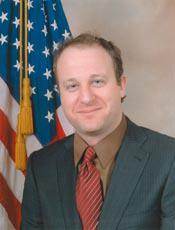
Mr. Speaker, for the purpose of debate only, I yield the customary 30 minutes to the gentleman from Colorado (Mr. Polis), pending which I yield myself such time as I may consume. During consideration of this resolution, all time yielded is for the purpose of debate only.
General Leave
Mr. Speaker, I ask unanimous consent that all Members have 5 legislative days to revise and extend their remarks.
Mr. Speaker, House Resolution 515 provides for consideration of H.R. 3189, the Water Rights Protection Act, under a structured amendment process, making in order three amendments and providing for extra time for debate for the substitute amendment, which will be offered by Mr. Polis.
The rule also provides for the consideration of H.R. 4015, the SGR Repeal and Medicare Provider Payment Modernization Act of 2014 with one amendment, offered by Chairman Camp from the Ways and Means Committee, being self-executed in order to ensure that the legislation has a valid pay-for.
This is necessary so that the bill before us does not run afoul with the majority's rule on CutGo. As is customary, the rule allows the minority to offer a motion to recommit on each bill. Finally, the rule provides for the customary district work period authority.
H.R. 3189, the Water Rights Protection Act, addresses a concern of a number of our Western State colleagues who have experienced the Federal Government threatening to take over the private water rights of businesses and private citizens held on public lands.
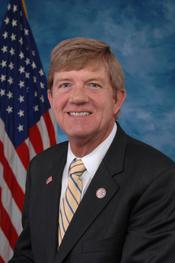
The bill, sponsored by Representative Scott Tipton from Colorado, is a bipartisan effort to protect water supplies and property rights designated for recreation, agriculture, local conservation, and municipal use from Federal Government overreach.
The bill protects water users and upholds State water laws by prohibiting Federal agencies from extorting water rights through their use of permits, leases, and other land management arrangements.
If the floor debate on this bill is anything like the debate which members of the Rules Committee observed last night, this discussion will be spirited, as this issue deeply affects Western States, where so much of their land is controlled by the Federal Government.
The second bill, H.R. 4015, the SGR repeal legislation, is an issue that I have worked on my entire congressional career. It reflects years of bipartisan, multicommittee, bicameral discussions and negotiations, bringing together Members of all ideological stripes, as well as those from the outside, to coalesce around a policy to help patients and to help their care providers get out from under the constant threat of payment cuts under the current sustainable growth rate structure for Medicare payments.
Everyone agrees, Mr. Speaker, that the Medicare sustainable growth rate has got to go; but today, we are considering an actual framework to realistically accomplish that goal.
This formula--the sustainable growth rate formula--was enacted as part of the Balanced Budget Act of 1997 in an ultimately misguided means by which to restrain Federal spending in Medicare Part B.
The formula consists of expenditure targets, which are established by applying a growth rate, which is designed to bring spending in line with the expenditure targets over time.
Since 2002, this formula has called for a reduction to physician reimbursement rates. However, every Congress has consistently passed legislation to override this formula. This has led this body to find over $150 billion with no solution out of this annual mess.
If Congress were to let the SGR go into effect, physicians would face a 24 percent reduction in reimbursement rates in just a few weeks' time. This unrealistic assumption of spending and efficiency have plagued the health care profession and our Nation's seniors.
The bill before us repeals the SGR--let me repeat that because it is so important--this bill repeals the sustainable growth rate formula, avoiding potentially devastating across-the-board cuts slated for 2014 and does so at a cost far lower than what Congress has already spent or would likely spend over the next 10 years' time.
The bill provides for 5 years of payment transition, essential to allow us to ensure continued beneficiary access, to allow medicine to concentrate on moving to a broad adoption of quality reporting, and allow Congress to move past the distraction of this formula to identify Medicare reforms that can further benefit beneficiaries.
This bill will also allow providers the time to develop and the time to test quality measures and clinical practice improvement activities, which will be used for performance assessment during other phases of this bill. During the 5-year stability period, physicians will receive annual increases of \1/2\ of 1 percent.
I know, I can hear it already. That is not very much. Correct, it is not; but it is more in aggregate than what has been provided over the last several years. More importantly, it provides that stability so physician offices can plan and plan ahead on how to take care of their patients.
The quality measures implemented in what is called the Merit-Based Incentive Payment System will be evidence-based and developed through a transparent process that will seek input from provider groups, from patient groups, and from other stakeholders.
Quality reporting will involve a provider's being judged against its practice rather than a one-size-fits-all, generic standard of care that does not take into account the unique practices of various specialty providers.
Providers will also self-determine their measures. We consolidate three reporting programs into the Merit-Based Incentive Payment System, easing the administrative burden on doctors while retaining the congressionally established goals of quality, resource use, and meaningful use.
The new reimbursement structure ensures continued access to high- quality care while providing physicians with certainty and security in their reimbursements. Physicians will be aware of the benchmarks they are competing against, and unlike current law, all penalties assessed from those not meeting the benchmarks will go to those who are. This keeps the dollars
in the Medicare system, and that, ultimately, drives the quality, which benefits Medicare patients.
Standards against which providers will be measured will be developed by professional organizations in conjunction with existing programs and will incorporate ongoing feedback to doctors, thus further ensuring that optimal care is ultimately provided to the patient.
Realtime feedback will be gained through registries and performance data, and doctors are encouraged to participate in the process through data reporting. For eligible professionals who choose to opt out of the fee-for-service program, alternative payment models will be available. These alternative models may include patient-centered medical homes, whether they are primary or specialty models, and bundles or episodes of care. By encouraging alternative payment models, care coordination, and disease management, our proposed solution will inspire innovation. Qualifying practices that move a significant number of their patients into one of these alternative payment methods will see a 5 percent quality bonus. The bill will also take affirmative steps to improve the accuracy of relative values and misvalued services.
But even though we are taking these important steps toward ensuring quality care, the bill specifically states that these quality measures are not creating a Federal right of action or a legal standard of care or a duty of care owed by the health care provider to the patient.
Mr. Speaker, we have had a lot of discussion. I know my friends on the other side of the dais may disagree with having to pay for new spending, but this is an important reform that Republicans put in place when they reclaimed the majority after the 2010 elections. If you want to increase mandatory spending, you should reduce mandatory spending elsewhere. This is a simple concept, and I know that my constituents and many Americans agree with this.
The Democrats' substitute highlights the difference between the parties on this issue. Democrats have embraced a budget gimmick to offset their bill, a gimmick that even the nonpartisan Congressional Budget Office has said is not scorable. There is no way that it will pay for anything, because the score is zero.
Republicans want to reform Medicare and the payment system in a responsible way and do so in a way that is paid for. If my colleagues on the other side can find a legitimate offset, I am happy to review it. In fact, this is exactly what we are asking of the United States Senate. You don't like our offset. Offer one of your own, and let's work together to pass these much-needed reforms.
This bill is consistent in its themes throughout. We provide payment stability, reduce and streamline the administrative burden, increase predictability in doctors' interactions with the Centers for Medicare and Medicaid Services, build transparency into systems, encourage innovation and the delivery of services, and keep providers in the driver's seat.
I encourage my colleagues to vote ``yes'' on the rule and ``yes'' on the underlying bills.
I reserve the balance of my time.
Mr. Speaker, I yield myself 1 minute to respond to some of this, just to put things in context on a timeline.
H.R. 4015 was introduced on February 6, 2014. The bill has been available to all Members and the public for more than a month. The bill is cosponsored by the bipartisan chairs and ranking members of the Committees on Energy and Commerce, Ways and Means, and the Senate Finance Committee.
We are recommending no changes to the underlying substance of H.R. 4015, which has been negotiated on a bipartisan basis.
I do believe that providing offsets for new spending is an appropriate course of action. Therefore, the Camp amendment saves almost $170 billion over the next 10 years, and this rule ensures that we aren't making future generations foot the bill.
I yield 4 minutes to the gentleman from Colorado (Mr. Tipton).
Mr. Speaker, may I inquire as to the amount of time that remains.
Thank you, Mr. Speaker.
I yield myself 2 minutes.
I wanted to just list some of the exemptions from the individual mandate--those passed in a bipartisan manner by the House of Representatives and those instituted by executive action by the President:
July 17, we delayed the individual mandate until 2015. Twenty-two Democrats voted in favor of that.
March 10, 2014, delayed the individual penalty for individuals who fail to have health care coverage. Twenty-seven Democrats voted in favor.
March 11, H.R. 1814, exempted individuals with certain religious beliefs. Passed by a voice vote. Not a single dissenting vote.
March 11, we exempted volunteer firefighters and emergency responders from the individual mandate. The vote was 410-0. 186 Democrats voted in favor.
March 11, we exempted individuals who receive health coverage under TRICARE, VA, from being counted towards the employer mandate under the ACA. 183 Democrats voted in favor of that exemption.
This is not something that is exclusive to the House of Representatives.
Just last week, the administration quietly excused millions of people from the requirement to purchase health insurance or else pay the tax. Now all you need to do is fill out a form attesting that your plan was canceled and you believe that the plan options available in the marketplace in your area are more expensive than your canceled insurance policy. You believe that to be true. You don't have to prove it. You believe it to be true. It is self-attestation. So the President has already delayed the individual mandate for another 2 years' time.
This is a reasonable proposal, what is out there today. Yes, doctors do need relief, but we need to pay for that. I believe the proposal before the Congress today will do just that.
Mr. Speaker, I reserve the balance of my time.
Mr. Speaker, I yield myself 2 minutes.
Mr. Speaker, again I remind the body that this language, this compromise, this bipartisan, bicameral compromise has been available for all to see since February 6. During that time, what response have we gotten from the United States Senate as the responsible way to pay for this legislation? Crickets. Zero. Nothing.
We are offering this bill today with the pay-for that has been embraced by both sides in a bipartisan fashion, as I have demonstrated to you already. This would not be necessary if the Senate had provided us feedback on what their approach to a method of paying for this legislation would be, but they did not.
We know the chairman of the Senate Finance Committee, the Finance Committee in the other body, the chairwoman has now gone to a different occupation, so there is a new chairperson in the other body on the Finance Committee, but that shouldn't have been an obstacle. There was a way forward to provide the discussion, a preconference conference, if you will, because we had all agreed on the policy. This was not a mystery. This was not something that one body had done in secret. This had all been done out in the open for the past 2 years. So that pathway was available.
But for whatever reason, the other body said no deal. We don't want to deal with the House. We want to jam the House at the last minute and get them to accept something. Or better yet, let's just do another patch and get us past our Election Day. That is a very cynical approach.
Mr. Speaker, today before us on the floor we are taking a responsible approach. And guess what. Because we have taken this approach, the Senate is now talking once again about their way forward, which, ultimately, I think is a good thing.
Mr. Speaker, I reserve the balance of my time.
As the gentleman from Colorado knows, I am capable of filling whatever volume of time remains on my own, but, no, I don't see other speakers seeking recognition.
I would inquire of the gentleman from Colorado his status of additional speakers.
I am prepared to close.
Mr. Speaker, I yield myself the balance of the time.
Mr. Speaker, I do want to direct Members' attention to yesterday's Wall Street Journal, the article entitled ``ObamaCare's Secret Mandate Exemption,'' which goes into some detail about the self-attestation for the so-called hardship exemption, which the administration included as part of an unrelated rule last week.
As a consequence, there is an exemption from the individual mandate for the next 2 years for anyone who simply wants to go and say: I am sorry; this is too tough for me to do.
Mr. Speaker, today's rule provides for the consideration of two important bills, one dealing with critical water rights and the other addressing the serious problem in the Medicare Sustainable Growth Rate.
I certainly want to thank the gentleman from Colorado (Mr. Tipton) on H.R. 3189, as well as thank the chairmen and the ranking members of the House Committees on Energy and Commerce and Ways and Means, as well as the Senate Finance Committee, for coming together for our Nation's doctors and seniors.
As I close, I would like to note that each committee's work is represented in H.R. 4015. H.R. 4015's base policy has the backing of the House and Senate negotiators and all three committees of jurisdiction. The original cosponsors of the bill include the chairmen and the ranking members of the full committees of jurisdiction, as well as their health subcommittees.
The bill has gained support from the GOP Doctors Caucus, as well as many physicians on the other side of the aisle. We have over 100 bipartisan cosponsors. The bill's policy has been embraced by organized medicine, with well over 700 State and national groups in support of the bill.
From primary care to specialists to surgeons to organized nursing and everyone in-between, we have support for this policy. We will not be able to accomplish this goal without substantive and immediate bipartisan dialogue seeking agreement on reforms to offset the costs associated with the policies in H.R. 4015.
While the delay of the mandate has received bipartisan support, I understand the problems that arise and the opposition that arises.
These reforms must receive the necessary majority support, not only of the House and Senate, but also be agreed to by the White House. However, no one Chamber can negotiate on such an important task in a vacuum.
This action by the House is a means of clearly demonstrating that the legislative policies contained within H.R. 4015 and S. 2000 not only have the support of the committees of jurisdiction and organized medicine, but can gain the necessary support to pass the House.
Mr. Speaker, this is clearly not the end of this conversation. It is another step--another step of many that have been taken in demonstrating to both sides of the Capitol that the committees of jurisdiction have produced significant policy that can serve as the solution to the sustainable growth rate formula that most of us have sought throughout our congressional careers.
Mr. Speaker, I do want to take a moment to thank some of the staff members who have done so much work. I really wanted to start with Dr. John O'Shea, who no longer is on the staff, but now works at the Brookings Institute.
Dr. O'Shea, a physician from New York, was hired by committee staff for the express purpose of helping develop the policy for repealing the sustainable growth rate. In addition, James Decker
on my staff assists me with rules issues.
J.P. Paluskiewicz, known affectionately by his friends as J.P., has put in extraordinary hours on this project, as have Sarah Johnson and Adrianna Simonelli on my personal staff.
On the committee staff, Clay Alspach and Robert Horne have additionally put in hours well above and beyond what ordinarily would be required of committee staff in order to see this project come to fruition.
I certainly want to thank Chairman Upton for making this a priority during his chairmanship of the Committee on Energy and Commerce; and I thank all of the staff--staff on Ways and Means and staff on Senate Finance--who have worked on this issue and will continue to work on this issue until it is solved.
Every success we have had at every point in this process was further than we have ever come before, and that involved a lot of working weekends; but ultimately, if we use this action to springboard to full bicameral engagement on the package that can go to the White House and get signed by the President, indeed, I think all involved would agree that it would be worth it.
I look forward to passage. I look forward to continuing the process with this Chamber and the other Chamber to embrace the underlying policy and ultimately identify the offsets that can get this badly needed policy into law. I urge my colleagues to support the rule and both underlying bills.
[From the Hill, March 13, 2014]
ObamaCare's Secret Mandate Exemption
ObamaCare's implementers continue to roam the battlefield
and shoot their own wounded, and the latest casualty is the
core of the Affordable Care Act--the individual mandate. To
wit, last week the Administration quietly excused millions of
people from the requirement to purchase health insurance or
else pay a tax penalty.
This latest political reconstruction has received zero
media notice, and the Health and Human Services Department
didn't think the details were worth discussing in a
conference call, press materials or fact sheet. Instead, the
mandate suspension was buried in an unrelated rule that was
meant to preserve some health plans that don't comply with
ObamaCare benefit and redistribution mandates. Our sources
only noticed the change this week.
That seven-page technical bulletin includes a paragraph and
footnote that casually mention that a rule in a separate
December 2013 bulletin would be extended for two more years,
until 2016. Lo and behold, it turns out this second rule,
which was supposed to last for only a year, allows Americans
whose coverage was cancelled to opt out of the mandate
altogether.
In 2013, HHS decided that ObamaCare's wave of policy
terminations qualified as a ``hardship'' that entitled people
to a special type of coverage designed for people under age
30 or a mandate exemption. HHS originally defined and
reserved hardship exemptions for the truly down and out such
as battered women, the evicted and bankrupts.
But amid the post-rollout political backlash, last week the
agency created a new category: Now all you need to do is fill
out a form attesting that your plan was cancelled and that
you ``believe that the plan options available in the
[ObamaCare] Marketplace in your area are more expensive than
your cancelled health insurance policy'' or ``you consider
other available policies unaffordable.''
This lax standard--no formula or hard test beyond a
person's belief--at least ostensibly requires proof such as
an insurer termination notice. But people can also qualify
for hardships for the unspecified nonreason that ``you
experienced another hardship in obtaining health insurance,''
which only requires ``documentation if possible.'' And yet
another waiver is available to those who say they are merely
unable to afford coverage, regardless of their prior
insurance. In a word, these shifting legal benchmarks offer
an exemption to everyone who conceivably wants one.
Keep in mind that the White House argued at the Supreme
Court that the individual mandate to buy insurance was
indispensable to the law's success, and President Obama
continues to say he'd veto the bipartisan bills that would
delay or repeal it. So why are ObamaCare liberals silently
gutting their own creation now?
The answers are the implementation fiasco and politics. HHS
revealed Tuesday that only 940,000 people signed up for an
ObamaCare plan in February, bringing the total to about 4.2
million, well below the original 5.7 million projection. The
predicted ``surge'' of young beneficiaries isn't
materializing even as the end-of-March deadline approaches,
and enrollment decelerated in February.
Meanwhile, a McKinsey & Company survey reports that a mere
27% of people joining the exchanges were previously uninsured
through February. The survey also found that about half of
people who shopped for a plan but did not enroll said
premiums were too expensive, even though 80% of this group
qualify for subsidies. Some substantial share of the people
ObamaCare is supposed to help say it is a bad financial
value. You might even call it a hardship.
HHS is also trying to pre-empt the inevitable political
blowback from the nasty 2015 tax surprise of fining the
uninsured for being uninsured, which could help reopen
ObamaCare if voters elect a Republican Senate this November.
Keeping its mandate waiver secret for now is an attempt get
past November and in the meantime sign up as many people as
possible for government-subsidized health care. Our sources
in the insurance industry are worried the regulatory loophole
sets a mandate non-enforcement precedent, and they're
probably right. The longer it is not enforced, the less
likely any President will enforce it.
The larger point is that there have been so many unilateral
executive waivers and delays that ObamaCare must be
unrecognizable to its drafters, to the extent they ever knew
what the law contained.
With that, I yield back the balance of my time, and I move the previous question on the resolution.