Mr. Speaker, I yield myself such time as I may consume. I rise today in opposition to H.R. 1105, which will create a gaping loophole for private equity fund advisers and deprive investors and…
Mr. Speaker, I yield myself such time as I may consume.
I rise today in opposition to H.R. 1105, which will create a gaping loophole for private equity fund advisers and deprive investors and regulators of important information about the risk these funds pose.
The Dodd-Frank Act wisely required that advisers to all hedge funds, private equity funds, and other private funds register and file regular reports with the SEC. It did this for two reasons: one, to help regulators better understand the systemic risks that these funds pose to the overall financial system, and to provide investors in these funds with meaningful information about the funds' governance.
This bill would exempt nearly every private equity fund adviser from these important disclosure requirements. Some of my colleagues who support this bill will argue that because private equity funds were not the cause of the last crisis, we should not subject them to these modest transparency and accountability requirements.
But one of the most important lessons we did learn during the financial crisis is that systemic threats seem to always bubble up from the opaque and unregulated sectors of the market. Giving this exemption will allow threats to once again grow in the dark corners of our financial system, only showing themselves when it is too late to prevent serious harm to the American taxpayer.
Supporters of this bill, while well-intended, will point to the provision that ensures advisers to private equity funds with leverage ratios over 2:1 will still have to register. This may sound attractive on its surface until you realize that every private equity fund is basically within that parameter. Private equity funds invest in companies, and it is these portfolio companies that
load up on leverage and that have the potential to take on outside risk, piling on the leverage while the private equity fund itself appears on its surface to be modestly leveraged. A private equity fund could have a leverage ratio well below 2:1, while its portfolio companies are leveraged in excess of 30:1 masking the actual risk that these funds pose. Nearly every private equity fund in existence today would come in below the 2:1 leverage cap. This is a hollow limitation that provides no protection to the funds' investors or to the American taxpayer.
Mr. Speaker, we learned the hard way after the recent financial crisis that systemic risks grow in the dark corners of our financial markets and that the more information we can gather about how the markets work, the safer we will be. The registration and reporting requirements for private equity advisers are modest and narrowly tailored, but they provide investors and regulators with important information. Rolling back these reforms now moves us in the wrong direction. I urge my colleagues to oppose H.R. 1105.
I reserve the balance of my time.
Mr. Speaker, I yield myself 1 minute.
I do want to respond to the gentleman's invoking of the SEC chair, Mary Jo White. Judging from the gentleman's remarks, you would think she might be in favor of this bill. Well, let me talk about what she says about this bill in particular:
Our markets would not be well served by narrowing the scope
of the commission's jurisdiction in oversight of these
advisers.
That is with respect to this bill. She also said:
Private equity investors are in need of the same
protections as other private fund investors.
Lastly, she has also said that the commission has brought enforcement actions, talking about the advisability of having oversight over advisers and having these disclosures made:
The commission has brought enforcement actions against
private equity funds and their advisory personnel involving
unlawful pay-to-play schemes, insider trading, conflicts of
interest, valuation, and misappropriation of assets.
I yield myself another 30 seconds.
Now, when you think about the protections that are necessary for pension funds, especially where these workers have invested their whole lives in these pension funds, you understand the need for this disclosure.
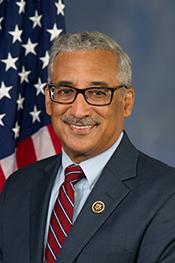
At this time I yield 3 minutes to the gentleman from Minnesota (Mr. Ellison).
I yield the gentleman an additional 1 minute.
I yield the gentleman an additional 20 seconds.
Mr. Speaker, I yield myself 1 minute to respond to some of these allegations.
In respect to sophisticated investors, the Council of Institutional Investors, which is an association representing corporate, union, and public pensions, foundations and endowments, largely very sophisticated investors with combined assets of $3 trillion, opposes this bill. They oppose this bill because of the record of enforcement actions of the SEC to go after risks that do actually exist.
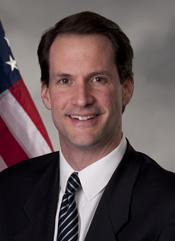
I now yield 3 minutes to the gentleman from Connecticut (Mr. Himes), a cosponsor of the bill.
Mr. Speaker, I yield the gentleman an additional 1 minute.
Mr. Speaker, may I ask how much time is remaining for each side.
Mr. Speaker, at this time I yield 3 minutes to the gentleman from Tennessee (Mr. Cooper).
Mr. Speaker, I yield myself such time as I may consume.
I do want to point out, in response to the gentleman from Tennessee's remarks about this bill going on voice vote in committee, I just want to remind the Members and the public that during that debate there was a need for further work on this bill.
I think, in a moment of bipartisanship, we agreed, both Democrat and Republican, to allow the bill to go by voice vote with the promise to work on some of those issues going forward. So it was an agreement to try to continue to agree and to work on the bill. It was
not a vote in favor of any particular provisions within this bill.
There has been a lot of talk here about the risks that don't exist, and I do want to just point out some of those. As a result of this bill, funds investing more than $300 billion a year, much of which is the retirement savings of workers like teachers, firefighters, police officers, they would no longer be required to provide basic investor protections.
Specifically, H.R. 1105 would deprive investors of basic disclosures about an employee of a fund adviser who, for instance, violated securities law, or the adviser's businesses practices, its fees, any conflict of interest on the part of that adviser.
It would also eliminate a compliance program and code of ethics within the bill, within Dodd-Frank, and would eliminate the need for a chief compliance officer for each fund manager.
H.R. 1105, the bill under consideration here, would also prevent the SEC from conducting compliance exams of private equity fund adviser, even though SEC Chairman Mary Jo White notes that the Commission has already uncovered issues such as unlawful pay-to-play schemes, insider trading that we have all read about recently, conflicts of interest, valuation issues, and misappropriation of assets.
I want to talk about some of these since there has been a complete dismissal of any risk here. I think the record speaks to the risk.
The SEC has brought several enforcement actions against private equity firms. While the defendants do not necessarily represent all private equity firms, they do highlight the need for a strong police officer with the authority to examine all private equity advisers.
Capital formation relies on investor confidence in the underlying assets; and without registration with the SEC, investors will no longer have a cop on the beat that can enforce the rule of law, reducing investor demand.
In Knelman, for example here, there have been broad violations related to fraud, custody, compliance, and reporting. In Knelman Asset Management Group, the SEC found that registered private equity fund-of- funds adviser Knelman Asset Management Group, LLC, and Irving P. Knelman, KAMG's managing director, chief executive officer, and former CCO, violated the Advisers Act's custody, antifraud, compliance, reporting, and books-and-records provisions.
In insider trading enforcement, the Gowrish insider trading case involved an individual who allegedly stole confidential acquisition information, TPG Capital, and sold that information to two friends who made $500,000 in illicit trading profits.
Valuation related enforcement actions, the Oppenheimer/Brian Williamson matters concern an investment adviser and portfolio manager who misrepresented material details about his valuation methodology to his investors.
Recently, the Commission filed a case against Yorkville Advisors, where Yorkville allegedly inflated the values of certain liquid assets. While Yorkville managed hedge funds, the valuation issues are very similar to ones we see in private equity.
Finally, the KCAP valuation case involved alleged overstatements of the value of certain debt securities and CLOs held in the investment portfolio, highlighting the division and AMU's emphasis on pursuing valuation cases.
And in the Ranieri Partners case, the SEC also found that an investment manager knowingly used a sanctioned, unregistered broker- dealer to solicit capital for a pooled investment vehicle.
So all of these illegal activities would be made unavailable to private equity investors under this bill. That is what the risk is. That is not fiction. Those are actual cases that the SEC has introduced enforcement actions on. So there is real risk here for investors and for the markets themselves.
Mr. Speaker, I reserve the balance of my time.
Mr. Speaker, I yield myself 2 minutes.
We need not worry about small firms in this. They are already exempt under this bill. They are already exempt. So the concerns about small firms being covered by this, they are already exempt, number one.
Number two, the other scenario that has been posited here is that somehow, by allowing private equity firms the right to keep secret--or to refuse to disclose that their employees have been prosecuted for violating securities laws, by allowing that to remain undisclosed, that somehow that is going to help some single mom go to work, I don't think that is a rational assumption.
Mr. Speaker, I will now enter into the Record letters from the following organizations who are all opposed to this bill: Americans for Financial Reform, the Council of Institutional Investors, the North American Securities Administrators Association, and a Statement of Administration Policy from the Obama administration.
I reserve the balance of my time.
Americans for
Financial Reform,
Washington, DC.
Dear Representative: On behalf of Americans for Financial
Reform, we are writing to express our opposition to HR 1105.
Contrary to its title, this bill is not designed to benefit
small business. Instead, it would exempt private equity fund
advisers--who include some of the wealthiest and most
significant entities on Wall Street--from basic reporting
requirements designed to help regulators
monitor systemic risk in the financial system and protect
investors and the public.
Prior to the Dodd-Frank Act, hedge and private equity funds
received almost no regulatory monitoring, despite the fact
that combined they manage some $3 trillion in assets and
played a significant intermediary role in the financial
crisis. Section 404 of the Dodd-Frank Act created more
transparency for this previously dark portion of the markets,
by requiring advisers to hedge and private equity funds to
report basic financial information relevant to systemic risk
to the Securities and Exchange Commission (SEC). The
experience of the 2008 crisis--where risks emerged from parts
of the markets not being monitored by regulators--clearly
demonstrates the importance of ensuring that regulators can
track financial risks wherever they originate.
The Section 404 reporting requirements as implemented by
the SEC are far from onerous. All advisers with below $150
million in assets under management are completely exempted,
and advisers with up to $1.5 billion in assets under
management must report only limited and basic information
once per year. Advisers to large private equity funds are
required to respond only once per year (advisers to other
large funds report quarterly).
HR 1105 would exempt almost all private equity fund
advisers from reporting requirements to the Securities and
Exchange Commission. The sole requirement for the exemption
is that the fund must not have outstanding borrowings that
exceed twice the fund's invested capital. But this
requirement places little if any real limitation on the
exemption, since the great majority of borrowing connected
with private equity activity is conducted through portfolio
companies, not at the fund level. (That is, companies owned
by private equity funds borrow large amounts as the direction
of the fund, but the fund itself rarely borrows a great
deal).
It is particularly distressing that Congress would consider
granting this exemption at a time when concern is growing
among regulators and market observers about risks created by
a possible bubble in the leveraged loan market, which is
dominated by loans sponsored by private equity firms. Several
warnings have been issued recently by regulators concerning
the risks being created in these markets. As Moody's
investor's service has stated:
``Private equity firms have been exploiting investors''
willingness to lend to speculative-grade companies . . .
Higher yields are drawing investors to riskier structures at
a time when interest rates remain at historical lows.''
Since leveraged loans are also being sold to small retail
investors, a bubble could impact both the stability of the
broader financial system and the retirement savings of retail
investors. The situation in the leveraged loan market clearly
demonstrates the connection between private equity activity
and important risks to financial stability and to investors.
An additional source of concern is the danger that the
exemption granted in HR 1105 could too easily be exploited to
reach beyond private equity firms alone. The distinction
between a hedge fund and a private equity fund is not a
formal legal distinction, it is simply a differentiation
between general investment strategies. While HR 1105 grants
the SEC the ability to define more precisely what a private
equity fund is, if that definition is at all overbroad then
it could be taken advantage of by a wide range of hedge funds
in order to avoid oversight.
Private equity funds already receive significant subsidies
through the tax system, as they are major beneficiaries of
the favorable treatment for `carried interest', as well as
the general tax subsidy to debt costs. It is totally
inappropriate to also grant such funds a blanket exemption
from even the limited and basic Dodd-Frank regulatory
reporting requirements. Such a blanket exemption would make
it more difficult for regulators to monitor systemic risk and
risks to investors, solely in order to exempt wealthy
managers of large private equity funds from a minor
administrative task. HR 1105 should be rejected.
Thank you for your consideration. For more information
please contact AFR's Policy Director, Marcus Stanley.
Sincerely,
Americans for Financial Reform.
Following Are the Partners of Americans for Financial Reform
All the organizations support the overall principles of AFR
and are working for an accountable, fair and secure financial
system. Not all of these organizations work on all of the
issues covered by the coalition or have signed on to every
statement.;
A New Way Forward; AFL-CIO; AFSCME; Alliance For Justice;
American Income Life Insurance; American Sustainable Business
Council; Americans for Democratic Action, Inc; Americans
United for Change; Campaign for America's Future; Campaign
Money; Center for Digital Democracy; Center for Economic and
Policy Research; Center for Economic Progress; Center for
Media and Democracy; Center for Responsible Lending; Center
for Justice and Democracy.
Center of Concern; Center for Effective Government; Change
to Win; Clean Yield Asset Management; Coastal Enterprises
Inc.; Color of Change; Common Cause; Communications Workers
of America; Community Development Transportation Lending
Services; Consumer Action; Consumer Association Council;
Consumers for Auto Safety and Reliability; Consumer
Federation of America; Consumer Watchdog; Consumers Union.
Corporation for Enterprise Development; CREDO Mobile; CTW
Investment Group; Demos; Economic Policy Institute; Essential
Action; Greenlining Institute; Good Business International;
HNMA Funding Company; Home Actions; Housing Counseling
Services; Home Defender's League; Information Press;
Institute for Global Communications; Institute for Policy
Studies: Global Economy Project.
International Brotherhood of Teamsters; Institute of
Women's Policy Research; Krull & Company; Laborers'
International Union of North America; Lawyers' Committee for
Civil Rights Under Law; Main Street Alliance; Move On; NAACP;
NASCAT; National Association of Consumer Advocates; National
Association of Neighborhoods; National Community Reinvestment
Coalition; National Consumer Law Center (on behalf of its
low-income clients); National Consumers League; National
Council of La Raza.
National Council of Women's Organizations; National Fair
Housing Alliance; National Federation of Community
Development Credit Unions; National Housing Resource Center;
National Housing Trust; National Housing Trust Community
Development Fund; National NeighborWorks Association;
National Nurses United; National People's Action; National
Urban League; Next Step; OpenTheGovernment.org; Opportunity
Finance Network; Partners for the Common Good; PICO National
Network.
Progress Now Action; Progressive States Network; Poverty
and Race Research Action Council; Public Citizen; Sargent
Shriver Center on Poverty Law; SEIU; State Voices; Taxpayer's
for Common Sense; The Association for Housing and
Neighborhood Development; The Fuel Savers Club; The
Leadership Conference on Civil and Human Rights; The Seminal;
TICAS; U.S. Public Interest Research Group; UNITE HERE.
United Food and Commercial Workers; United States Student
Association; USAction; Veris Wealth Partners; Western States
Center; We the People Now; Woodstock Institute; World Privacy
Forum; UNET; Union Plus; Unitarian Universalist for a Just
Economic Community.
List of State and Local Affiliates
Alaska PIRG; Arizona PIRG; Arizona Advocacy Network;
Arizonans For Responsible Lending; Association for
Neighborhood and Housing Development NY; Audubon Partnership
for Economic Development LDC, New York NY; BAC Funding
Consortium Inc., Miami FL; Beech Capital Venture Corporation,
Philadelphia PA; California PIRG; California Reinvestment
Coalition; Century Housing Corporation, Culver City CA;
CHANGER NY; Chautauqua Home Rehabilitation and Improvement
Corporation (NY); Chicago Community Loan Fund, Chicago IL.
Chicago Community Ventures, Chicago IL; Chicago Consumer
Coalition; Citizen Potawatomi CDC, Shawnee OK; Colorado PIRG;
Coalition on Homeless Housing in Ohio; Community Capital
Fund, Bridgeport CT; Community Capital of Maryland, Baltimore
MD; Community Development Financial Institution of the Tohono
O'odham Nation, Sells AZ; Community Redevelopment Loan and
Investment Fund, Atlanta GA; Community Reinvestment
Association of North Carolina; Community Resource Group,
Fayetteville A; Connecticut PIRG; Consumer Assistance
Council; Cooper Square Committee (NYC).
Cooperative Fund of New England, Wilmington NC; Corporacion
de Desarrollo Economico de Ceiba, Ceiba PR; Delta Foundation,
Inc., Greenville MS; Economic Opportunity Fund (EOF),
Philadelphia PA; Empire Justice Center NY; Empowering and
Strengthening Ohio's People (ESOP), Cleveland OH;
Enterprises, Inc., Berea KY; Fair Housing Contact Service OH;
Federation of Appalachian Housing; Fitness and Praise Youth
Development, Inc., Baton Rouge LA; Florida Consumer Action
Network; Florida PIRG; Funding Partners for Housing
Solutions, Ft. Collins CO; Georgia PIRG.
Grow Iowa Foundation, Greenfield IA; Homewise, Inc., Santa
Fe NM; Idaho Nevada CDFI, Pocatello ID; Idaho Chapter,
National Association of Social Workers; Illinois PIRG; Impact
Capital, Seattle WA; Indiana PIRG; Iowa PIRG; Iowa Citizens
for Community Improvement; JobStart Chautauqua, Inc.,
Mayville NY; La Casa Federal Credit Union, Newark NJ; Low
Income Investment Fund, San Francisco CA; Long Island Housing
Services NY; MaineStream Finance, Bangor ME.
Maryland PIRG; Massachusetts Consumers' Coalition;
MASSPIRG; Massachusetts Fair Housing Center; Michigan PIRG;
Midland Community Development Corporation, Midland TX;
Midwest Minnesota Community Development Corporation, Detroit
Lakes MN; Mile High Community Loan Fund, Denver CO; Missouri
PIRG; Mortgage Recovery Service Center of L.A.; Montana
Community Development Corporation, Missoula MT; Montana PIRG;
Neighborhood Economic Development Advocacy Project; New
Hampshire PIRG.
New Jersey Community Capital, Trenton NJ; New Jersey
Citizen Action; New Jersey PIRG; New Mexico PIRG; New York
PIRG; New York City Aids Housing Network; New Yorkers for
Responsible Lending; NOAH Community Development Fund, Inc.,
Boston MA; Nonprofit Finance Fund, New York NY; Nonprofits
Assistance Fund, Minneapolis M;
North Carolina PIRG; Northside Community Development Fund,
Pittsburgh PA; Ohio Capital Corporation for Housing, Columbus
OH; Ohio PIRG.
OligarchyUSA; Oregon State PIRG; Our Oregon; PennPIRG;
Piedmont Housing Alliance, Charlottesville VA; Michigan PIRG;
Rocky Mountain Peace and Justice Center, CO; Rhode Island
PIRG; Rural Community Assistance Corporation, West Sacramento
CA; Rural Organizing Project OR; San Francisco Municipal
Transportation Authority; Seattle Economic Development Fund;
Community Capital Development; TexPIRG.
The Fair Housing Council of Central New York; The Loan
Fund, Albuquerque NM; Third Reconstruction Institute NC;
Vermont PIRG; Village Capital Corporation, Cleveland OH;
Virginia Citizens Consumer Council; Virginia Poverty Law
Center; War on Poverty--Florida; WashPIRG; Westchester
Residential Opportunities Inc.; Wigamig Owners Loan Fund,
Inc., Lac du Flambeau WI; WISPIRG.
Small Businesses
Blu; Bowden-Gill Environmental; Community MedPAC;
Diversified Environmental Planning; Hayden & Craig, PLLC; Mid
City Animal Hospital, Pheonix AZ; The Holographic Repatteming
Institute at Austin; UNETO.
Mr. Speaker, could I ask how much time remains on each side.
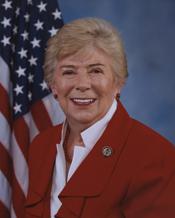
I yield 2 minutes to the gentlelady from New York (Mrs. Maloney).
I yield the gentlewoman an additional 1 minute.
I yield myself 2 minutes.
Mr. Speaker, I would now like to enter into the Record statements from the following organizations which all oppose H.R. 1105: the AFL- CIO, California Public Employees' Retirement System, and North American Securities Administrators Association.
And regarding reading the bill, I certainly did read the bill, and my point is that the bill does not require public disclosure of those matters, as the gentleman points out. It just goes to the Commission. So it doesn't go to the public. The public doesn't get the information. It stays within the custody of the Commission.
I yield to the gentleman from Texas.
Reclaiming my time, that is right. But those are public investors. They are the ones that need the information.
Mr. Speaker, I yield the balance of my time to the gentlelady from California (Ms. Waters), our ranking member and a real champion of America's working families.
Legislative Proposals to Relieve the Red Tape Burden on Investors and
Job Creators
United States House of Representatives Committee on Financial Services
Subcommittee on Capital Markets and Government Sponsored Enterprises
(Statement of Anne Simpson Senior Portfolio Manager, Investments Director of Global Governance California Public Employees' Retirement
System, May 23, 2013)
Chairman Garrett, Ranking Member Maloney, and Members of
the Committee, on behalf of the California Public Employees'
Retirement System (CalPERS), we thank you for convening this
hearing. CalPERS is pleased to submit testimony for the
record to reassert our strong support for efficient and
effective financial regulation, as enacted by the Dodd-Frank
Wall Street Reform and Consumer Protection Act (``Dodd-
Frank'').
This statement includes a brief overview of CalPERS,
including how we benefit from effective financial markets
regulation and the role that shareowner rights and corporate
governance play in building investor confidence. It also
includes a discussion of our views on HR 1135, HR 1105, and