Mr. Chairman, I yield as much time as he may consume to the gentleman from Mississippi (Mr. Thompson), cochair of the Sportsmen's Caucus. Mr. Chair, I just inquire as to how much time remains on…
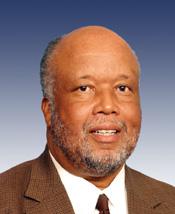
Mr. Chairman, I yield as much time as he may consume to the gentleman from Mississippi (Mr. Thompson), cochair of the Sportsmen's Caucus.
Mr. Chair, I just inquire as to how much time remains on either side?
I yield 5 minutes to the gentleman from California (Mr.
Mr. Chairman, may I inquire how many more speakers does the gentleman have?
I have no more speakers except myself, so I would suggest the gentleman go ahead.
I reserve the balance of my time.
I yield myself such time as I may consume.
Mr. Chairman, if the gentleman from Ohio (Mr. Latta) would remain on the floor for a moment, I would like to direct to the gentleman a question about the filming provision. I am curious as to what problems specifically have been identified regarding filming permits. The second question would be: Is it the gentleman's intent that they should be able to use mechanized filming on tracks and otherwise motorized filming in wilderness areas?
With that, I yield to the gentleman from Ohio (Mr. Latta).
Reclaiming my time, as I understand the current process, there is not one large fee. The fees vary in terms of the agency. If it is a one-person crew or a four-person crew, whatever, the fees would be smaller. If it is a mega film coming from Hollywood, they would charge a larger fee, is my understanding.
I am just wondering if there has been a specific case where someone has come to the gentleman and said, Gee, we are a two-person crew, and they want to charge us $10,000. Do we have any specific examples?
I yield to the gentleman.
Further, the issue of mechanized filming equipment, motorized equipment being used in wilderness areas. And I yield to the gentleman.
Does the gentleman feel that we should waive the Wilderness Act for film crews, but not other activities?
I yield to the gentleman.
Reclaiming my time, I think this is a solution in search of a problem. We have had no testimony before the committee and no specifics were provided here. I believe it is an overly broad provision. If we had cases where extortionate fees were being charged for small groups or unreasonable fees that weren't following this scale basis that the agency tells me they follow, then I would share the gentleman's concerns.
With that, I reserve the balance of my time.
Mr. Chairman, if the gentleman had remained on the floor for a moment, I was going to direct a question to him, which is: Since the EPA has found it does not have legal authority to regulate these substances, why do we need to pass a law to prevent a law from being passed? Which I guess is what we are trying to do here. In case we wanted to ever consider a law to do this, we would say, Well, we already passed a law to prohibit that.
Because the EPA says they don't have the authority to do this, it is not going to happen. There was a petition filed. It was rejected. End of story.
With that, I reserve the balance of my time.
Mr. Chairman, I yield myself such time as I may consume.
I would like to ask the chairman a question regarding that, since this is under the jurisdiction of our committee and I am not aware that we held a hearing on this issue.
I yield to the gentleman.
Reclaiming my time, I have many Corps areas in my district, and I am not aware of restrictions, except there are restricted areas because a number of these projects have sensitive equipment that operate spillways and dams and other things, and those are high security areas post-9/11.
I am wondering if the gentleman's interpretation of this is that it would allow people to carry sidearms into these high security areas.
I yield to the gentleman.
Reclaiming my time, I am a strong supporter of the Second Amendment, a gun owner myself. I haven't had a single complaint about Corps restrictions in my State, and that would include areas where we have had tampering with machinery that relates to spillways and dams--potential terrorism. I wouldn't want to facilitate terrorism.
If we are talking about general Corps areas and lands being managed, fine, but if we are talking about sensitive, secure areas that have to be protected and guarded, I don't see why we would allow civilian firearm carry within those sensitive protected areas, which would make us vulnerable to terrorism.
Terrorists without a weapon, I suppose they could bring in a weapon anyway. They could violate the law, but if someone were noted bringing a weapon into one of those areas now, they would be asked to leave or apprehended.
So I am concerned about those aspects, and I think that my committee and Homeland Security should have looked at this issue before it was brought to the floor without a hearing.
With that, I reserve the balance of my time.
Mr. Chairman, I would inquire how many more speakers the gentleman has.
Mr. Chairman, I continue to reserve the balance of my time.
Mr. Chairman, I yield myself such time as I may consume.
I would agree with the gentleman. That came out of committee unanimously. It is a true bipartisan proposal. I learned to shoot through the Y in a basement range with a .22. That is where I started. We have got to learn somewhere.
The public lands is another place for families to go and learn to shoot. So that is one of the noncontroversial parts of the bill. In fact, four of the components of this bill could have been brought up yesterday under suspension or even, I believe, unanimous consent. Definitely under suspension. They definitely would have passed them. They have been previously considered by committee, subject to hearings, and the language was agreed upon. Unfortunately, the majority has insisted, although I also believe that the title would get unanimous consent in this body--it is a great title--but sometimes we attach provisions to great titles that aren't necessary or belie that title.
Some of the components of this, which I have talked about--the potential for degradation of wetlands management, wildlife refuge management, intrusions into wilderness areas--are
inappropriate and unnecessary. We can do a little political ``gotcha''--you voted against this bill that has this great title, so that means you are against sportsmen and fishing and hunters and families enjoying those activities.
I am not, and very few, if any, Members of this body are. But, be that as it may, we have pointed out a number of the problems in this legislation.
Legislating is really a pretty difficult exercise, to do real things, to do things that actually would benefit our wildlife resources and hunting and fishing activities. One would be Congressman Daines' proposal to reauthorize the Land and Water Conservation Fund.
Every day development proposals move forward that take more and more wildlife areas, more and more wetlands, more and more forests out of access to hunting and fishing and recreation in many cases. The Land and Water Conservation Fund has been a key in protecting those lands, when jeopardized, and purchasing from willing sellers to prevent that kind of development.
Though we are still collecting the tax that funds the Land and Water Conservation Fund--yes, we are collecting the tax. Even the Republicans haven't proposed that we do away with that tax because they are spending Land and Water Conservation Funds on other things; God only knows what. Some of the earmarks in a bill we will take up later this week. I don't know.
But they are spending hundreds of millions of dollars that are supposed to go to benefit sportsmen and -women, hunters, fishers, wildlife, and protect those areas and manage them reasonably with that full access. They are spending that money somewhere else, so they don't want to take away the tax, but they don't want to reauthorize the Land and Water Conservation Fund. That is a shame, and that would be a much bigger benefit than anything else that we are doing here today.
We have a number of bipartisan wilderness proposals pending: Mr. Reichert, from Washington State, Alpine Lakes; Mr. Benishek, Sleeping Bear Dunes; and others that are pending. Those things would benefit since wilderness does allow hunting and fishing and does provide a degree of protection for those lands that is unparalleled. That would be an experience for horseback hunters, people who walk in on their own two feet. But there are plenty of places to go in a motorized way. It is a little more rare to have an opportunity to do that from horseback or hiking.
But we are not considering those today because those are controversial. So instead, we have this kind of hash that we are calling one thing and doing a number of other things with.
We have the proposal that we have a problem with unidentified film crews who have never come forward, who might be charged too much or need to use motorized equipment in wilderness areas and so, therefore, we are just going to open them up. That is kind of a heck of a way to legislate, really.
We are worried that maybe some units, and definitely the dam areas of the Corps of Engineers, prohibit individuals carrying weapons. That is not exactly an intrusion. They can't carry a weapon into an airport. You can't carry a weapon into the Capitol. You can't carry a weapon into a Federal courthouse, and you can't carry a weapon to a dam site where tampering with equipment could cause a massive flood or dam failure. It makes a little bit of sense to me, but the bill says, no, that is an infringement on the Second Amendment. I think it is a reasonable step by the government. So we are going to open that up, again, without any hearings identifying any problems with access.
I have a lot of Corps projects in my State. I have never had a constituent call and say, gee, I want to go on to this Corps property and bring my gun. I have got a concealed weapons permit, and I have carried a gun on many Federal lands where there is no restriction, and I supported the park provision last year. But we are creating another imaginary problem so we can add yet another title to this hash of a bill. So I am sorry that we are having to go forward in this way.
I did support a less controversial measure for sportsmen heritage in the last Congress, and even that didn't go anywhere in the Senate. This one already has an affirmed veto threat from the White House, and the Senate isn't going to take it up.
But we can pretend we did something here today, and some people get excited about the fact that we did something here today that will never happen. We could, and it is much harder, agree on a bipartisan measure for reasonable measures to protect people's right to hunt and fish and bear arms, but we are not going to do that. So let's get on with the political show.
Mr. Chairman, with that, I yield back the balance of my time.
Mr. Chairman, I rise in opposition to the amendment.
I appreciate there are some clarifications in this amendment which we do support, but there are a few remaining oversights.
There was an amendment by DelBene and Kilmer from Washington State that specified that tribal jurisdiction is not to be infringed upon, where this blanket language in the Hastings amendment protecting tribal rights could well not be read. Supposedly, in a number of places here we are chasing chimeras, you know, illusions, threats, with some of the provisions about the film permitting and that.
But this might be real, which this does not deal with the potential for disputes between tribes and neighboring landowners or between tribes; and so, therefore, it would have been better to have the broader language of DelBene and Kilmer, which specified treaty- protected rights of the individual tribal members are protected, whereas this amendment only protects the rights of the tribe itself. So I worry that we are creating a loophole here that doesn't adequately protect the sovereignty of tribes and all of their members.
The amendment does attempt to address some of the wilderness issues in title VII, the so-called Recreational Fishing and Hunting Heritage Act, which fails to address the wilderness issues in title III, filming on public lands. We have already had extensive discussion of that. No identified problem, no hearing, nobody has ever said we need this, but it is in there. We are going to allow mechanized film crews into wilderness areas.
Then title VII creates a loophole that will allow motorized equipment and vehicles into Federal wilderness areas--now, not with permanent roads, with only temporary roads or driving off-road--to facilitate hunting in wilderness areas or otherwise restricted areas, wildlife refuges and that. And we still find that very problematic.
Mr. Chairman, I yield back the balance of my time.
Mr. Chair, I rise in opposition to the amendment.
I believe that the information on the economic impacts of
conservation is important. It is something that we don't quantify very well.
As we have pointed out earlier, some of the provisions of this act, unfortunately, will fly in the face of conservation, the benefits of hunting and fishing activities on public lands.
So I think, actually, on balance, the gentleman's requirement here would be very useful information in the future to help land managers who have to make decisions between opening up lands to mining or to oil and gas development versus the benefits the community could realize or has been realizing or will continue to realize from the recreational hunting and fishing.
Federal lands had become essentially a reservoir, a place where these activities are protected, for the most part, from development, with the exceptions of what I had mentioned earlier. They are some of the premiere destinations for hunting and fishing in the country.
Again, the chairman and I disagree over the merits of acquiring some of these lands which are now in private ownership from willing sellers that potentially will otherwise be slated for development, using the Land and Water Conservation Fund. I believe that addressing the Land and Water Conservation Fund proactively would have been useful.
For certain, given the objections to that--because it has not yet quite expired, even though we are underutilizing it and using the tax dollars somewhere else--the North American Wetlands Conservation Act has expired. The Dingell-Wittman amendment was proposed to reauthorize that critical program, and that was not allowed. So that would also be something that would show a measurable benefit.
With that, I yield back the balance of my time.
Will the gentleman yield?
I thank the gentleman, and I want to congratulate him on his diligence and on his foresight here to propose this amendment. It was an oversight in replacing the current council with a new membership. I am not exactly certain why we need to do that because we haven't heard particular complaints.
In any case, this is an improvement upon the newly recommended council to include minorities and women fully engaged, since I see a lot of those folks out in the back country in my State, and I am sure you do in Texas, too.
So I am pleased that for one brief moment here, we have a bipartisan consensus. With that, I congratulate the gentleman.
Texas is batting .100 here today.
I would like to thank the gentleman for improving the proposed composition of the council. I thought your points about the healing that can come from wounded warriors being in these precious natural areas in our country is very well taken, and I appreciate that.
Not to create any discord at the moment, but there was another amendment that wasn't allowed by the Rules Committee, offered by the gentleman from California, Representative Ruiz, which is in the purview of the gentleman whose bill is on the floor today, which would have waived recreation fees for veterans with disabilities, and I hope we can revisit that issue in the future.
I congratulate the gentleman on his improvement and his recognition of our veterans.
Mr. Chair, as the designee of Mr. Ellison, who is detained at the White House, I have an amendment at the desk.
Mr. Chair, I want to applaud the gentleman from Minnesota, Congressman Ellison, for bringing this amendment to the attention of the House.
We have had endless debate about the appropriate role of the National Environmental Policy Act in both the Natural Resources Committee as well as the House Committee on Transportation.
The underlying bill, H.R. 3590, includes language which would eliminate the need for the Fish and Wildlife Service to disclose, analyze, and take comments on decisions related to management decisions in national wildlife refuges.
I repeat that. They would not have to analyze or take comments from either side on decisions that relate to management decisions in national wildlife refuges. Never has there been a case made here during the lead-up to this bill, such as there was, and during the debate why we need this very broad NEPA exception which would, if they want to increase hunting, no NEPA analysis, if they want to decrease hunting, no NEPA analysis, no opportunity for the public to be involved in the process.
As we learned during the shutdown, the wildlife refuge system provides a tremendous opportunity--some of it very ephemeral in terms of seasons--for duck hunters, fishermen, and other sportsmen and -women across the country. In some densely populated areas like in Congressman Thompson's district, wildlife refuges are some of the only hunting areas open to the public, and especially the disabled public.
Why do we need to cut the public out, including disabled Americans, veterans, anybody, regarding these special places and their management when no evidence has been presented that NEPA is in any way an impediment to refuge management? It is just the standard boilerplate: repeal NEPA anywhere, everywhere, all the time, and maybe sooner or later it might stick. But it won't, given the veto threat on this bill and the fact that the Senate isn't going to act on it. But, anyway, it is in here.
There was an amendment to be offered by Congressman Broun from Georgia--which I was going to strongly support--which would have fixed the bill and probably brought a fair number of votes across the aisle by stripping these extraneous provisions regarding NEPA, wilderness, and everything that is under attack in this bill that doesn't need to be under attack in this bill. But I guess somehow, even though it was made in order, the Republican side has convinced him not to offer the amendment because it would have passed, and it would have made the bill better.
So at this point, at least we could support the Ellison amendment as it relates to national wildlife refuges.
With that, I reserve the balance of my time.
Mr. Chairman, I demand a recorded vote.
I rise in opposition to the gentleman's amendment.
Mr. Chair, I certainly am not an expert on the gentleman's district and what the exact issue is here; however, I do know that there has been a proposed management plan that has been out for comment since November 8. It will close on Friday. I would hope that the gentleman and concerned parties on either side of the issue have all weighed in to comment because what we are doing here today in this bill will not become law. It is already guaranteed a veto threat. The addition of this to the bill will not help resolve what is a local issue where the Park Service has to weigh comments from motorized users and nonmotorized users and then come to a conclusion weighing those comments and put forward a new management plan. That is the way this is going to get done.
It shouldn't be done from Washington, D.C. We shouldn't be dictating. If we get into every individual land use or access decision being made by every unit of the Park Service, every unit of the Fish and Wildlife Service and their refuges and every unit of the Forest Service and every unit of the BLM, we are going to be pretty busy and be embroiled in a lot of local controversy.
So this, I believe, is premature in that the comment period closes this week and the process will come to a conclusion. Comments will be weighed and a decision will be put out for final comment. It is also, at this point, being added to a bill that is going nowhere.
With that, I yield back the balance of my time.
Mr. Chair, we often have conflicts in Oregon. We had a very substantial conflict relating to geese in terms of farmers' fields. The resolution was that the birds protected by the Migratory Bird Act would continue to be protected, but farmers would be able to hunt with the State license--and I don't know about the gentleman's State whether or not a State license would be required--the birds that were not migratory that were becoming pests and were resident in order to protect their crops.
This substantially resolved the problem.
I don't know if a similar fix would work here, but an amendment that gives an open license on the Migratory Bird Act, which has international implications, the migratory bird treaty, seems to me to be an extreme measure in this case. Therefore, we would oppose the amendment.
I yield back the balance of my time.
Mr. Chairman, we have talked about major problems confronting this Congress, and here we are now trying to resolve yet another local conflict.
After considerable complaints by private property owners about hunters encroaching on their land to retrieve their dogs that have gotten lost, driving on their land and that, the Forest Service decided because of the intermingled ownership to prohibit dog deer hunting.
Now comes the gentleman who says, well, we are going to reopen it. We will countermand the locally made decision, but we will have a new process where the private landowners can petition the secretary to re- close certain areas of the area that are now closed that he is reopening because of conflicts with their private property. However, these private property owners' petitions will have to go through the dreaded NEPA process, and that is, for deciding something as minor as that, kind of problematic.
You know, I guess maybe we should have a special day here, and I have some beefs with some Federal agencies ongoing that I would like to settle with legislation, too. Maybe we should have an open amendment process some day where every little local issue we have been dealing with with a Federal agency which is contentious between conflicting users will be decided by the United States Congress in Washington, D.C., not at the local level. That is what we are doing here. It is pretty extraordinary.
I reserve the balance of my time.