Mr. Speaker, I have a motion at the desk. Mr. Speaker, I yield myself such time as I may consume. I rise today in strong support of the Veterans' Access to Care through Choice, Accountability, and…
Mr. Speaker, I have a motion at the desk.
Mr. Speaker, I yield myself such time as I may consume.
I rise today in strong support of the Veterans' Access to Care through Choice, Accountability, and Transparency Act of 2014, which was passed by the Senate 93-7 on June 11 of this year.
This critical piece of legislation is one that must be implemented immediately to provide solutions to the many problems that have been discovered at the Department of Veterans Affairs and to provide the necessary care and assistance that our veterans deserve. We must move immediately on an agreement with the Senate and not further delay the long overdue care that our veterans need and have earned.
The most expeditious way to do this would be to move forward with the Senate bill, one, as I said, that was supported by 93 Senators-- Republican, Democrat, and Independent alike. I know that my colleagues in the House and Senate are committed to serving our veterans. Services for our veterans, I am pleased to say, is an issue of great importance and is one that continuously receives strong bipartisan support in both Chambers.
I want to applaud Chairman Miller and the Veterans' Affairs Committee and Ranking Member Michaud for their hard work in bringing to light the many problems and the terrible corruption that we have discovered in the VA, and for working to improve the care for our veterans.
I am here to fight for the veterans and the military families in my district and for those across the country. Mr. Speaker, this is a deeply personal issue with me. My father was a veteran of World War II. He joined the Army Air Corps, and probably lied about his age so he could go serve his country.
He served in World War II. He went on to serve in Korea and Vietnam, and when he left the Air Force, he extensively used the services of the veterans administration.
Were he alive today, I know he would be enraged by what has been discovered about the neglect, misconduct, and manipulation of the VA waiting lists, so that top executives could receive financial rewards and bonuses.
The 85,000 veterans I work for in southern Arizona--and countless more nationwide--deserve better from us and from the Department of Veterans Affairs than they have been getting.
I have been pressing for better access to health care for our veterans since I first came to Congress in 2012. One of the first bills I introduced was the Veterans Health Access Act, to ensure that veterans could get the health care they needed in their communities, without long commutes and even longer wait times, and I am pleased that the House and Senate are now working to address this issue.
We must improve the quality and timeliness of care to our veterans, and that is why, today, Mr. Speaker, I stand before you to call on my colleagues in the House and the Senate to support the Senate bill that increases access to care and takes many more steps to improve services and support for our veterans and their families.
Included in the Senate-passed bill is the expansion of the Marine Gunnery Sergeant John David Fry Scholarship, so that surviving spouses may have a chance to further their education and take care of their families.
The Marine Gunnery Sergeant John David Fry Scholarship is a current education benefit for the surviving children of our fallen military servicemembers. It has sent many sons and daughters of fallen heroes to college and given them the opportunity to get the American Dream.
However, it is important that we also offer this benefit to the spouses who are left widowed and must singlehandedly care for their families. This scholarship could provide many spouses an opportunity to get the education they need and the jobs that will help them succeed and support their family.
This scholarship was originally created in memory of John David Fry, who was a leader of marines from Lorena, Texas. Gunnery Sergeant Fry, a member of the explosive ordnance disposal community, demonstrated true service to his country and to his fellow marines in Iraq.
With only 1 week left on his tour in 2006, he injured his hand and was given the option to return home early with a Bronze Star. Fry declined the offer and volunteered to go on one last patrol, to defuse bombs for his fellow servicemembers.
Sadly, Gunnery Sergeant Fry was killed that day by an improvised explosive device in Anbar province, Iraq, leaving behind his wife and three small children.
Mr. Speaker, this type of courage and sacrifice has been witnessed countless times in the past 13 years by our men and women in uniform. For example, just recently, on May 12, a soldier from my district with 29 years of military service succumbed to the wounds he received in Afghanistan.
Command Sergeant Major Martin R. Barreras of Tucson was the enlisted leader of his infantry battalion in Harat province and was on his sixth deployment to Afghanistan.
While on patrol with his soldiers, Gunny--as his family likes to call him and remember him--was fatally wounded by small-arms fire while leading his troops into battle.
This was not the only time this respected leader saw combat. In 2003, Sergeant Major Barreras helped rescue former prisoner of war Jessica Lynch from an Iraqi hospital. At the time, he was the enlisted leader of the Army battalion that conducted the mission.
He personally handed Lynch to another soldier to transfer her to the helicopter that evacuated her from the area and to safety. According to reports, he then fended off multiple attacks to retrieve all nine bodies of the other U.S. soldiers missing in action.
Everyone in our country owes all of our fallen heroes, such as Gunnery Sergeant Fry and Command Sergeant Major Barreras, a debt of gratitude for their service and their courage, but we must also remember the silent courage of spouses of our servicemembers who must cope with the rigors of military life and who must live with only the memory of their fallen husband or wife.
These unsung heroes are the ones who maintain the homefront for our deployed men and women in uniform. They are the ones who maintain the
morale of our troops. They are the ones who unite with other military families to develop a support network for those spouses and children while their loved ones are in harm's way.
They are the ones who live with constant worry of their servicemember's safety, and they are the ones who must bear the burden in the absence of their husband or wife.
Our military spouses play a pivotal role in our Nation, and it is one that we must never forget. This is a good way to honor that service, by providing a scholarship in memory not just of Gunnery Sergeant Fry and Command Sergeant Barreras, but all of the servicemembers who died for our country and have left behind a loving family.
Mr. Speaker, I urge my colleagues on both sides of the aisle to support this motion to instruct, to support the expansion, with no limitations, of the Gunnery Sergeant John David Fry Scholarship.
I further urge swift passage to pass the Veterans' Access to Care through Choice, Accountability, and Transparency Act of 2014 in its entirety. We must act now to enact this legislation and get our veterans the care that they deserve.
Mr. Speaker, I reserve the balance of my time.
Mr. Speaker, could you advise me on how much time remains?
Mr. Speaker, I want to introduce a series of Members who would like to speak to this issue, but before I do, I would just say this: I have been here now a little bit more than 2 years, and I have learned a few things.
One of those things I have learned is that, when you have the public's attention and when you have this Chamber's attention and when you have the Senate's attention on an issue of importance like this, you act, and you do as much as you can to not only take care of the corruption, the systemic problems within the VA, but other issues that have been pending for a long time. To that end, I hope that we will, in fact, recede to the Senate version of the legislation.
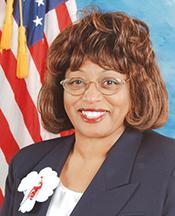
Mr. Speaker, I yield 3 minutes to my colleague from Arizona (Mrs. Kirkpatrick), ranking member on the Oversight Subcommittee of the Veterans' Affairs Committee, who has been a strong fighter for our veterans her entire time in Congress.
Mr. Speaker, next I would like to yield 3 minutes to the gentlewoman from Nevada, Congresswoman Dina Titus, a member of the House Veterans' Affairs Committee, who has introduced legislation here in the House, H.R. 3441, the Spouses of Heroes Education Act, which would expand this scholarship.
As a university professor at UNLV for more than 30 years, Congresswoman Titus understands the importance of education and has been a strong leader in education issues both in Nevada and here in Washington, as a former member of the Education and Labor Committee.
Mr. Speaker, next I would like to yield 3 minutes to my colleague from Arizona, Congresswoman Kyrsten Sinema. If you know Congresswoman Sinema, you know that when she gets her dander up, she fights like hell for whatever the issue is, and that has certainly been true in the fight that she has waged on behalf of our veterans.
As you know, the first evidence of corruption and misdeeds was discovered in Arizona at the VA in Phoenix, and from the very beginning, Congresswoman Sinema has been on that issue. So I am very proud and pleased to yield to her to speak on this bill.
I have no further requests for time, but I do have some closing remarks.
Mr. Speaker, could I ask for the balance of time remaining.
Mr. Speaker, let me just close with these thoughts.
I came here, as you well know, following the resignation of Congresswoman Gabrielle Giffords, for whom I worked, when she was a Member. Her commitment to veterans was complete and deep. I am pleased to have picked up that mission and have tried to move forward with it in every way possible.
I also came here in the spirit of bipartisanship, looking for partners on both sides of the aisle to move important legislation for our country, and I am very pleased to say that I have found bipartisanship in full measure in the manner with which we have worked together to ensure that our veterans are properly served. Now I call on my colleagues, the conferees, to move quickly to bring our two bills together, to strike now while the opportunity presents.
Back home, when I meet with veterans, they say, What are you waiting for? We need you to act, and act now.
I urge our colleagues to adopt the motion to instruct so that we can get this job done expeditiously and in full measure.
Mr. Speaker, I yield back the balance of my time.
Mr. Speaker, on that I demand the yeas and nays.