Madam Speaker, I want to take just a moment to say I know this will be the last time you will be presiding over the House, and I want to thank you for your friendship over all these years. Working…
Madam Speaker, I want to take just a moment to say I know this will be the last time you will be presiding over the House, and I want to thank you for your friendship over all these years. Working together with you has been a pleasure.
I want to thank my friend from Oklahoma for yielding me the customary time, and I yield myself such time as I may consume. Let me say about him, he is someone I admire very greatly. But I don't admire this bill.
I have to rise to debate the rule for the final bill of the 113th Congress, which is the most closed Congress in history. The House majority has, over and over again, stifled debate, limited the ability of Members of this body to participate in the legislative process, and undermined the institution.
We have had 83 closed rules this term, the most in history, and this bill follows suit and has been, again, brought to us under a closed rule, which means that no Member will be able to offer an amendment; and the $1.1 trillion spending bill to keep the Federal Government funded will be rushed through the legislative process because the deadline to keep the government open is 11:59 this evening.
By the same circumstance, I was doing a rule the night of the last time the government shut down, still on the
floor at midnight and made the announcement that the great Government of the United States of America was closed.
We don't, obviously, none of us, want to see that again, but we do see dysfunction mirrored in the Rules Committee, because all of our meetings are now only declared emergency. That means it has not gone to any committee, has no public input, no hearing, no markups, and no time to fully consider the legislation.
The bill has been brought to us under an onerous, blatantly political process, and its contents are troubling as well. It seems to me that with every passing hour, a new alarming provision comes to light. Perhaps if the House majority had spent less time voting to undermine the health care law, taking health care away from people, or investigating a nonexistent scandal in Benghazi, we might have been able to do a budget.
While this may have averted another dangerous government shutdown, what we are doing now, this bill, is another example of the preferred method of governance--manufactured crises. We are pushed and pulled from the brink for their political games, and America suffers.
At 1,603 pages, this spending bill is a behemoth. It was submitted in the dark of night at the last minute in hopes that we wouldn't find out what is in it and serves as further proof that the majority has reneged on their pledge of transparency.
Speaker Boehner, himself, said in December of 2010, as reported by the New York Times:
I do not believe that having 2,000-page bills on the House
floor serves anyone's best interest--not the House, not the
Members, and certainly not the American people.
He was referring, of course, to the fact that we would have 72 hours to examine such legislation.
Madam Speaker, I submit for the Record the New York Times' article from December 17, 2010, entitled: ``Republicans Prepare for Looming Budget Battle''--even then.
[From the New York Times, Dec. 17, 2010]
Republicans Prepare for Looming Budget Battle
(By Carl Hulse)
Washington.--The collapse of a government-wide spending
package in the final days of this Congressional session sets
up a politically charged fiscal showdown early next year,
testing the determination of Republicans about to take over
the House with promises to slash an array of domestic
programs.
As Congress struggled to assemble a stopgap measure to
finance the government at least into the first months of
2011, House and Senate Republicans on Friday hailed their
ability to derail a $1.2 trillion spending measure put
forward by Senate Democrats, and promised to use their new
Congressional muscle to respond to public demands to shrink
government.
``Beginning in January, the House is going to become the
outpost in Washington for the American people and their
desire for a smaller, less costly and more accountable
government,'' said Representative John A. Boehner of Ohio,
the incoming House speaker.
``I will tell you,'' he added, ``we are going to cut
spending.''
With the lame-duck session entering its final days, there
was an air of partisan chaos on Capitol Hill as both parties
scored important legislative victories and events changed on
an almost hour-to-hour basis as the end of Democratic control
of the House approached.
Both President Obama and Congressional Republicans claimed
credit for the package of tax cuts and unemployment pay the
president signed into law Friday. Democrats also appeared
poised to repeal the ban on gay and lesbian troops serving
openly in the military, a long-sought goal of the party and
its progressive constituency.
The House advanced a major Pentagon policy measure that had
previously been tied up in the fight over the military's
``don't ask, don't tell'' policy. At the same time, a major
immigration measure championed by Democrats and the White
House seemed headed toward defeat as early as Saturday.
Republicans celebrated their blockade of the spending
package, which Senator Harry Reid of Nevada, the majority
leader, had to abandon after Republicans denied him the
handful of votes from their side of the aisle that he was
counting on to break a filibuster.
Republicans said their determination to kill the omnibus
spending package even when top party lawmakers had inserted
pet spending projects demonstrated that they were heeding the
fervor of voters who were fed up with giant spending measures
slipping through Congress in the final hours.
``The defeat of the omnibus should reassure every American
that their voice is making a difference in Washington,'' said
Senator Tom Coburn, an Oklahoma Republican and an outspoken
foe of increased federal spending.
But the collapse of the Senate measure, which like its
House counterpart would have financed government agencies
through the end of the fiscal year on Sept. 30, means
Republicans could begin the new Congress with an immediate
need to resolve the spending stalemate.
With the Senate making slow progress toward a stopgap
measure, the House on Friday approved a plan to keep the
government open through Tuesday and the Senate later followed
suit to prevent a government shutdown after Saturday.
Aides said that behind closed doors, White House officials
and some Democratic lawmakers were still trying to strike a
deal to finance the government through September. But the
officials said it was much more likely that government
financing would be extended only into February or March.
Republicans say that timeline will allow them to quickly
put their stamp on the budget for the current fiscal year,
and Mr. Boehner and his leadership team have vowed to
eliminate about $100 billion in spending out of about $400
billion in domestic programs.
Both sides say reaching that goal will mean very difficult
choices and Democrats, promising to resist Republican
efforts, say Republicans may find it easier to talk about
cutting than actually doing it.
``They have been really good about talking about the need
to cut this and cut that, but they are never specific,'' said
Representative James P. McGovern, Democrat of Massachusetts.
``I think it is going to be tough.''
The 2011 spending fight could be complicated by the need to
raise the federal debt limit to avoid a federal default--a
vote that many new Republican lawmakers have indicated they
would not make.
Republicans say the debt limit vote could also present an
opportunity, allowing them to tie a package of spending
reductions to the debt increase to make it more palatable.
Another complicating factor is that since Democrats retain
control of the Senate, House Republicans must reconcile their
spending proposals with those crafted by the Senate
Appropriations Committee under the leadership of Senator
Daniel K. Inouye, Democrat of Hawaii. Senator Inouye is
unlikely to agree easily to Republican spending cuts,
creating a climate for gridlock as the two parties face off.
On Friday, Mr. Inouye chastised Congress for jettisoning
the spending package crafted by his committee, saying that
simply extending current funding levels left the government
on autopilot and could lead to disruptions. He said it also
left too much discretion for determining spending priorities
to the executive branch.
``And in two months we will find ourselves having to pass
another 2,000-page bill that will cost more than $1 trillion
or once again abdicate our authority to the Obama
administration to determine how our taxpayer funds should be
spent,'' he said.
Mr. Boehner has made changing the culture of the
Appropriations Committee a top interest of the new Republican
majority, pressing new leaders of the panel to turn it into a
center for budget cutting and stocking it with a few anti-
spending advocates.
On Friday, he indicated that he would prefer that
Republicans next year break up the enormous spending package
that died in the Senate and pass a dozen spending bills
individually to allow for better scrutiny--a process that
could consume considerable time and subject the measures to
multiple attacks on the floor.
``I do not believe that having 2,000-page bills on the
House floor serves anyone's best interests, not the House,
not for the members and certainly not for the American
people,'' Mr. Boehner said.
Aides to Mr. Boehner later said the speaker-designate was
referring to his desire to have an orderly appropriations
process later in 2011 and was not referring to the spending
package Republicans would have to quickly assemble in the
opening weeks of the new Congress.
Lawmakers on both sides were running out of energy and
patience as the session dragged on with no certain conclusion
in sight. Even House Democrats who would be turning over
control to Republicans seemed ready to call it quits.
``A lot of us just want to go home,'' said Representative
John B. Larson of Connecticut, chairman of the House
Democratic Caucus.
Madam Speaker, this bill can cause grievous harm to the Department of Homeland Security by funding it until only February of next year, and it really does endanger the Nation's safety and security because they are the people who provide border security and the TSA. I have said this in the past--but it bears repeating--that funding the government in tranches weakens, destabilizes, and undermines our Nation.
The majority's insistence on punishing the President for his executive order on immigration by toying with the funding for the Department of Homeland Security, of all things, is troubling. This maneuver will hinder how we train new officers, how we guard the border, and it will endanger the Nation's airports; but the most
egregious provisions of this bill strike at the very soul of our democracy.
A last-minute, nongermane addition would fundamentally change our Republic. It gives away almost all power of the people to choose their leaders and to participate in their government by cementing the status of power donors. This provision changes campaign finance law to allow megadonors to give 10 times the amount currently allowed to political parties for housekeeping, and those of us in the political field know what it means to have the housekeeping accounts: that means it can go for absolutely anything. This change flies in the face of McCain- Feingold, and it completes the mission of the Supreme Court with their decision on Citizens United.
This tenet has been central to our democracy in that each person has equal power to influence their government by their voice and their vote. Not only has this Congress refused to reenact the Voting Rights Act, but this added provision will hasten the toxic influence of money and will further corrupt and unbalance our democracy.
Furthermore, the underlying bill includes a provision added only 2 days ago that would put our economy in danger and would roll back the gains made since the Great Recession. This most egregious provision would change the Dodd-Frank bill to give undue power back to the banks. The provision puts the taxpayers on the hook for risky behaviors by Wall Street banks, meaning, once again, that taxpayers will have to bail out the banks if they fail. It was a basic tenet of Dodd-Frank's that we would never do that again, and that will now be undone.
It has been only 5 years since the start of the Great Recession, and the economy has made great strides in adding 10.9 million private sector jobs in the last 57 months, but passing this bill would risk erasing those strides by steering us on a dangerous path toward another recession.
The former chair of the House Financial Services Committee, Barney Frank, released a statement this week, calling this inserted provision: ``a substantive mistake, a terrible violation of the procedure that should be followed on this complex and important subject, and a frightening precedent that provides a roadmap for further attacks on our protection against financial instability.''
He continues: ``Ironically, it was a similar unrelated rider put without debate into a larger bill that played a major role in allowing irresponsible, unregulated derivative transactions to contribute to the crisis.''
He is referring to the crisis of 2008.
He is warning us. He is imploring us: Don't make the same mistake twice. Our national economy cannot take this risk.
Madam Speaker, I would like to insert this article from The Wall Street Journal from December 10, 2014, entitled: ``Barney Frank Criticizes Planned Rollback of Namesake Financial Law,'' into the Record.
[From the Wall Street Journal, Dec. 10, 2014]
Barney Frank Criticizes Planned Roll-Back of Namesake Financial Law
(By Andrew Ackerman)
Washington.--Retired House Democrat Barney Frank urged his
former colleagues to vote against a nearly $1.1 trillion
spending plan, saying it constitutes an attack on a Wall
Street regulatory overhaul he co-authored in response to the
financial crisis.
At issue is a provision included in the plan that would
rollback a controversial part of the 2010 Dodd-Frank law
requiring banks to ``push out'' some of their riskiest
derivatives-trading activities into affiliates that aren't
eligible for federal backstop programs. Mr. Frank is one of
two namesakes of the law along with former Sen. Christopher
Dodd (D., Conn.), who is also retired from Congress.
``The provision inserted into the appropriations bill is a
substantive mistake, a terrible violation of the procedure
that should be followed on this complex and important
subject, and a frightening precedent that provides a road map
for further attacks on our protection against financial
instability,'' the Massachusetts Democrat said in a statement
Wednesday.
The comments came hours after House and Senate lawmakers
unveiled the plan, which would keep the federal government
funded through September. The roll-back of the Dodd-Frank
provision was included as part of an agreement to provide
modest funding increases to the two agencies primarily
responsible for implementing and policing Dodd-Frank--the
Securities and Exchange Commission and the Commodity Futures
Trading Commission.
Sen. Sherrod Brown (D., Ohio) and other congressional
Democrats also warned against the move, saying it would
``open the door to future bailouts funded by American
taxpayers.''
``This provision, originally written by lobbyists, has no
place in a must-pass spending bill,'' he said in a statement.
Critics of the ``push out'' provision, including Federal
Reserve officials as well as some Democrat and Republican
lawmakers, say it doesn't strengthen the financial system and
only moves potentially destabilizing activities to a
different bank subsidiary. The provision could also increase
costs for bank customers that use the derivatives.
Derivatives, which played a central role in the crisis, are
used by firms to hedge or speculate on everything from moves
in interest rates to the cost of fuel.
Mr. Frank said reasonable people can disagree on how to
regulate derivatives. But he criticized the plan to change
regulations through ``a non-germane amendment inserted with
no hearings, no chance for further modification and no chance
for debate into a mammoth bill in the last days of a lame-
duck Congress.''
``Ironically it was a similar unrelated rider put without
debate into a larger bill that played a major role in
allowing irresponsible, unregulated derivative transactions
to contribute to the crisis,'' Mr. Frank said, referring to
2000 Commodity Futures Modernization Act that essentially
barred the regulation of derivatives and was signed into law
as part of a larger appropriations bill.
Madam Speaker, for these reasons and several others, Democrats should not support this bill, and I urge my colleagues to vote ``no'' against the rule.
I reserve the balance of my time.
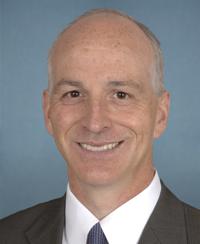
Madam Speaker, I am pleased to yield 2 minutes to the gentleman from Massachusetts (Mr. McGovern), a valued member of the Committee on Rules.
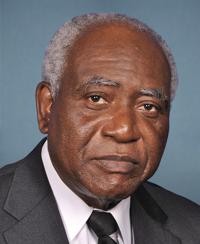
Madam Speaker, I yield 2 minutes to the gentleman from Mississippi (Mr. Thompson), the distinguished ranking member of the Committee on Homeland Security.
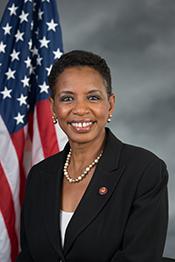
Madam Speaker, I yield 1\1/2\ minutes to the gentlewoman from Maryland (Ms. Edwards).
I am pleased to yield 3 minutes to the gentleman from Maryland (Mr. Hoyer), the Democrat whip.
Madam Speaker, I yield 20 seconds to the gentleman from Maryland (Mr. Hoyer).
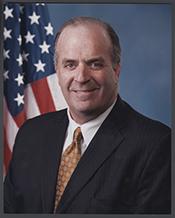
Madam Speaker, I am pleased to yield 1\1/2\ minutes to the gentleman from Michigan (Mr. Kildee).
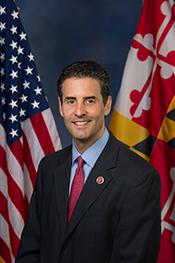
Madam Speaker, I yield 1\1/2\ minutes to the gentleman from Maryland (Mr. Sarbanes).
Madam Speaker, I am pleased to yield 1\1/2\ minutes to the gentleman from Florida (Mr. Deutch).
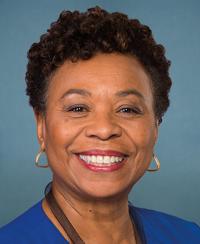
Madam Speaker, I am pleased to yield 1\1/2\ minutes to the gentlewoman from California (Ms. Lee), a member of the Appropriations Committee.
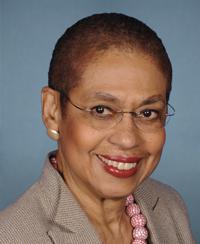
Madam Speaker, I am pleased to yield 1\1/2\ minutes to the gentlewoman from the District of Columbia (Ms. Norton).
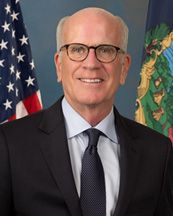
Madam Speaker, I am pleased to yield 1\1/2\ minutes to the gentleman from Vermont (Mr. Welch).
Madam Speaker, I yield myself the balance of my time to close.
Madam Speaker, this bill spends $1.1 trillion to fund the Federal Government. While we may yet avert another government shutdown, a lot of our trust in the legislative process has been destroyed. If a provision to allow the United States to be mined for uranium by a company with ties to Iran can be inserted into and passed with the National Defense Authorization
Act, taking away land sacred to an Indian tribe, what other deplorable and risk-ladened bills are in this House majority bill? Heaven only knows what other egregious actions we will find.
The House majority continues to govern via manufactured crises. Regular appropriations bills have been replaced with temporary stopgap measures. Cliffs and brinks and fits and starts continue. The majority has another opportunity in the new Congress to do the good work of government and to provide stability to the American people with the American people put ahead of banking interests and political party interests--and I pray they do.
Madam Speaker, I urge my colleagues to vote ``no'' on the rule and the bill underlying it.
And to end the 113th Congress, I yield back the balance of my time.
Madam Speaker, on that I demand the yeas and nays.