Mr. Speaker, I ask unanimous consent that all Members may have 5 legislative days in which to revise and extend their remarks and include extraneous material on the subject of my Special Order. Mr.…
Mr. Speaker, I ask unanimous consent that all Members may have 5 legislative days in which to revise and extend their remarks and include extraneous material on the subject of my Special Order.
Mr. Speaker, today, back in Missouri, this frigid cold snap is really making life miserable for everyone. We have below-zero temperatures and wind chills and a lot of snow. In fact, a lot of children are home from school today, and it is on snowy days like this back in Missouri and across much of America that we really appreciate the ability to go to our thermostats and to turn up the temperature and be able to sit by a nice fire to keep warm. What we don't need is the government interfering in that. Safe, affordable and reliable energy is vital for all of us as Americans, and it is being threatened by the Environmental Protection Agency. They are increasing burdens and making our regulations more difficult and costly for hardworking taxpayers.
While I support commonsense regulations designed to protect my constituents and the environment, many of the EPA regulations have gone too far, threatening to raise electricity rates during these cold winter months and hurting markets designed to provide rural homes with proper heating systems.
County officials, farmers and city administrators, as well as moms and dads
all across Missouri who have to pay the electric bill every month, are constantly coming up to me with stories of the burdens that the EPA regulations have placed on their families, their businesses and their communities.
It is time for this to stop. It is time for the EPA to begin working with my constituents, with local officials and with State governments to bring commonsense, consensus-driven changes to the regulations instead of the typical, heavy-handed Washington bureaucracy. Many of these regulations are stifling small businesses and local communities, leading to slow economic growth, stagnant jobs and less opportunities for the next generations of Americans.
So, today, my colleagues and I would like to outline some of the most egregious EPA regulations and offer commonsense solutions to fix, replace or eliminate previous EPA actions that are hurting the average American.
For example, the EPA's recently proposed rule on source performance standards for new power plants has raised serious concerns among ratepayers, utilities and small businesses in my district. My main concern with these proposed regulations remains focused on Missouri's need to provide affordable and reliable electricity. However, in a State like Missouri that derives over 80 percent of our power from coal, the EPA has proposed a rule that would create a de facto ban on building any new coal-fired power plants by requiring the use of something called carbon capture and storage technology.
This technology has not even been proven commercially viable anywhere, and the small pilot projects used as a basis of the EPA's analysis have been highly subsidized by the government and are not commercially available.
Congressional intent in the Clean Air Act is clear. The EPA is required to complete a cost-benefit analysis and base their regulations on the best commercially available technology. It is clear that these standards have not been met.
The good news is that there is a bipartisan solution for this regulation. Congressman Whitfield and Senator Manchin have introduced the Electricity Security and Affordability Act. They designed the bill to require that any greenhouse gas standard set by the EPA for new coal-fired plants are achievable by commercial power plants operating in the real world, including highly efficient plants that utilize the most modern, state-of-the-art standards that can be met by all States in a way that is not economically damaging to local ratepayers and small businesses.
All we ask is that the EPA work with us to find commonsense solutions for real world problems.
Another example of needless regulation is the EPA's proposed rule on future production of wood-burning stoves like the one in this picture right here. My constituents are concerned that this regulation could provide another de facto ban of the production and sale of 80 percent of America's current wood-burning stoves, which are the world's oldest heating system.
The EPA's stringent, one-size-fits-all policy goes against the will of the people, and it requires the same stringent standards in a cottage in the woods that it applies to a high-rise building in downtown New York. For the first 10 years of my marriage, my husband and I heated our home with a wood-burning stove like this. I am concerned for the many constituents who have used these stoves for years to heat their home, that they will have to turn in their old furnaces for scrap and make costly upgrades if they choose to remodel.
So, again, I implore the EPA to apply a little common sense to these onerous regulations and not finalize this burdensome rule.
These are just two examples of the many concerns of the EPA overreach that I hear on a regular basis.
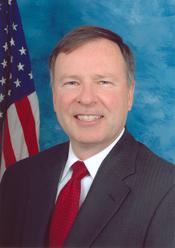
I pause now to invite my colleagues to share experiences and issues that their constituents face dealing with this agency. So I would like to start with my dear friend from Colorado, Doug Lamborn.
Representative Lamborn, what would you like to share?
Thank you, gentleman. Thank you for your leadership on this. You have been at the forefront of this, and this is so, so important. I love what you said about the EPA is basing this on wishful thinking and not sound science. I think most of us would appreciate if there was some science behind regulations. That seems to be common sense, but they clearly have gone beyond that, and it is hurting, as you say, people. It is hurting the bottom line. It is hurting when you pay your bills every month, and your electric bill is just going through the roof unnecessarily because of these onerous regulations.
So thank you, gentleman.
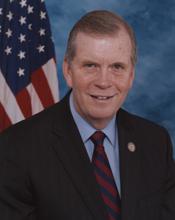
Now, I would like to turn to my friend and colleague from Utah, Representative Chris Stewart, to share his thoughts on this important topic.
Thank you, Chris.
Mr. Speaker, excellent points there. I think you are right; we need to make regulations that make sense. What the EPA is doing does not make sense. It does feed into the distrust of government bureaucracy by the American people, and well-deserved when they have some of the regulations coming out that they have been proposing that are harming Americans. That is why we are here tonight, to raise these concerns and to fight against them.
I am so glad today to get to pass the baton to my friend from North Carolina (Mr. Holding).
I thank the gentleman very much, and I want to follow up on exactly your same story. I hear the same from my farmers in Missouri. And this picture on this poster, I hope everyone can see, because I want to show what Representative Holding was just talking about.
The Clean Water Act gave the EPA authority to regulate navigable waters, and those are the pictures here. They would be something that you would consider navigable waters, and they worked with the Corps of Engineers to develop regulations.
The pictures on the right are what I consider nonnavigable, and I think most people with common sense would. They are farm ponds, puddles, and ditches. This is what the EPA is trying to expand its reach to regulating. As Representative Holding said, this is going to impact every farmer and every property owner, and it is a violation of property rights.
The government should not have any control or say over how people manage their ponds, or if there is a puddle in the field, they shouldn't have to ask permission to be able to plant a crop there. And yet that is what you have, one of the things that EPA is doing. Thank you for bringing that up. And I wanted everybody to see how ridiculous this is and what an overreach of government it is. Thank you for showing that picture.
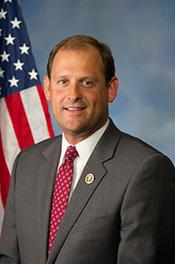
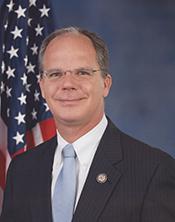
Now, I turn to Andy Barr from Kentucky. He knows a little bit about coal and some of the other impacts of the EPA. Please share your thoughts on the topic.
Thank you very, very much. I don't think anyone could say it any better than that.
I appreciate as well your comments about coal because in my district, I have the only working coal mine in Missouri. In Missouri, 85 percent of our energy comes from coal. It is an extremist agenda that would raise the price of energy unnecessarily, especially on the hardest hit Americans whose hours are being cut back because of other policies from this country coming forth, and whose paychecks are shrinking.
Why would you artificially raise the cost of their electric bills due to regulations that aren't even scientifically based and shut off a major source of energy in this country that is affordable, reliable, safe, and clean--and that is coal.
Thank you very much for sharing that.
Now I would like to go to my friend from Oklahoma, James Lankford, to hear his thoughts about EPA and how it is hurting Americans and how we can provide better solutions.
We have turned sadly into a regulation Nation, and it is wrong, but some of us--and the ones here tonight speaking--are not going to sit by and allow this and stand idly by. We are fighting against it, and that is why we are here.
I totally agree with my colleague that it is wrong to just tell people: well, this is going to be hard, but you are going to have to pay more on your electric bill basically because of this new regulation because we care more for a minnow than we do about people. That is wrong. It is time to change things.
I appreciate my friend from Ohio, Representative Robert Latta, being here tonight and welcome your comments on this issue.
Thank you so much, gentleman. Thank you for your leadership on that. That is a great bill, and we really need more of that to push back on these onerous regulations by the EPA, like you pointed out, that cost the taxpayers $1.8 trillion a year overall just to comply with paperwork. That is wrong.
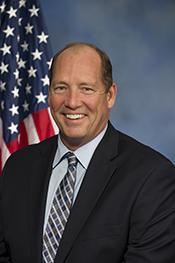
Now I would like to turn to my friend from Florida, Representative Ted Yoho, to share his thoughts.
Your comments were very, very helpful to what we are doing tonight, which is making people
aware of how these EPA regulations hurt real people. I think your example of the 2-year fight and the $200,000 fine just for a low area in your yard that fills with water is just too much.
Thank you. That is why we are here fighting tonight.
I would like to turn it over now to my friend from Arkansas, which is just a little south of me, to Representative Rick Crawford.
Thank you for your leadership on this. That issue is just so important to farmers all across this country and to rural communities, which could certainly use that $3.3 billion.
Now I would like to turn to my friend from Oklahoma, Markwayne Mullin, to share his thoughts on the EPA.
I am glad you are here tonight. I am glad you are here representing the common person in this country who is fighting these regulations every day, who has had real-world experience dealing with the EPA, like many of us have.
You are exactly right. It is stifling jobs and hurting people, whether it is the families back in Missouri who are dealing with the big 10-inch snow that we got yesterday, and they are wanting to heat their home with a wood-burning stove or turn up the thermostat and worry about their electricity bills at the end of the month, or whether it is the farmer out there who is trying to raise chickens and provide poultry and meat for this country, and then they have the government trying to regulate their feathers.
Last year, the EPA tried to regulate farm dust. Now they are trying to expand the definition of navigable waters to regulating farm ponds and ditches and little depressions in the fields, and asking for permission from Americans to be able to farm their land.
There are other regulations we haven't even talked about tonight dealing with permitting and being able to spray crop protection products on their cops. Farmers get this every day. So do manufacturers. So do businesses, and so does anyone who has to pay an electric bill every month, with the President's war on coal.
So that is why here in the House we are standing strong against the EPA. We are exposing what they are doing and how it is hurting Americans and why it is important for the Senate to move on our bills to rein in the EPA, to bring common sense back to Washington, and to return this government of the people, by the people, to start working for the people once again.
With that, I yield back the balance of my time.