Mr. Speaker, it was really good to hear the initial description of Congressman Mickey Leland. He loved being called Mickey Leland. Although his full name is George Thomas, Mickey was what he went by.…
Mr. Speaker, it was really good to hear the initial description of Congressman Mickey Leland. He loved being called Mickey Leland. Although his full name is George Thomas, Mickey was what he went by. He was a person of the people.
Today, I stand here in support of H.R. 78, designating the facility of the United States Postal Service located at 4110 Almeda Road in Houston, Texas, as the George Thomas ``Mickey'' Leland Post Office Building.
I thank the ranking member and the chair of the full committee of the House Oversight and Government Reform Committee for their kindness and their diligence in helping to bring this to the floor of the House. It is appropriate to have it in this year, the 25th commemoration of Mickey's death, along with 15 other brave individuals who were flying to provide lifesaving commodities for those who were starving and dying.
This bill will acknowledge this 25th year that we have lost Mickey Leland. It will acknowledge the charitableness of his heart. It will acknowledge he was a person who was willing to sacrifice his own life. It will also acknowledge that he was our fellow colleague in the United States Congress.
I am glad that we are doing this, and I again thank the committee because it is important to note that, over the years of this very historic, hallowed institution, Members have come and they have served. That should be our continuing challenge: to serve America and to serve the world.
Mickey was born in November 1944. He was born to George Thomas and Alice Raines in Lubbock, Texas. Soon, Mom brought the family to Houston, Texas--to our advantage and benefit. He thrived in this city, where as a youth he enjoyed a successful career as a high school sports star at historic Phillis Wheatley High School in Houston, Texas, which is still standing. In fact, as I speak on the floor today, there are advocates trying to preserve the historic old Wheatley High School where Mickey went to school.
Mickey entered Texas Southern University in 1965 and received a bachelor of science degree in pharmacy in 1970. In fact, we called Mickey ``the pharmacist,'' as a nickname. It introduced him to caring about people and health care.
Mickey was so good, he served after graduation as an instructor of clinical pharmacy at TSU for 1 year. While working there, he established a door-to-door outreach campaign in low-income neighborhoods to educate people
about medical care options and to perform preliminary health screenings.
Can you imagine, Mickey Leland, a graduate of the Texas Southern University pharmacy school, helping those poor people who really had no access to health care?
His first effort in public service was to work with the City of Houston health officials to set up community health clinics. We could call him the father of that endeavor. Then, of course, he also was an activist trying to improve the civil rights of African Americans in the fifth ward community, and also involved himself in the Jensen Medical Referral Service.
In 1972, he was elected to the 88th session of the Texas House of Representatives. He was one of the first groups of African Americans to be elected to that body.
Heretofore, prior to the 1965 Voting Rights Act, there were no African Americans of number in the Texas State Legislature, including the Honorable Barbara Jordan, who was able to be elected as well during that time after the 1965 Voting Rights Act.
He was reelected for 2 years, two terms, serving until 1978, and then, during that tenure, he served on the senate-house conference committee as a member of the house appropriations committee, and then came to the United States Congress.
He will be remembered in the United States Congress as someone who helped create and support health maintenance organizations, HMOs. He did that through the State of Texas.
He then came to Congress in January of 1978, was elected in 1978 to the 18th Congressional District, and he served 10 years here. He was chosen as a freshman majority whip and an at-large majority whip, chaired the Congressional Black Caucus, advocated for ethnic diversity through affirmative action and broadcast, served as a member of the Energy and Commerce Committee, and he and Bill Emerson established the Select Committee on Hunger.
Now, my colleagues, this is where his heart showed even larger than it did in his local community. He was an effective spokesperson for ending the suffering of hunger in the United States, and he joined with his good friend, Republican William ``Bill'' Emerson, who represented Missouri's Eighth Congressional District. His wife later represented him.
Through the power of bipartisanship, Mickey Leland and Bill began a mission that still resonates today--that food is a basic right and should never be used as a weapon.
Today we still have the Mickey Leland hunger center, of which I serve on the board, and many are still advocating around the world, Mickey Leland Fellows who are around the world and who are fighting against hunger.
Bill died in office and, as I indicated, his wife took his place.
But Mickey married, in 1983, his wonderful wife, Alison. His beautiful sons, Jarrett David and twins Austin Mickey and Cameron George Leland, and his mother, Alice Raines, of course, are still living.
In 1983, in the midst of the civil war, the nation of Ethiopia experienced the worst famine in nearly 100 years, which led to more than 400,000 deaths. Mickey heard that cry, and so the Speaker of the House asked him to go there to Sudan in 1985.
The hunger was so overwhelming he came back and passed the African Famine and Relief and Recovery Act of 1985. He then continued to serve on the Select Committee on Hunger, led by himself and Bill Emerson, and provided $8 million for a vitamin A program.
Mickey loved people. He loved solving their problems, and so it was maybe fate that he would die on August 7, 1989, on the side of an Ethiopian mountain with other brave individuals, such as Hugh Anderson Johnson, Jr., and Patrice Yvonne Johnson, two of his aides; Joyce Francine Williams, an aide to Ron Dellums; Robert Woods, a political aide at the American Embassy; Gladys Gilbert, a staff person with USAID; and Thomas Warrick, the USAID representative, and many others who were on that flight with him.
I can only say that, in closing, it is an honor to introduce this legislation, and I would ask my colleagues to support this legislation, not in the honor of a colleague so much as in honor of an American who cared enough about people to be willing to sacrifice his life.
I ask my colleagues to support this legislation in the 25th year of the commemoration of the death of the Honorable Mickey Leland, George Thomas Mickey Leland, the late Congressperson of the 18th Congressional District.
Mr. Speaker, I rise in strong support of H.R. 78, which designates the facility of the United States Postal Service located at 4110 Almeda Road in Houston Texas as the ``George Thomas `Mickey' Leland Post Office Building.''
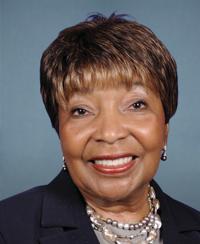
I thank the Chair and Ranking Member of the House Oversight and Government Reform for taking up consideration of H.R. 78, which I introduced to honor our beloved former colleague George Thomas `Mickey' Leland, by having a post office in the 18th Congressional District designated in his name.
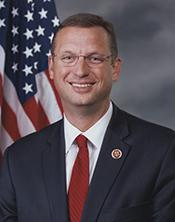
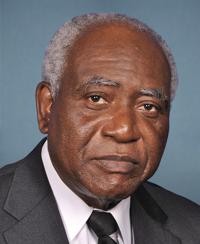
My thanks to Congressman Doug Collins and Congressman Danny Davis for management of the floor debate on this bill.
In 1983, Mickey Leland married Alison Clark Walton, and fathered three wonderful children, Jarrett David; and twins, Austin Mickey and Cameron George Leland, who were born on January 14, 1990, following his tragic death.
On November 27, 1944, George Thomas Leland, III was born to George Thomas Leland, II and Alice Raines, in Lubbock, Texas.
Mickey Leland's mother moved the family, which included his brother William Gaston Leland, to Houston where she worked in a drugstore and later became a teacher.
Mickey Leland thrived in the city of Houston where as a youth he enjoyed a successful career as a high school sports star at the Phyllis Wheatley High School in Houston.
In 1965, Mickey graduated in the top 10% of his class from Wheatley High School and enrolled in Texas Southern University (TSU), where he received a Bachelor of Science degree in Pharmacy in 1970.
Mickey Leland had heart, passion and brains and he used all three to the benefit of the poor and working poor living in the city of Houston.
Following his graduation from TSU he was hired as an Instructor of Clinical Pharmacy at TSU from 1970-1971. This was not enough for Mickey who saw so much work that needed to be done for those in need.
While working as a TSU instructor he established a ``door-to-door'' outreach campaign in low-income neighborhoods to educate people about their medical care options and to perform preliminary health screenings.
Benjamin Mayes once said, ``The tragedy of life is often not in our failure, but rather in our complacency; not in our doing too much, but rather in our doing too little; not in our living above our ability, but rather in our living below our capacities.''
Mickey Leland was not complacent--one of his first efforts in public service was to work with city of Houston health officials to set up community health clinics.
Mickey Leland, as an active member of the Black Community Action Team, (``Black Cats'') worked towards other reform measures, which led to the establishment of the health system for Casa del Amigos.
In Fifth Ward, Houston, Mickey Leland helped initiate a free community health clinic called the Jensen Medical Referral Service. Long before the passage of the Affordable Care Act, he was creating an opportunity for universal health care for poorest of the poor living in the 18th Congressional District.
In 1972, he made the full transition to public servant when he ran for and won election to the Texas House of Representatives to represent the 88th District of Houston Texas. He was reelected to successive two- year terms, serving in the Texas House until 1978.
Mickey Leland was the first African-American legislator in the Texas State legislature to serve on the Senate-House conference Committee as a member of the House Appropriations Committee.
During his time as a member of the Texas House of Representatives Mickey Leland is remembered for promoting legislation that provided Texas residents access to generic prescription medication; and for his support of employment opportunities for minorities.
He also supported the creation of universal access to health care for Texas residents through establishment of Health Maintenance Organizations (HMO's).
In 1978, Mickey Leland expanded his public service to include the entire 18th Congressional District when he was elected to Congress, succeeding the legendary Congresswoman Barbara Jordan.
Congressman Leland served in the United States House of Representatives for nearly 10 years.
He was chosen Freshman Majority Whip in his first term, and later served twice as At-Large Majority Whip.
Martin Luther King, said, ``Human progress is neither automatic nor inevitable . . . Every step toward the goal of justice requires sacrifice, suffering, and struggle; the tireless exertions and passionate concern of dedicated individuals.''
During his time in Congress Mickey Leland engaged in tireless and passionate concern for others. As a member of Congress, he Chaired the Congressional Black Caucus; Advocated for ethnic diversity through affirmative action in broadcast employment both on and off camera to promote responsible and realistic television and cable programming; served as a member of the Energy and Commerce Committee; chaired the Subcommittee on Postal Operations and Services; served on the Committee on Post Office and Civil Service and the Subcommittee on Compensation and Employment; established the Select Committee on Hunger.
Mickey Leland was an effective spokesman for those suffering from hunger in the United States and he joined with Republican Congressman William ``Bill'' Emerson, who represented Missouri's 8th Congressional District, to create the House Select Committee on Hunger.
Through the power of bipartisanship Mickey Leland and Bill Emerson began a mission that still resonates today--that food is a basic human right--and should never be used as a weapon.
The Select Committee on Hunger led by Mickey Leland and Bill Emerson is credited gaining Congressional approval of an $8 million annually appropriation for a developing the nation's Vitamin A program that is believed to have reduced child mortality.
The anti-hunger committee also worked to improve hunger conditions for impoverished neighborhoods in the United States.
Bill Emerson died while in office and was succeed by his wife Jo Ann, who served the people of Missouri's 8th District for many years.
In 1983, in the midst of civil war, the nation of Ethiopia experienced the worse famine in nearly 100 years, which led to more than 400,000 deaths. A significant drought contributed to the famine, but it had more to do with the war that impeded aid and the violence that was visited upon people who were displaced as they searched for food.
He led the effort for the Africa Famine Relief and Recovery Act of 1985. The legislation provided $800 million in food and humanitarian relief supplies.
He was asked by then Speaker Tip O'Neill to lead a bipartisan Congressional delegation to assess conditions and relief requirements in Ethiopia.
Mickey Leland's trip to the Sudan in the spring of 1989, made a tremendous impression on him, which made his mission against hunger a personal commitment to help the Sudanese refugees in Ethiopia.
Throughout his time in the House of Representatives his commitment to end hunger and homelessness became his mission and now it is his legacy.
Nelson Mandela observed that, ``If you talk to a man in a language he understands, that goes to his head. If you talk to him in his language, that goes to his heart.''
Mickey Leland knew how to speak to the hearts of people to move them to action with the goal of relieving suffering where he found it.
The international attention Congressman Leland brought to the plight of famine victims in Ethiopia by his personal commitment to bring non- governmental assistance to support government efforts saved thousands of lives.
Mickey Leland met personally with Pope John Paul II about food aid in Africa.
Pope John Paul II once said, ``Have no fear of moving into the unknown. Simply step out fearlessly knowing that I am with you, therefore no harm can befall you; all is very, very well. Do this in complete faith and confidence.''
While Chairing the Congressional Black Caucus he proudly presented the first awards the Caucus had ever given to non-black recipients: Rock musician Bob Geldorf and news person Ted Koppel.
Bob Geldorf was honored for his Band Aid concert and fundraising efforts for Africa Famine victims; and Ted Koppel was honored for his news stories on the African famine.
On Leland's sixth visit to Africa on August 7, 1989, his plane crashed near Gambela, Ethiopia on a mountainside on his way to visit the Fugnido refugee camp on the Sudan-Ethiopian border. The camp held more than 300,000 Sundanese escaping famine and war in their adjacent country.
The plane, carrying sixteen people, was found after a six day search in southwestern Ethiopia.
Congressman Leland was joined on that fateful flight by: Hugh Anderson Johnson Jr.; Patrice Yvonne Johnson, both his Congressional aides; Joyce Francine Williams, an aide to fellow Congressman Ronald V. Dellums, who served as an expert on child nutrition; Y. Ivan Tillen, a New York businessman and friend of Congressman Leland's; Robert Woods, a political and economic officer at the American Embassy in Addis Ababa; Gladys Gilbert, a special projects officer for the mission of the U.S. Agency for International Development attached to the embassy; Thomas Worrick, the acting AID representative in Ethiopia, and Worrick's wife, Roberta.
Also seven Ethiopians were killed including Debebe Agonofer, an Ethiopian agricultural economist with the AID mission, and six other Ethiopians, including the plane's crew of three.
Mickey Leland's dedication and service were honored at services throughout the State of Texas and in Washington, DC. The U.S. Congress named the Mickey Leland Harris County Courthouse Annex located in the city of Houston in his name. TSU honored Mickey Leland and Barbara Jordon by dedicating the School of Public Affairs as the ``Barbara Jordan and Mickey Leland School of Public Affairs.''
Mickey Leland was laid to rest in accordance to his wishes in a plain pine coffin, under an oak tree in Houston's Golden Gate Cemetery located in his former neighborhood.
Mickey Leland we stand on this floor among the shadows of yesterday and the dreams of tomorrow to honor you for what you have done in far too short a lifetime
There is much more to the life of Mickey Leland that I want to share with my colleagues who will be voting on this bill to name a Post Office in his name. His life's work to end famine, hunger, and provide access to health care to the poor are tremendous in and of themselves, but he contributed much more to the lives of people he touched.
Mickey Leland was a person who loved people and found great joy in gatherings where he could meet new people or share moments with family and friends. He had a great sense of humor and would soon have others laughing at one of his stories or an account of a personal experience.
He accomplished a great deal and still had time to encourage young people to pursue careers in public service. In 1980, Mickey Leland and his close friends J. Kent Friedman and Vic Samuels founded the Mickey Leland Kibbutzim Internship. Mickey Leland was so deeply moved by his visit to Israel in 1979 that he wanted other young people to share that experience. His admiration for the Kibbutzim Movement, and his own childhood experiences of growing up in poverty inspired him to create a program to fund urban youths' travel to the Holy Land.
The Mickey Leland Kibbutzim Internship has benefited outstanding high school students from the fifth Congressional District who demonstrated leadership skills allowing them to have travel to Israel.
To honor his legacy and commitment to youth, the Leland Fellowship Program at the University of Houston was initiated and launched.
The Leland Fellowship Program supports historically, economically disadvantaged students who may want to pursue employment opportunities as congressional staff members.
Leland Fellows are provided with a monthly stipend and round-trip airfare, as well as paid housing. Upon successful completion of the program, interns earn 3-12 upper level hours in political science.
Mickey Leland as Chair of the House Post Office and Civil Service Subcommittee on Postal Operations and Services championed the United States Postal Service--which remains one of the world's most efficient low cost national postal systems.
In 1987, when the Postal service considered closing a 52-year-old post office in Philadelphia he raised questions about the buildings future after the announcement to abolish 87 jobs.
Mickey Leland championed the cause of our men and women of the Postal Service by acknowledging that they were then and remain the most productive and efficient in the entire world. He chaired the committee at a time when the Postal Service was undergoing change and renovations that spoke to its age and the demand for its services by the American public.
It is the one agency that touches every home and business in the United States 6 days a week. The Post Office for roughly a hundred million Americans is the face of the Federal government.
Mickey Leland reminded us that life is made by those who take the hard road and tough challenges. Your mission to change how America viewed famine and hunger was monumental because it saved the lives of millions through domestic and international food programs that you created or inspired.
First Corinthians Chapter 12 verse 11 through 13 reads ``When I was a child, I spoke as a child, I understood as a child, I thought as a child; but when I became a man, I put away childish things. For now we see through a glass, darkly; but then face to face: now I know in part; but then shall I know even as also I am known. And now abideth faith, hope, charity, these three; but the greatest of these is charity.''
George Thomas ``Mickey'' Leland once was a child, but he grew into a man and knew in part the wages of hunger and famine and it was enough to set his course in life to relieve the suffering of people no matter where they were or who they were. He demonstrated charity in the truest sense of the word.
I was proud to call you a friend and mentor--and I am honored to stand before our colleagues in the United States House of Representatives to affirm your impact on the city of Houston, this nation and the world.
I thank my colleagues who join me in honoring former Congressman Mickey Leland by naming the Post Office located at 4110 Almeda Road in Houston, Texas, as the ``George Thomas `Mickey' Leland Post Office Building.''
This post office will be a living memorial to a dedicated public servant. It has been over 25 years since we lost the Honorable George Thomas ``Mickey'' Leland.
I ask that my colleagues in the House of Representatives honor the life and legacy of Honorable George Thomas ``Mickey'' Leland by passing