Electing officers of the House of Representatives.

Legislative Activity
Stay on top of the latest movement without scrolling through every action
Subsequent to the adoption of the resolution, the Chair announced that, without objection, H. Res. 1 is amended by striking "Florida" in the second place it appears and inserting "Oregon".
January 3, 2013 • 5:17 PM
View full timeline
Introduced in House
January 3, 2013
Considered as privileged matter. (consideration: CR H6)
January 3, 2013 • 2:14 PM
Mr. Becerra demanded that the question be divided on the adoption of the resolution so as to have a separate vote on the election of the Chaplain. Agreed to without objection.
January 3, 2013 • 2:14 PM
Passed/agreed to in House: On agreeing to that portion electing the Chaplain Agreed to by voice vote.
January 3, 2013 • 2:15 PM
On agreeing to that portion electing the Chaplain Agreed to by voice vote.
January 3, 2013 • 2:15 PM
Passed/agreed to in House: On agreeing to the resolution Agreed to by voice vote.(text: CR H6)
January 3, 2013 • 2:17 PM
On agreeing to the resolution Agreed to by voice vote. (text: CR H6)
January 3, 2013 • 2:17 PM
Motion to reconsider laid on the table Agreed to without objection.
January 3, 2013 • 2:17 PM
Subsequent to the adoption of the resolution, the Chair announced that, without objection, H. Res. 1 is amended by striking "Florida" in the second place it appears and inserting "Oregon".
January 3, 2013 • 5:17 PM
Floor Debate
18 membersWhat members said about H.Res. 1 on the floor
 MW
MW CBR
CBR DC
DC LD
LD CVH+13
Floor Debate
18 membersWhat members said about H.Res. 1 on the floor
Mr. Speaker, I thank Mr. Rangel for yielding. Mr. Speaker, I rise to oppose H.R. 4, the so-called Jobs for America Act. Six years ago this week marked the collapse of Lehman Brothers. That bankruptcy…
Mr. Speaker, I thank Mr. Rangel for yielding.
Mr. Speaker, I rise to oppose H.R. 4, the so-called Jobs for America Act.
Six years ago this week marked the collapse of Lehman Brothers. That bankruptcy on Wall Street quickly spread across our country, bringing small business lending to a halt, causing a devastating number of foreclosures, and pushing far too many of our fellow Americans into personal bankruptcy.
In the wake of this devastation, Democrats in Congress worked diligently to put in place serious and comprehensive safeguards to prevent another collapse. And, today, my Republican colleagues continue their hard work to thwart that effort and roll back meaningful reform.
Indeed, this bill, H.R. 4, places significant additional administrative hurdles on our Federal regulatory agencies, particularly on our independent financial regulators, like the Securities and Exchange Commission and the Commodity Futures Trading Commission.
Certain provisions of this bill would impose requirements on our financial regulators to conduct onerous cost-benefit analysis, to submit their rules for review to the Office of Management and Budget, and to delay effectiveness of major rules until Congress enacts an unprecedented joint resolution.
Not only would these provisions limit the independence of our Wall Street sheriffs, it would also tie up their already insufficient resources and put them at even greater risk of litigation for every rule. In fact, this bill would create a constitutional crisis by allowing the ``do-nothing'' Republican Congress to intervene in the actions of our executive branch, which is diligently trying to implement critical portions of the Wall Street Reform Act.
The effect of this legislative effort would be to grind to a halt all meaningful regulation on everything from payday loans to mortgage services to the types of risky trading that caused the 2008 crisis. And, ironically, it would stop JOBS Act implementation dead in its tracks. Worst, this comes at a time when House Republicans want to hold funding for our financial regulators flat, despite their new responsibilities, the increase in the number of entities they oversee, and the growth in the complexity and size of U.S. financial markets.
With our economy still recovering from the $14 trillion financial crisis, we simply cannot, under the guise of so-called ``job creation,'' afford to destroy crucial reforms and hamstring our financial regulators.
I enter the following letter of opposition from Public Citizen into the Record.
Public Citizen,
Washington, DC
A Vote for the ``Jobs for America Act'' Is a Vote Against Public Health
and Safety
Republicans will have you believe that a vote for H.R. 4,
the ``Jobs for America Act,'' is not a vote against clean air
and water, against food safety, against safe consumer
products, against safe workplaces, and against a stable
financial system less prone to excessive risk-taking. But
that is false. The Impact of the ``Jobs for America'' Act is
clear and simple: it will lead to more polluted air and
water, more dangerous workplaces, more tainted and
contaminated food, more dangerous workplaces, and a
deregulated Wall Street allowed to gamble our economy into
the next financial crash. By taking regulators ``off the
beat'' and preventing them from updating and modernizing
basic health and safety protections, the public is once again
dependent on Big Business to ``self-regulate.'' Our public
has seen the disastrous impact of letting industry regulate
itself whether it's the BP Gulf Oil Spill, the West Virginia
Chemical Spill, The Upper Big Branch Mine explosion, oil
train derailment explosions, or the Wall Street financial
meltdown. The solution is not to make our public even more
vulnerable to deregulatory disasters that put Americans in
harm's way and damage our economy as the ``Jobs for America
Act'' would do.
The enormous costs of deregulation
a. West Virginia Chemical Spill: those who were hurt by the
damage caused by the spill are claiming 160 million in
damages from the spill. These include small businesses in
Charleston who were forced to shut down for days and the many
thousands of residents who were forced to buy bottled water
because of the severe water contamination. http:// www.insurancejournalcom/news/southeast/2014/08/12/337282.htm
b. Lake Erie Algae Bloom: a half million Ohio residents
were forced to buy bottled water because their water had
become so badly contaminated from algae. In 2008, the
government estimated algae blooms resulted in 82 million
dollars annually in economic damages: http:// www.cop.noaa.gov/stressors/extremeevents/hab/current/ econimpact 08.pdf the damage to Lake Erie can be directly
traced to successful attempts to roll back the Clean Water
Act by special interests. http://www.foodandwaterwatch.org/ blogs/the-toledo-water-crisis-wont-be-the-last/ c. Oil Freight Train Explosions: Trains carrying highly
explosive crude oil are traveling through communities every
day without most of those communities even aware of the
threat. A massive oil train derailment and explosion in
Canada killed 47 people and will cost 2.7 billion in economic
damages over the next decade. http://bangordailynews.com/ 2014/04/17/news/state/after-end-of-the-world-explosion- Quebec-town-tries-to-find-hope/ d. Preventable Workplace Deaths and Injuries: Every day, an
average of 150 workers die from job injuries or occupational
diseases. Every year, the lack of effective workplace safety
protections costs our country 250 billion to 330 billion in
injuries and illnesses. http://www.aflcio.org/content/ download/126621/34645631/DOTJ2014.pdf
e. Climate Inaction: Blocking or delaying new carbon
emission rules from the EPA and other climate change measures
will cost our country up to 150 billion dollars annually in
economic damage in the future. http://fortune.com/2014/07/29/ white-house-in-action-on-climate-costs-150-billion-a-year/ f. BP Oil Spill: This massive environmental disaster in the
Gulf ended up costing more than 42 billion dollars. The oil
spill harmed thousands of Gulf Coast residents and destroyed
many local small businesses. BP has now been found ``grossly
negligent'' in causing the disaster and faces up to 18
billion in fines, some of which will go to Gulf Coast
restoration projects. http://www.edf.org/blog/2014/09/05/bp- oil-spill-ruling-could-jumpstart-gulf-coast-restoration-work
g. 2008 Wall Street Crash: The rampant deregulation that
led to the crash cost our economy anywhere from 6 trillion to
14 trillion dollars or 50,000 to 120,000 for every US
household. In addition, 8.7 million Americans lost their jobs
during or immediately following the crisis. http:// ourfinancialsecurity.org/blogs/wp-content/ ourfinancialsecurity.org/uploads/2012/09/Costs-of-The- Financial-Crisis-September-20142.pdf
The ``Jobs for America Act'' will not create a single job
The bill trades on the fallacy that deregulation leads to
job growth by freeing up capital to invest in labor. There is
simply no neutral, non-partisan empirical evidence to back
this up. In fact, journalists and academics who have
thoroughly studied this claim have concluded that regulations
have no overall effect on job growth. The claim that
regulations kill jobs is the very definition of a baseless
and fabricated talking point.
A thorough investigative report by the Washington Post
concluded that regulations
have no effect on jobs (highlights below): http:// www.washingtonpost.com/business/economy/does-government- regulation-really-kill-jobs-economists-say-overall-effect- minimal/2011/10/19/gIQALRF5IN story.html.
Conservative thinker Richard Morganstern (Resources for the
Future): ``Based on the available literature, there's not
much evidence that EPA regulations are causing major job
losses or major job gains.''
Mike Morris, CEO of AEP, one of America's largest coal-
based utilities even admitted EPA regulations will create
jobs: ``We have to hire plumbers, electricians, painters,
folks who do that kind of work when you retrofit a plant''
Morris said. ``Jobs are created in the process--no question
about that.''
A recent and exhaustive exploration of the ``job-killing
regulation'' claim by Academics from across the political
spectrum concluded that regulations have no net impact on
jobs: http://www.upenn.edu/pennpress/book/15183.html
The editors of ``Does Regulation Kill Jobs?'' Cary
Coglianese and Christopher Corrigan conclude: ``the empirical
work suggests that regulation plays relatively little role in
affecting the aggregate number of jobs in the United
States.''
Big business ``job-killing'' claims are always wrong
Big Business groups have been making hyperbolic claims
about regulations killing jobs for decades and it never comes
true. Not only is this talking point patently false, but it
also never dies despite being proven wrong every time. The
following examples are from Public Citizen's recent report,
``It's an Outrage: Regulations are Entirely to Blame for
Unemployment and a Leading Cause of Death, According to
Industry and Allies'' http://www.citizen.org/documents/ regulations-are-to-blame-unemployment-death-report.pdf
1974: OSHA bans the carcinogenic vinyl chloride. The
plastics industry claimed that the OSHA regulation would kill
2.2 million jobs. Those claims were proven completely false
and a new way manufacture vinyl chloride was developed within
a year without any jobs lost.
1975: NHTSA increases fuel efficiency standard. Industry
reports warned of 1.5 million jobs lost. By 1985, auto makers
had met the higher standard without losing any jobs.
1990: EPA sets new pollution standards under the Clean Air
Act. In response the Business Roundtable (BRT) and National
Federation of Independent Business (NFIB) responded with
doomsday hysterics, claiming up to 2 million jobs would be
lost. Those were proven entirely wrong. Instead, according to
the Investor's Business Daily, ``Pollution has been falling
across the board for decades, even while the nation's
population and economy have expand
1995: EPA removes lead from gasoline. A Monsanto official
testified to Congress that the regulation would cost up to 43
million jobs. The removal of lead is now considered one of
the biggest public health success stories while gas prices
did not dramatically increase and no jobs were lost.
The new industry-funded study on regulations doesn't pass the laugh
test
The study just released by the National Association of
Manufacturers (NAM) is not worth the paper it is printed on.
NAM turned to discredited economists whose last study was so
poorly done and inaccurate that it was roundly criticized by
observers in bipartisan fashion, including by the CRS,
Republican economists, and then OIRA Administrator Cass
Sunstein. The study brought so much negative attention that
the agency which commissioned it, the Small Business
Administration, had to formally and publicly disavow it.
Business Media Push Industry-Funded Study On Federal
Regulations Experts Call ``Bogus'': Reuters and CNBC
uncritically promoted a new report claiming that government
regulations cost the economy over $2 trillion each year,
ignoring any benefits of regulation. But the study uses the
same flawed methodology as an earlier report by the same
authors that was so widely panned that even the organization
that commissioned it distanced itself from it. http:// mediamatters.org/research/2014/09/11/business-media-push- industry-funded-study-on-fe/200732
NAM's ``Cost of Regulations'' Estimate: An Exercise in How
Not to Do Convincing Empirics: The bulk of these costs (75
percent) are estimated using a cross-country regression
analysis. This cross-country analysis, however, is completely
unconvincing and should be ignored. http://www.epi.org/ bloginams-cost-regulations-estimate-exercise/
The ``Jobs for America Act'' is a Broken Record
The ``Jobs for America Act'' is just a re-packaging of the
same old and tired legislation that the House has already
passed. Each of these bills, if enacted, will significantly
exacerbate the current problems in our regulatory system.
Collectively, these bills amount to a virtual shutdown of our
system of public protections by blocking federal agencies
from responding to public health and safety crises and
putting forth strong new safeguards to prevent the next one.
1. Regulations from the Executive in Need of Scrutiny Act
(REINS, HR): This bill is a blatant power grab by the House
GOP. Requiring Congressional approval of regulations before
they take effect means, in practical terms, that the House
GOP can unilaterally veto any regulation it opposes. Even
Congressional inaction would kill a regulation. This is a
recipe for extending the same paralysis and dysfunction that
has plagued our lawmaking process to the regulatory process.
2. Regulatory Accountability Act (RAA, H.R. 2122): This
bill would re-write dozens of critical public health and
safety laws, including the Clean Air Act, to require agencies
to choose safety standards not based on whether they are the
most effective but on whether they are the least burdensome
to regulated special interests. This bill is a backdoor way
of gutting laws that the GOP knows are too politically
popular to overturn directly.
3. Regulatory Flexibility Improvements Act (RFIA, H.R.
2542): This bill is a small business bill in name only. It
does nothing to help small businesses directly. Instead, it
would delay or block rules that in many instances
disproportionately impact Big Business. For example, the bill
requires agencies to consider the ``indirect'' effects of
their rules on small businesses without ever defining what
constitutes an ``indirect'' effect. Ordering an agency to
discern all indirect economic impacts of any rule, however
small, is akin to ordering a meteorologist to discern the
effects on Washington, D.C. weather of a butterfly flapping
its wings in Japan. Even worse, agencies could be sued by
industry for not complying with this wholly undefined
mandate. Agencies will be forced to waste precious time and
resources looking for small business impacts where there
clearly are none. In the meantime, lives could be lost and
people could be needlessly injured.
4. Unfunded Mandates Reform Act (UMRA, H.R. 899): Once
again, this legislation forces agencies to pick the least
costly rule to industry, rather than the rule that is most
effective at keeping the public safe. It also undermines the
independence of important agencies that are working to put
new Wall Street reforms and product safety standards in
place. Ironically, the new mandates in this bill do not come
with any additional funding for agencies, making them the
very definition of ``unfunded mandates.''
5. The Sunshine for Regulatory Decrees and Settlements Act
(H.R. 1493): This legislation targets citizen suits aimed at
spurring agencies to move forward with overdue and
congressionally mandated protections. Consent decrees and
settlement agreements have long been an effective tool to
provide citizens and the courts with a means of ensuring that
Congressional mandates are implemented, whether they are new
environmental safety standards or civil rights and
antidiscrimination measures. This bill would force them to
run a gauntlet of burdensome, time-consuming, and redundant
procedures--furthering slowing agency action. This bill would
weaken the power of citizens to ensure agencies follow the
law--and waste government resources in the process.
6. The All Economic Regulations are Transparent (``ALERT'')
Act (H.R. 2804): This legislation would add a blanket six-
month delay to most rules essential to protecting the health,
safety, and welfare of the American public. When the norm is
federal agencies missing Congressional and legal deadlines
for new public protections, rather than meeting or beating
deadlines, the last thing our public needs is more delays.
Bottom Line
A vote for H.R. 4, the ``Jobs for America Act,'' is a vote
against life-saving public health and safety standards and
will put American lives at risk without creating any jobs. We
need stronger public protections, not a weaker system of
safeguards. We need better enforcement of health and safety
and environmental rules, not more needless delays.
We urge you in the strongest terms to vote against the
``Jobs for America Act.''
Mr. Speaker, I would like to submit the following:
Americans for Financial Reform,
Washington, DC, September 18, 2014.
Dear Representative: On behalf of Americans for Financial
Reform (AFR), we are writing to urge you to oppose H.R. 4,
the ``Jobs For America Act''. Division III of the legislation
contains a number of extremely problematic provisions that
would require regulatory agencies to satisfy dozens of
additional mandates prior to any regulation of Wall Street,
and which would create numerous additional opportunities for
large financial firms to block any government action in
court. AFR has joined the Coalition for Sensible Safeguards
and dozens of other civil society organizations in a joint
letter opposing these provisions.
We would also like to draw attention to Title I of Division
II of this legislation, the ``Small Business Capital Access
and Job Preservation Act''. This legislation would exempt
private equity fund advisors--who include some of the
wealthiest and most significant entities on Wall Street--from
registration and reporting requirements designed to allow
regulators to protect investors and the public and monitor
risk in the financial system.
Prior to the Dodd-Frank Act, hedge and private equity funds
received almost no regulatory monitoring, despite the fact
that they manage some $3 trillion in assets in total on
behalf of numerous investors, including many pension funds.
The Dodd-Frank Act created more transparency for this
previously dark portion of the markets, by requiring hedge
and private equity fund advisors to register with the
Securities and Exchange Commission (SEC), maintain a code of
ethics and a compliance program, and report basic financial
information relevant to systemic risk. This legislation would
effectively exempt all private equity fund advisors from
these requirements.
Since this legislation was voted on as a stand alone bill
in December, 2013 as H.R. 1105, the SEC has reported publicly
on its basic `presence examinations' of private equity fund
advisors pursuant to its new Dodd-Frank responsibilities.
These examinations found widespread evidence of abuse of
investors and violations of the law. In a recent speech,
Andrew Bowden, the SEC's Director of Compliance Inspections
and Examinations, stated that ``when we have examined how
fees and expenses are handled by advisers to private equity
funds, we have identified what we believe are violations of
law or material weaknesses in controls over 50% of the
time''. The speech details evidence of deception and abuse of
investors in other areas as well. Mr. Bowden also stated that
due to the opaque nature of the private equity model and the
limited information rights of investors, outside investors in
private equity funds ``often have little to no chance of
detecting'' these abuses on their own.
Given the findings of the SEC in its initial investigations
of private equity advisors, it is deeply disappointing to see
that the House is once again pursuing a broad exemption from
registration, reporting, and associated ethics requirements
for private equity advisors. The passage of ``The Small
Business Capital Access and Job Preservation Act'' would
effectively remove the SEC's most effective tool for
addressing the evidence of widespread investor abuses
recently uncovered through their examinations. We urge you to
oppose this legislation.
Thank you for your consideration. For more information
please contact AFR's Policy Director, Marcus Stanley.
Sincerely,
Americans for Financial Reform.
Mr. Speaker, I yield myself such time as I might consume. It is awkward and embarrassing to stand on this floor to discuss something described as a Jobs for America bill. Fortunately, we Democrats…
Mr. Speaker, I yield myself such time as I might consume.
It is awkward and embarrassing to stand on this floor to discuss something described as a Jobs for America bill.
Fortunately, we Democrats don't have to expend too much energy because of the lack of credibility that the majority party has with any type of legislation designed to help those people who are without employment.
The irony of this whole thing is that our distinguished chairman spent hours, days, weeks, and months putting together a tax reform bill that, even though it could be challenged in parts, all tax writers and people who respect the necessity of reforming the Tax Code lauded him for the work, the fairness, and, most of all, the lack of partisanship that went into that bill.
Indeed, many of the provisions that are in this bill that could better be described as an opportunity for corporates to avoid paying taxes, many of those provisions in this bill were repealed in the chairman's bill that he presented to the Congress to be considered for reform.
Let me strike that from the record. He did not bring it to the floor for it to be considered for anything. It was a strong political statement that he knew the majority of his party would not support.
Having said that, it was a fine piece of legislation that gained support by eliminating the very same violations of equity and fair play that are now in this bill.
$500 billion tab. $500 billion cost, not paid for, not a promise to pay for. And half of this is to make permanent the extension of bonus appreciation, which all economists, including those in the Congressional Research Service, say that in order to be effective, it should not be made permanent.
In any event, I think, as we go home, we should recognize that there will be opportunity when we come back to really get together and have an effective bill.
To do this, the Republican majority should not bring to the floor bills that have passed the House and been rejected already by the Senate, but should sit down with the administration, with the Senate, with the minority in the House and work out something that is for the good of all Americans.
This happened yesterday, where we had honest, serious disagreements. But at the same time, we came together as a Congress in the House at least on what is good for the country.
So, quite frankly, I don't think I will be using all of my time because what is before the House today is not a jobs bill but a public relations piece of political advertisement.
I reserve the balance of my time.
Mr. Speaker, I yield myself such time as I may consume.
If we were serious about passing a bill that has been rehashed in this House and no action has been taken upon it, common sense and reason would dictate that we would work with the Democrats, work with the Senate, and work with the President to get one passed.
This bill transcends over eight or nine different legislative committees, and the ranking member--one who has so much jurisdiction over this issue--would share with the House and the country what parts of this bill she believes would create jobs, if any part.
Mr. Speaker, I yield 3 minutes to the distinguished gentlewoman from California (Ms. Waters).
Mr. Speaker, I yield myself such time as I may consume.
Certainly, we all will be getting a lot of mail from the logging companies asking for this legislation in order to create jobs. I wish included in this package would have been the earned income tax credit, a bill that keeps people who work hard each and every day out of poverty by subsidizing their wages, but that is too much like creating jobs, and it is not in this package.
I yield 3 minutes to the gentleman from Georgia (Mr. Johnson), a distinguished and articulate Member who serves on the Judiciary Committee and has a ranking position on the subcommittee that has jurisdiction over part of this bill.
Mr. Speaker, I yield myself such time as I may consume.
I want to thank the gentleman from Pennsylvania, my friend, who eloquently mentioned how the Congress should and could be working more closely together. Again, I say that yesterday proved it.
I am certain that the eloquent gentleman from Pennsylvania would have to agree that, if we were passing bills in the House and they were not going anywhere, any legislator would have to find out why.
It would seem to me that we would go to the minority party, we would ask
to sit down with the Senate, we would work with the Department of Labor and the administration, and we would do that just before we were going home to attempt to get reelected.
I don't challenge the sincerity of the gentleman from Pennsylvania, but just bringing in bills that you know are not going to pass the Senate, bringing in bills the administration has already said that they would veto is not the way to success. It may be a good political statement, but it is certainly not the way to pass legislation.
I have the great honor to yield 3 minutes to the gentleman from Maryland (Mr. Cummings), who has distinguished himself nationally in terms of being a legislator with a heart and common sense.
He is the ranking member of the Oversight Committee, that has attempted to show the entire country exactly what is going on and not going on in the Congress. I look forward to his eloquent remarks on this sensitive, important subject.
Mr. Speaker, I yield myself such time as I may consume.
Mr. Speaker, I would not suggest to the distinguished gentleman from Illinois what he should be doing as a part of the majority, but if I had a bill as good as the one that he had, I certainly would not allow it to be included in this piece of political legislation. Because it would serve the veterans of this great country, I would say, give me a break and let the House and the Senate and the President give this legislation a chance.
But I am not in the majority, and I respect that you are doing the best you can with what you have to work with, and I respect you for that.
Mr. Speaker, I yield 3 minutes to the gentleman from Maryland (Mr. Van Hollen), who is the ranking member of the Budget Committee.
Most Americans know, like with our family, he has the responsibility to suggest to this august body exactly how much we are spending, how much we owe, and which is the best way to bring some balance to it, and I am so proud to be able to serve with him.
I yield the gentleman from Maryland 30 more seconds.
I yield the gentleman as much time as he may consume to close.
Mr. Speaker, I yield myself such time as I may consume.
Mr. Speaker, before I yield to the gentleman from Maryland to inform the gentleman from Georgia more about these corporations that are attempting to flee the United States, I would like to have good news for the distinguished chairman of the committee that this veterans bill has been so popular on the other side of the Capitol that it appears as though it is included in a Senate bill and, as we talk, is actually being attacked by the Republican minority on the other side. So, at least as relates to the veterans, if we can take it out of this hodgepodge that has politically been put together, maybe collectively we can do something for our beloved veterans.
As far as the gentleman from Georgia is concerned, he had a problem in identifying the U.S. company that is going to receive a bonus, that is fleeing their tax obligation.
Mr. Speaker, I yield such time as he may consume to the gentleman from Maryland (Mr. Van Hollen) so he can help clarify those issues to explain exactly how this provision is costing us.
Mr. Speaker, I yield 3 minutes to the gentleman from Texas (Mr. Doggett), a hardworking gentleman on the Ways and Means Committee, one who has been outspoken on all of the issues that concern national security as well as the protection of our economy.
I yield the gentleman an additional 2 minutes.
Mr. Speaker, I yield 3 minutes to the gentleman from Wisconsin (Mr. Kind), my friend and a distinguished, eloquent member of the Ways and Means Committee.
I yield the gentleman an additional 1 minute.
Mr. Speaker, I yield 3 minutes to the gentleman from Illinois (Mr. Davis), one of the hardest working members of the Ways and Means Committee.
I yield myself the balance of my time.
Mr. Speaker, as we close out on this bill, I would like to enter into the Record a report by the Center on Budget and Policy Priorities. This is an objective report on the subject that we have just talked about, and that is whether or not the Affordable Care Act has caused a loss in full-time jobs. This report clearly shows that we have had a rise in full-time work in connection with the health care reform bill.
[From Off the Charts, Sept. 17, 2014]
Census Report Shows Rise in Full-Time Work, Undercutting Claims by
Health Reform Opponents
(By Paul N. Van de Water)
Yesterday's Census Bureau report shows that the share of
workers with full-time, full-year work rose in 2013, while
the share with part-time, part-year work fell. This finding
further undercuts assertions that health reform is causing a
large increase in part-time employment--as proponents of a
House measure to change health reform's rules on covering
full-time workers claim.
Health reform requires employers with at least 50 full-
time-equivalent workers to offer coverage to full-time
employees--defined as those who work at least 30 hours a
week--or pay a penalty. Critics claim that employers are
shifting some employees to part-time work to avoid offering
them health insurance. But the data provide scant evidence of
such a shift.
To the contrary, part-time work became less frequent last
year. ``An estimated 72.7 percent of working men with
earnings and 60.5 percent of working women with earnings
worked full time, year round in 2013, both percentages higher
than the 2012 estimates of 71.1 percent and 59.4 percent
respectively,'' according to the new Census report. These
data are consistent with a recent Urban Institute analysis
that found little evidence that health reform has increased
part-time work.
The share of involuntary part-timers--workers who'd rather
have full-time jobs but can't find them--tells a similar
story. If health reform were distorting hiring practices, as
critics assert, we'd expect the share of involuntary part-
timers to be growing. Instead, as the chart (based on Labor
Department data) shows, it's down by 1\1/2\ percentage points
from its post-recession peak. My colleague Jared Bernstein
finds that this pattern is typical for this stage of a
recovery.
Later this week, the House will consider a proposal (part
of a so-called ``jobs bill'') to raise health reform's
threshold for full-time work from 30 to 40 hours. But this
step would make a shift toward part-time employment much more
likely--not less so.
Only about 7 percent of employees work 30 to 34 hours (that
is, at or modestly above health reform's 30-hour threshold),
but 44 percent of employees work 40 hours a week and thus
would be vulnerable to cuts in their hours if the threshold
rose to 40 hours. Employers could easily cut back large
numbers of employees from 40 to 39 hours so they wouldn't
have to offer them health coverage.
If you exclude workers at firms that already offer health
insurance and thus won't be tempted to cut workers' hours,
more than twice as many workers would face a high risk of
reduced hours under a 40-hour threshold than under the
current 30-hour threshold, according to New York University
economist Sherry Glied.
There's little evidence to date that health reform has
caused a shift to part-time work. There's every reason to
expect the impact to be small as a share of total employment,
as we have explained. And raising the cutoff for the employer
mandate from 30 to 40 hours a week would be a step in the
wrong direction.
Now, the gentleman knows also that in order to get a bill passed, it really helps if you get the cooperation of the President of the United States.
I would like to submit a statement for the Record from the administration which says that if this bill was to reach him that he would be forced to follow the advice of his administration specialists and veto it.
On the other hand, I think it is abundantly clear that the Speaker knows that the President has reached out to him and to the Senate to come together to create jobs.
Statement of Administration Policy
H.R. 4--Jobs for America Act
(Rep. Camp, R-Michigan, and 4 cosponsors)
The Administration strongly opposes House passage of H.R.
4, which incorporates several bills that have previously been
passed by the House during this Congress, including a number
of bills for which the Administration issued Statements of
Administration Policy strongly opposing passage and
indicating that, if presented to the President, his senior
advisors would recommend that he veto them.
The Administration wants to work with Congress to make
progress on measures that strengthen the economy and help
middle class families, including pro-growth business tax
reform. The Administration continues to support tax proposals
that would benefit the Nation's economy and small businesses,
such as making permanent the research and experimentation tax
credit and increased expensing for small businesses. However,
making traditional tax extenders and costly business tax cuts
permanent without offsets, while at the same time allowing
taxes to increase on 26 million working families, represents
the wrong approach.
In addition, the Administration welcomes ideas to improve
the Affordable Care Act. However, H.R. 4 would undermine that
Act by shifting costs to taxpayers and causing fewer
Americans to have employer-sponsored health insurance
coverage.
Also, the Administration is committed to ensuring that the
benefits of regulation justify their costs and that they are
tailored to advance statutory goals in a manner that is
efficient, is cost-effective, and minimizes uncertainty.
However, H.R. 4 would throw all major regulations into a
months-long limbo, marking a significant departure from the
longstanding separation of powers between the Executive and
Legislative branches and, fostering uncertainty and impeding
business investment that is vital to economic growth.
Furthermore, the bill would impose other unnecessary
requirements on agencies that would seriously undermine their
ability to execute their statutory mandates.
Finally, the Administration is committed to sound long-term
management of Federal lands for continued productivity and
economic benefit, as well as for the long-term
health of the wildlife and ecological values sustained by
these holdings. However, H.R. 4 includes numerous harmful
provisions that would impair responsible management of
Federally-owned lands and undermine many important existing
public land and environmental laws, rules, and processes.
If the President were presented with H.R. 4, his senior
advisors would recommend that he veto the bill.
Lastly, I would like to say, as the distinguished chair moves on to his retirement from this august body, that for as long as the gentleman has been a member of this Ways and Means Committee that I have admired and I continue to respect the fine work that he has contributed to the committee as well as to this House, and that his honesty, candidness, sincerity, and hard work to make this a better Congress and a better country certainly is appreciated now and will be in the future.
And I would hope that the hard work that he has done on tax reform-- which is a very difficult, complex subject to deal with--that we might try to remember him for the fine work that he has done over these years, rather than on the eve of an election, where sometimes the leadership would want to make a political statement.
I, for one, will never associate him with this piece of legislation, but, rather, for the outstanding contributions that he has made year after year, session after session--not for Republicans, not for the committee, but for this great country. And I thank him for his friendship over the years.
I yield back the balance of my time.
Mr. Speaker, pursuant to House Resolution 727, I call up the bill (H.R. 4) to make revisions to Federal law to improve the conditions necessary for economic growth and job creation, and for other…
Mr. Speaker, pursuant to House Resolution 727, I call up the bill (H.R. 4) to make revisions to Federal law to improve the conditions necessary for economic growth and job creation, and for other purposes, and ask for its immediate consideration.
Mr. Speaker, I ask unanimous consent that all Members have 5 legislative days in which to revise and extend their remarks and to include extraneous material on H.R. 4.
Mr. Speaker, I yield myself such time as I may consume.
Every day, honest, hardworking men and women are struggling. Far too many families haven't seen a pay raise in years, and many have lost hope and stopped looking for work entirely. H.R. 4, the Jobs for America Act, will strengthen the economy by creating more jobs with higher take-home pay.
The House has already passed dozens of bipartisan solutions that will break down burdensome regulations and promote policies that allow businesses, large and small, to do what they do best: grow, innovate, and hire new workers.
The bill we have before us today, the Jobs for America Act, includes provisions that have strong bipartisan support in both the House and the Senate.
The research and development credit, which has been around for over 30 years, is a proven way to incentivize U.S. companies to innovate, create new products, and invest in the U.S.
The United States is the only country that allows important pieces of its Tax Code to expire on a regular basis. Businesses cannot grow and invest when the Tax Code is riddled with instability and uncertainty.
Making the R&D tax credit permanent also supports good-paying jobs. According to the National Association of Manufacturers, 70 percent of research and development credit dollars are used to pay salaries of R&D workers.
The nonpartisan Joint Committee on Taxation estimates that making the R&D credit permanent could increase the amount of research and development American companies undertake by up to 10 percent. That translates into more workers, higher wages, and increased innovation here in the United States.
This bill would also make permanent bonus depreciation and section 179 expensing at higher levels, allowing businesses, farmers, and ranchers to plan for the future and expand their businesses. The result of that is more jobs and higher wages for hardworking Americans. The Tax Foundation analysis found that permanent bonus depreciation would add $182 billion to the economy and increase wages by 1 percent, which creates 212,000 jobs.
Additionally, the bill would make permanent several expired tax provisions that benefit S corporations, a popular and important business structure that is used by millions of small businesses across the country.
This commonsense effort will give small businesses some much-needed relief from the burdens of the Tax Code, allowing them to invest and create new jobs.
This bill would also repeal some of the job-killing provisions of the health care law. The current 30-hour rule in the Affordable Care Act's employer mandate results in fewer jobs, reduced hours, and less opportunity for Americans.
By changing the definition of ``full-time work,'' ObamaCare places an unprecedented government regulation on workers. As a direct result, Americans across the country are having their hours cut at work and seeing smaller paychecks. At a time when the cost of groceries, gas, and health care keep increasing, lower paychecks are simply unacceptable.
Worst of all, the law hits lower-income Americans the hardest: 2.6 million workers with a median income of under $30,000 are at risk of losing jobs or hours; 89 percent of workers impacted by the rule don't have college degrees, 63 percent of which are women; and over half have a high school diploma or less.
So simply restoring the definition of ``full-time work'' to 40 hours will ensure the hardest-working Americans don't see their hours and wages cut as a result of the health care law.
This bill also ensures that small businesses that hire veterans returning from service overseas, who already have coverage through TRICARE or the VA, are not counted under the employer mandate.
And we repeal the onerous medical device tax, which is stifling medical innovation and hurting jobs. According to a survey by AdvaMed, the medical device tax has already resulted in 14,000 jobs lost in the industry and prevented 19,000 jobs from being created. This tax is contributing to lackluster job creation and hampering medical innovation.
We have strong bipartisan support for repeal of this tax, and for repealing it before even more detrimental harm is done to the workforce and medical community.
These are only a few among a long list of policies that will ultimately get Americans back to work and increase their quality of living. With better jobs, higher take-home pay, and a stronger economy, we can offer a brighter future for our youth and ease the everyday burdens felt by individuals nationwide.
It is time to create an America that works.
Mr. Speaker, I reserve the balance of my time.
Mr. Speaker, I yield 2 minutes to the gentleman from Virginia (Mr. Goodlatte), the distinguished chairman of the Judiciary Committee.
Mr. Speaker, at this time, I yield 3 minutes to the gentleman from Washington (Mr. Hastings), the gentleman from the Natural Resources Committee.
Mr. Speaker, I yield 3 minutes to the gentleman from Pennsylvania (Mr. Kelly), a distinguished member of the Ways and Means Committee.
Mr. Speaker, I yield 2 minutes to the distinguished gentleman from Illinois (Mr. Rodney Davis).
Mr. Speaker, I yield myself such time as I may consume.
I would just say my friend from Maryland mentioned the Hire Our Heroes Act. That received virtually every Democrat vote and Republican vote on the floor but one. I certainly trust that the gentleman from Maryland has urged his two Democrat Senators in the Senate to take this bill up and pass it. It has been sitting in the Senate. It is blocked.
Certainly, we don't think those who fight for our country should be penalized when they come back to the United States in terms of getting their health care. This would certainly help tremendously, and it is something that has received large bipartisan support.
Every one of these provisions help create jobs, and certainly all of them have bipartisan support:
R&D, the research and development credit, 62 Democrat votes;
Section 179, extending, 53 Democrat votes;
The S corporation reform, 42 Democrat votes;
Bonus depreciation, 34 Democrat votes;
Repealing the 30-hour work week rule, 18 Democrat votes.
All of these have bipartisan support. They are all sitting in the Senate.
I heard the gentleman say maybe nothing is being done. Well, I would submit, my friends on the other side, other than voting for these bills, have done nothing to urge their colleagues who have the majority in the Senate to move something that will actually get people back to work and really bring the American Dream back in reach for millions of Americans, and it isn't now.
Mr. Speaker, I yield 2 minutes to the distinguished gentleman from Georgia (Mr. Kingston).
I yield the gentleman an additional 1 minute.
Mr. Speaker, I yield 2 minutes to the gentleman from Indiana (Mr. Young), a distinguished member of the Ways and Means Committee.
Mr. Speaker, I yield 2 minutes to the distinguished gentleman from Virginia (Mr. Hurt).
Mr. Speaker, I yield myself such time as I may consume.
I would just say to my good friend from Wisconsin that that was part of the story. Many of these provisions that are bipartisan job-creating provisions have been extended time and time again without being ``offset,'' without being ``paid for.''
Look at the research and development tax credit. It has been extended 15 times over a 33-year period. It has never been paid for, but it is temporary, so it doesn't have the impact on innovation and research and development. That is what drives economies. That is what grows jobs.
Let's make this permanent. Let's not be the only nation in the world with a temporary tax policy. Then we wonder why we are not growing. Then we wonder why median incomes are flat or are declining. Then we wonder why people aren't achieving the American Dream.
Some of my friends have talked about the Senate. They didn't pay for this. What did they do? They extended some of these policies backwards a year and forward 1 year. How can anyone decide to hire a worker, to build a new building, to buy equipment, to start a new production line on 1 year of policy? This is about permanency, and it is about growing jobs.
I yield 3 minutes to the distinguished gentleman from Minnesota (Mr. Paulsen), a member of the Ways and Means Committee.
I am prepared to close, so I reserve the balance of my time.
Mr. Speaker, I yield myself such time as I may consume.
I thank the gentleman from New York for those kind remarks and also for the work we have been able to do together over the years.
I remember the first legislation that we really worked together on was the Adoption and Safe Families Act, which was signed into law and has done a lot to move children from a temporary situation into a permanent loving home. And I want to thank the gentleman for his leadership on that and other issues on the committee.
And as a former chairman of the committee, you have sat in the chair I am sitting in right now and know what a challenge it can be at times. But we have done some great work together.
I do happen to believe, though, that this legislation would create jobs. And it is not just my opinion. These provisions have been analyzed by the nonpartisan Joint Committee on Taxation, and that indicates that these are all important provisions.
There has been some reference to the fact that we are close to an election. And I think clearly what most Americans are sick of is the dysfunction in Washington, the lack of ability for the two parties to get together, whether it is the Republicans and Democrats in the House or Democrat majorities in the Senate and Republican majorities in the House. And these are all bipartisan provisions. These are all tax provisions that have had significant Democrat support and votes. In the case of the Help Hire Our Heroes Act, I think every Democrat but one voted for it. Clearly these are things that will help create jobs.
And not only do Americans want to see the dysfunction in this body end, but they would like to see something that will help move the economy forward, that will help make their lives better.
If you look at polling--there is certainly a lot of polling out there right now--a lot of Americans know that things are not as good as they should be. I mean, it clearly comes across in the polls how dissatisfied they are. And there are lots of reasons for that, largely because median incomes are declining.
But what is really troubling is that Americans don't believe that things are going to get better. They are worried that, for the first time, their children or their brothers and sisters or their family members or they will not have the same opportunities that many of their parents or some of their friends have had. That is a very troubling situation.
This is legislation that will help move the ball forward on getting some economic growth, some job creation, a stronger economy. And with that stronger economy comes more jobs, comes higher wages, comes benefits so that people can pay for food and gas and put something aside for their retirement and for their kids' education.
These are all things that have been extended repeatedly with bipartisan support. As I mentioned, R&D, 30 years; section 179, expensing for small businesses, 10 years; some of the S Corp perform, 12 years--seven times since 2006.
So let's not have a temporary policy. Let's make this permanent. Let's get this country moving again. Let's restore that faith that people have had in this country and in the American Dream. Let's vote ``yes'' on H.R. 4.
Mr. Speaker, I yield back the balance of my time.
I thank the gentleman. Mr. Speaker, House Republicans are shutting down this House early today, and they are shutting it down with the same happy talk and tax cut hocus pocus that they began this…
I thank the gentleman.
Mr. Speaker, House Republicans are shutting down this House early today, and they are shutting it down with the same happy talk and tax cut hocus pocus that they began this Congress with 21 months ago, last January.
That is when Speaker Boehner reserved H. Res. 1 for a form of Miracle-Gro. They were going to sprinkle around Miracle-Gro tax cuts-- more special interest tax breaks on everyone--and they would grow money faster than it could grow on trees. They have given us so much talk and so many press conferences about how they would do away with all of these complex special interest provisions that Republicans have spent years writing into law for their buddies--into their Tax Code--and we would all have brighter smiles and, certainly, fatter wallets. All of that joy, all of those wonders, would be accomplished debt free. We wouldn't have to borrow another dime from the Chinese or the Saudis or from whoever would lend it to us. We would get all that and more with their proposal.
Unfortunately, their old time medicine show started brightly, but it fizzled out rather quickly.
No Democrat stood in the way of their introducing and voting in the Ways and Means Committee on a tax cut Miracle-Gro elixir. There is no reason they couldn't have brought it out here on the floor on any day the Speaker wanted to consider Miracle-Gro. Yet we are here today, closing out, and H. Res. 1 says on the Republican Web site that it is still reserved for the Speaker, as is most attention to any major issue in this country reserved, because these folks don't want to work here in Washington. Instead, we get to this sorry bill today that is before us that provides more debt, more complexity, and more sweetheart deals.
When we consider the difficult budget choices, Republicans claim that we just don't have enough money. As much as they would like to provide full funding for Alzheimer's research, for cancer, for multiple sclerosis, for diabetes, for Parkinson's, we just don't have the money. We would like to do more to prevent the many forest fires that are spreading across the country--wildfires of all types--and provide the National Weather Service better funding to deal with the dramatic changes in our climate and our weather, but we just don't have the money to do that.
And what about our roads and bridges? We can't figure out a way to fund them, even to this time next year, because we just don't have the money.
Yes, we would like each child to be able to accomplish their full, God-given potential, but we just can't afford to fund from pre-K to post grad. But somehow we can afford more Miracle-Gro today--$500 billion taken right out of the debt, added to the debt.
I am for--and I know the gentleman is for--a pro-growth, pro-job creation set of government policies that focus on workforce development, on having the research in medicine and technology not only to find cures but to produce another round of jobs.
If we lack the Federal resources to do that, we certainly don't have the Federal resources today to hand out one bonus after another, as their bill does, to corporations with special interest provisions that will ultimately fail our economy.
This bill that we have does everything that they said their tax elixir would not do. It borrows money from many to give money to a few who already have the most. This represents the first installment in new national debt, a big chunk of the more than $1 trillion that these Republicans told us they wouldn't bury us in, but they proposed the first big installment today. They continue a Tax Code that is riddled with special interest tax preferences and giveaways while making a bonus depreciation provision that even failed as a temporary stimulus measure.
The only jobs that this bill is really designed to protect--and the reason that it is here right now before they rush to the airport--are the jobs of the Republican Members of this House of Representatives, and they sure do a good job of trying to accomplish that.
We ought to reject this package that is motivated solely by a looming election for a Republican majority whose biggest contributions to job creation in America have cost us dearly. They stand steadfast against the proposal that the U.S. Chamber of Commerce and one business group after another tells us will grow this economy--that is immigration reform--because they can't overcome the Know Nothings within their party who stand against the reform that we know would grow so many jobs.
Of course, their major accomplishment that they can point to right now out of this Congress was when they put the country on Cruz control, and it cost us $24 billion in economic growth. Reject this bill.
Mr. Speaker, I thank my good friend from New York for all his good work on these issues. Just to underscore what he said with respect to Mr. Davis' proposal, we would love to have that proposal on…
Mr. Speaker, I thank my good friend from New York for all his good work on these issues.
Just to underscore what he said with respect to Mr. Davis' proposal, we would love to have that proposal on veterans come before the floor as a stand-alone bill. Of course it has been wrapped into a much larger package that has nothing to do with jobs and everything to do with rewarding special interests at the expense of middle class families and taxpayers. It is a continuation of the failed strategy that responds to every economic challenge with more tax breaks to corporations and more breaks to folks at the very top of the economic ladder, the old, failed trickle-down theory of economics.
There is nothing to raise the minimum wage, nothing to achieve pay equity for women, nothing to invest in America's infrastructure or our education system. Instead, it is a collection of tax cuts that together would add $572 million to the deficit over the next 10 years--no attempt to offset that cost.
That is a lot of work in one afternoon, to add over half a trillion dollars to the deficit, totally in violation of the Republican budget that was brought to the floor.
Nor is this a bill that attempts to reform the Tax Code. I have great respect for the chairman of the Ways and Means Committee, and he did a credible effort in coming up with a reform plan. It wasn't perfect, lots of things that a lot of people don't like, but it was a credible effort.
This bill takes us in the opposite direction. When the chairman introduced that bill, the Speaker of this House ran away faster than anybody else from that proposal, and this proposal runs away from it as well.
Let me give you one example. The reform bill that was proposed by Mr. Camp repealed bonus depreciation. This bill adds $270 billion to the deficit by making bonus depreciation permanent.
Mr. Camp's proposal was revenue-neutral in the first 10 years. This one adds over half a trillion dollars to the deficit, and it doesn't close a single corporate tax loophole.
Look, if we are going to provide over a half a trillion dollars in tax breaks to large corporations, you would think that our Republican colleagues would at least deal with the issue of inversions, this sweep we see toward more and more corporations changing their
address offshore to avoid their tax obligations to the American people. But, no, nothing to deal with inversions. In fact, this bill rewards a number of companies that have recently engaged in inversions.
I want to call attention to section 701 of the bill because it says a lot about the priorities reflected on the floor today. That section repeals the excise tax paid by medical device companies that was put in place to help finance health care reform.
So it repeals that--no effort to replace that. So it adds $26 billion to the deficit, just that provision. Not only that, but it repeals it going forward, and it also gives a rebate going backwards. So a company, Medtronic, which is right now moving its tax address overseas to avoid its tax obligations to the American people, is going to get a $200 million plus interest tax bonus.
So here is this bill in a nutshell: do nothing to boost the middle class.
So just to wrap this up, because I hope people will focus on this, the bottom-line message of this is: sorry to see you leave our shores, but you know what? As a good-bye present, we are going to hand you $200 million in tax breaks.
That sums up the problems with this bill, Mr. Speaker. I urge my colleagues to vote ``no.''
Mr. Speaker, I thank my friend.
Look, the Joint Tax Committee has suggested that if we don't deal with this problem of corporations changing their tax address to escape their responsibilities to the citizens of this country, it will add $20 billion to the deficit, which taxpayers will have to make up.
I just want to emphasize the point the gentleman made because Mr. Camp has called upon Senate Democrats to vote on the Hire Our Heroes bill. In fact, that bill is in the Senate 2-year extender bill in the United States Senate, which is currently being blocked and filibustered by our Republican Senate colleagues.
I would also point out that the cost of that bill, which we all accept, is $700 million added to the deficit. You are now putting it in a package with all sorts of corporate giveaways that doesn't cost $700 million but, together, costs $573 billion to the deficit, all in an afternoon's work.
Mr. Speaker, this is an irresponsible bill. We should vote ``no.''
Show 8 more
I thank my friend for yielding me this time. Mr. Speaker, I am not quite sure if I have been living in a parallel universe over the last few years, but I thought there was genuine concern in this…
I thank my friend for yielding me this time.
Mr. Speaker, I am not quite sure if I have been living in a parallel universe over the last few years, but I thought there was genuine concern in this body about getting a grip on our budget deficits, about trying to get our fiscal house put back in order. Yet here we are, in the eleventh hour, before they cut us loose for the fall campaign season, and we have another bill pending before this body that costs $573 billion--with a B--with not a penny of offset, with not a dime of it paid for. Then people wonder where these budget deficits come from.
What is unfortunate is some of the policy proposals in this legislation I actually support. We have got five bills coming out of the Ways and Means Committee with some permanent changes to the Tax Code that I happen to agree with, whether it is the R&D--research and development--tax credit; the 179 expensing; the S Corp Modernization bill, which is a bill that I and my friend from Washington State (Mr. Reichert) introduced earlier this year to help with the S corporation businesses in this country; the bonus depreciation; and the repeal of the medical device tax--again, legislation that I and my friend from Minnesota, Erik Paulsen, had introduced because we didn't think it was a good idea for us to be taxing our domestic medical device manufacturers, especially on a pre-revenue basis.
I always believed that, with these changes being made, they should be offset, that they should be paid for. That is the fiscally responsible approach to take, and yet we have a $573 billion bill with not one offset. This is following on the heels earlier this year of 15 permanent changes to the Tax Code being reported out of the Ways and Means Committee, at a cost approaching $1 trillion, with none of it being offset.
I would submit that, if we went forward on that type of policy prescription, we might as well forget about comprehensive tax reform because we wouldn't have any tools left to do anything with.
I give the chairman of the committee, Mr. Camp, who is going to be retiring at the end of this year, a lot of credit for having the guts to come out with a discussion draft on what comprehensive reform should look like. In that draft, he was making some tough decisions. He was finding offsets to lower rates and simplify the Tax Code in order to help us be more competitive in the global marketplace. That is not what is being done here today.
I would request with the Republican leadership that, instead of cutting us loose today, what we ought to be doing is staying in longer and working on a true innovation agenda for our Nation, one that invests in quality educational opportunities for all of our students and good job training programs for workers in transition or for those looking to upgrade their skills so they can be competitive in the global marketplace, the crucial investments we have to make in broadband expansion, basic research funding through NIH and NSF grants and infrastructure modernization in this country, that is long overdue. We know we have to do it. Let's do it now when we need the jobs. That would be a true jobs package that, I think, we could rally around so as to get this economy humming again.
Rather than this dog and pony show and the message piece that is before us today, right before the November 4 elections, I think the American people are a lot smarter than what some people give them credit for. They know we have a fiscal problem that has to be addressed, and I think most people would realize that, by coming forward with yet another bill at a cost of $573 billion, with no offsets and no pay-fors, it is only going to make the situation worse and truly jeopardize the economic opportunities for our children and grandchildren in the future.
Instead of coming out with this legislation today, which is a grab bag for powerful special interests, let's do the tough, heavy lifting that needs to be done. Let's make these policy changes but in a fiscally responsible way, by finding offsets in the code to pay for them, so we can get our fiscal house put back in order and create the good-paying jobs that America needs today.
Mr. Speaker, it is with a great sense of disappointment that I deliver my remarks today. For the past 21 months, this House has failed to take any meaningful action to reduce unemployment or boost…
Mr. Speaker, it is with a great sense of disappointment that I deliver my remarks today. For the past 21 months, this House has failed to take any meaningful action to reduce unemployment or boost job creation in America. We know what the solutions are, and yet unconscionably the Republican leadership has chosen to engage in divisive political gamesmanship rather than taking on the more challenging task of governing, which is what our constituents sent us here to do.
In my home state of Rhode Island, employers are still struggling to find qualified employees to fill available jobs. This skills gap keeps the unemployment rate stubbornly high, while many middle class families are still struggling to make ends meet.
H.R. 4 contains provisions from several bills that have already passed the House and failed to gain traction in the Senate. Instead of more duplicative messaging bills, we should be working with our colleagues across the aisles, and across the Capitol, to incentivize companies to bring jobs back home, invest in advanced research and development, educate and train our workforce for a 21st Century economy, and modernize our infrastructure to improve safety, boost commerce and create jobs.
Certainly the House and Senate have different visions about how to proceed. But when disagreements arise, the process should involve working together to find a solution that can pass both houses and reach the President's desk. Instead, House Republican leaders have decided the best course of action is to revisit bills that we already know are unacceptable to the Senate. As a fitting coda to the 113th Congress, we will again squander an opportunity to act while millions of Americans still need our help.
This Congress is set to go down in history as the least productive ever. Many members have taken a ``death or glory'' approach to legislating, demanding that either we give them everything, or nobody can have anything. It was a year ago that we suffered the first government shutdown in 17 years; a shutdown caused by the House Majority's inability to contemplate negotiation.
Even by the Speaker's own criteria of ``laws repealed'' instead of laws passed, we have been remarkably unproductive. Without any coherent legislative strategy, the Republican majority has attempted to repeal or undermine the Affordable Care Act over 50 times. However, we still cannot find the time to extend long-term unemployment insurance, fix our broken immigration system, or tackle any of the other challenges that our constituents sent us here to fix.
One of the easiest steps we can take would be to re-authorize the Carl D. Perkins Career and Technical Education Act. This main source of federal funding for career training programs was last re-authorized in 2006 and expired in 2012. There is broad, bipartisan support for revisiting Perkins and updating its provisions to reflect the realities of the 21st Century economy. Advocates across the country support re- authorizing Perkins. Unfortunately, this did not become a priority for the Committee and we are left waiting for action yet again.
There is too much work to be done to waste time on this petty political squabbling. We have the capacity to meet the challenges that face us, but a lack of courage on the part of House leadership keeps us from doing so. It is my sincere hope that in the 114th Congress we return to regular order, negotiate instead of digging in our heels, and solve problems instead of creating them.
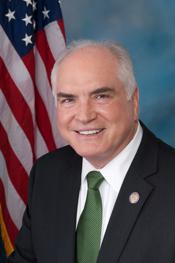
I thank the chairman for his great work. Mr. Speaker, I rise in strong support of H.R. 4, and I will tell you why: the world is looking for the next great, emerging economy, and you know where it is?…
I thank the chairman for his great work.
Mr. Speaker, I rise in strong support of H.R. 4, and I will tell you why: the world is looking for the next great, emerging economy, and you know where it is? It is right here. It is us. It sits here, in this country.
We talk about the American people. What are they tired of? They are tired of political talk and not policy change that will get them back to work.
This morning, Mr. Speaker, 92 million Americans woke up and decided they weren't even going to go look for a job today because there is no hope in finding a job today. That is 92 million Americans.
Now, I don't know if they vote Republican. I don't know if they vote Democrat. I think they are getting to the point where they don't want to vote for either side because all they are asking is: work together to fix America.
The President of Ukraine came to the United States today to ask for help. He didn't go anywhere else in the world. He came here. Why did he come to the United States? Why did he come to America? Why, for centuries, have people come to America? For opportunity, for jobs, and to make their life better.
We sit and debate a jobs package, and we want to talk about politics. We don't want to talk about the policy of it; we don't want to talk about the opportunity that this country has always presented. Are you kidding me?
If there is dysfunction, it is in the Senate, where 360 pieces of legislation are on a table because one man stands in the way of this legislation, and it is the leader of the Senate.
If the American people--and I am not talking about Republicans or Democrats, I am talking about the American people--are to see what actually takes place in this great House, where so much policy has been driven in the past--please, get away from the politics; we are sick of it as a people.
The opportunity is off the charts. A new day is dawning. The only thing holding it back right now is the cloud cover that comes from Washington, D.C., where we refuse to create opportunity and, instead, create anger and we create dissatisfaction and we create confusion.
The American people sit back and say, ``Why me? Why now? Why here?'' That is the great question, ``Why?'' Does a reelection mean more than the redirection of this country?
After 6 years of waiting to see this great country emerge again with all the assets that we have been given--and they are gifts from God, but we haven't capitalized on them--the American people want something done.
This is a package of jobs bills, my friends. This gets America back to work, my friends. This makes America great again. This makes us who we are. This is the very fabric of who this country has always been, the greatest Nation in the world, always a defender of personal freedoms and liberty, but we can only do it when we have a dynamic and robust company.
It is time to stop talking politics and start talking policy. It is time to get America back to work. A new day is dawning, a new opportunity is waiting for us, and the greatest emerging economy the world has ever seen is sitting right here within our borders, and the only thing it is looking for right now is dynamic leadership and direction.
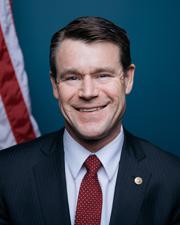
Mr. Speaker, I rise today to speak in support of H.R. 4, the Jobs for America Act. The undeniable fact is the U.S. House has passed more than 40 individual jobs bills, sent them to the Senate, and…
Mr. Speaker, I rise today to speak in support of H.R. 4, the Jobs for America Act.
The undeniable fact is the U.S. House has passed more than 40 individual jobs bills, sent them to the Senate, and
they remain untouched by the Democratic majority leader.
Many of the jobs proposals included in this broader package, H.R. 4, have bipartisan support and include commonsense ideas like extending the section 179 tax benefits for small businesses, helping our veterans get back to work, and a repeal of the medical device tax.
Medical device companies, in particular, play an integral role in my home State of Indiana and our economy--more than 71,000 jobs and $44 billion in personal income on account of the industry--and I hear every day how this tax has stifled innovation and led to a decrease in jobs for my fellow Hoosiers.
In 2013, 79 Senators, many of them champions of ObamaCare, took a symbolic vote to eliminate that tax. I hope that the Democrat- controlled Senate will move beyond political symbolism--and for many, political self-preservation--and vote to repeal this tax on innovation, job creation, and patient care.
Finally, I am pleased that two pieces of legislation which I authored are included in H.R. 4. The Save American Workers Act, which is also bipartisan, would simply change the definition of full-time employment within ObamaCare from 30 hours back to the traditional definition of 40 hours.
Now, 40 hours is what everyone agrees is full time, so let's not further harm small business employees, school cafeteria workers, adjunct university professors, and other hourly workers with this arbitrary change in the definition of ``full time.''
Also included is the REINS Act. This bipartisan bill aims to relieve much of the regulatory burden on our Nation's small- and medium-sized businesses and on all Americans who benefit from affordable goods and services.
The legislation ensures that, when unelected, unaccountable bureaucrats in Washington enact rules and regs that impact our economy, these regulations will be voted on by Congress to ensure that your elected Representatives are held accountable for the laws our constituents are subjected to.
I respectfully urge the American people to take a very close look at H.R. 4 and to demand that the Democratic-controlled Senate bring these bills up for consideration so we can enable people to get back to work and see their personal incomes grow.
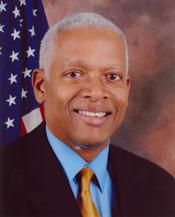
I thank the gentleman from New York. Mr. Speaker, I rise in strong opposition to H.R. 4, the so-called Jobs for America Act. It brings to mind occasions where, as a youth, my sister and I would go to…
I thank the gentleman from New York.
Mr. Speaker, I rise in strong opposition to H.R. 4, the so-called Jobs for America Act. It brings to mind occasions where, as a youth, my sister and I would go to my uncle's house in Cleveland. My uncle's wife would prepare a lot of food, and we would sit down and eat. The food would taste terrible. We had a couple of more days to be there, and so we hoped for the best. The next day, when we sat down at dinner, we had leftovers.
This is what this bill reminds me of. It is a package of anti- consumer, anti-safety, anti-environment bills that the House has already passed. This omnibus legislation is emblematic of a Republican Party that lacks vision or direction for Americans that demand cooperation and leadership.
This bill smacks of a new Republican leadership that is still on training wheels, unable to work across the aisle to deliver real solutions to grow the economy and create jobs; but what is new from a Republican Party that voted dozens and dozens of time to defund and defeat the Affordable Care Act, the same law that is helping American families by keeping millions of young people--be they recent college graduates looking for their first job or students still in school--on their parents' insurance and out of a cycle of unpayable medical debt?
Well, Mr. Speaker, it is time for the training wheels to come off so that this Chamber can, once again, do the work of the American people.
There is a clear, unmistakable thirst in our country for cooperation, bipartisan solutions, and getting things done. The American people look to the House of Representatives for leadership, not one-sided messaging bills that this Chamber has already warmed up, served yesterday--it was bad--and, today, we are eating the leftovers.
This Chamber has already considered and passed these bills, and they have no chance, no hope, of becoming law. The so-called Jobs for America Act includes a number of dangerous bills straight from the wish list of industrial polluters and unsafe manufacturers. This legislation will not create a single job.
It exists only to minimize corporate accountability while maximizing the likelihood of dangerous, unsafe conditions in our homes, vehicles, workplaces, and throughout the environment.
It is time to work together to forge real solutions, Mr. Speaker, not the same dangerous legislation that this Chamber has already passed.
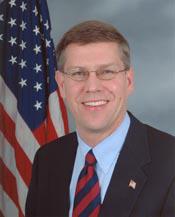
I thank the gentleman for yielding. Mr. Speaker, Americans have been pleading for Congress to take action to spur economic growth and create jobs. And the House has repeatedly acted to pass…
I thank the gentleman for yielding.
Mr. Speaker, Americans have been pleading for Congress to take action to spur economic growth and create jobs. And the House has repeatedly acted to pass bipartisan legislation to get people back to work, and we are doing so once again today.
Today in this jobs bill is a provision that I authored to repeal the destructive medical device tax. It is destructive because it is a tax not on profit but on sales.
The medical device industry directly employs more than 400,000 people across the country, including 35,000 jobs in my home State of Minnesota. These companies create the lifesaving and life-improving technologies for our patients.
But, because of the President's new health care law, the device industry is now facing one of the highest effective tax rates in the world. This device tax has already resulted in the loss of 33,000 American jobs. That is the equivalent of the entire Minnesota medical device industry being wiped off the map. Another 132,000 jobs are expected to disappear or now go overseas. And these are good-paying jobs, Mr. Speaker--$60,000 to $80,000 per job. Eighty
percent of these companies are small businesses, employing 50 people or less.
I asked one company that I recently visited, with 60 employees: What does the device tax mean to you? It means I have six projects now instead of 10 projects; I will have two fewer engineers and two fewer technicians.
Another Minnesota company that I recently talked to with 20 employees that is not yet profitable told me that now they are borrowing--they are borrowing--$100,000 a month just to pay the tax. That is crazy.
So companies are cutting back on their research and development. Venture capital is disappearing. And we are seeing less innovation.
The bottom line is, this device tax is so poorly conceived, it kills jobs, it is stifling lifesaving and life-enhancing innovation, and both Democrats and Republicans in the House agree on this.
My legislation to repeal this harmful tax has 275 coauthors in this body, 46 of whom are Democrats. There is overwhelming bipartisan support to repeal this job-killing tax. But we need the Senate to take action. We need the Senate to stop blocking this bill from moving forward. That way, we can get this done.
It is time, Mr. Speaker, to come together to protect American jobs by repealing the device tax.
Mr. Speaker, I thank the gentleman for yielding. And I wanted to also say, the gentleman from Maryland talked about a company, and I am not familiar with this company, but a company that is moving…
Mr. Speaker, I thank the gentleman for yielding.
And I wanted to also say, the gentleman from Maryland talked about a company, and I am not familiar with this company, but a company that is moving out of America because of our burdensome Tax Code. Does that not prove the point that we need tax reform as championed by Mr. Camp, the chairman of the Ways and Means Committee?
We need a Tax Code that is competitive. This company is probably leaving to get away from a burdensome, complicated tax system that is killing jobs. Those jobs are going overseas. They need to stay in America.
Mr. Speaker, to create jobs, we have to have a Tax Code that is clear, fair, concise, one that creates jobs. But we also need a regulatory burden that does the same thing: one that is clear; one that is concise; one that uses cost-benefit analysis.
I can't understand why there are Members of the House that oppose cost-benefit analysis on new regulations. It is a matter of common sense, because our regulatory burden, as much as the Tax Code, is driving jobs offshore. We don't need that.
One of the things that was lost in the debate earlier that I find just mind-boggling is the ability to fight forest fires, of all things. As Smokey the Bear says, ``Only you can prevent forest fires.'' Well, I guess towards this administration he is saying, ``Only you can promote forest fires through your ridiculous regulatory climate.''
And then let me say this. To create jobs in America, we need to have competitive energy. We need to use American energy resources.
As somebody who represents four military installations, I know well that it is not a matter of cheap and abundant energy for manufacturing and traveling and transportation purposes. It is also a matter of national security. Because when we depend so heavily on Middle East oil and oil from unstable anti-American countries, what we are, in fact, doing is funding both sides in the war on terrorism.
We need to develop American energy, and that is what this bill does. It is commonsense tax reform, commonsense regulatory reform, and commonsense energy reform.
I am appalled that the United States Senate has not had time to take up one of these bills. And, as Mr. Camp just outlined, as a matter of public record, the number of Democrats who have supported these pieces of legislation, we need to get the Senate moving.

Mr. Speaker, I want to thank my friend, Mr. Camp, the chairman of the Ways and Means Committee, for yielding me the time. Mr. Speaker, this jobs package includes important legislation, H.R. 1526, the…
Mr. Speaker, I want to thank my friend, Mr. Camp, the chairman of the Ways and Means Committee, for yielding me the time.
Mr. Speaker, this jobs package includes important legislation, H.R. 1526, the Restoring Healthy Forests for Healthy Communities Act, which passed the House almost 1 year ago today. It is a long-term sustainable solution to put Americans back to work, restore forest health, and prevent wildfires.
Our national forests, unless otherwise designated, should be open for multiple uses for everything from recreation to job-creating economic activities. Instead, Mr. Speaker, due to onerous Federal regulations and litigation, our Federal forests have increasingly been shut down.
Mr. Speaker, timber harvests have dropped by 80 percent in the last 30 years. We have seen catastrophic wildfires destroy our Federal forests. We have seen loggers, mill workers, and truck drivers put out of work, and we have seen rural communities turned into ghost towns.
It is long past time for the Senate to join with the House to provide better
stewardship over our Federal forest lands. It is disappointing and, frankly, unacceptable that a year later the Senate is still sitting on the sidelines. Meanwhile, rural communities continue to suffer.
This legislation requires responsible timber production on at least one half of the Federal Forest Service's non-environmentally sensitive timber lands.
By restoring active forest management, this bill will create over 200,000 direct and indirect jobs. It also maintains and strengthens the historic sharing of timber receipts with local counties which is essential, given the upcoming expiration of the Secure Rural Schools program.
Instead of having to pay for wildfire suppression, this bill would allow us to reap the benefits of a responsible timber harvest that reduces wildfire threats to our communities.
Mr. Speaker, Congress must act to restore the promise that the Federal Government made over a century ago to actively manage our forests and create jobs for the benefit of rural communities. Today, the House is, once again, living up to this promise. We hope that the Senate will join us and support this commonsense reform of Federal forest management.
Show 5 more
Thank you, Mr. Chairman, for your service in this great institution. Mr. Speaker, we are here debating this jobs package because our economy is stagnant. Our unemployment rate hasn't fallen below 6…
Thank you, Mr. Chairman, for your service in this great institution.
Mr. Speaker, we are here debating this jobs package because our economy is stagnant. Our unemployment rate hasn't fallen below 6 percent since this President took office 6 years ago.
Although growing the economy may not remain a number one priority for the Senate, it may not remain a number one priority for the President, I assure you it is for millions of Americans who can't find a job or who continue to look for that job promotion or who feel their paycheck isn't going as far as it should.
My bill, the Hire More Heroes Act, is not a waste of our time, is not a waste of taxpayer dollars, and it overwhelmingly passed this House with only one ``no'' vote. You can't get much more bipartisan than that, Mr. Speaker.
It is part of this jobs package because the Senate has yet to take up this bipartisan bill that would help our veterans. This bill will help incentivize small businesses to hire more of our heroes. It takes away a punitive punishment in ObamaCare.
We have been told that we can't change ObamaCare, but this bill does, and it does it because any veteran who gets their health care through the VA or TRICARE wouldn't count toward a small business' 50-employee limit which would, in turn, incentivize small businesses who create the jobs in this country to hire more of our veterans.
That is not a waste of taxpayer dollars. That is not a waste of time. Frankly, we need to do what we can to stop what ObamaCare has been doing to small businesses and disincentivizing them from hiring more people and, therefore, lowering our unemployment rate.
This jobs package is crucial. This jobs package is something that we in this House should continue to push. I would urge my colleagues on the other side of the aisle to make sure that they call their colleagues in the Senate and say, ``Pass this bill.''
Pass this bill. Do what is right. Help our veterans. Help Americans find jobs.

I thank Chairman Camp for his leadership on this bill. I thank Chairman Hensarling for his leadership on the issue that I rise to speak about today. Mr. Speaker, I rise to support the Jobs for…
I thank Chairman Camp for his leadership on this bill. I thank Chairman Hensarling for his leadership on the issue that I rise to speak about today.
Mr. Speaker, I rise to support the Jobs for America Act, H.R. 4.
In Virginia's Fifth District, our district, there are literally thousands of jobs that exist because of private equity investments. These critical investments allow our small businesses to innovate, expand their operations, and create the jobs that our communities need.
Unfortunately, Dodd-Frank has placed the costly and unnecessary regulatory burden of SEC registration on advisers to private equity while exempting advisers to similar investment funds. These registration requirements do not improve the stability of our financial system, and they restrict the ability of private equity to invest capital in small businesses, which would spur job growth.
Instead of complying with costly SEC registration, private equity should be encouraged to focus on investing capital in companies such as Virginia Candle, a company in our district that, through private equity investment, expanded from a garage in Lynchburg to millions of homes across the world.
That is why I, along with my colleagues Representative Cooper and Representative Himes, introduced the Small Business Capital Access and Job Preservation Act, a provision of H.R. 4 which previously passed the House with bipartisan support.
Unfortunately, the Senate has failed to consider this and dozens of other House-passed jobs bills. At a time when unemployment in Virginia's Fifth District is still too high, the Senate needs to join us immediately in enacting pro-growth policies to spur job creation for our communities.
I ask my colleagues to join me in supporting H.R. 4 to increase the flow of private capital to our small businesses so they can innovate, grow, and create jobs for the American people.

Mr. Speaker, I thank the chairman for yielding, and I very much appreciate his leadership on this issue. In every State across this country, and most certainly in the Commonwealth of Virginia, there…
Mr. Speaker, I thank the chairman for yielding, and I very much appreciate his leadership on this issue.
In every State across this country, and most certainly in the Commonwealth of Virginia, there are folks still looking for good full- time jobs and businesses who want to hire them but can't for fear of government imposed regulations that increase expenses.
The administration's tax, regulate, and spend response to this problem hasn't worked, and it is incumbent upon us to enact necessary reforms to restore the American economy.
The legislation we consider today includes many provisions to combat excessive regulations that have already been passed by the House of Representatives and await action in the Senate, which has been moribund in dealing with a whole host of issues that are sitting over there on the majority leader's desk, including provisions to restore the 40-hour workweek, to permanently ban taxation of Internet access, to prevent secret settlement deals between Federal bureaucrats and pro-regulatory plaintiffs in lawsuits, to require bureaucrats to consider the cost of regulations to small businesses, to require agencies to adopt the least costly method of implementing the law, and to require Federal agencies to submit major regulations to Congress for approval. We know these provisions will help spur our economy and create jobs.
America's labor force participation rate has essentially remained stagnant for the past several months and job creation and economic growth continue to fall short of what is needed to produce a real and durable recovery in our country. It is imperative that we again take action to pass these commonsense reforms, return discouraged workers to full-time jobs, and restore America to prosperity.
I urge the Senate to stop stalling and to join us in this effort.
Mr. Speaker, I rise in opposition to H.R. 4. The special interest bills that make up this package have all passed the House before and went nowhere in the Senate. This is not just a waste of time, it…
Mr. Speaker, I rise in opposition to H.R. 4. The special interest bills that make up this package have all passed the House before and went nowhere in the Senate. This is not just a waste of time, it is a waste of taxpayer money. Americans work hard for their money, and here we are wasting time, and everybody knows that.
This legislation is simply a gimmick. It hurts me to even say that, but it is, in fact, a gimmick. The Republican leadership in the House cannot fool the American people by passing the same bad bills over and over again.
Just because Republican leadership has slapped the word ``jobs'' on this bill does not change the fact that the bill will not create jobs, and they know that. We each represent 700,000 people. Those people have sent us here with the mission of making their lives better.
The legislation we are considering today will not help the people we represent. This bill would help big corporations.
Let me give you an example. Under this legislation, private companies would have the ability to weigh in on agency rulemakings before individual citizens and most other stakeholders. That means that oil companies could weigh in on drilling regulations before the American public even gets a chance to submit comments.
Another section of the bill would explicitly prohibit the Office of Information and Regulatory Affairs from taking into account benefits when providing total cost estimates for proposed and final rules as required by the bill.
The bill also contains numerous provisions to degrade the regulatory process and make it nearly impossible for agencies to take actions that protect our health, our safety, our air, our water, our food, and our environment.
This is a terrible piece of legislation, and I urge my colleagues to vote against it.
Mr. Speaker, I want to thank my colleague from New York for yielding. I rise in strong opposition to H.R. 4 because it adds over $500 billion in permanent corporate tax giveaways that could end up…
Mr. Speaker, I want to thank my colleague from New York for yielding.
I rise in strong opposition to H.R. 4 because it adds over $500 billion in permanent corporate tax giveaways that could end up causing 1 million hardworking Americans to lose their employer-provided health coverage and do nothing to help the tens of thousands of my constituents and tens of millions of Americans who are experiencing deep poverty, unemployment, and economic distress.
I cannot support adding over $500 billion to our deficit for permanent handouts to big corporations while 3.3 million long-term unemployed go unaided, while repairs and renovations to our Nation's infrastructure are threatened, while the Medicare doctors' fix goes unresolved, and while irrational budget cuts strangle education, health, research, and innovation.
This bill marks the height of Republican irresponsibility on both fiscal and policy grounds. I ask, how many millions of low-income students could complete college using Pell grants with just a fraction of the cost of this bill? How many long-term unemployed could pay their rent or provide food for their families with even a tiny amount of the cost of this bill? How many more small businesses could receive investment grants or critical low-cost loans?
Our government, yes, has the responsibility to advance policies that create jobs, strengthen our citizens, and grow our economy, not ones that undermine the health and well-being of Americans and advance the wealthiest among us at the expense of the struggling.
I will vote ``no'' on this sham jobs-creating bill.
Bill Text
Latest available legislative text
        [Congressional Bills 113th Congress]
[From the U.S. Government Publishing Office]
[H. Res. 1 Engrossed in House (EH)]

H. Res. 1

In the House of Representatives, U. S.,

January 3, 2013.
Resolved, That Karen L. Haas of the State of Maryland, be, and is hereby,
chosen Clerk of the House of Representatives.
Resolved, That Paul D. Irving of the State of Florida be, and is hereby,
chosen Sergeant-at-Arms of the House of Representatives.
Resolved, That Daniel J. Strodel of the District of Columbia be, and is
hereby, chosen Chief Administrative Officer of the House of Representatives.
Resolved, That Father Patrick J. Conroy of the State of Oregon, be, and is
hereby, chosen Chaplain of the House of Representatives.
Attest:

Clerk.