Mr. Speaker, by direction of the Committee on Rules, I call up House Resolution 215 and ask for its immediate consideration. Mr. Speaker, for the purpose of debate only, I yield the customary 30…
Mr. Speaker, by direction of the Committee on Rules, I call up House Resolution 215 and ask for its immediate consideration.
Mr. Speaker, for the purpose of debate only, I yield the customary 30 minutes to the gentlelady from New York (Ms. Slaughter), pending which I yield myself such time as I may consume. During consideration of this resolution, all time yielded is for the purpose of debate only.
General Leave
Mr. Speaker, I ask unanimous consent that all Members have 5 legislative days to revise and extend their remarks.
House Resolution 215 provides for a rule to consider the full repeal of the flawed, ill-conceived and inappropriately named Affordable Care Act, a bill whose final language was written by staff on the Senate Finance Committee and the actual legislative text of which received not a single committee hearing or markup in this body. While many hearings and markups were held on other iterations of other health care bills, the legislation that was signed by the President received not a single moment of scrutiny in this House and contained none of the bipartisan amendments that were accepted during the markups of other health care bills, including H.R. 3200, which passed the House but was never considered by the Senate. As such, only a full repeal is acceptable, and that is what this rule provides for.
The rule provides for 2 hours of debate, controlled by the Committees on Energy and Commerce, Ways and Means, and Education and the Workforce. Further, the rule self-executes the Bachmann amendment, which provides for a clean repeal of the entire ACA, consistent with the provisions of the opening day rules package of this Congress. The rule further provides the minority one motion to recommit with or without instructions.
This approach, a full repeal, will give the House, particularly Members who were not here in the past two Congresses, an opportunity to have an up-or-down vote, an affirmation or a denial, of the Affordable Care Act.
Americans should have the freedom to make their own health care decisions. In March of 2010, the Patient Protection and Affordable Care Act was signed into law. It was drafted quickly and behind closed doors at the end of 2009--behind closed doors in the other body, in fact. It included secret deals, loopholes, drafting errors, and allowed entirely new Federal agencies to be created without congressional knowledge or oversight.
The bottom line: it was not the way to achieve meaningful reform. In addition, the Supreme Court ruled last June that the law is, in fact, a tax. This is after President Obama continually told the American people that it was not a tax.
The health care system in America needs reform, and it needs improvement; but the law that was passed will cost American taxpayers and patients millions of dollars. It will not improve care, and it will not make care more affordable. We need to start fresh and address the issues with commonsense improvements that will focus on the real issues at hand--creating a health care system that is focused on patients instead of payment, quality instead of quantity, affordability instead of cheapness, and innovation instead of stagnation. The first step is eliminating bad legislation that simply does not work and that today stands in the way of any real improvement. That is why, today, I strongly support the repeal of the President's health care law.
The President did repeatedly tell us that the penalty associated with the individual mandate was not a tax. It was repeated several times in the run-up to this bill's being signed. In June, the Supreme Court affirmed that the only way that this bill could remain law was that it was, indeed, a tax, and Congress has the infinite power to tax. In fact, Congress can tax morning, noon, and night. It can tax the American people back to the stone age if that's what it wishes, and that's what the Affordable Care Act does. When millions are unemployed, this is, indeed, the last thing we need.
It's not just the tax. It's the effect on premiums. Up on the Energy and Commerce Web site this week is a study showing how the Affordable Care Act is going to affect premiums in the individual market, in the small-group market, and in the large-group market; and almost uniformly those premiums are going up, and in some cases they are going up a staggering amount.
Last summer, the Supreme Court's decision leaves in place a costly and unworkable health care scheme that is hurting America's families, that is hurting America's workers, that is hurting America's job creators, and that is damaging America's patients. We will all have to live with that ruling. If we do not repeal, then we will have to live with the law as written. The time has come to step up and do the right thing. I urge support of the rule.
I reserve the balance of my time.
Mr. Speaker, now I would like to yield 2 minutes to the gentleman from Texas, a member of the Budget Committee, Roger Williams.
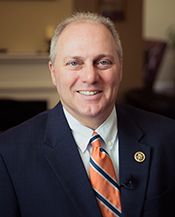
Mr. Speaker, I now yield 2 minutes to the gentleman from Louisiana (Mr. Scalise).
Mr. Speaker, I now am pleased to yield such time as she may consume to the author of the bill and a true leader in this effort, in this fight, the gentlewoman from Minnesota (Mrs. Bachmann).
Mr. Speaker, may I ask as to the time remaining.
Mr. Speaker, I yield 2 minutes to the gentleman from Kansas (Mr. Huelskamp).
Mr. Speaker, at this time I yield 1 minute to the gentleman from Virginia (Mr. Hurt).
Mr. Speaker, I now yield 1 minute to the gentleman from Virginia.
Mr. Speaker, at this time, I yield 2 minutes to the gentleman from Georgia, Dr. Paul Broun.
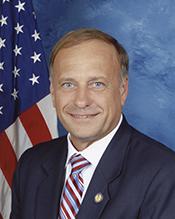
Mr. Speaker, I am pleased now to yield 2 minutes to the gentleman from Iowa, Steve King.
Mr. Speaker, I'd now like to yield 1 minute to the gentleman from Texas (Mr. Culberson).
Mr. Speaker, may I inquire as to the status of time for both sides.
Mr. Speaker, I would like to yield 2\1/2\ minutes to the chairman of the Rules Committee, the gentleman from Texas (Mr. Sessions), for his consideration.
Mr. Speaker, at this time, I am pleased to yield 1 minute to the gentleman from South Carolina (Mr. Rice).
I have an additional speaker, and then my close.
Mr. Speaker, I am pleased to yield 1 minute to the gentleman from California (Mr. LaMalfa).
Mr. LaMALFA Mr. Speaker, I'm from northern California, which is the land of the original 49ers. That was based on the Gold Rush of about 160 years ago.
Now I see we are creating a new group of 49ers, and it is certainly not heading towards a gold rush for the country. These new 49ers are the people that have to limit the jobs of their small business to 49 or less in order to stay out of the clutches of ObamaCare.
We also are creating a group called 29ers, who have to see their hours cut to less than 30 hours because their employer is out of options; again, because of ObamaCare.
As a farmer, I know that when things aren't going right with the farm you have to learn to cut your losses. In this situation here, we need to have the good sense to not spend good money after bad. It is time that we take a good, hard look at this Obama health care takeover and decide to repeal it.
In California, we seem to have a lot of boondoggles, to include the high-speed rail project, which prices could quadruple over its original cost. We are seeing the same type of boondoggle with this Obama health care takeover.
Let's do the right thing to preserve jobs and preserve people's health care plans as they are and not have this boondoggle upon our entire country.
Mr. Speaker, I yield myself the balance of the time.
It was, indeed, a very dark day 3 years ago in March when this bill was brought to the House floor, 11 o'clock at night, 11:30 at night, and passed this House of Representatives after members of the Democratic conference, the majority Democratic conference, were lied to by the administration about an executive order to prevent the funding for abortion. That is what tipped the balance. That is what brought those last few wavering votes.
How did we get to that point? Well, throughout 2009, throughout the year, the House had, indeed, considered the health care question. My Committee on Energy and Commerce did have a markup on H.R. 3200. They took a lot of amendments. Some amendments I offered; some amendments were bipartisan. All of those amendments that were accepted by the committee at some point evaporated at the opening of day, whatever happened over in the Speaker's Office, and they were gone. The health care bill which the Energy and Commerce Committee passed out at 1,000 pages grew to 2,000 pages in the Speaker's Office, and all the Republican amendments were stripped out.
And then what happened? Well, H.R. 3200 died. It is gone. Nobody has ever seen or heard of it since. That was the House health care product.
What, in fact, happened was, down at the White House in July of 2009, there were secret meetings that took place. There were six special interest groups that met with the President's folks down at the White House--Nancy-Ann DeParle, Rahm Emanuel's brother. These are the folks that constructed the basis of what has now become known as ObamaCare.
The insurance companies don't hate this law. They like this law. Look what has happened to their insurance stock since the law has passed. They have doubled or tripled in value. That is because they had a seat at the table when this thing was crafted, and it was crafted according to their liking. But who really wrote the nuts and bolts of the bill was the staff on the Senate Finance Committee between Thanksgiving and Christmas.
H.R. 3590, which passed the floor of this House 3 years ago, was a bill that had never had a single hearing in the House of Representatives. It had never had a markup in a single House committee. H.R. 3590 had passed under suspension in the House of Representatives in July of 2009 as a housing bill. It went over to the Senate to await further action. The further action was an amendment offered by Harry Reid to ``strike all after the enacting clause and insert,'' and the health care language was inserted. It came back over here and languished for 3 months. Nobody read it. Then the Speaker forced it through the House of Representatives a few minutes before midnight on March 18 of 2010.
That's why we're having this debate today. Sure, there have been other efforts to repeal this. There was a full repeal in January of 2011, remember? Republicans won 84 House seats, so it was natural to have a repeal vote. After the Supreme Court had their ruling, it was important to reiterate that position. Now we're doing it again.
The other repeal votes that have happened, many of them have been bipartisan. The 1099--you guys liked that? Do you want that paperwork requirement to come back? The President signed the 1099 repeal. What about the CLASS Act? You all voted for that. I didn't. The CLASS Act was repealed on the fiscal cliff vote. The President signed it. The repeal votes that have happened in between have been relatively minor in scope, perfecting amendments, if you will.
The fact of the matter is you can't perfect this thing. It was a dog at the beginning, and it's a dog at the end. We ought to do the right thing. Let's bring up the bill. Let's pass it. Let's send it over to the Senate.
I yield back the balance of my time, and I move the previous question on the resolution.