Mr. Speaker, by direction of the Committee on Rules, I call up House Resolution 260 and ask for its immediate consideration. Mr. Speaker, for the purpose of debate only, I yield the customary 30…
Mr. Speaker, by direction of the Committee on Rules, I call up House Resolution 260 and ask for its immediate consideration.
Mr. Speaker, for the purpose of debate only, I yield the customary 30 minutes to the gentleman from Massachusetts (Mr. McGovern), pending which I yield myself such time as I may consume. During consideration of this resolution, all time yielded is for the purpose of debate only.
General Leave
Mr. Speaker, I ask unanimous consent that all Members have 5 legislative days to revise and extend their remarks.
Mr. Speaker, House Resolution 260 is a structured rule that provides House consideration of amendments to this year's National Defense Authorization Act.
As I explained when I was down here yesterday, the Rules Committee receives hundreds of amendments to the NDAA every single year. This time we had 299 amendments to make our way through.
While the volume of amendments was massive, the Rules Committee evaluated each and every one in developing this rule. We were not able to make every amendment in order, but I believe this rule will allow for the exhaustive debate of a vast majority of the issues presented in committee.
Yesterday's rule provided for 1 hour of general debate on the underlying bill, H.R. 1960. Today, we're considering a structured rule that provides Members of the House with the opportunity to have copious and free-flowing debate on many of the issues contained in the underlying legislation.
As a member of both the Rules Committee and the Armed Services Committee, I know how complicated and far-reaching the National Defense Authorization Act can be. I've sat through multiple subcommittee marks on this legislation. We had a nearly 16-hour-long full committee markup on this bill, a meeting that started early Wednesday and lasted into Thursday morning. And now we've had two Rules Committee hearings on this bill, including yesterday's hearing, which took almost 10 hours from start to finish.
Having spent as much time with this legislation as I have, I can promise you this: the National Defense Authorization Act for fiscal year 2014 is a good bill. That's why the Armed Services Committee passed it with an overwhelming vote of 59-2. And we need to acknowledge Chairman McKeon and Ranking Member Smith for fostering such a bipartisan and collaborative approach. This rule is the next step in that transparent and cooperative process.
Of the 299 amendments that we received in the Rules Committee, H. Res. 260 makes 172 of them in order. To use a technical term, that's a lot of amendments. Despite that, my colleagues on the other side of the aisle will remind us that even with 172 amendments allowed on the floor, it's still not an open rule; and, clearly, they're right. But let me assure you that this is also a fair and inclusive rule.
Having considered each of the amendments that was offered in the Rules Committee, I can honestly say that what we have here today is a rule that gives the House the opportunity to debate all of the major topics contained in the underlying legislation without duplicating efforts and having multiple amendments on the same issue.
For example, we heard many Members speak on the House floor yesterday about sexual assault in the military. The underlying legislation takes significant and necessary steps to combat, prosecute, and prevent this heinous crime. But given the importance of this issue, the Rules Committee understandably received five different amendments all related to sexual assault. So I'm proud to say that H. Res. 260 provides the House with the opportunity to debate this issue and ask ourselves if there isn't more that we can do.
Another major topic, one that none of us can ignore, is the nature of our military's operation in Afghanistan. We need to ask ourselves what's going to happen at the end of 2014, at which time President Obama has indicated we will have moved strictly to a security operation in that country.
The Rules Committee received no less than four different amendments on Afghanistan. I'm happy to say the rule allows for debate on the issue by way of an amendment offered by my colleague from the Rules Committee, Mr. McGovern, and I look forward to that. I look forward to having the opportunity to join the gentleman from Massachusetts in supporting that important--and I think commonsense--amendment, and my hat's off to you for that.
And the list goes on--energy, the use of drones, Guantanamo Bay, missile defense. The rule allows for amendments on all these important topics. I am going to vote for some of the amendments that this rule makes in order; I'm going to vote against others. But first and foremost, I'm going to vote for this rule.
The bill was done the right way. It went through the subcommittee process; it had a thorough and lively markup in the full committee; and it went to the Rules Committee, where we were diligent about making sure we gave it the consideration it deserves and provided it with two rules.
H. Res. 260 is the next step in a thoughtful, bipartisan process. I'm proud of this rule and the underlying legislation and the process that has gotten us to where we are today. For that reason, I encourage all of my colleagues on both sides of the aisle to join me in passing this rule, passing the National Defense Authorization Act for fiscal year 2014, and making sure our men and women in uniform have the tools and resources they need to complete the mission safely and successfully.
With that, I reserve the balance of my time.
Mr. Speaker, I yield 3 minutes to the gentlewoman from South Dakota (Mrs. Noem).
Mr. Speaker, I yield an additional 30 seconds to the gentlelady.
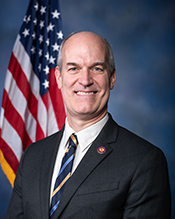
Mr. Speaker, I yield 3 minutes to the gentlewoman from Indiana (Mrs. Walorski).
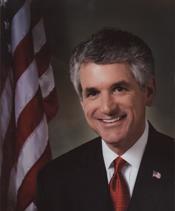
Mr. Speaker, I yield 2 minutes to the gentleman from Ohio (Mr. Turner).
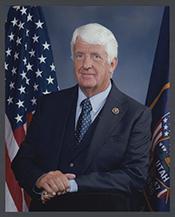
Mr. Speaker, I yield 4 minutes to the gentleman from Utah (Mr. Bishop), my colleague on both the Rules Committee and the Armed Services Committee.
Mr. Speaker, I yield 1\1/2\ minutes to the gentleman from Tennessee (Mr. Duncan).
Mr. Speaker, I yield 2 minutes to the gentleman from Illinois (Mr. Rodney Davis).
Mr. Speaker, I reserve the balance of my time.
Mr. Speaker, I continue to reserve the balance of my time.
I continue to reserve the balance of my time.
I have none.
Mr. Speaker, this may be my third National Defense Authorization Act as a Member of Congress, but it's my first NDAA as a member of the Armed Services Committee. Let me tell you, it's been an experience. It's an educational, time-consuming and sometimes an exhausting experience, but it's always been a gratifying one.
As the father of three sons that currently serve in the United States Army, I never forget the overarching purpose for all of our work on the Defense Authorization Act. I know that my HASC colleagues never forget it either.
I've had sons that have served in Iraq and Afghanistan, sometimes simultaneously. I know what it's like to send a son or a daughter off to war. As a family, it's something that causes you anguish all the time. It's not something that should be done lightly. So I appreciate the McGovern amendment because it's going to provide the opportunity to actually discuss and put on the floor an ability for this House to actually authorize or continue authorization of any force.
I think this House has been, unfortunately, somewhat derelict in its duties because of what we've done in the past and what we've called the President to do when we went into Libya, even though limited by air support only. We should never put our men and women at risk unless this House has a say in that which is so precious to us, and that's our sons and daughters.
You heard Mr. Turner speak as relates to sexual assault, and I heard a lot on the floor about Ms. Speier. She had the ability in the Armed Services Committee--the committee I serve on--she had the ability to bring that up in committee and have unlimited debate--unlimited debate--within that body in regards to her amendment. She chose not to do that. Instead, she chose to bring it in front of the Rules Committee that has a limited time slot.
Of the 299 amendments that were brought forward, 172 were made in order that are going to be heard on this floor today. That's what this rule is about, about giving everybody access and to be heard on all the important aspects of the NDAA. So to say that she was locked out just isn't so. The ability was there. As a Member of the HASC Committee, she had the ability to have unlimited debate.
Remember, the NDAA passed out of that committee 59-2. That's about as bipartisan as you can get, and it really talks about the issues that are important to America and particularly as it relates to protecting our sons and daughters that are called upon to protect this Nation and called upon to go out and sacrifice for this Nation. We owe them that much. We want to make sure that they're successful in any mission that they're sent forward to participate in to protect the interests of this Nation and our Allies.
The American people hear in the news media about how partisan Congress is today. Although we have our disagreements, and I know those reports and folks back home can't be looking at the work we're doing on the Armed Services Committee if all they see is partisanship, because it's not there. If they were looking at the Armed Services Committee and this year's National Defense Authorization Act, they'd see the kind of collaboration that legislation is supposed to be about. They'd see a chairman and a ranking member who work together on a common goal. They'd see staff that works to benefit our warfighters and not a political party. They'd see an
NDAA that was passed out of the largest committee in the House of Representatives with only two people opposing it.
And, tomorrow, I hope they'll see a House of Representatives that can put politics aside and support our troops by overwhelmingly passing the National Defense Authorization Act for fiscal year 2014.
It's a good bill. H. Res. 260 makes it even better by allowing the House to consider amendments covering all the major issues covered by NDAA and the Department of Defense at large. I always like to say that nobody has a monopoly on good ideas. And that truism is evidenced by the 299 amendments that were offered to this legislation. The rule provides time for a vote on the majority of those ideas. That's why I support the rule, I support the underlying legislation, and I hope the House, as a whole, can do the same.
With that, I yield back the balance of my time, and I move the previous question on the resolution.