Mr. Speaker, President Franklin Delano Roosevelt once said: All my life, I have dreamed of going back to my home on the Hudson River. It was the center of the world. He was referring to his habit of,…
Mr. Speaker, President Franklin Delano Roosevelt once said:
All my life, I have dreamed of going back to my home on the Hudson River. It was the center of the world.
He was referring to his habit of, late at night, of remembering being a child, before he was stricken with polo, before he was President, before he was burdened with the awesome responsibilities of his office during a time of war.
Being a child in the Hudson River meant sledding down a hill behind Hyde Park and feeling totally free. And he remembered that, as a President, to forget the burdens of his office and to remember the miracle and dream of his youth. Those of us who are blessed to represent the Hudson Valley understand that the Hudson Valley writes its beauty on our personalities and on our very souls. It inscribes us with its timeless beauty. And as it flows on endlessly by, we are reminded of the fleeting nature of our service and of our very lives.
A group of artists, including Thomas Cole, Asher Brown Durand, Jasper Francis Cropsey, and Frederic Edwin Church, somehow by hiking, sketching, and experiencing the Hudson River Valley found a way to translate what it means to those of us who live, work, and raise our families there into these permanent, lasting images. And our own modern-day genius, Greg Wyatt, has found a way to capture them. So we pause here tonight to honor that.
Drawing inspiration from our natural environment, these artists began painting scenes and now sculpting images. From across New York and our country, Asher Brown Durand, one of the original founders of the school, has one of the most beautiful pieces anyone will ever create of Beacon, New York. It is called ``Beacon Hills on the Hudson River.'' It was painted across the river in Newburgh in 1852. Today, my office in Newburgh looks out at that same image, at that same beauty.
Frederic Church was one of the first to capture Niagara Falls back in 1857. Within 2 weeks of its debut, his piece had lured 100,000 visitors to pay 25 cents apiece to view it.
Not only did the Hudson River School influence the modern-day environmental conservation movement, but these paintings actually inspired the establishment of our National Park System in the early part of the 20th century, which was, of course, formed by President Teddy Roosevelt. Teddy Roosevelt couldn't have spoken more true words when he said:
There are no words that can tell the hidden spirit of the
wilderness, that can reveal its mystery, its melancholy, and
its charm.
But, again, our painters from the Hudson Valley found that hidden spirit
and that charm that Franklin and Teddy Roosevelt both remembered.
Dating back 100 years, my neighbors in the Hudson Valley take great pride in our natural resources and protecting and conserving this unique home for us and for our children and for generations to come.
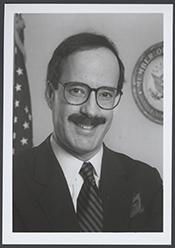
I want to take just a minute to recognize my predecessor and our former colleague, Congressman Maurice Hinchey, and his family who have joined us here tonight. When you follow Maurice Hinchey in the Congress, you have some very big shoes to fill. And I have heard a lot about Congressman Hinchey and his service, and I always enjoy the stories because it sets for me an example of what I want to do in this body.
After Congressman Hinchey sacrificed for his country as a Navy sailor, as my own father did, he became a respected State lawmaker, and he proudly served here for two decades. My neighbors in the Hudson Valley know that he worked tirelessly for them, for economic justice and equal opportunity, because he believed that this government should work for everyone, including someone like him who grew up in a working class family and spent some time working in a factory, because our country, as Congressman Hinchey understood, is better off when leadership like his supports ordinary Americans, people like him who served in our military, our veterans, our working and middle class families who struggle to put food on the table and pay the bills but who can also appreciate the beauty of the environment and the timeless wonder of places like the Hudson Valley.
Congressman Hinchey played a critical role in the modern environmental movement even before it was widely recognized as important. Back in 1996 when I was working for President Clinton, Congressman Hinchey was authoring legislation that the President signed into law that established the Hudson Valley National Heritage Area. Because of Mr. Hinchey's leadership, the Hudson Valley National Heritage Area currently links over 100 individual sites, from Saratoga to Westchester, while showcasing the Hudson Valley's unique role in American history and development.
I want to commend Barnabas McHenry who is with us here today who has dedicated so much of his life to that same mission. Because of their leadership, my children and my grandchildren will see and be able to treasure the Hudson Valley's unique and incredible scenic, historic, agricultural, and natural wonders.
Congressman Hinchey always made sure that we remember the rich contributions of the Hudson River School of painters. Congressman Hinchey knows, like many of us do, that there is no place in the country that compares to the Hudson Valley, and those of us lucky enough to live there are not surprised that it was the birthplace of America's first and greatest school of art.
In closing, let me just say that not long ago, a friend of mine came over to my home, which is across from West Point and Cold Spring, and actually looks down the Hudson River towards Garrison and south towards the Bear Mountain Bridge. I walked him up to the property, and the sun was going down. A short while later after he left, he sent a note and he said:
Sean, I once saw a sunset like that in a Frederic Church
painting, and I thought he made it up. But when I saw it with
my own eyes at your house, I understood for the first time
what inspired these great geniuses to try to capture the
wonder and beauty that is the Hudson River Valley for all
time.
We honor their success in doing so tonight, and we honor those who continue that legacy who join us here tonight. Thank you on behalf of a grateful Hudson Valley and a grateful Nation.
I yield back the balance of my time, Mr. Speaker.
Announcement by the Speaker Pro Tempore