Mr. Speaker, by direction of the Committee on Rules, I call up House Resolution 575 and ask for its immediate consideration. Mr. Speaker, for the purpose of debate only, I yield the customary 30…
Mr. Speaker, by direction of the Committee on Rules, I call up House Resolution 575 and ask for its immediate consideration.
Mr. Speaker, for the purpose of debate only, I yield the customary 30 minutes to the gentlewoman from New York (Ms. Slaughter), my friend, the ranking member of the Rules Committee, pending which I yield myself such time as I may consume. During consideration of this resolution, all time yielded is for the purpose of debate only.
General Leave
Mr. Speaker, I also ask unanimous consent that all Members have 5 legislative days to revise and extend their remarks on House Resolution 575, which provides for a closed rule for consideration of H. Res. 567.
Mr. Speaker, it has been nearly 20 months since terrorists attacked the American diplomatic mission in Benghazi, Libya, killing four Americans, including then-U.S. Ambassador to Libya J. Christopher Stevens.
Since that time, the House Armed Services Committee, the Foreign Affairs Committee, the Permanent Select Committee on Intelligence, and the Committee on Oversight and Government Reform have all conducted investigations related to the events surrounding the attack and the administration's response. And I want to commend each of these committees and their chairmen and their members for work that has been done that is exemplary, that has aimed exactly on the questions that needed to be asked, and for those who have dedicated time and effort to make sure that these important issues are not only discussed but understood and resolved so that each of these committees, as they work with their particular agencies in the Federal Government, come to a clear and a clean understanding about what happened, what our responses might and should have been, and what they would be in the future.
We are here today because this administration has chosen not to fully participate, to block our efforts to know the truth, and to provide the necessary people in a forthright manner who could be a part of answering these questions. This blockage has included a timed delivery that has not been timely but the time interval for requesting information, for the redacting of information that has not been properly done, and, perhaps most importantly, for the remarks that have been made by the administration, including the President of the United States, the former Secretary of State, the Secretary of State, and other highly public officials who serve at the pleasure of the American people who have tried to thwart, who have tried to misdirect, and who have tried to--what I believe is--badger Republicans into believing that what they did was aboveboard and correct when, in fact, an evaluation and a proper lessons learned lesson being available not only for them, for the United States Congress, but also accountability to the American Government.
We are here specifically today because in the last few weeks an outside group, Judicial Watch, through the Freedom of Information Act, obtained information and received that information through the judicial system of the United States whereby they received emails that were not redacted, that were not doctored or altered, and that came to them and did not match up with the information that had been provided to official committees of the
United States House of Representatives for official business.
At a time when an administration decides that they are going to take advantage of the structure of the United States House of Representatives under official business, then that means that it is time for the United States House of Representatives to then learn that they are being duped, that they are being taken advantage of, and that our open system was being used, I believe, in a political way.
That is why we are here today, Mr. Speaker. We are here today not for political reasons but because the official business of the United States House of Representatives, article I, is to make sure that we understand and have oversight over those that are in article II and work with people who are in article III.
We work together in a careful balance to make sure that what we do is in the best interest of the people--the American people, who need to have faith and confidence in the work that is done on their behalf--but also be accountable to the American people when great things happen and when mistakes happen also.
To sweep something under the rug, to try and move people in another direction and try and fool them, to not be forthright about the actions that were taken or understood, I believe is a dereliction of duty. Most importantly, I think that what the investigation up to now has revealed is a lack of desire by this administration to fess up to what I believe might be failures or weaknesses in a system that we need to work on together.
Four Americans' lives were not only at stake, but the reputation of the United States of America was on the line. Terrible things happened. Worse things could have happened, also. And for the United States Congress to have oversight to work on these issues is, I believe, an important national security objective.
We are here today because President Barack Obama and his administration are not forthright or interested in working with official Members of the United States House of Representatives to clear the issue, and to understand what happened so that we may move forward with great confidence; that as our men and women who are in the State Department are engaged in the sensitive work, the work that is done on behalf of this great Nation, that we can understand that relationship with the United States military, with intelligence, with the money that we spend and the mission that the President of the United States decides that these men and women will be engaged in.
We are here today to gain answers, to gain knowledge, and to gain corrective action. And that is why I believe last night in the Rules Committee, the Rules Committee moved forward on an original jurisdiction hearing whereby the Rules Committee would make and take the responsibility, Mr. Speaker, to make sure that we understood that we would be taking the time of the House of Representatives, that we would be taking, in essence, jurisdiction and putting that to a select committee, a select committee which would have the authority and the responsibility to ensure that the things which I have spoken of this morning were achieved.
This is not political. This is public policy at its most important level. It is national security that is being discussed not only today but discussed in private among Members of Congress with this administration to ensure that the events that occurred on that day were well understood and reflective to the Members of Congress who provide money, resources, and oversight relating to those events.
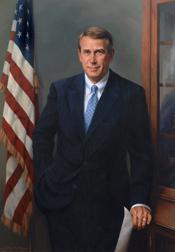
Unfortunately, it became apparent to me and others, including the Speaker of the House of Representatives, the Honorable John Boehner, that these committees are struggling with an unwanted partner: the administration. And this administration, by refusing to completely comply with congressional subpoenas, by delaying the delivery of important documents, by heavily redacting critical information--not sensitive or information that might be considered national security-- and by retroactively classifying previously unclassified files, the Obama administration has thrown roadblocks at every turn of the road.
The most recent example of this was the deliberate subversion of the investigation which occurred on April 17, less than a month ago. This is why the Speaker of the House of Representatives, John Boehner, who has been very deliberative and most involved but careful to let each committee operate to the level of its jurisdiction, to make sure that each committee had not just the resources but the ability to make sure that they were on a process for the delivery of the things which I have talked about, up to and including the truth, Mr. Speaker, the truth behind the events, the truth behind how we would describe this event so that lessons would be learned, and evince how we would effectively and capably understand the new and current threats against the United States and what occurred on that day and on a moving-forward basis. If you refuse to participate with the United States Congress, if you subvert the process and take advantage of our structure, the Honorable John Boehner will then respond with that which is given to him and to the United States House of Representatives, and that is to honorably pivot based upon something that happened less than a month ago, April 17.
This administration chose to deliberately mislead the United States Congress, and we responded therein. On that day, the administration delivered 276 documents consisting of 779 pages. They gave these to the Committee on Oversight and Government Reform, many of which continued to be heavily redacted. The same day, the State Department complied under a Freedom of Information Act requested by Judicial Watch. I believe that the timing of these two productions is not a coincidence as to whether or not Congress would have received these documents absent Judicial Watch's FOIA request. The two sets of documents are incredibly similar, and, shockingly, some of the documents received by the committee are more redacted than those received by Judicial Watch.
Well, I get that. That is because under FOIA, the Freedom of Information Act, there is a criminal statute attached to that which those lawyers preparing these documents knew they could be criminally held liable.
Mr. Speaker, the bottom line of this is this administration has not respected the United States Congress, did not respect the committees that were asking for this information, and there, too, made sure that they made their job even more difficult. These roadblocks, I believe, serve as two important points for us to remember: that the Speaker of the House of Representatives did not choose to be where we are today but, rather, it was this administration through its deliberate attempt to place us exactly where we are.
So, first, the committee will have questions that it has to ask, and they are going to this administration to make sure that we have complete documentation. Every Member of this select committee will have the opportunity--and should have on a bipartisan basis--to see the documents. The select committee will consolidate itself into a centralized location in order to make sure that they work together. We are going to streamline congressional efforts when we find out the things which we could have and should have known but know now to avoid in the future.
And lastly, we are going to come with an answer to the American people that we believe is what they are due, and that is: what happened; how could we have avoided it; and what do we look for in the future.
Our representative government is founded on the assumption of a transparent government. Our President, Barack Obama, stated when he was elected that this would be the most open and transparent government. Mr. Speaker, we are here today to take the President at his word. The question is: Will the President live up to his word and expect this administration to join with the House of Representatives in this new era, this new way of trying to go about getting an answer for the American public?
Mr. Speaker, I reserve the balance of my time.
Mr. Speaker, the Rules Committee is the committee that meets upstairs. We decide what legislation will come to the floor. In this case, the House Rules Committee has original jurisdiction over this bill, but the Rules Committee is made up of specialists, of experts across this Congress, not only on the Republican and Democrat side, but people who represent people back home who hear from and want to know about the effects that Congress does and about the daily impact.
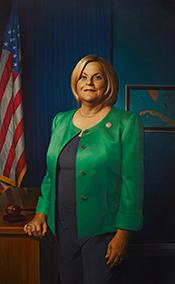
One of those Members comes with vast experience and comes to us as former chairman of the Foreign Affairs Committee. She is a person who is well respected and thoughtful.
More importantly, she was on duty as the chairwoman at the time Benghazi occurred, and we are delighted she is on the Rules Committee. She has brought incredible integrity and insight into this matter.
At this time, I yield 4 minutes to the gentlewoman from Florida (Ms. Ros-Lehtinen).
I yield 2 minutes to the gentlewoman.
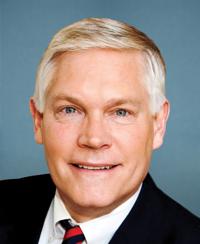
I yield 5 minutes to the gentleman from Lewisville, Texas (Mr. Burgess), a member of the Rules Committee.
Mr. Speaker, I yield myself 15 seconds.
Members of Congress who attend hearings and heard the testimony yesterday should not mislead the American people by their statements on the floor as the gentlewoman from Texas did.
I reserve the balance of my time.
In fact, I do not.
Mr. Speaker, I yield myself such time as I may consume.
There is an old saying that the closer to the target you get, the more flak comes up. While that is probably a naval or an Air Force term whereby pilots who are on their duty know when they are getting close to the real target. Mr. Speaker, we are getting closer to the real target.
The facts of the case are really pretty simple. There is no gag order involved here. We spoke last night and yesterday in a very open, probably several-hour meeting on original jurisdiction at the Rules Committee. I was very open with the members of the committee. I told them, which has not been expressed today, that the last day of the 113th Congress this investigation, if it is still going on, would have to be reauthorized by the next Congress. It is not like there is a never-ending date. As a matter of fact, we say in the original jurisdiction that 30 days after the completion of their report this select committee would go away.
Secondly, we spoke very openly about not having new money available, but rather the money that was originally given to the House of Representatives for the purposes of running the House. The Speaker of the House would have to make sure that this committee operates within what we had originally asked for. There are not unlimited amounts of money. And to suggest as has been done on the floor, up to $200 million to run this investigation, that simply would not be truthful.
Mr. Speaker, the closer to the target we have gotten, we have found that the Obama administration is trying to do everything they can to keep the United States House of Representatives and the committees from doing their job to try and misdirect us, to try and trick us, to try and fool us, to try and redact information that did not fall under a national security title but rather was to politically save them from what might be an embarrassment.
What are some of those embarrassments? Well, some of the embarrassments would be: Why didn't the State Department understand on September 11 of any year why you probably do not conduct official operations, especially in a dangerous area? That might be one question.
Another question might be: Who is it that said no? We have heard that there are serious flaws in the State Department. We already knew that. The former Secretary of State has numerous investigations that have revealed inadequacy all the way to the top of the State Department when Hillary Clinton was Secretary of State.
But what we are about here is to get to the bottom of it, to effectively get this done, to report to the American people, and they, Mr. Speaker, will see exactly why this was done, because the oversight responsibilities of the House of Representatives were done at the highest levels of this House. And by the way, we will read the bills before we pass them, we will understand the facts of the case and be able to explain them, and, more importantly, the Speaker of the House of Representatives will be in support of the American people knowing the truth.
Mr. Speaker, thank you for allowing the Rules Committee to bring forth its rule today to talk about this important, not just intelligence operation and national security and State Department and military operations, but to be able to say that the confidence that the American people have in the brave men and women who represent America-- that we will never leave them on the battlefield alone in hours of firefights without a backup position of knowing that the next sound you hear will be the United States Navy or the United States Air Force coming to aid the men and women who are in harm's way. That is the bottom line to this: an apology, not just stating a mismanagement, based upon the facts of the case.
Mr. Speaker, I urge my colleagues to vote ``yes'' on the resolution and ``yes'' on the underlying legislation. I believe what we are doing today is an honorable day for the American people, and I am proud to be here as an American, as a Member of Congress, saying we will get to the bottom of this, it will be done quickly, and it will be done efficiently, and the American people can then make their decisions and us move on, knowing that we will support the men and women who wear the uniform.
I yield back the balance of my time, and I move the previous question on the resolution.