Mr. President, today I rise to introduce legislation in the Senate that would prohibit the use of racial profiling by Federal, State, or local law enforcement agencies. This legislation is entitled…
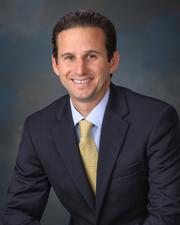
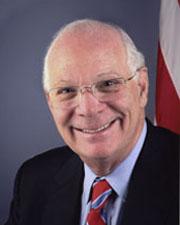
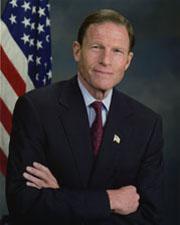
Mr. President, today I rise to introduce legislation in the Senate that would prohibit the use of racial profiling by Federal, State, or local law enforcement agencies. This legislation is entitled the End Racial Profiling Act, ERPA, 2013. I thank my colleagues who have joined me as original cosponsors of this legislation, including Senators Durbin, Blumenthal, Coons, Harkin, Menendez, Stabenow, Levin, Mikulski, Warren, Boxer, Gillibrand, Lautenberg, and Hirono.
Last year, the Nation's attention was riveted to the tragic, avoidable death of Trayvon Martin in Florida in February 2012. As we all know from the news, an unarmed Martin, 17, was shot in Sanford, FL, on his way home from a convenience store, while carrying a can of iced tea and a bag of skittles.
After the tragedy, I met with faith and civil rights groups at the Center for Urban Families in Baltimore to discuss the issue of racial profiling. Joining me were representatives from various faith and civil rights groups in Baltimore, as well as graduates from the center's program. I heard there first-hand accounts of typical American families that were victims of racial profiling. One young woman recounted going to a basketball game with her father, only to have her dad detained by police for no apparent reason other than the color of his skin.
That is why I was pleased that the Justice Department, under the supervision of Attorney General Eric Holder, announced a Civil Rights Division and FBI investigation into the shooting death of Trayvon Martin. I join all Americans in wanting a full and complete investigation into the shooting death of Trayvon Martin to ensure that justice is served. There are many questions that we need answered.
Was Trayvon targeted because he was black? The State of Florida has already charged the shooter with second-degree murder, and the defendant will be given a jury trial of his peers, which begins next month in State court.
Trayvon's tragic death leads to a discussion of the broader issue of racial profiling. The Senate Judiciary Committee held a hearing entitled ``Ending Racial Profiling in America'' in April 2012, which was chaired by Senator Durbin.
At the hearing I was struck by the testimony of Ronald L. Davis, the Chief of Police of the City of East Palo Alto, CA. I want to quote part of Chief Davis' testimony, in which he stated that:
[T]here exists no national, standardized definition for
racial profiling that prohibits all uses of race, national
origin, and religion, except when describing a person.
Consequently, many state and local policies define racial
profiling as using race as the 'sole' basis for a stop or any
police action. This definition is misleading in that it
suggests using race as a factor for anything other than a
description is justified, which it is not. Simply put, race
is a descriptor not a predictor. To use race along with other
salient descriptors when describing someone who just
committed a crime is appropriate. However, when we deem a
person to be suspicious or attach criminality to a person
because of the color of his or her skin, the neighborhood
they are walking in, or the clothing they are wearing, we are
attempting to predict criminality. The problem with such
predictions is that we are seldom right in our results and
always wrong in our approach.
After the hearing I was joined at a press conference by Baltimore's Rev. Dr. Jamal Bryant, a leading youth activist and advisor to the Trayvon Martin family. He echoed the call to end racial profiling by law enforcement in America:
This piece of legislation being offered by my senator,
Senator Cardin, is the last missing piece for the civil
rights bill from 1965 that says there ought to be equality
regardless of one's gender or one's race. Racial
profiling is in fact an extension of racism in America that
has been unaddressed and this brings closure to the divide in
this country.
I have called for putting an end to racial profiling, a practice that singles out individuals based on race, ethnicity, national origin, or religion.
My legislation would protect minority communities by prohibiting the use of racial profiling by law enforcement officials.
First, the bill prohibits the use of racial profiling by all law enforcement agents, whether Federal, State, or local. Racial profiling is defined in a standard, consistent definition as the practice of a law enforcement agent relying on race, ethnicity, religion, or national origin as a factor in their investigations and activities. The legislation creates an exception for the use of these factors where there is trustworthy information, relevant to the locality and time frame, which links persons of a particular race, ethnicity, or national origin to an identified incident or scheme.
Law enforcement agencies would be prohibited from using racial profiling in criminal or routine law enforcement investigations, immigration enforcement, and national security cases.
Second, the bill would mandate training on racial profiling issues, and requires data collection by local and State law enforcement agencies.
Third, this bill would condition the receipt of Federal funds by state and local law enforcement on two grounds. First, under this bill, state and local law enforcement would have to ``maintain adequate policies and procedures designed to eliminate racial profiling.'' Second, they must ``eliminate any existing practices that permit or encourage racial profiling.''
Fourth, the bill would authorize the Justice Department to provide grants to State and local government to develop and implement best policing practices that would discourage racial profiling, such as early warning systems.
Finally, the bill would require the Attorney General to provide periodic reports to assess the nature of any ongoing discriminatory profiling practices.
The bill would also provide remedies for individuals who were harmed by racial profiling.
The legislation I introduce today is supported by the Leadership Conference on Civil and Human Rights, NAACP, Rights Working Group, ACLU, and numerous other national, state, and local organizations.
Racial profiling is bad policy, but given the state of our budgets, it also diverts scarce resources from real law enforcement. Law enforcement officials nationwide already have tight budgets. The more resources spent investigating individuals because of their race, religion, national origin, or ethnicity, the fewer resources directed at suspects who are actually demonstrating illegal behavior.
Using racial profiling makes it less likely that certain affected communities will voluntarily cooperate with law enforcement and community policing efforts, making it harder for our law enforcement community to combat crimes and fight terrorism.
Minorities living and working in these communities in which racial profiling is used may also feel discouraged from traveling freely, which corrodes the public trust in government. This ultimately demonizes entire communities and perpetuates negative stereotypes based on an individual's race, ethnicity, or religion.
Racial profiling has no place in modern law enforcement. The vast majority of our law enforcement officials who put their lives on the line every day handle their jobs with professionalism, diligence, and fidelity to the rule of law.
However, Congress and the Justice Department can and should still take steps to prohibit racial profiling and finally root out its use.
I agree with Attorney General Holder's remarks to the American-Arab Anti-Discrimination Committee where he stated:
In this Nation, security and liberty are--at their best--
partners, not enemies, in ensuring safety and opportunity for
all . . . In this Nation, the document that sets forth the
supreme law of the land--the Constitution--is meant to
empower, not exclude . . . Racial profiling is wrong. It can
leave a lasting scar on communities and individuals. And it
is, quite simply, bad policing--whatever city, whatever
state.
The Fourteenth Amendment to the U.S. Constitution guarantees the ``equal protection of the laws'' to all Americans. Racial profiling is abhorrent to that principle, and should be ended once and for all.
As the late Senator Ted Kennedy often said, ``civil rights is the great unfinished business of America.'' Let us continue the fight here to make sure that we truly have equal justice under law for all Americans. I urge my colleagues to support this legislation.
Mr. President, authorized under P.L. 105-312 in 1998 and reauthorized by P.L. 107-308 in 2002, the Chesapeake Bay Gateways and Watertrails Network helps several million visitors and residents discover, enjoy, and learn about the special places and stories of the Chesapeake Bay and its watershed. Today I am introducing legislation to reauthorize this successful program.
For visitors and residents, the Gateways are the ``Chesapeake connection.'' The Network members provide an experience of such high quality that their visitors will indeed connect to the Chesapeake emotionally as well as intellectually, and thus to its conservation.
The Chesapeake Bay is a national treasure. The Chesapeake ranks as the largest of America's 130 estuaries and
one of the nation's largest and longest fresh water and estuarine systems. The Atlantic Ocean delivers half the bay's 18 trillion gallons of water and the other half flows through over 150 major rivers and streams draining 64,000 square miles within six states and the District of Columbia. The Chesapeake watershed is among the most significant cultural, natural and historic assets of our nation.
The Chesapeake is enormous and vastly diverse--how could you possibly experience the whole story in any one place? Better to connect and use the scores of existing public places to collaborate on presenting the many chapters and tales of the bay's story. Visitors and residents go to more places for more experiences, all through a coordinated Gateways Network.
Beyond simply coordinating the Network, publishing a map and guides, and providing standard exhibits at all Gateways, the National Park Service has helped Gateways with matching grants and expertise for 200 projects with a total value of more than $12 million. This is a great deal for the Bay--it helps Network members tell the Chesapeake story better and inspires people to care for this National Treasure--and it's a good deal for the Park Service. In this legislation, we cap the Gateways authorization at just $2 million annually. It serves all 150+ Gateways and their 10 million visitors. No other National Park can provide such a dramatic ratio of public dollars spent to number of visitors served.
With the National Park Service's expertise and support, Gateways have made significant progress in their mission to tell the bay's stories to their millions of members and visitors, extend access to the bay and its watershed, and develop a conservation awareness and ethic. It is time to reauthorize the Chesapeake Gateways and Watertrails program. It is my hope that the Congress will act quickly to adopt this legislation.
Mr. President, I ask unanimous consent that the text of the bill be printed in the Record.